


Exploring Transliteracy:
The New Literacies and
Libraries
LibraryLinkNJ


Bobbi Newman
librarianbyday.net
@librarianbyday
Evolution of Communication
Acceleration of Communication
         Technologies
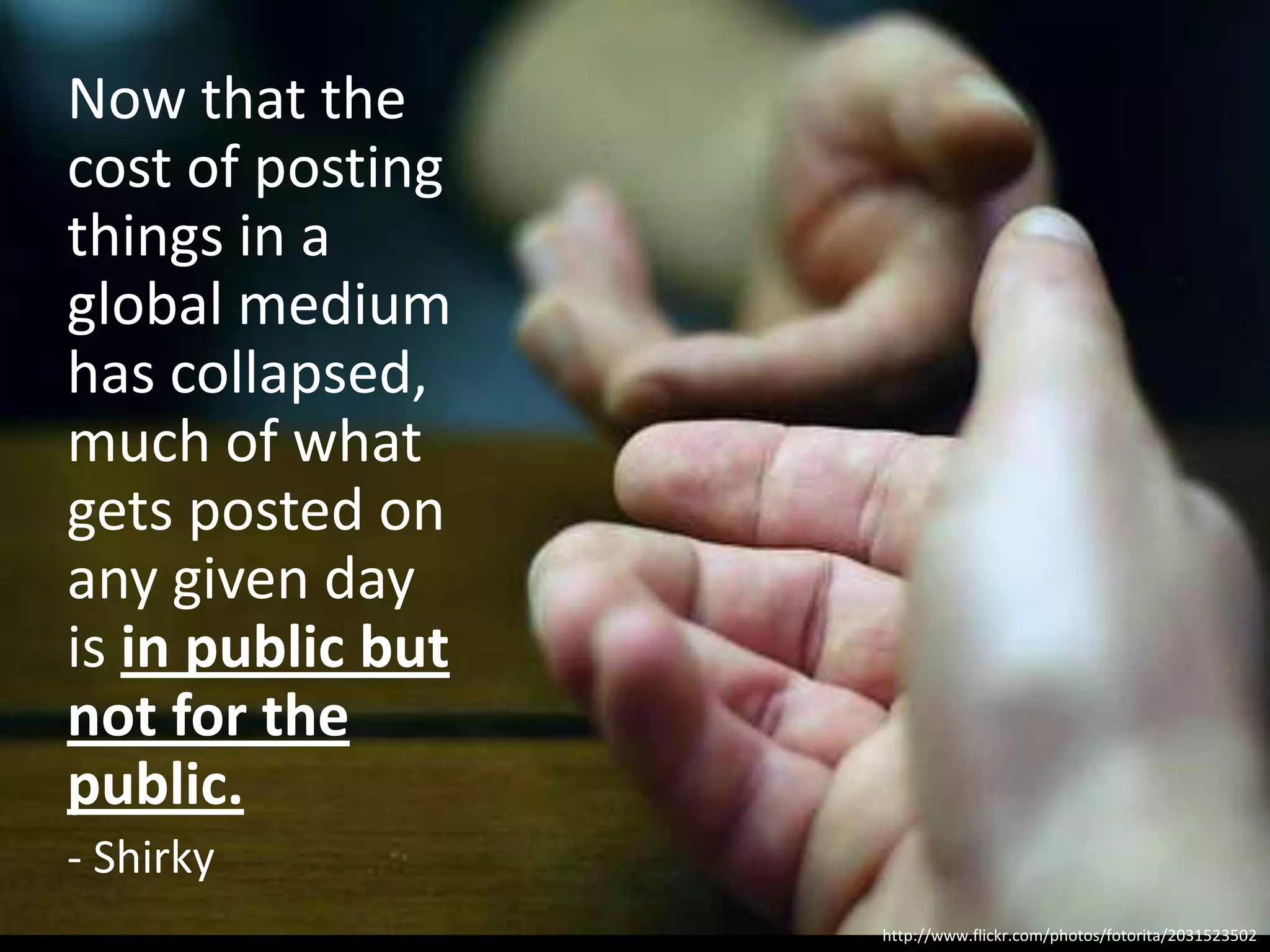
Now that the
cost of posting
things in a
global medium
has collapsed,
much of what
gets posted on
any given day
is in public but
not for the
public.
- Shirky
                   http://www.flickr.com/photos/fotorita/2031523502
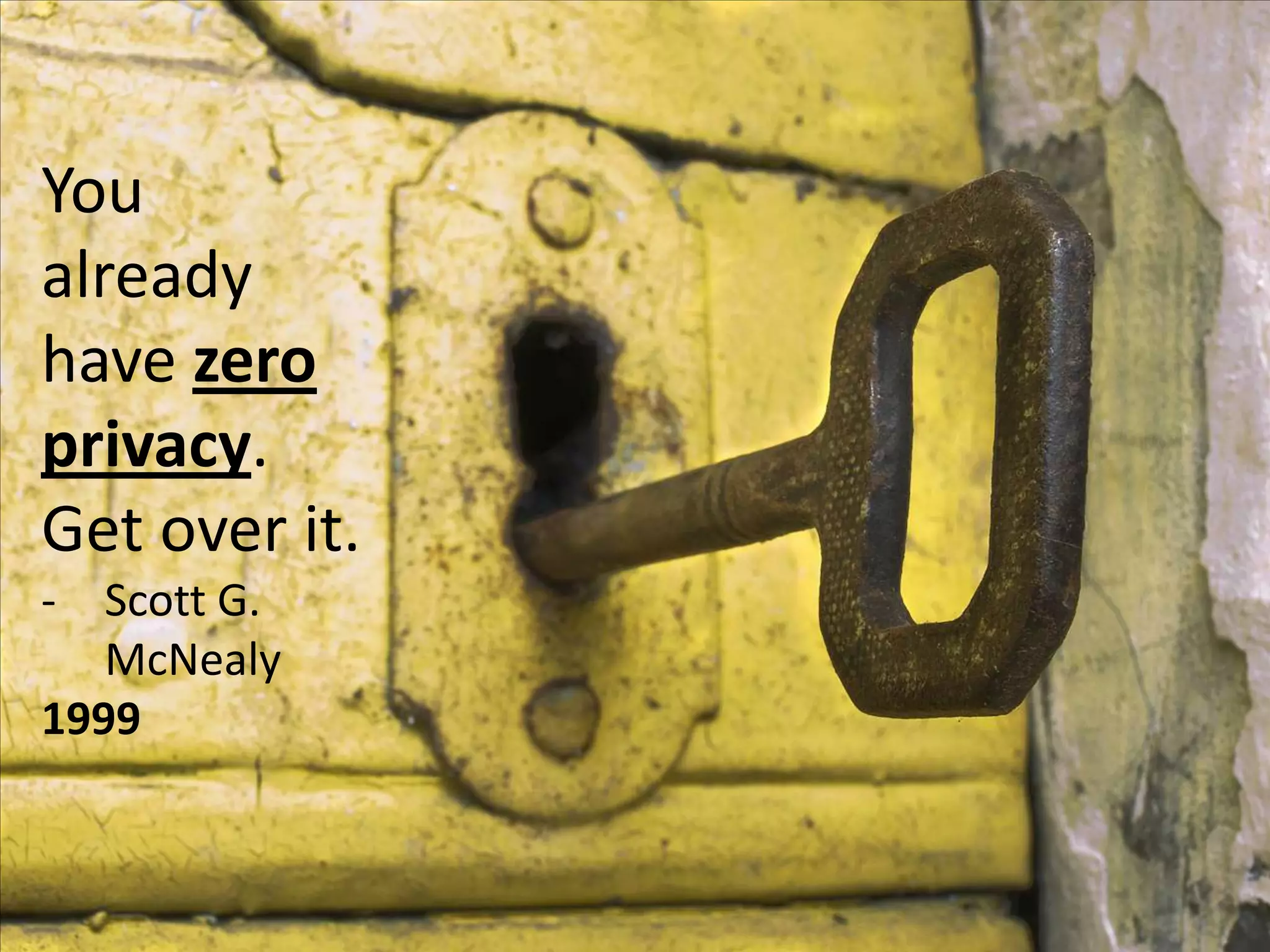
You
already
have zero
privacy.
Get over it.
- Scott G.
   McNealy
1999
The illiterate of the 21st century will
 not be those who cannot read and
 write, but those who cannot learn,
         unlearn, and relearn.
               - Alvin Toffler
Enter Transliteracy
Transliteracy is the ability
to read, write and
interact across a range of
platforms, tools and
media from signing and
orality through
handwriting, print, TV,
radio and film, to digital
social networks.
-Thomas, et al
Origins of Transliteracy
          • 2005
          • Transliteracies Research
            Project
          • Alan Liu from the
            Department of English at
            the University of
            California at Santa
            Barbara
          • “intersections of the
            humanistic, social, and
            technological disciplines”
Origins of Transliteracy
          • 2005
          • Sue Thomas
          • Institute of Creative
            Technologies at De
            Montfort University
          • PART Group (Production
            and Research in
            Transliteracy) - >
            Transliteracy Research
            Group.
The concept of
transliteracy calls for a
change of perspective
away from the battles
over print versus
digital, and a move
instead towards a
unifying ecology not
just of media, but of all
literacies relevant to
reading, writing,
interaction and culture,
both past and present.”
-Thomas et al.
Origins of Libraries and Transliteracy
                 • 2009
                 • Bobbi Newman
                 • Libraries Need to Focus
                   on Transliteracy
Libraries have focused
on literacy, the ability
to read, write and
interact, for years.
People need to be
literate in order to be
involved in and
contribute to society.
Times are changing,
technologies are
evolving rapidly, it is
no longer enough to
focus on the ability to
read and write alone.
Origins of Libraries and Transliteracy
                 • 2010
                 • Libraries and
                   Transliteracy Project
                 • Tom Ipri
                 • Bobbi Newman
                 • Lane Wilkinson
                 • Gretchen Casserroti
Because of the ways in
which transliteracy
questions authority and
devalues hierarchical
structures proponents
tend to advocate for
issues that help level the
information playing
field, such as ensuring
neutrality and bridging
the digital divide
- Ipri
Transliteracy is more than…
digital literacy
technology literacy
information literacy
media literacy
foundational literacy
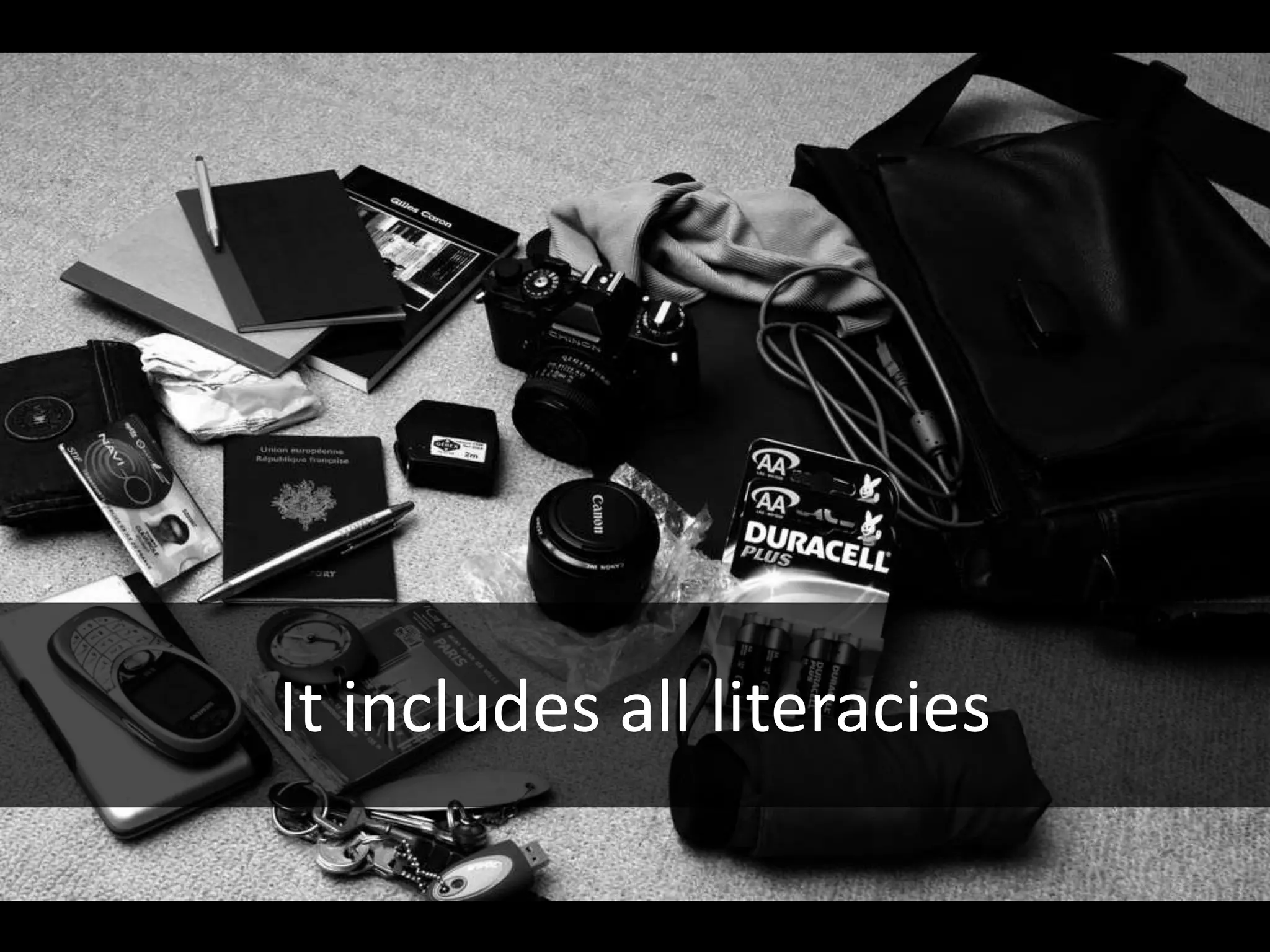
It includes all literacies
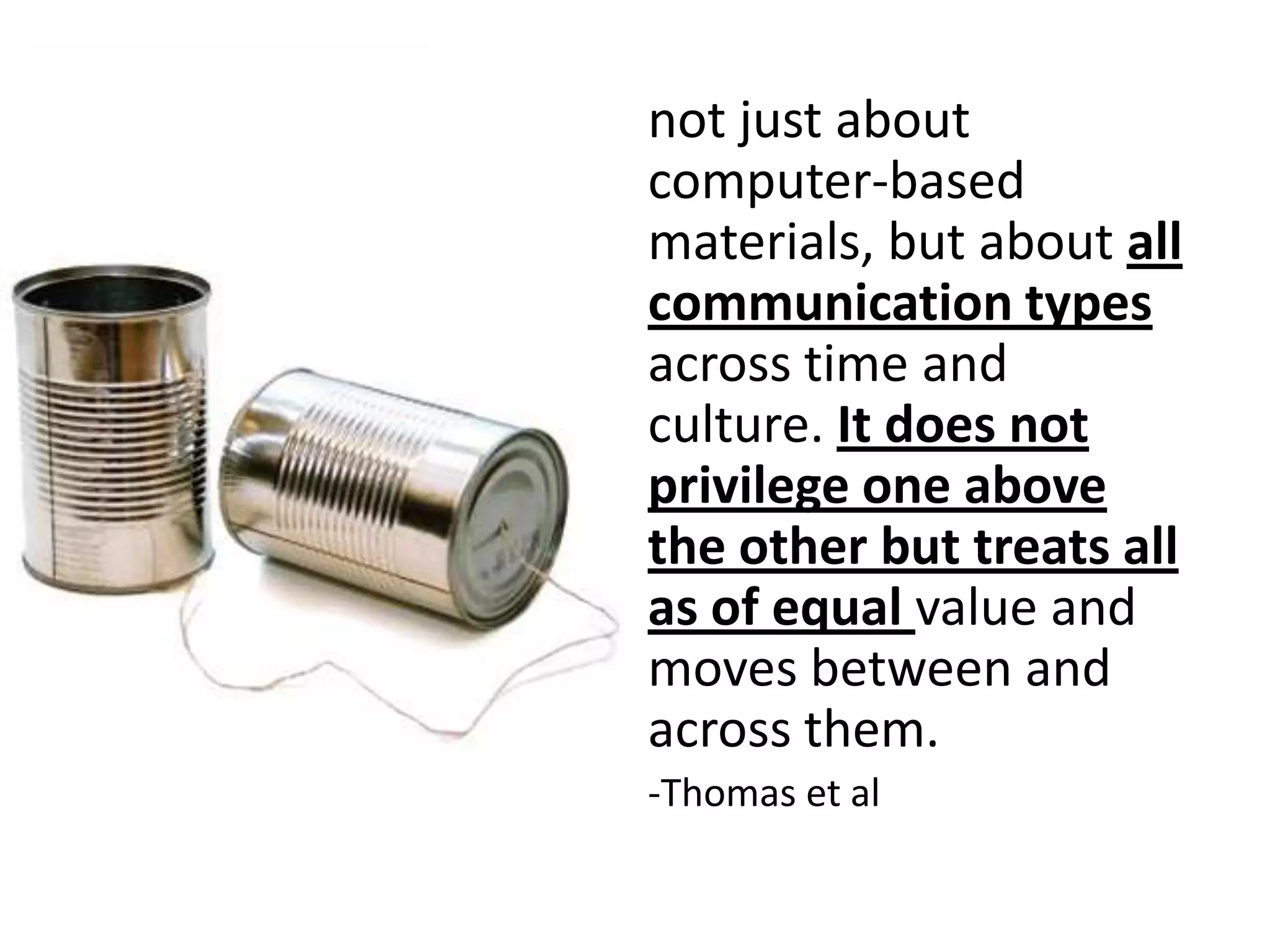
not just about
computer-based
materials, but about all
communication types
across time and
culture. It does not
privilege one above
the other but treats all
as of equal value and
moves between and
across them.
-Thomas et al
Transliteracy happens in the places where
different things meet, mix, and rub
together.
-Thomas et al
Transliteracy is
information
content
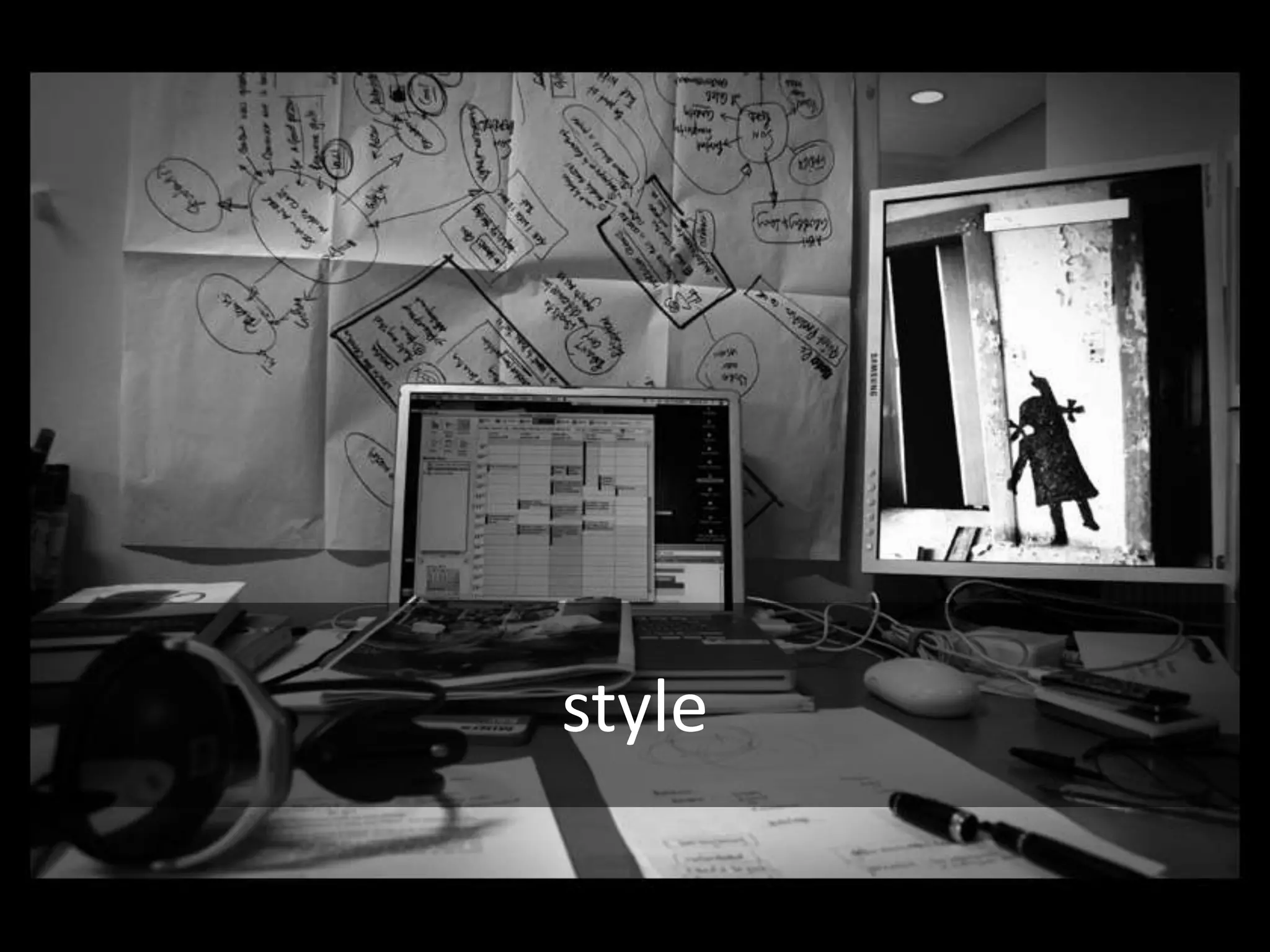
style
connection
format
texting
a telephone call
email
instant messaging
music
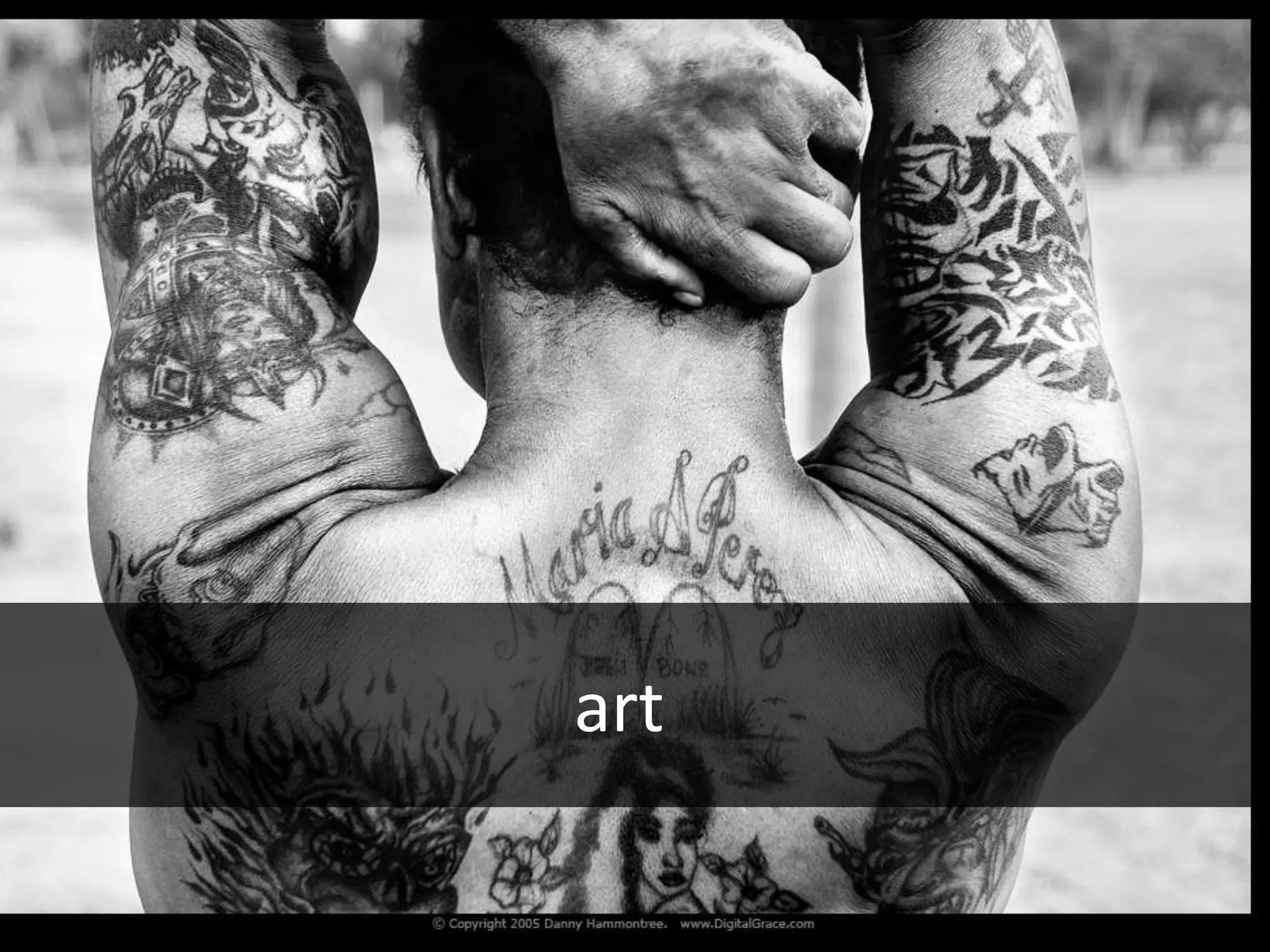
art
video
images
social networking
face to face
paper and pencil
gestures
expressions
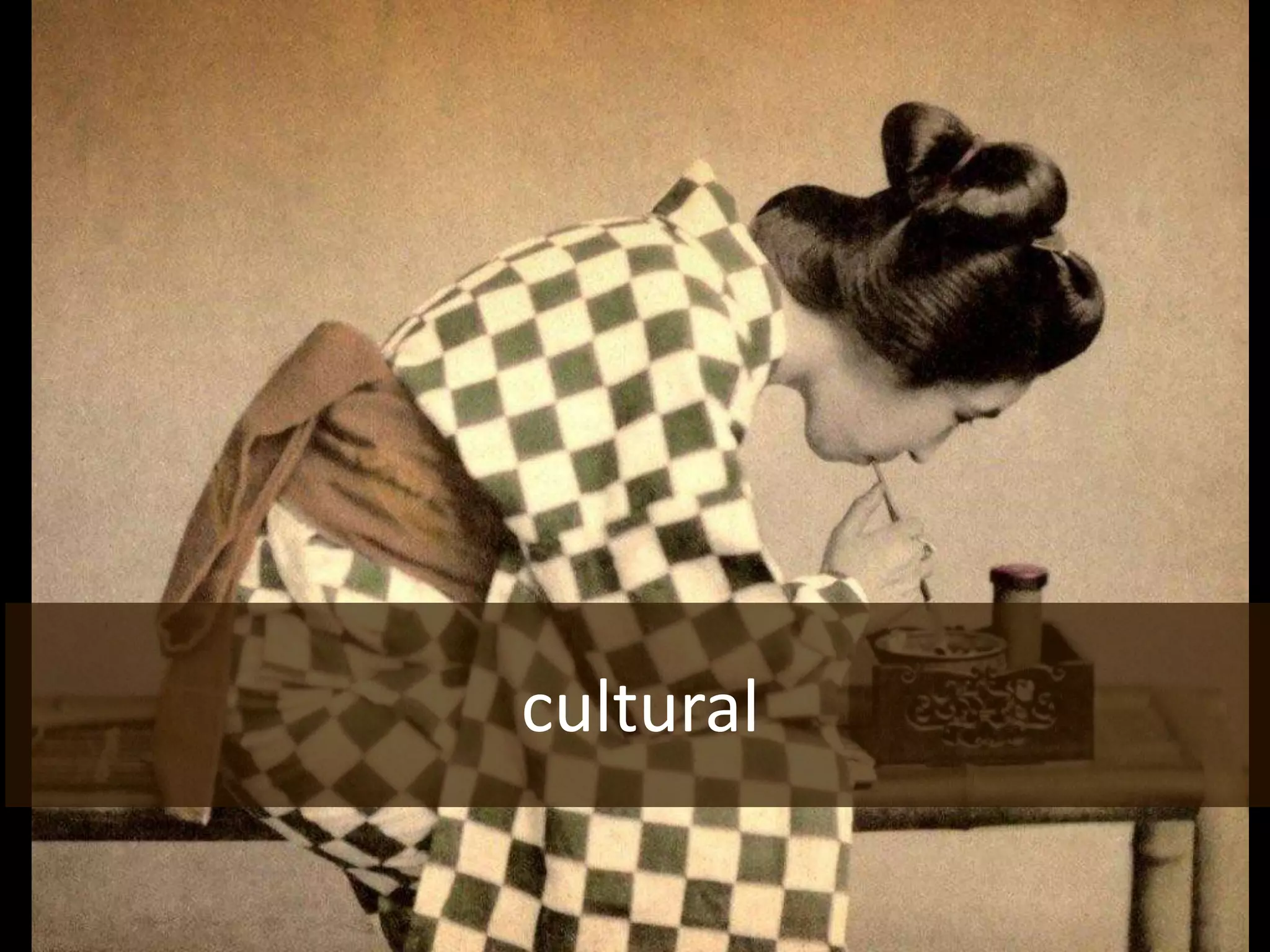
social
cultural
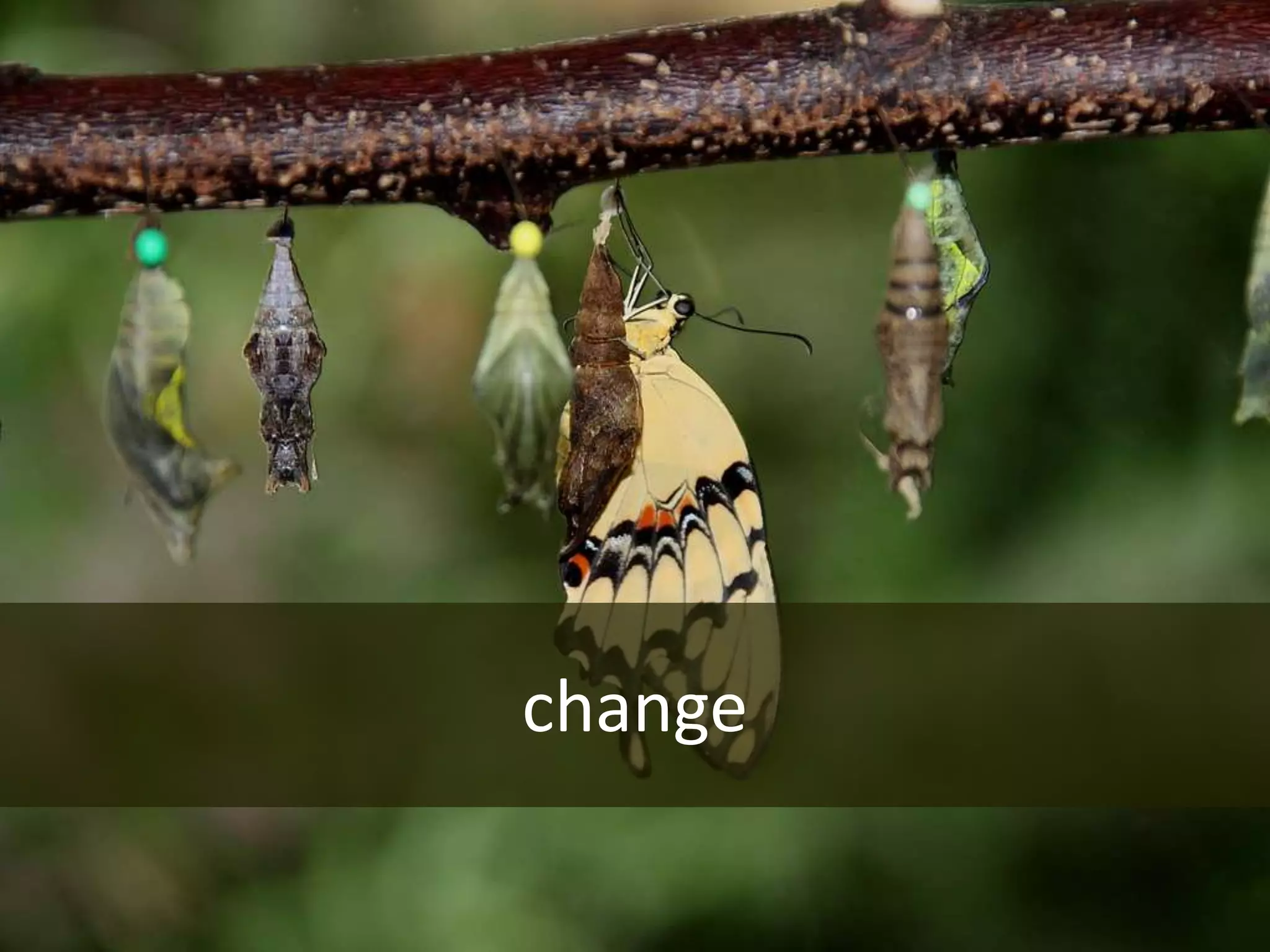
change
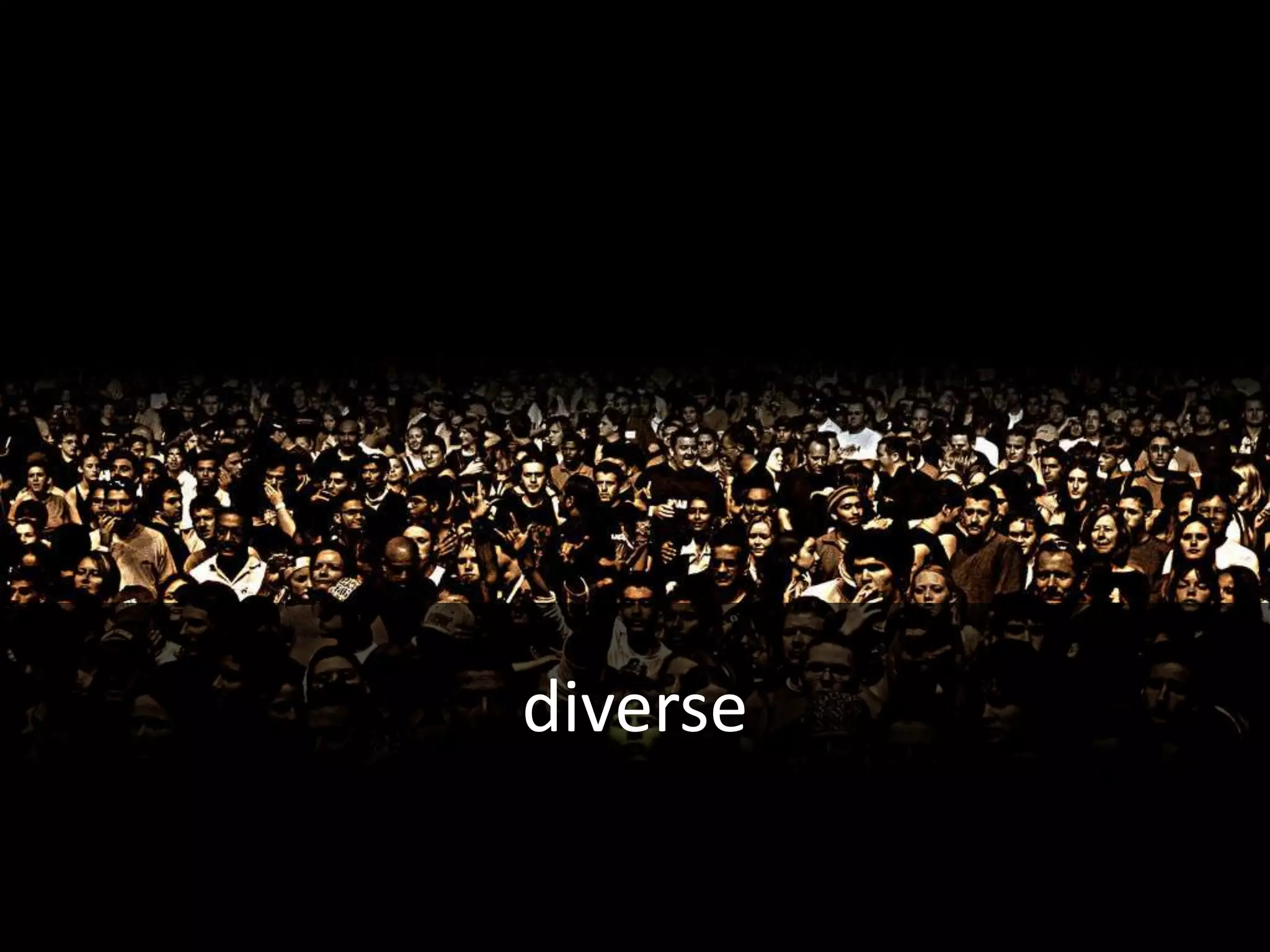
diverse
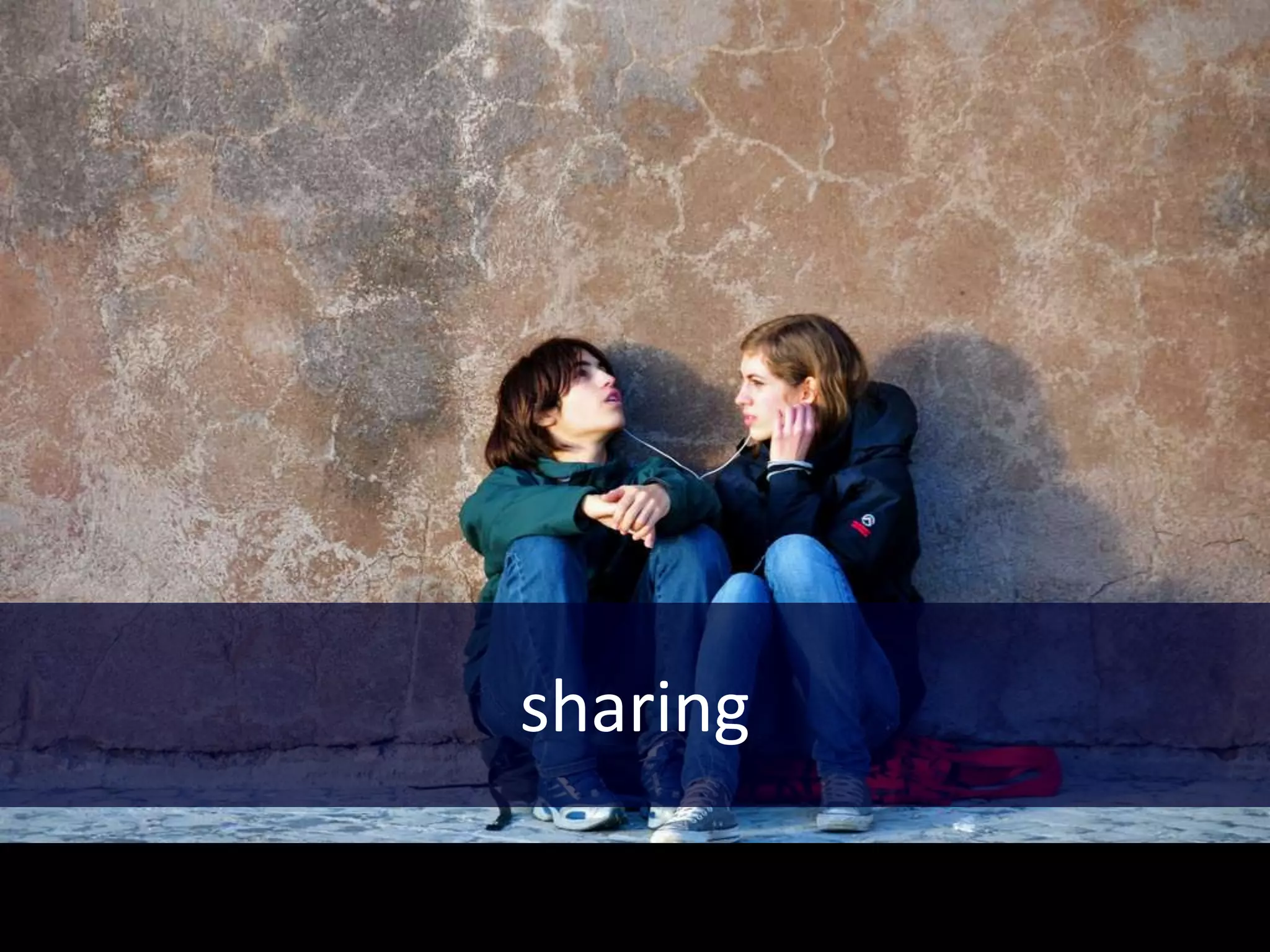
sharing
participatory
aware
fluid
flexible
fluent
The transliterate individual can:
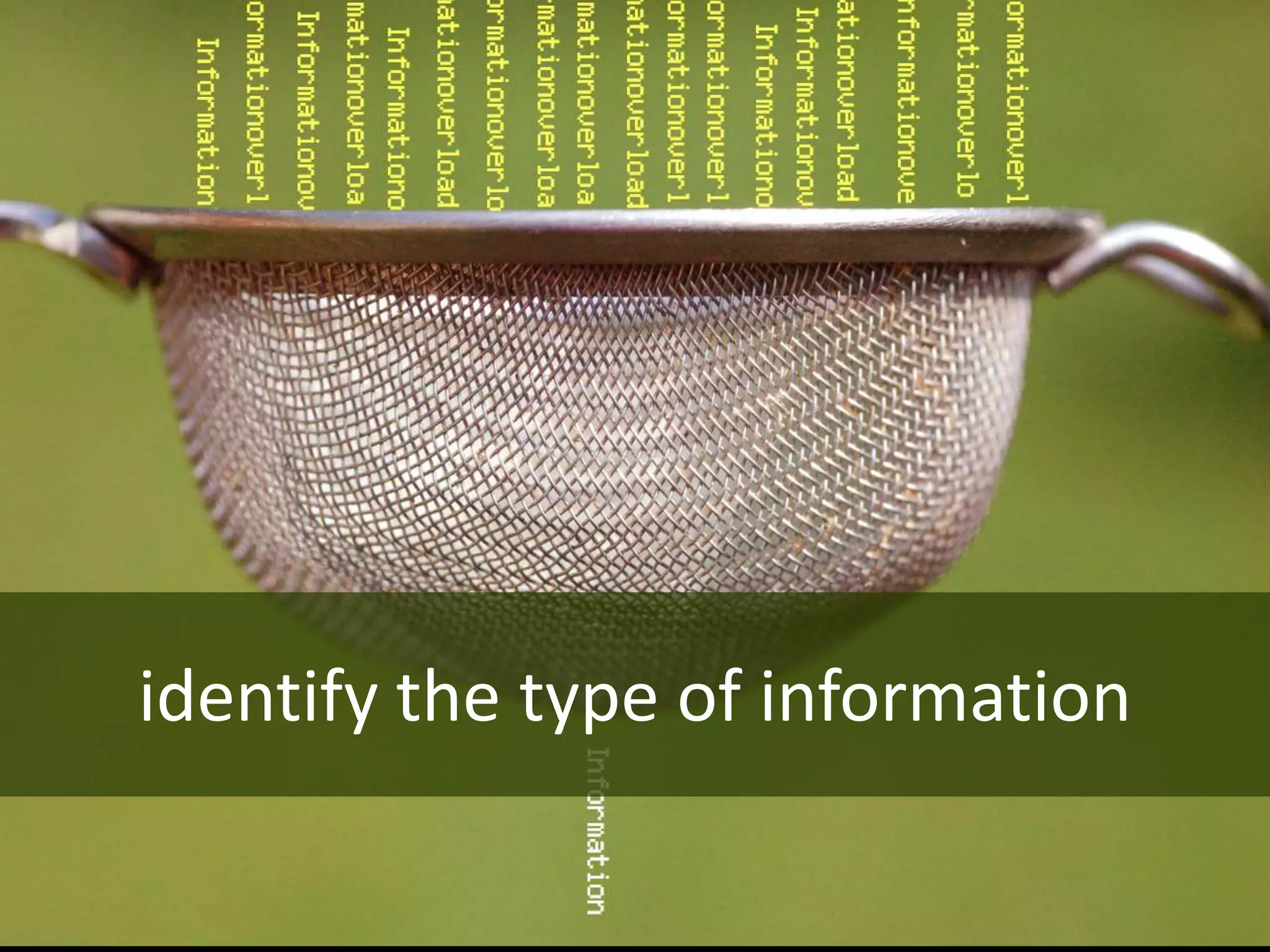
identify the type of information
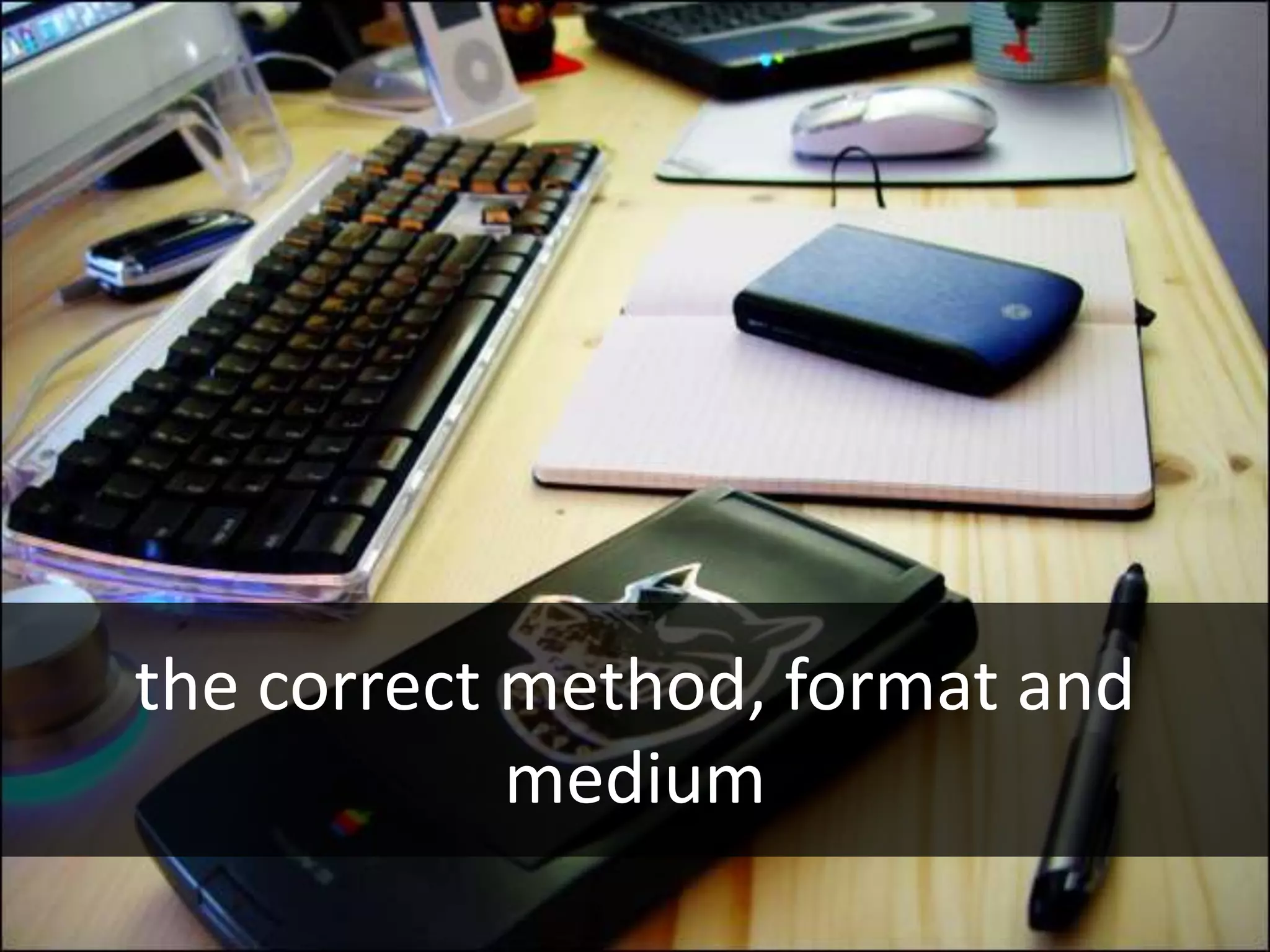
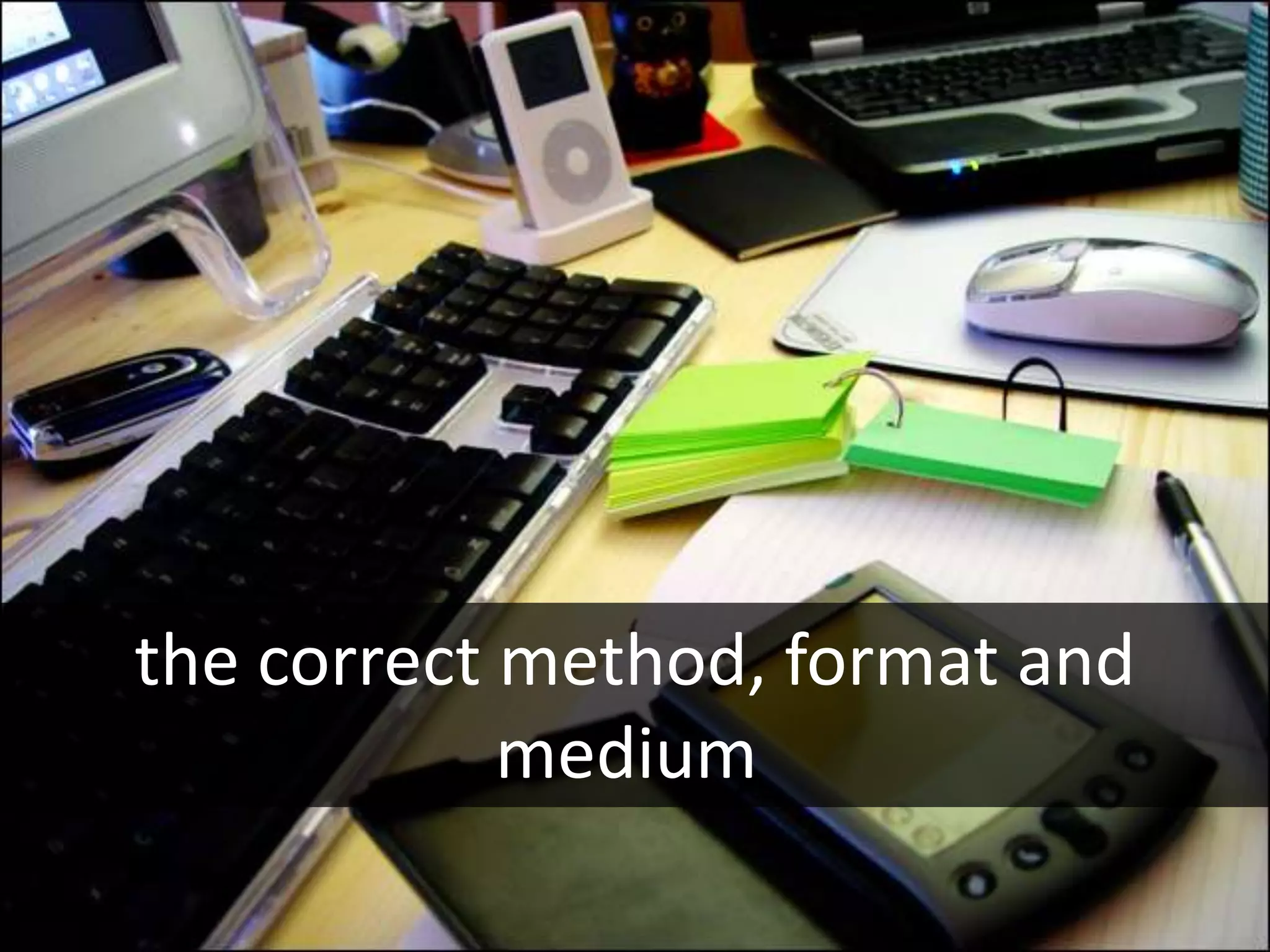
the correct method, format and
            medium
for sharing
Can identify the
the correct method, format and
            medium
for accessing information.
Transliteracy is
identifying your audience
and the correct method of
  sharing your message.
Transliteracy is
communication
in any form.
If not libraries, then who?
What can we do?
Choice
Stop fighting amongst ourselves
Get educated
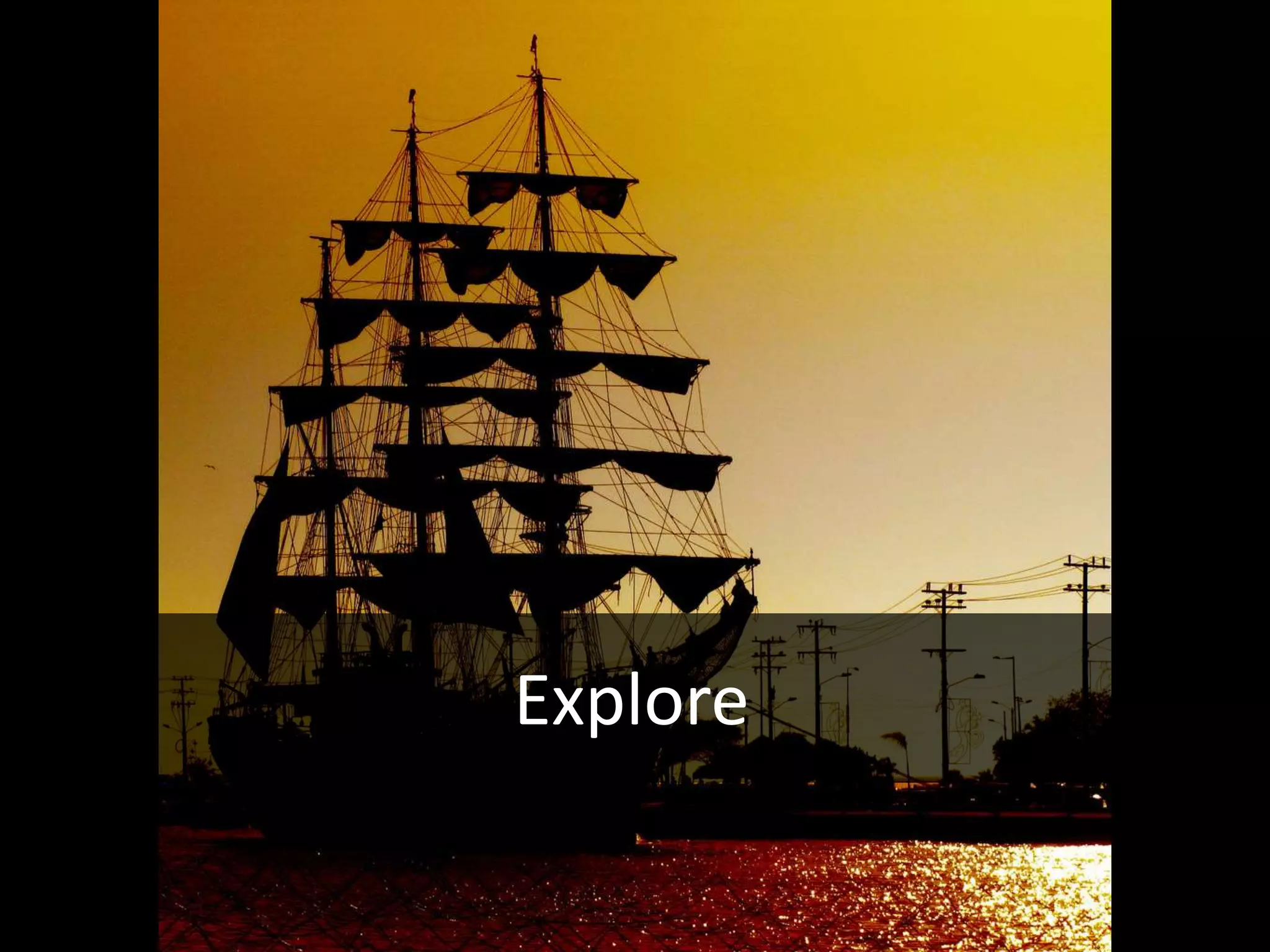
Explore
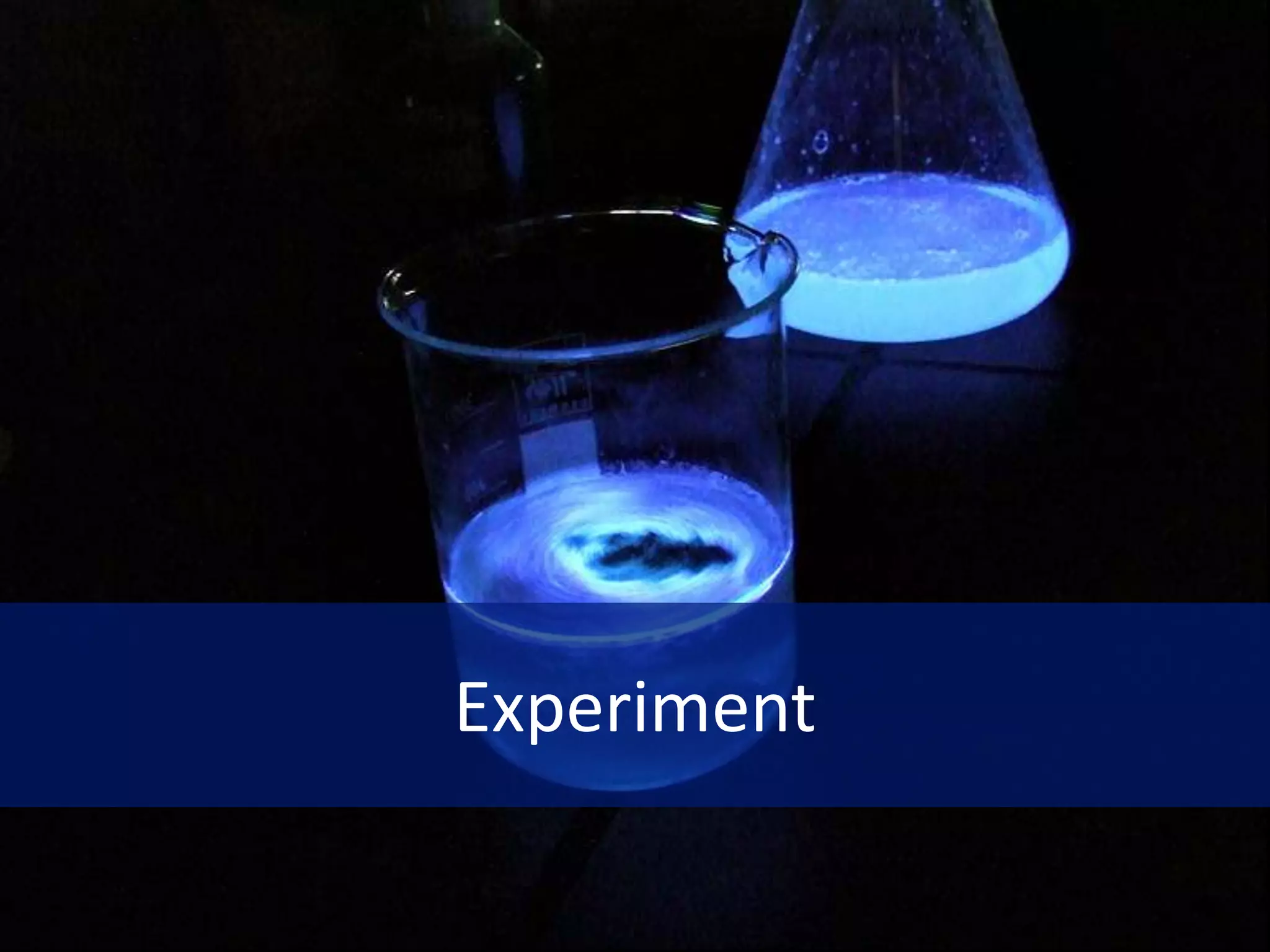
Experiment
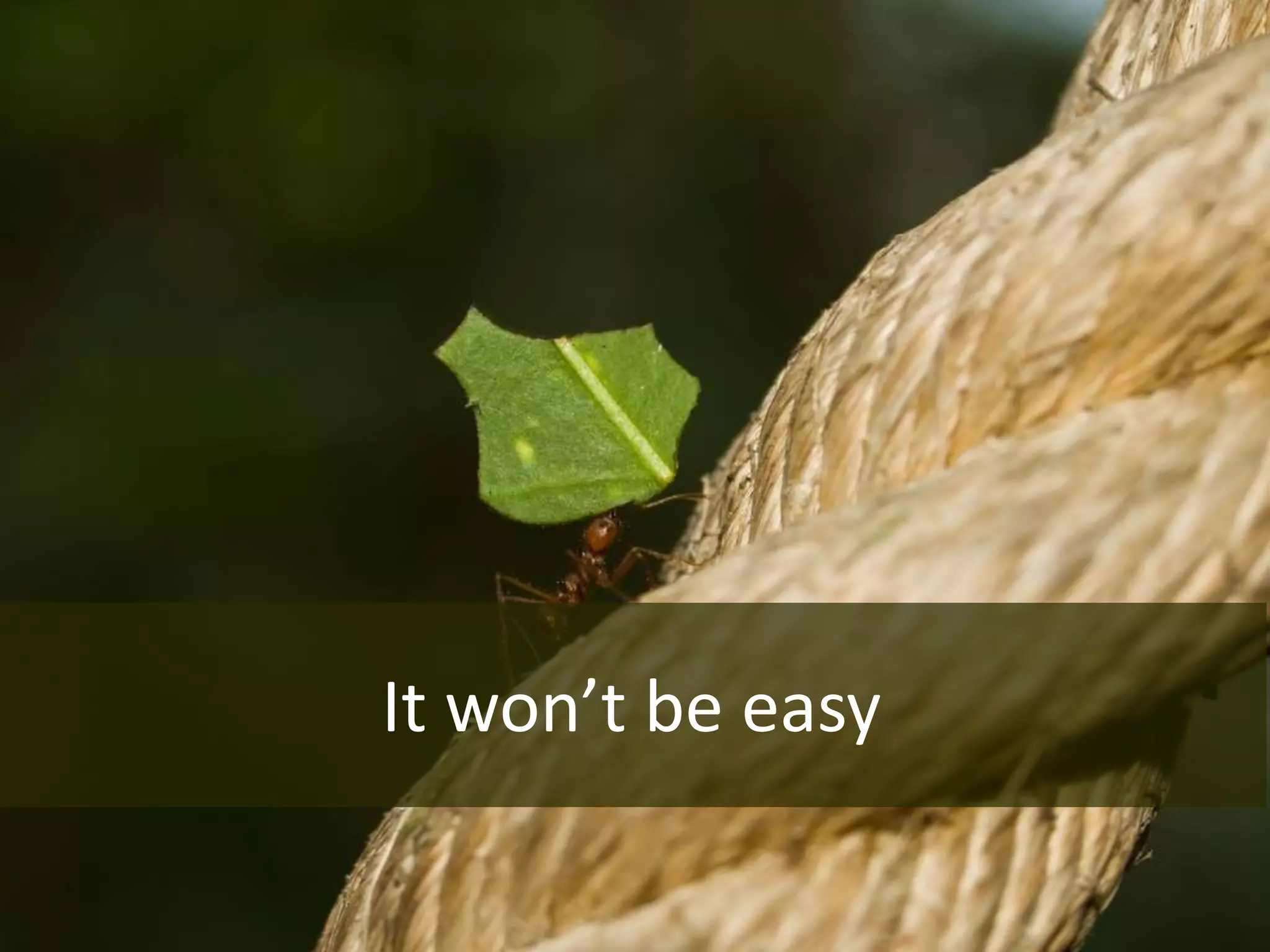
It won’t be easy
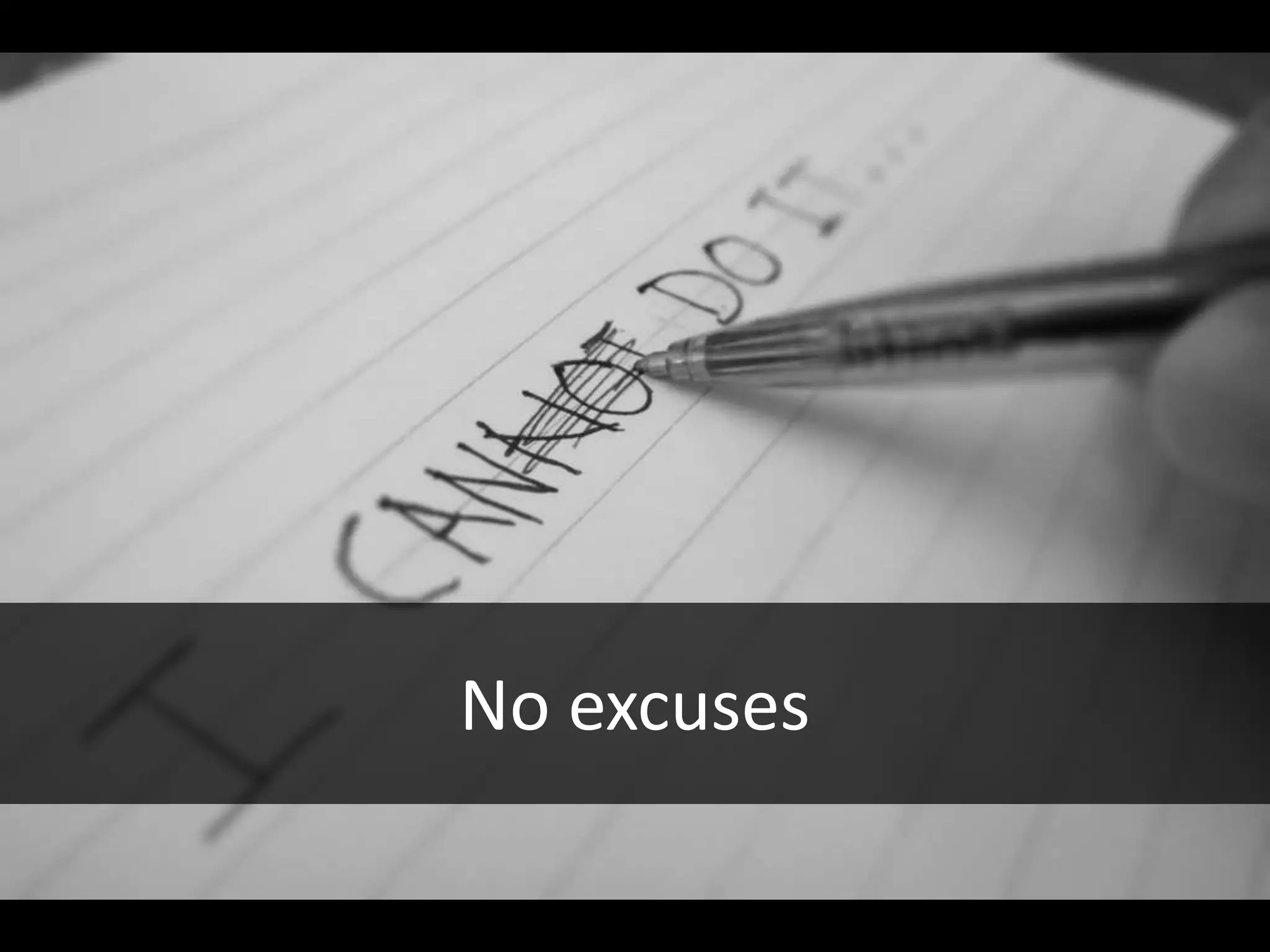
No excuses
Expectations
Commit

         http://www.flickr.com/photos/fl4y/2524287242/
Questions?
                                                              Bobbi Newman
                                                           librarianbyday.net
                                                             @librarianbyday


     This work is licensed under the Creative Commons
Attribution-Noncommercial-No Derivative Works 3.0 United
                        States License.
             To view a copy of this license, visit
  http://creativecommons.org/licenses/by-nc-nd/3.0/us/
References
• Andretta, S. (2009). Transliteracy: Take a walk on the wild side. In World
  Library and Information Congress: 75 th IFLA Genreal Conference and
  Assembly, Milan, Italy: 23-27. http://eprints.rclis.org/handle/10760/14868
• Ipri, T. (2010) Introducing Transliteracy. College & Research Libraries News,
  71(10), 532-567.
• Karp, J. (2010, Oct 25). What is this buzz word “transliteracy”? (Blog)
  Retrieved from http://spotlight.macfound.org
• Newman, B. (2011). Beginner’s guide to transliteracy. Available online at
• http://librariesandtransliteracy.wordpress.com/beginner’s-guide-to-
  transliteracy/
• Saveri, A., Rheingold, H., & Vian, K. (2005). Technologies of cooperation.
  Palo Alto CA. Retrieved from
  http://www.rheingold.com/cooperation/Technology_of_cooperation.pdf
• Shirky, C. (2008). Here comes everybody: The power of organizing without
  organizations. New York: Penguin Press.
• Thomas, S., et al. (2007). Transliteracy: crossing divides. First Monday,
  12(12). Online.

Exploring transliteracy

Editor's Notes

  • #2 http://www.flickr.com/photos/massics/2468052137/
  • #3 http://www.flickr.com/photos/selago/864144893/ 
  • #5 http://www.flickr.com/photos/fotorita/2031523502/
  • #7 http://www.flickr.com/photos/meredithharris/2129929046/
  • #8 http://www.flickr.com/photos/squinza/2827340185/
  • #9 http://www.flickr.com/photos/squinza/2827340185/
  • #10 http://www.flickr.com/photos/squinza/2827340185/
  • #11 http://www.flickr.com/photos/squinza/2827340185/
  • #12 http://www.flickr.com/photos/squinza/2827340185/
  • #13 http://www.flickr.com/photos/squinza/2827340185/
  • #14 http://www.flickr.com/photos/squinza/2827340185/
  • #15 http://www.flickr.com/photos/squinza/2827340185/
  • #16 http://www.flickr.com/photos/squinza/2827340185/
  • #24 http://www.flickr.com/photos/kitcowan/2103850699/
  • #25 http://www.flickr.com/photos/gribley/1518211292/
  • #34 http://www.flickr.com/photos/aftab/2683898610/
  • #37 http://www.flickr.com/photos/digitalgrace/17494634/
  • #38 http://www.flickr.com/photos/bionicteaching/4129185944/
  • #39 http://www.flickr.com/photos/lilit/63848586/
  • #40 http://www.flickr.com/photos/graylight/261480919/
  • #61 http://www.flickr.com/photos/fromeyetopixel/2203928814/
  • #66 http://www.flickr.com/photos/cobalt/3035453906/
  • #68 http://www.flickr.com/photos/digidragon/3046266667/
  • #69 http://www.flickr.com/photos/jakecaptive/3205277810/
  • #70 http://www.flickr.com/photos/thomasthomas/258931782/
  • #71 http://www.flickr.com/photos/balladist/2843633256/
  • #72 http://www.flickr.com/photos/heycoach/1197947341/
  • #73 http://www.flickr.com/photos/luchilu/2183156848/
  • #74 http://www.flickr.com/photos/mgdtgd/140282001/
  • #75 http://www.flickr.com/photos/wwarby/1584814181/
  • #76 http://www.flickr.com/photos/wongjunhao/2953814622/
  • #77 http://www.flickr.com/photos/chanwj91/3575432061/
  • #78 http://www.flickr.com/photos/fl4y/2524287242/
  • #79 http://www.flickr.com/photos/yazzzz/3423736208