Jorge Nuno Pinto De Melo
                     07037694


Forensic
Literature Project
PH3H05
2010/2011
Nature of Fatal Fires:
         Accidental

         Homicidal

         Suicidal

         Homicide Concealment

The fatal fire must be viewed as an investigation for
      the criminal acts of arson and homicide.
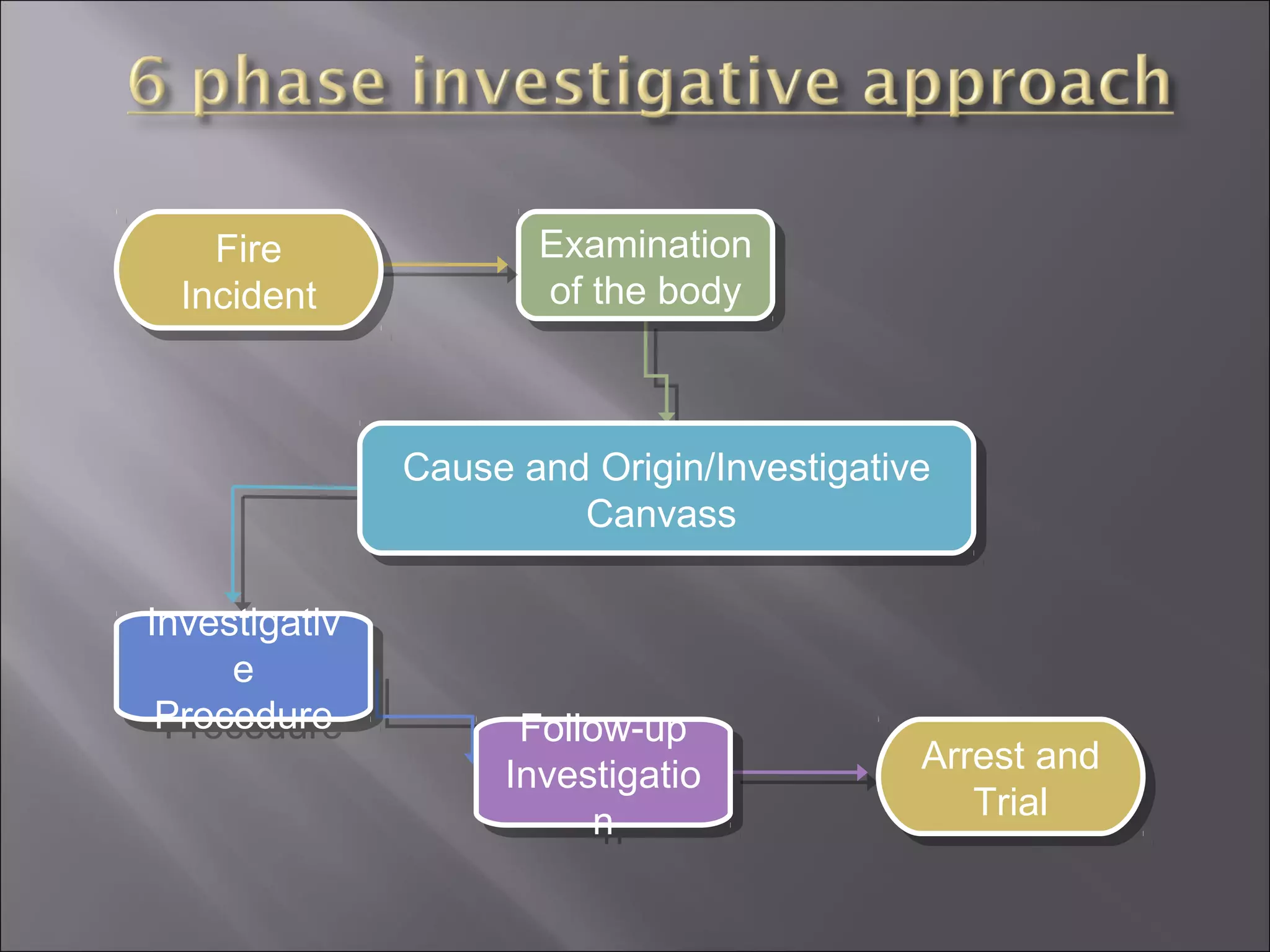
Fire
     Fire              Examination
                       Examination
  Incident
   Incident            of the body
                        of the body


                Cause and Origin/Investigative
                Cause and Origin/Investigative
                         Canvass
                          Canvass

Investigativ
 Investigativ
     ee
 Procedure
  Procedure           Follow-up
                       Follow-up            Arrest and
                     Investigatio
                      Investigatio          Arrest and
                           n                   Trial
                                               Trial
                           n
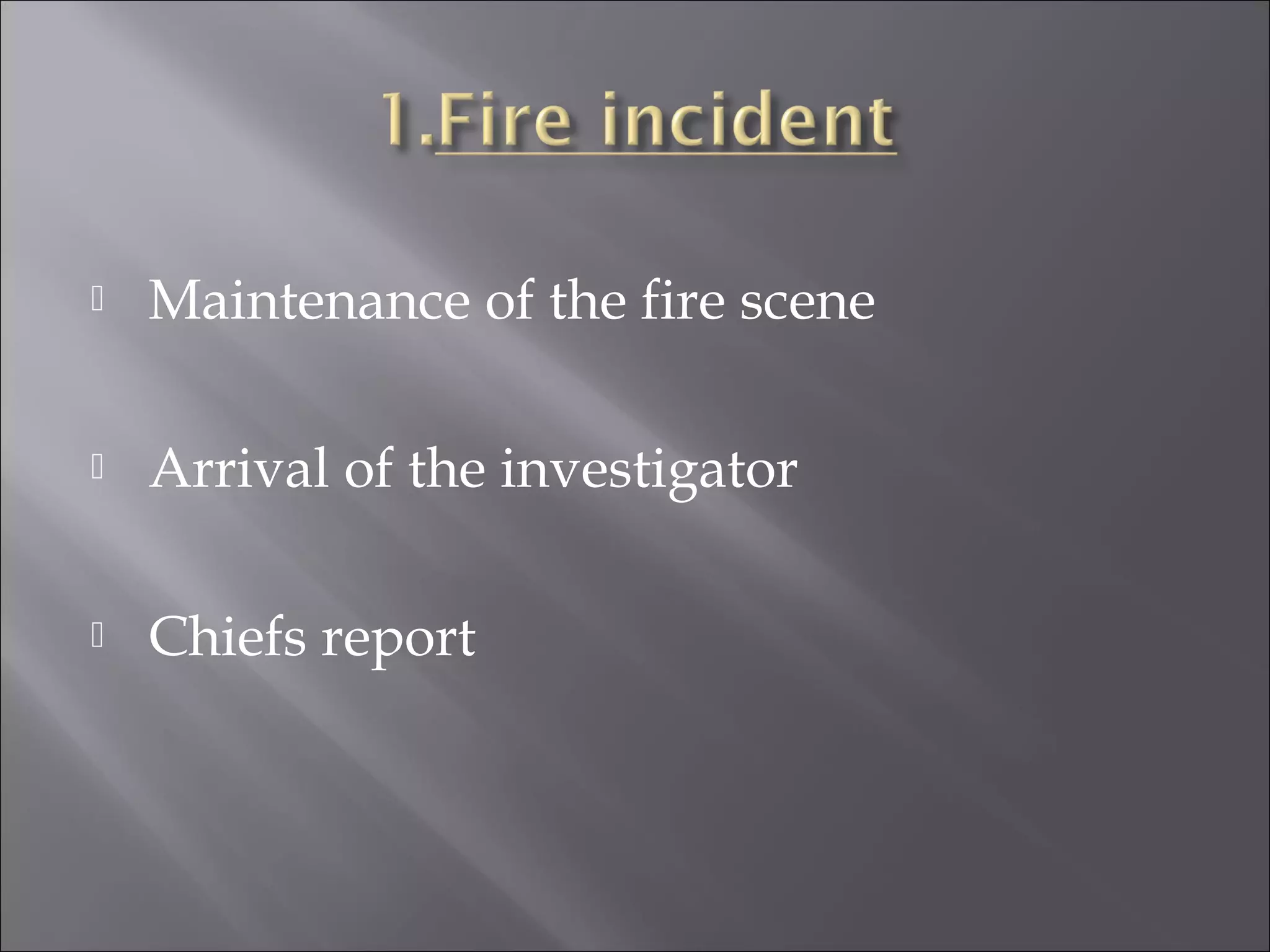
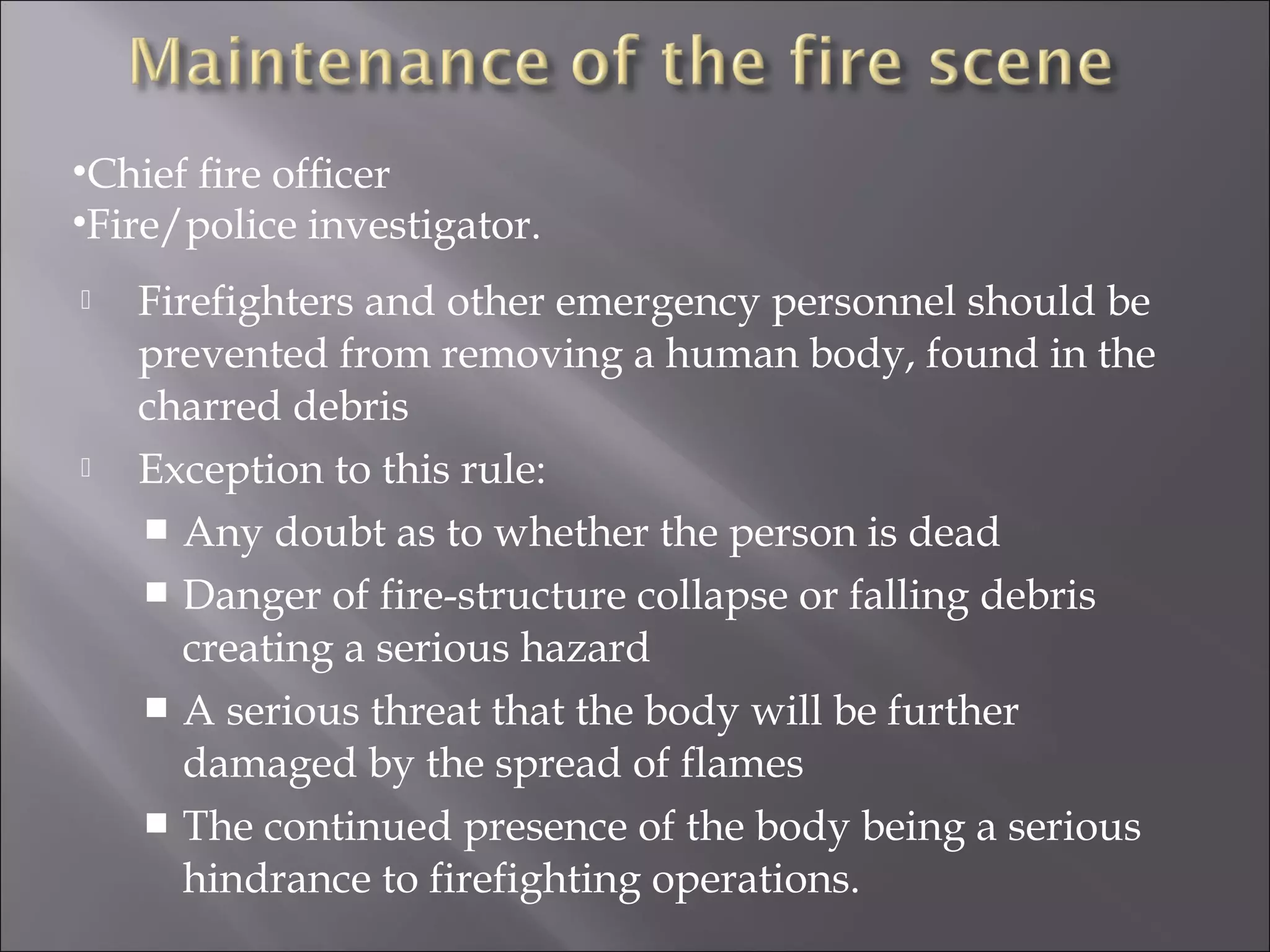
   Maintenance of the fire scene

   Arrival of the investigator

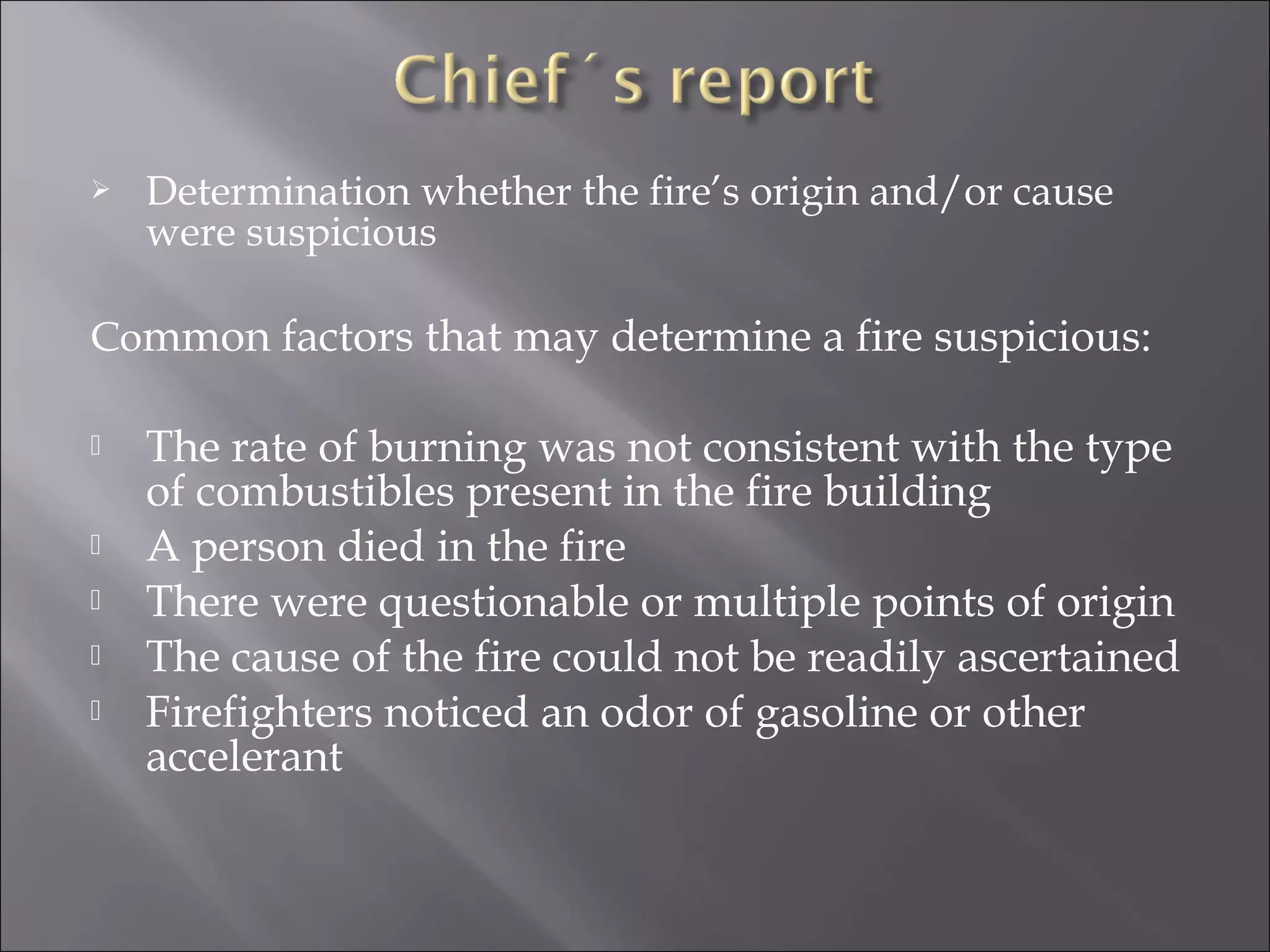
   Chiefs report
•Chief fire officer
•Fire/police investigator.
   Firefighters and other emergency personnel should be
    prevented from removing a human body, found in the
    charred debris
   Exception to this rule:
     Any doubt as to whether the person is dead
     Danger of fire-structure collapse or falling debris
       creating a serious hazard
     A serious threat that the body will be further
       damaged by the spread of flames
     The continued presence of the body being a serious
       hindrance to firefighting operations.
   General observations

   Detailed background

   Identification of himself to
    the chief fire officer
   Determination whether the fire’s origin and/or cause
    were suspicious

Common factors that may determine a fire suspicious:

   The rate of burning was not consistent with the type
    of combustibles present in the fire building
   A person died in the fire
   There were questionable or multiple points of origin
   The cause of the fire could not be readily ascertained
   Firefighters noticed an odor of gasoline or other
    accelerant
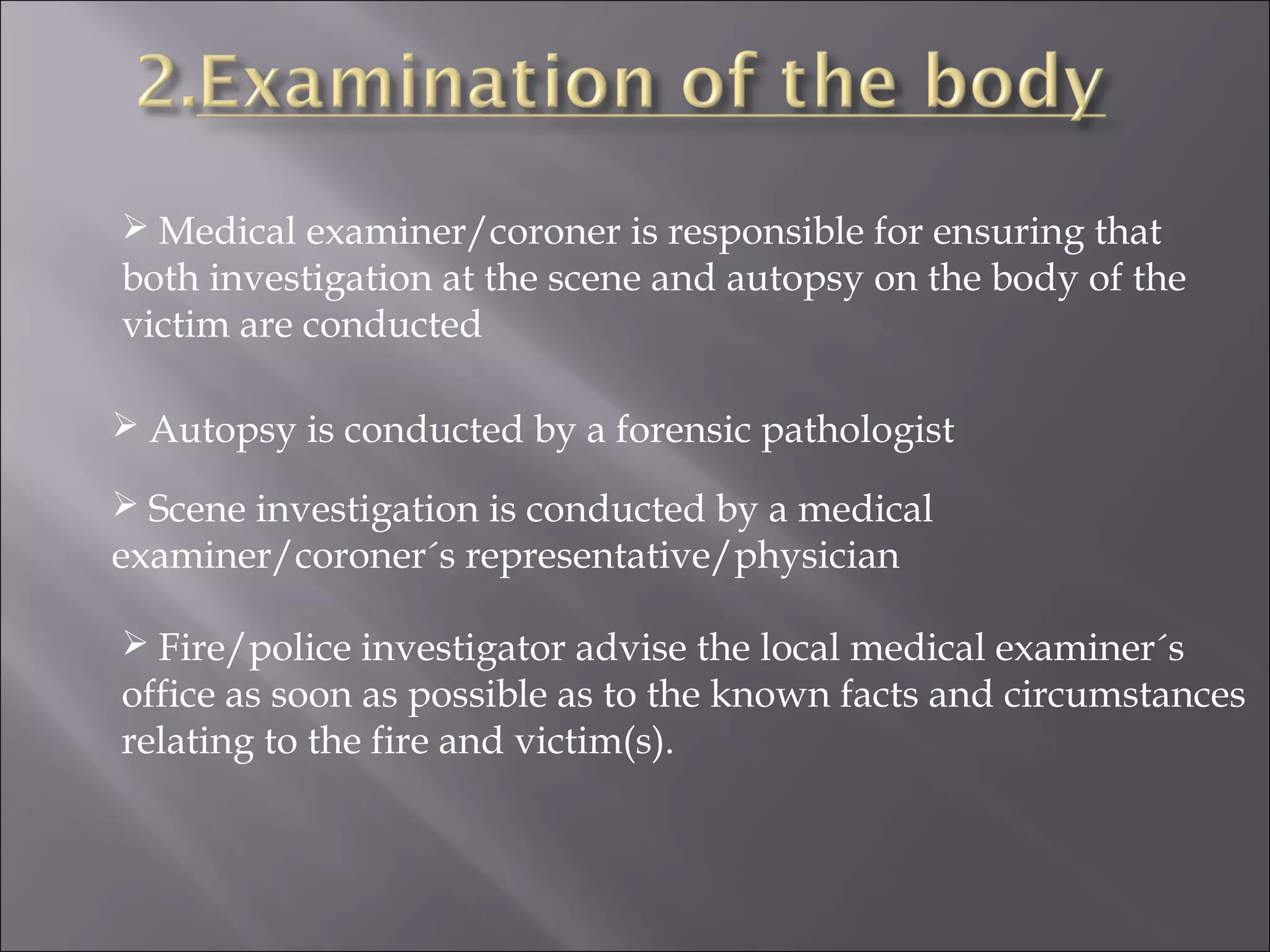
 Medical examiner/coroner is responsible for ensuring that
both investigation at the scene and autopsy on the body of the
victim are conducted

 Autopsy is conducted by a forensic pathologist

 Scene investigation is conducted by a medical
examiner/coroner´s representative/physician

 Fire/police investigator advise the local medical examiner´s
office as soon as possible as to the known facts and circumstances
relating to the fire and victim(s).
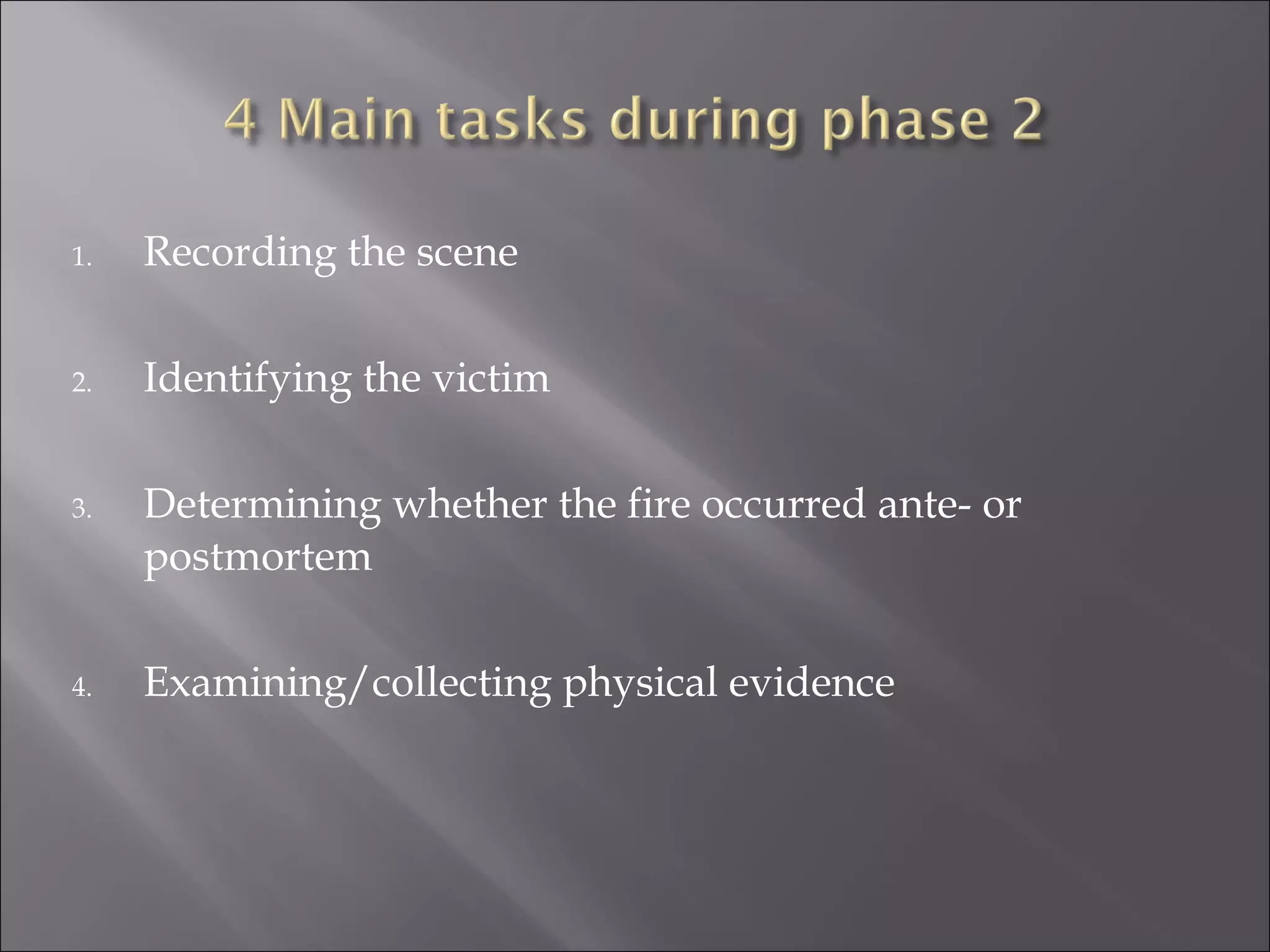
1.   Recording the scene

2.   Identifying the victim

3.   Determining whether the fire occurred ante- or
     postmortem

4.   Examining/collecting physical evidence
   Photographs of the body in situ

   Photographs of the room and area

   Investigative notes

   Rough sketches
   Fire investigator- collect items that can identify the victim

   Forensic odontologist- dental records

   Pathologists- autopsy

   Medical/physical- tattoos, surgical procedures, bones
    fractures, unusual deformations, sex race, build, fractures
    and approximate age, jewelry, clothing etc.

   Gross identification (friends/relatives)

   Forensic scientists - Fingerprints
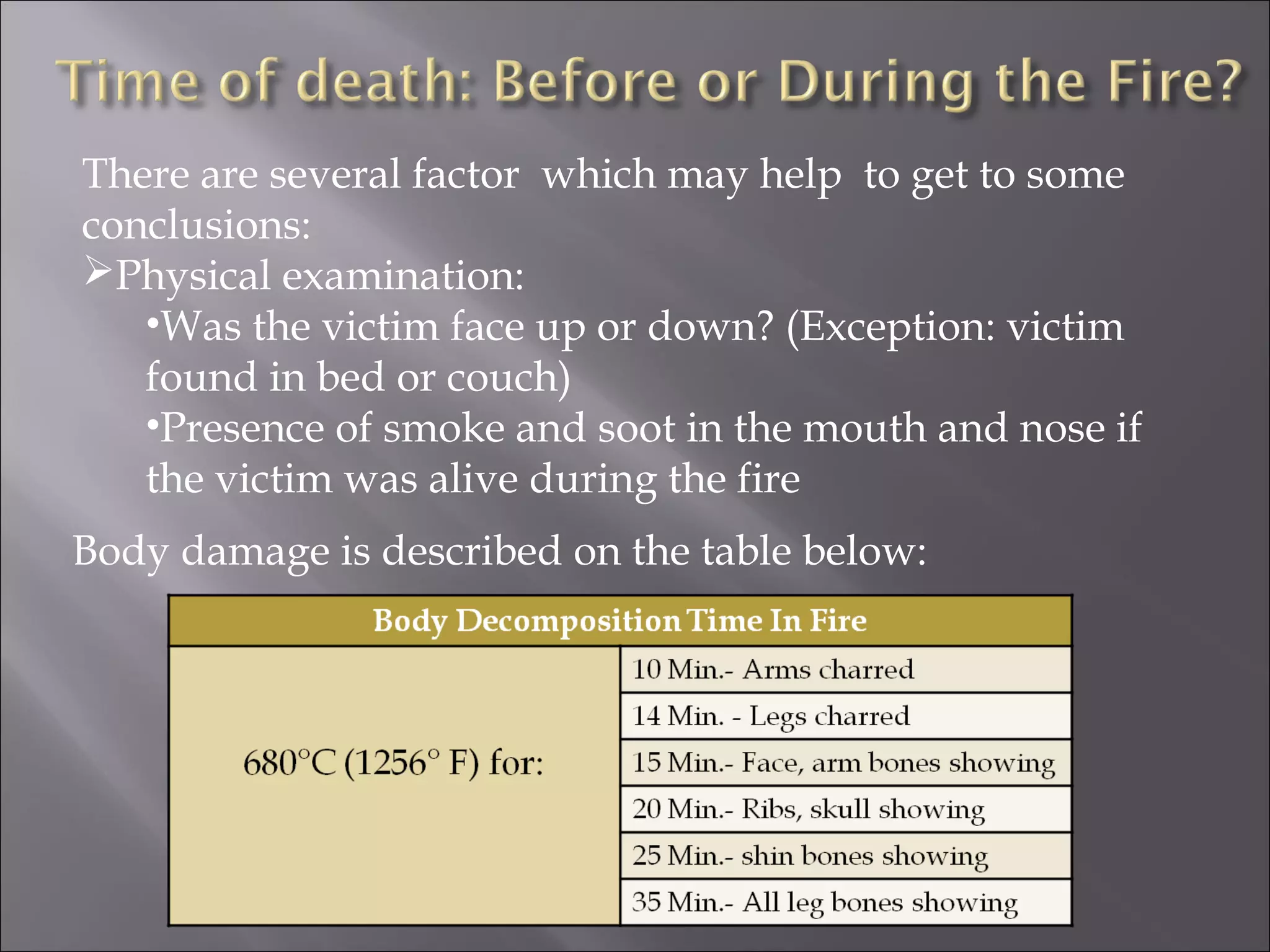
There are several factor which may help to get to some
conclusions:
Physical examination:
   •Was the victim face up or down? (Exception: victim
   found in bed or couch)
   •Presence of smoke and soot in the mouth and nose if
   the victim was alive during the fire
Body damage is described on the table below:
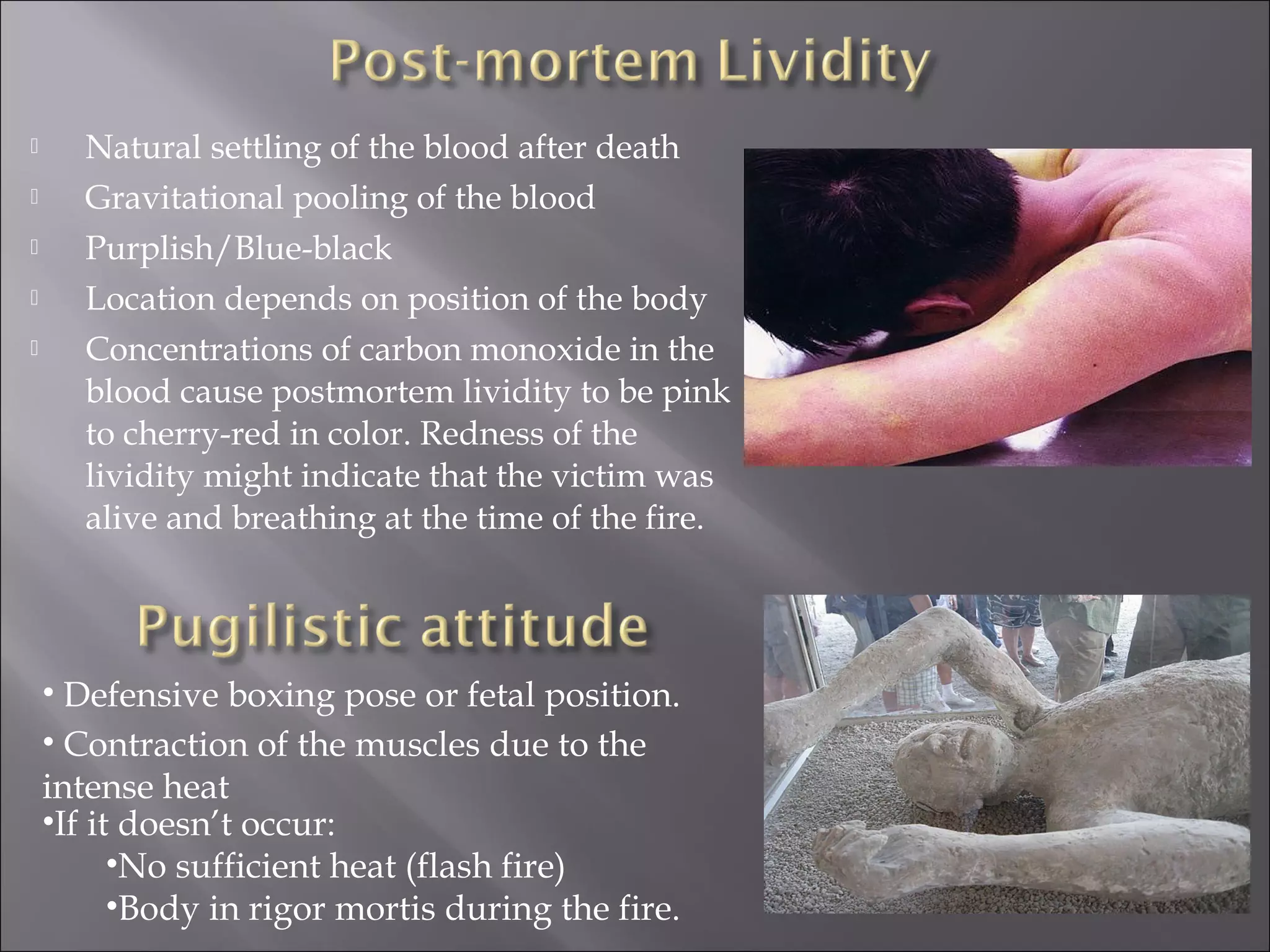
     Natural settling of the blood after death
     Gravitational pooling of the blood
     Purplish/Blue-black
     Location depends on position of the body
     Concentrations of carbon monoxide in the
      blood cause postmortem lividity to be pink
      to cherry-red in color. Redness of the
      lividity might indicate that the victim was
      alive and breathing at the time of the fire.


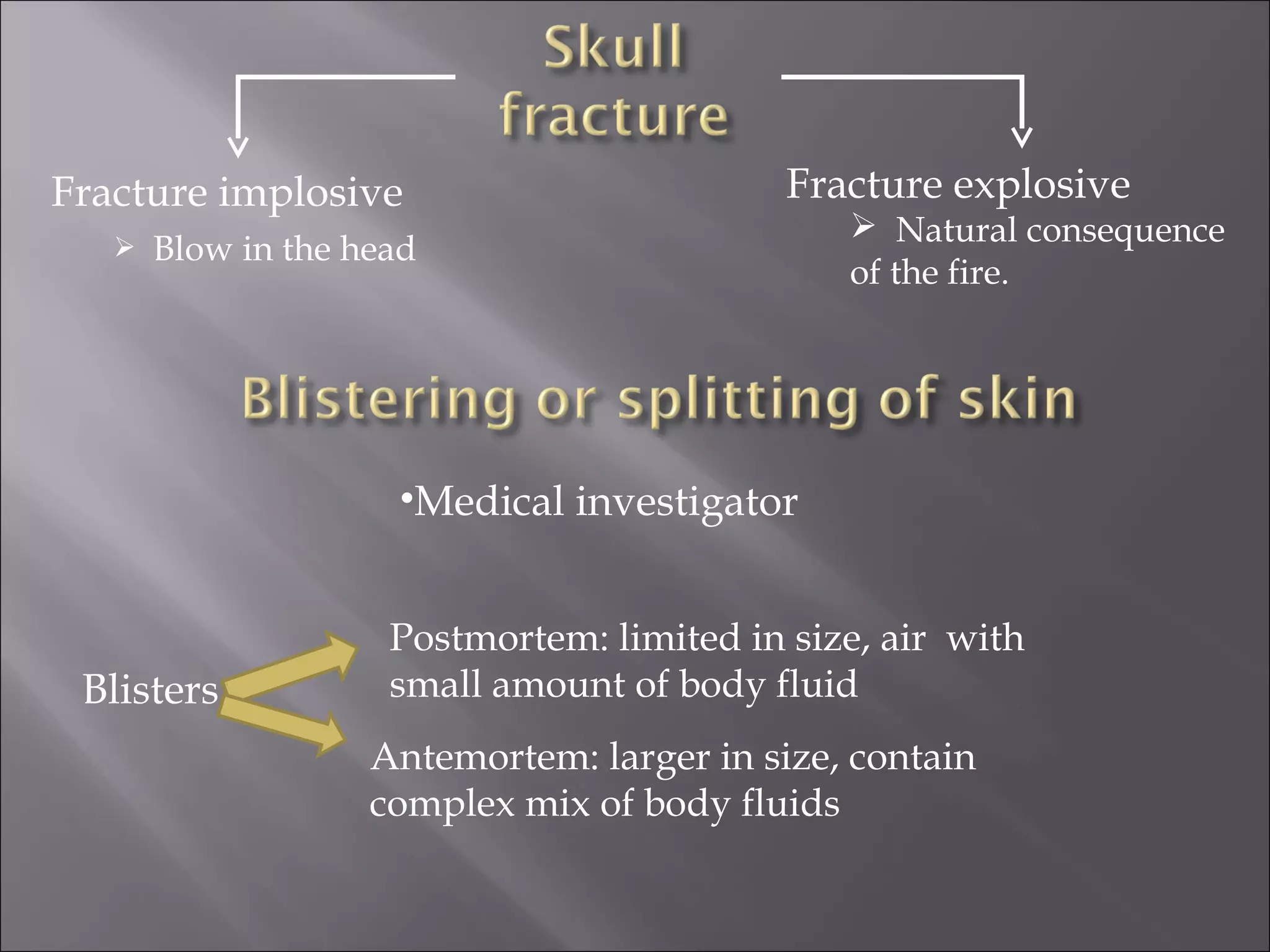
    • Defensive boxing pose or fetal position.
    • Contraction of the muscles due to the
    intense heat
    •If it doesn’t occur:
          •No sufficient heat (flash fire)
          •Body in rigor mortis during the fire.
Fracture implosive                          Fracture explosive
                                                Natural consequence
      Blow in the head
                                               of the fire.


                     •Medical investigator


                     Postmortem: limited in size, air with
 Blisters            small amount of body fluid
                    Antemortem: larger in size, contain
                    complex mix of body fluids
   Fire investigator: responsible for determining
    the fire´s origin and cause (physical
    examination)

   Police: responsible for the death investigations

   Medical investigator: authorizes and
    supervises the removal of the body.
The result of the physical examinations carried out by the
medical examiner will depend on several narrowly
circumscribed factors:
    • Cause of the fire (accidental or incendiary).
    • The possible use of an accelerant
    (gasoline/kerosene,etc)
    • Survivability: why the victim failed to escape
    safely?!


 •Interview friends and/or relatives that have just escaped from
 the fire

 •The investigator uses the tension and stress manifested by the
 fire survivors as a motivating factor to elicit information.
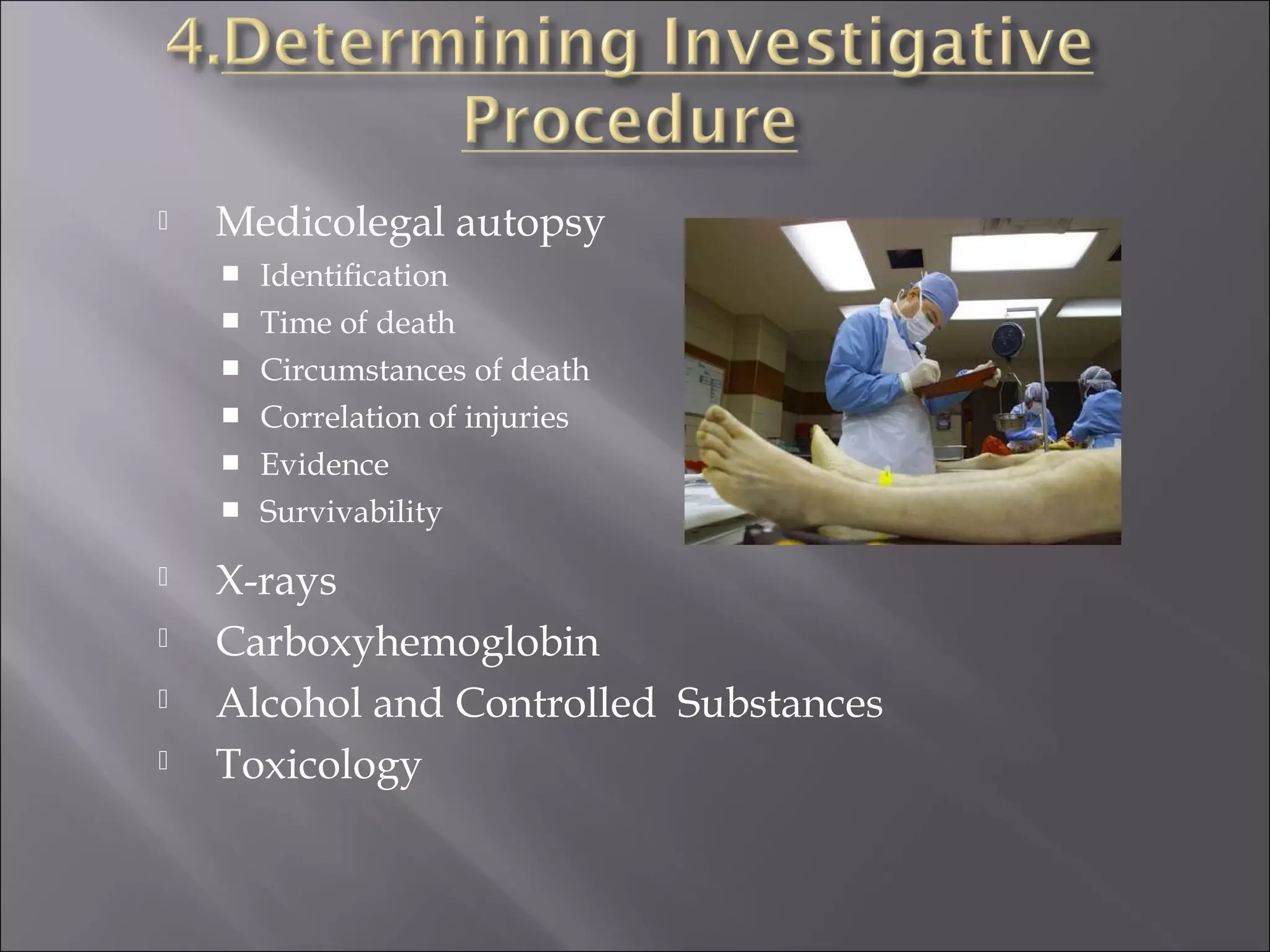
   Medicolegal autopsy
       Identification
       Time of death
       Circumstances of death
       Correlation of injuries
       Evidence
       Survivability

   X-rays
   Carboxyhemoglobin
   Alcohol and Controlled Substances
   Toxicology
Causes are determined by the pathologist:
    Burns
    Burns plus CO asphyxiation
    Spasm of the epiglottis
    Acute alcoholism plus CO asphyxiation
    Edema
    Shock
    Gunshot wound or stabbing
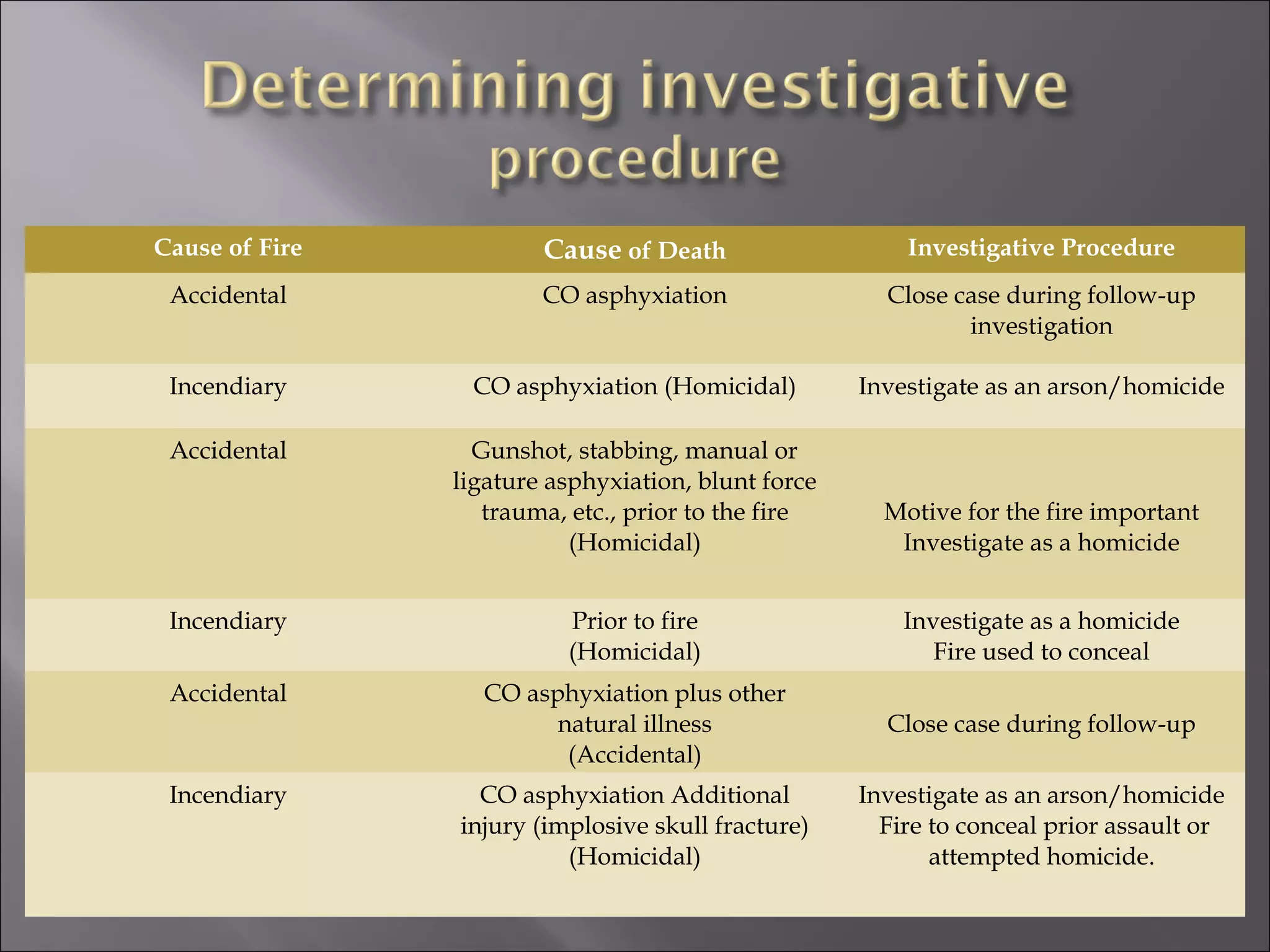
Cause of Fire           Cause of Death                   Investigative Procedure
 Accidental             CO asphyxiation                Close case during follow-up
                                                              investigation

 Incendiary      CO asphyxiation (Homicidal)         Investigate as an arson/homicide

 Accidental       Gunshot, stabbing, manual or
                ligature asphyxiation, blunt force
                   trauma, etc., prior to the fire     Motive for the fire important
                           (Homicidal)                  Investigate as a homicide


 Incendiary               Prior to fire                  Investigate as a homicide
                          (Homicidal)                       Fire used to conceal
 Accidental       CO asphyxiation plus other
                        natural illness                Close case during follow-up
                         (Accidental)
 Incendiary       CO asphyxiation Additional         Investigate as an arson/homicide
                injury (implosive skull fracture)      Fire to conceal prior assault or
                          (Homicidal)                       attempted homicide.
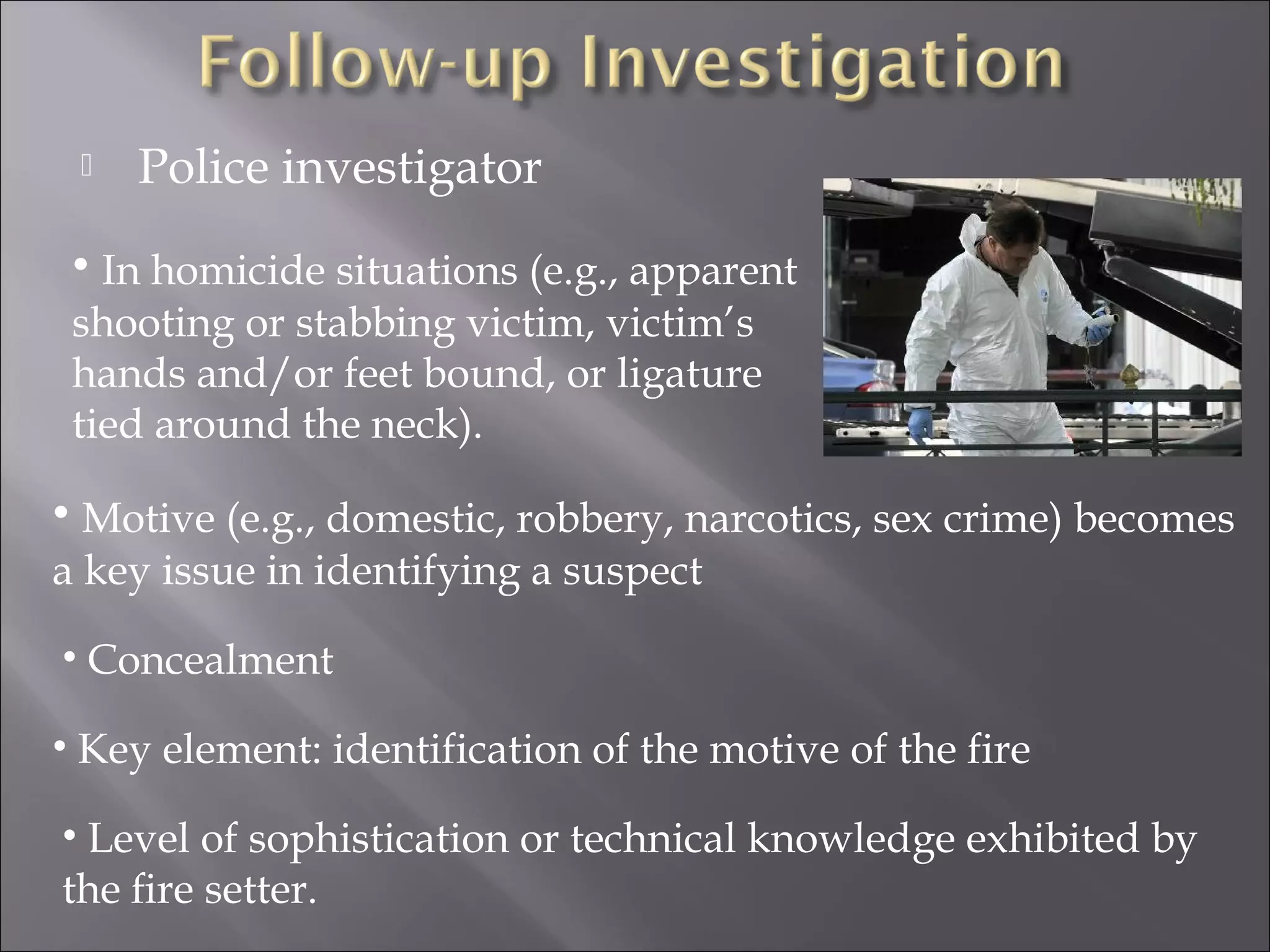
   Police investigator
 • In homicide situations (e.g., apparent
 shooting or stabbing victim, victim’s
 hands and/or feet bound, or ligature
 tied around the neck).

• Motive (e.g., domestic, robbery, narcotics, sex crime) becomes
a key issue in identifying a suspect

• Concealment

• Key element: identification of the motive of the fire

• Level of sophistication or technical knowledge exhibited by
the fire setter.
   Arrest Based on Probable Cause
           minimum level of proof necessary to justify an
            arrest
           must prove every element of the crime beyond a
            reasonable doubt in order to secure a conviction
   Arrest with a warrant
   Trial
      What to be proved:
    1. That crime (arson) was committed
    2. That the defendant committed the crime
    There is an additional burden of proving:
    3. That the actions of the defendant led to the death of the
       victim
       All witnesses are called to testify
   Internal Bloodstains
     Livor mortis
     postmortem epidural hematoma (brown/honeycomb
      structure)
   Internal Changes
       Hemolysis
   External bloodstains
       May fuel the fire
   Wet vs. Dry Bloodstains
       Dried bloodstains keep the original shape and better
        configuration with the action of the heat.
   The Human body
       Burns
         First degree (superficial): red skin, warm to touch
         Second degree (partial thickness): red skin, blisters
         Third degree (full thickness): burns appear dry and light
          colored and blisters are not normally seen.
         Fourth degree: burns involve long exposure to a heat source
          which results in the partial cremation of the exposed portion of
          the body and extends into layers below the skin
   Smoke and Sludge
       May cover bloodstain evidence on walls and ceilings.
   Target Surfaces
       Some surfaces may preserve bloodstains.
   A Fatal fire occurred
   Body found on the floor of the bedroom and it was removed
    by Firefighters
   Investigators found that it was used accelerant on the
    mattress
   Pathologist found multiple stabbing wounds
   Projected bloodstains were “faded” and lighter in
    appearance than the adjacent soot-covered surfaces.
   Swabs were obtained from the altered blood
   “Wet vs dry effect experiment”
   Main objective: identify any physiological differences
    between the wet and dry stains, when they were subjected
    to fire
   Results

       The closer the blood stain to the fire, the more physiological
        changes. The further away the stain, the less prevalent the
        changes, but these characteristics were still present.
       Stains on painted surfaces were most affected by the fading
        phenomenon
       Swiping marks situated further than 50 cm from the fire
        darkened in color
       All projected stains near to and at a distance from the fire were
        subjected to a darkening effect
       No fading in projected stains
       The effects of water provided physiological changes
       The stains are recognizable as being altered bloodstains and
        should be used as part of the bloodstain pattern analysis.
       The “wet vs. dry” experiment may be a valuable piece of
        information.
Questions?
   Barracato, J.S.
Fire … Is it Arson? The Aetna Casualty and Surety Co., Hartford, CT.
    1979
   Brannigan, F.L., R.G. Bright, and N.H. Jason
1978 Fire Investigation Handbook. National Bureau of Standards
    Handbook No. 134, U.S.
Department of Commerce, Washington, D.C.
   DeHaan, J., Kirks Fire Investigation, 2nd ed., John Wiley & Sons, New
    York, 1983.
   DiMaio, D. J. and Vincent, J. M., Forensic Pathology, CRC Press, Boca
    Raton, FL.,1993.
   Furton, Kenneth & Almirall, Jose
  Analysis and Interpretation of Fire Scene Evidence
2004
   Geberth, V. J., Practical Homicide Investigation, 2nd ed., CRC Press,
    Boca Raton,Florida, 1996.
   Gross, E. M., The role of the medical examiner in homicide
    investigation, course material, Homicide Investigation Course,
    New York City Police Dept., undated.
   Harris, R. I., Outline of Death Investigation, Charles C Thomas,
    Springfield, IL, 1962.
   Hughes, D. J., Homicide Investigative Techniques, Charles C Thomas,
    Springfield, IL,1974.
   Kennedy, J., Fire and Arson Investigation, Investigations Institute,
    Chicago, 1962 (rev.1977).
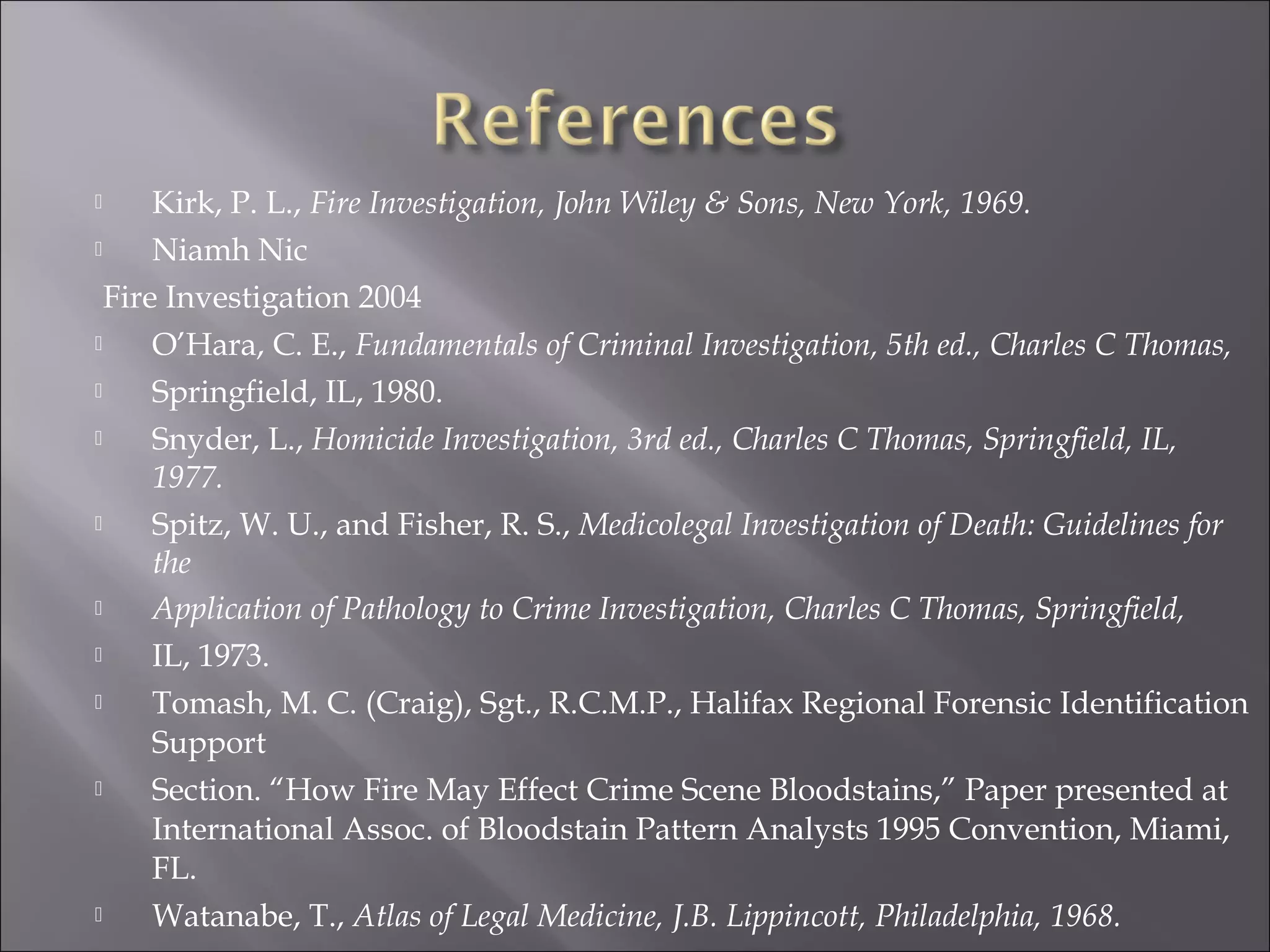
     Kirk, P. L., Fire Investigation, John Wiley & Sons, New York, 1969.
     Niamh Nic
  Fire Investigation 2004
     O’Hara, C. E., Fundamentals of Criminal Investigation, 5th ed., Charles C Thomas,
     Springfield, IL, 1980.
     Snyder, L., Homicide Investigation, 3rd ed., Charles C Thomas, Springfield, IL,
      1977.
     Spitz, W. U., and Fisher, R. S., Medicolegal Investigation of Death: Guidelines for
      the
     Application of Pathology to Crime Investigation, Charles C Thomas, Springfield,
     IL, 1973.
     Tomash, M. C. (Craig), Sgt., R.C.M.P., Halifax Regional Forensic Identification
      Support
     Section. “How Fire May Effect Crime Scene Bloodstains,” Paper presented at
      International Assoc. of Bloodstain Pattern Analysts 1995 Convention, Miami,
      FL.
     Watanabe, T., Atlas of Legal Medicine, J.B. Lippincott, Philadelphia, 1968.

Fatal Fire Investigation (Forensic Science)

  • 1.
    Jorge Nuno PintoDe Melo 07037694 Forensic Literature Project PH3H05 2010/2011
  • 2.
    Nature of FatalFires:  Accidental  Homicidal  Suicidal  Homicide Concealment The fatal fire must be viewed as an investigation for the criminal acts of arson and homicide.
  • 3.
    Fire Fire Examination Examination Incident Incident of the body of the body Cause and Origin/Investigative Cause and Origin/Investigative Canvass Canvass Investigativ Investigativ ee Procedure Procedure Follow-up Follow-up Arrest and Investigatio Investigatio Arrest and n Trial Trial n
  • 4.
    Maintenance of the fire scene  Arrival of the investigator  Chiefs report
  • 5.
    •Chief fire officer •Fire/policeinvestigator.  Firefighters and other emergency personnel should be prevented from removing a human body, found in the charred debris  Exception to this rule:  Any doubt as to whether the person is dead  Danger of fire-structure collapse or falling debris creating a serious hazard  A serious threat that the body will be further damaged by the spread of flames  The continued presence of the body being a serious hindrance to firefighting operations.
  • 6.
    General observations  Detailed background  Identification of himself to the chief fire officer
  • 7.
    Determination whether the fire’s origin and/or cause were suspicious Common factors that may determine a fire suspicious:  The rate of burning was not consistent with the type of combustibles present in the fire building  A person died in the fire  There were questionable or multiple points of origin  The cause of the fire could not be readily ascertained  Firefighters noticed an odor of gasoline or other accelerant
  • 8.
     Medical examiner/coroneris responsible for ensuring that both investigation at the scene and autopsy on the body of the victim are conducted  Autopsy is conducted by a forensic pathologist  Scene investigation is conducted by a medical examiner/coroner´s representative/physician  Fire/police investigator advise the local medical examiner´s office as soon as possible as to the known facts and circumstances relating to the fire and victim(s).
  • 9.
    1. Recording the scene 2. Identifying the victim 3. Determining whether the fire occurred ante- or postmortem 4. Examining/collecting physical evidence
  • 10.
    Photographs of the body in situ  Photographs of the room and area  Investigative notes  Rough sketches
  • 11.
    Fire investigator- collect items that can identify the victim  Forensic odontologist- dental records  Pathologists- autopsy  Medical/physical- tattoos, surgical procedures, bones fractures, unusual deformations, sex race, build, fractures and approximate age, jewelry, clothing etc.  Gross identification (friends/relatives)  Forensic scientists - Fingerprints
  • 12.
    There are severalfactor which may help to get to some conclusions: Physical examination: •Was the victim face up or down? (Exception: victim found in bed or couch) •Presence of smoke and soot in the mouth and nose if the victim was alive during the fire Body damage is described on the table below:
  • 13.
    Natural settling of the blood after death  Gravitational pooling of the blood  Purplish/Blue-black  Location depends on position of the body  Concentrations of carbon monoxide in the blood cause postmortem lividity to be pink to cherry-red in color. Redness of the lividity might indicate that the victim was alive and breathing at the time of the fire. • Defensive boxing pose or fetal position. • Contraction of the muscles due to the intense heat •If it doesn’t occur: •No sufficient heat (flash fire) •Body in rigor mortis during the fire.
  • 14.
    Fracture implosive Fracture explosive  Natural consequence  Blow in the head of the fire. •Medical investigator Postmortem: limited in size, air with Blisters small amount of body fluid Antemortem: larger in size, contain complex mix of body fluids
  • 15.
    Fire investigator: responsible for determining the fire´s origin and cause (physical examination)  Police: responsible for the death investigations  Medical investigator: authorizes and supervises the removal of the body.
  • 16.
    The result ofthe physical examinations carried out by the medical examiner will depend on several narrowly circumscribed factors: • Cause of the fire (accidental or incendiary). • The possible use of an accelerant (gasoline/kerosene,etc) • Survivability: why the victim failed to escape safely?! •Interview friends and/or relatives that have just escaped from the fire •The investigator uses the tension and stress manifested by the fire survivors as a motivating factor to elicit information.
  • 17.
    Medicolegal autopsy  Identification  Time of death  Circumstances of death  Correlation of injuries  Evidence  Survivability  X-rays  Carboxyhemoglobin  Alcohol and Controlled Substances  Toxicology
  • 18.
    Causes are determinedby the pathologist:  Burns  Burns plus CO asphyxiation  Spasm of the epiglottis  Acute alcoholism plus CO asphyxiation  Edema  Shock  Gunshot wound or stabbing
  • 19.
    Cause of Fire Cause of Death Investigative Procedure Accidental CO asphyxiation Close case during follow-up investigation Incendiary CO asphyxiation (Homicidal) Investigate as an arson/homicide Accidental Gunshot, stabbing, manual or ligature asphyxiation, blunt force trauma, etc., prior to the fire Motive for the fire important (Homicidal) Investigate as a homicide Incendiary Prior to fire Investigate as a homicide (Homicidal) Fire used to conceal Accidental CO asphyxiation plus other natural illness Close case during follow-up (Accidental) Incendiary CO asphyxiation Additional Investigate as an arson/homicide injury (implosive skull fracture) Fire to conceal prior assault or (Homicidal) attempted homicide.
  • 20.
    Police investigator • In homicide situations (e.g., apparent shooting or stabbing victim, victim’s hands and/or feet bound, or ligature tied around the neck). • Motive (e.g., domestic, robbery, narcotics, sex crime) becomes a key issue in identifying a suspect • Concealment • Key element: identification of the motive of the fire • Level of sophistication or technical knowledge exhibited by the fire setter.
  • 21.
    Arrest Based on Probable Cause  minimum level of proof necessary to justify an arrest  must prove every element of the crime beyond a reasonable doubt in order to secure a conviction  Arrest with a warrant  Trial  What to be proved: 1. That crime (arson) was committed 2. That the defendant committed the crime There is an additional burden of proving: 3. That the actions of the defendant led to the death of the victim  All witnesses are called to testify
  • 22.
    Internal Bloodstains  Livor mortis  postmortem epidural hematoma (brown/honeycomb structure)  Internal Changes  Hemolysis  External bloodstains  May fuel the fire  Wet vs. Dry Bloodstains  Dried bloodstains keep the original shape and better configuration with the action of the heat.
  • 23.
    The Human body  Burns  First degree (superficial): red skin, warm to touch  Second degree (partial thickness): red skin, blisters  Third degree (full thickness): burns appear dry and light colored and blisters are not normally seen.  Fourth degree: burns involve long exposure to a heat source which results in the partial cremation of the exposed portion of the body and extends into layers below the skin  Smoke and Sludge  May cover bloodstain evidence on walls and ceilings.  Target Surfaces  Some surfaces may preserve bloodstains.
  • 24.
    A Fatal fire occurred  Body found on the floor of the bedroom and it was removed by Firefighters  Investigators found that it was used accelerant on the mattress  Pathologist found multiple stabbing wounds  Projected bloodstains were “faded” and lighter in appearance than the adjacent soot-covered surfaces.  Swabs were obtained from the altered blood  “Wet vs dry effect experiment”  Main objective: identify any physiological differences between the wet and dry stains, when they were subjected to fire
  • 25.
    Results  The closer the blood stain to the fire, the more physiological changes. The further away the stain, the less prevalent the changes, but these characteristics were still present.  Stains on painted surfaces were most affected by the fading phenomenon  Swiping marks situated further than 50 cm from the fire darkened in color  All projected stains near to and at a distance from the fire were subjected to a darkening effect  No fading in projected stains  The effects of water provided physiological changes  The stains are recognizable as being altered bloodstains and should be used as part of the bloodstain pattern analysis.  The “wet vs. dry” experiment may be a valuable piece of information.
  • 26.
  • 27.
    Barracato, J.S. Fire … Is it Arson? The Aetna Casualty and Surety Co., Hartford, CT. 1979  Brannigan, F.L., R.G. Bright, and N.H. Jason 1978 Fire Investigation Handbook. National Bureau of Standards Handbook No. 134, U.S. Department of Commerce, Washington, D.C.  DeHaan, J., Kirks Fire Investigation, 2nd ed., John Wiley & Sons, New York, 1983.  DiMaio, D. J. and Vincent, J. M., Forensic Pathology, CRC Press, Boca Raton, FL.,1993.  Furton, Kenneth & Almirall, Jose Analysis and Interpretation of Fire Scene Evidence 2004
  • 28.
    Geberth, V. J., Practical Homicide Investigation, 2nd ed., CRC Press, Boca Raton,Florida, 1996.  Gross, E. M., The role of the medical examiner in homicide investigation, course material, Homicide Investigation Course, New York City Police Dept., undated.  Harris, R. I., Outline of Death Investigation, Charles C Thomas, Springfield, IL, 1962.  Hughes, D. J., Homicide Investigative Techniques, Charles C Thomas, Springfield, IL,1974.  Kennedy, J., Fire and Arson Investigation, Investigations Institute, Chicago, 1962 (rev.1977).
  • 29.
    Kirk, P. L., Fire Investigation, John Wiley & Sons, New York, 1969.  Niamh Nic Fire Investigation 2004  O’Hara, C. E., Fundamentals of Criminal Investigation, 5th ed., Charles C Thomas,  Springfield, IL, 1980.  Snyder, L., Homicide Investigation, 3rd ed., Charles C Thomas, Springfield, IL, 1977.  Spitz, W. U., and Fisher, R. S., Medicolegal Investigation of Death: Guidelines for the  Application of Pathology to Crime Investigation, Charles C Thomas, Springfield,  IL, 1973.  Tomash, M. C. (Craig), Sgt., R.C.M.P., Halifax Regional Forensic Identification Support  Section. “How Fire May Effect Crime Scene Bloodstains,” Paper presented at International Assoc. of Bloodstain Pattern Analysts 1995 Convention, Miami, FL.  Watanabe, T., Atlas of Legal Medicine, J.B. Lippincott, Philadelphia, 1968.

Editor's Notes

  • #14 http://www.google.com/imgres?imgurl=http://images.travelpod.com/users/hiwhthi/5.1256528340.6_pompeii.jpg&imgrefurl=http://www.forensicmed.co.uk/pathology/fire-deaths/was-deceased-alive-or-dead-at-the-time-of-the-fire-/&usg=__lXYq5MlnWAP3XttnpFIs9WV0bFo=&h=413&w=550&sz=102&hl=pt-pt&start=0&sig2=RMbbLttqhTIsu7M4n0ji3g&zoom=1&tbnid=1OiEvRntXUAV-M:&tbnh=129&tbnw=172&ei=xDgyTZPtM8qYhQfUoeSdCw&prev=/images%3Fq%3DPugilistic%2Battitude%26um%3D1%26hl%3Dpt-pt%26client%3Dfirefox-a%26sa%3DN%26rls%3Dorg.mozilla:pt-PT:official%26biw%3D1280%26bih%3D552%26tbs%3Disch:1&um=1&itbs=1&iact=hc&vpx=227&vpy=259&dur=451&hovh=136&hovw=182&tx=137&ty=173&oei=xDgyTZPtM8qYhQfUoeSdCw&esq=1&page=1&ndsp=21&ved=1t:429,r:15,s:0 http://www.codoh.com/newrevoices/nrtkco.html
  • #18 http://www.google.com/imgres?imgurl=http://evidenceblog.iape.org/wp-content/uploads/2010/11/2010-11-24_INT_Former-medical-examiner-Bruce-Levy-BruceLevyTTY11.jpg&imgrefurl=http://evidenceblog.iape.org/2010/11/former-medical-examiner-bruce-levy-pleads-guilty-to-official-misconduct/&usg=___6fepbhpN1pPxC40xFqtII7Jbdk=&h=352&w=510&sz=17&hl=pt-pt&start=0&sig2=qnkQW4i3E-GbT0bfOeavXg&zoom=1&tbnid=GuvlTfasMII4iM:&tbnh=119&tbnw=156&ei=yQUzTYPxBsa2hAep0KSXCw&prev=/images%3Fq%3Dbody%2Bexaminator%26um%3D1%26hl%3Dpt-pt%26client%3Dfirefox-a%26rls%3Dorg.mozilla:pt-PT:official%26biw%3D1280%26bih%3D552%26tbs%3Disch:1&um=1&itbs=1&iact=hc&vpx=969&vpy=275&dur=3581&hovh=186&hovw=270&tx=134&ty=104&oei=yQUzTYPxBsa2hAep0KSXCw&esq=1&page=1&ndsp=21&ved=1t:429,r:20,s:0
  • #21 http://www.google.com/imgres?imgurl=http://www.hurriyetdailynews.com/images/2010_11_04/after-greek-bombs-calls-for-tougher-eu-screening-2010-11-04_l.jpg&imgrefurl=http://www.hurriyetdailynews.com/n.php%3Fn%3Dafter-greek-bombs-calls-for-tougher-eu-screening-2010-11-04&usg=__evcLB2s32GDXGYjdTtDM3ApFMd4=&h=275&w=414&sz=23&hl=pt-pt&start=124&sig2=P7Mvh0xc7Wkkj9T84_kyFw&zoom=1&tbnid=D-CgBIE7ynnlpM:&tbnh=119&tbnw=159&ei=PTwzTe6FGcWH5AbHvLDqCg&prev=/images%3Fq%3Dpolice%2Binvestigator%26um%3D1%26hl%3Dpt-pt%26client%3Dfirefox-a%26rls%3Dorg.mozilla:pt-PT:official%26biw%3D1280%26bih%3D552%26tbs%3Disch:10%2C2586&um=1&itbs=1&iact=hc&vpx=111&vpy=276&dur=3508&hovh=183&hovw=276&tx=219&ty=72&oei=DDwzTbzHIZOKhQffnb2iCw&esq=7&page=7&ndsp=21&ved=1t:429,r:7,s:124&biw=1280&bih=552