Using a Faceted Classification Scheme to Predict the Future of Virtual Worlds Sarah “Intellagirl” Robbins-Bell Relive 2008
What is a virtual world?
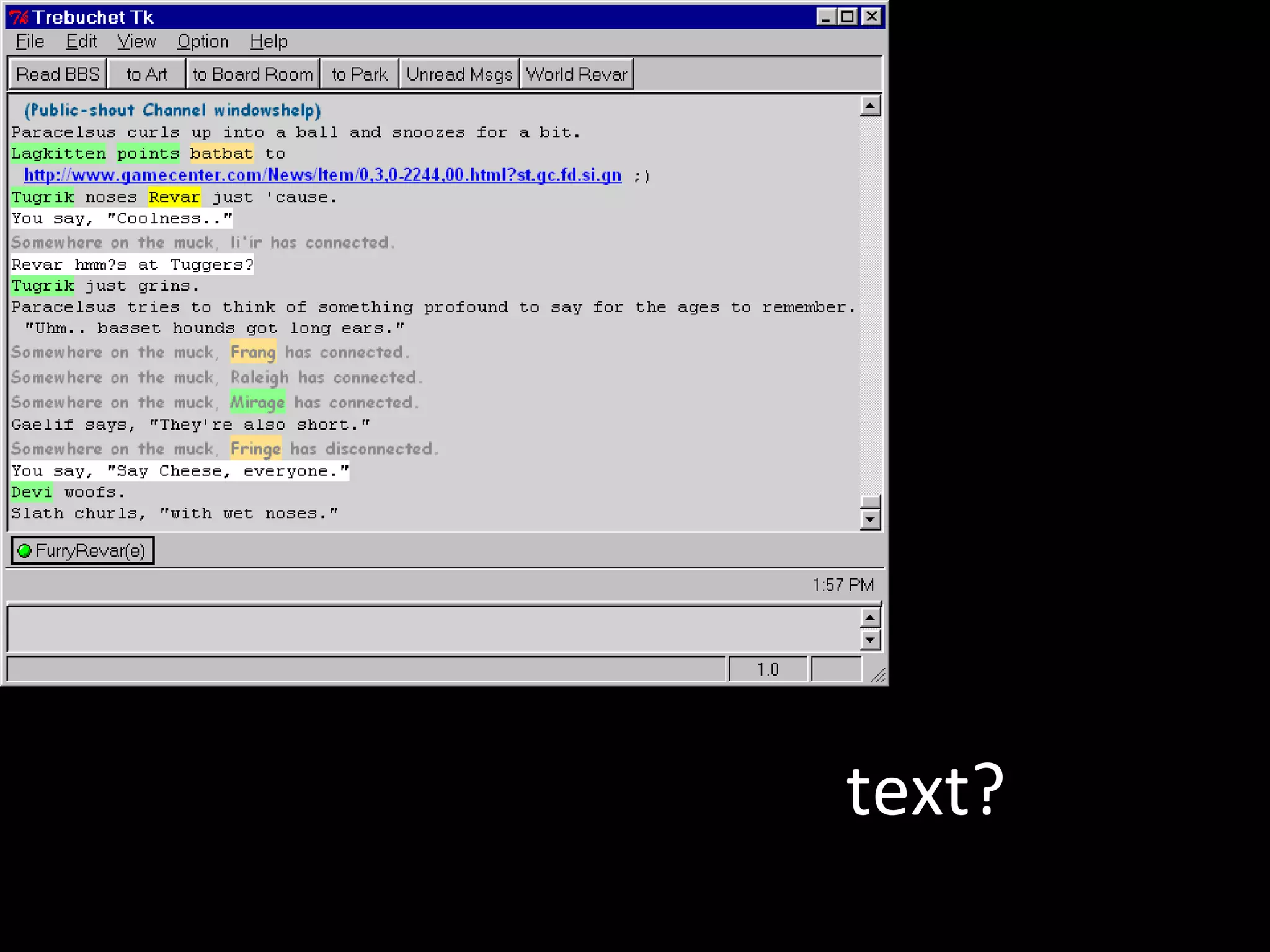
text?
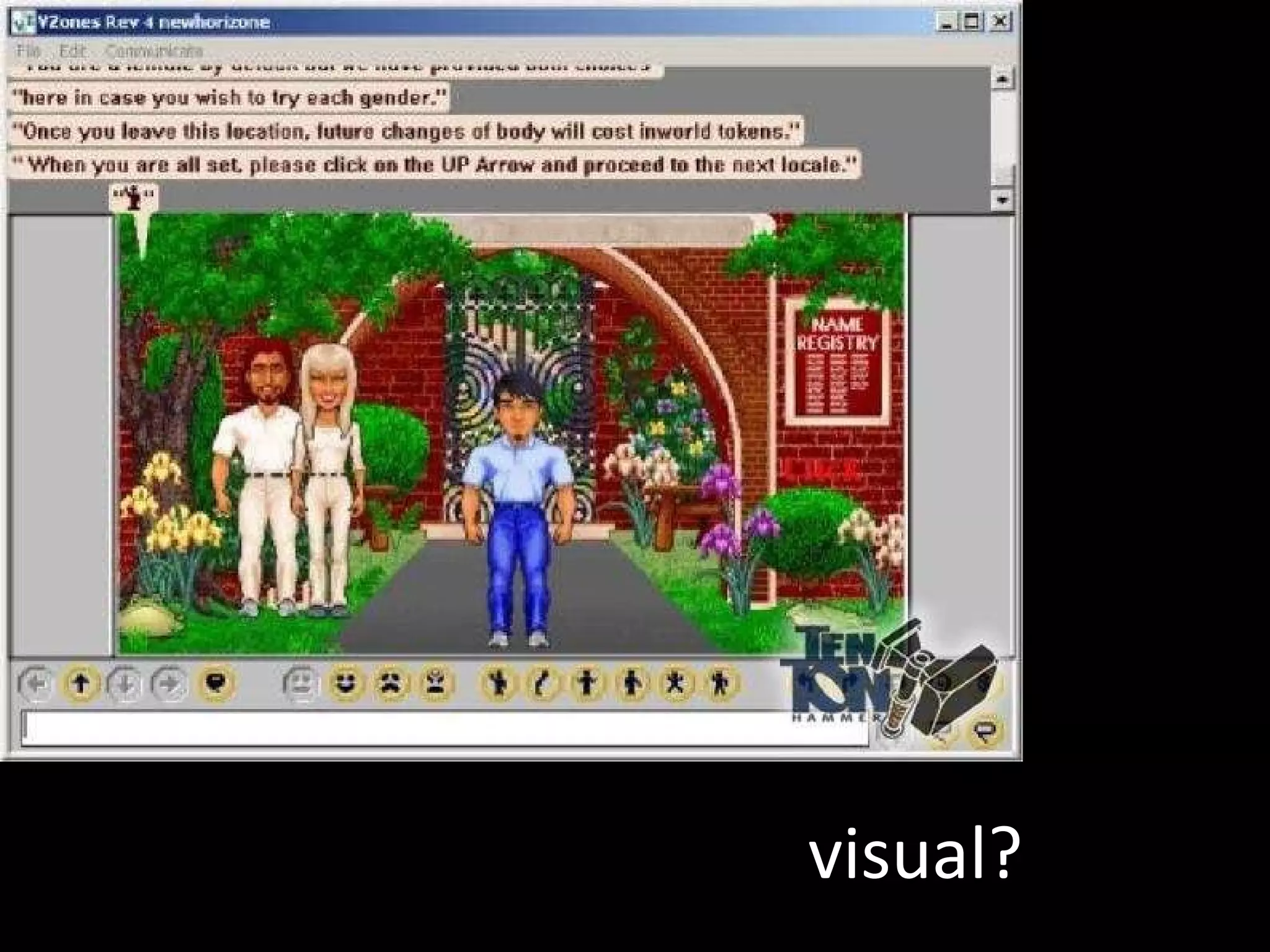
visual?
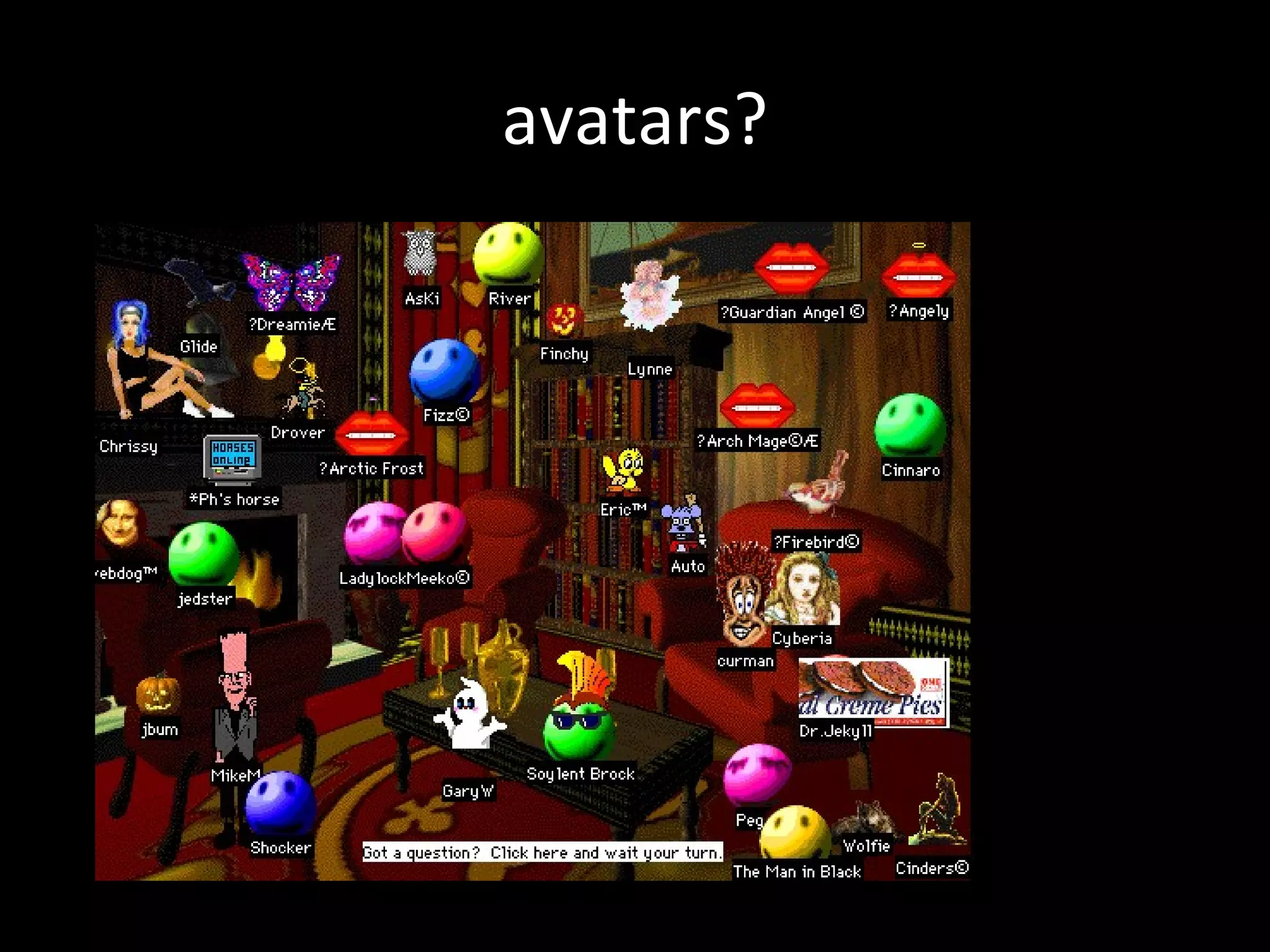
avatars?
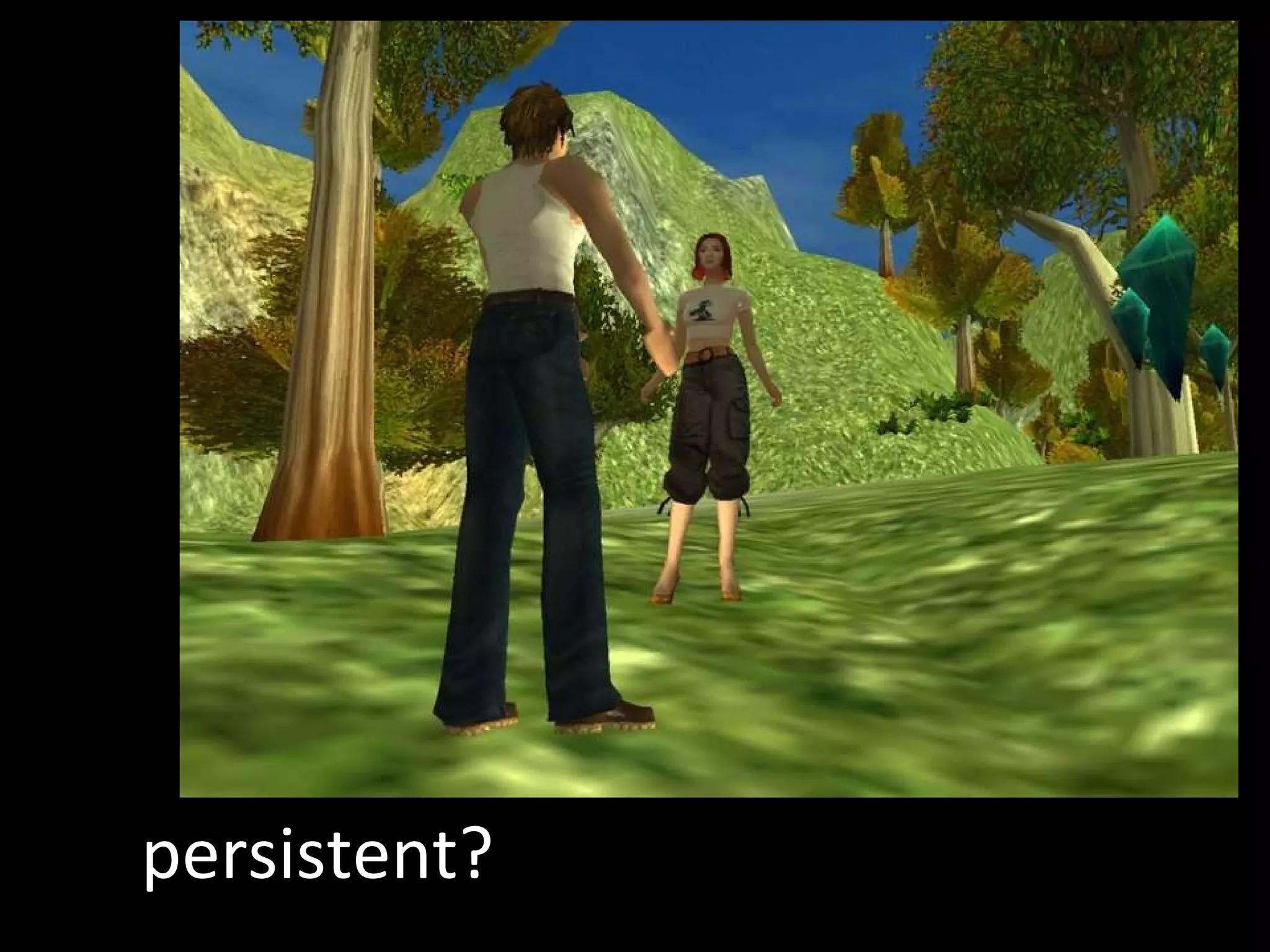
persistent?
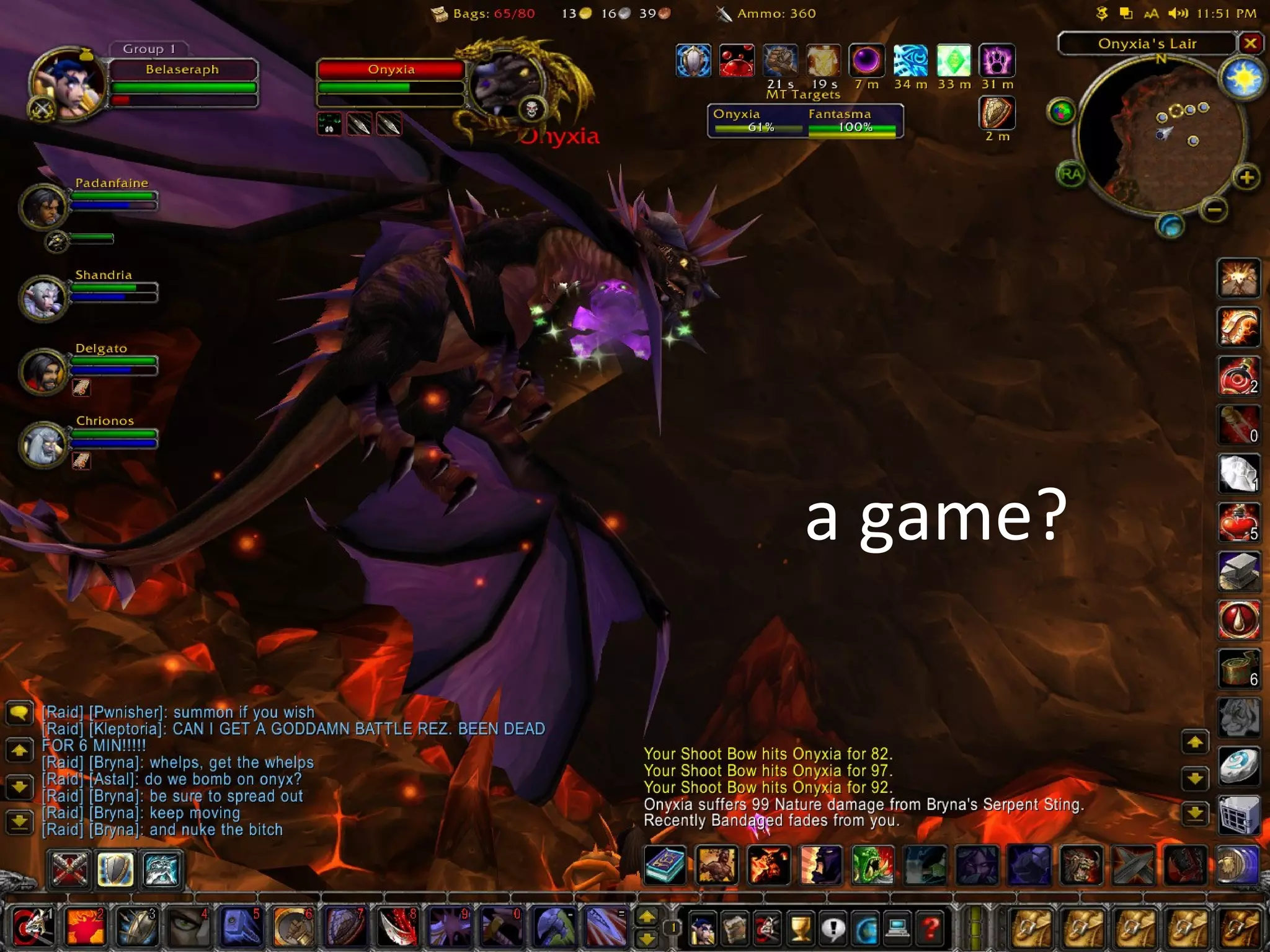
a game?
my definition
Persistence:  A virtual world can’t be paused; it exists whether or not a user is logged in.
2. Multiuser:  A virtual world must be populated or at least have the potential for population.
3. Avatars:  Rather than offering an icon to represent a user, a virtual world allows a user to create an agent that takes action, an  avatar.  This representation of the user can perform actions that the user requests, such as fighting, expressing emotion, or simply moving through a space.
4. Wide Area Network:  A virtual world is facilitated via a wide area network rather than a local one. Freed from the limited access of a locally hosted space, virtual worlds have the potential to be global and large.
VWs Definition Persistent Multiuser Avatars Wide Area Network
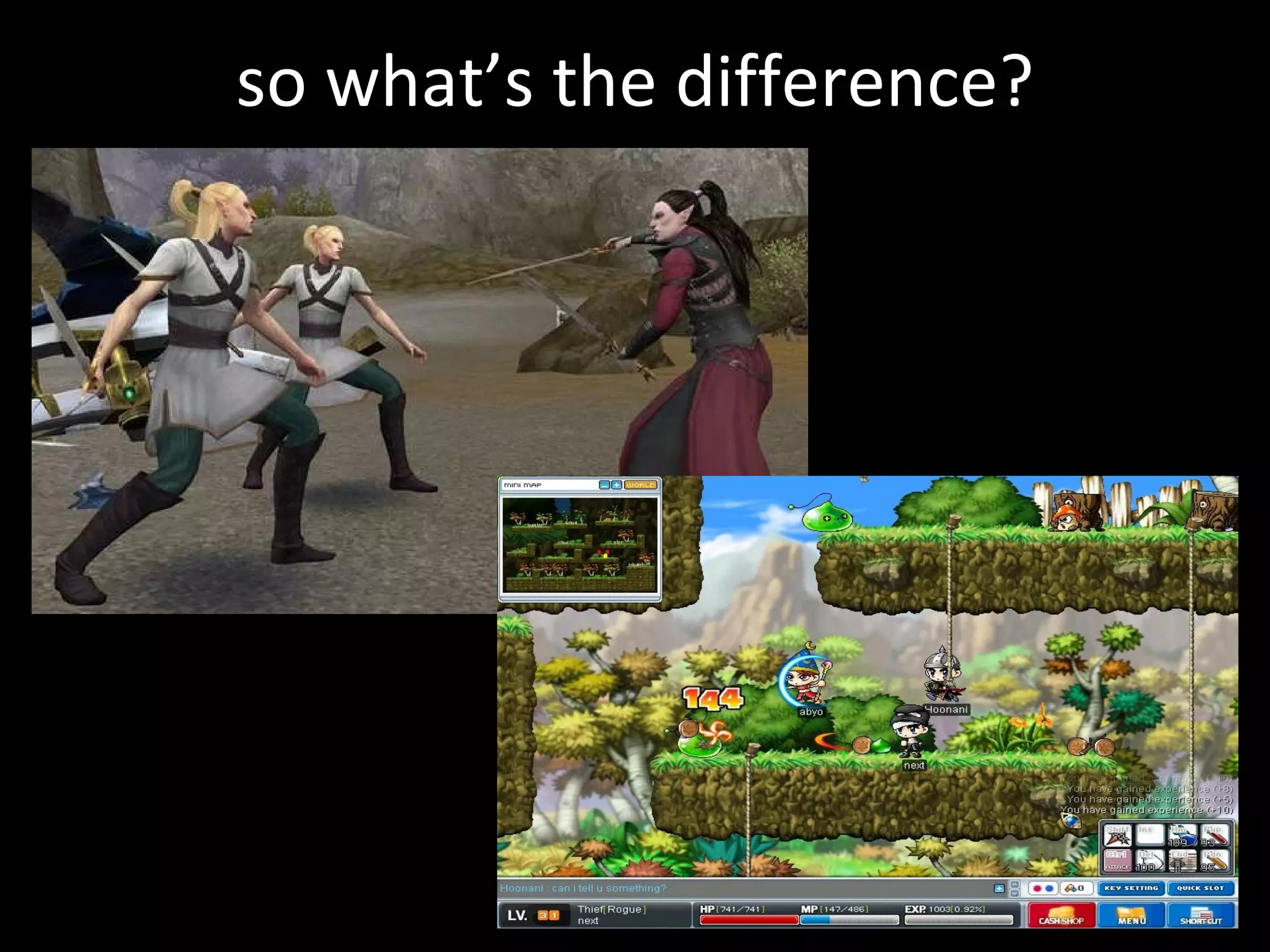
so what’s the difference?
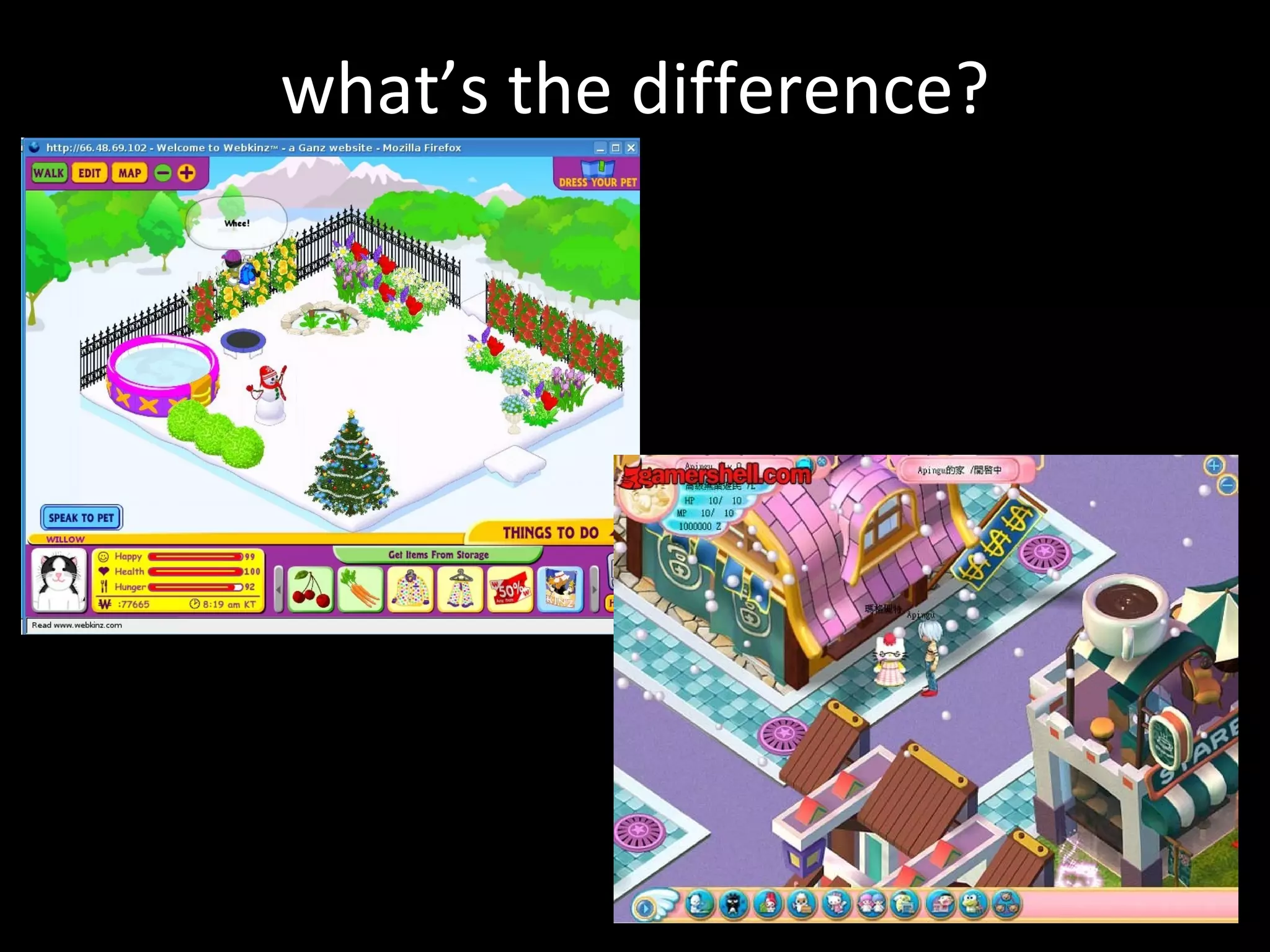
what’s the difference?
why are the differences important?
not defining the differences  flaws  our choices
Faceted Classification
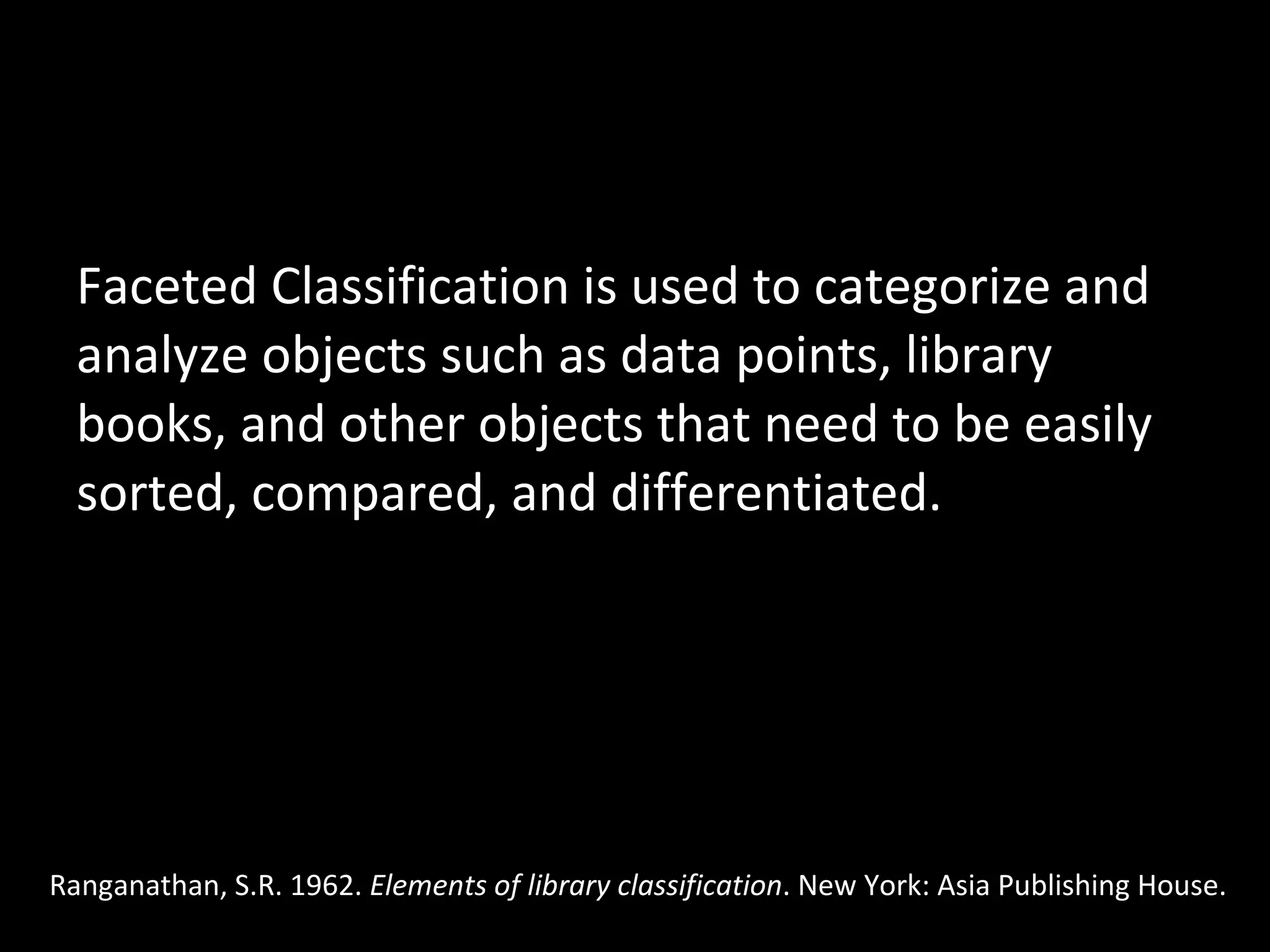
Faceted Classification is used to categorize and analyze objects such as data points, library books, and other objects that need to be easily sorted, compared, and differentiated.  Ranganathan, S.R. 1962.  Elements of library classification . New York: Asia Publishing House.
75  worlds, which fit the operational definition of a virtual world, were studied to define common facets among them
10 facets emerged
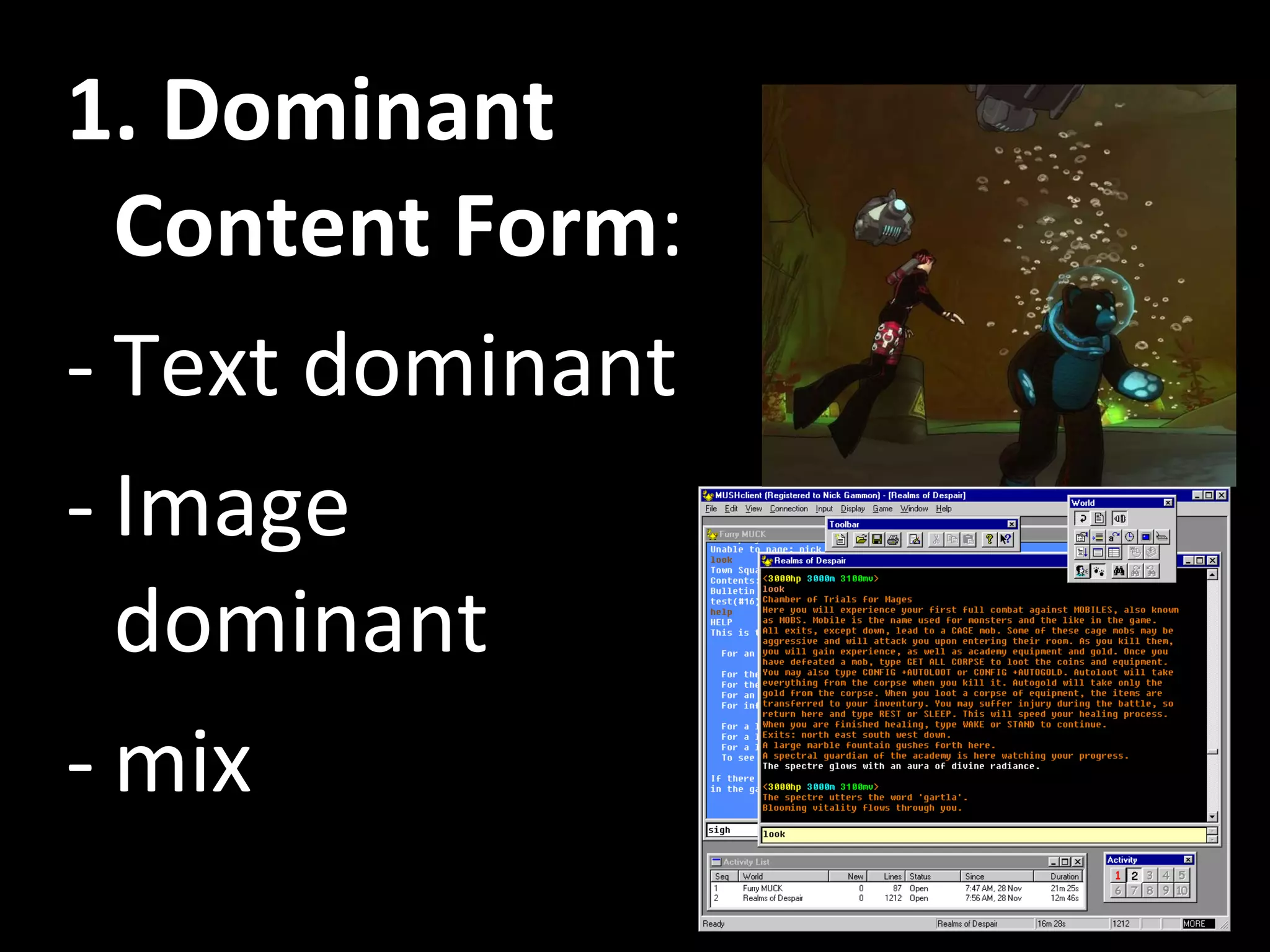
1. Dominant Content Form : Text dominant Image dominant mix
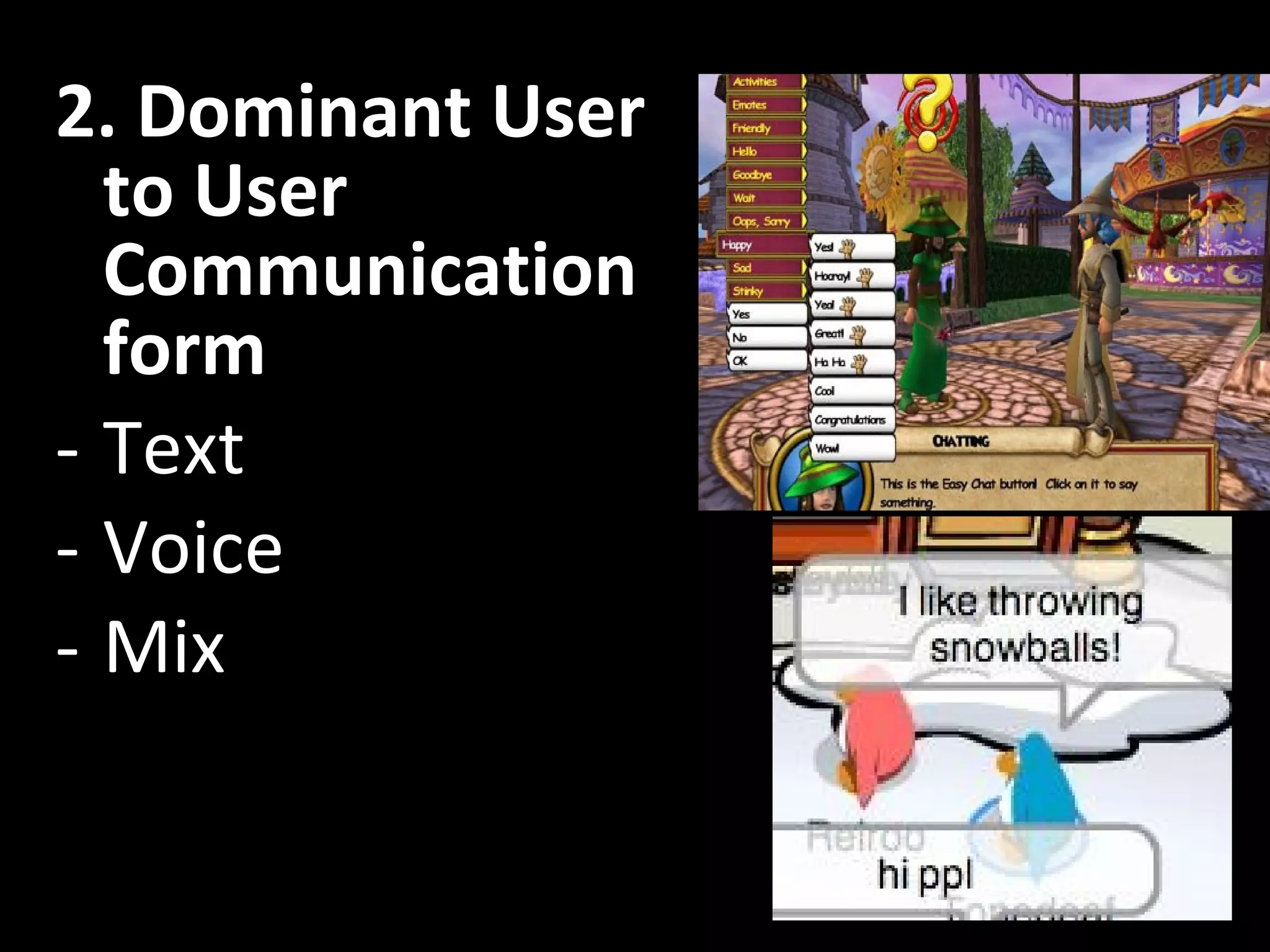
2. Dominant User to User Communication form Text Voice Mix
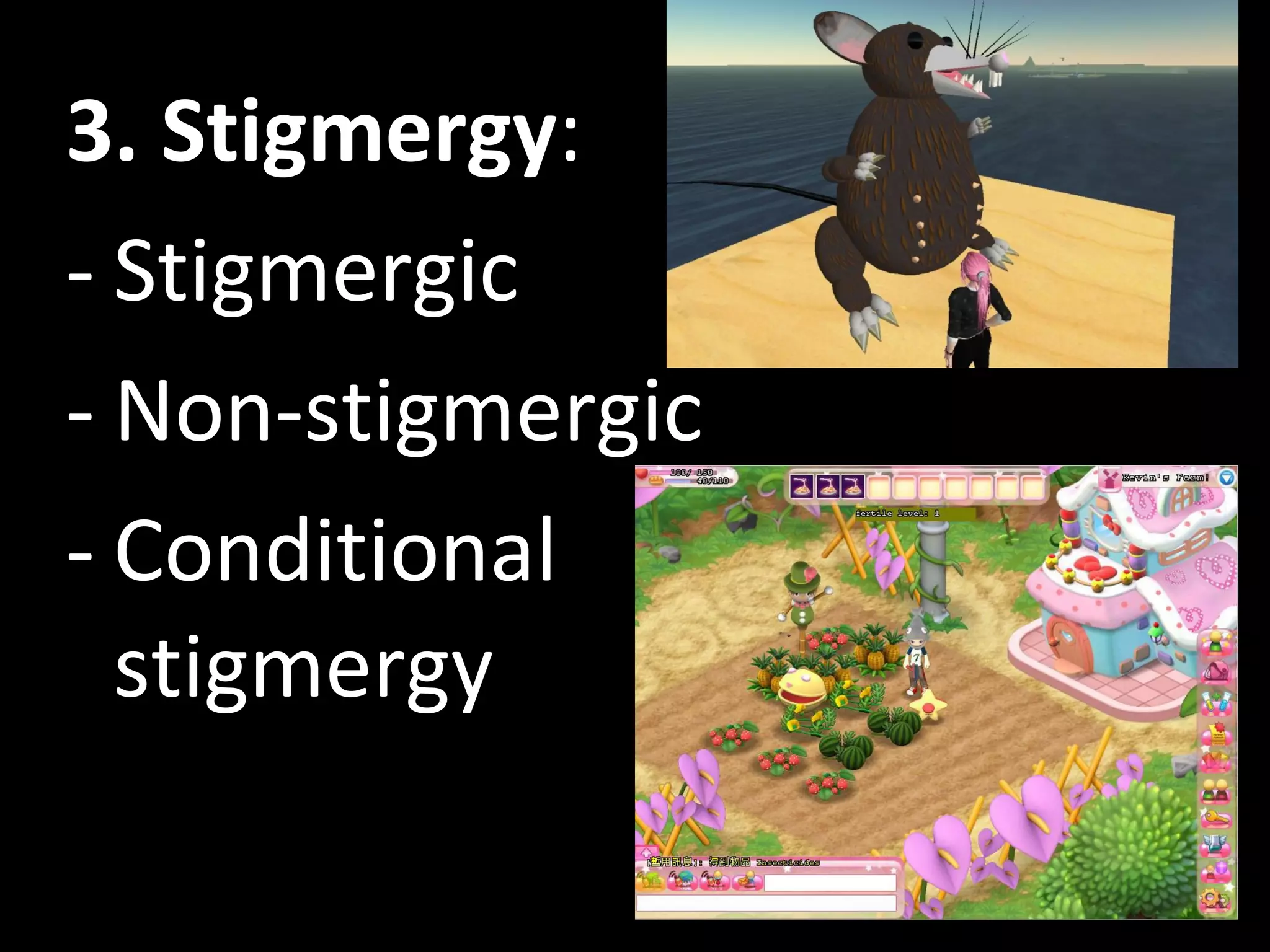
3. Stigmergy : Stigmergic Non-stigmergic Conditional stigmergy
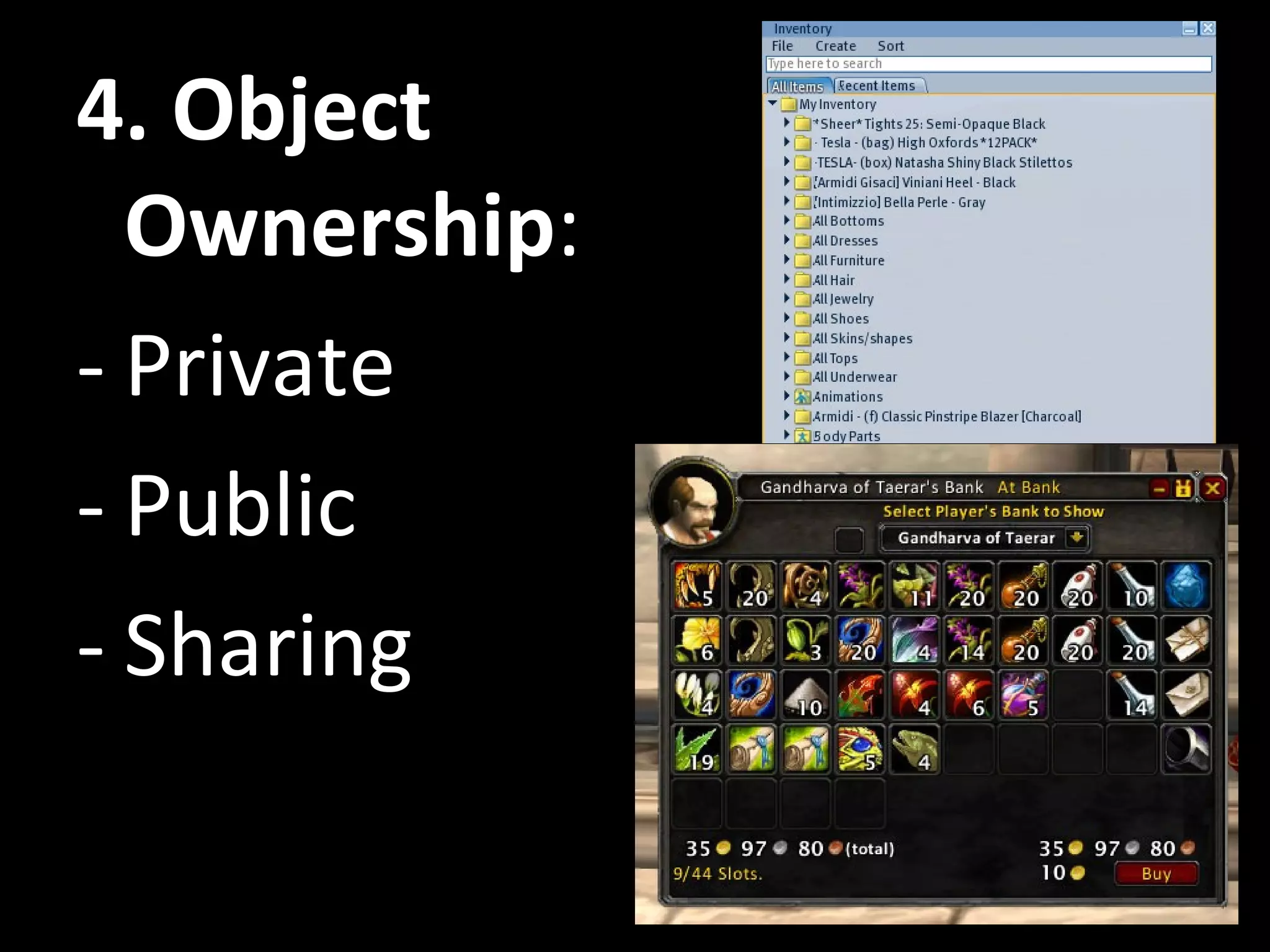
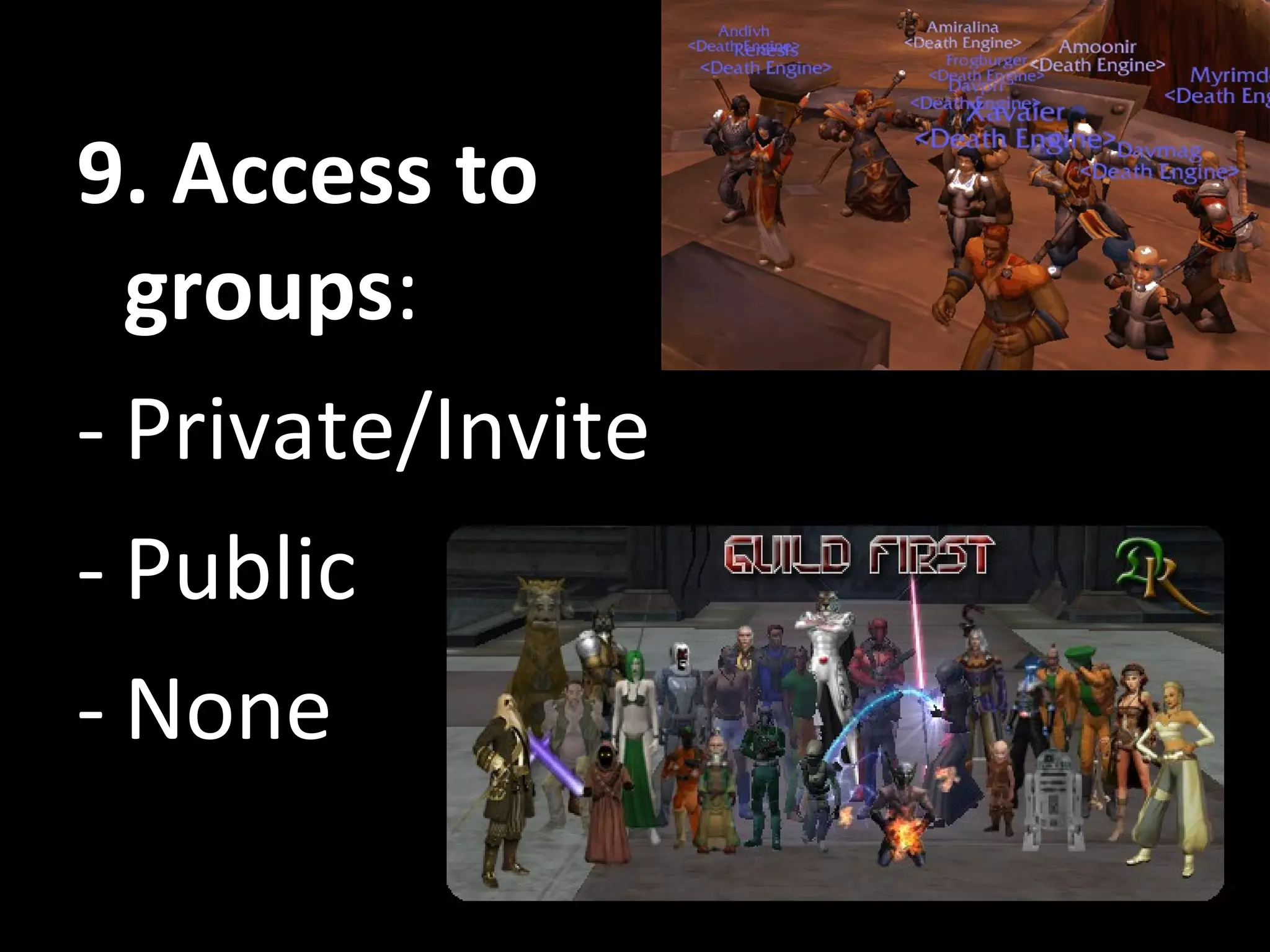
4. Object Ownership : Private Public Sharing
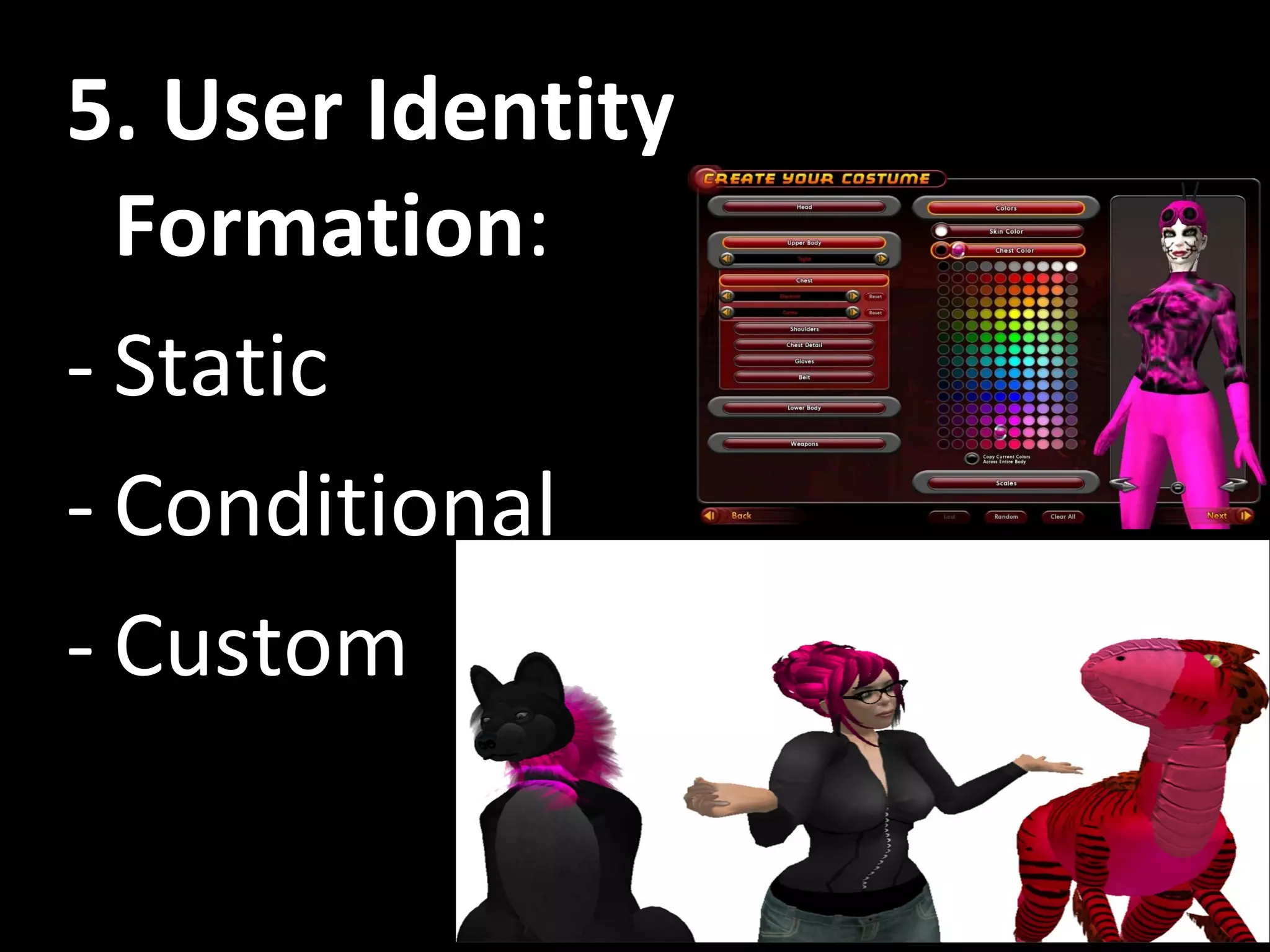
5. User Identity Formation : Static Conditional Custom
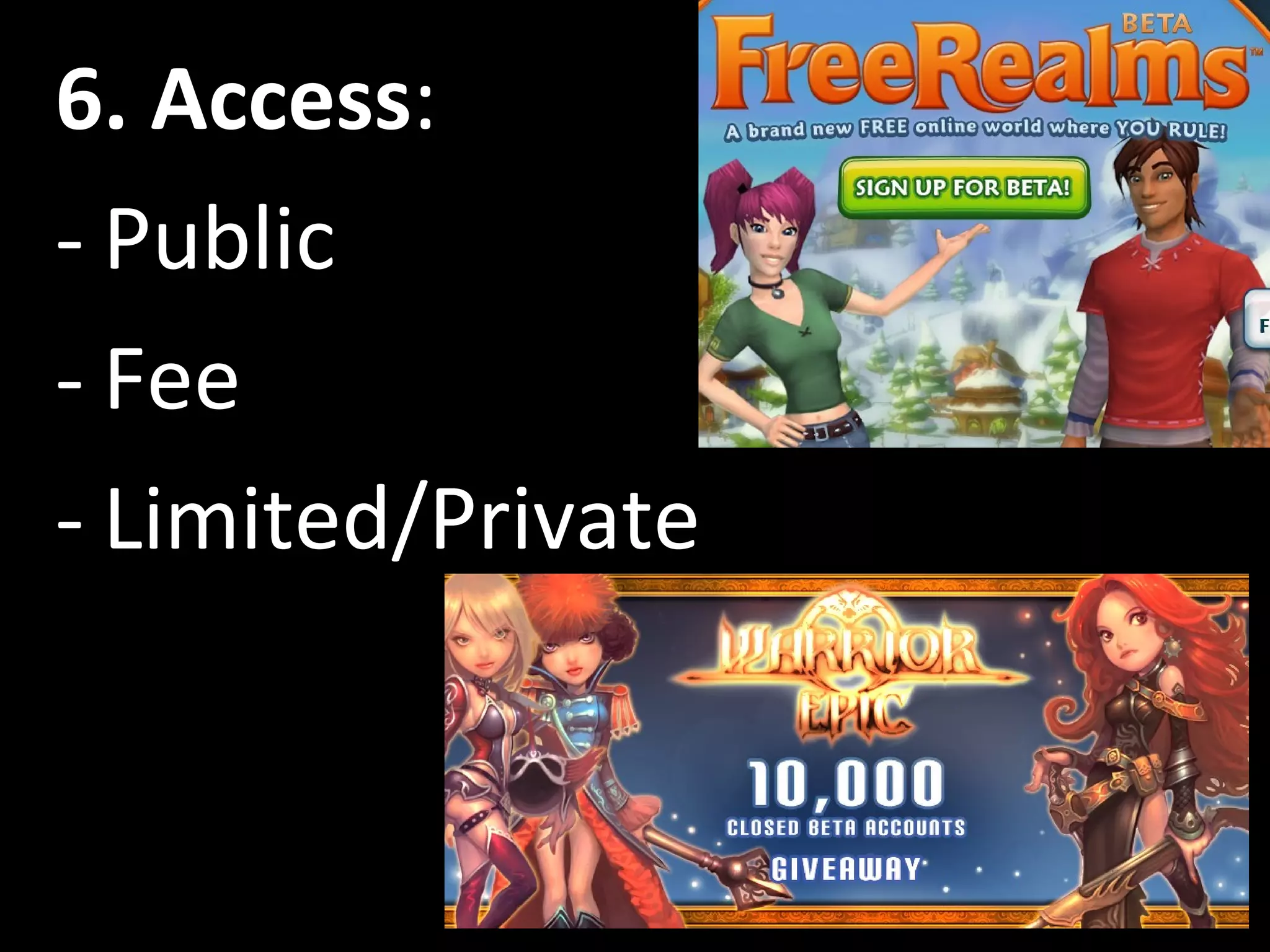
6. Access : Public Fee Limited/Private
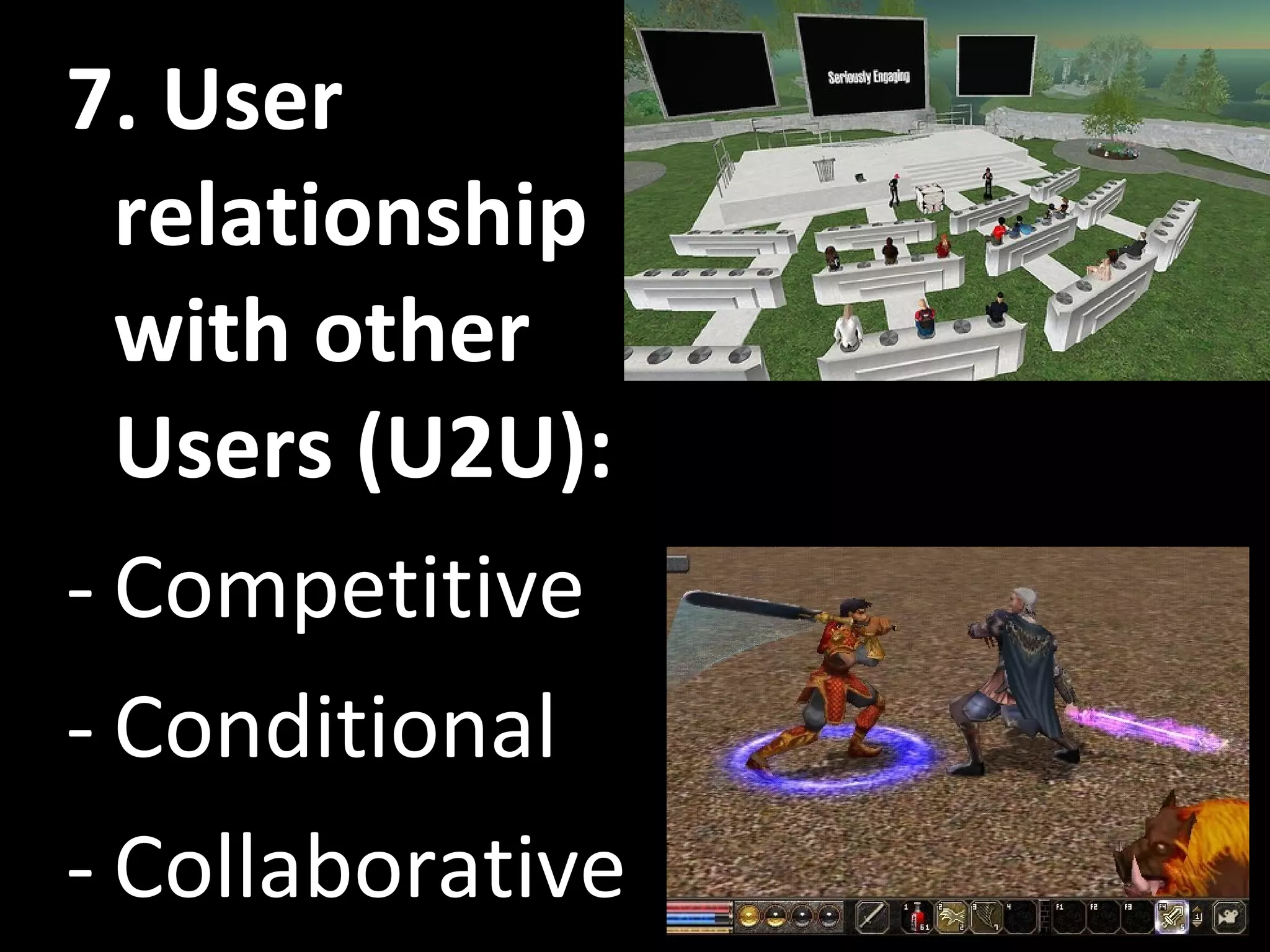
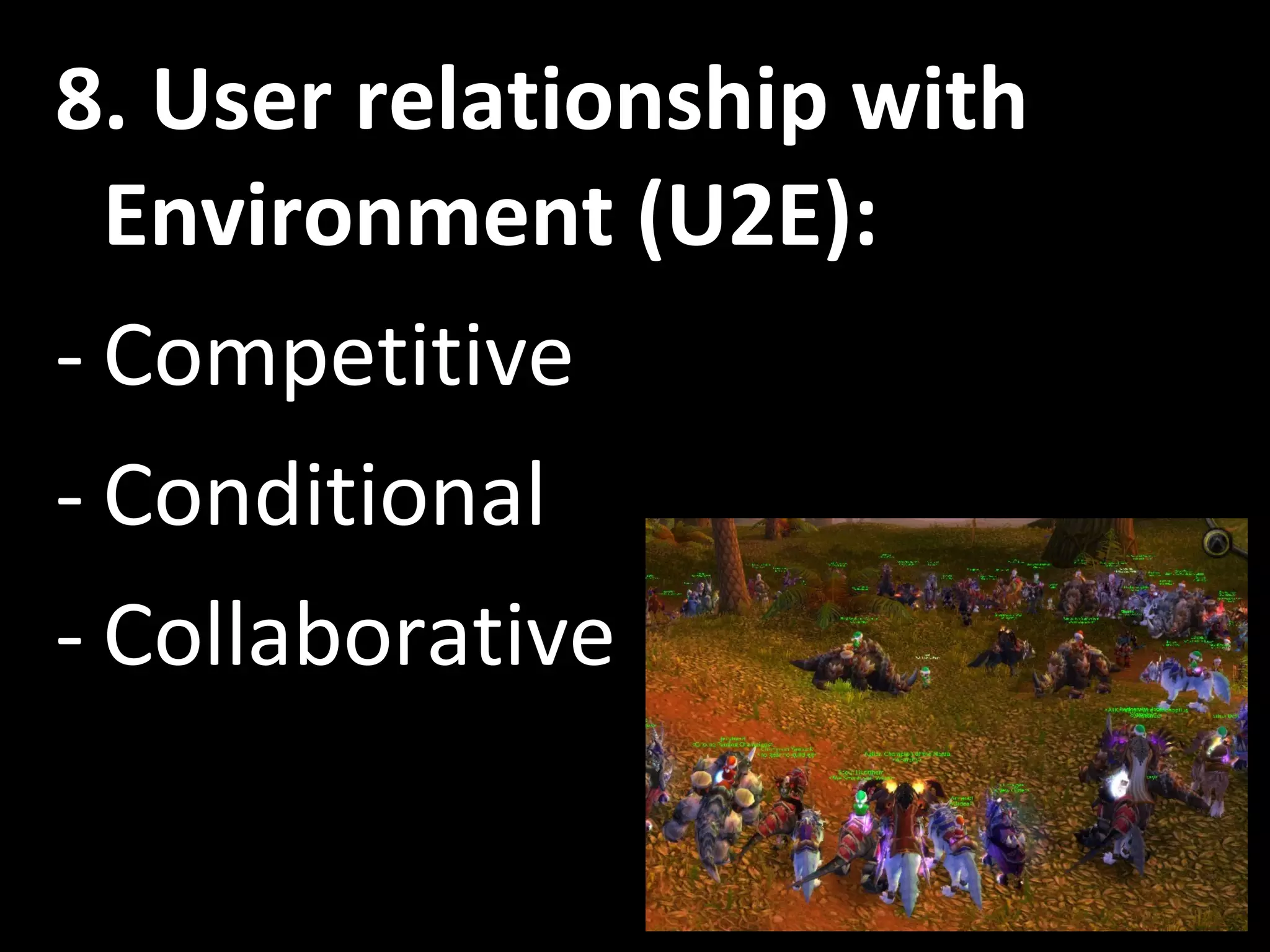
7. User relationship with other Users (U2U): Competitive Conditional Collaborative
8. User relationship with Environment (U2E): Competitive Conditional Collaborative
9. Access to groups : Private/Invite Public None
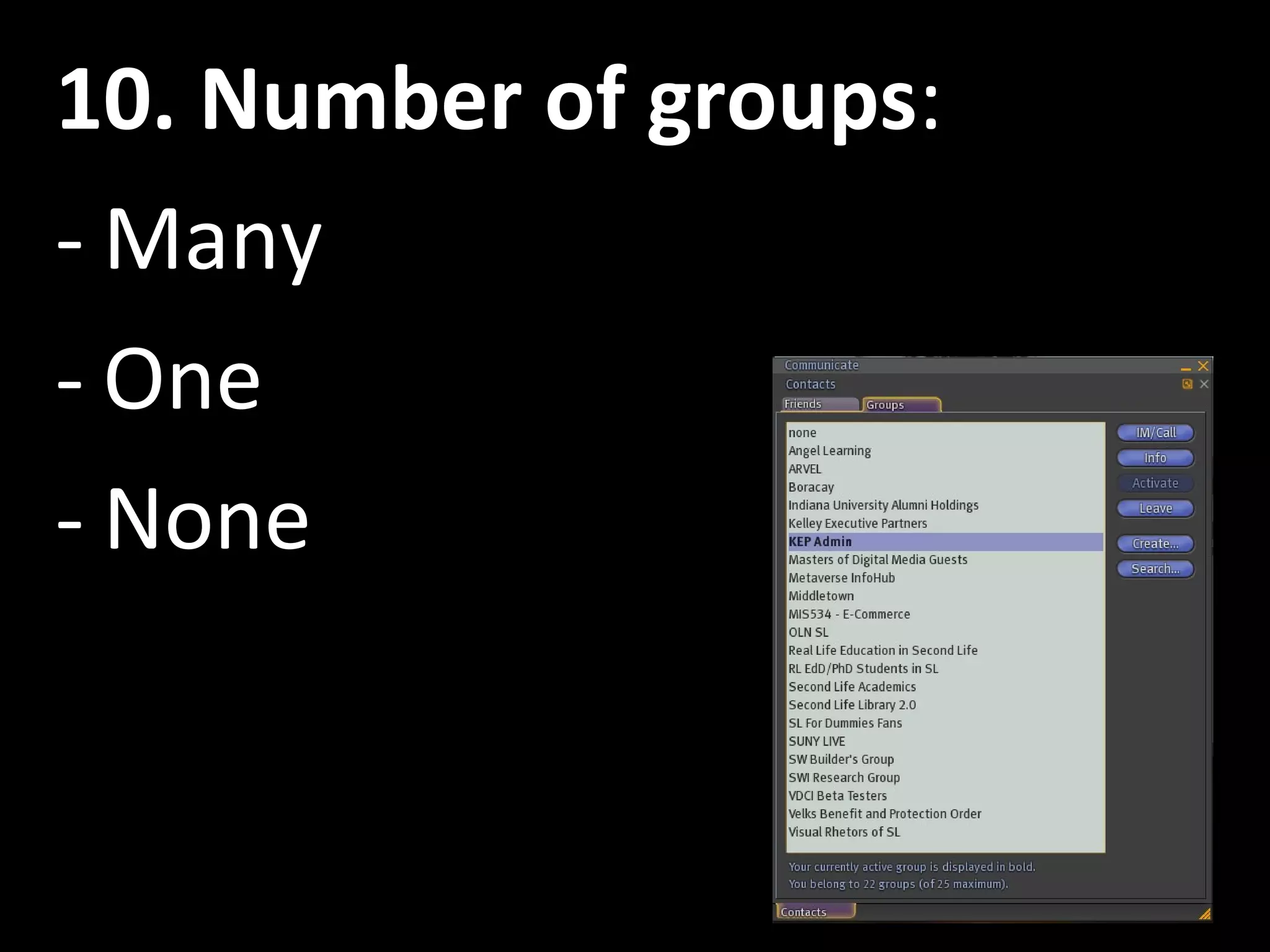
10. Number of groups : Many One None
The Facets are Powerful
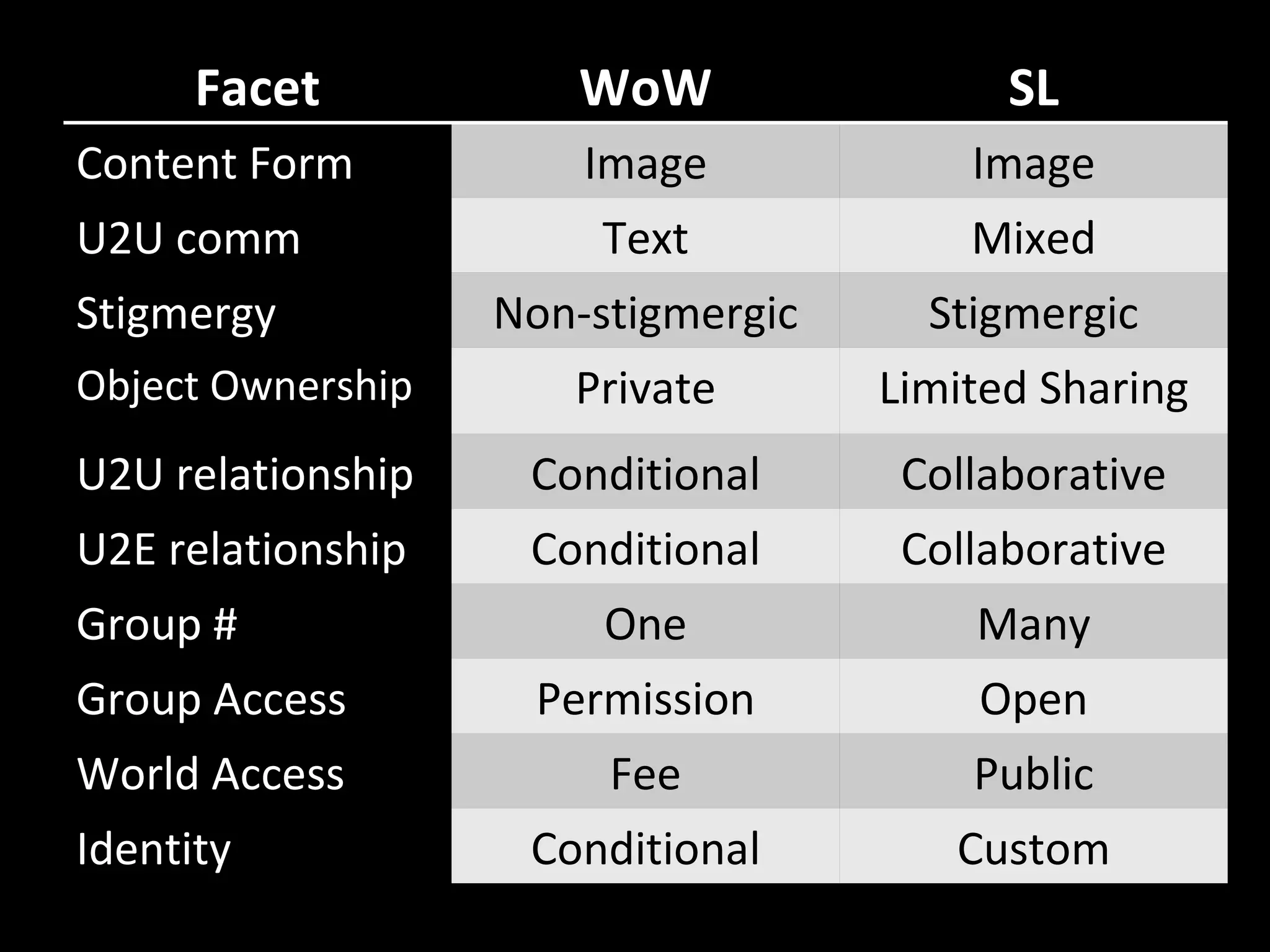
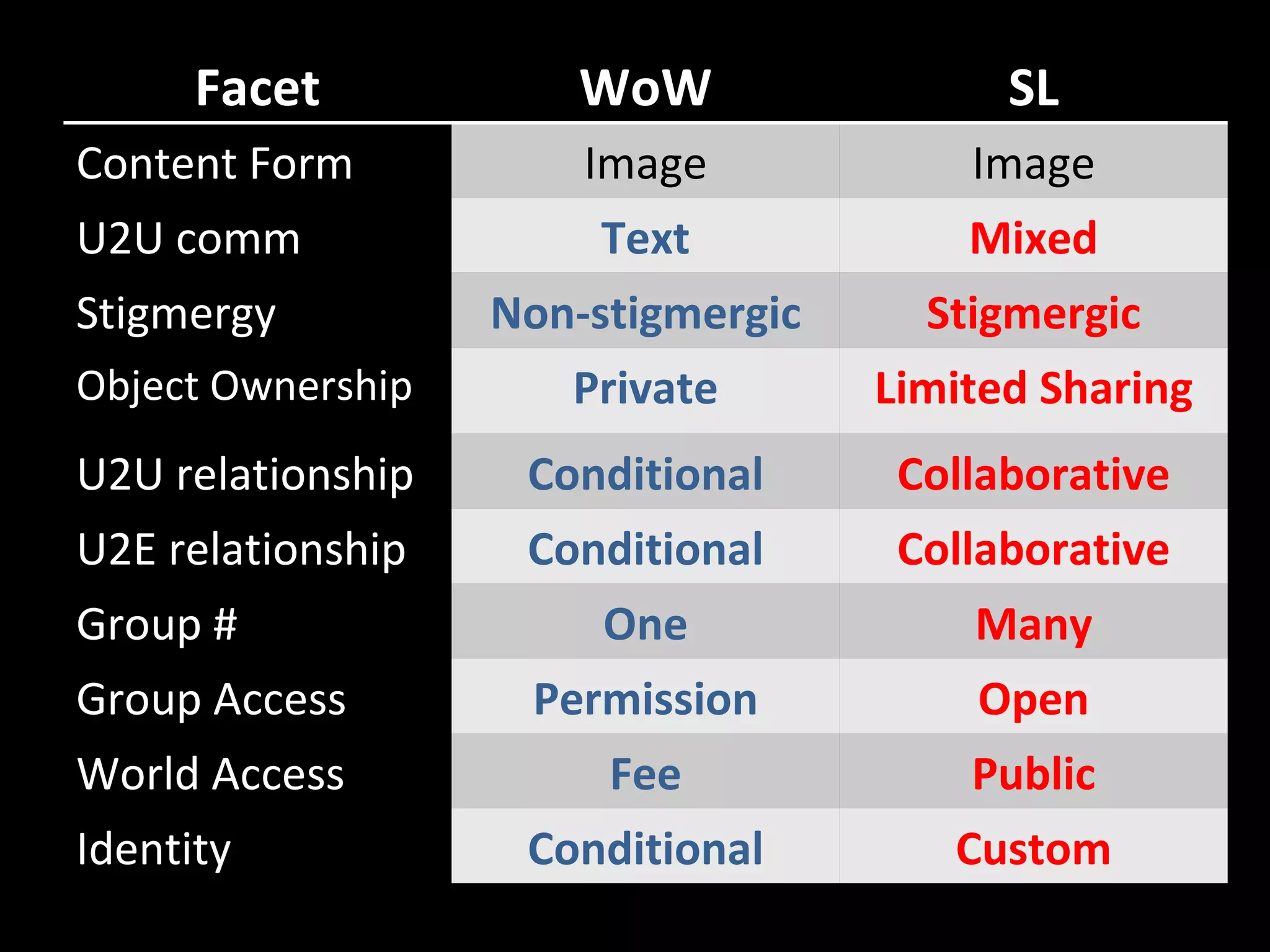
Facet WoW SL Content Form Image Image U2U comm Text Mixed Stigmergy Non-stigmergic Stigmergic Object Ownership Private Limited Sharing U2U relationship Conditional Collaborative U2E relationship Conditional Collaborative Group # One Many Group Access Permission Open World Access Fee Public Identity Conditional Custom
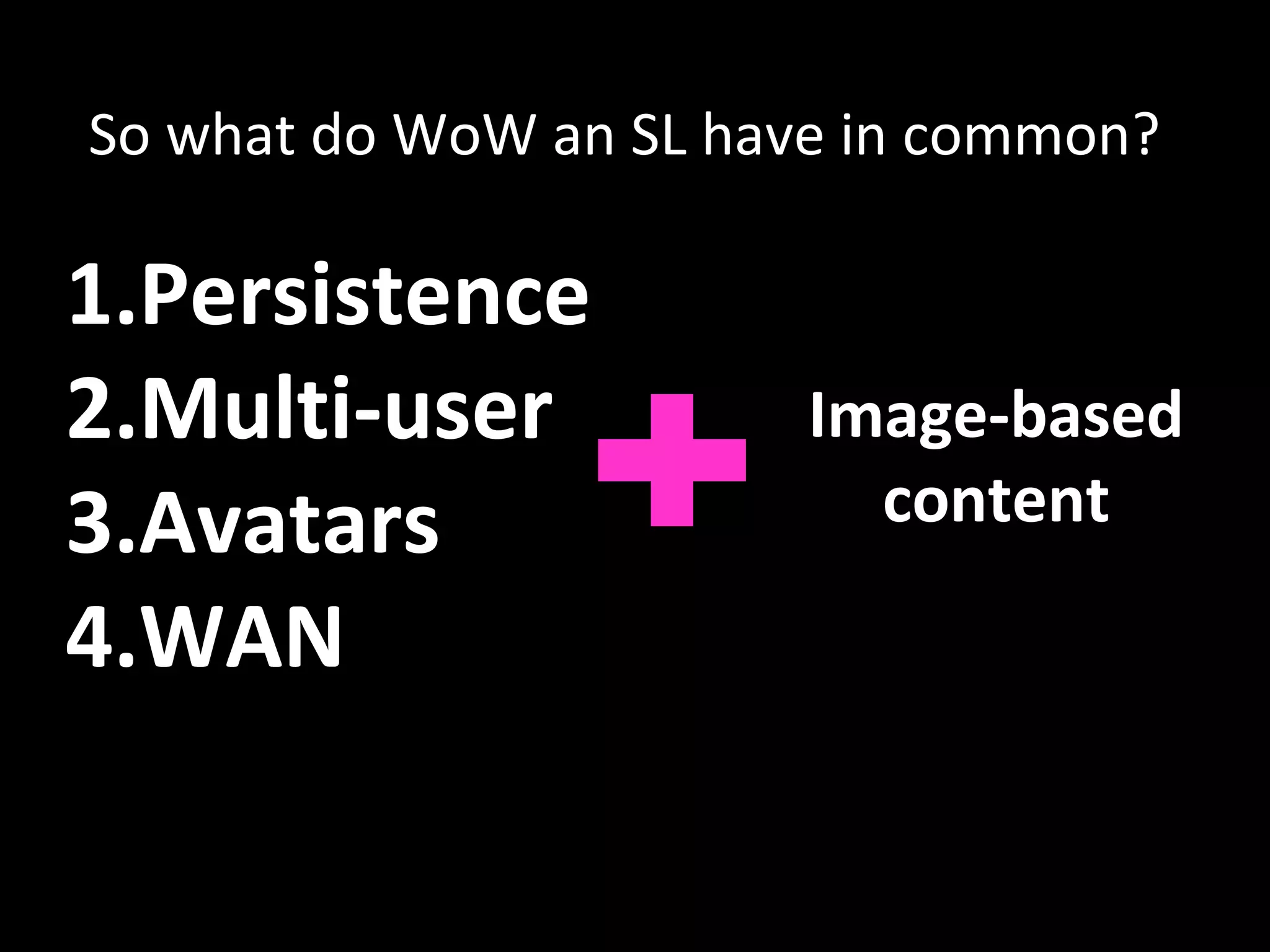
So what do WoW an SL have in common?  Persistence Multi-user Avatars WAN Image-based content
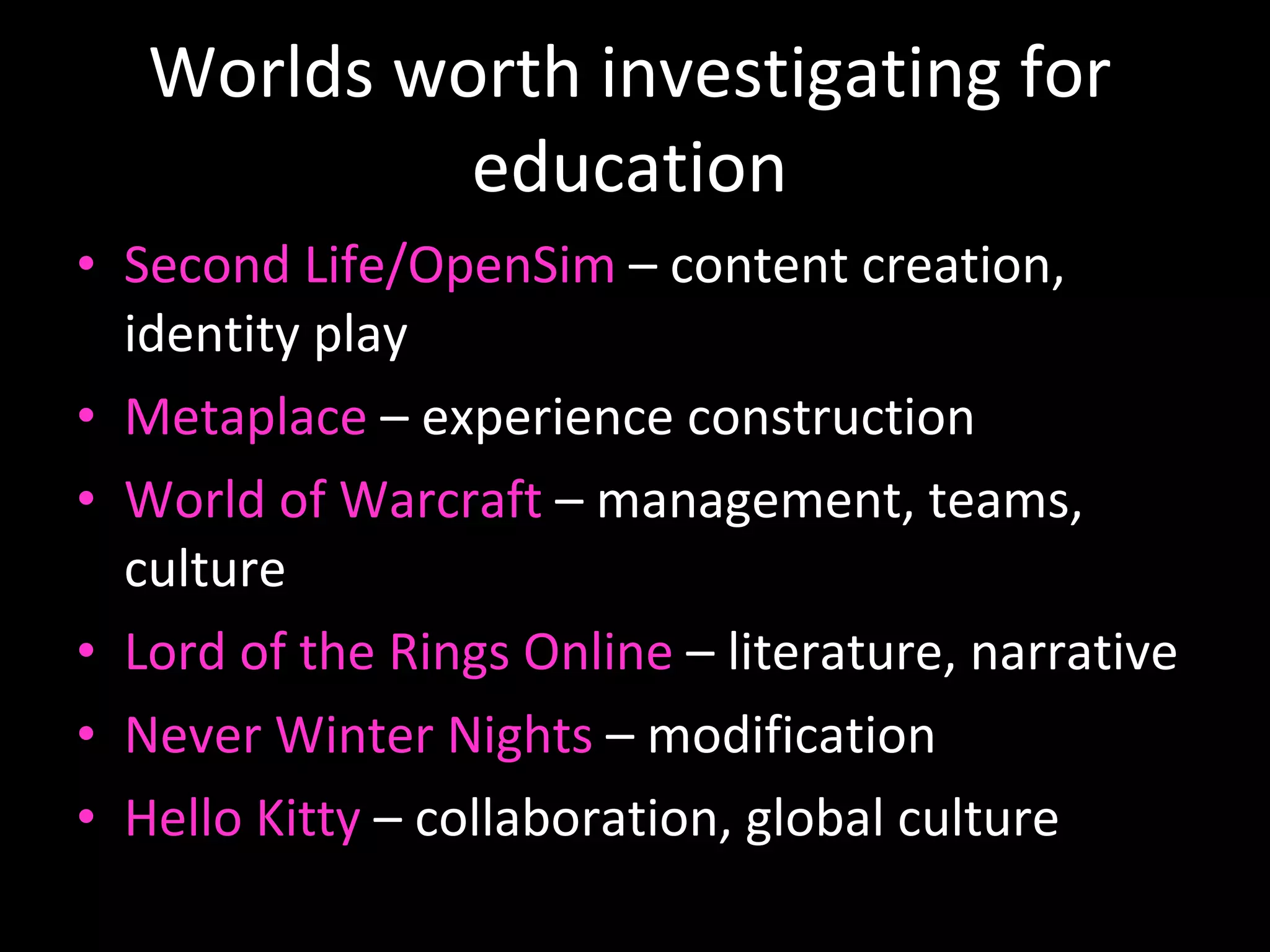
Worlds worth investigating for education Second Life/OpenSim  – content creation, identity play Metaplace  – experience construction World of Warcraft  – management, teams, culture Lord of the Rings Online  – literature, narrative Never Winter Nights  – modification Hello Kitty  – collaboration, global culture
Sarah “Intellagirl” Smith-Robbins [email_address] Skype, AIM, Gchat, Flickr, Second Life: Intellagirl For more info and discussion check at www.ubernoggin.com

Robbins Virtual Worlds Iuswitc

  • 1.
    Using a FacetedClassification Scheme to Predict the Future of Virtual Worlds Sarah “Intellagirl” Robbins-Bell Relive 2008
  • 2.
    What is avirtual world?
  • 3.
  • 4.
  • 5.
  • 6.
  • 7.
  • 8.
  • 9.
    Persistence: Avirtual world can’t be paused; it exists whether or not a user is logged in.
  • 10.
    2. Multiuser: A virtual world must be populated or at least have the potential for population.
  • 11.
    3. Avatars: Rather than offering an icon to represent a user, a virtual world allows a user to create an agent that takes action, an avatar. This representation of the user can perform actions that the user requests, such as fighting, expressing emotion, or simply moving through a space.
  • 12.
    4. Wide AreaNetwork: A virtual world is facilitated via a wide area network rather than a local one. Freed from the limited access of a locally hosted space, virtual worlds have the potential to be global and large.
  • 13.
    VWs Definition PersistentMultiuser Avatars Wide Area Network
  • 14.
    so what’s thedifference?
  • 15.
  • 16.
    why are thedifferences important?
  • 17.
    not defining thedifferences flaws our choices
  • 18.
  • 19.
    Faceted Classification isused to categorize and analyze objects such as data points, library books, and other objects that need to be easily sorted, compared, and differentiated. Ranganathan, S.R. 1962. Elements of library classification . New York: Asia Publishing House.
  • 20.
    75 worlds,which fit the operational definition of a virtual world, were studied to define common facets among them
  • 21.
  • 22.
    1. Dominant ContentForm : Text dominant Image dominant mix
  • 23.
    2. Dominant Userto User Communication form Text Voice Mix
  • 24.
    3. Stigmergy :Stigmergic Non-stigmergic Conditional stigmergy
  • 25.
    4. Object Ownership: Private Public Sharing
  • 26.
    5. User IdentityFormation : Static Conditional Custom
  • 27.
    6. Access :Public Fee Limited/Private
  • 28.
    7. User relationshipwith other Users (U2U): Competitive Conditional Collaborative
  • 29.
    8. User relationshipwith Environment (U2E): Competitive Conditional Collaborative
  • 30.
    9. Access togroups : Private/Invite Public None
  • 31.
    10. Number ofgroups : Many One None
  • 32.
  • 33.
    Facet WoW SLContent Form Image Image U2U comm Text Mixed Stigmergy Non-stigmergic Stigmergic Object Ownership Private Limited Sharing U2U relationship Conditional Collaborative U2E relationship Conditional Collaborative Group # One Many Group Access Permission Open World Access Fee Public Identity Conditional Custom
  • 34.
    Facet WoW SLContent Form Image Image U2U comm Text Mixed Stigmergy Non-stigmergic Stigmergic Object Ownership Private Limited Sharing U2U relationship Conditional Collaborative U2E relationship Conditional Collaborative Group # One Many Group Access Permission Open World Access Fee Public Identity Conditional Custom
  • 35.
    So what doWoW an SL have in common? Persistence Multi-user Avatars WAN Image-based content
  • 36.
    Worlds worth investigatingfor education Second Life/OpenSim – content creation, identity play Metaplace – experience construction World of Warcraft – management, teams, culture Lord of the Rings Online – literature, narrative Never Winter Nights – modification Hello Kitty – collaboration, global culture
  • 37.
    Sarah “Intellagirl” Smith-Robbins[email_address] Skype, AIM, Gchat, Flickr, Second Life: Intellagirl For more info and discussion check at www.ubernoggin.com