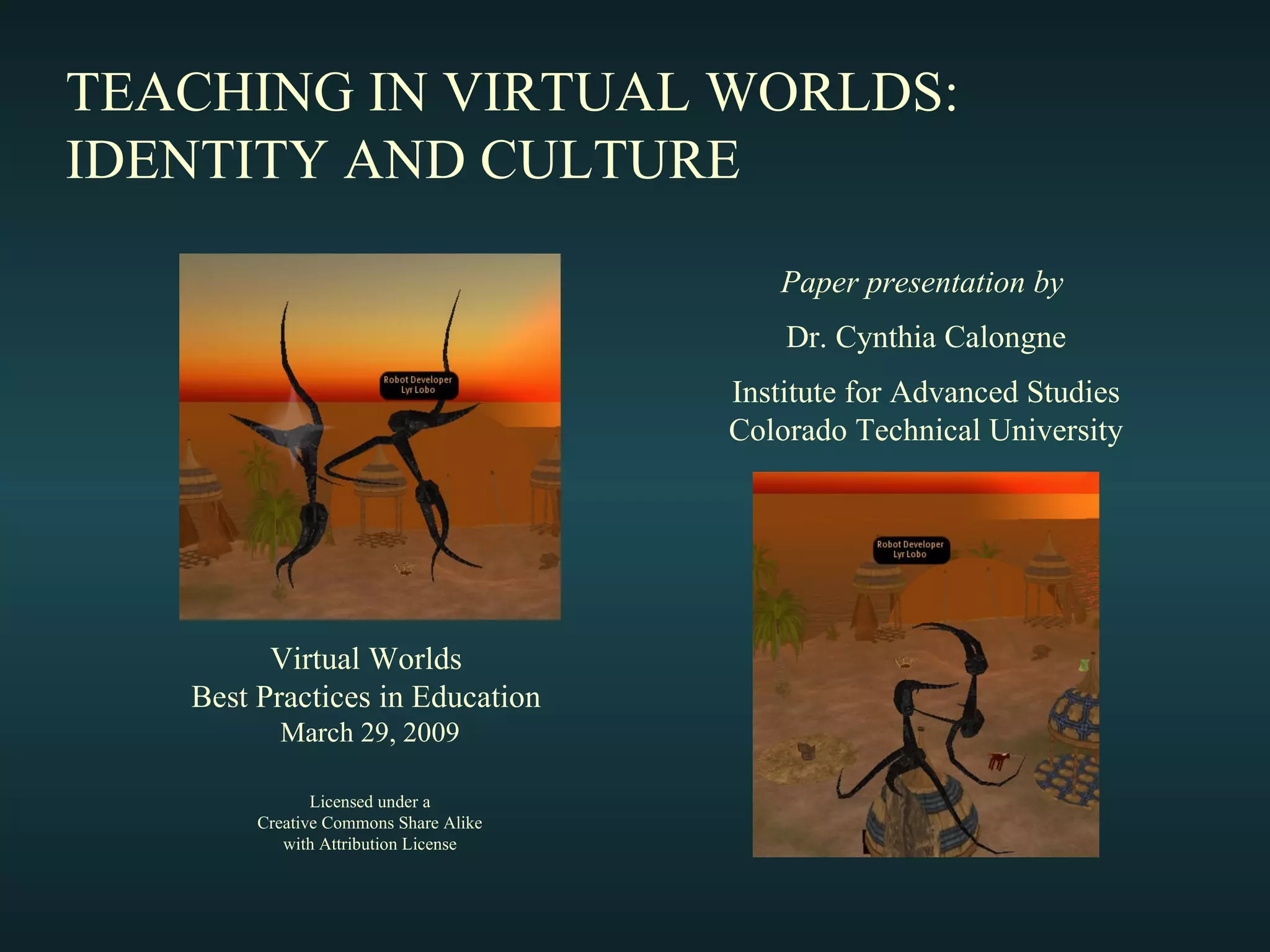
TEACHING IN VIRTUAL WORLDS: IDENTITY AND CULTURE Paper presentation by   Dr. Cynthia Calongne Institute for Advanced Studies Colorado Technical University Licensed under a Creative Commons Share Alike with Attribution License Virtual Worlds  Best Practices in Education  March 29, 2009
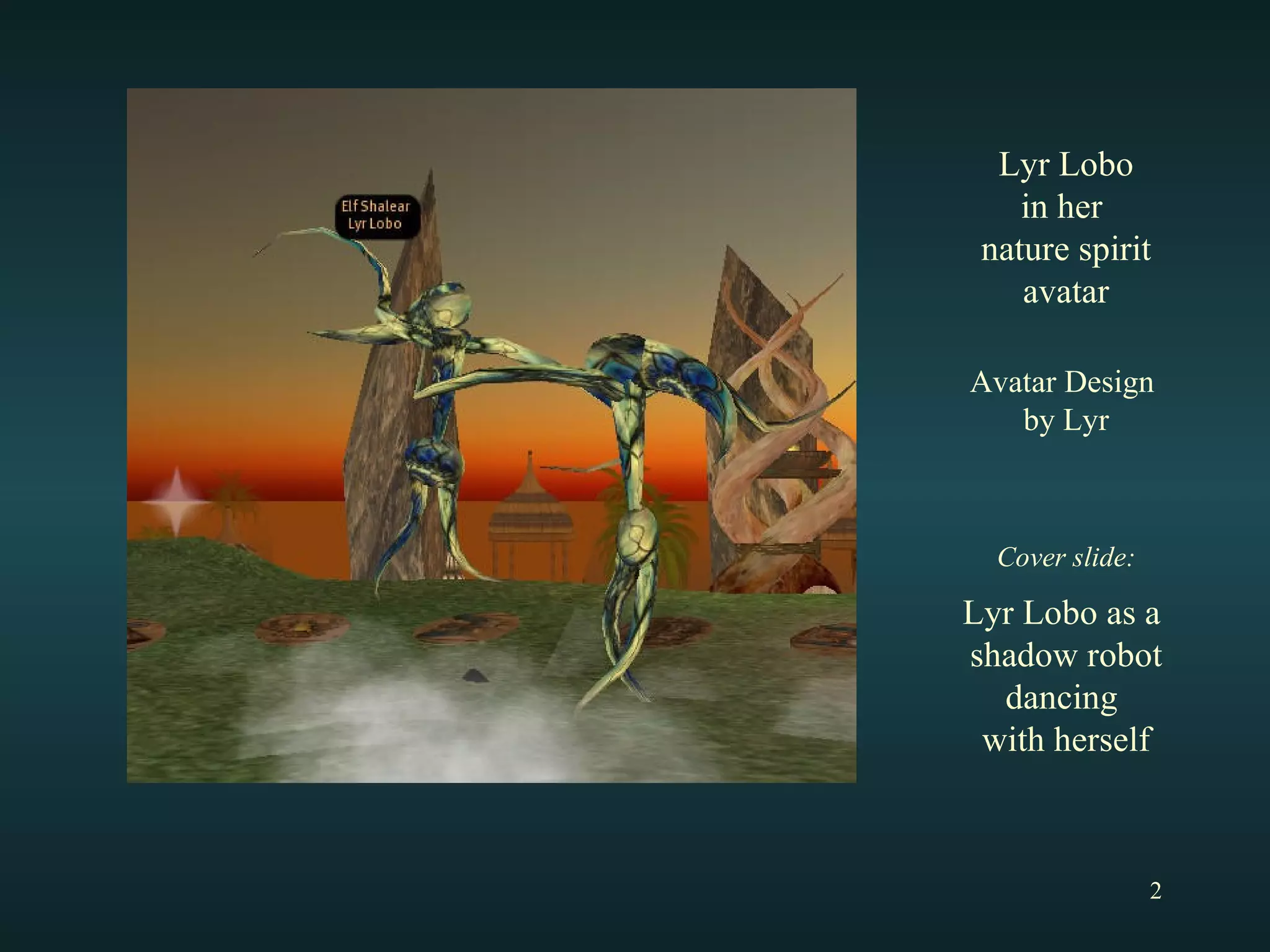
Lyr Lobo in her  nature spirit avatar Avatar Design  by Lyr Cover slide: Lyr Lobo as a  shadow robot dancing  with herself
An Educause SAC Story The National Science Foundation (NSF) had recently updated their website Someone asked if the NSF needed a Second Life site  Why? Persis Trilling noted that Second Life centers on people interacting with each other and the content Immersion, interaction & a sense of presence Engaging and personal
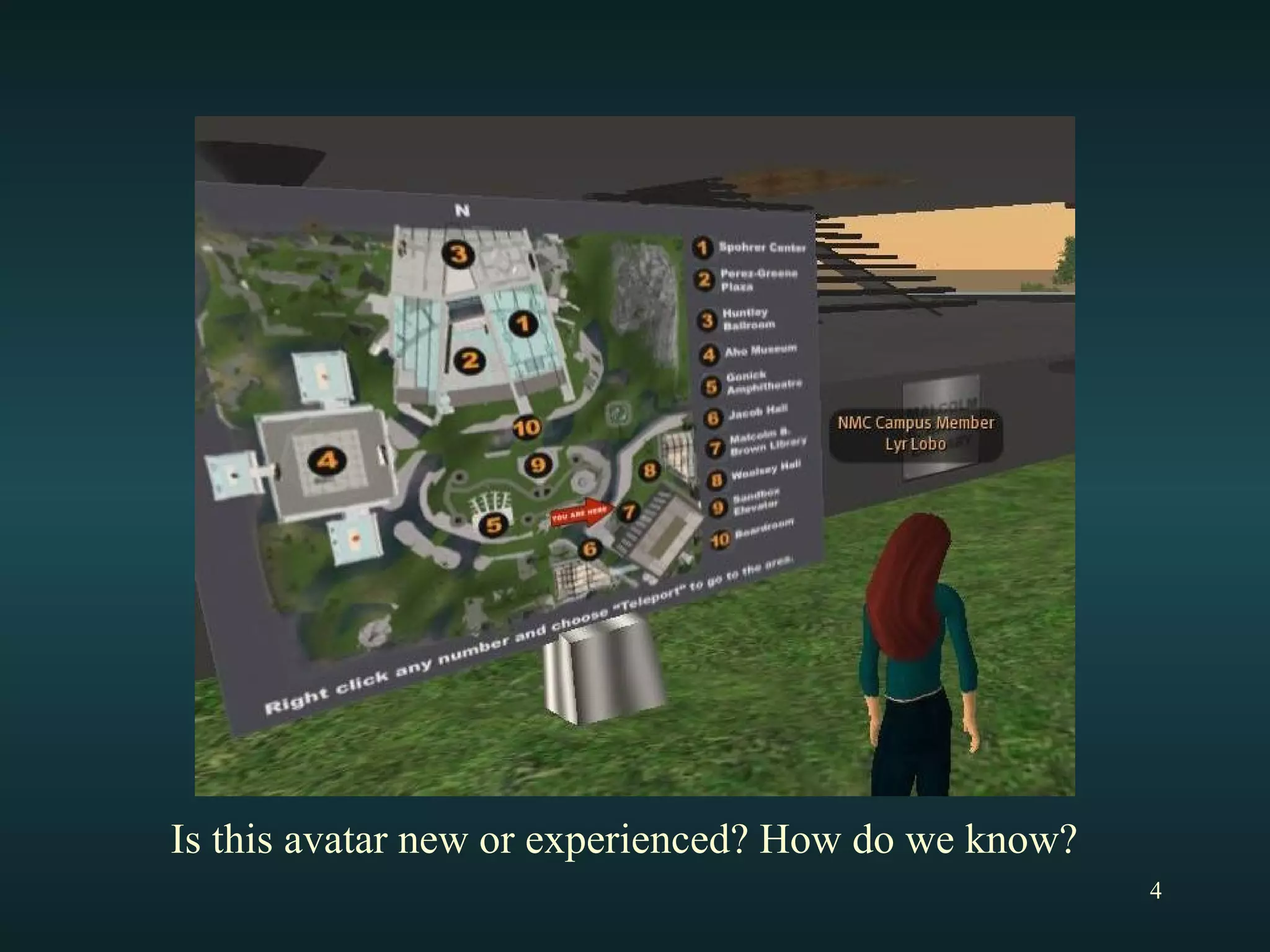
Is this avatar new or experienced? How do we know?
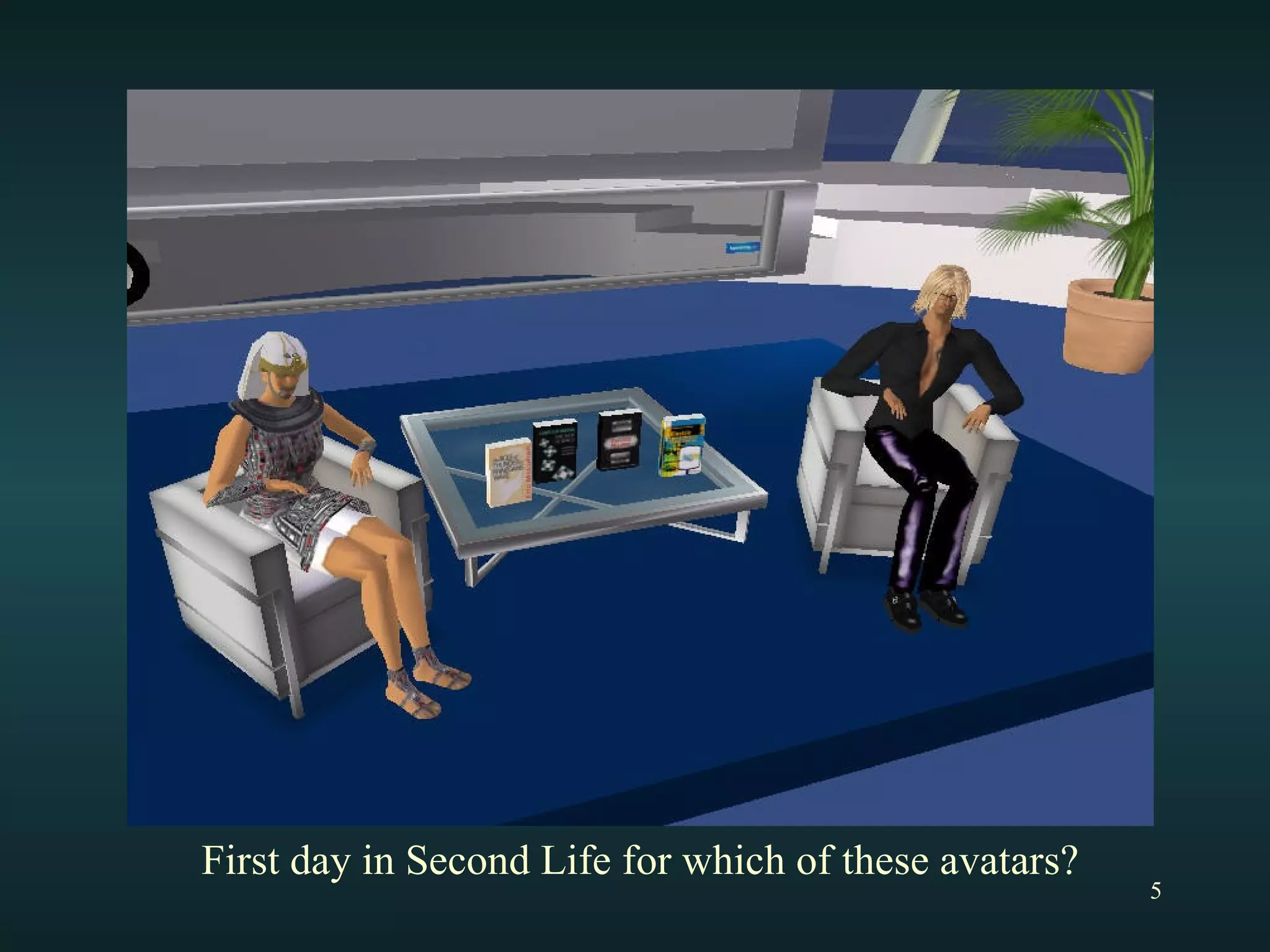
First day in Second Life for which of these avatars?
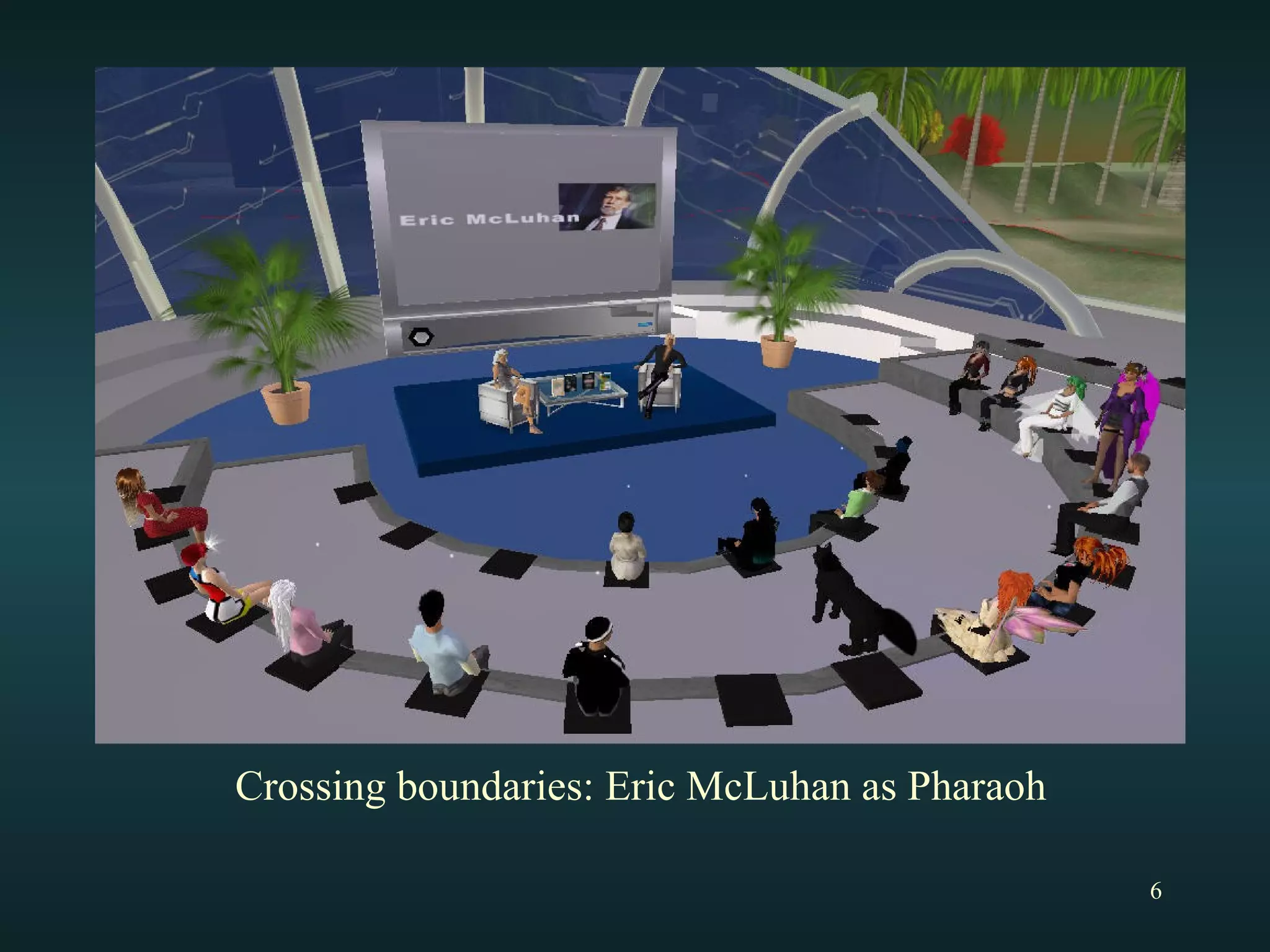
Crossing boundaries: Eric McLuhan as Pharaoh
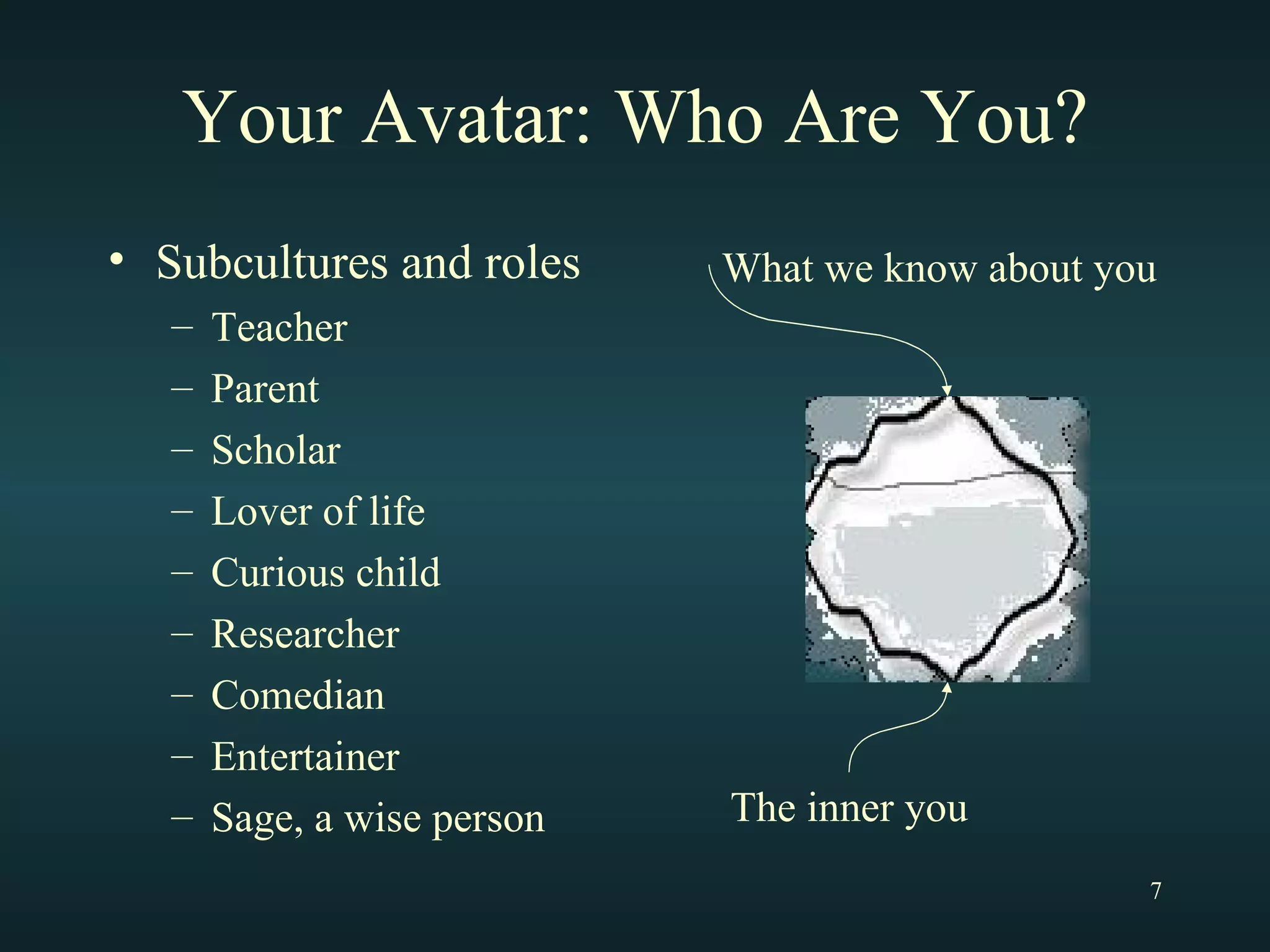
Your Avatar: Who Are You? Subcultures and roles Teacher Parent Scholar Lover of life Curious child Researcher Comedian Entertainer Sage, a wise person What we know about you The inner you
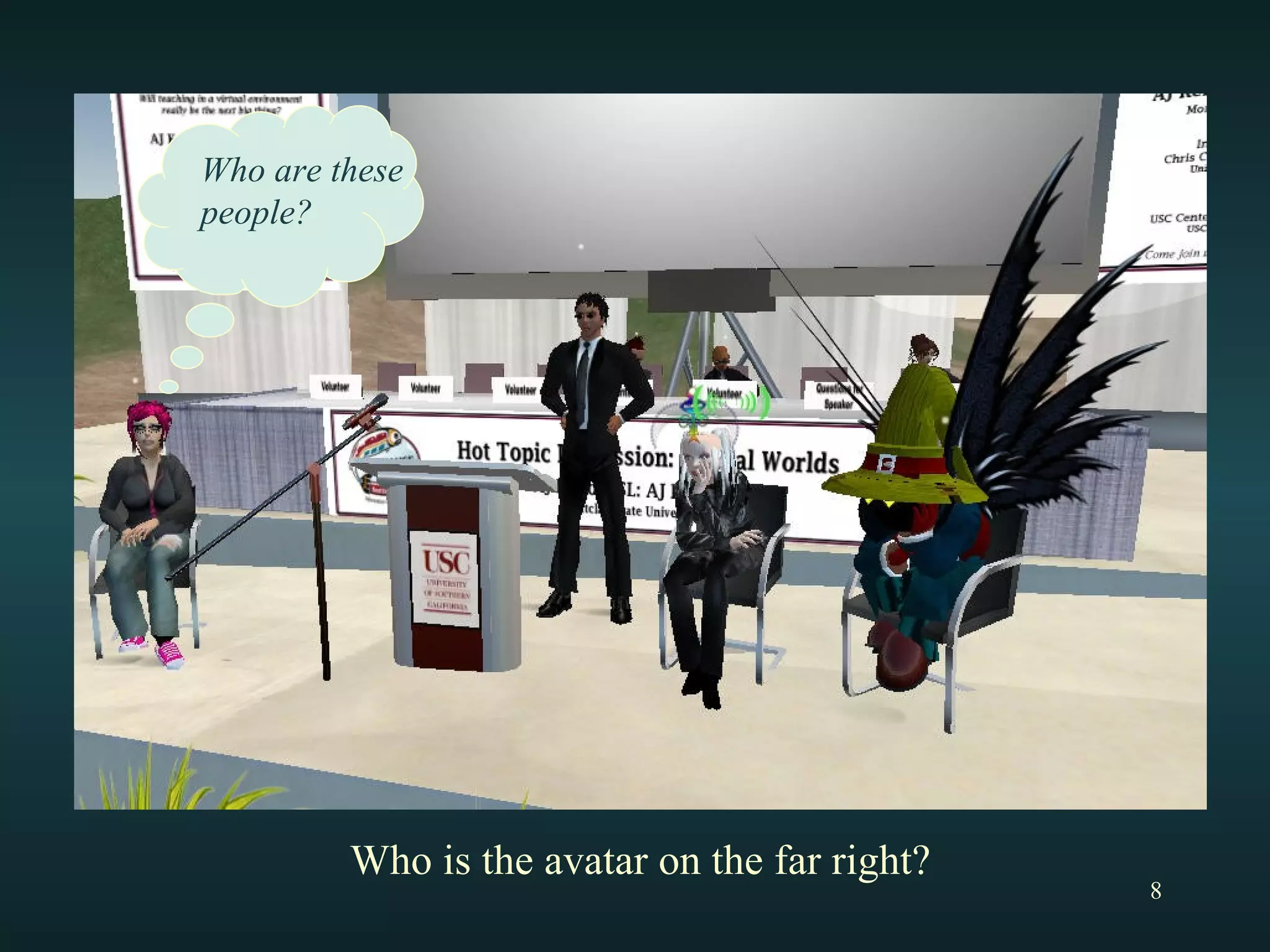
Who are these people? Who is the avatar on the far right?
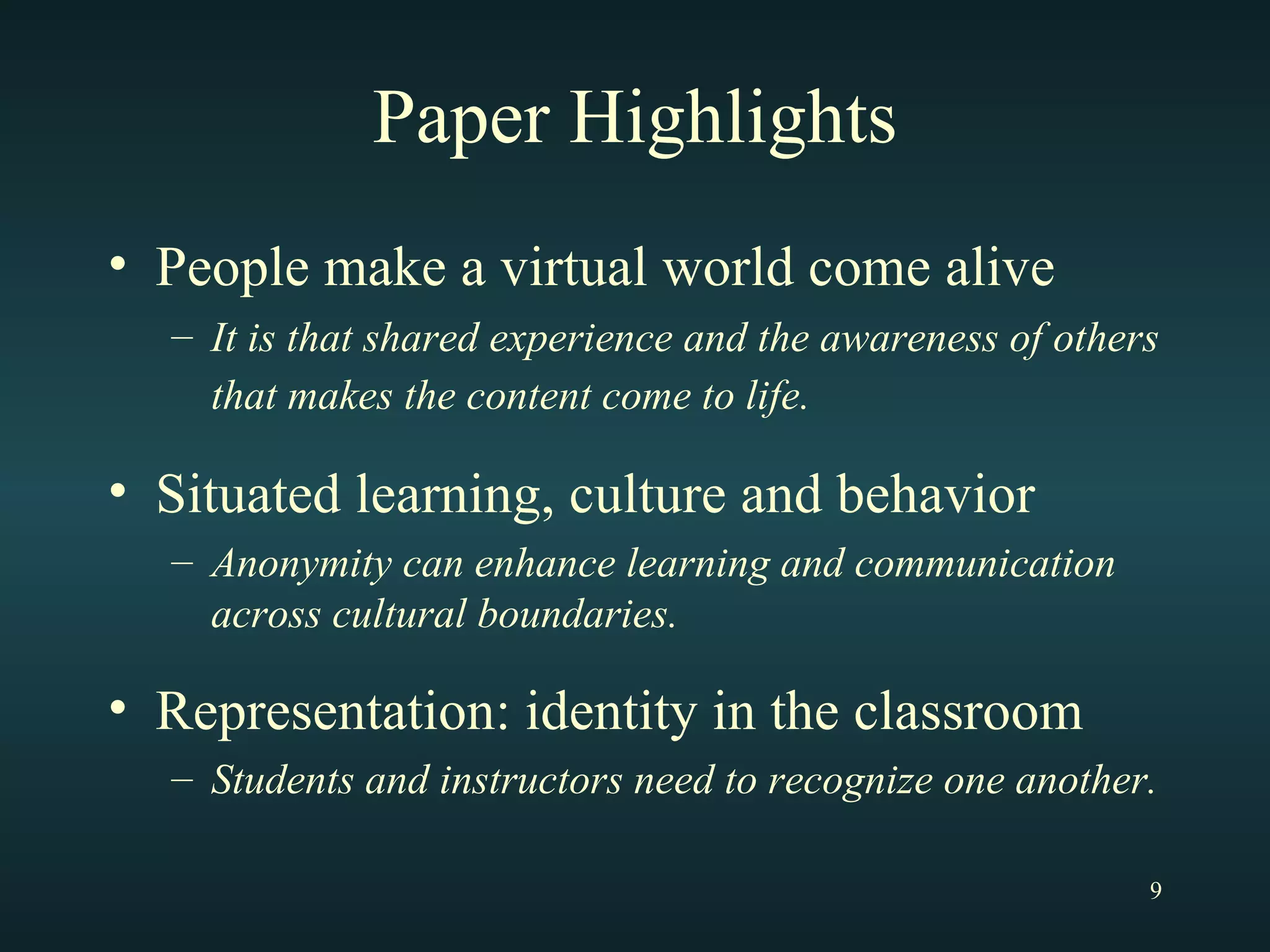
Paper Highlights People make a virtual world come alive It is that shared experience and the awareness of others that makes the content come to life.   Situated learning, culture and behavior Anonymity can enhance learning and communication across cultural boundaries. Representation: identity in the classroom Students and instructors need to recognize one another.
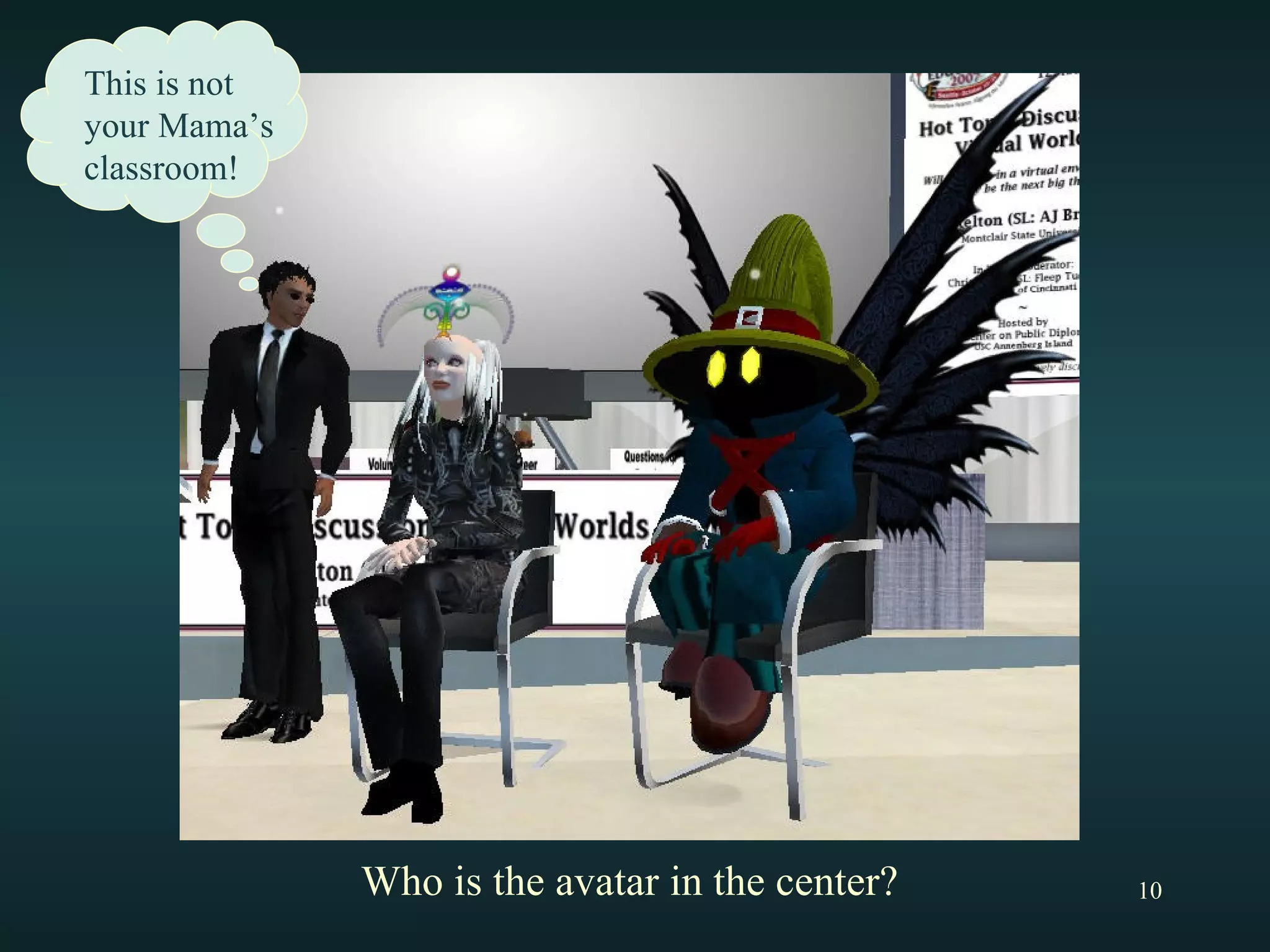
This is not your Mama’s  classroom! Who is the avatar in the center?
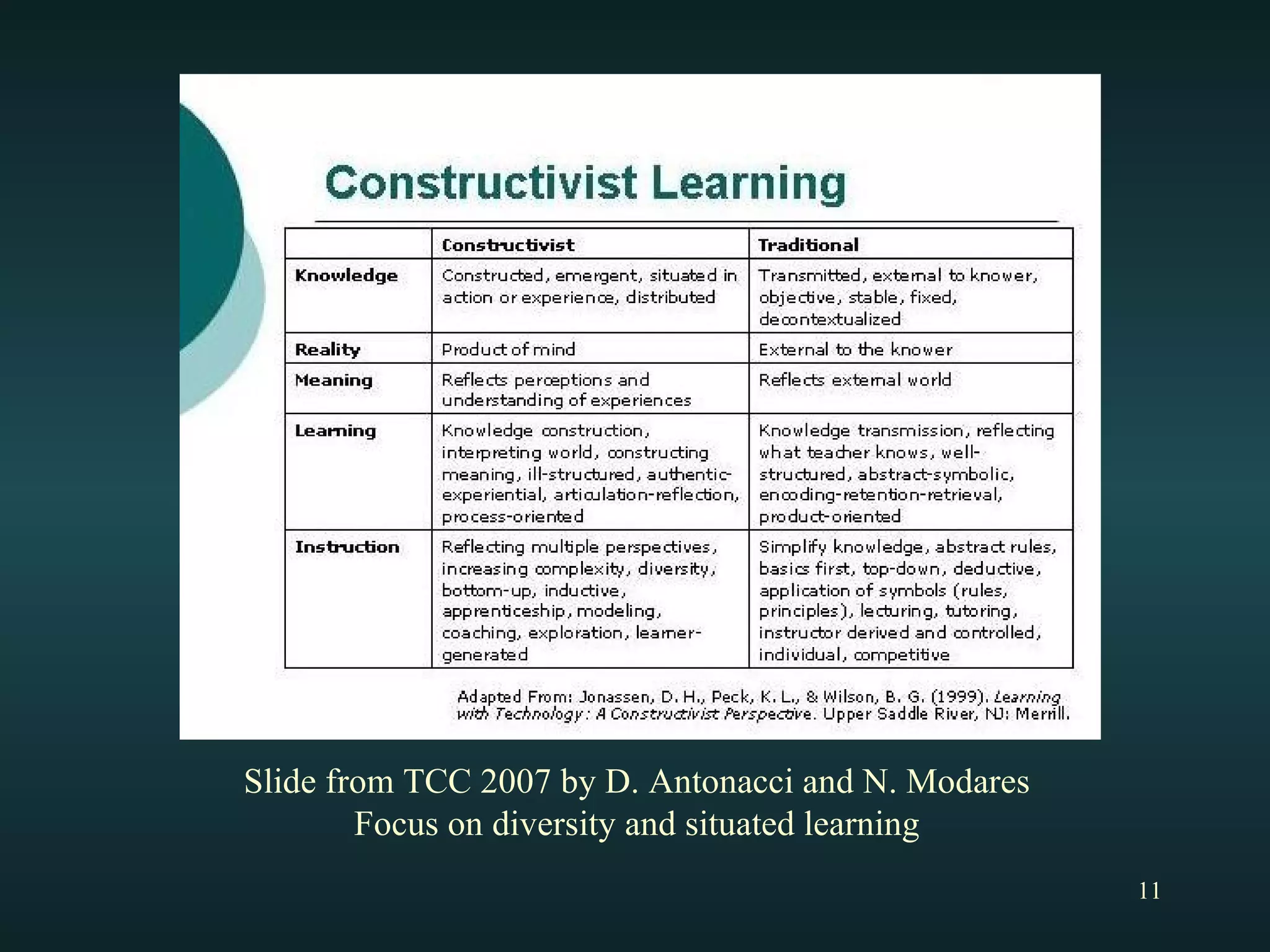
Slide from TCC 2007 by D. Antonacci and N. Modares Focus on diversity and situated learning
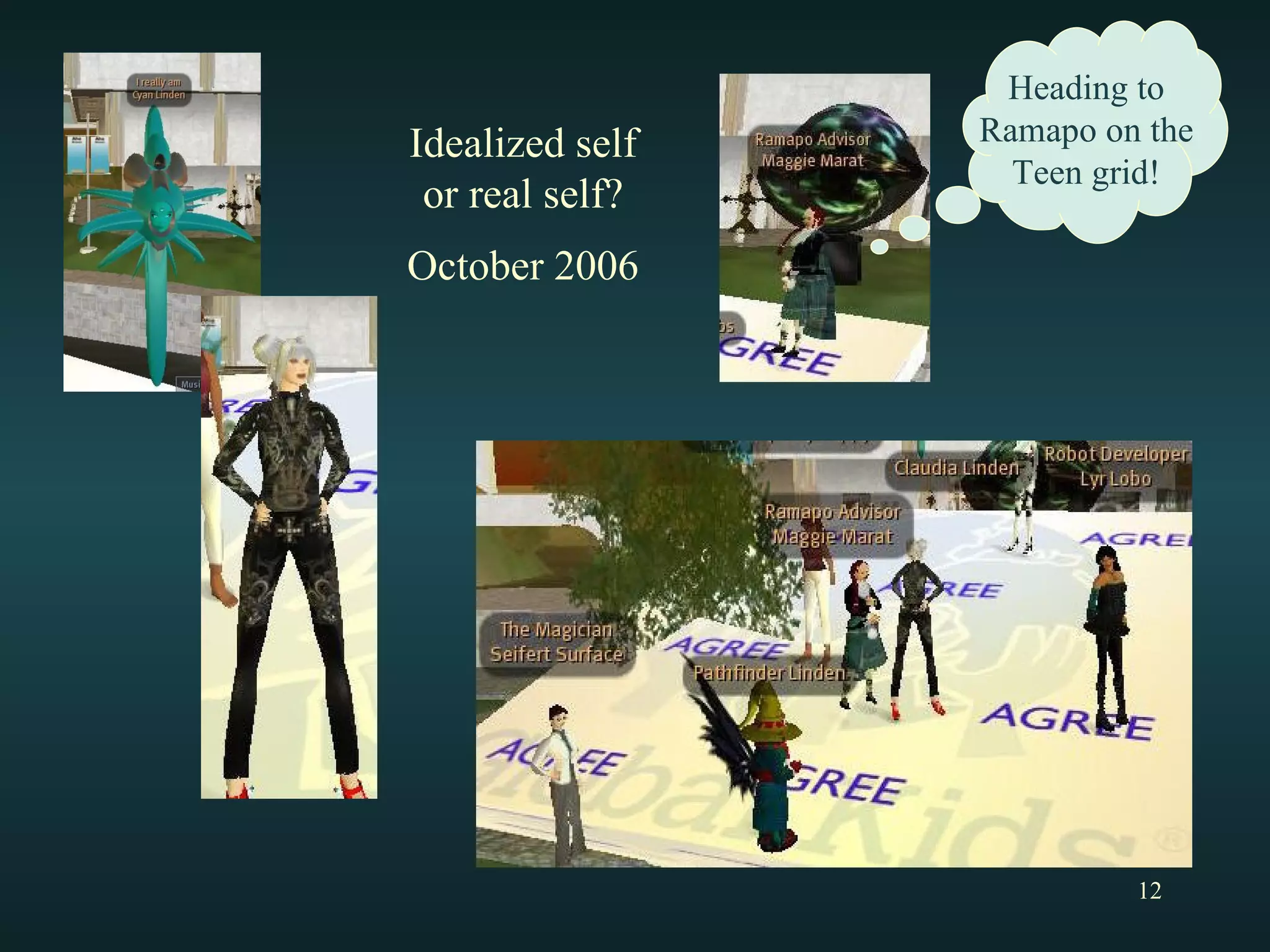
Idealized self or real self? October 2006 Heading to Ramapo on the  Teen grid!
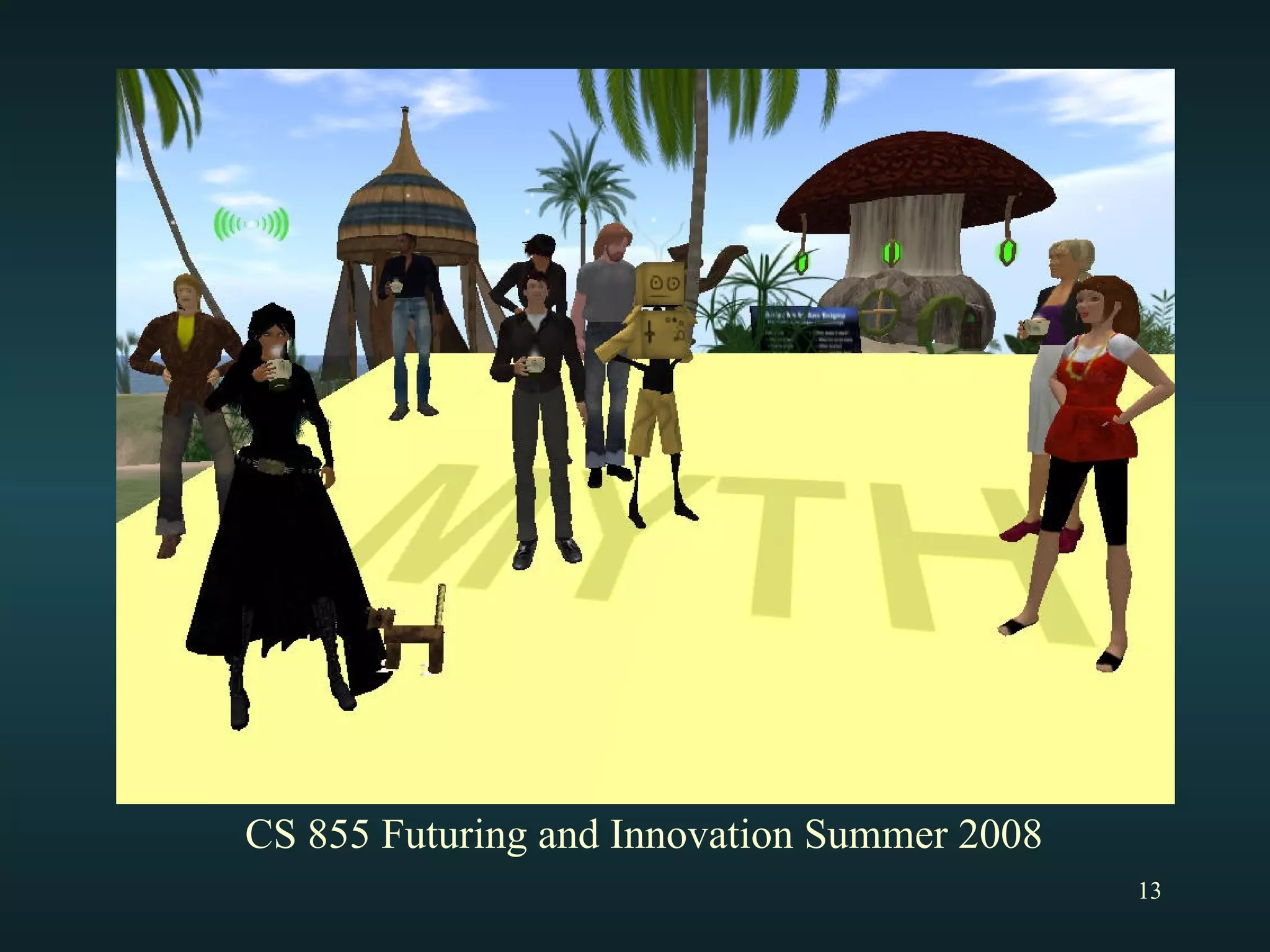
CS 855 Futuring and Innovation Summer 2008
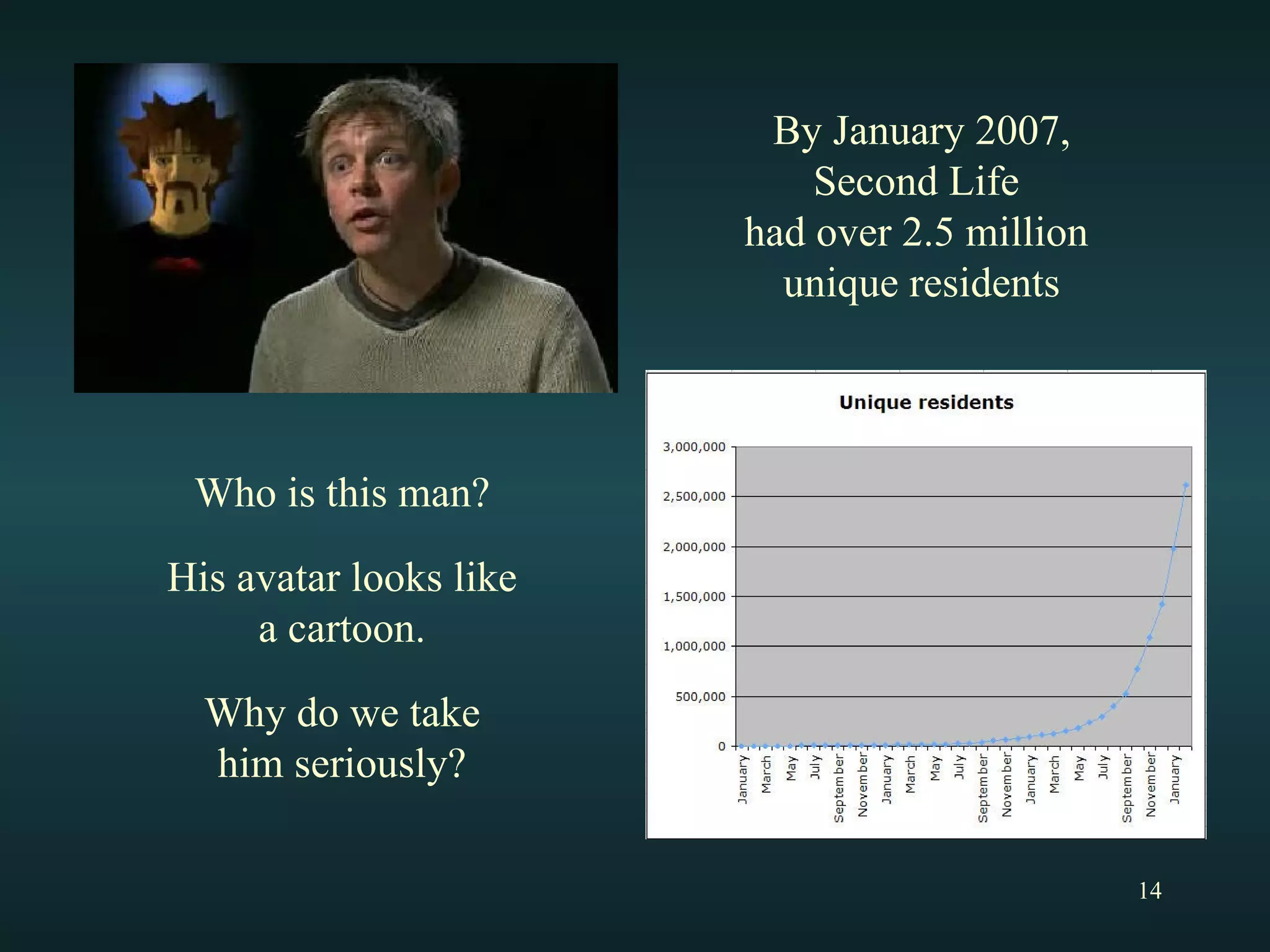
By January 2007, Second Life  had over 2.5 million  unique residents Who is this man? His avatar looks like a cartoon. Why do we take him seriously?
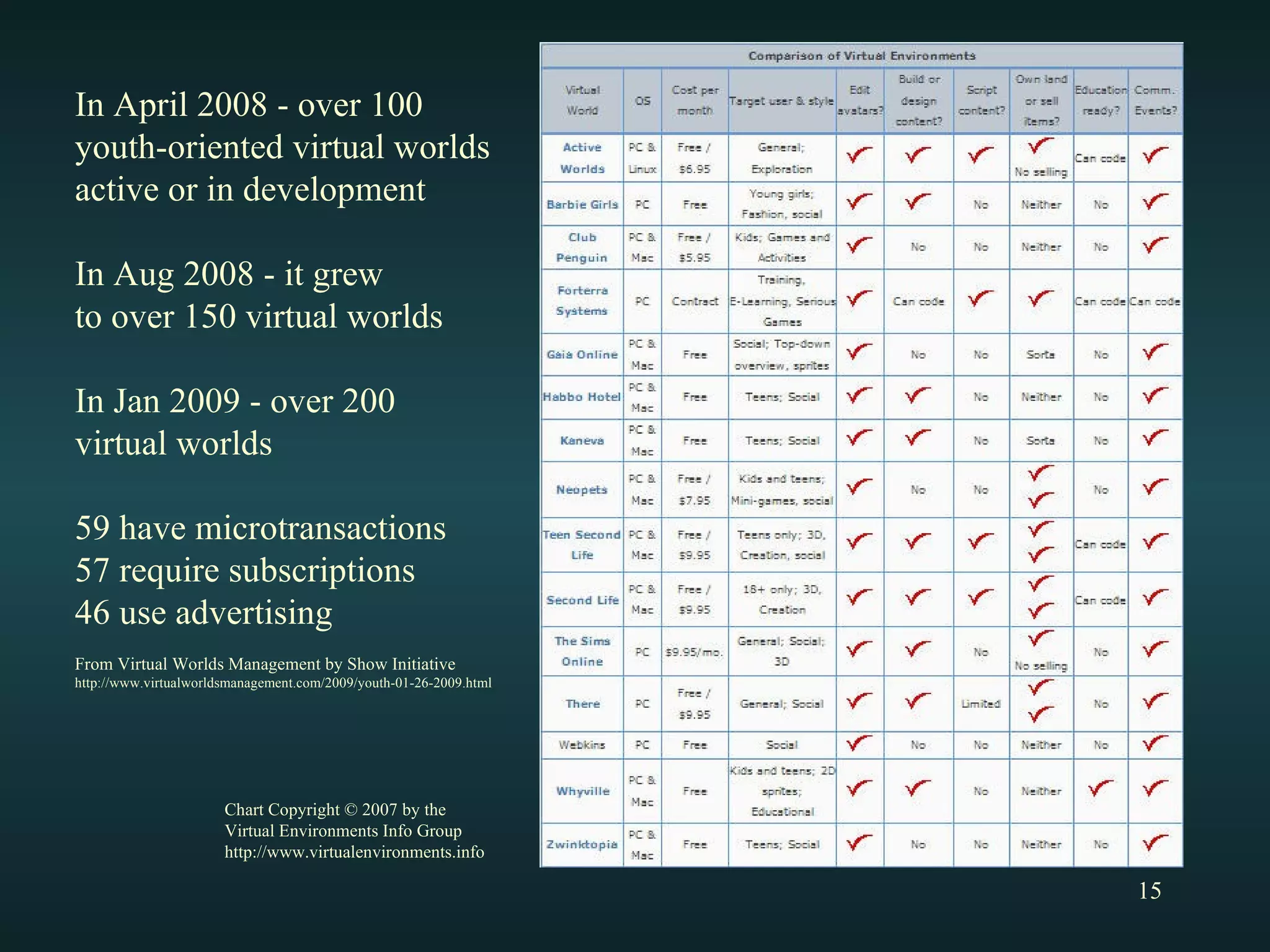
Chart Copyright © 2007 by the Virtual Environments Info Group http://www.virtualenvironments.info In April 2008 - over 100 youth-oriented virtual worlds  active or in development In Aug 2008 - it grew to over 150 virtual worlds In Jan 2009 - over 200 virtual worlds 59 have microtransactions 57 require subscriptions 46 use advertising From Virtual Worlds Management by Show Initiative http://www.virtualworldsmanagement.com/2009/youth-01-26-2009.html
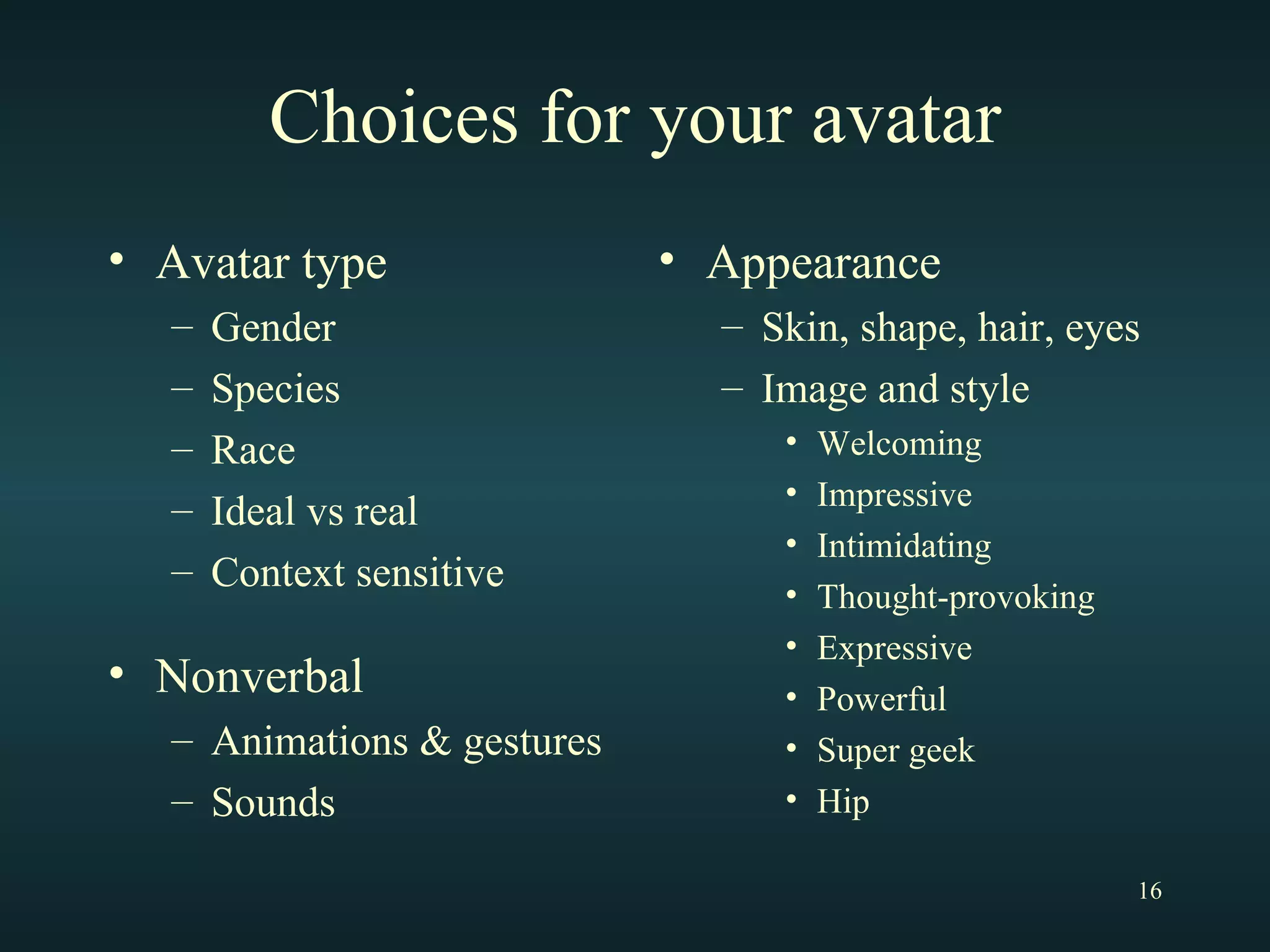
Choices for your avatar Avatar type Gender Species Race Ideal vs real Context sensitive Nonverbal Animations & gestures Sounds Appearance Skin, shape, hair, eyes Image and style  Welcoming Impressive Intimidating Thought-provoking Expressive Powerful Super geek Hip
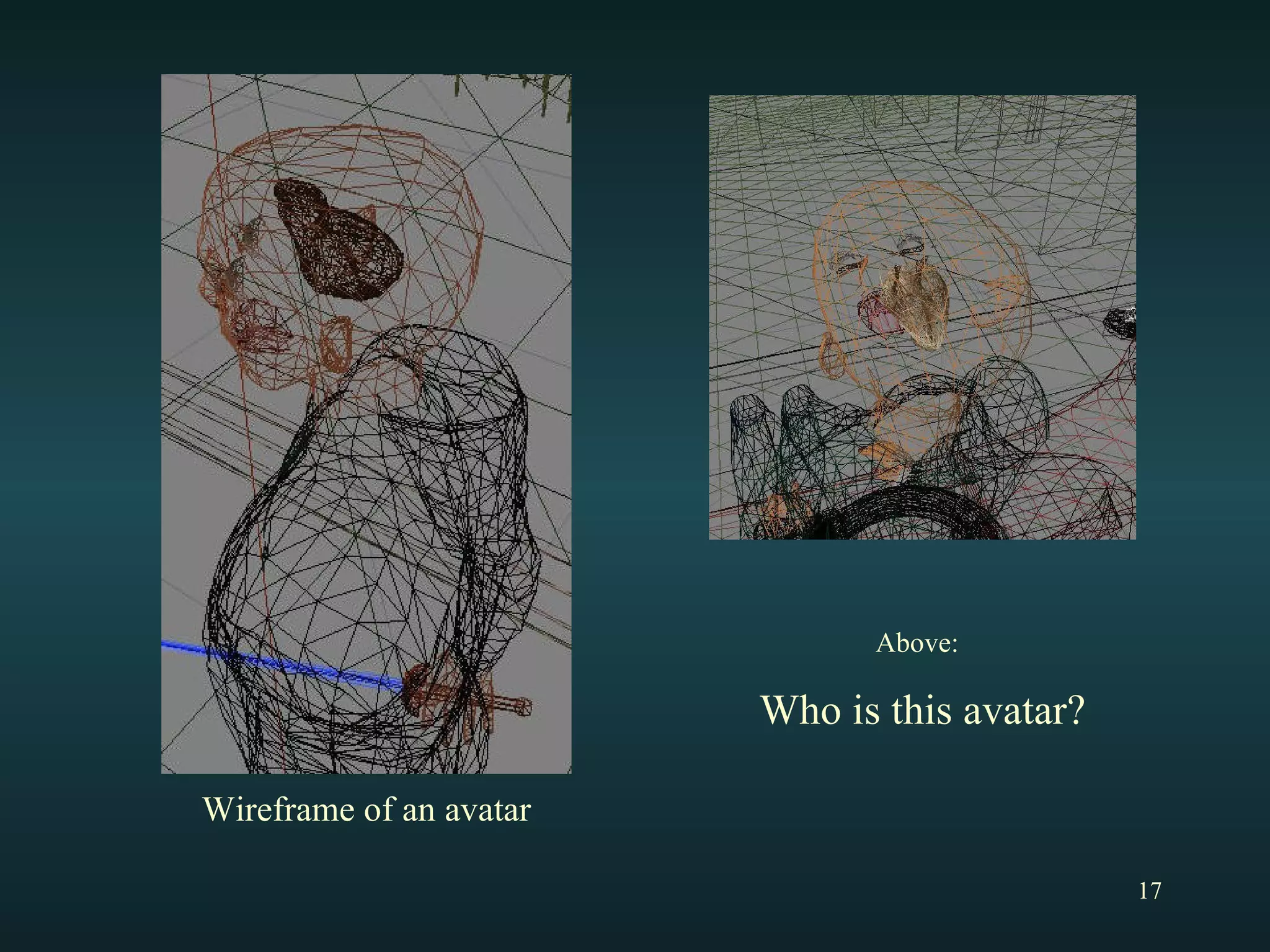
Above:   Who is this avatar? Wireframe of an avatar
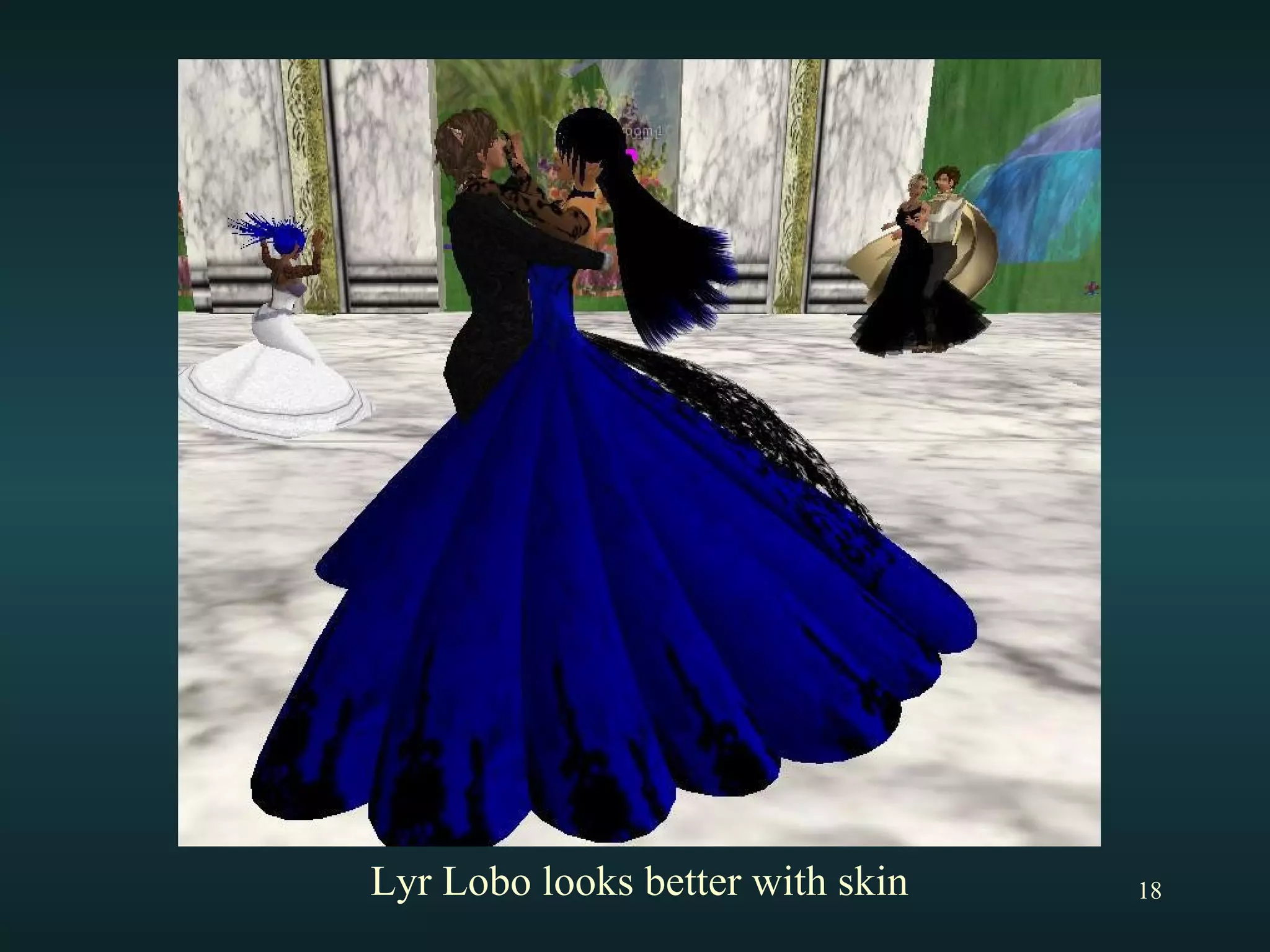
Lyr Lobo looks better with skin
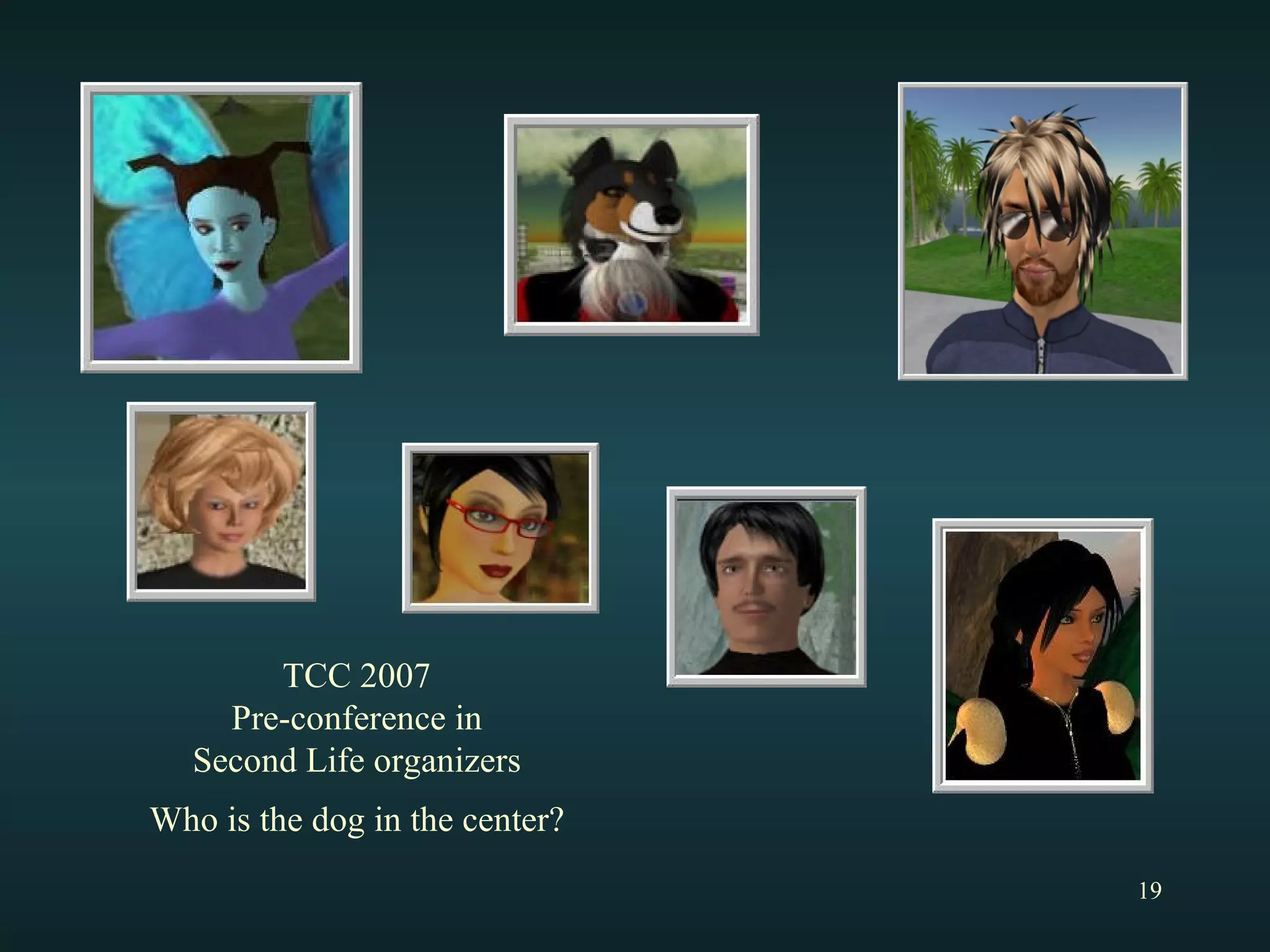
TCC 2007 Pre-conference in Second Life organizers Who is the dog in the center?
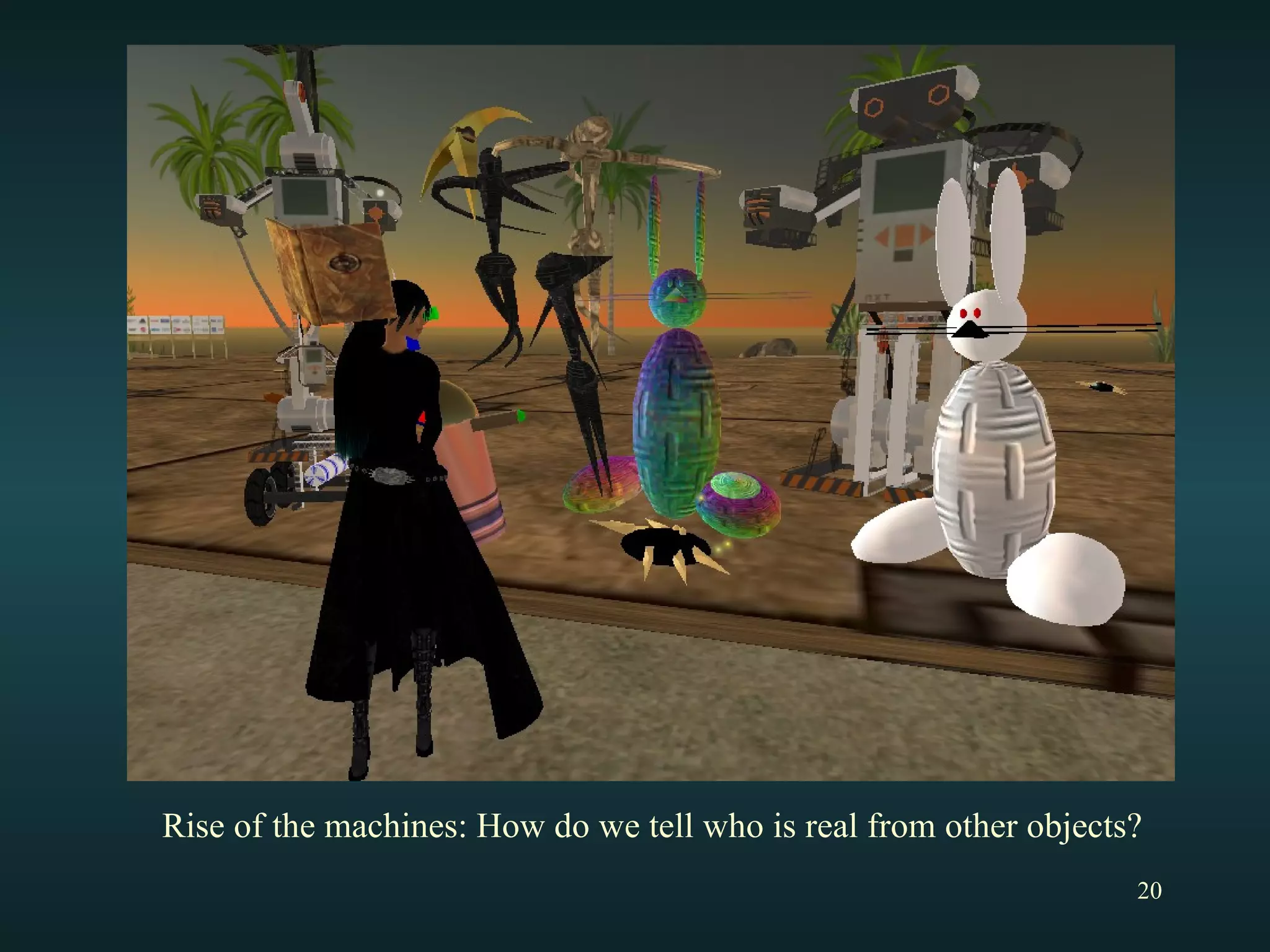
Rise of the machines: How do we tell who is real from other objects?
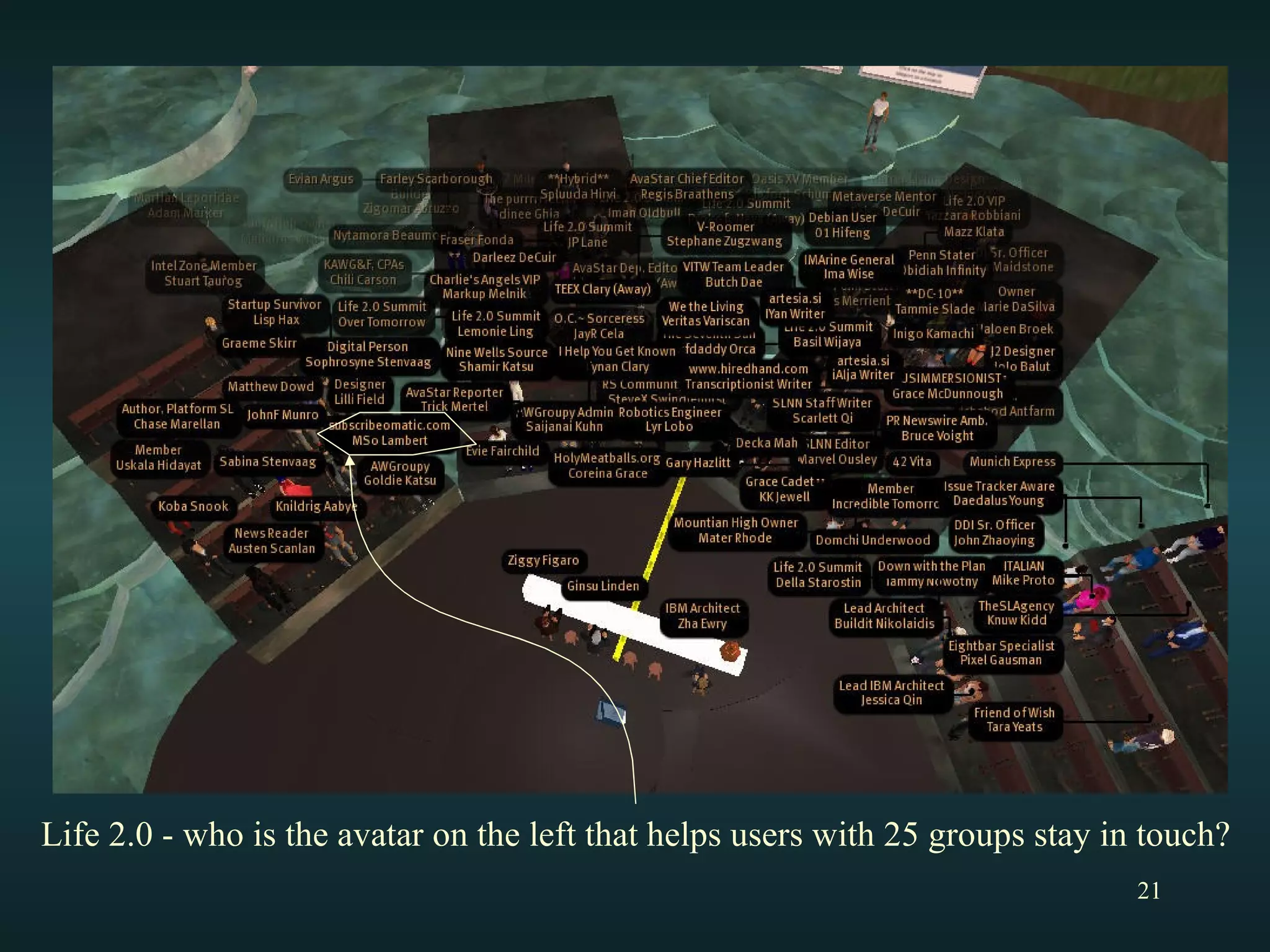
Life 2.0 - who is the avatar on the left that helps users with 25 groups stay in touch?
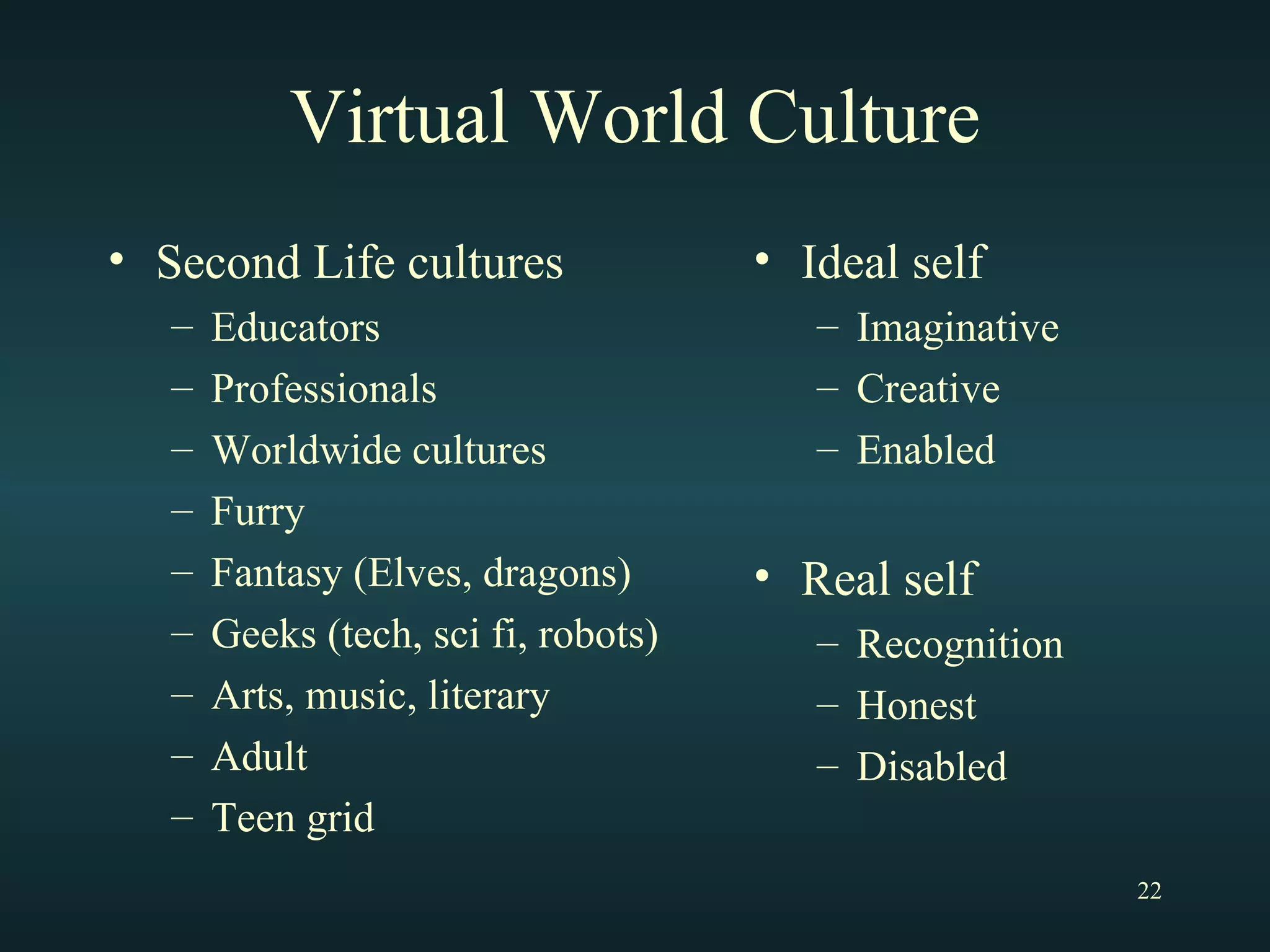
Virtual World Culture Second Life cultures Educators Professionals Worldwide cultures Furry Fantasy (Elves, dragons) Geeks (tech, sci fi, robots) Arts, music, literary Adult Teen grid Ideal self Imaginative Creative Enabled Real self Recognition Honest Disabled
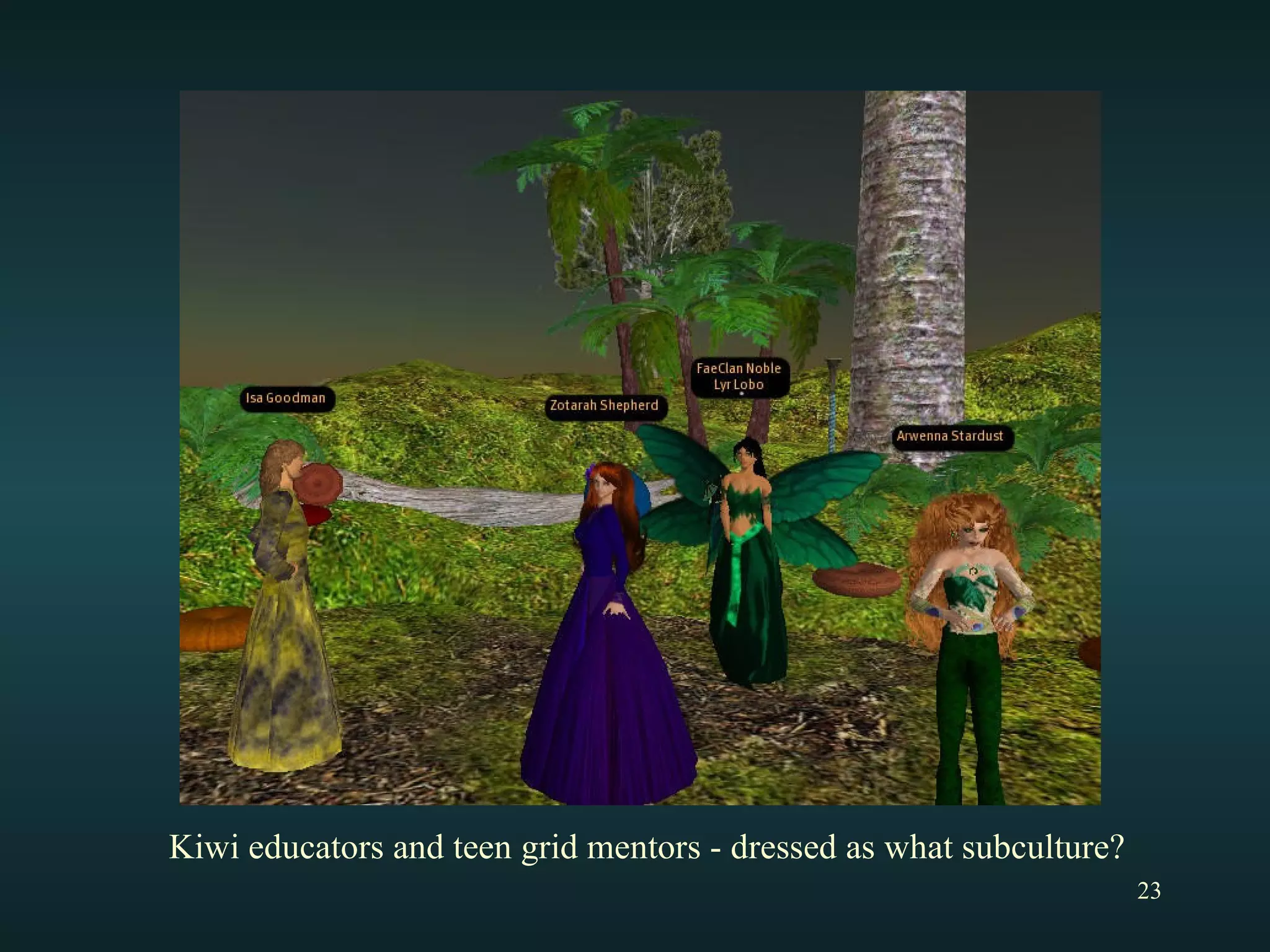
Kiwi educators and teen grid mentors - dressed as what subculture?
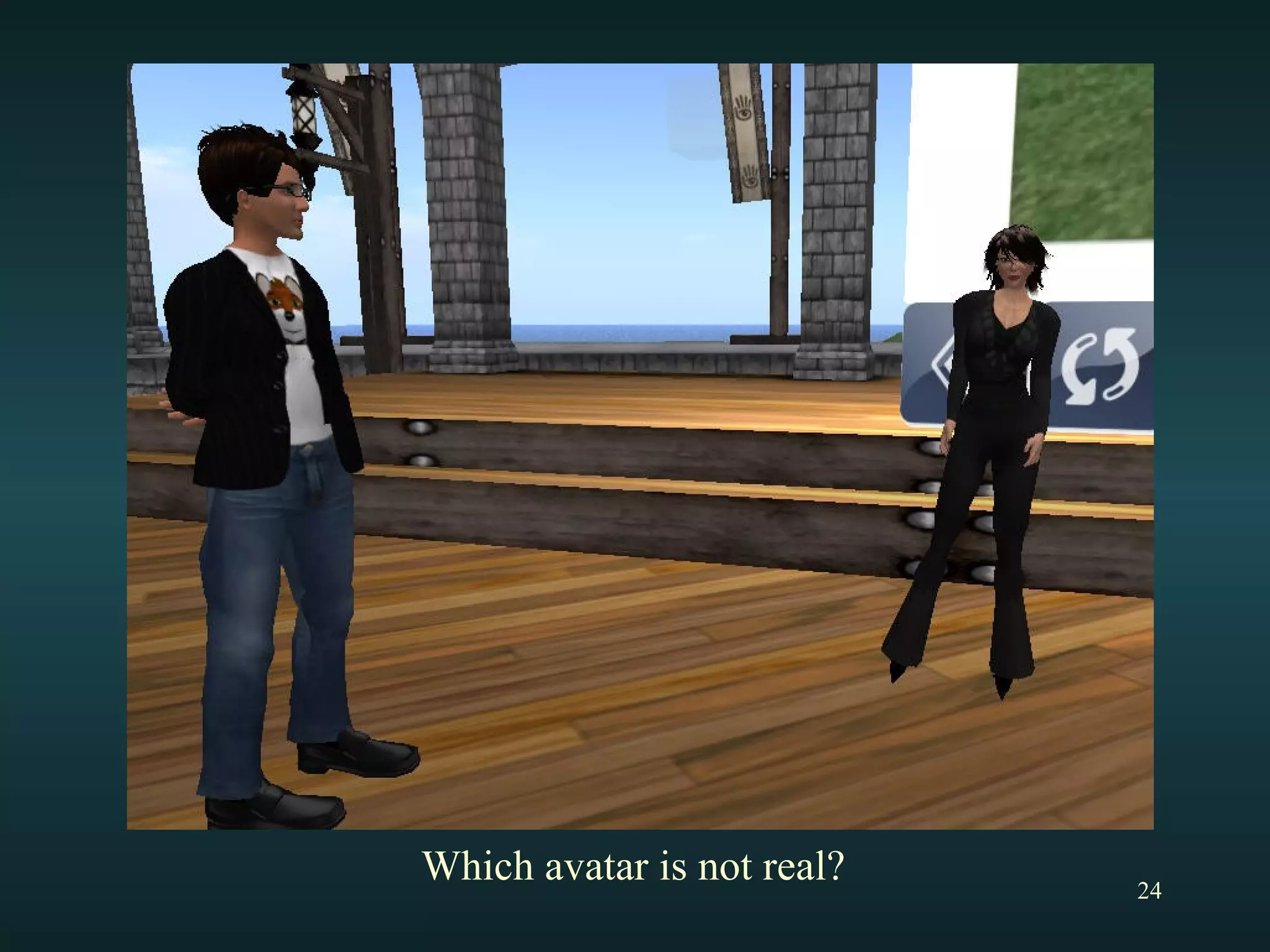
Which avatar is not real?
Real avatars, real people - who is on the left?
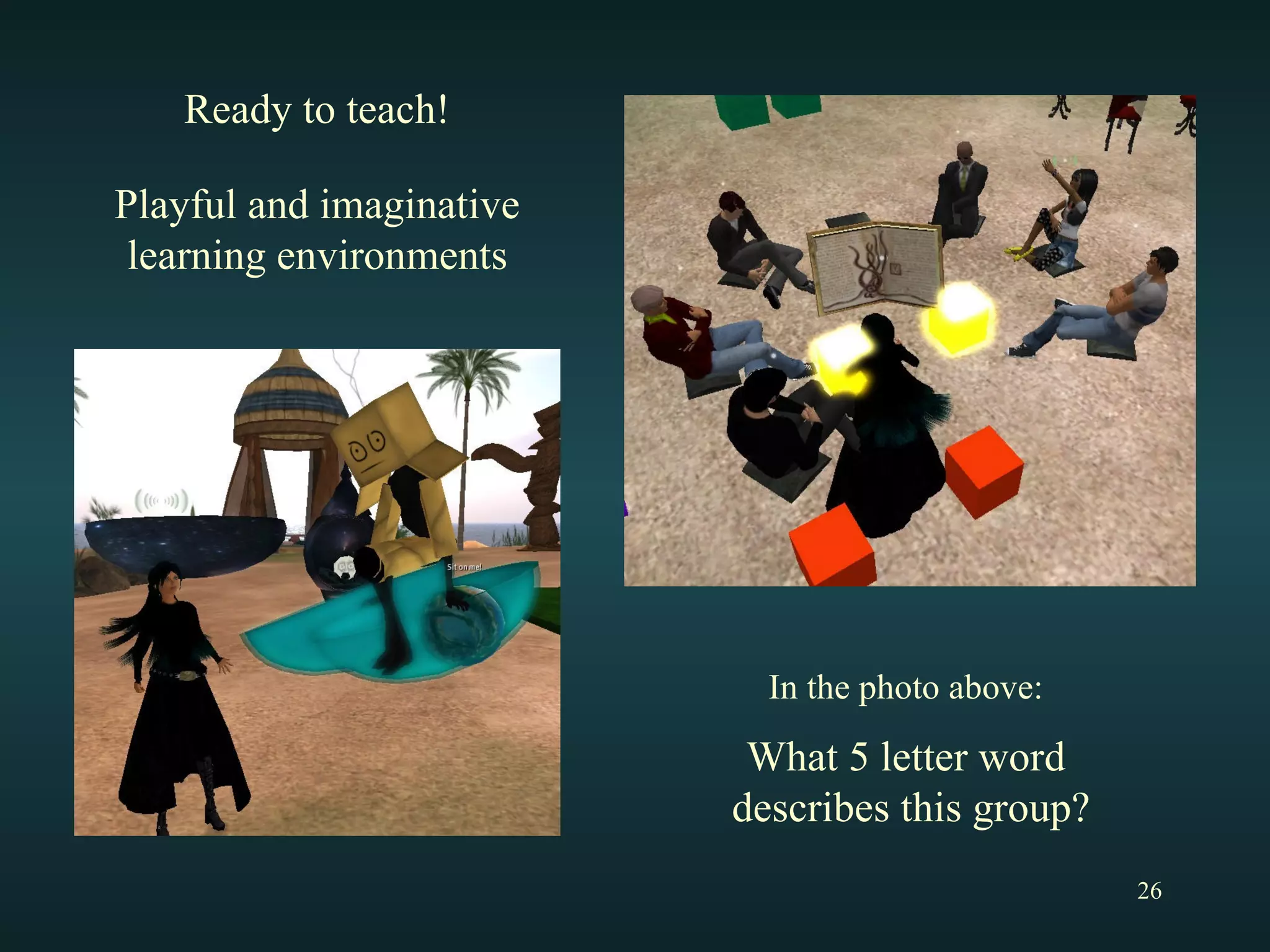
Ready to teach! Playful and imaginative learning environments In the photo above:   What 5 letter word  describes this group?
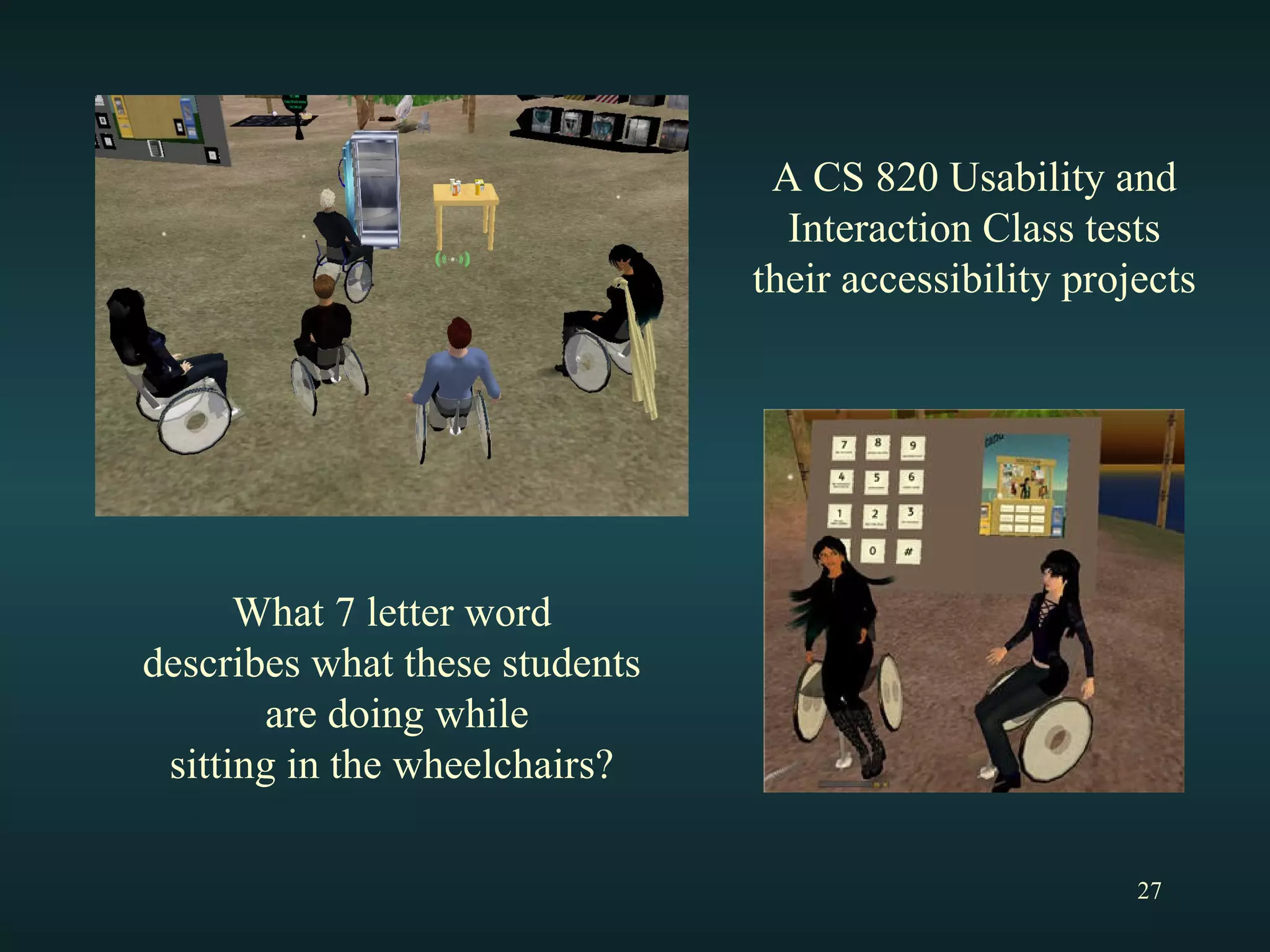
What 7 letter word describes what these students are doing while sitting in the wheelchairs? A CS 820 Usability and Interaction Class tests their accessibility projects
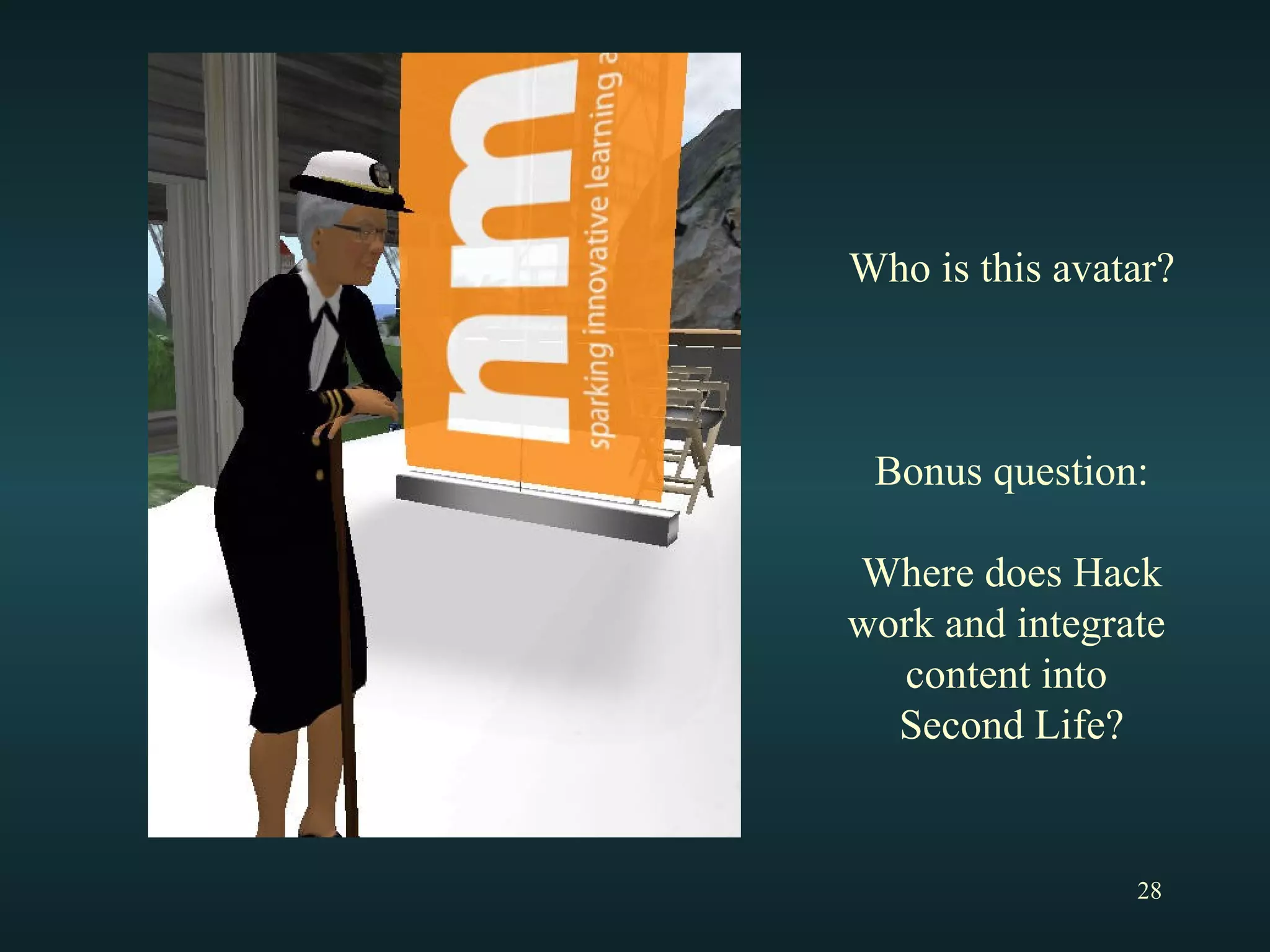
Who is this avatar? Bonus question: Where does Hack work and integrate  content into  Second Life?
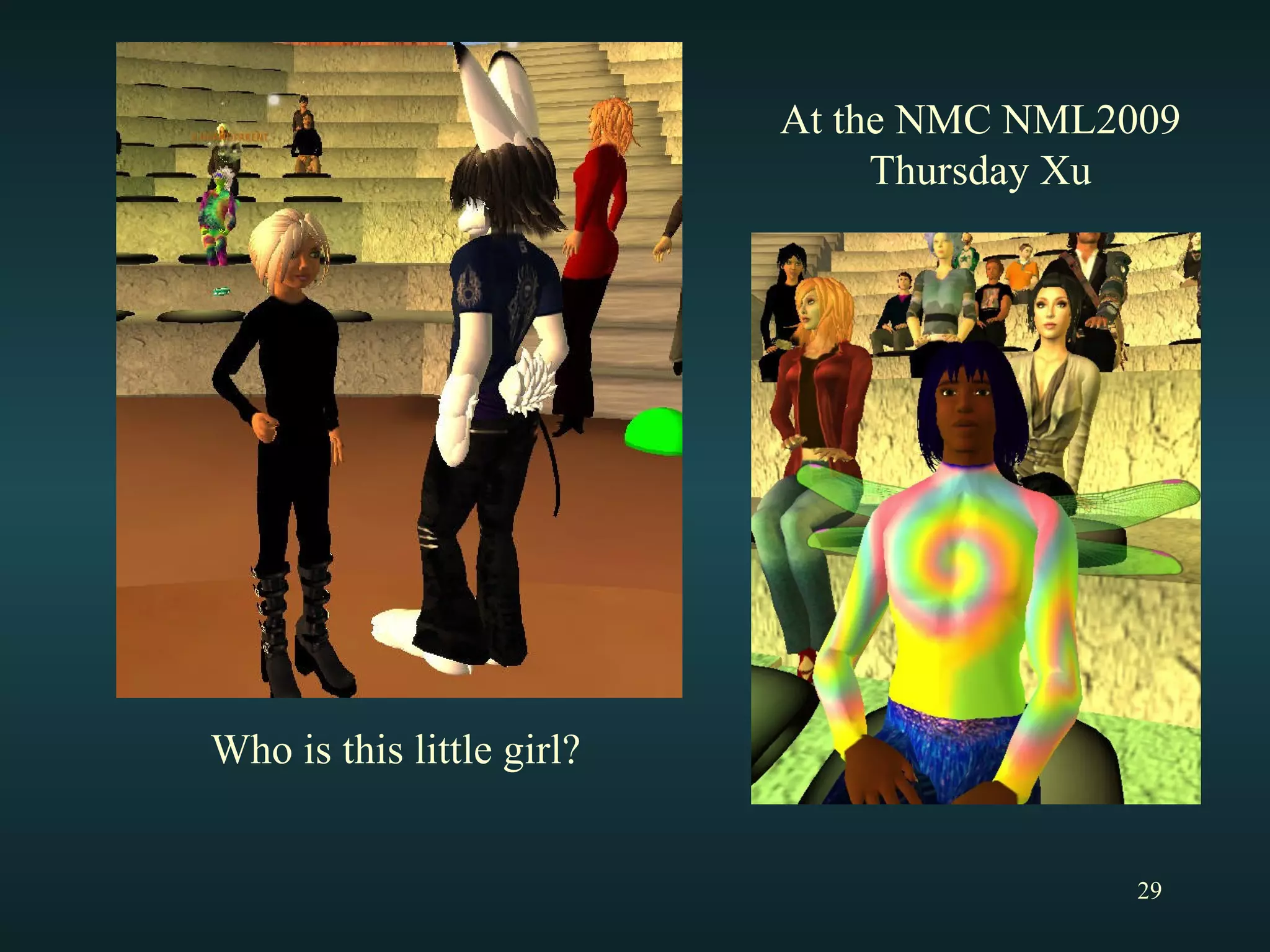
Who is this little girl? At the NMC NML2009 Thursday Xu
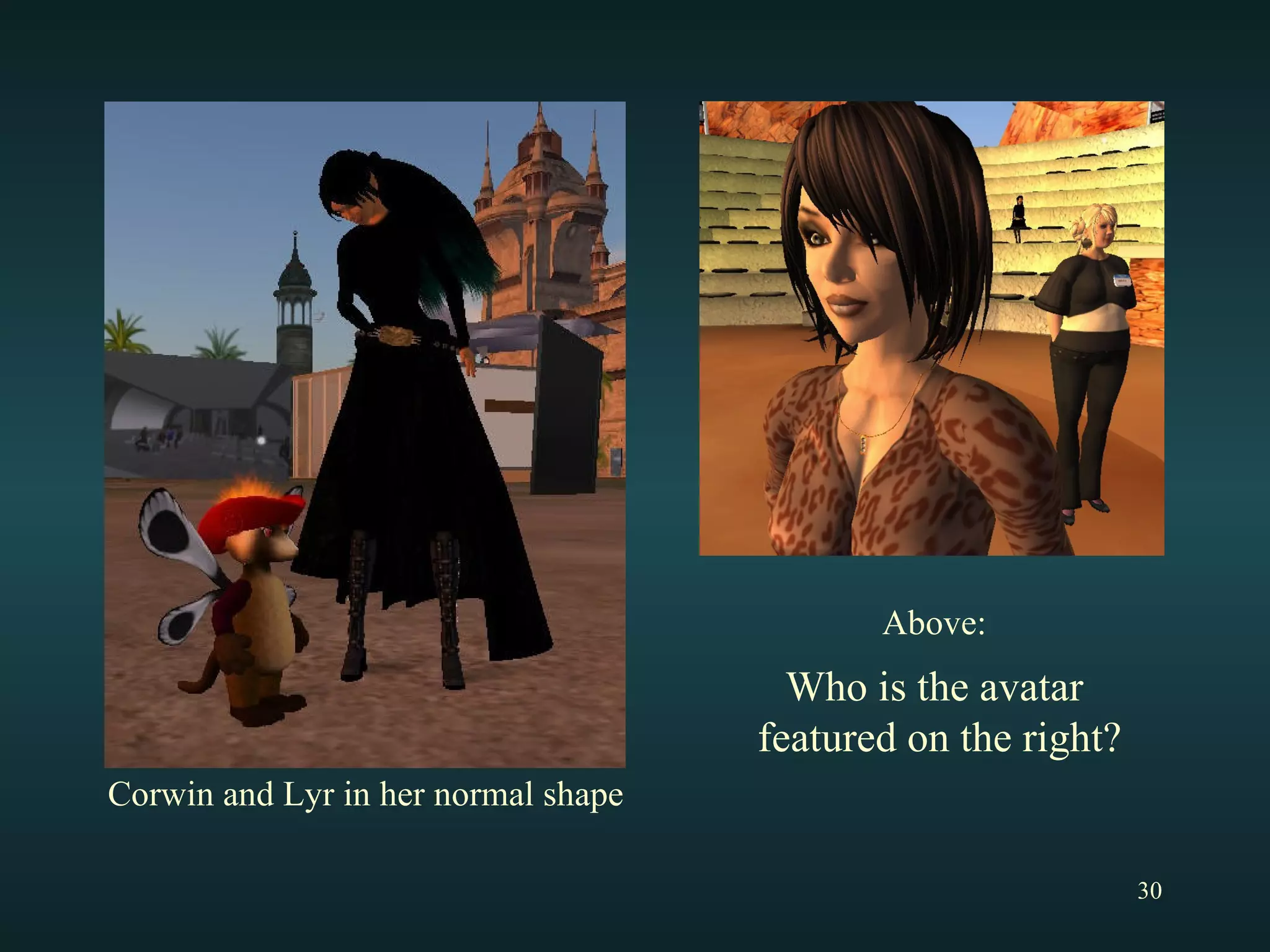
Above: Who is the avatar featured on the right? Corwin and Lyr in her normal shape
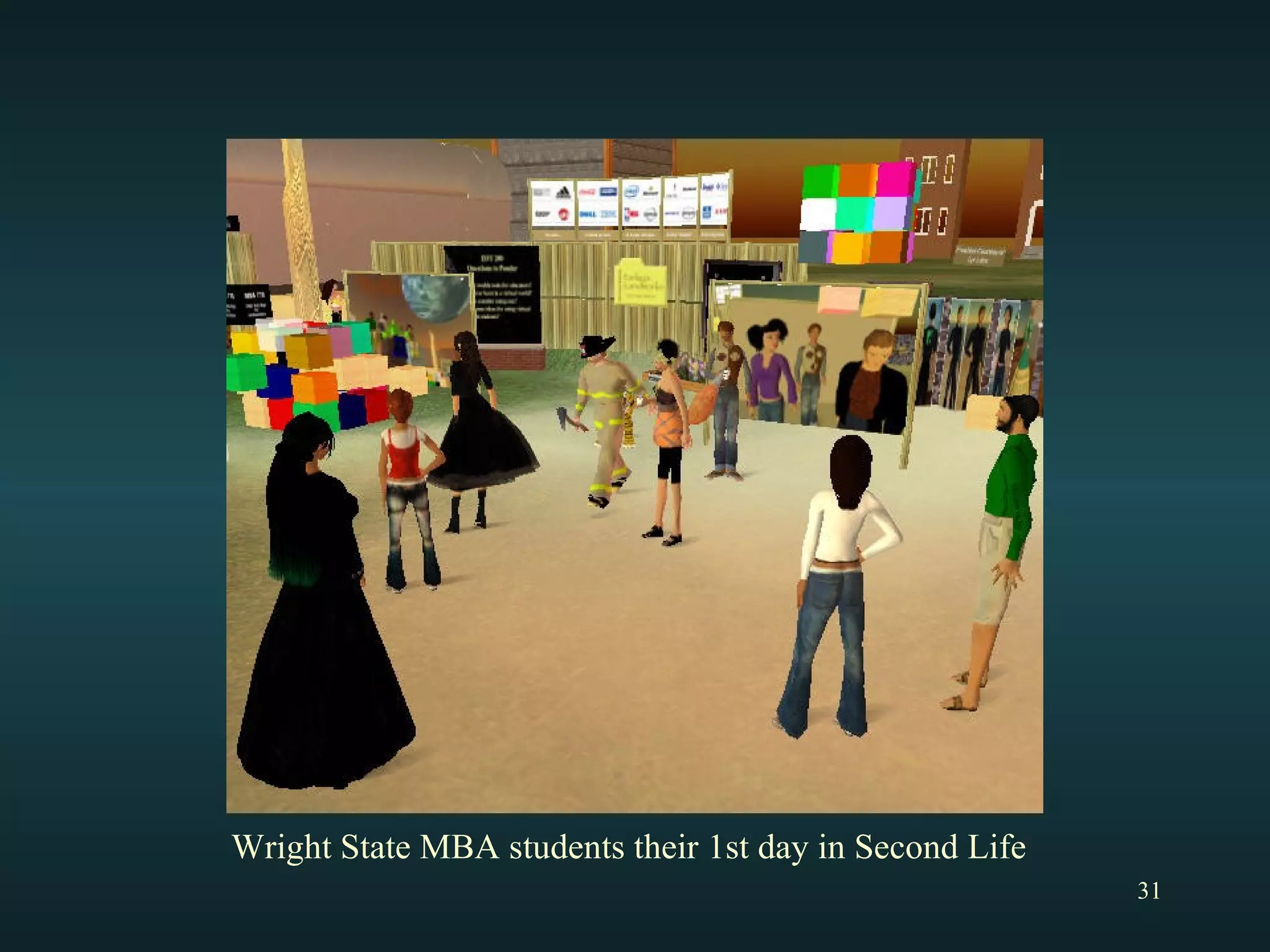
Wright State MBA students their 1st day in Second Life
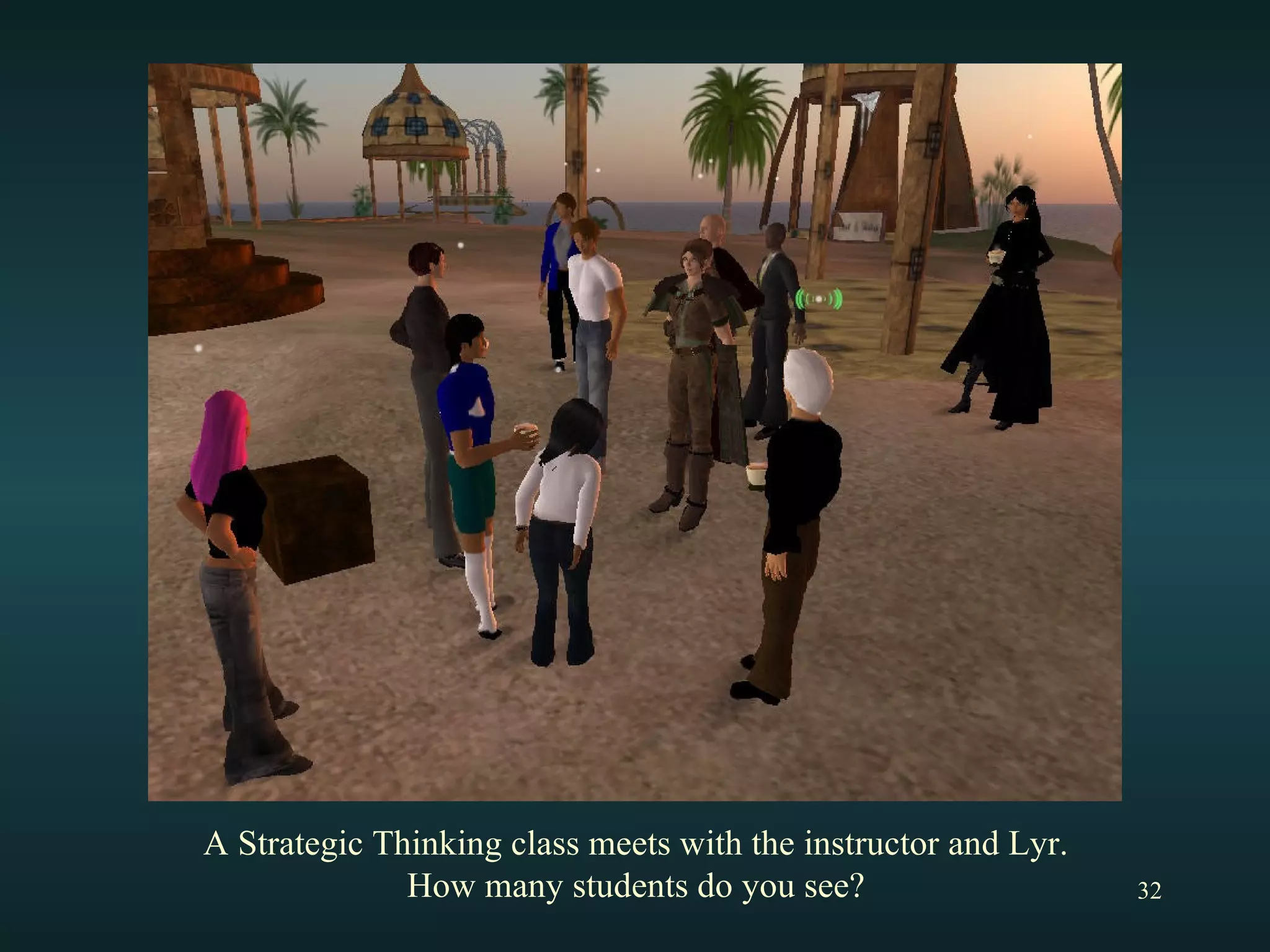
A Strategic Thinking class meets with the instructor and Lyr. How many students do you see?
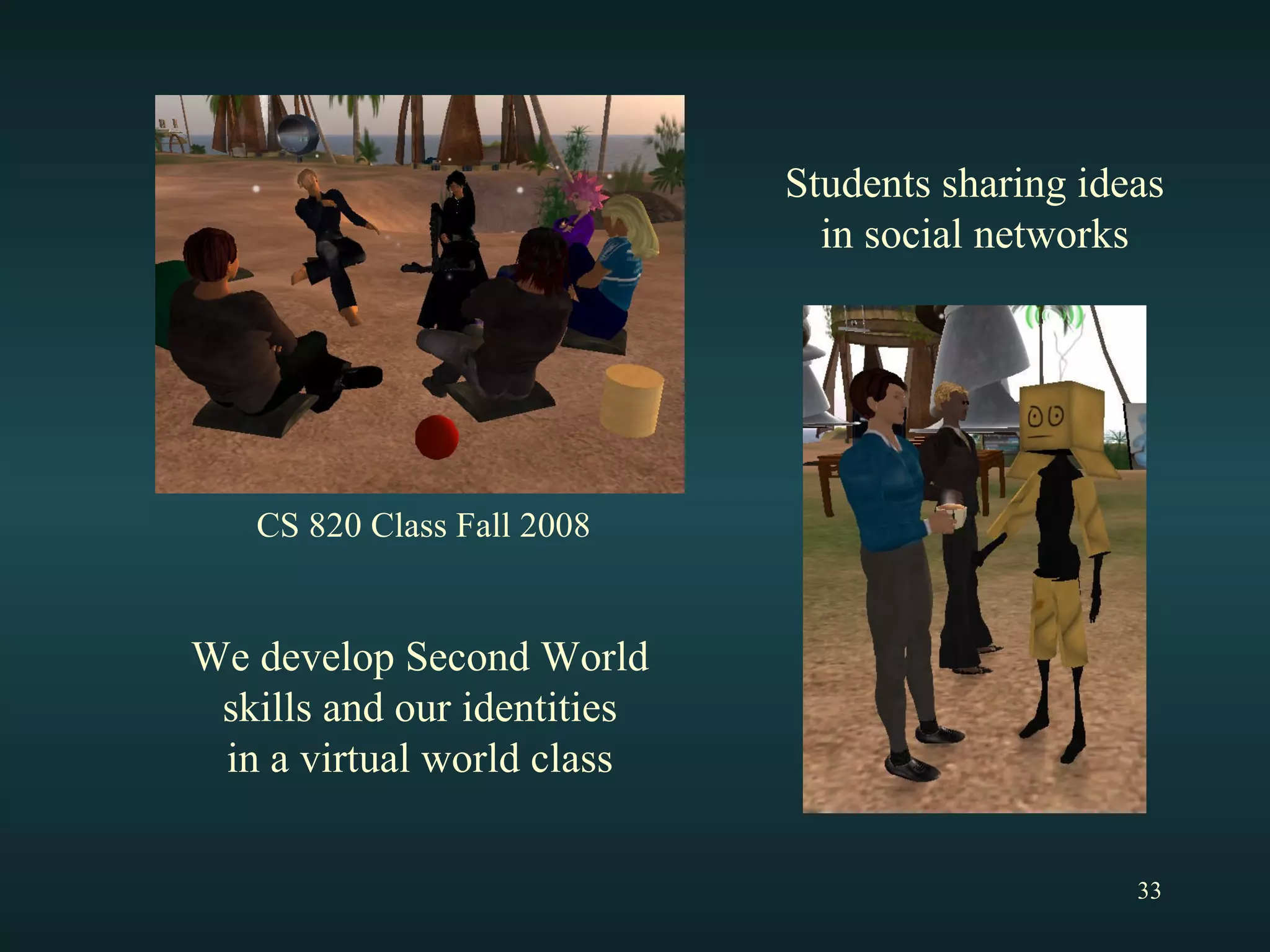
We develop Second World skills and our identities in a virtual world class Students sharing ideas in social networks CS 820 Class Fall 2008
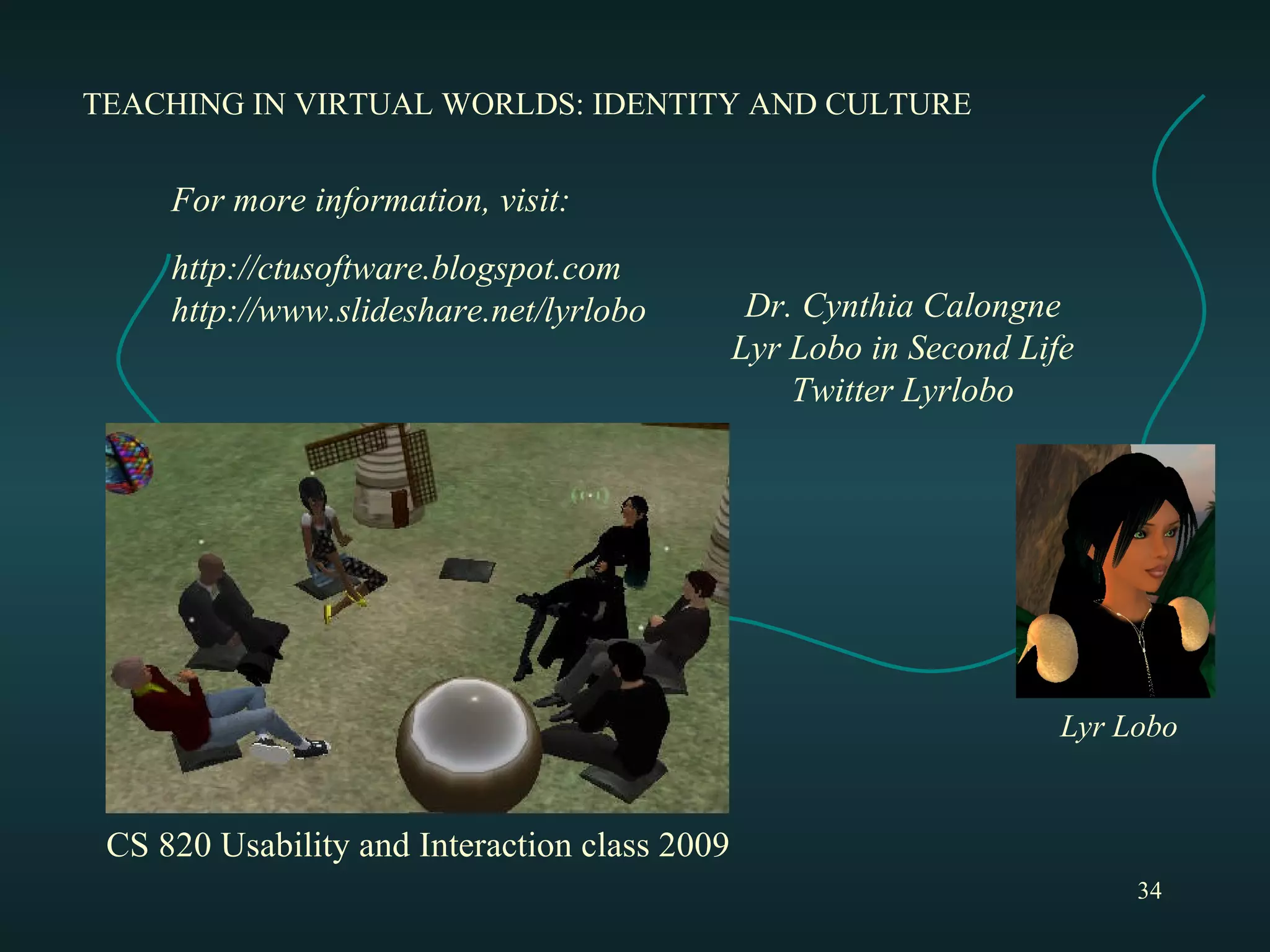
TEACHING IN VIRTUAL WORLDS: IDENTITY AND CULTURE Dr. Cynthia Calongne Lyr Lobo in Second Life Twitter Lyrlobo For more information, visit: http://ctusoftware.blogspot.com http://www.slideshare.net/lyrlobo Lyr Lobo CS 820 Usability and Interaction class 2009

Identity and Culture in Virtual Worlds

  • 1.
    TEACHING IN VIRTUALWORLDS: IDENTITY AND CULTURE Paper presentation by Dr. Cynthia Calongne Institute for Advanced Studies Colorado Technical University Licensed under a Creative Commons Share Alike with Attribution License Virtual Worlds Best Practices in Education March 29, 2009
  • 2.
    Lyr Lobo inher nature spirit avatar Avatar Design by Lyr Cover slide: Lyr Lobo as a shadow robot dancing with herself
  • 3.
    An Educause SACStory The National Science Foundation (NSF) had recently updated their website Someone asked if the NSF needed a Second Life site Why? Persis Trilling noted that Second Life centers on people interacting with each other and the content Immersion, interaction & a sense of presence Engaging and personal
  • 4.
    Is this avatarnew or experienced? How do we know?
  • 5.
    First day inSecond Life for which of these avatars?
  • 6.
    Crossing boundaries: EricMcLuhan as Pharaoh
  • 7.
    Your Avatar: WhoAre You? Subcultures and roles Teacher Parent Scholar Lover of life Curious child Researcher Comedian Entertainer Sage, a wise person What we know about you The inner you
  • 8.
    Who are thesepeople? Who is the avatar on the far right?
  • 9.
    Paper Highlights Peoplemake a virtual world come alive It is that shared experience and the awareness of others that makes the content come to life. Situated learning, culture and behavior Anonymity can enhance learning and communication across cultural boundaries. Representation: identity in the classroom Students and instructors need to recognize one another.
  • 10.
    This is notyour Mama’s classroom! Who is the avatar in the center?
  • 11.
    Slide from TCC2007 by D. Antonacci and N. Modares Focus on diversity and situated learning
  • 12.
    Idealized self orreal self? October 2006 Heading to Ramapo on the Teen grid!
  • 13.
    CS 855 Futuringand Innovation Summer 2008
  • 14.
    By January 2007,Second Life had over 2.5 million unique residents Who is this man? His avatar looks like a cartoon. Why do we take him seriously?
  • 15.
    Chart Copyright ©2007 by the Virtual Environments Info Group http://www.virtualenvironments.info In April 2008 - over 100 youth-oriented virtual worlds active or in development In Aug 2008 - it grew to over 150 virtual worlds In Jan 2009 - over 200 virtual worlds 59 have microtransactions 57 require subscriptions 46 use advertising From Virtual Worlds Management by Show Initiative http://www.virtualworldsmanagement.com/2009/youth-01-26-2009.html
  • 16.
    Choices for youravatar Avatar type Gender Species Race Ideal vs real Context sensitive Nonverbal Animations & gestures Sounds Appearance Skin, shape, hair, eyes Image and style Welcoming Impressive Intimidating Thought-provoking Expressive Powerful Super geek Hip
  • 17.
    Above: Who is this avatar? Wireframe of an avatar
  • 18.
    Lyr Lobo looksbetter with skin
  • 19.
    TCC 2007 Pre-conferencein Second Life organizers Who is the dog in the center?
  • 20.
    Rise of themachines: How do we tell who is real from other objects?
  • 21.
    Life 2.0 -who is the avatar on the left that helps users with 25 groups stay in touch?
  • 22.
    Virtual World CultureSecond Life cultures Educators Professionals Worldwide cultures Furry Fantasy (Elves, dragons) Geeks (tech, sci fi, robots) Arts, music, literary Adult Teen grid Ideal self Imaginative Creative Enabled Real self Recognition Honest Disabled
  • 23.
    Kiwi educators andteen grid mentors - dressed as what subculture?
  • 24.
    Which avatar isnot real?
  • 25.
    Real avatars, realpeople - who is on the left?
  • 26.
    Ready to teach!Playful and imaginative learning environments In the photo above: What 5 letter word describes this group?
  • 27.
    What 7 letterword describes what these students are doing while sitting in the wheelchairs? A CS 820 Usability and Interaction Class tests their accessibility projects
  • 28.
    Who is thisavatar? Bonus question: Where does Hack work and integrate content into Second Life?
  • 29.
    Who is thislittle girl? At the NMC NML2009 Thursday Xu
  • 30.
    Above: Who isthe avatar featured on the right? Corwin and Lyr in her normal shape
  • 31.
    Wright State MBAstudents their 1st day in Second Life
  • 32.
    A Strategic Thinkingclass meets with the instructor and Lyr. How many students do you see?
  • 33.
    We develop SecondWorld skills and our identities in a virtual world class Students sharing ideas in social networks CS 820 Class Fall 2008
  • 34.
    TEACHING IN VIRTUALWORLDS: IDENTITY AND CULTURE Dr. Cynthia Calongne Lyr Lobo in Second Life Twitter Lyrlobo For more information, visit: http://ctusoftware.blogspot.com http://www.slideshare.net/lyrlobo Lyr Lobo CS 820 Usability and Interaction class 2009