Internal Bleaching
Presented to you
By
Hossam Faisal
Definition and Historical Review
“The lightening of the color of a tooth through the
application of a chemical agent to oxidize the
organic pigmentation in the tooth is referred to as
Bleaching”
Causes of intrinsic local stains, indicating
non-vital bleaching
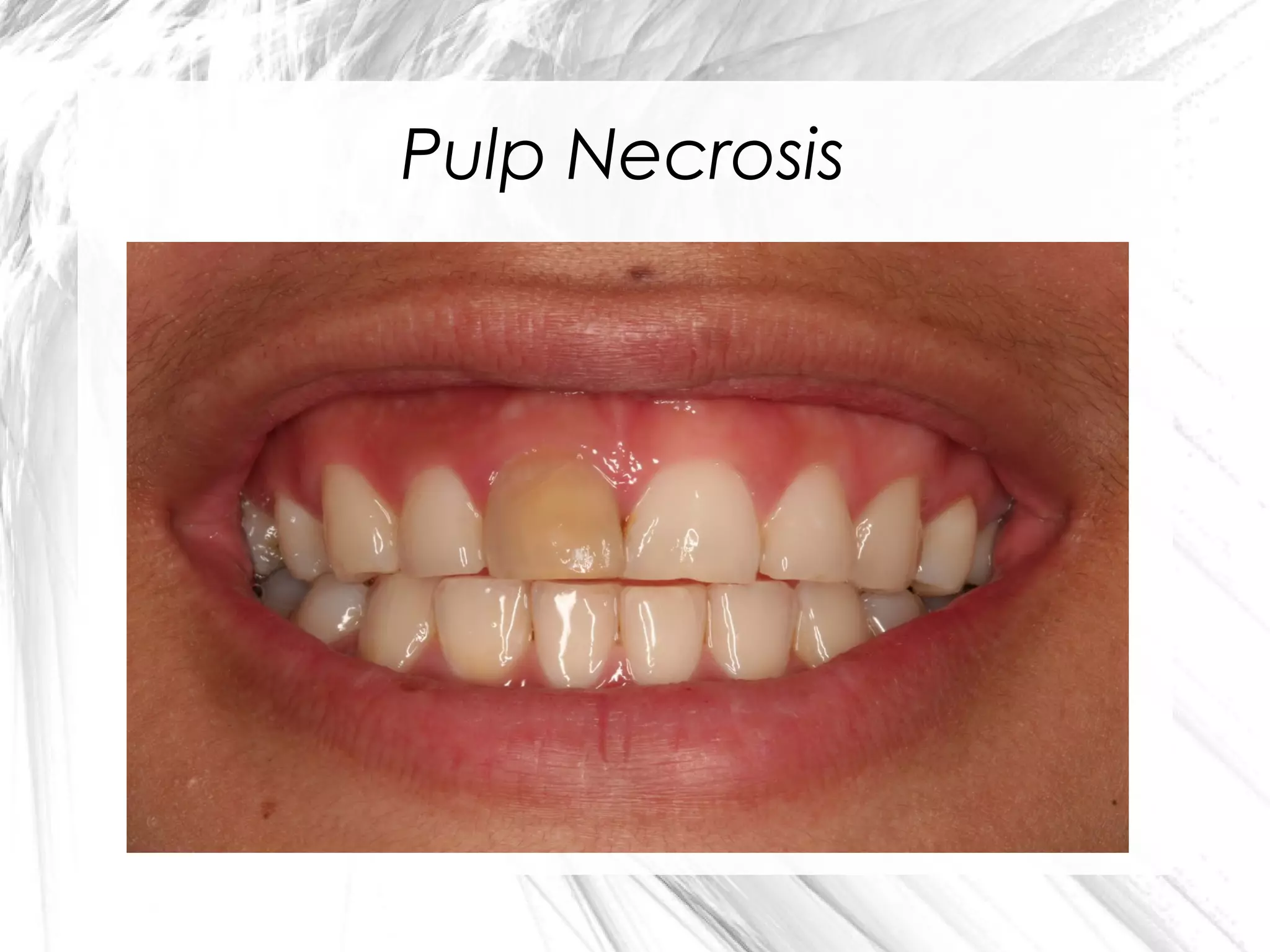
Pulp Necrosis
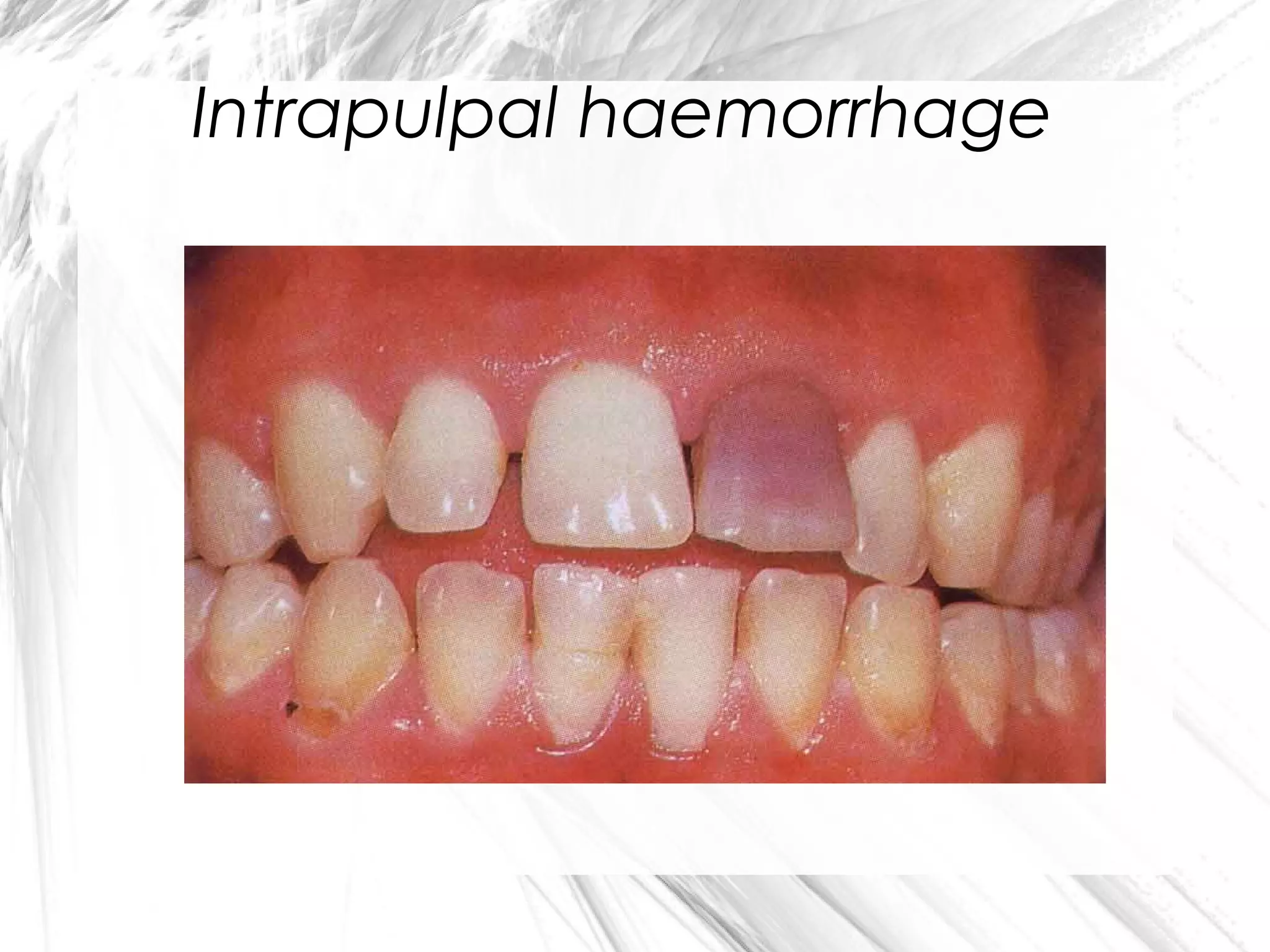
Intrapulpal haemorrhage
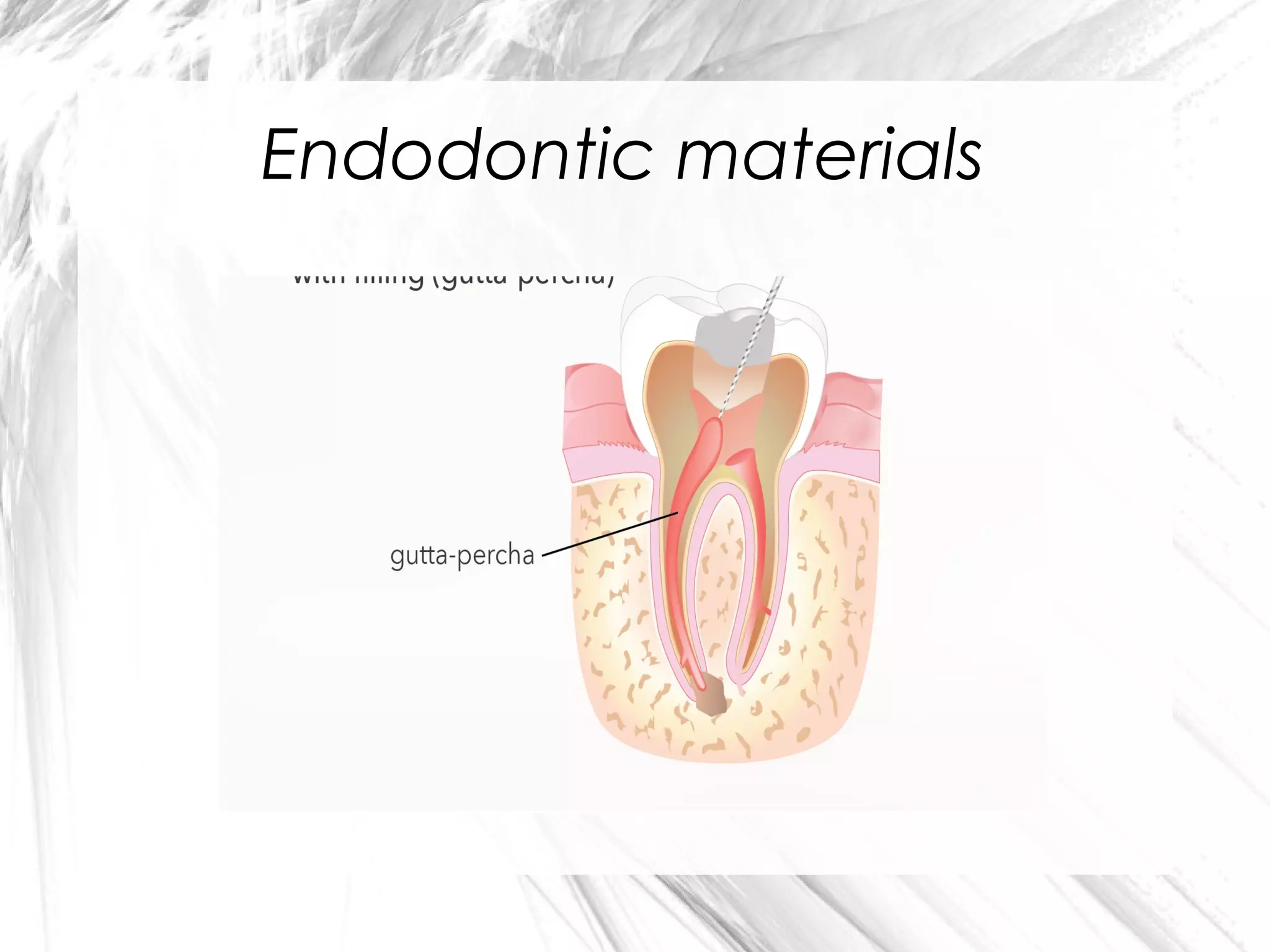
Endodontic materials
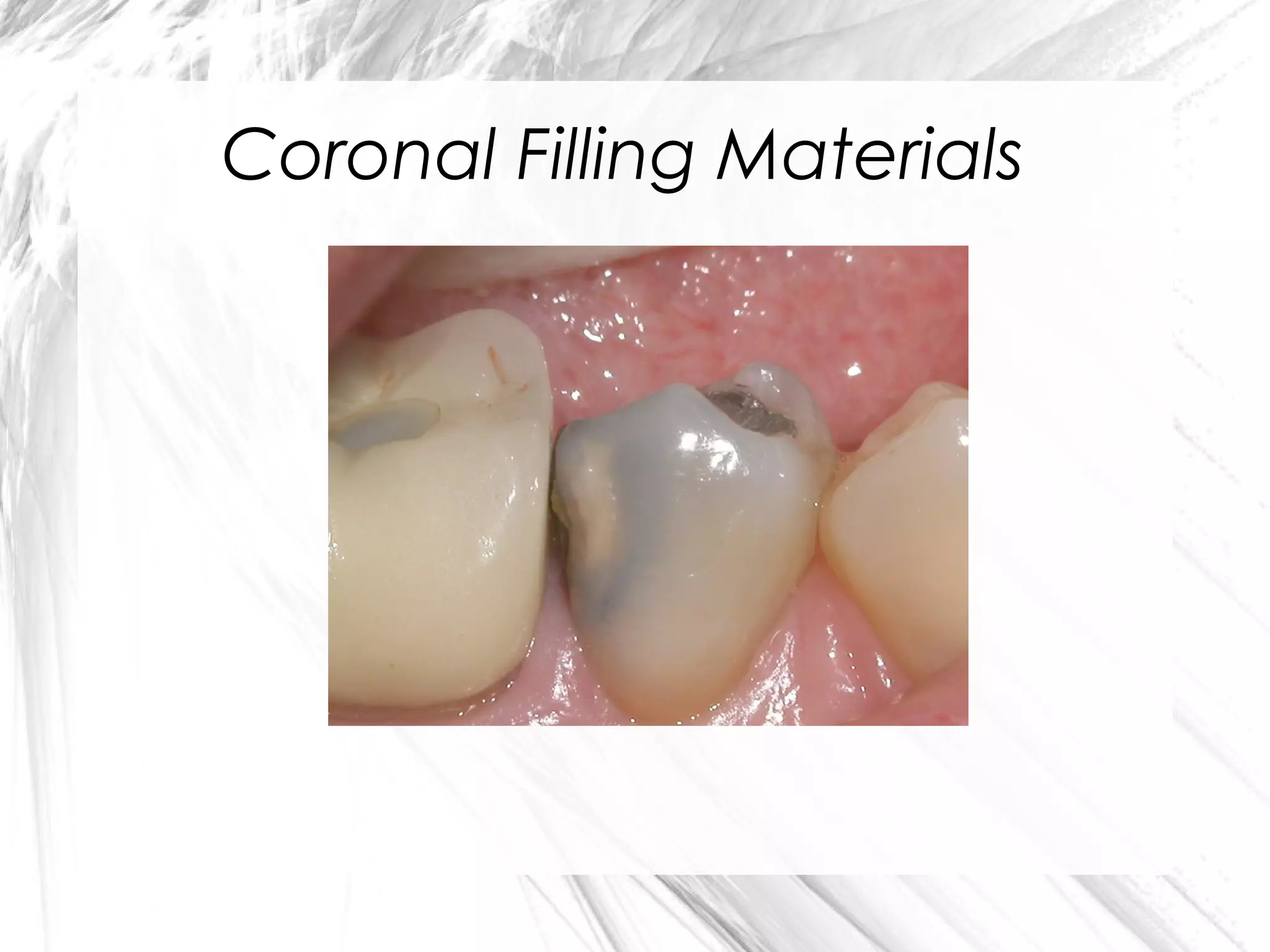
Coronal Filling Materials
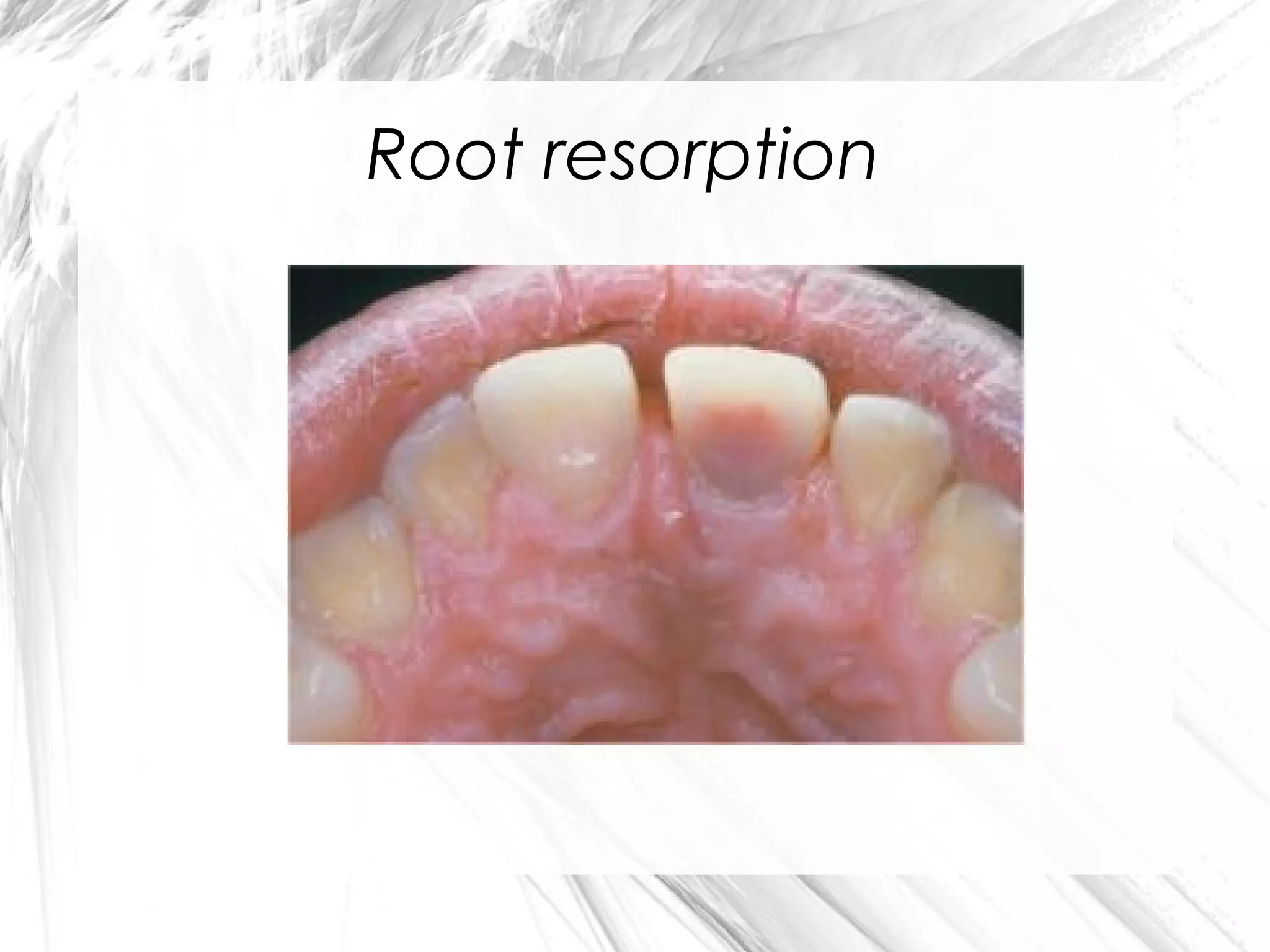
Root resorption
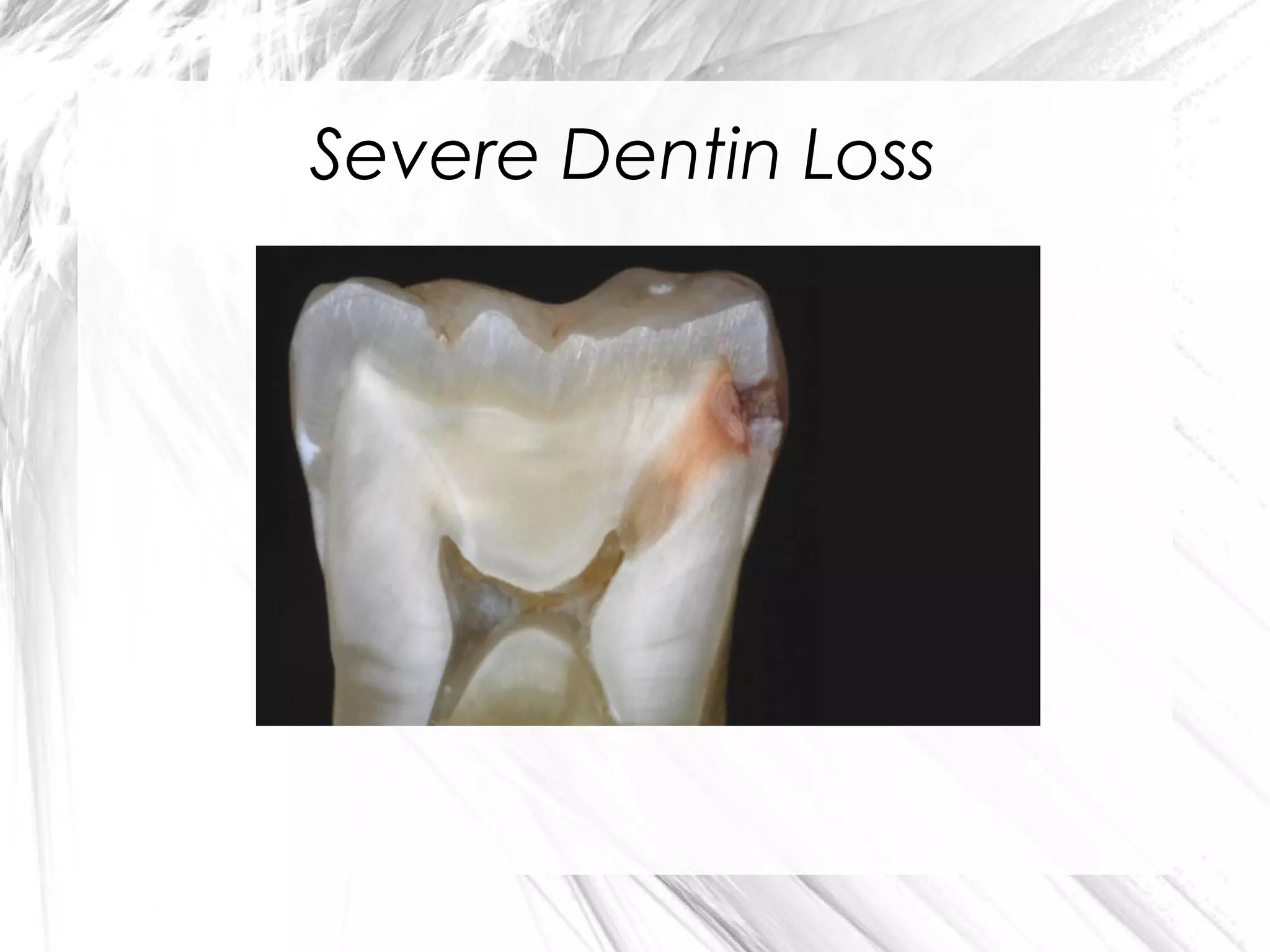
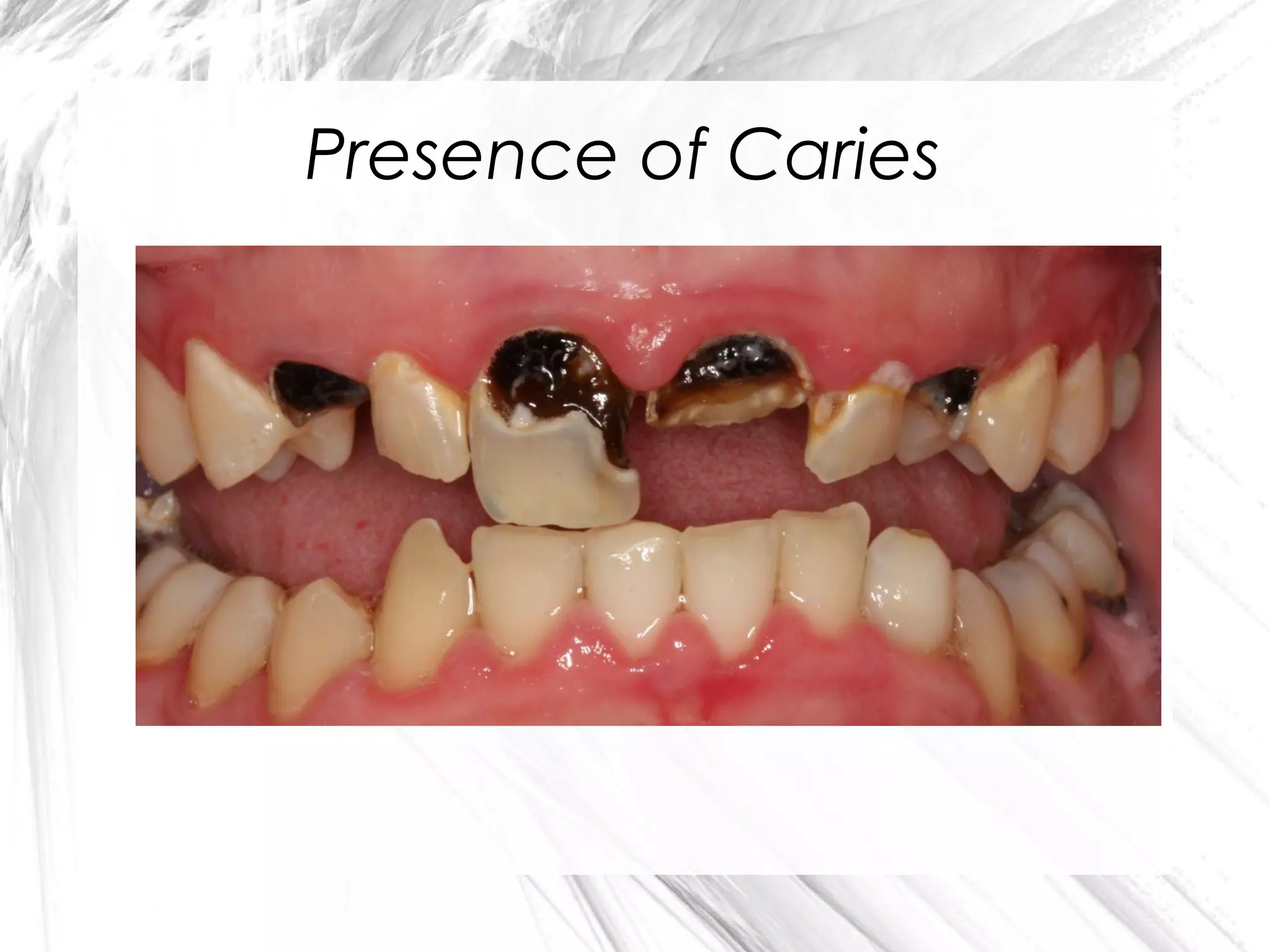
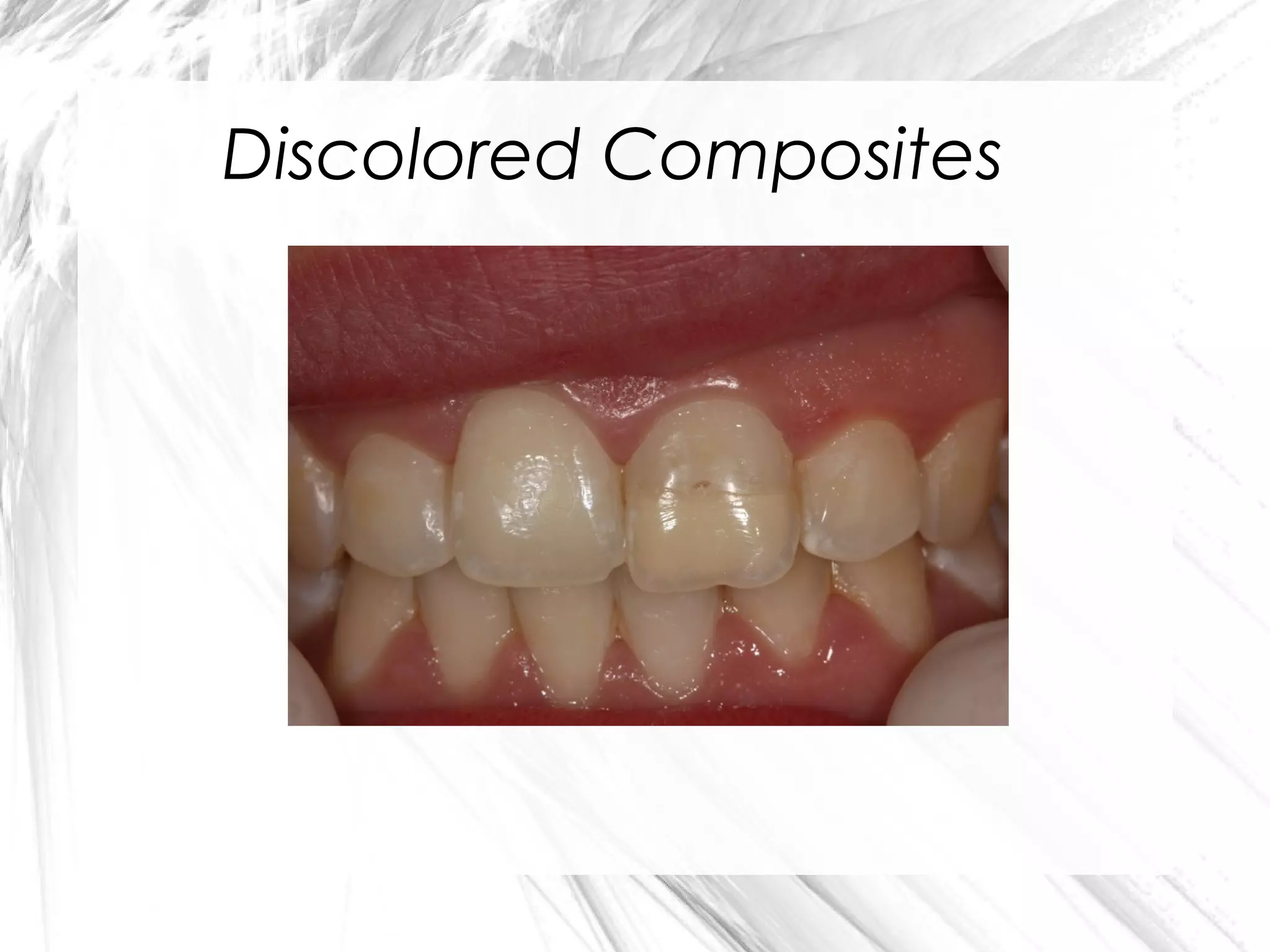
Contraindications
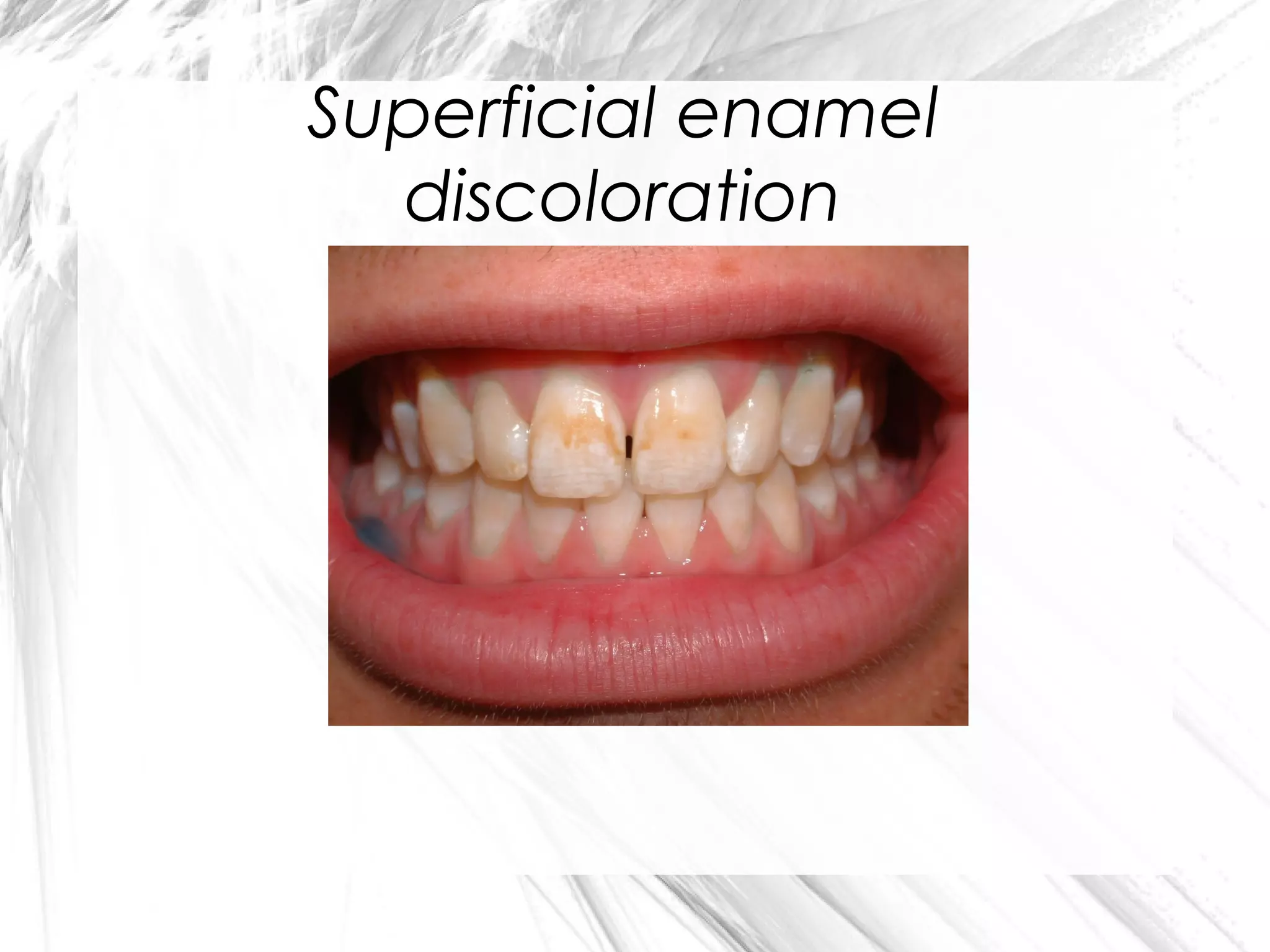
Superficial enamel
discoloration
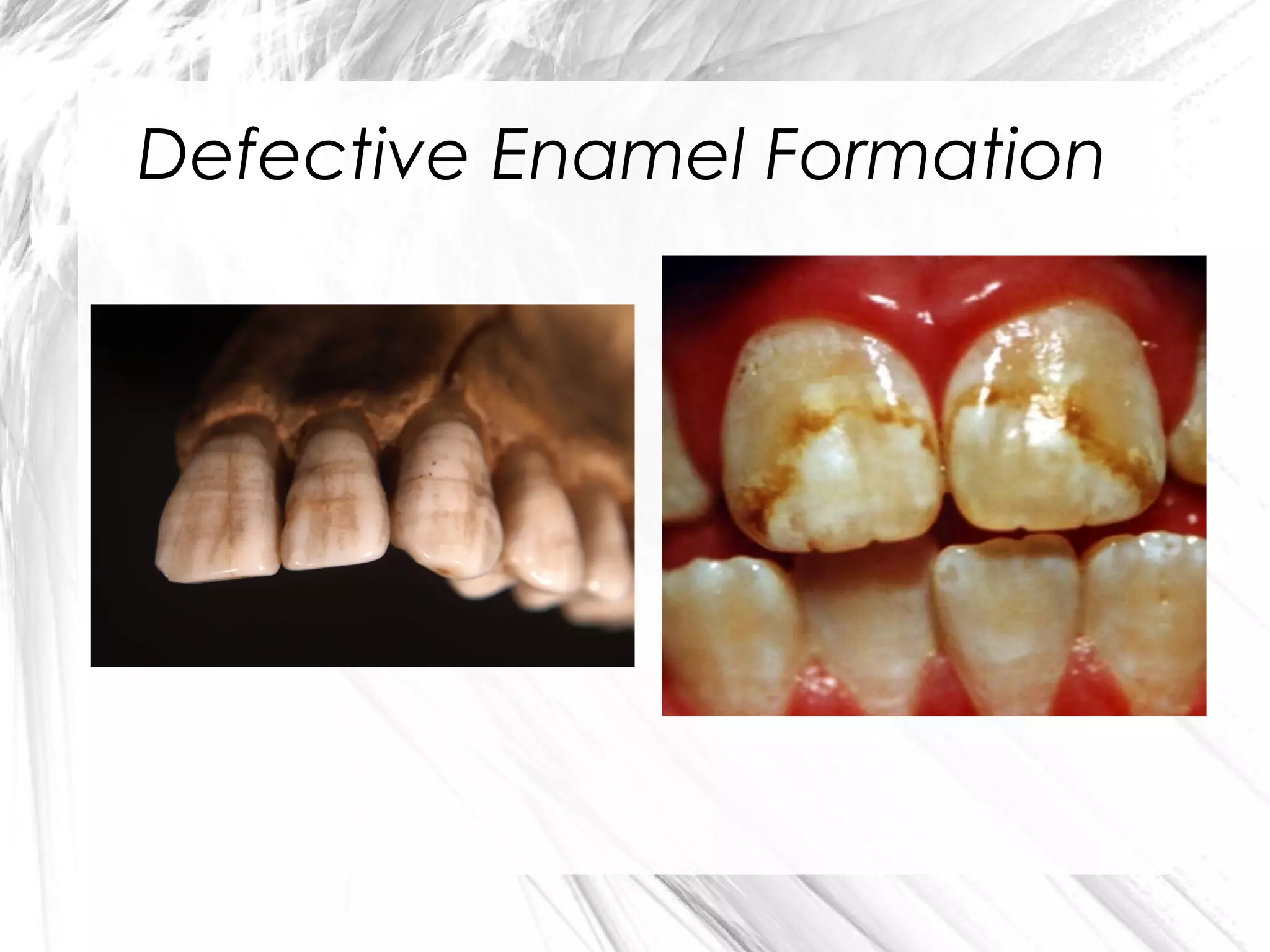
Defective Enamel Formation
Severe Dentin Loss
Presence of Caries
Discolored Composites
Differences Between Vital and Non-Vital
Bleaching
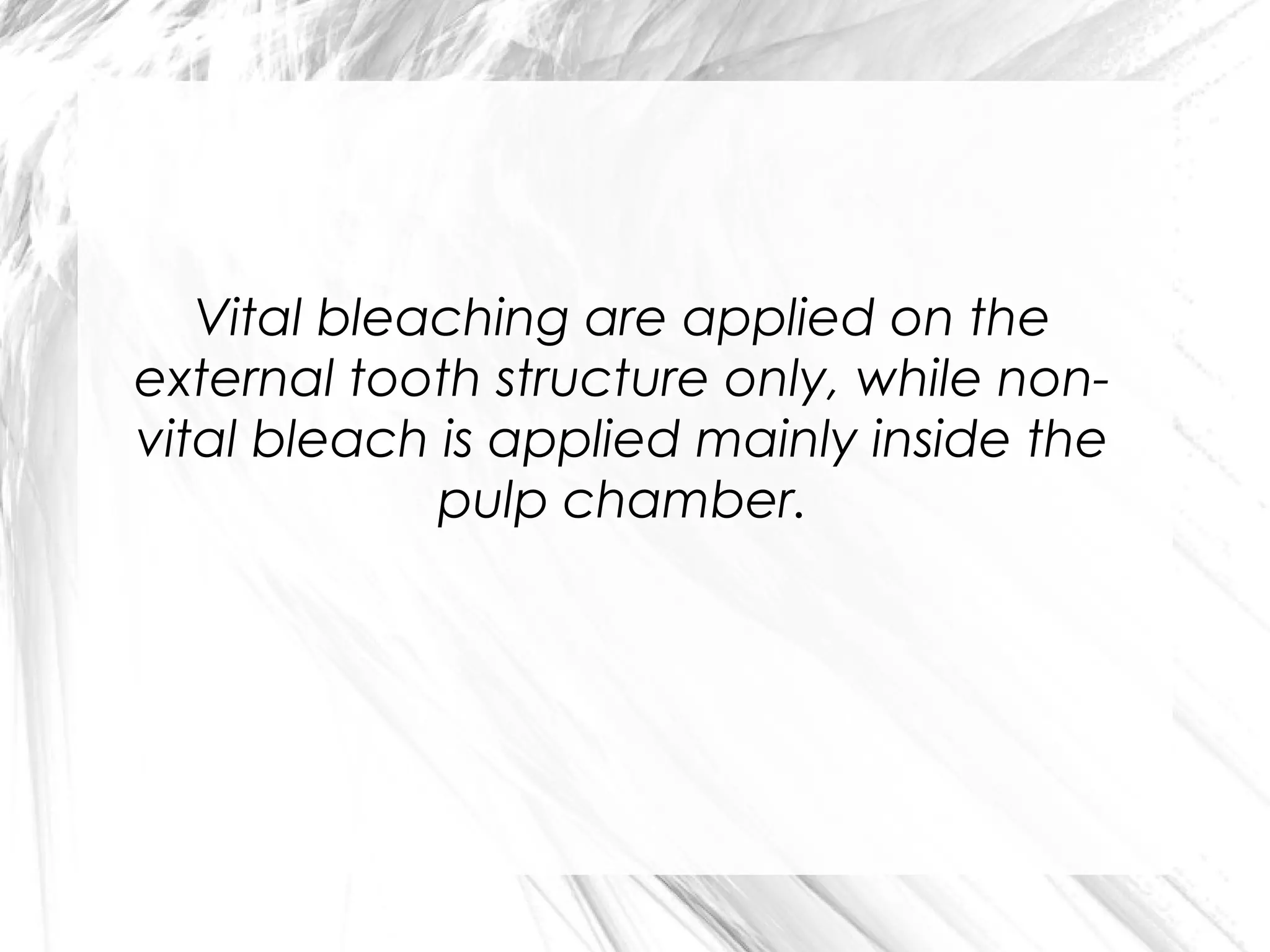
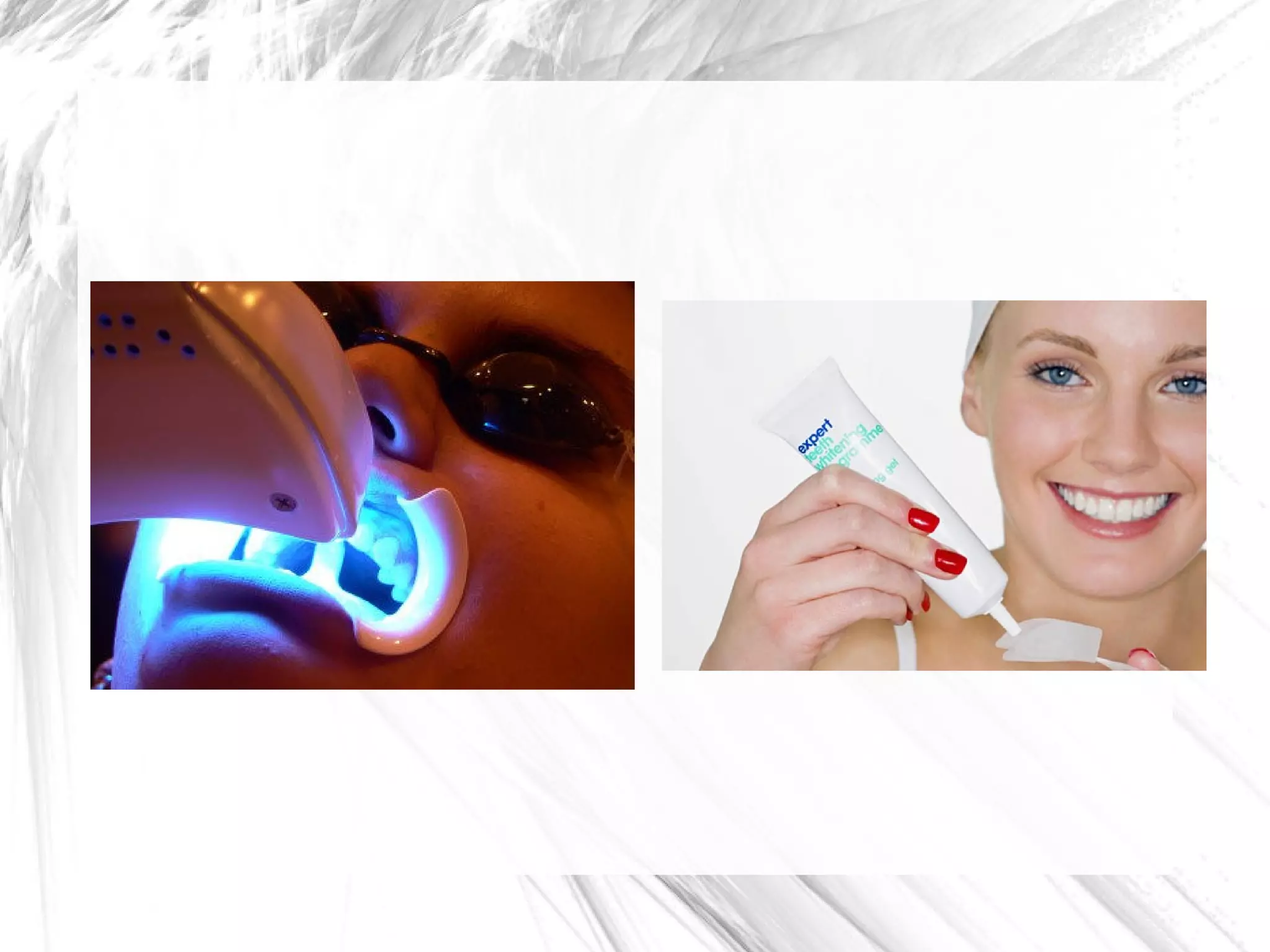
Vital bleaching could either be applied by
the dentist, or by the patient at home
using the home bleaching techniques,
while non-vital bleaching is mainly applied
by the dentist.
In-office bleaching could yield satisfactory
results from just a single visit, while modern
and recommended(described later) nonvital bleaching requires at least 2 days of
treatment, which could also last up two
four weeks.
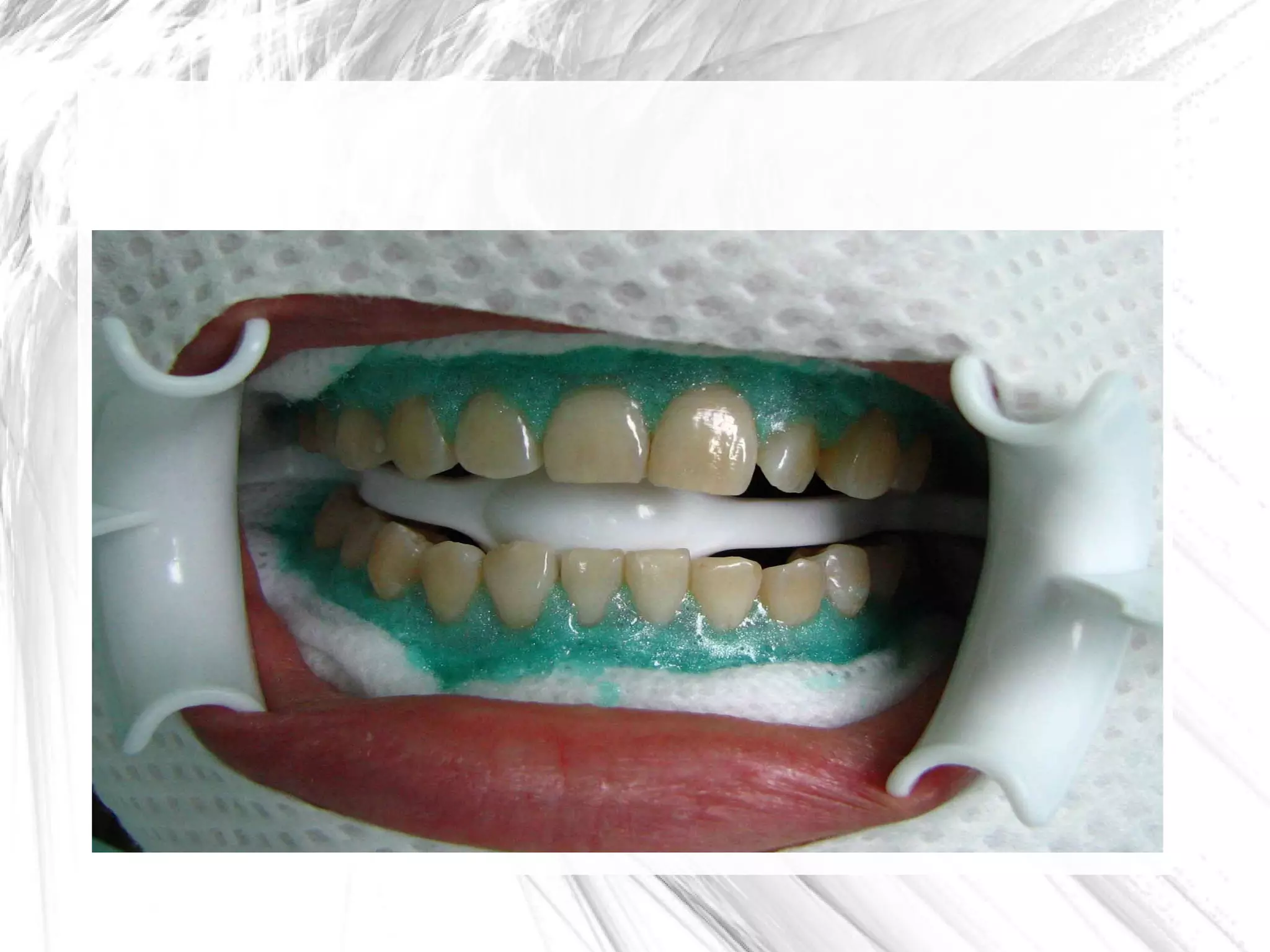
Vital bleaching are applied on the
external tooth structure only, while nonvital bleach is applied mainly inside the
pulp chamber.
In vital bleaching, protection of the
gingival tissues is of main importance,
while in non-vital bleaching, the
endodontically treated root canal must
be protected using GI or RMGI to prevent
leakage of the bleaching material.
There is also a notable price difference
between vital and non-vital bleach, with
the latter being cheaper.
Techniques for Non-Vital Bleaching
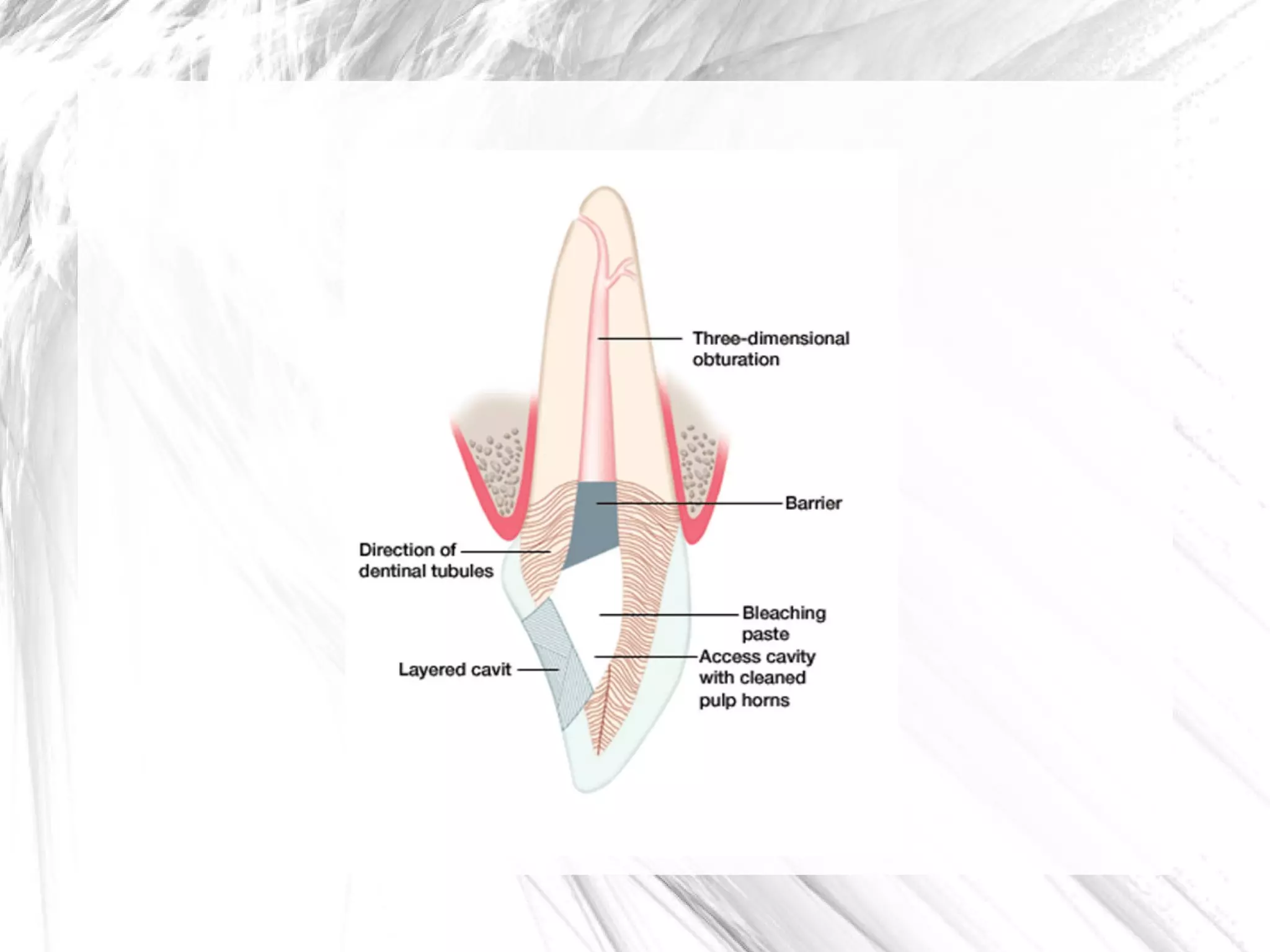
Walking Bleach Technique
Most common technique



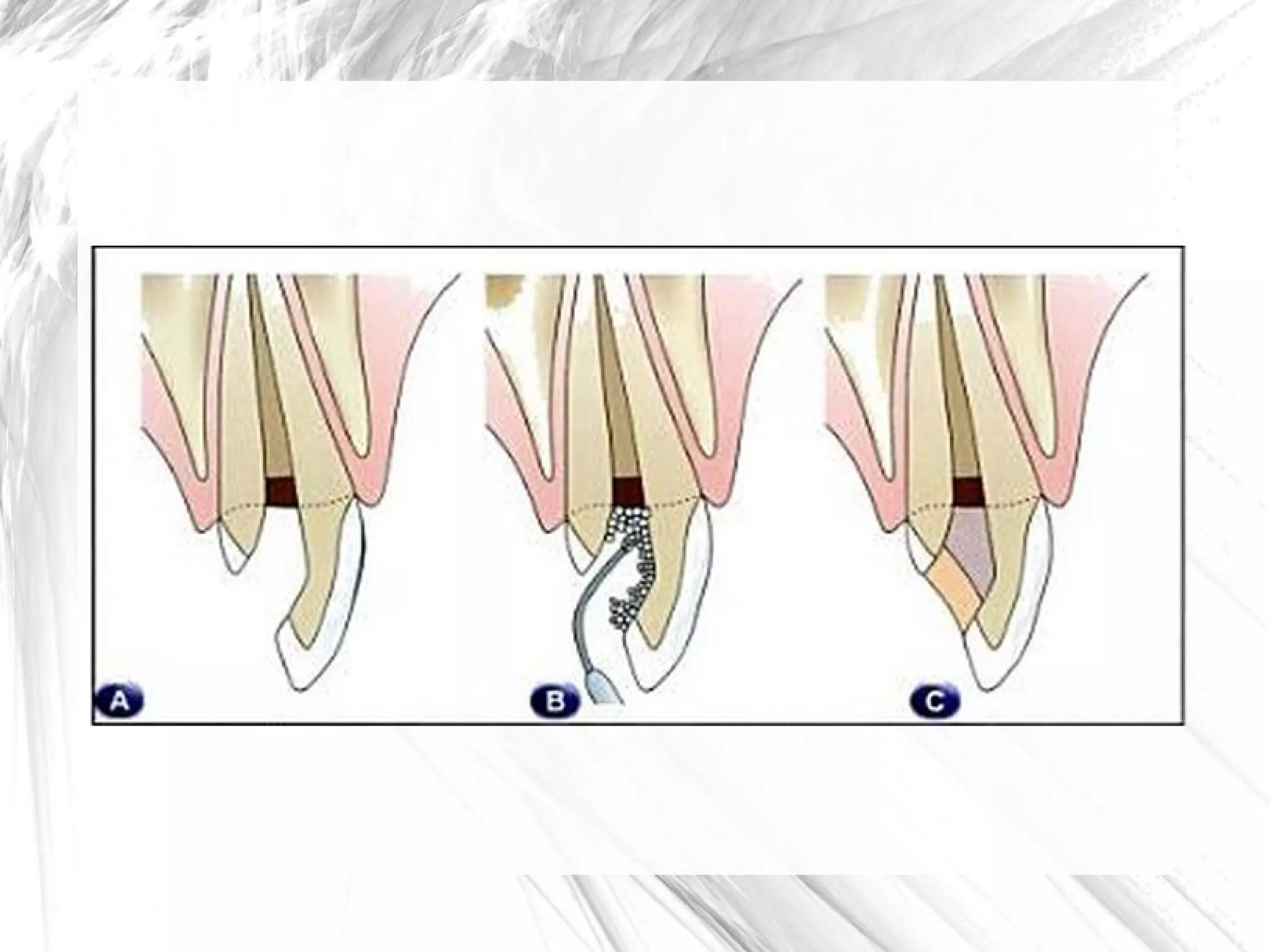
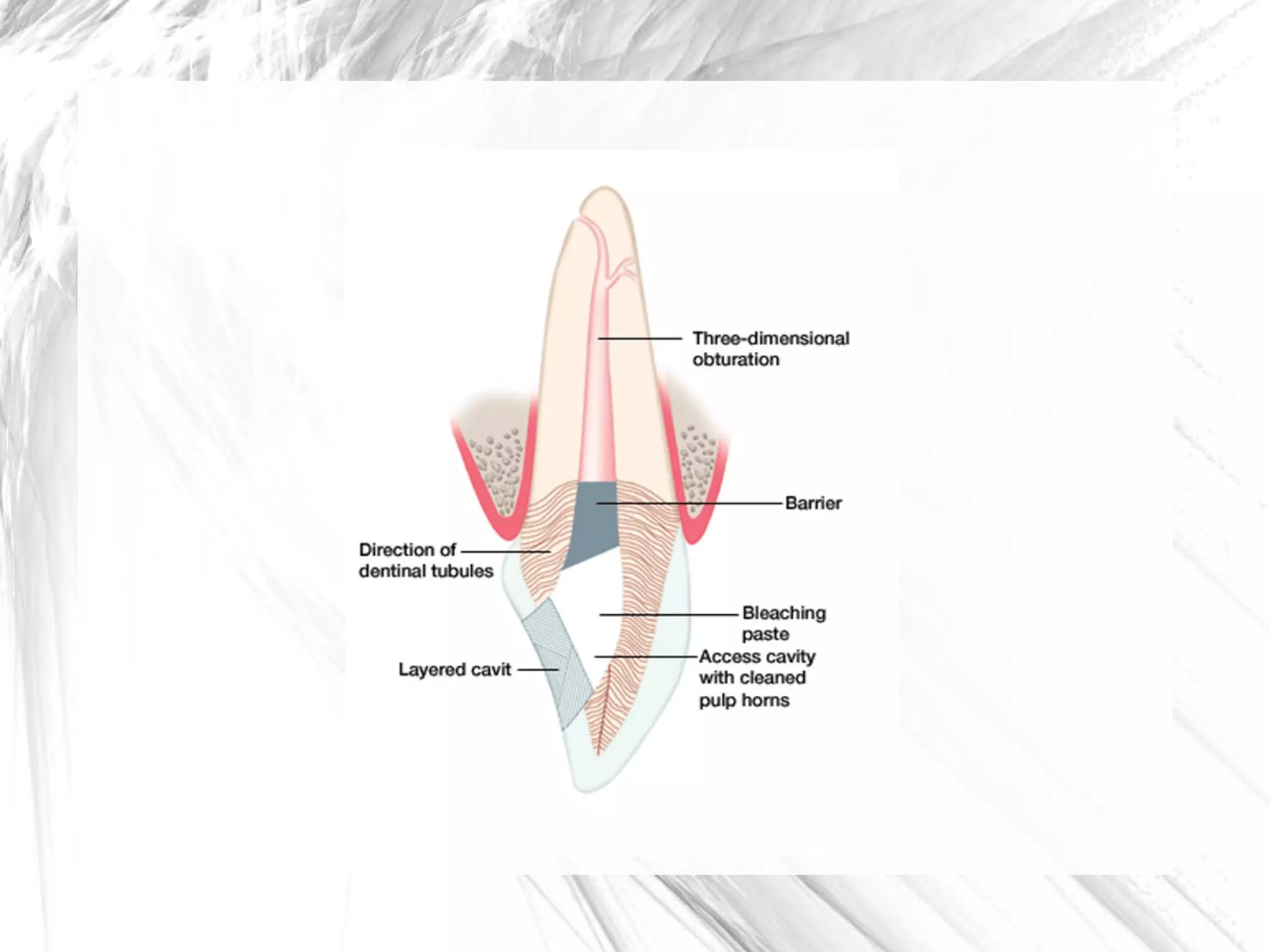
Sealing of the endodontically treated root canal with
RMGI or GI


Placement of the bleaching material in the pulp
chamber


Access cavity sealed with temporary restoration and
recall after 2-7 days

Walking Bleach Technique


The process should not be repeated four
more than four weeks, to avoid
weakening of the crown and potential
spontaneous fracture
Agents used for Walking Bleach Technique
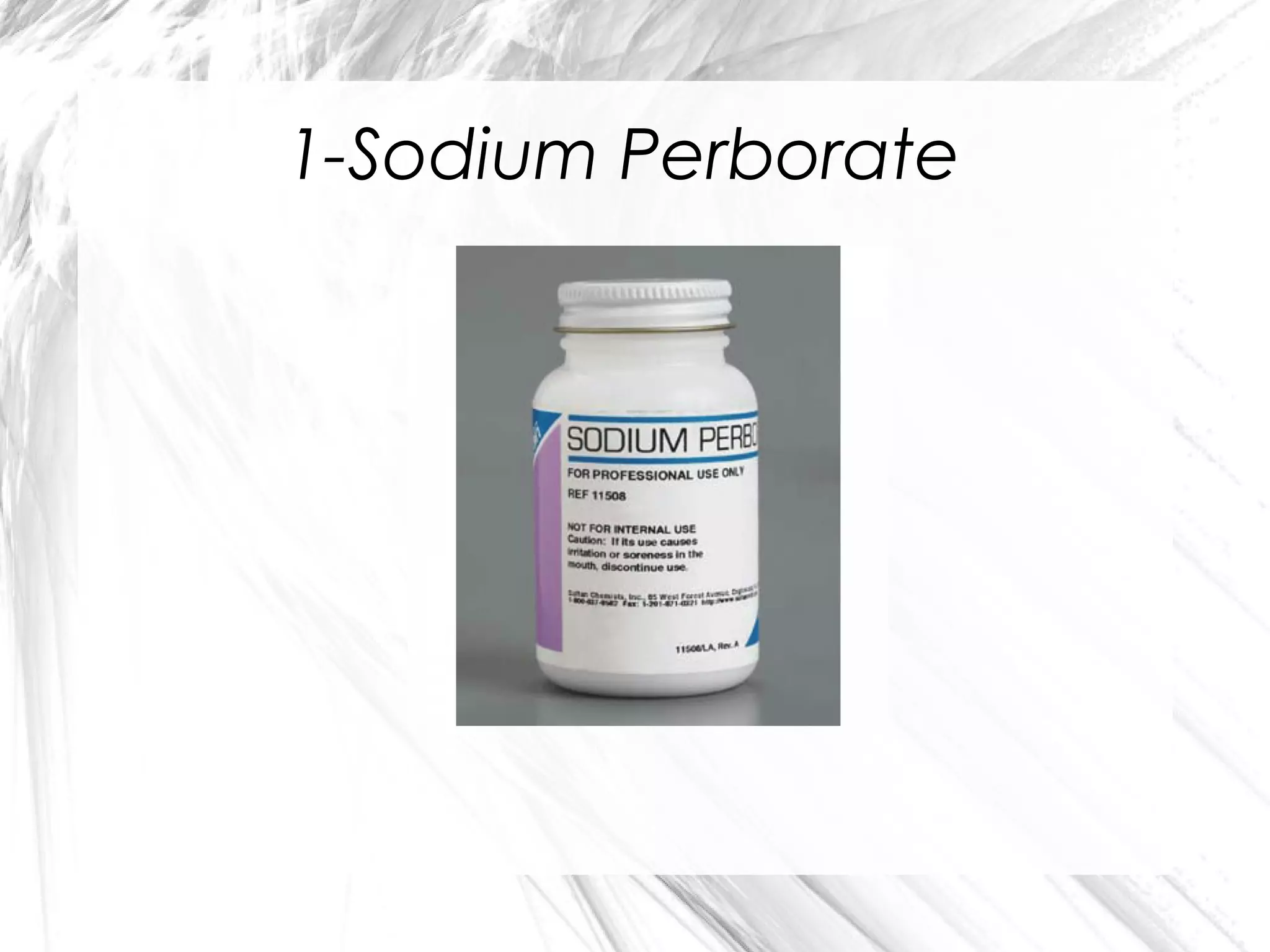
1-Sodium Perborate
1-Sodium Perborate
Available as powder that is stable when dry



It is an oxidizing agent



It is mixed with water, or with hydrogen peroxide (330%)


Breaks down to sodium metaborate, hydrogen
peroxide and nascent oxygen


Easier to control and safer than H2O2


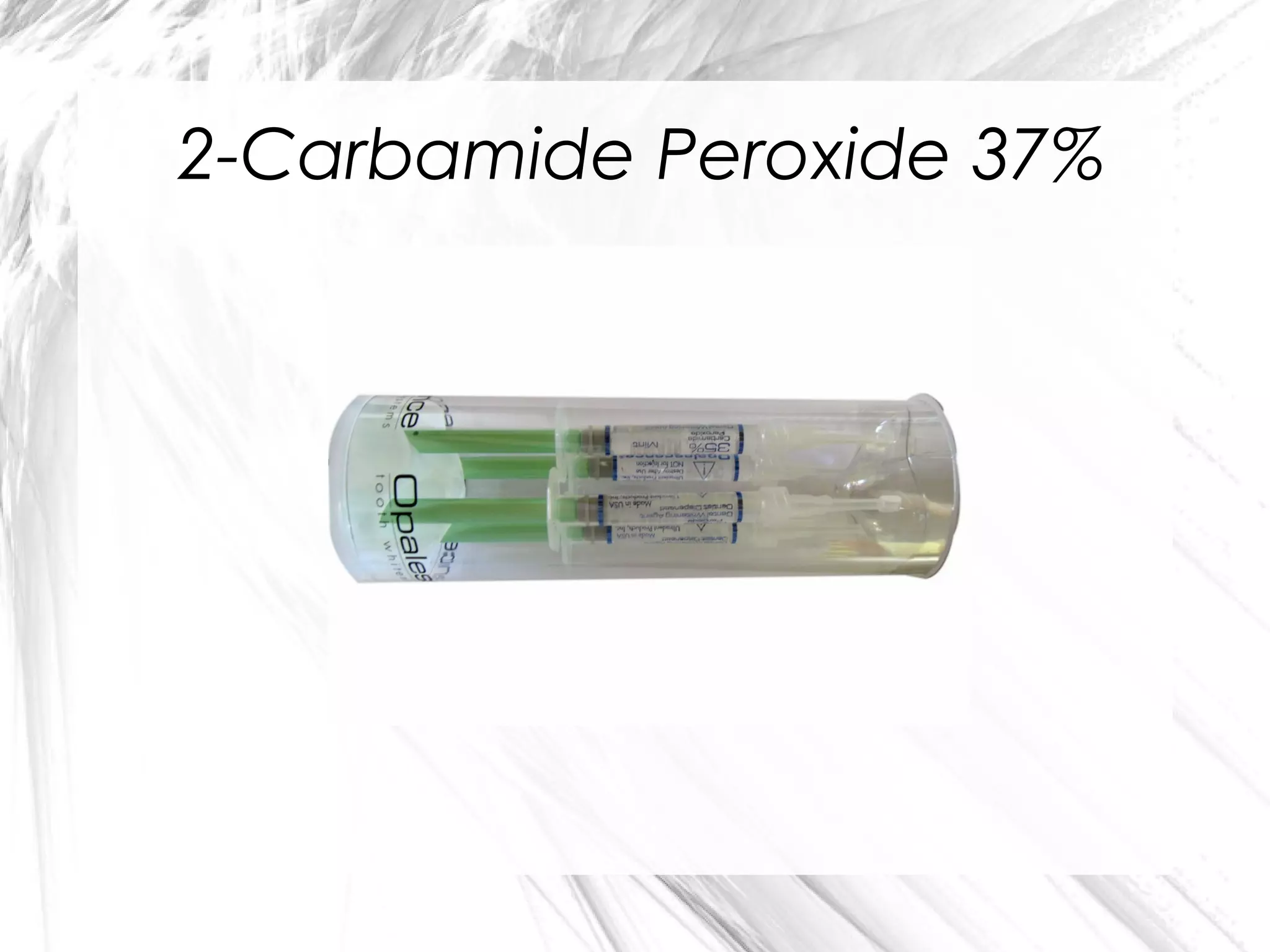
2-Carbamide Peroxide 37%
2-Carbamide Peroxide








Breaks up to H2O2 and Urea
Urea elevates the pH, increasing the effect of and
stabilizing the H2O2
Currently contains glycerin to make it more
chemically stable than H2O2
Shows antibacterial potential
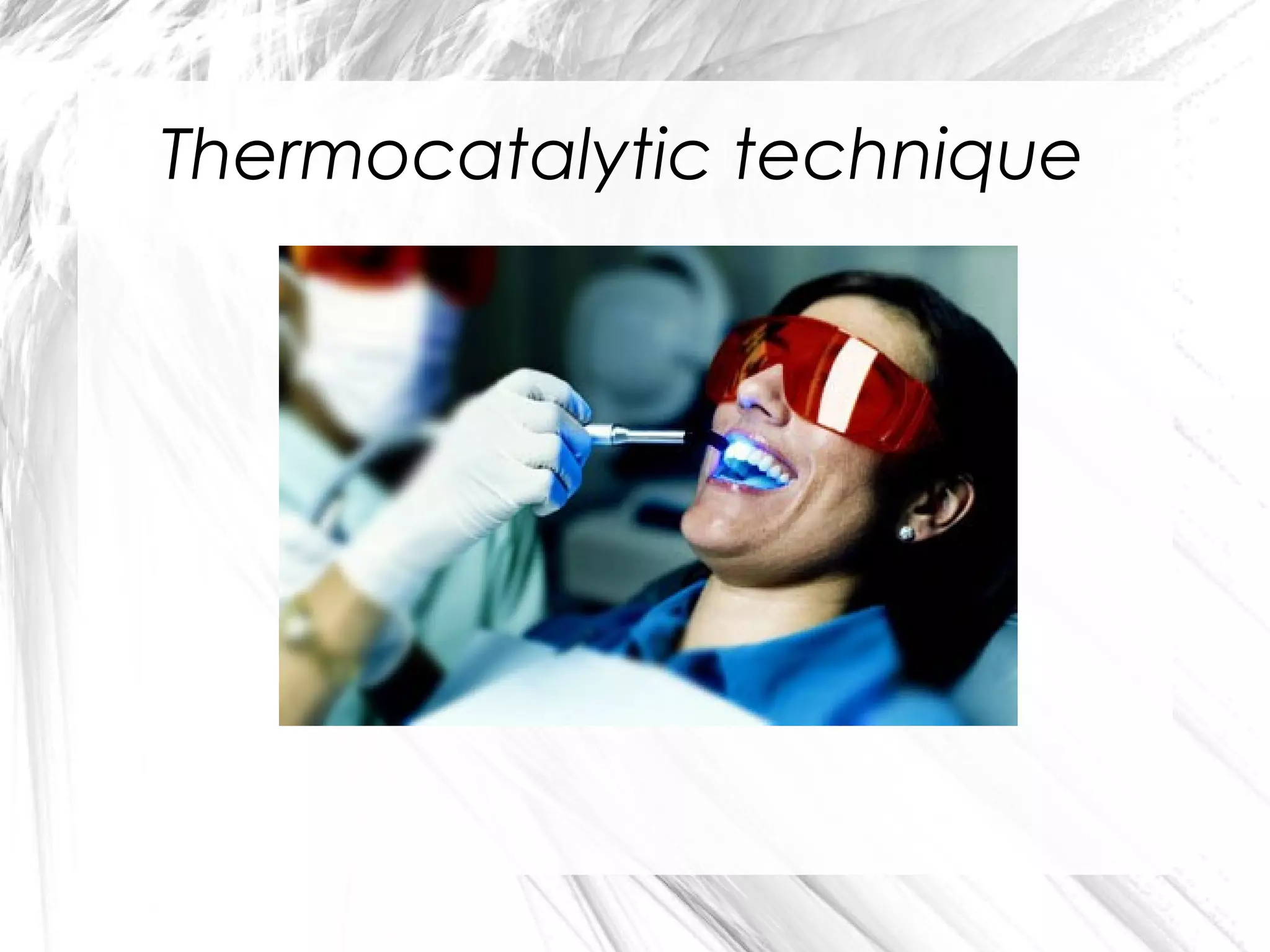
Thermocatalytic technique
Thermocatalytic Technique
Same as the walking bleach technique, but heat is
applied using different instruments


Due to the heat and the high concentration of the
bleaching agent, cervical root resorption could occur


Not proven more effective, yet more dangerous



Not recommended for routine use


Agents used for Thermocatalytic
Technique
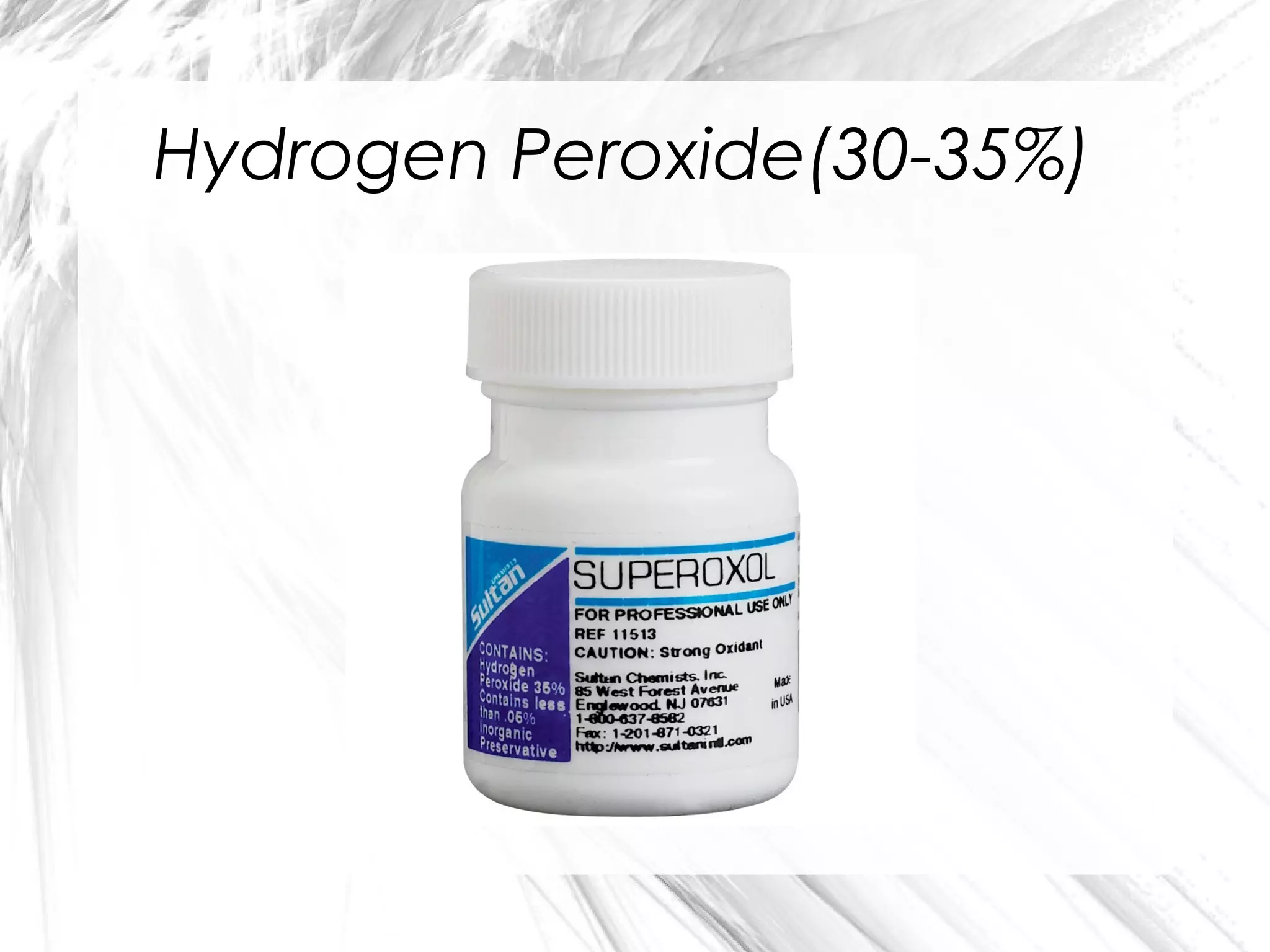
Hydrogen Peroxide(30-35%)
Caustic at high concentrations and cause chemical
burns


Thermodynamically unstable, could explode so stored
in dark and cool containers

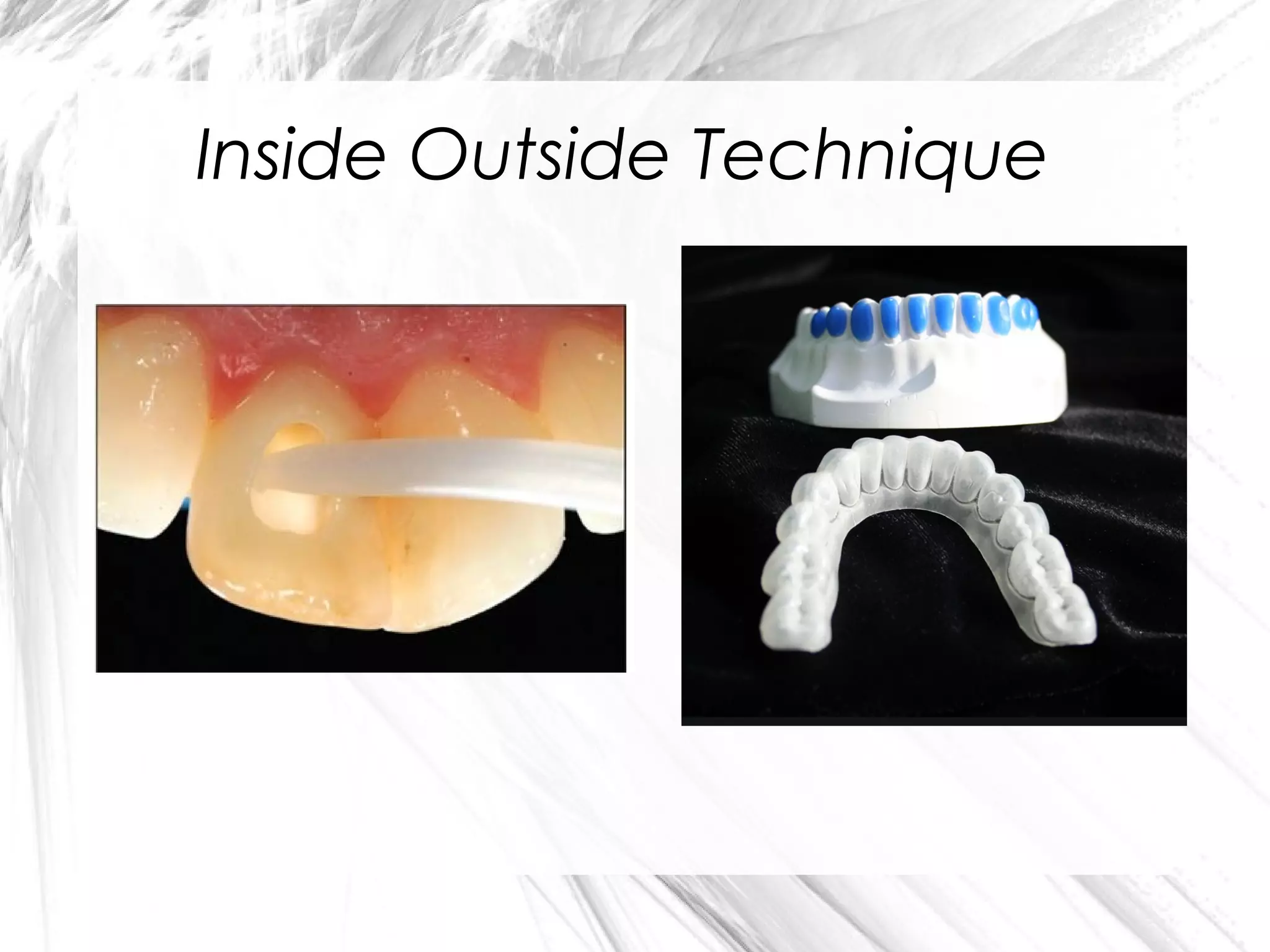
Inside Outside Technique
Inside Outside technique

In addition to the intracoronal bleaching, the agent is
also applied to external tooth structure using specially
designed bleaching tray


10% carbamide peroxide is used


Inside Outside technique

Useful when simultaneous vital and non-vital
bleaching is used


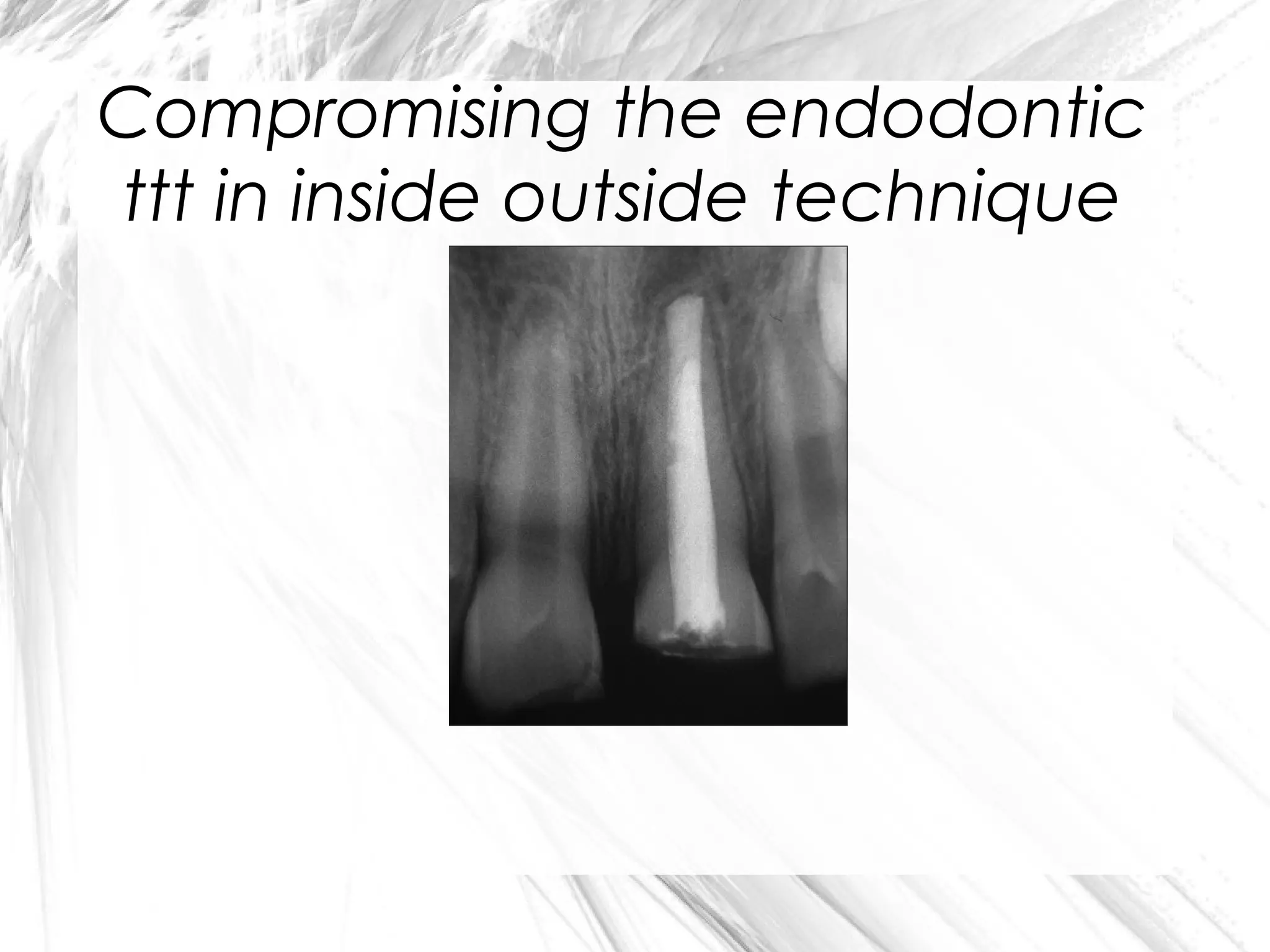
Could compromise the endodontic treatment, as the
the access cavity is left open

Advantages
Allows better esthetics of tooth structure, and better
esthetics of overlying fixed prosthesis


Antibacterial potential of carbamide peroxide



Lower risk of damage to gingival tissues



Ability to do simultaneous vital and non-vital
bleaching via inside outside technique

Disadvantages and possible
complications
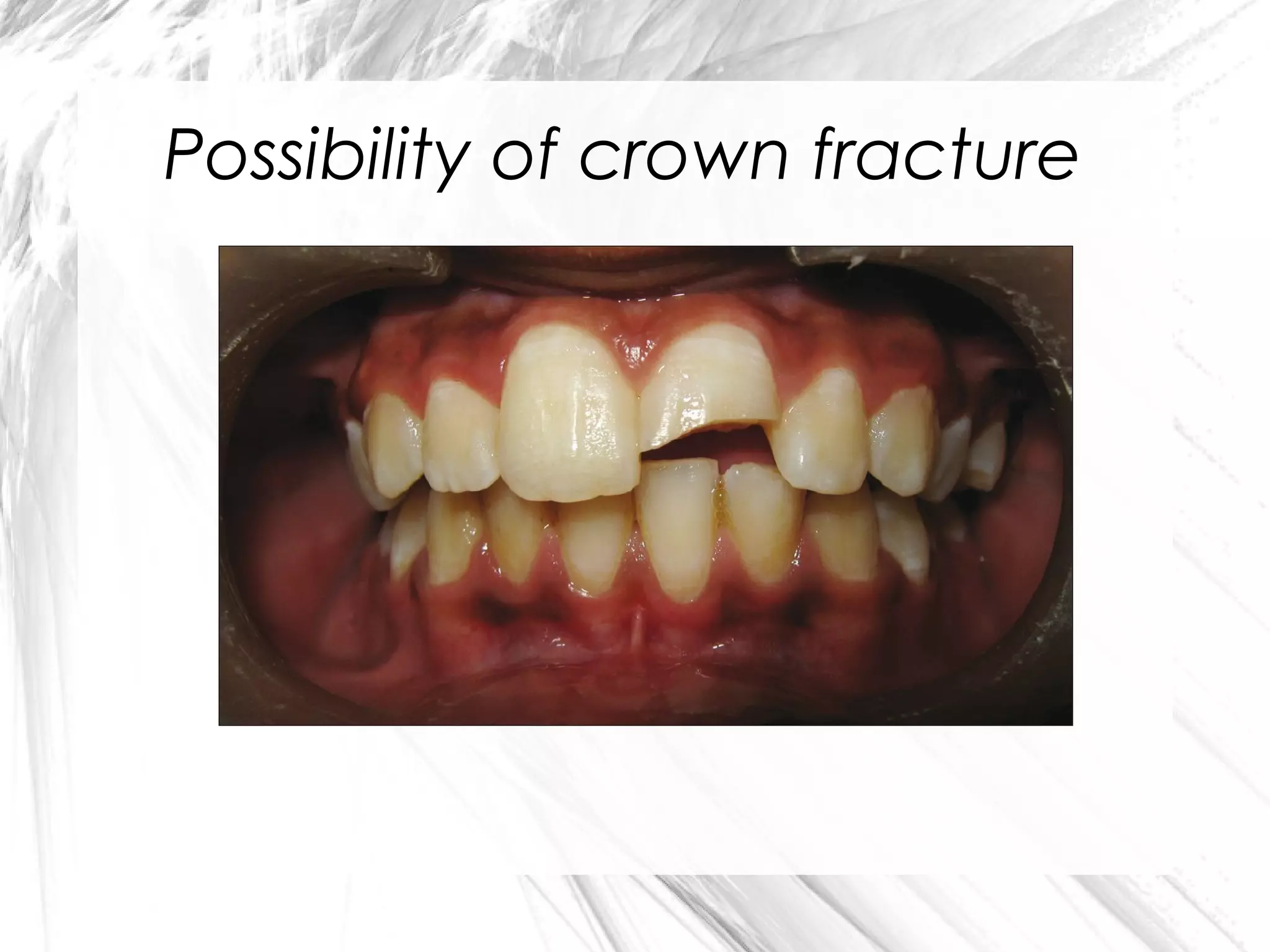
Possibility of crown fracture
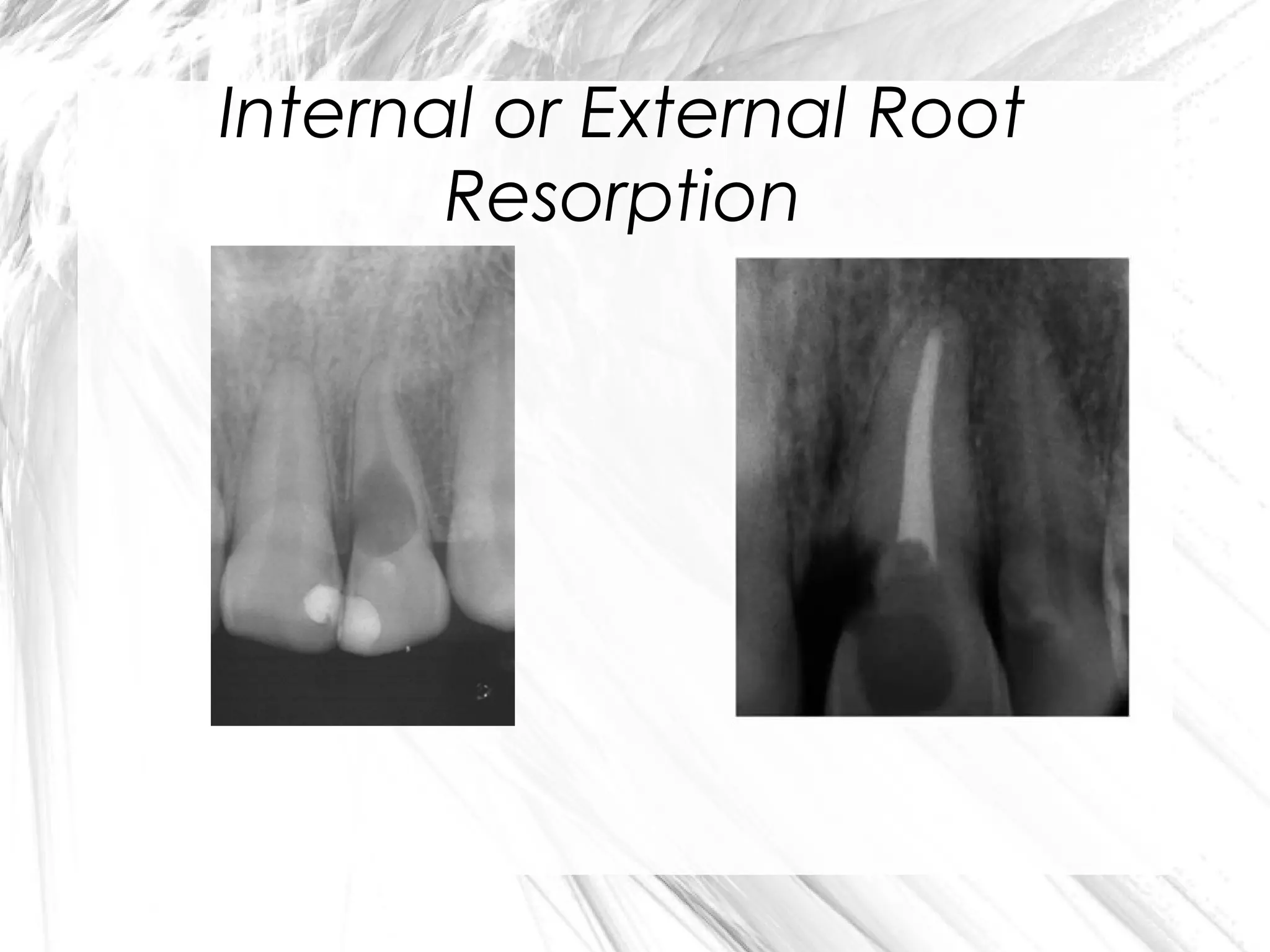
Internal or External Root
Resorption
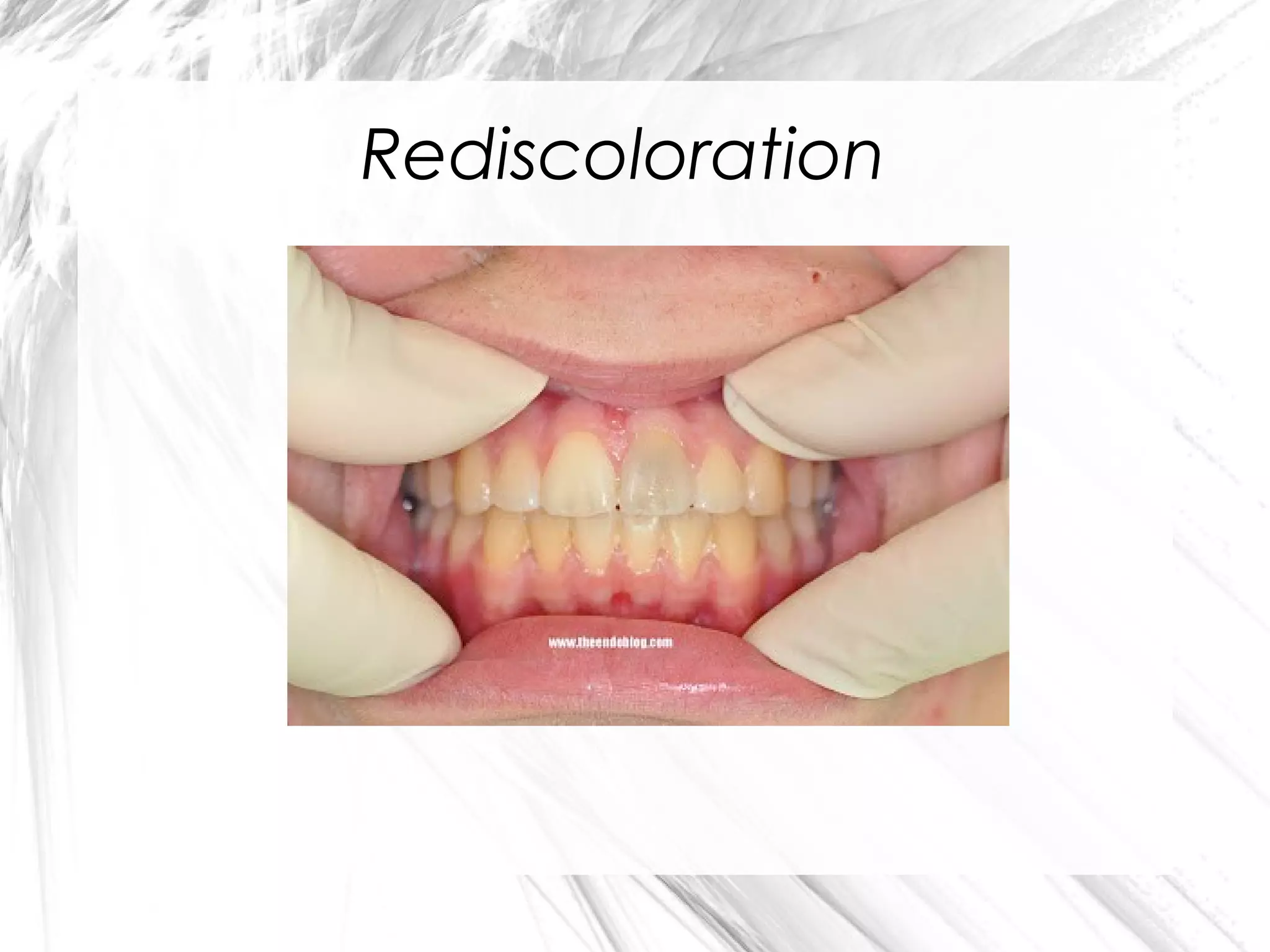
Rediscoloration
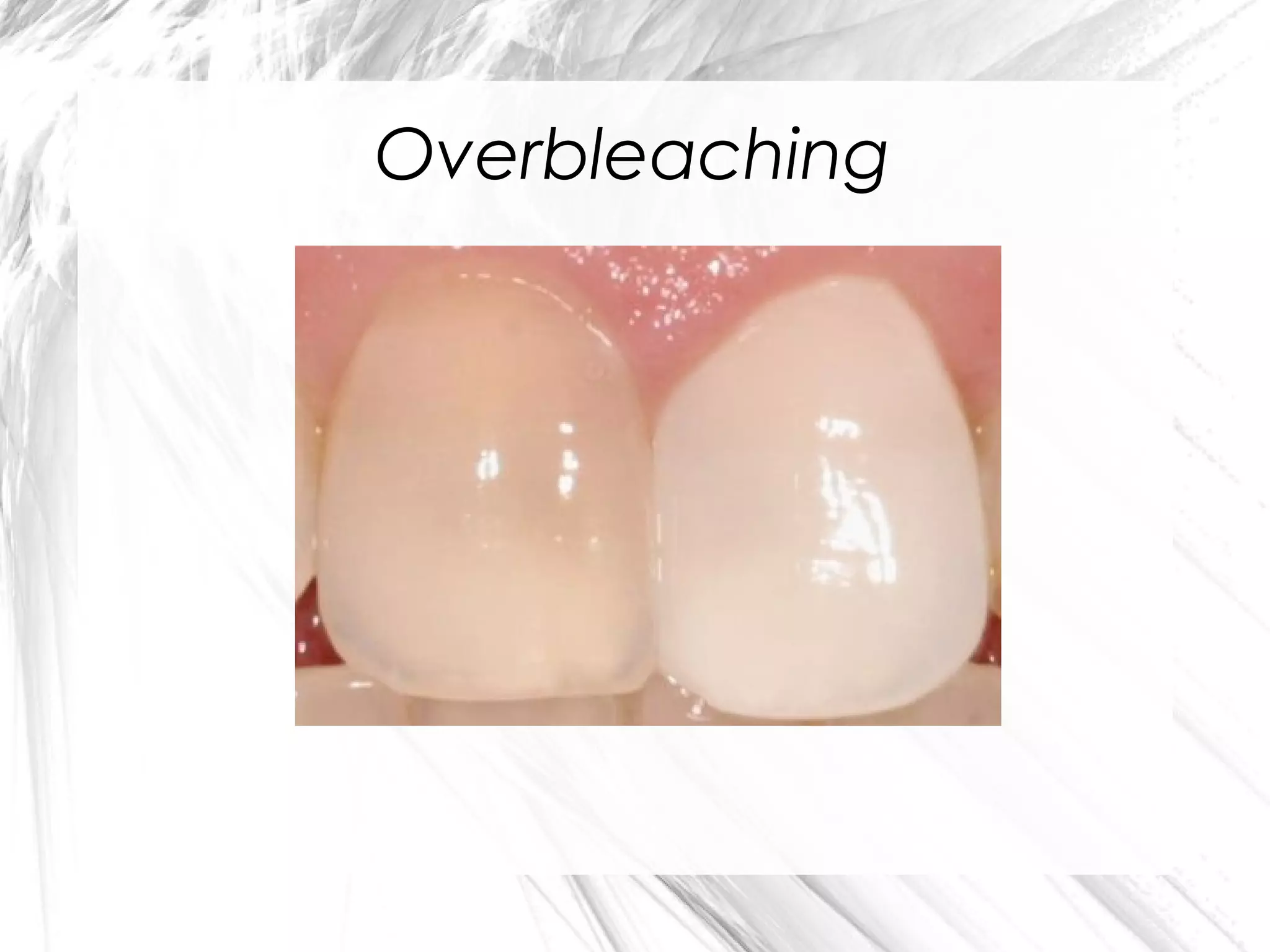
Overbleaching
Compromising the endodontic
ttt in inside outside technique
References
1- Sturdevant’s Art and Science of Operative Dentistry,
6th edition
2, 4- Textbook of Endodontics By Nisha Garg, Amit
Garg, 2nd edition, pg 448
3- Aesthetic dentistry, Color atlas of dental medicine,
Josef Schmidseder, Thieme,2000
5- Ingle's Endodontics 6. John Ide Ingle, Leif K. Bakland,
J. Craig Baumgartner
6- Endodontics: Principles and Practice, Mahmoud
Torabinejad, Richard E. Walton, Elsevier Health
Sciences, 2009.
References
7- Essentials of Operative Dentistry, I. Anand Sherwoo, JP
Medical Ltd, 2010
8- Endodontics, Volume 1, John Ide Ingle, Leif K. Bakland,
PMPH-USA, 2002
9- http://www.sso.ch/doc/doc_download.cfm?
uuid=B37966DCDD3FDE41D6DDAAAC6A1B57D7
10http://www.quintpub.com/userhome/qi/qi_35_2_teixeira_
3.pdf
11http://www.endoexperience.com/documents/Bleaching
JOE2008.pdf

Internal bleaching