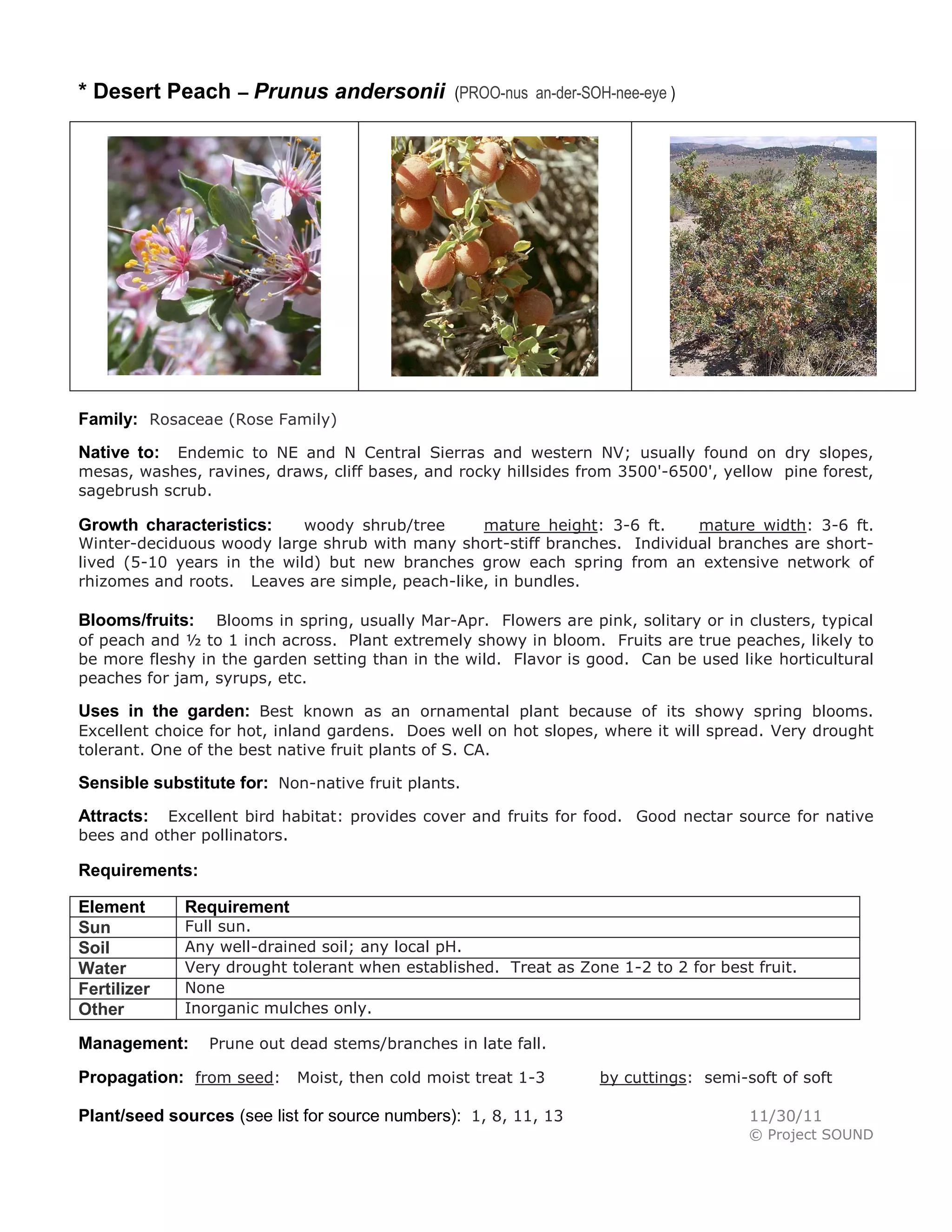
* Desert Peach – Prunus andersonii

(PROO-nus an-der-SOH-nee-eye )

Family: Rosaceae (Rose Family)
Endemic to NE and N Central Sierras and western NV; usually found on dry slopes,
mesas, washes, ravines, draws, cliff bases, and rocky hillsides from 3500'-6500', yellow pine forest,
sagebrush scrub.

Native to:

woody shrub/tree
mature height: 3-6 ft.
mature width: 3-6 ft.
Winter-deciduous woody large shrub with many short-stiff branches. Individual branches are shortlived (5-10 years in the wild) but new branches grow each spring from an extensive network of
rhizomes and roots. Leaves are simple, peach-like, in bundles.

Growth characteristics:

Blooms in spring, usually Mar-Apr. Flowers are pink, solitary or in clusters, typical
of peach and ½ to 1 inch across. Plant extremely showy in bloom. Fruits are true peaches, likely to
be more fleshy in the garden setting than in the wild. Flavor is good. Can be used like horticultural
peaches for jam, syrups, etc.

Blooms/fruits:

Uses in the garden: Best known as an ornamental plant because of its showy spring blooms.
Excellent choice for hot, inland gardens. Does well on hot slopes, where it will spread. Very drought
tolerant. One of the best native fruit plants of S. CA.

Sensible substitute for: Non-native fruit plants.
Excellent bird habitat: provides cover and fruits for food. Good nectar source for native
bees and other pollinators.

Attracts:

Requirements:
Element
Sun
Soil
Water
Fertilizer
Other

Requirement

Full sun.
Any well-drained soil; any local pH.
Very drought tolerant when established. Treat as Zone 1-2 to 2 for best fruit.
None
Inorganic mulches only.

Management:

Prune out dead stems/branches in late fall.

Propagation: from seed: Moist, then cold moist treat 1-3
Plant/seed sources (see list for source numbers): 1, 8, 11, 13

by cuttings: semi-soft of soft
11/30/11
© Project SOUND

Prunus andersonii

  • 1.
    * Desert Peach– Prunus andersonii (PROO-nus an-der-SOH-nee-eye ) Family: Rosaceae (Rose Family) Endemic to NE and N Central Sierras and western NV; usually found on dry slopes, mesas, washes, ravines, draws, cliff bases, and rocky hillsides from 3500'-6500', yellow pine forest, sagebrush scrub. Native to: woody shrub/tree mature height: 3-6 ft. mature width: 3-6 ft. Winter-deciduous woody large shrub with many short-stiff branches. Individual branches are shortlived (5-10 years in the wild) but new branches grow each spring from an extensive network of rhizomes and roots. Leaves are simple, peach-like, in bundles. Growth characteristics: Blooms in spring, usually Mar-Apr. Flowers are pink, solitary or in clusters, typical of peach and ½ to 1 inch across. Plant extremely showy in bloom. Fruits are true peaches, likely to be more fleshy in the garden setting than in the wild. Flavor is good. Can be used like horticultural peaches for jam, syrups, etc. Blooms/fruits: Uses in the garden: Best known as an ornamental plant because of its showy spring blooms. Excellent choice for hot, inland gardens. Does well on hot slopes, where it will spread. Very drought tolerant. One of the best native fruit plants of S. CA. Sensible substitute for: Non-native fruit plants. Excellent bird habitat: provides cover and fruits for food. Good nectar source for native bees and other pollinators. Attracts: Requirements: Element Sun Soil Water Fertilizer Other Requirement Full sun. Any well-drained soil; any local pH. Very drought tolerant when established. Treat as Zone 1-2 to 2 for best fruit. None Inorganic mulches only. Management: Prune out dead stems/branches in late fall. Propagation: from seed: Moist, then cold moist treat 1-3 Plant/seed sources (see list for source numbers): 1, 8, 11, 13 by cuttings: semi-soft of soft 11/30/11 © Project SOUND