LANDSCAPE
ARCHITECTURE
Mediterrenion and Cyprus Plants
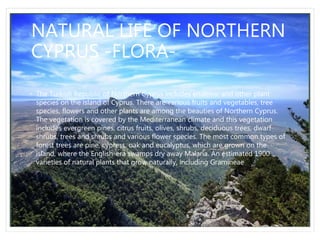
NATURAL LIFE OF NORTHERN
CYPRUS -FLORA-
• The Turkish Republic of Northern Cyprus includes endemic and other plant
species on the island of Cyprus. There are various fruits and vegetables, tree
species, flowers and other plants are among the beauties of Northern Cyprus.
The vegetation is covered by the Mediterranean climate and this vegetation
includes evergreen pines, citrus fruits, olives, shrubs, deciduous trees, dwarf
shrubs, trees and shrubs and various flower species. The most common types of
forest trees are pine, cypress, oak and eucalyptus, which are grown on the
island, where the English-era swamps dry away Malaria. An estimated 1900
varieties of natural plants that grow naturally, including Gramineae
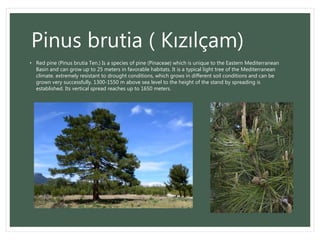
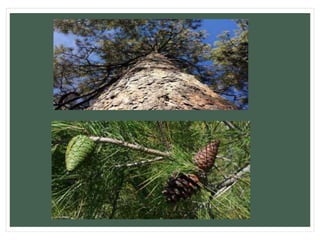
Pinus brutia ( Kızılçam)
• Red pine (Pinus brutia Ten.) Is a species of pine (Pinaceae) which is unique to the Eastern Mediterranean
Basin and can grow up to 25 meters in favorable habitats. It is a typical light tree of the Mediterranean
climate. extremely resistant to drought conditions, which grows in different soil conditions and can be
grown very successfully. 1300-1550 m above sea level to the height of the stand by spreading is
established. Its vertical spread reaches up to 1650 meters.
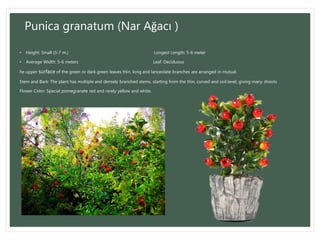
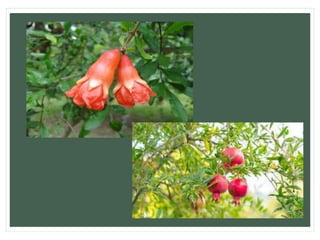
Punica granatum (Nar Ağacı )
• Height: Small (3-7 m.) Longest Length: 5-6 meter
• Average Width: 5-6 meters Leaf: Deciduous
he upper surface of the green or dark green leaves thin, long and lanceolate branches are arranged in mutual.
Stem and Bark: The plant has multiple and densely branched stems, starting from the thin, curved and soil level, giving many shoots
Flower Color: Special pomegranate red and rarely yellow and white.
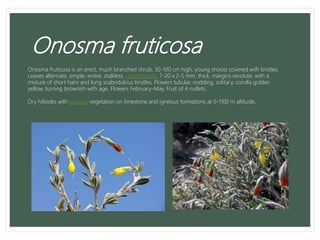
Onosma fruticosa
Onosma fruticosa is an erect, much branched shrub, 30-100 cm high, young shoots covered with bristles.
Leaves alternate, simple, entire, stalkless, oblanceolate, 7-20 x 2-5 mm, thick, margins revolute, with a
mixture of short hairs and long scabridulous bristles. Flowers tubular, nodding, solitary, corolla golden
yellow, turning brownish with age. Flowers February-May. Fruit of 4 nutlets.
Dry hillsides with garigue vegetation on limestone and igneous formations at 0-1100 m altitude.
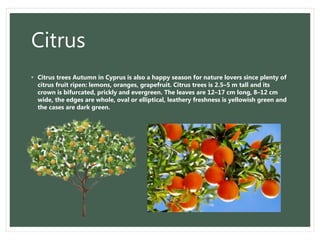
Citrus
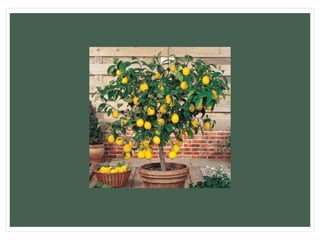
• Citrus trees Autumn in Cyprus is also a happy season for nature lovers since plenty of
citrus fruit ripen: lemons, oranges, grapefruit. Citrus trees is 2.5–5 m tall and its
crown is bifurcated, prickly and evergreen. The leaves are 12–17 cm long, 8–12 cm
wide, the edges are whole, oval or elliptical, leathery freshness is yellowish green and
the cases are dark green.
Dianthus Cyprius
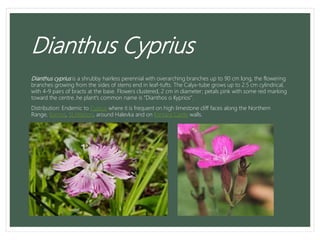
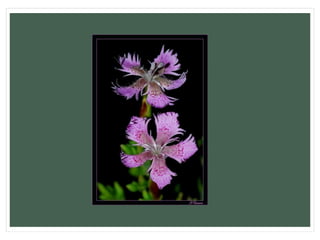
Dianthus cyprius is a shrubby hairless perennial with overarching branches up to 90 cm long, the flowering
branches growing from the sides of stems end in leaf-tufts. The Calyx-tube grows up to 2.5 cm cylindrical,
with 4-9 pairs of bracts at the base. Flowers clustered, 2 cm in diameter; petals pink with some red marking
toward the centre..he plant's common name is "Dianthos o Kyprios".
Distribution: Endemic to Cyprus where it is frequent on high limestone cliff faces along the Northern
Range, Kornos, St Hilarion, around Halevka and on Kantara Castle walls.
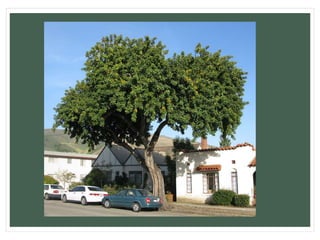
Olive Trees
Olive trees are Cyprus’ calling card, as well as the green and black olives, olive oil and its
derivatives – one of the major commodity resources of the island. Olive trees have been
cultivated on the island for more than two thousand years, which is reflected in local
folklore and sustainable Cypriot expressions: “Where is the sun and love, there are olive
trees.” Due to its ability to survive in any environment, even after cutting and burning, olive
trees have become a symbol of immortality, and even reincarnation, and for some
superstitious locals – the best remedy for the evil eye, evil spirits, blessings for a wedding,
the birth of children, the opening of new projects and other major events. From the Old
Testament times the olive branch is a symbol of peace.
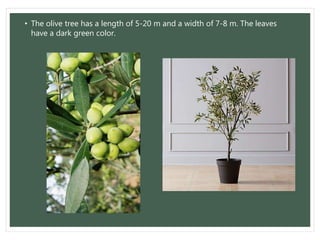
• The olive tree has a length of 5-20 m and a width of 7-8 m. The leaves
have a dark green color.
Tulipa Cypria
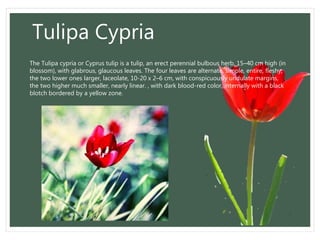
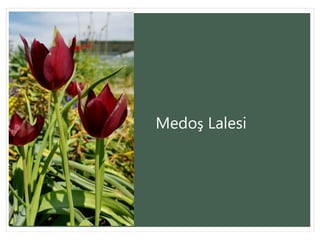
The Tulipa cypria or Cyprus tulip is a tulip, an erect perennial bulbous herb, 15–40 cm high (in
blossom), with glabrous, glaucous leaves. The four leaves are alternate, simple, entire, fleshy,
the two lower ones larger, laceolate, 10-20 x 2–6 cm, with conspicuously undulate margins,
the two higher much smaller, nearly linear. , with dark blood-red color, internally with a black
blotch bordered by a yellow zone.
Medoş Lalesi
Pinus pinea
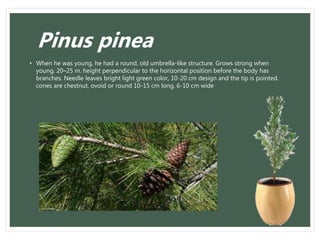
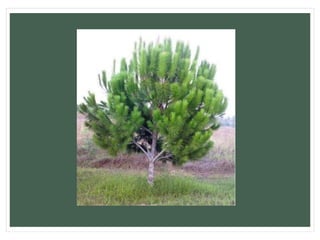
• When he was young, he had a round, old umbrella-like structure. Grows strong when
young. 20–25 m. height perpendicular to the horizontal position before the body has
branches. Needle leaves bright light green color, 10-20 cm design and the tip is pointed.
cones are chestnut, ovoid or round 10-15 cm long, 6-10 cm wide
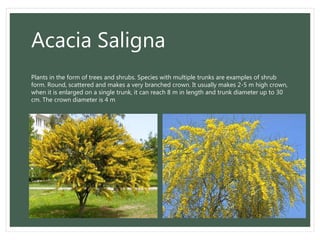
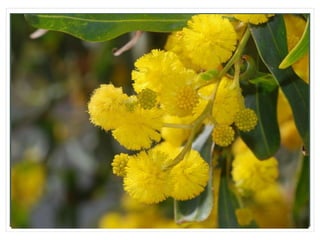
Acacia Saligna
Plants in the form of trees and shrubs. Species with multiple trunks are examples of shrub
form. Round, scattered and makes a very branched crown. It usually makes 2-5 m high crown,
when it is enlarged on a single trunk, it can reach 8 m in length and trunk diameter up to 30
cm. The crown diameter is 4 m
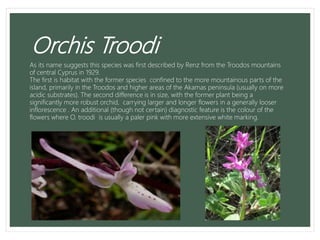
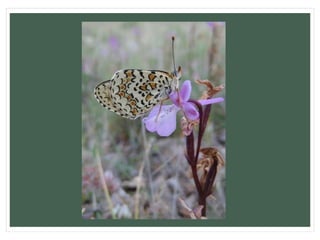
Orchis Troodi
As its name suggests this species was first described by Renz from the Troodos mountains
of central Cyprus in 1929.
The first is habitat with the former species confined to the more mountainous parts of the
island, primarily in the Troodos and higher areas of the Akamas peninsula (usually on more
acidic substrates). The second difference is in size, with the former plant being a
significantly more robust orchid, carrying larger and longer flowers in a generally looser
inflorescence . An additional (though not certain) diagnostic feature is the colour of the
flowers where O. troodi is usually a paler pink with more extensive white marking.
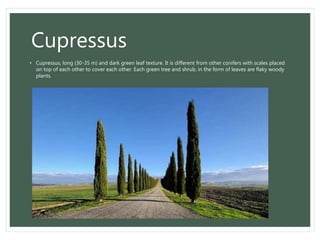
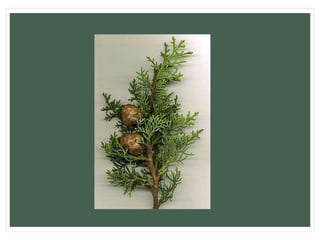
Cupressus
• Cupressus, long (30-35 m) and dark green leaf texture. It is different from other conifers with scales placed
on top of each other to cover each other. Each green tree and shrub, in the form of leaves are flaky woody
plants.
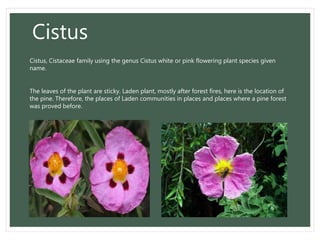
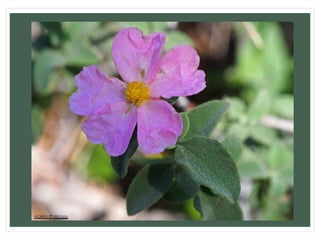
Cistus
Cistus, Cistaceae family using the genus Cistus white or pink flowering plant species given
name.
The leaves of the plant are sticky. Laden plant, mostly after forest fires, here is the location of
the pine. Therefore, the places of Laden communities in places and places where a pine forest
was proved before.
Ceratonia
Long life and length 10 m. is a shrub type tree. Hard and dark green leaves. Leaves,
compound leaves arranged in mutual mutual length 10–20 cm. length is drop-tipped.
Flowers; 6–12 cm. long and light greenish red, small and numerous. Flowers bloom in
September-October and are smelly.
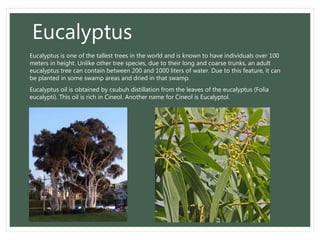
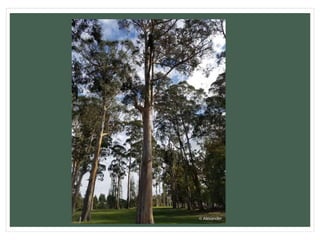
Eucalyptus
Eucalyptus is one of the tallest trees in the world and is known to have individuals over 100
meters in height. Unlike other tree species, due to their long and coarse trunks, an adult
eucalyptus tree can contain between 200 and 1000 liters of water. Due to this feature, it can
be planted in some swamp areas and dried in that swamp.
Eucalyptus oil is obtained by csubuh distillation from the leaves of the eucalyptus (Folia
eucalypti). This oil is rich in Cineol. Another name for Cineol is Eucalyptol.
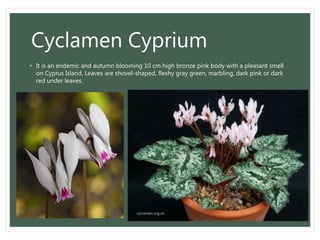
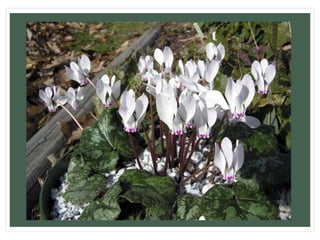
Cyclamen Cyprium
• It is an endemic and autumn blooming 10 cm high bronze pink body with a pleasant smell
on Cyprus Island. Leaves are shovel-shaped, fleshy gray green, marbling, dark pink or dark
red under leaves.
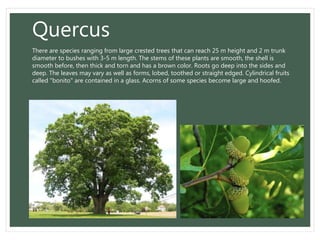
Quercus
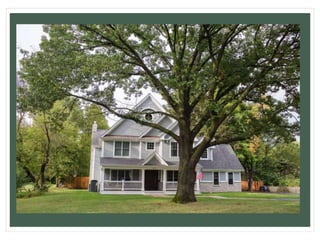
There are species ranging from large crested trees that can reach 25 m height and 2 m trunk
diameter to bushes with 3-5 m length. The stems of these plants are smooth, the shell is
smooth before, then thick and torn and has a brown color. Roots go deep into the sides and
deep. The leaves may vary as well as forms, lobed, toothed or straight edged. Cylindrical fruits
called "bonito" are contained in a glass. Acorns of some species become large and hoofed.
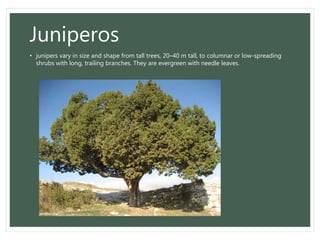
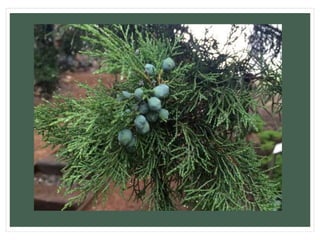
Juniperos
• junipers vary in size and shape from tall trees, 20–40 m tall, to columnar or low-spreading
shrubs with long, trailing branches. They are evergreen with needle leaves.
GÖRKEM DİKEN 170201005

Landscape

  • 1.
  • 2.
    NATURAL LIFE OFNORTHERN CYPRUS -FLORA- • The Turkish Republic of Northern Cyprus includes endemic and other plant species on the island of Cyprus. There are various fruits and vegetables, tree species, flowers and other plants are among the beauties of Northern Cyprus. The vegetation is covered by the Mediterranean climate and this vegetation includes evergreen pines, citrus fruits, olives, shrubs, deciduous trees, dwarf shrubs, trees and shrubs and various flower species. The most common types of forest trees are pine, cypress, oak and eucalyptus, which are grown on the island, where the English-era swamps dry away Malaria. An estimated 1900 varieties of natural plants that grow naturally, including Gramineae
  • 3.
    Pinus brutia (Kızılçam) • Red pine (Pinus brutia Ten.) Is a species of pine (Pinaceae) which is unique to the Eastern Mediterranean Basin and can grow up to 25 meters in favorable habitats. It is a typical light tree of the Mediterranean climate. extremely resistant to drought conditions, which grows in different soil conditions and can be grown very successfully. 1300-1550 m above sea level to the height of the stand by spreading is established. Its vertical spread reaches up to 1650 meters.
  • 5.
    Punica granatum (NarAğacı ) • Height: Small (3-7 m.) Longest Length: 5-6 meter • Average Width: 5-6 meters Leaf: Deciduous he upper surface of the green or dark green leaves thin, long and lanceolate branches are arranged in mutual. Stem and Bark: The plant has multiple and densely branched stems, starting from the thin, curved and soil level, giving many shoots Flower Color: Special pomegranate red and rarely yellow and white.
  • 7.
    Onosma fruticosa Onosma fruticosais an erect, much branched shrub, 30-100 cm high, young shoots covered with bristles. Leaves alternate, simple, entire, stalkless, oblanceolate, 7-20 x 2-5 mm, thick, margins revolute, with a mixture of short hairs and long scabridulous bristles. Flowers tubular, nodding, solitary, corolla golden yellow, turning brownish with age. Flowers February-May. Fruit of 4 nutlets. Dry hillsides with garigue vegetation on limestone and igneous formations at 0-1100 m altitude.
  • 8.
    Citrus • Citrus treesAutumn in Cyprus is also a happy season for nature lovers since plenty of citrus fruit ripen: lemons, oranges, grapefruit. Citrus trees is 2.5–5 m tall and its crown is bifurcated, prickly and evergreen. The leaves are 12–17 cm long, 8–12 cm wide, the edges are whole, oval or elliptical, leathery freshness is yellowish green and the cases are dark green.
  • 10.
    Dianthus Cyprius Dianthus cypriusis a shrubby hairless perennial with overarching branches up to 90 cm long, the flowering branches growing from the sides of stems end in leaf-tufts. The Calyx-tube grows up to 2.5 cm cylindrical, with 4-9 pairs of bracts at the base. Flowers clustered, 2 cm in diameter; petals pink with some red marking toward the centre..he plant's common name is "Dianthos o Kyprios". Distribution: Endemic to Cyprus where it is frequent on high limestone cliff faces along the Northern Range, Kornos, St Hilarion, around Halevka and on Kantara Castle walls.
  • 12.
    Olive Trees Olive treesare Cyprus’ calling card, as well as the green and black olives, olive oil and its derivatives – one of the major commodity resources of the island. Olive trees have been cultivated on the island for more than two thousand years, which is reflected in local folklore and sustainable Cypriot expressions: “Where is the sun and love, there are olive trees.” Due to its ability to survive in any environment, even after cutting and burning, olive trees have become a symbol of immortality, and even reincarnation, and for some superstitious locals – the best remedy for the evil eye, evil spirits, blessings for a wedding, the birth of children, the opening of new projects and other major events. From the Old Testament times the olive branch is a symbol of peace.
  • 13.
    • The olivetree has a length of 5-20 m and a width of 7-8 m. The leaves have a dark green color.
  • 14.
    Tulipa Cypria The Tulipacypria or Cyprus tulip is a tulip, an erect perennial bulbous herb, 15–40 cm high (in blossom), with glabrous, glaucous leaves. The four leaves are alternate, simple, entire, fleshy, the two lower ones larger, laceolate, 10-20 x 2–6 cm, with conspicuously undulate margins, the two higher much smaller, nearly linear. , with dark blood-red color, internally with a black blotch bordered by a yellow zone.
  • 15.
  • 16.
    Pinus pinea • Whenhe was young, he had a round, old umbrella-like structure. Grows strong when young. 20–25 m. height perpendicular to the horizontal position before the body has branches. Needle leaves bright light green color, 10-20 cm design and the tip is pointed. cones are chestnut, ovoid or round 10-15 cm long, 6-10 cm wide
  • 18.
    Acacia Saligna Plants inthe form of trees and shrubs. Species with multiple trunks are examples of shrub form. Round, scattered and makes a very branched crown. It usually makes 2-5 m high crown, when it is enlarged on a single trunk, it can reach 8 m in length and trunk diameter up to 30 cm. The crown diameter is 4 m
  • 20.
    Orchis Troodi As itsname suggests this species was first described by Renz from the Troodos mountains of central Cyprus in 1929. The first is habitat with the former species confined to the more mountainous parts of the island, primarily in the Troodos and higher areas of the Akamas peninsula (usually on more acidic substrates). The second difference is in size, with the former plant being a significantly more robust orchid, carrying larger and longer flowers in a generally looser inflorescence . An additional (though not certain) diagnostic feature is the colour of the flowers where O. troodi is usually a paler pink with more extensive white marking.
  • 22.
    Cupressus • Cupressus, long(30-35 m) and dark green leaf texture. It is different from other conifers with scales placed on top of each other to cover each other. Each green tree and shrub, in the form of leaves are flaky woody plants.
  • 24.
    Cistus Cistus, Cistaceae familyusing the genus Cistus white or pink flowering plant species given name. The leaves of the plant are sticky. Laden plant, mostly after forest fires, here is the location of the pine. Therefore, the places of Laden communities in places and places where a pine forest was proved before.
  • 26.
    Ceratonia Long life andlength 10 m. is a shrub type tree. Hard and dark green leaves. Leaves, compound leaves arranged in mutual mutual length 10–20 cm. length is drop-tipped. Flowers; 6–12 cm. long and light greenish red, small and numerous. Flowers bloom in September-October and are smelly.
  • 30.
    Eucalyptus Eucalyptus is oneof the tallest trees in the world and is known to have individuals over 100 meters in height. Unlike other tree species, due to their long and coarse trunks, an adult eucalyptus tree can contain between 200 and 1000 liters of water. Due to this feature, it can be planted in some swamp areas and dried in that swamp. Eucalyptus oil is obtained by csubuh distillation from the leaves of the eucalyptus (Folia eucalypti). This oil is rich in Cineol. Another name for Cineol is Eucalyptol.
  • 32.
    Cyclamen Cyprium • Itis an endemic and autumn blooming 10 cm high bronze pink body with a pleasant smell on Cyprus Island. Leaves are shovel-shaped, fleshy gray green, marbling, dark pink or dark red under leaves.
  • 34.
    Quercus There are speciesranging from large crested trees that can reach 25 m height and 2 m trunk diameter to bushes with 3-5 m length. The stems of these plants are smooth, the shell is smooth before, then thick and torn and has a brown color. Roots go deep into the sides and deep. The leaves may vary as well as forms, lobed, toothed or straight edged. Cylindrical fruits called "bonito" are contained in a glass. Acorns of some species become large and hoofed.
  • 36.
    Juniperos • junipers varyin size and shape from tall trees, 20–40 m tall, to columnar or low-spreading shrubs with long, trailing branches. They are evergreen with needle leaves.
  • 38.