











Making UX StrategicNorthern User ExperienceManchester1 Aug 2011@ccollingridge#nuxuk
Defining user experienceA person’s interactions with a piece of technology, and how they feel about that interactionFlickr: mikaku
Making UX “strategic”Core to the way the organisation operates
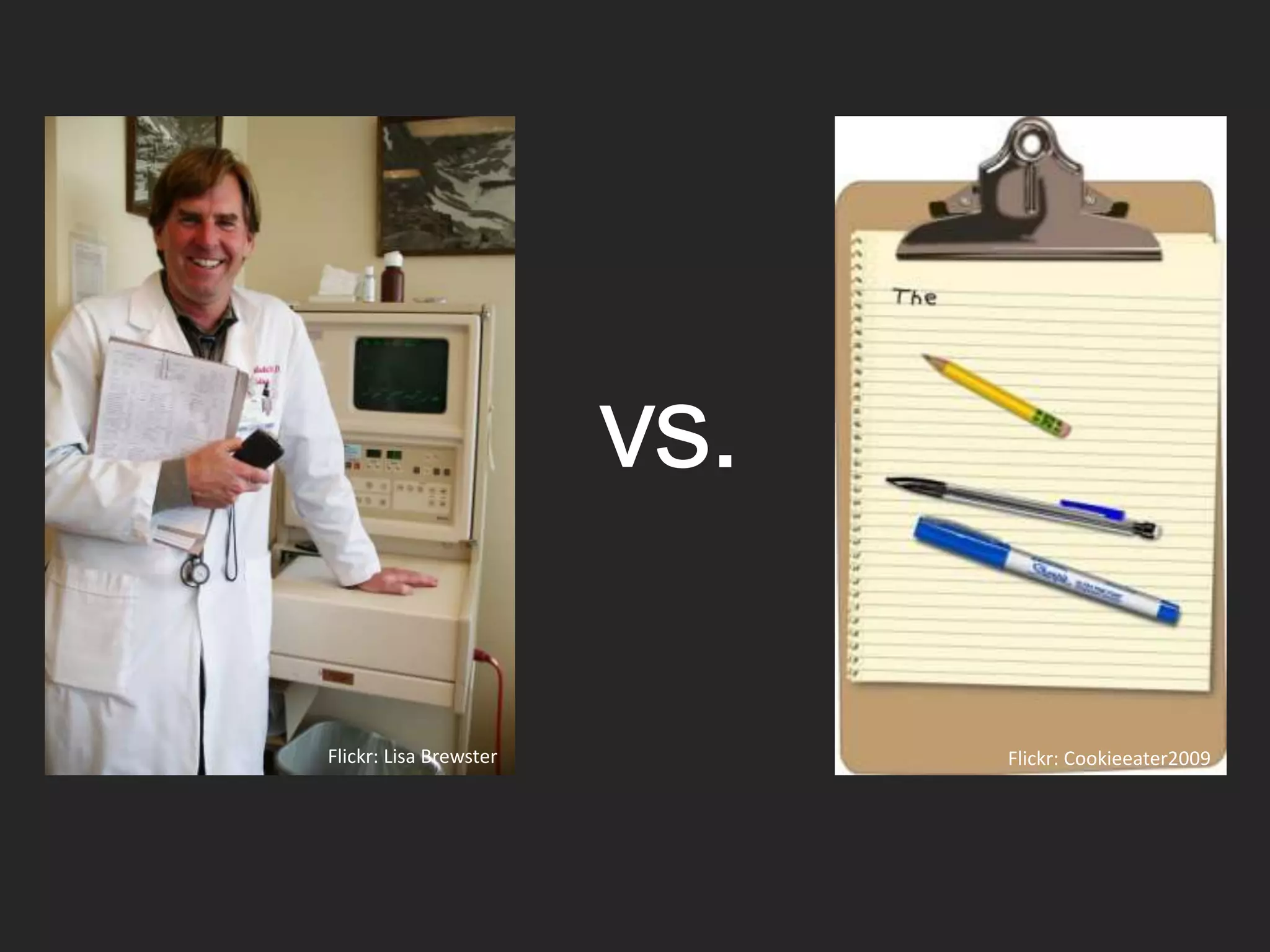
A competitive advantage or fundamental to your performancevs.Flickr: Lisa BrewsterFlickr: Cookieeater2009
?
Flickr: mitch59
I’m a nice but slightly weird person who likes motherhood and apple pie.
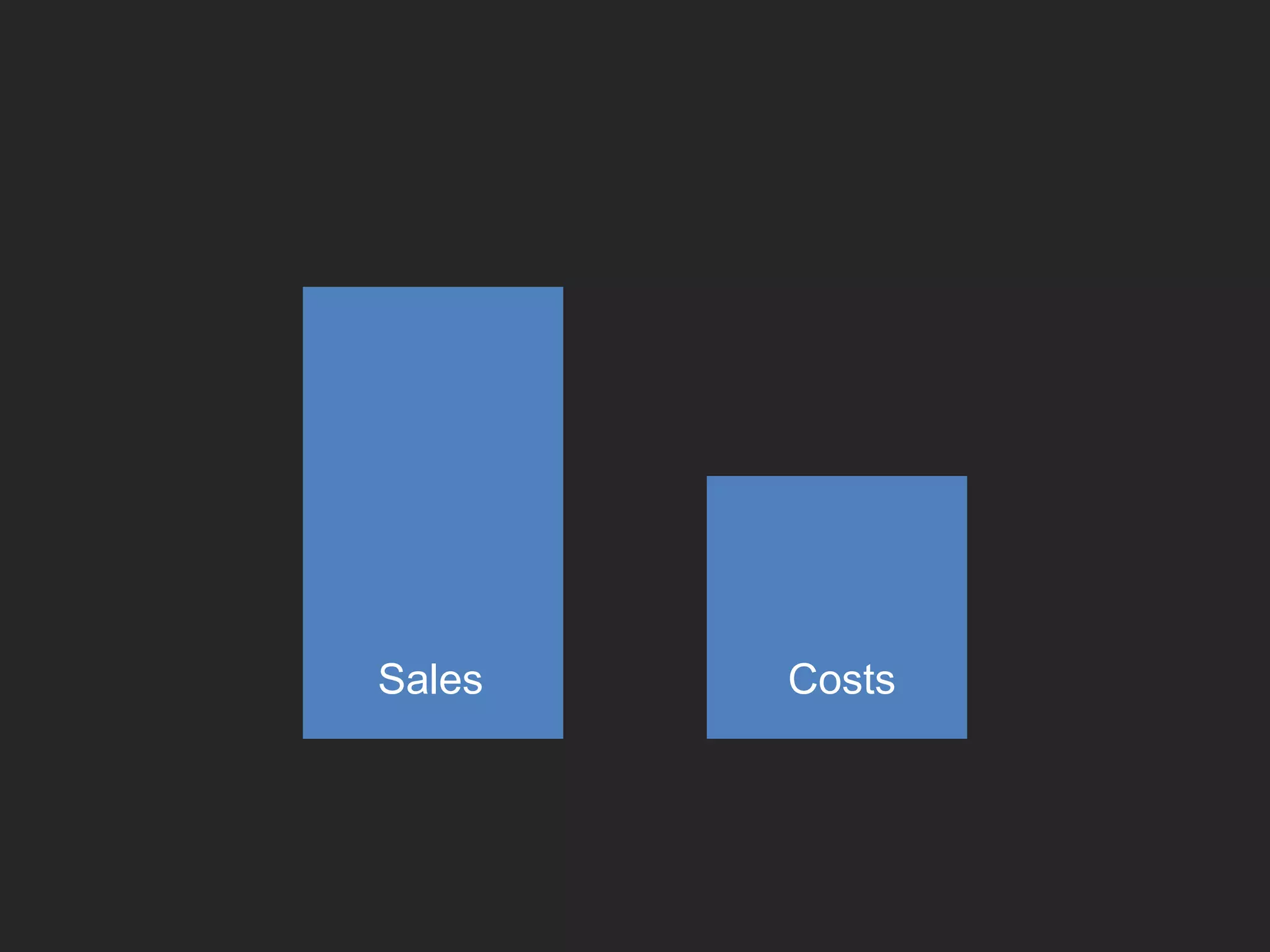
CostsSales
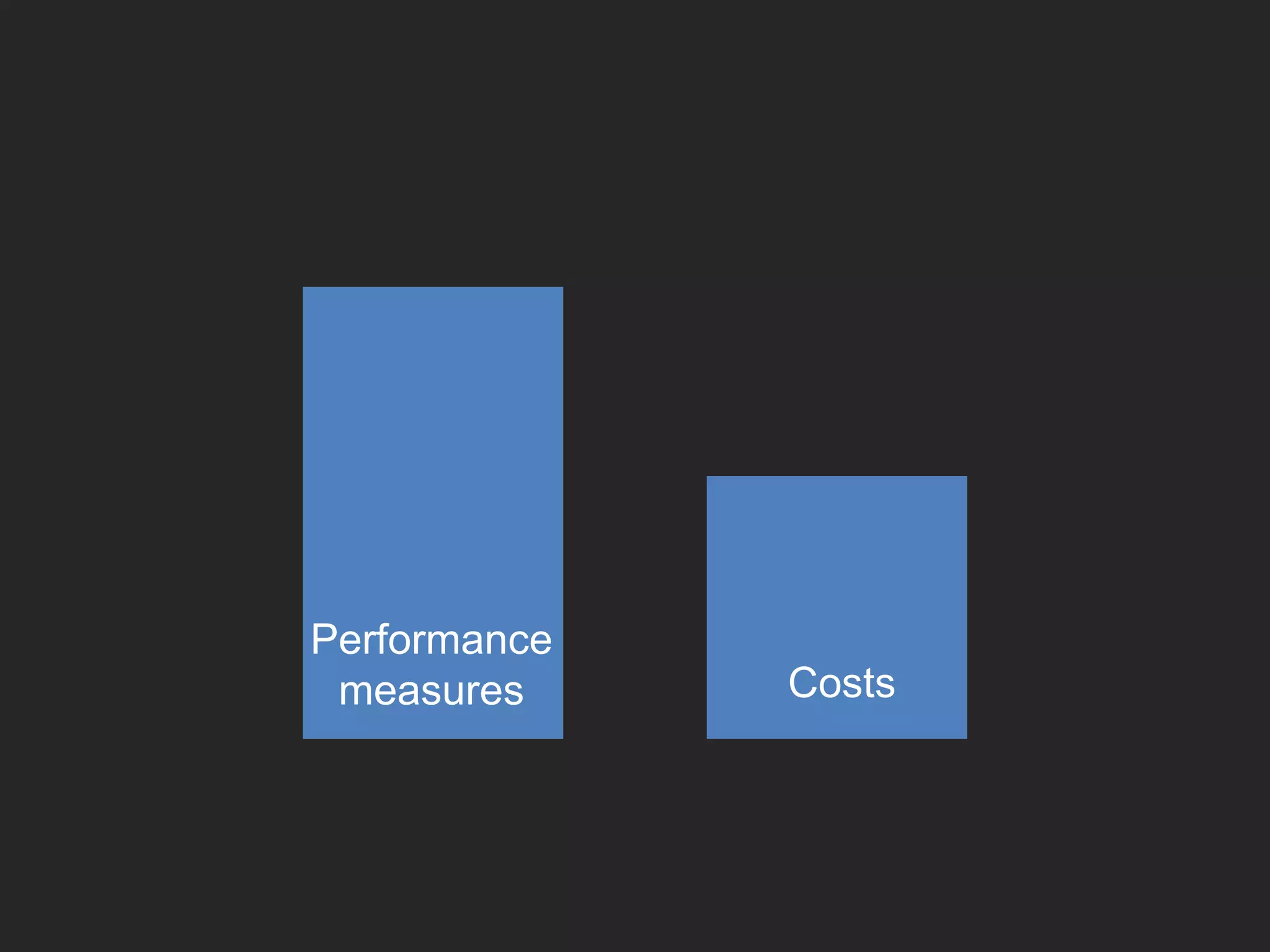
Performance measuresCosts
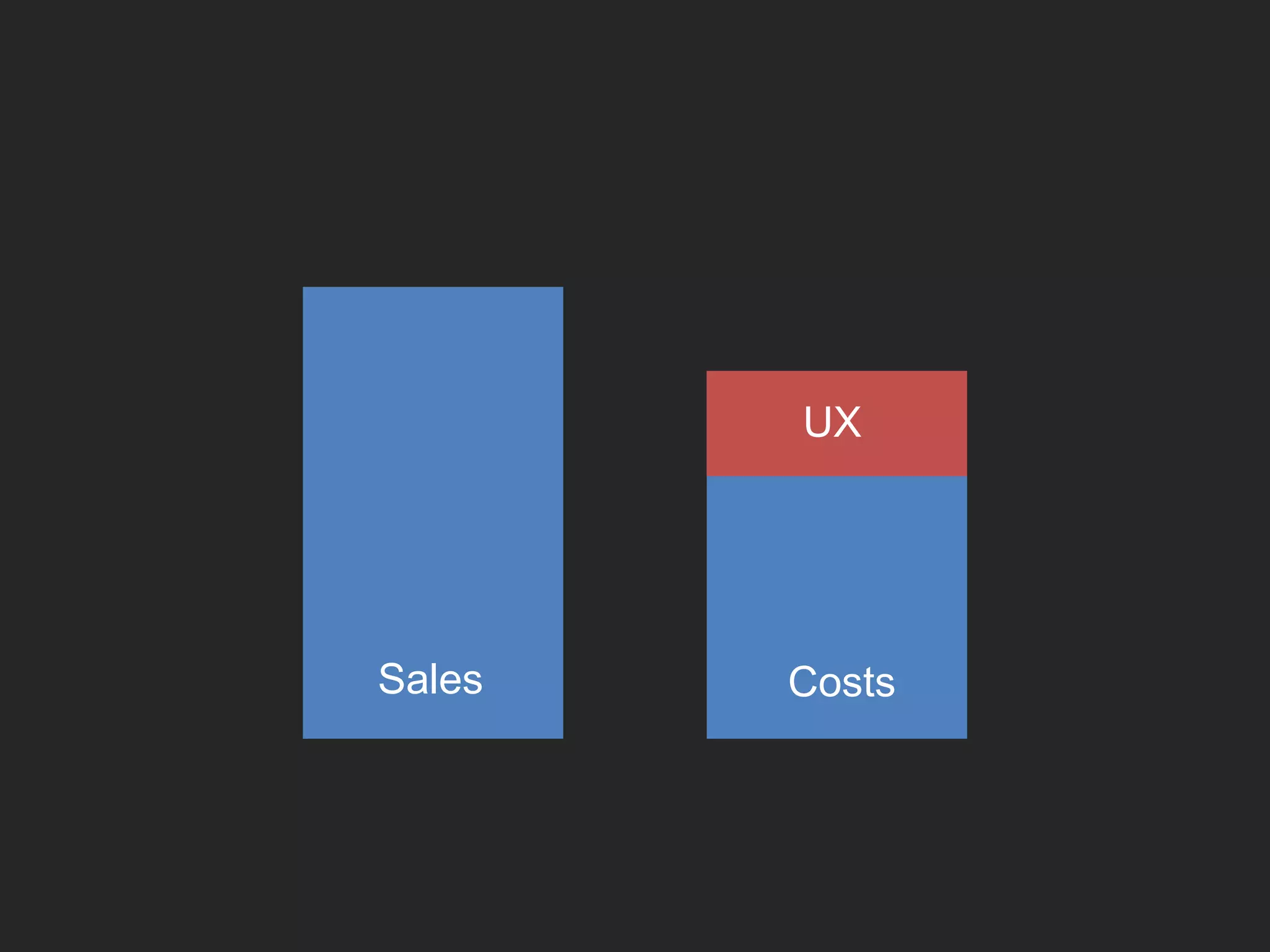
UXSalesCosts
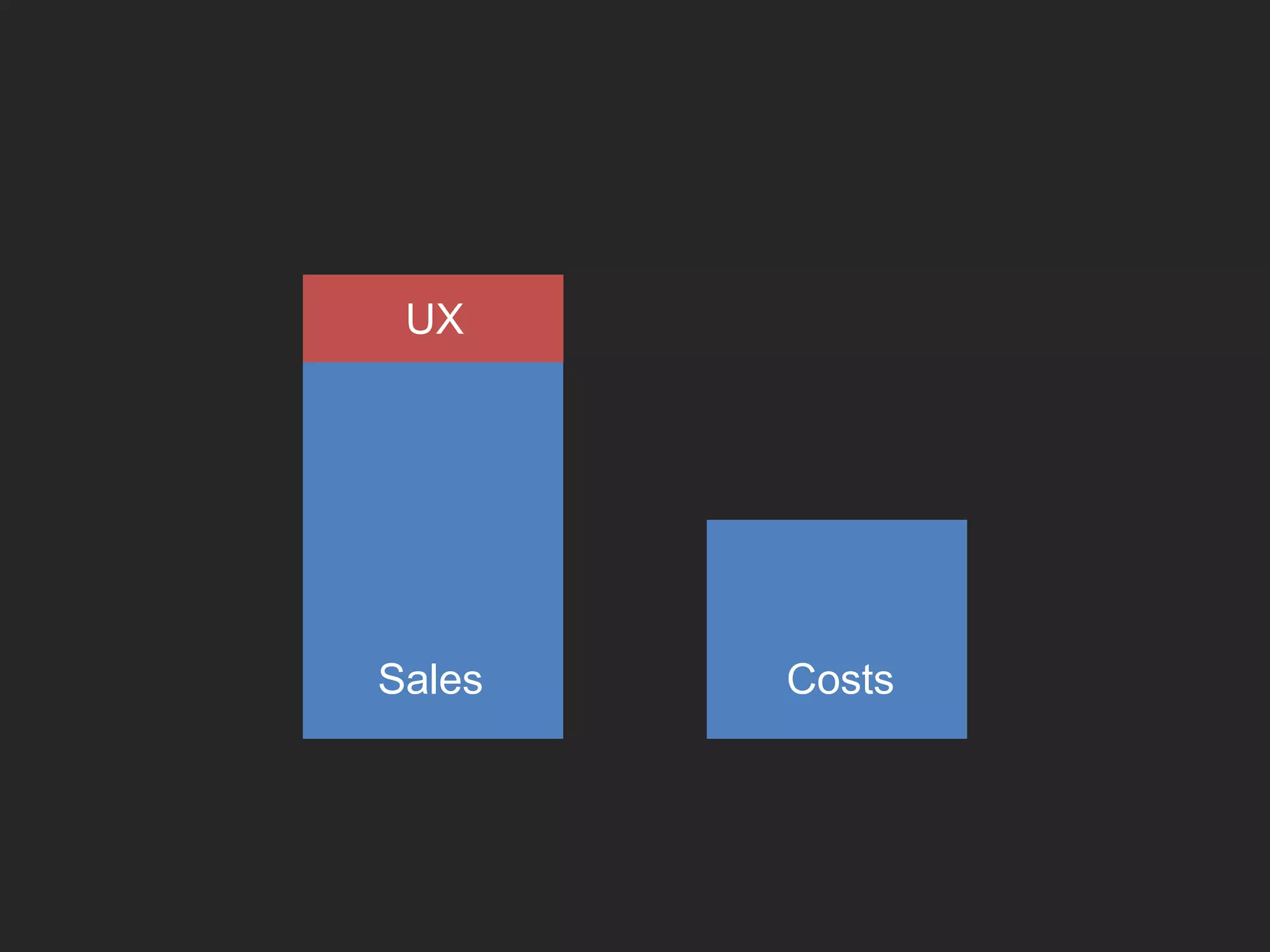
UXCostsSales
Why is UX core to your organisation, and who needs to believe in it?
STEP 1:Understand what’s important to your organisation’s success
It takes all the running you can do to keep in the same place. If you want to get somewhere else, you must run at least twice as fast.
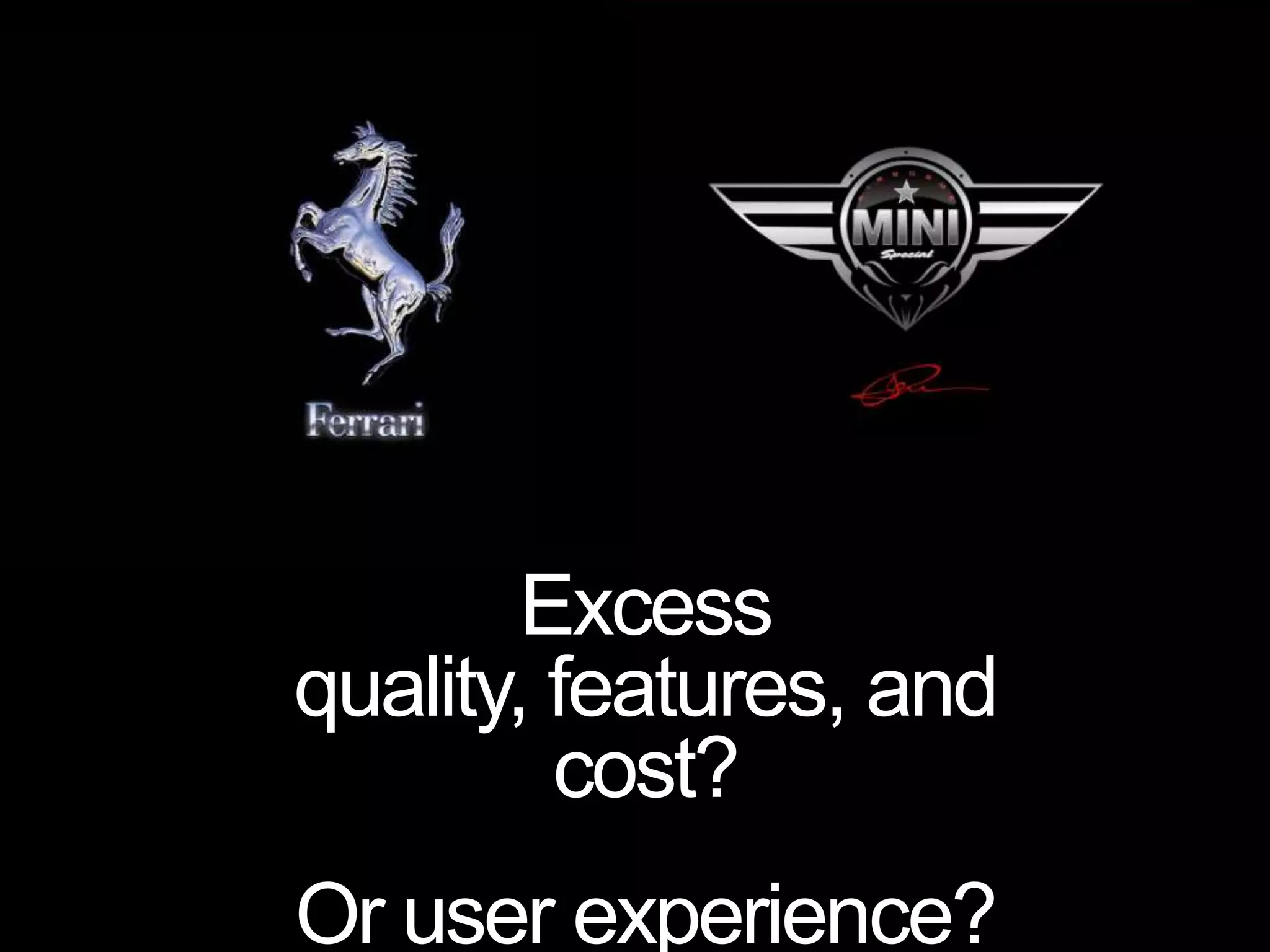
Excess quality, features, and cost?Or user experience?
Flickr: Kevin Dooley
STEP 2:Evaluate whether you’re being the most valuable you can be
Know thyself.Socrates**(or someone similar to Socrates)
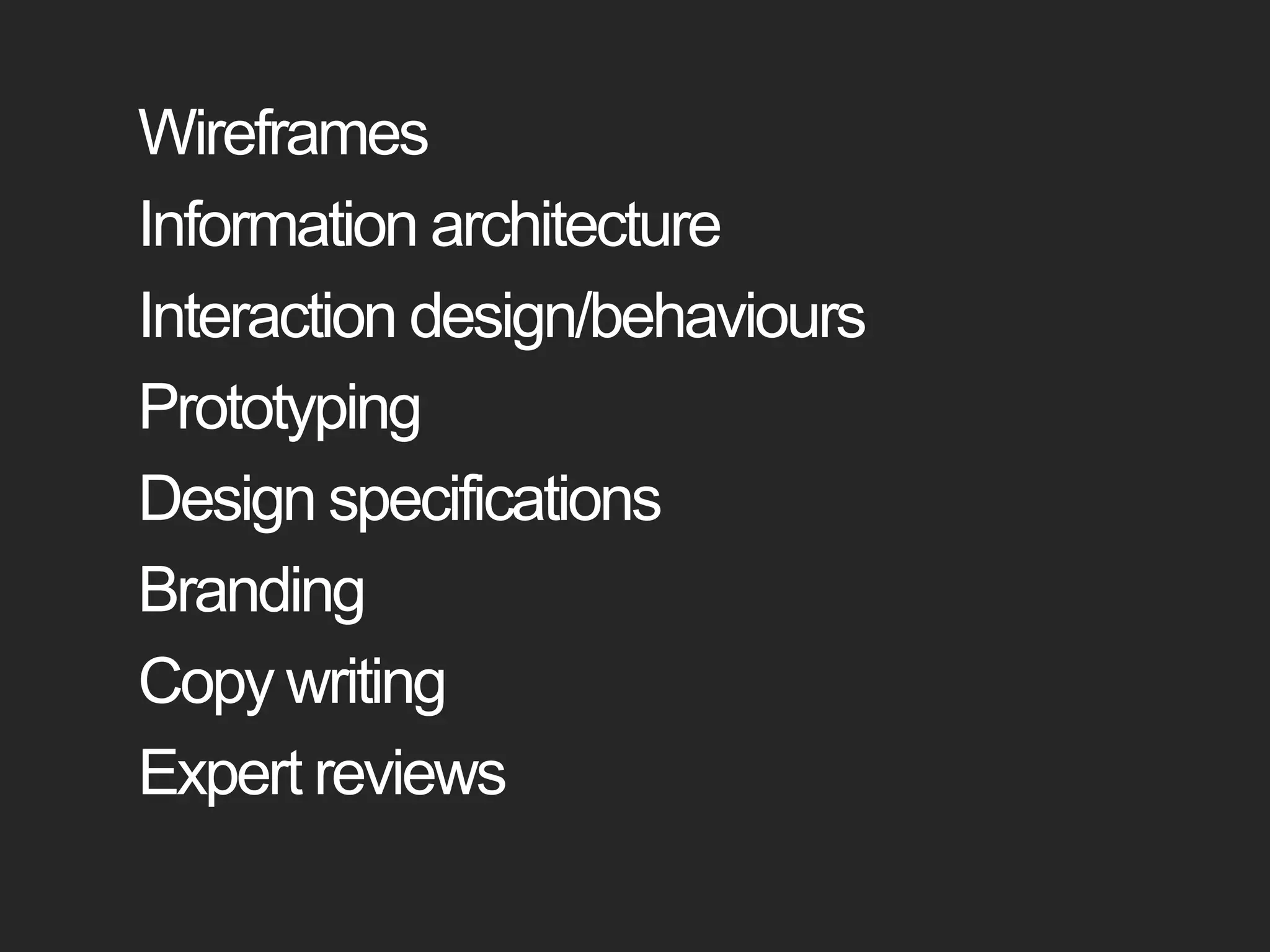
WireframesInformation architectureInteraction design/behavioursPrototypingDesign specificationsBrandingCopy writingExpert reviews
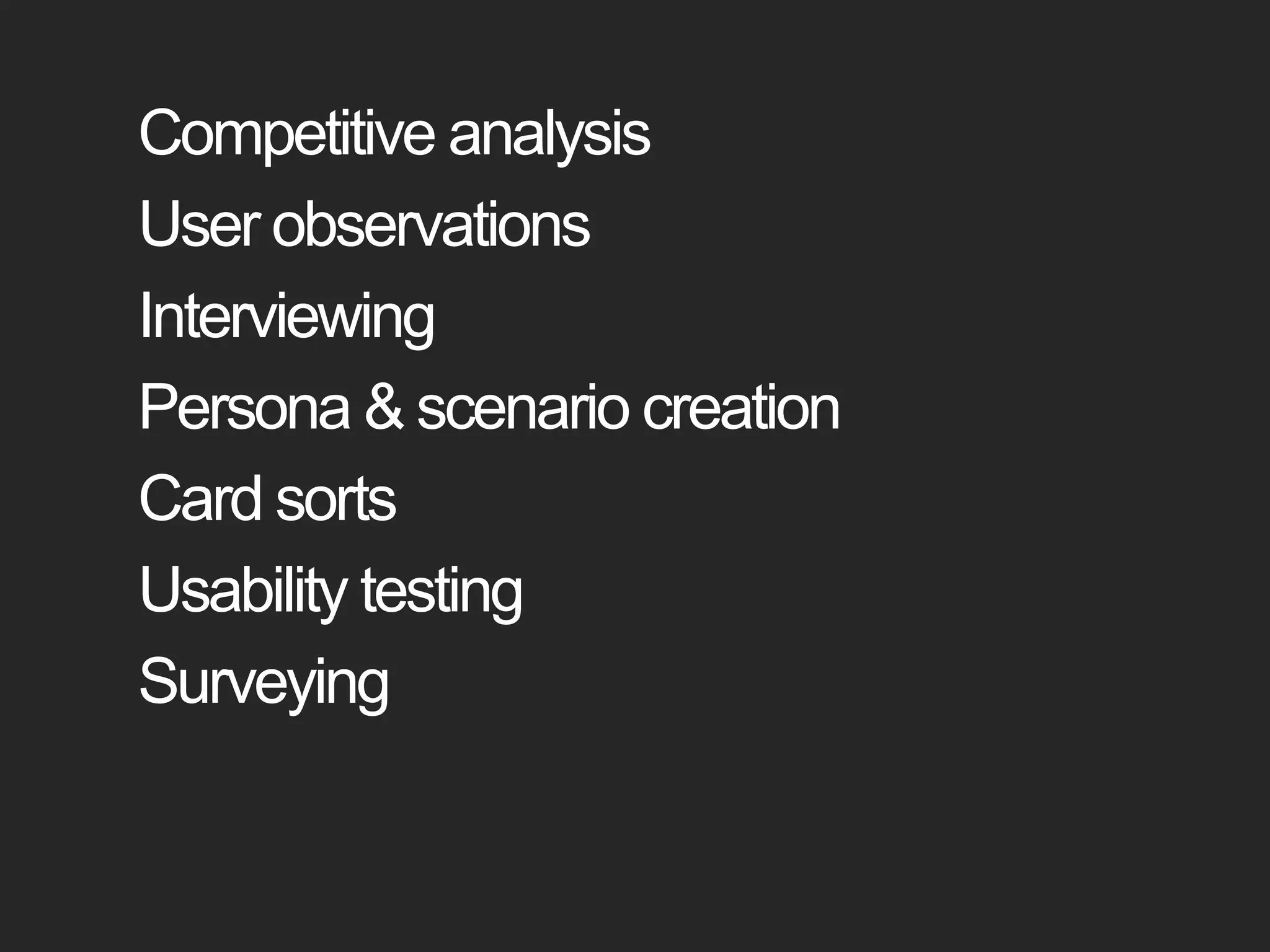
Competitive analysisUser observationsInterviewingPersona & scenario creationCard sortsUsability testingSurveying
DesignFlickr: Amir KuckovicResearchFlickr: Thomas Hawk
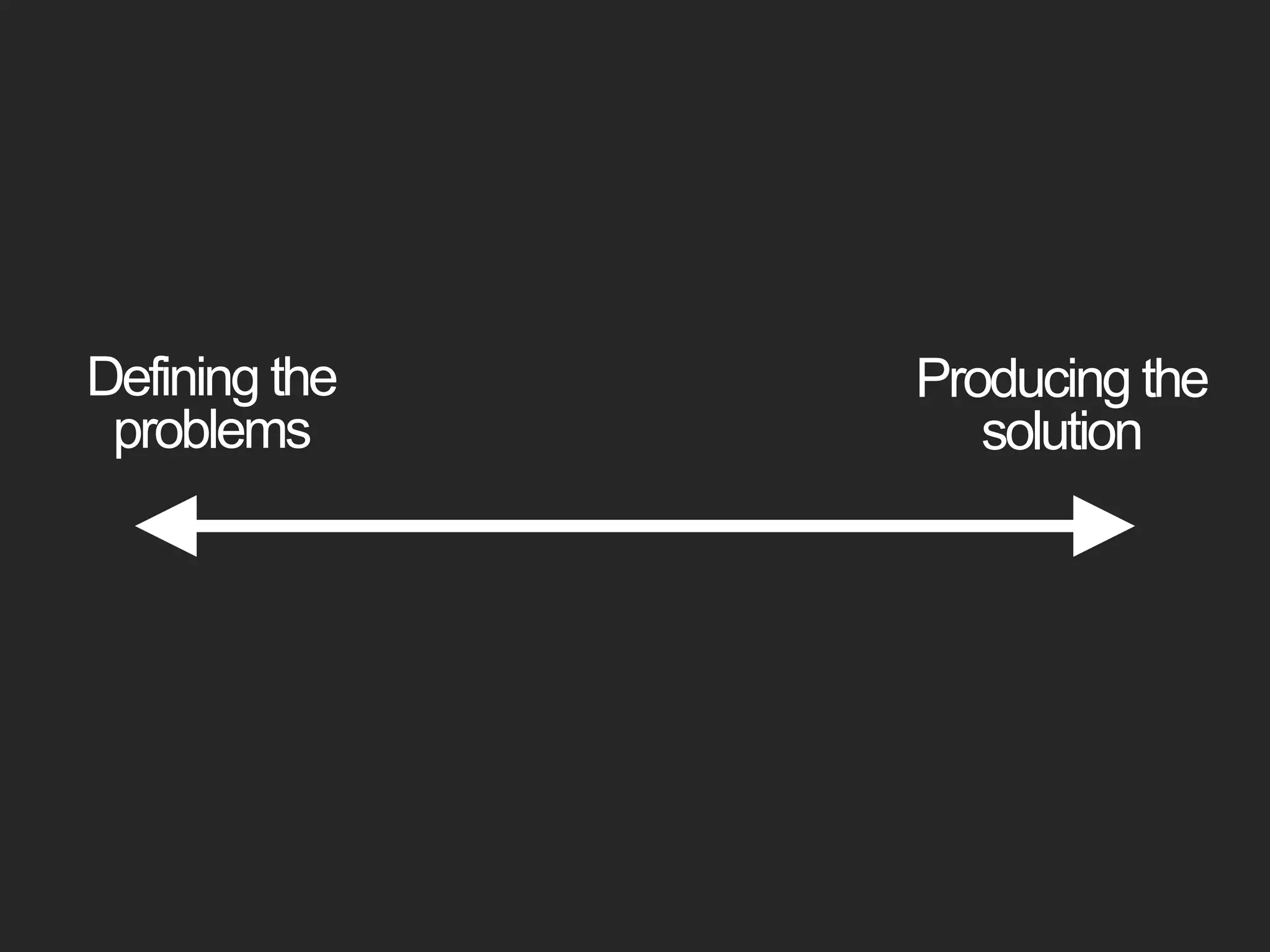
Defining the problemsProducing the solution
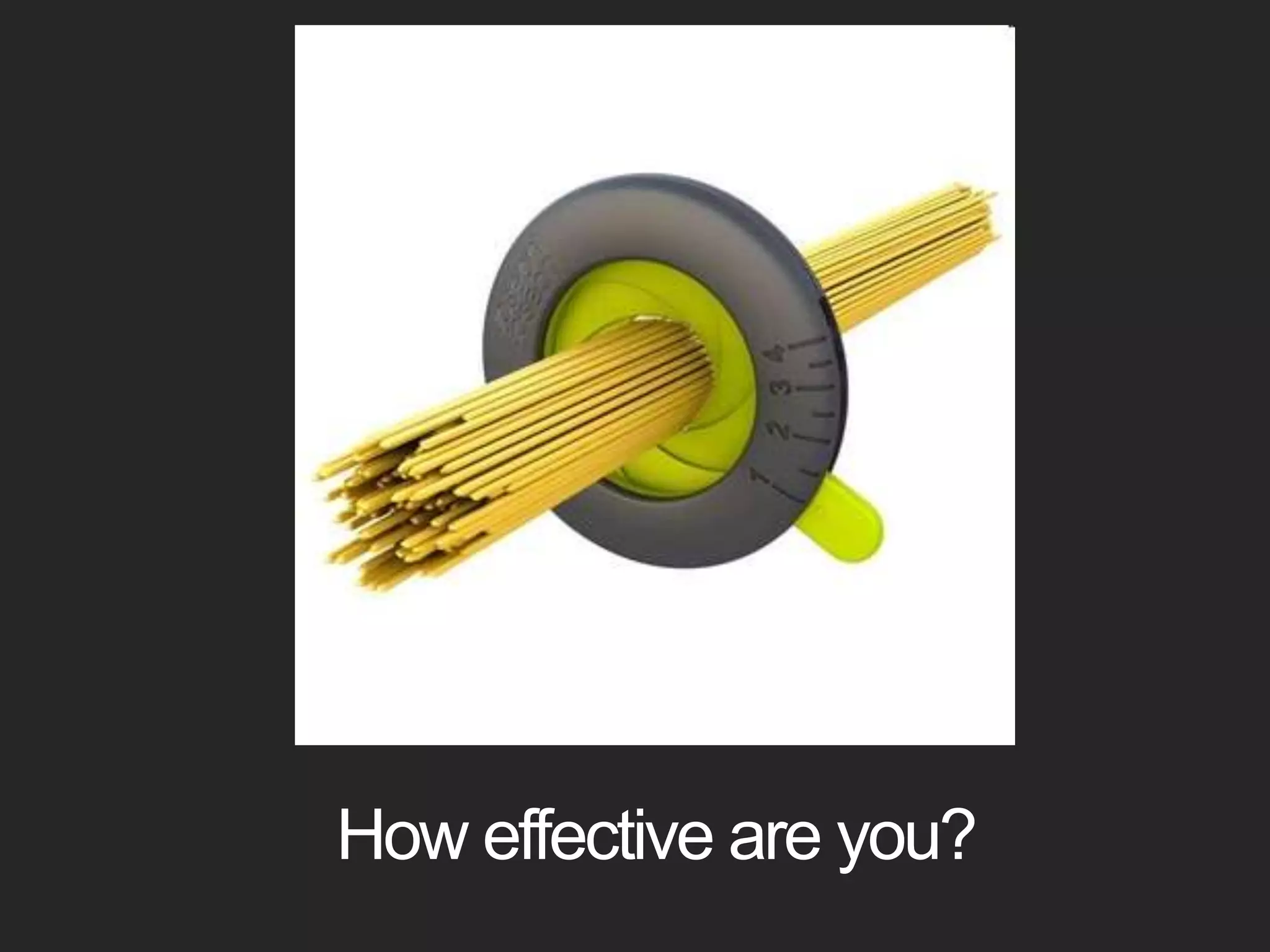
How effective are you?
STEP 3:Know your enablers and blockers, and how you can help them
I can’t convince executives to invest in UX (and neither can you).Jared Spool**actually definitely Jared Spool
Flickr: Luke Stearns
There are two levers with which to set a man in motion: fear and self-interest.
Flickr: Luke StearnsFlickr: JD Hancock
STEP 4:Identify people you can work with, and processes you can affect
Flickr: Fazen
You’re a leader if you can enlist others as followers volunteersKim Goodwin
Flickr: Dawn Willis Manser
If other peoples’ processes enable them to move forward without considering UX, they will probably do so Jon Innes & Liam Friedland**paraphrased
Flickr: Kev Gilmour
STEP 5:Measure your impact and help others evaluate your success
Weighing a cow does not make it heavier. But it does tell you if it’s getting heavier. Emma Dowsing
Flickr: AtliHaroarson
So…
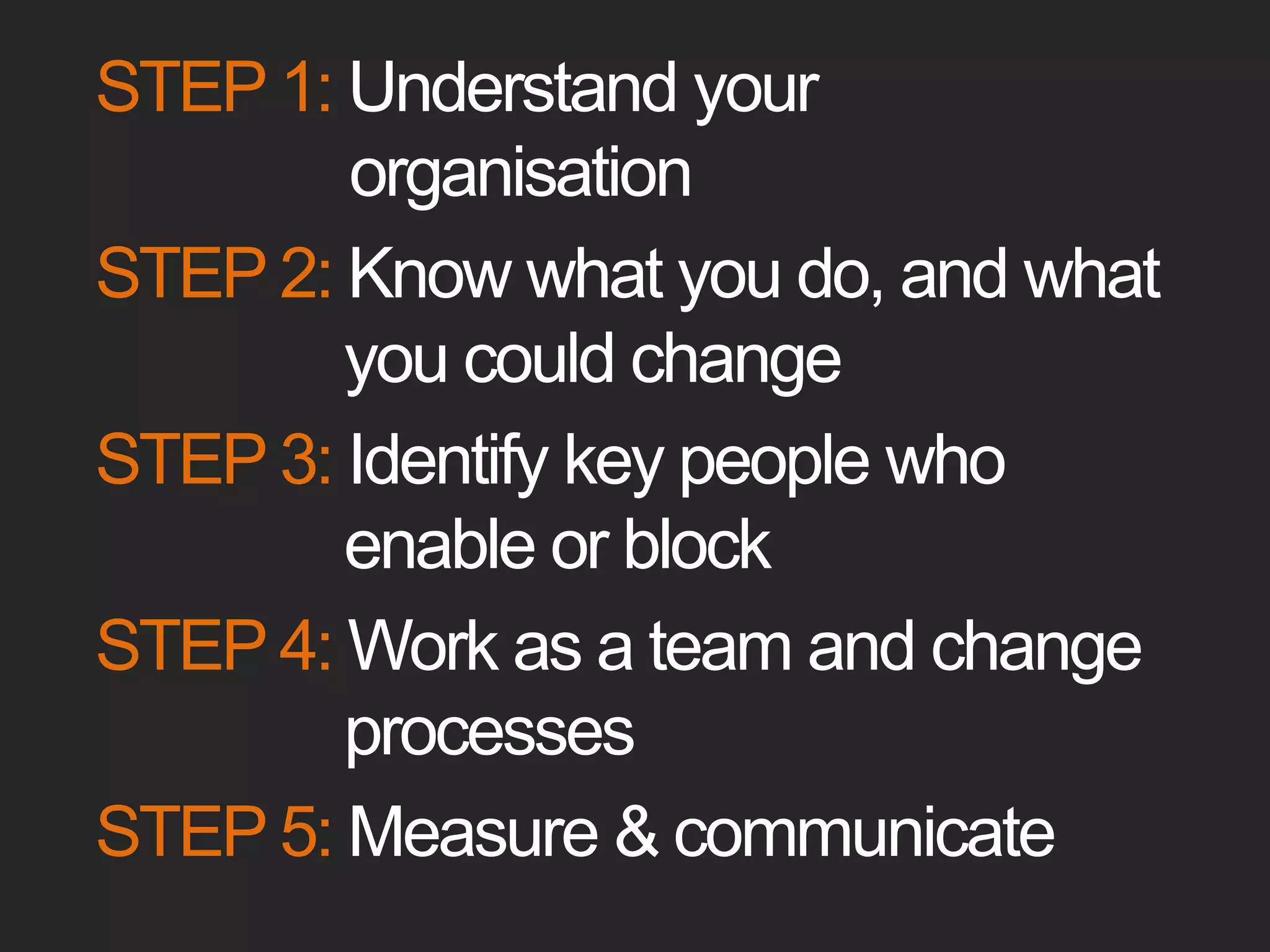
STEP 1: Understand your 			organisationSTEP 2: Know what you do, and what you could changeSTEP 3: Identify key people who enable or blockSTEP 4: Work as a team and change processesSTEP 5: Measure & communicate
Flickr: Jeff Belmonte
Making UX StrategicNorthern User ExperienceManchester1 Aug 2011@ccollingridge#nuxuk

Making UX strategic

Editor's Notes

  • #6 What will get you get out of today? A greater understanding of a process you could go through to change the way your organisation thinks about user experience, and the importance your organisation places on it.What is the fundamental question? It’s why user experience should be core to the way your organisation operates, and who should care.
  • #7 Did you want to be UX professional when you grew up? Did you get into it because of the money?I didn’t – it’s because I fell in love with making technology work better for human beings… I believe that technology should serve people - not the other way round - and that by making technology work for human beings we make the world a better place.
  • #8 Ifyou talk like this to a decision-maker, they pretty much hear something like this.People in UX often are really passionate, and believe and feel the mission. Often a lot of the problem is that they don’t talk to decision-makers in language they can understand and empathise with.
  • #9 Very simplistically, private sector senior managers look at the world like thisTheir goal is to maximise the gap between these things.
  • #10 Perhaps public sector managers look at the world like thisTheir goal is also to maximise the gap between these things – what they’re measured on and how much it costs.
  • #11 Whenthey hear me being a nice guy, and being a big fan of apple pie, this is what they hear.
  • #12 This is what they need to hear instead.
  • #15 Through the looking glass – Lewis CarrollCompetitive pressuresSomeone will improve the user experience for your customers – maybe it will be you.What would put you in a better competitive positions – more recommendation/evangelism, better reviews, customer loyalty?
  • #17 What other forces are operating on your organisation?Cost pressures?Resource constraints?Political changes?Market changes?Technological changes?Cultural changes (working from home, etc)?* What measures/KPIs does you business currently have – what does it target *
  • #23 Where are you (mostly) in the development lifecycle?
  • #24 What metrics do you currently have to evaluate your success?Even if you don’t have a measure, can you evaluate whether you’re having the most impact you can?This is not necessarily ROI – most times there is not a clear ROI (perhaps conversion aside) – and pseudo-factual ROI has proven to be an ineffective (and even counter-productive) way of convincing people.This questions IS NOT EQUAL TO “are you any good at your job?”. You can be doing the thing right, but not doing the right thing.
  • #27 Who do you need on your side?Who are your potential enablers? Who are your blockers?
  • #28 Napoleon.Like most things in life – making user experience a core part of your organisation is, in the long run, all about people.Why does an increased focus on user experience make life better for the key people?
  • #29 Look at the world through their eyeswhat’s their model of the world?What do they think has made them successful?What do they already want to improve (revenues, cost, risk, new customers, shareholder value, reputation)What measures do they already care about?What are their current incentives? Who provides/sets those targets?Who do they have relationships with? What are their strengths and weaknesses?What opportunities do they have, or threats do they face?What types of things persuade them – data, stories/anecdotes, common purpose, vision? Diffnt people have diffnt communication styles
  • #31 You are very unlikely to achieve what you want to achieve by working alone.You need allies.
  • #32 This is what you know about and believe in. This is what you know is good for your organisation (and you know why).You need to act as a leader in this subject, and enlist volunteersShare the responsibility and credit for the results with others
  • #33 You need other people to be advocates for you. This is not difficult if you know what your organisation needs to be successful, what you offer, and why it makes their life easier.Once they believe it is in their interests (because it is!) some of your most challenging people will become your greatest advocates.Appreciate that any kind of change will affect people – including moving to a more user-centred approach. Know that this can be difficult for them, and help them with that change.
  • #34 -Attended seminar about 18 months ago held by these Jon and Liam. Highly recommended.-Acted as a bug spur for me to focus on what “evangelism” meantMuch of the material here is inspired by the contents of that seminarRecommend it if you have an interest in this area
  • #35 What processes need to include UX?Are there things going on that just ignore UX? What are they? Can you affect them? If not, who can?You can only affect processes by having the right people on board, and by them wanting to make the change.Again, changing processes affect people, so you need to help then with that change.
  • #37 A measure is not the *point* of doing user experience, but it is fundamental to a culture that *believes* that UX is part of your organisation’s strategy
  • #38 So – how heavy is your cow?By having a measure for your impact, you can believe in and communicate the difference you’re makingYou can demonstrate why investment in UX is worthwhile, and so encourage moreYou can have othersstrack your measure – where there is attention there is actionYou can continually improve through having a feedback loopYou want a measure that it’s easy for decision makers to understand and consume – they have a lot to do.You want to align it with measures you already have, and measures that decision-makers care aboutYou want it to be something you can realistically collect – so you can do so repeatedly within the scope of your resources
  • #39 Where does all that leave us
  • #40 The process I’m trying to follow and am part way through.And most fundamentally, do not try to copy someone else’s solution. You need to understand your own unique organisation and work with that.
  • #41 If you remember one thing – remember that making user experience strategic is all about people – helping other people be more successful. Just like UX after all…