
Social Class and the Right to Die Movement: existing evidence Who joins the right to die movement? Earlier studies Current study
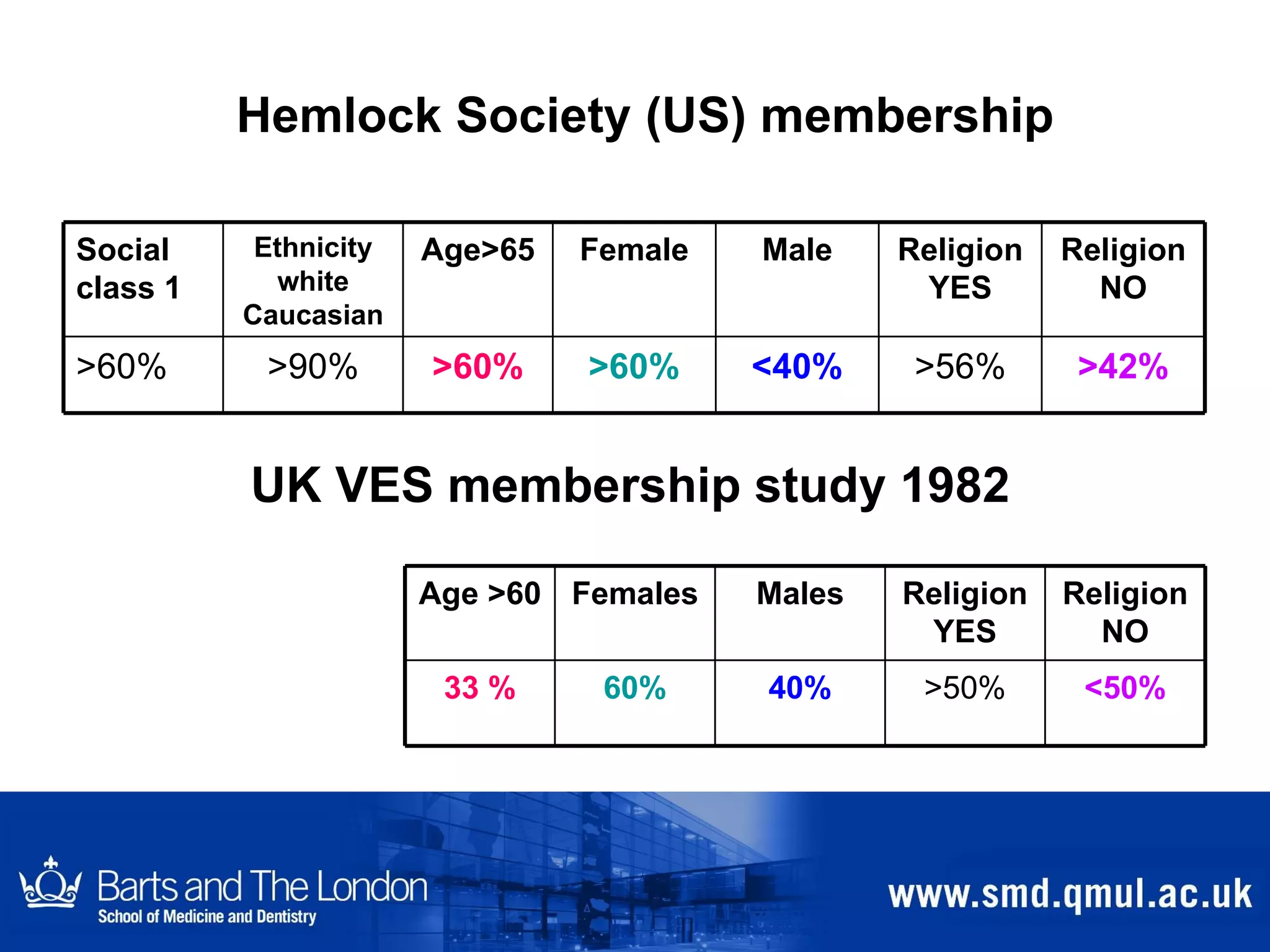
Hemlock Society (US) membership UK VES membership study 1982 >42% >56% <40% >60% >60% >90% >60% Religion NO Religion YES Male Female Age>65 Ethnicity white Caucasian Social class 1 <50% >50% 40% 60% 33 % Religion NO Religion YES Males Females Age >60
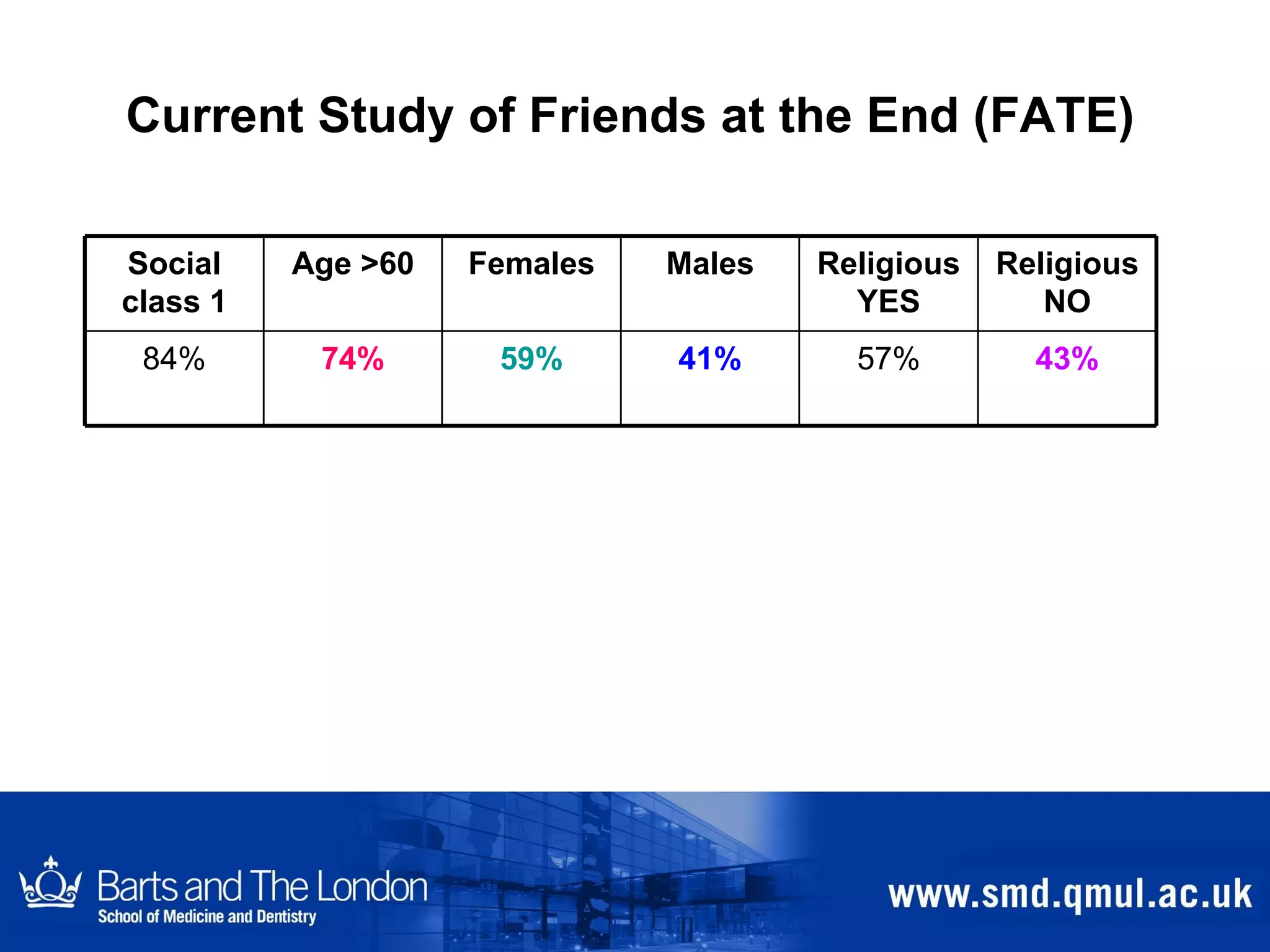
Current Study of Friends at the End (FATE) 43% 57% 41% 59% 74% 84% Religious NO Religious YES Males Females Age >60 Social class 1
 
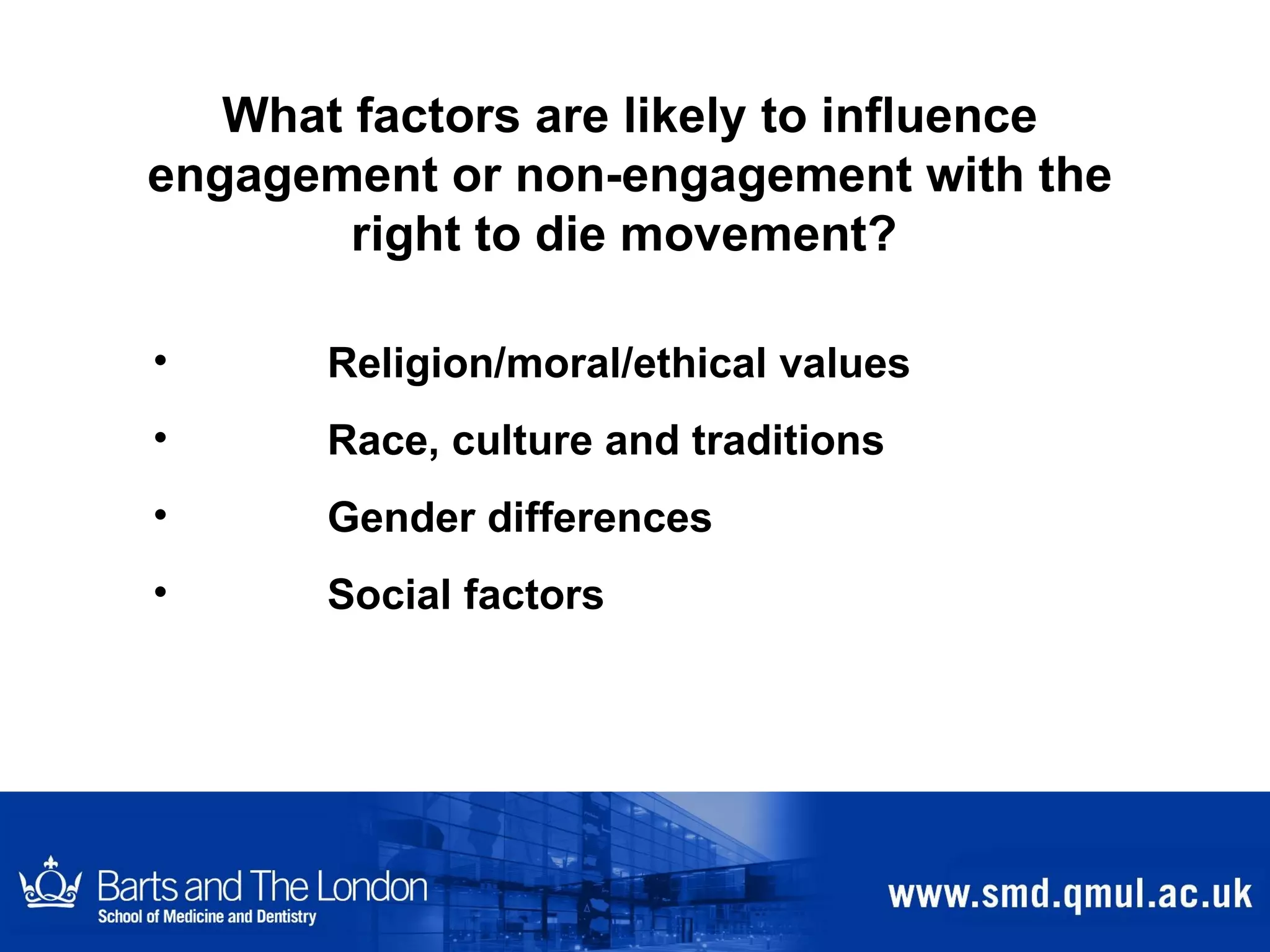
What factors are likely to influence engagement or non-engagement with the right to die movement?   Religion/moral/ethical values Race, culture and traditions Gender differences Social factors
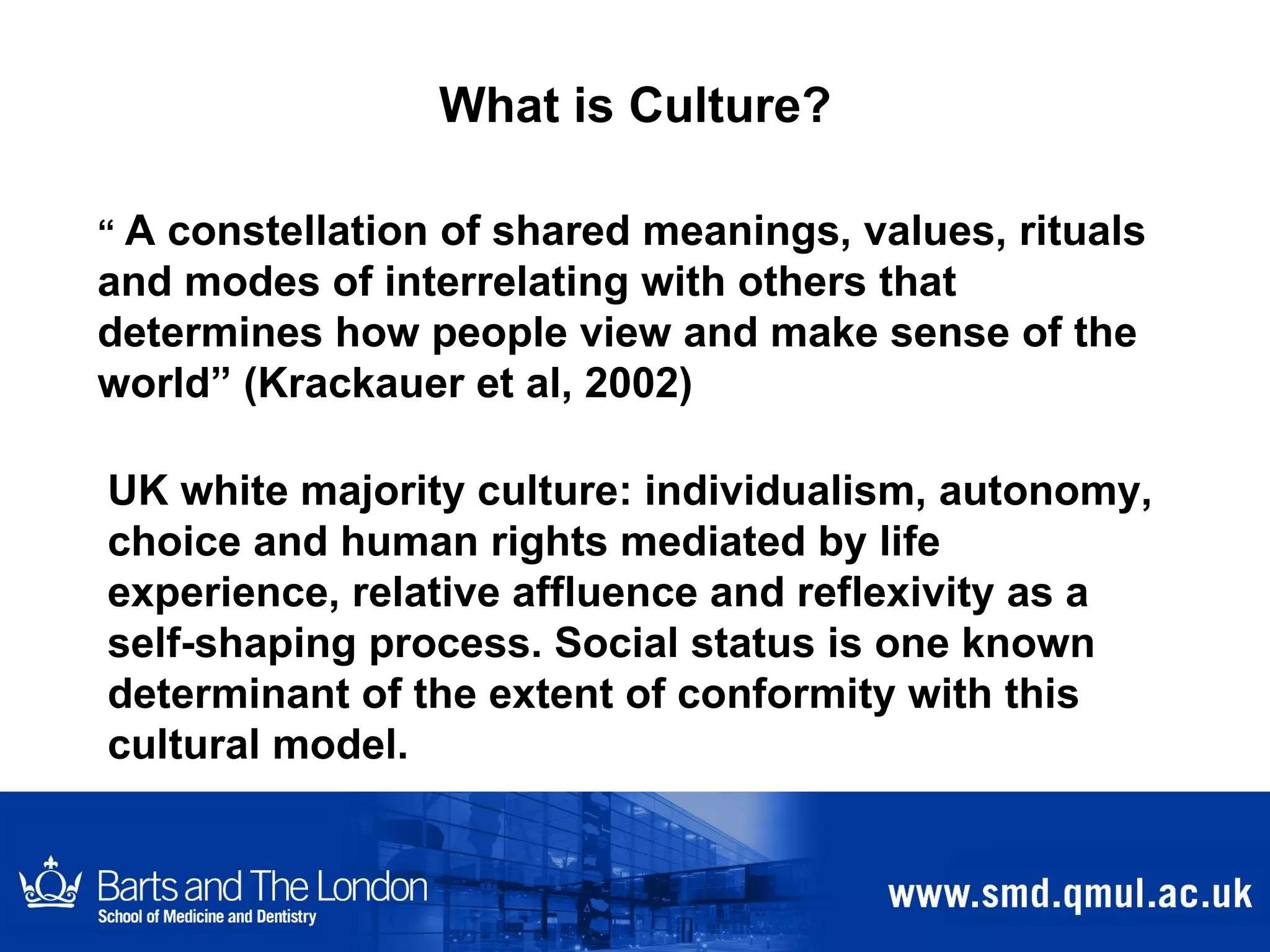
What is Culture? “  A constellation of shared meanings, values, rituals and modes of interrelating with others that determines how people view and make sense of the world” (Krackauer et al, 2002) UK white majority culture: individualism, autonomy, choice and human rights  mediated by life experience, relative affluence and reflexivity as a self-shaping process. Social status is one known determinant of the extent of conformity with this cultural model.
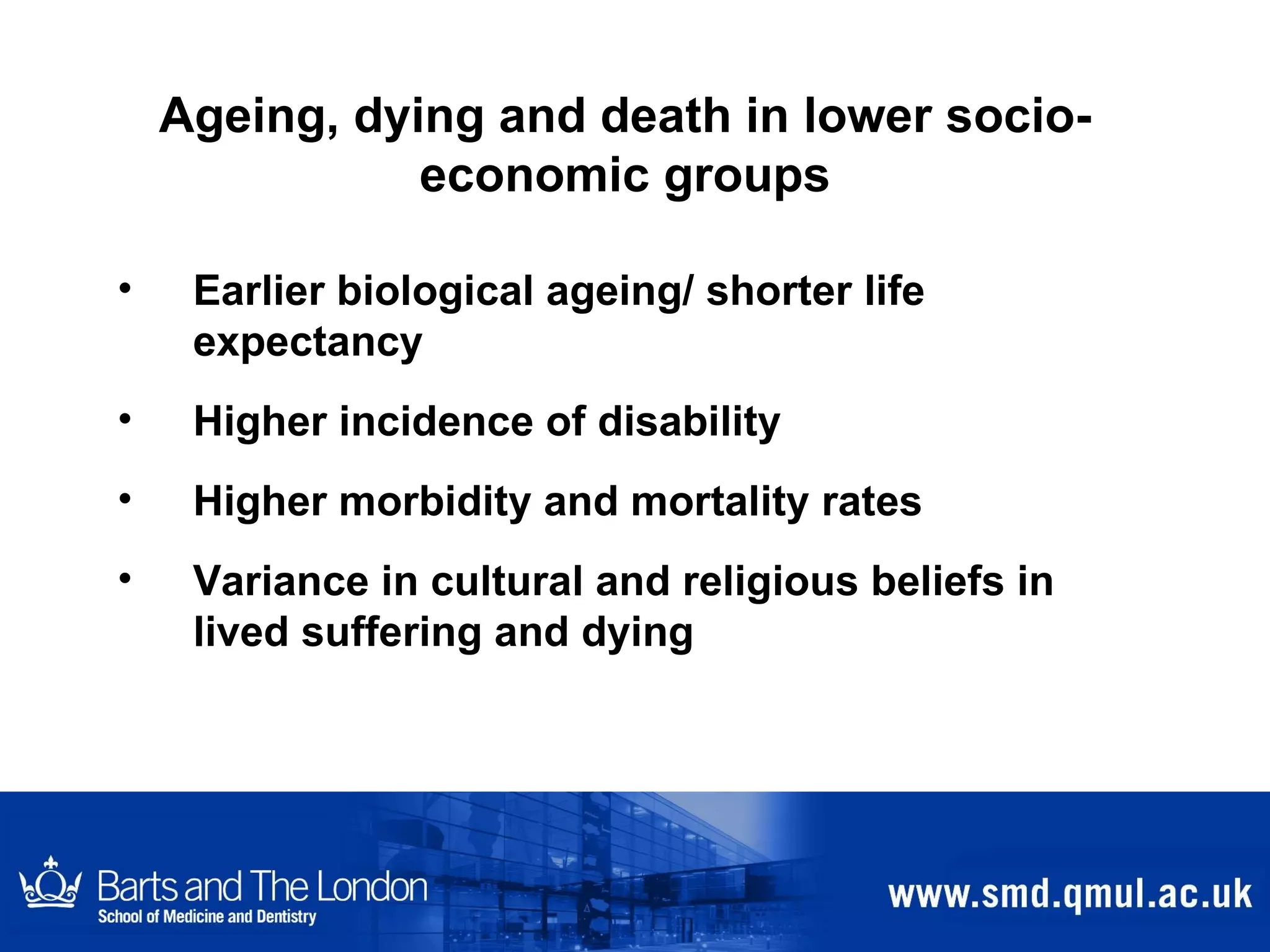
Ageing, dying and death in lower socio-economic groups Earlier biological ageing/ shorter life expectancy Higher incidence of disability Higher morbidity and mortality rates Variance in cultural and religious beliefs in lived suffering and dying
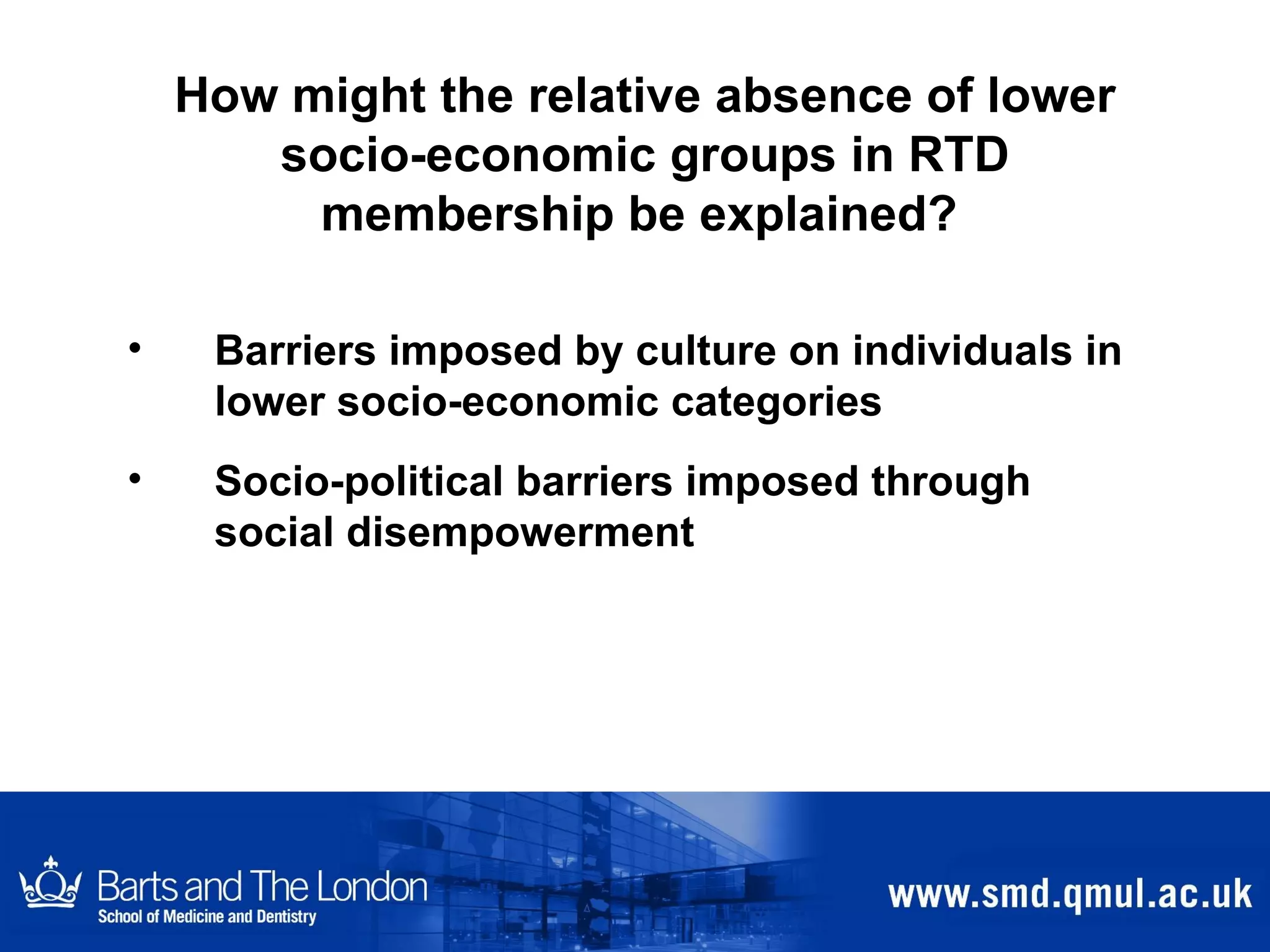
Barriers imposed by culture on individuals in lower socio-economic categories Socio-political barriers imposed through social disempowerment How might the relative absence of lower socio-economic groups in RTD membership be explained?
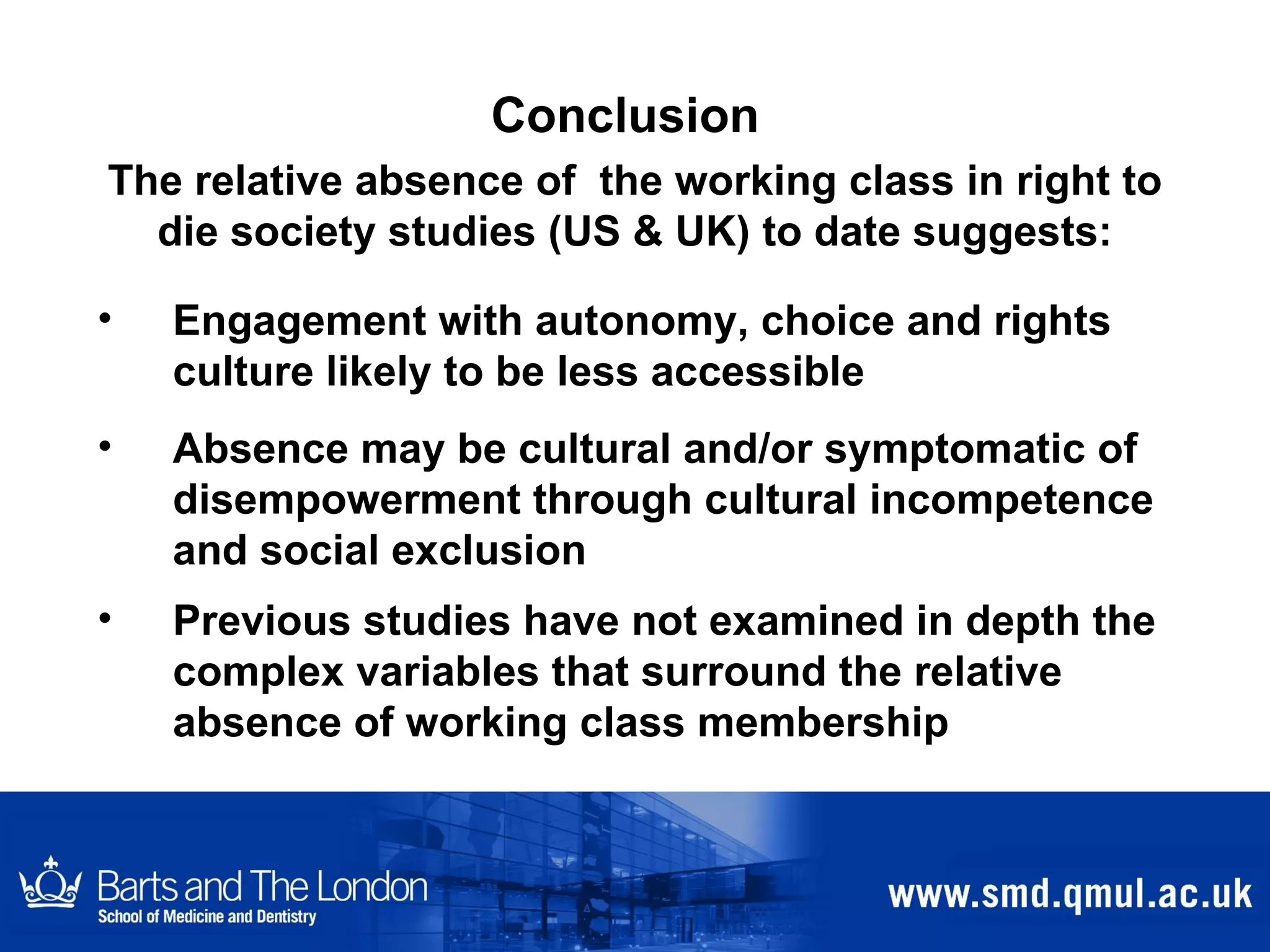
Conclusion Engagement with autonomy, choice and rights culture likely to be less accessible Absence may be cultural and/or symptomatic of disempowerment through cultural incompetence and social exclusion Previous studies have not examined in depth the complex variables that surround the relative absence of working class membership   The relative absence of  the working class in right to die society studies (US & UK) to date suggests:
Conclusion contd. The current study is limited by the absence of data on participant ethnicity and the relative absence of working class members  The current study will shed some light on religious, moral and ethical beliefs of a cohort of social class one FATE members
Cossman,J., Lewers G. A., Wilson J K, Fox E & Kamakahi J. J. (2002). The Hemlock Society Membership: Comparison Between 1983 and 1995 Surveys and the General Population. Omega 45(1),43-55 Epstein M. Legitimizing the shameful: end-of-life ethics and the political economy of death. Bioethics 2007;21(1):23-31 Firth, S.(2004). Minority ethnic communities and religious groups. In In Death, dying and social differences. Ed. Oliviere, D. and Monroe, B. Oxford University press. Gannon, G. and Nolan, B. (2007). The impact of disability transitions on social inclusion. Social Science & Medecine,64,1425-1437 Giddens, A. (1991).  Modernity and Self-Identity . Cambridge: Polity Press. Hardwig, J. (2000).  Is there a duty to die?  London, Routledge Helman, C. Cultural aspects of pain and suffering. Presentation to students, Brunel University, Holden, J. (1992). Demographics, Attitudes, and Afterlife Beliefs of Right-To-Life and Right-To-Die Organization Members. J Social Psychology, 133, 4,, 521-527. Kamakahi J J, Cossman J S and Fox E (2001). The Right -to Die movement: Extrapolating for the National Hemlock Society USA Membership Survey. OMEGA,43(1), 7-23 Kellehear, A. (2007). A social history of dying. Cambridge university press Kemp, N. D.A. (2002).  ‘Merciful Release’, the history of the British euthanasia movement . Manchester University Press. Lam, R. (1982), The queue for the EXIT, The Health Services Journal, 15th October Payne, M.(2004). Social class, poverty and social exclusion. In Death, dying and social differences. Ed. Oliviere, D. and Monroe, B. Oxford University press. Willems, S., De Maesschalk, S., Deveugele, M., derese, A and De Maeseneer, J. (2005). Socio-economic status of the patient and doctor-patient communication: does it make a difference? Patient Education and Counseling,56,139-146 References

Social Class and the Right to Die Movement: existing evidence by Marion Judd

  • 1.
  • 2.
    Social Class andthe Right to Die Movement: existing evidence Who joins the right to die movement? Earlier studies Current study
  • 3.
    Hemlock Society (US)membership UK VES membership study 1982 >42% >56% <40% >60% >60% >90% >60% Religion NO Religion YES Male Female Age>65 Ethnicity white Caucasian Social class 1 <50% >50% 40% 60% 33 % Religion NO Religion YES Males Females Age >60
  • 4.
    Current Study ofFriends at the End (FATE) 43% 57% 41% 59% 74% 84% Religious NO Religious YES Males Females Age >60 Social class 1
  • 5.
  • 6.
    What factors arelikely to influence engagement or non-engagement with the right to die movement? Religion/moral/ethical values Race, culture and traditions Gender differences Social factors
  • 7.
    What is Culture?“ A constellation of shared meanings, values, rituals and modes of interrelating with others that determines how people view and make sense of the world” (Krackauer et al, 2002) UK white majority culture: individualism, autonomy, choice and human rights mediated by life experience, relative affluence and reflexivity as a self-shaping process. Social status is one known determinant of the extent of conformity with this cultural model.
  • 8.
    Ageing, dying anddeath in lower socio-economic groups Earlier biological ageing/ shorter life expectancy Higher incidence of disability Higher morbidity and mortality rates Variance in cultural and religious beliefs in lived suffering and dying
  • 9.
    Barriers imposed byculture on individuals in lower socio-economic categories Socio-political barriers imposed through social disempowerment How might the relative absence of lower socio-economic groups in RTD membership be explained?
  • 10.
    Conclusion Engagement withautonomy, choice and rights culture likely to be less accessible Absence may be cultural and/or symptomatic of disempowerment through cultural incompetence and social exclusion Previous studies have not examined in depth the complex variables that surround the relative absence of working class membership The relative absence of the working class in right to die society studies (US & UK) to date suggests:
  • 11.
    Conclusion contd. Thecurrent study is limited by the absence of data on participant ethnicity and the relative absence of working class members The current study will shed some light on religious, moral and ethical beliefs of a cohort of social class one FATE members
  • 12.
    Cossman,J., Lewers G.A., Wilson J K, Fox E & Kamakahi J. J. (2002). The Hemlock Society Membership: Comparison Between 1983 and 1995 Surveys and the General Population. Omega 45(1),43-55 Epstein M. Legitimizing the shameful: end-of-life ethics and the political economy of death. Bioethics 2007;21(1):23-31 Firth, S.(2004). Minority ethnic communities and religious groups. In In Death, dying and social differences. Ed. Oliviere, D. and Monroe, B. Oxford University press. Gannon, G. and Nolan, B. (2007). The impact of disability transitions on social inclusion. Social Science & Medecine,64,1425-1437 Giddens, A. (1991). Modernity and Self-Identity . Cambridge: Polity Press. Hardwig, J. (2000). Is there a duty to die? London, Routledge Helman, C. Cultural aspects of pain and suffering. Presentation to students, Brunel University, Holden, J. (1992). Demographics, Attitudes, and Afterlife Beliefs of Right-To-Life and Right-To-Die Organization Members. J Social Psychology, 133, 4,, 521-527. Kamakahi J J, Cossman J S and Fox E (2001). The Right -to Die movement: Extrapolating for the National Hemlock Society USA Membership Survey. OMEGA,43(1), 7-23 Kellehear, A. (2007). A social history of dying. Cambridge university press Kemp, N. D.A. (2002). ‘Merciful Release’, the history of the British euthanasia movement . Manchester University Press. Lam, R. (1982), The queue for the EXIT, The Health Services Journal, 15th October Payne, M.(2004). Social class, poverty and social exclusion. In Death, dying and social differences. Ed. Oliviere, D. and Monroe, B. Oxford University press. Willems, S., De Maesschalk, S., Deveugele, M., derese, A and De Maeseneer, J. (2005). Socio-economic status of the patient and doctor-patient communication: does it make a difference? Patient Education and Counseling,56,139-146 References