This document discusses network effects, which refers to the phenomenon where the value of a product or service increases as more people use it. There are several types of network effects including direct, indirect, two-sided, and social network effects. Examples given include how telephones and social networks like Facebook become more valuable as more people use them. A bandwagon effect and positive feedback loop can also occur within network effects. Both positive and negative network effects are explored.
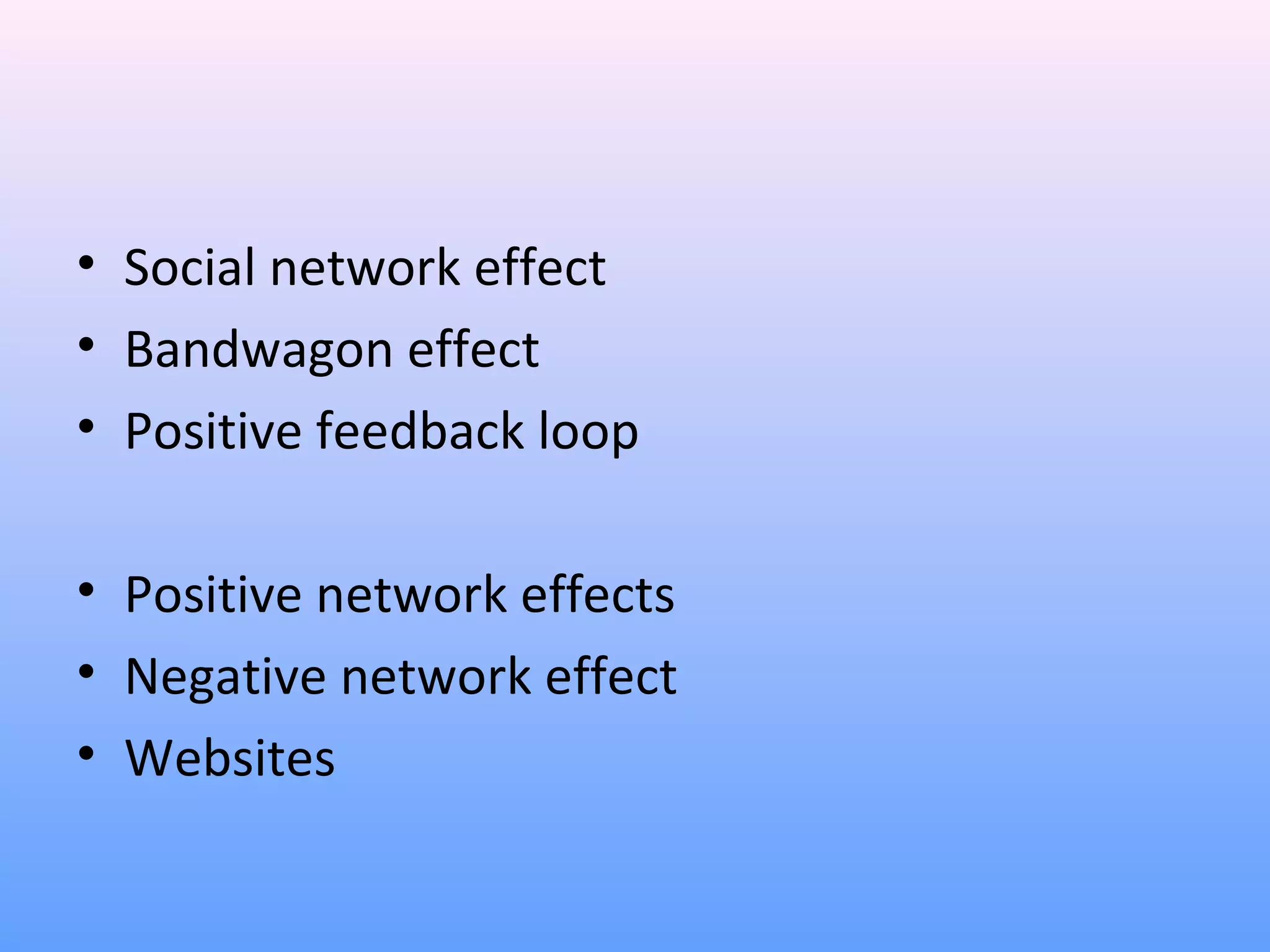
Network Effects?
In itssimplest form
it refers to an
environment where
an increase in
adoption and/or
usage creates more
value for all
participants in a
social community or
network.
http://ezinearticles.com/?Network-Effects-in-the-Web-2.0-Economy&id=1505581
5.
Examples
A classic
example isthe
telephone. The
more people
that own
telephones, the
more valuable
the telephone is
to each owner.
Online social
networks work
in the same way,
with websites
like Twitter and
Facebook.
http://en.wikipedia.org/wiki/Network_effect
6.
Types...
There are severaltypes of
network effects, these
are:
• Direct
• Indirect
• Social
• Two-sided
Direct effect
Indirect effect
7.
Direct Network Effects
Occurswhen the
product or service value
increases the more
people use it.
For example Microsoft
http://ezinearticles.com/?Network-Effects-in-the-Web-2.0-Economy&id=1505581
8.
Indirect Network Effects
Occurswhen increases in the use
of a product or service creates
increased value for
complimentary products resulting
in added value for the original
product or service.
For example Google
http://ezinearticles.com/?Network-Effects-in-the-Web-2.0-Economy&id=1505581
9.
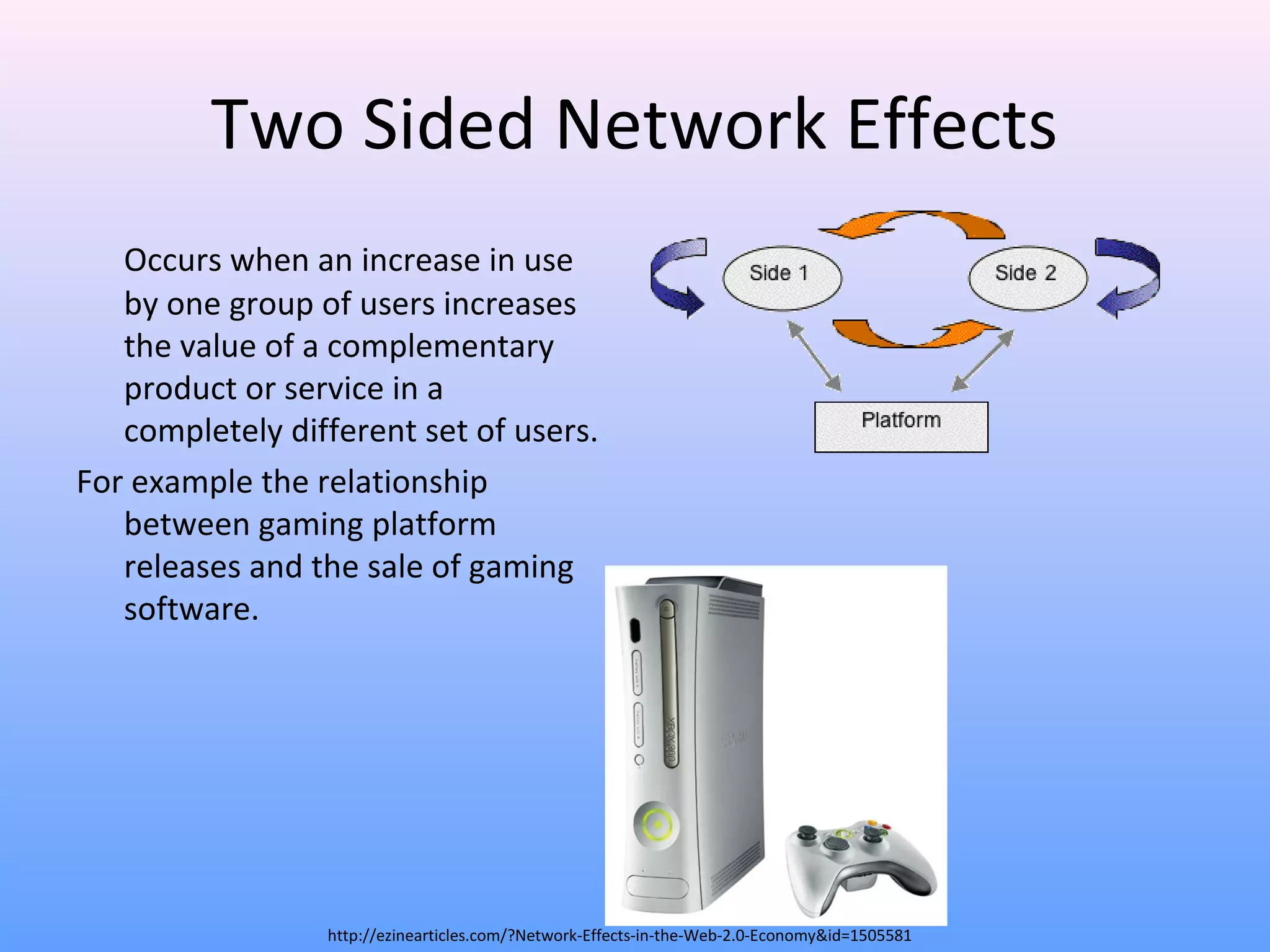
Two Sided NetworkEffects
Occurs when an increase in use
by one group of users increases
the value of a complementary
product or service in a
completely different set of users.
For example the relationship
between gaming platform
releases and the sale of gaming
software.
http://ezinearticles.com/?Network-Effects-in-the-Web-2.0-Economy&id=1505581
10.
Social Network Effects
Occurswhen groups of
people come together
in the online world
http://ezinearticles.com/?Network-Effects-in-the-Web-2.0-Economy&id=1505581
11.
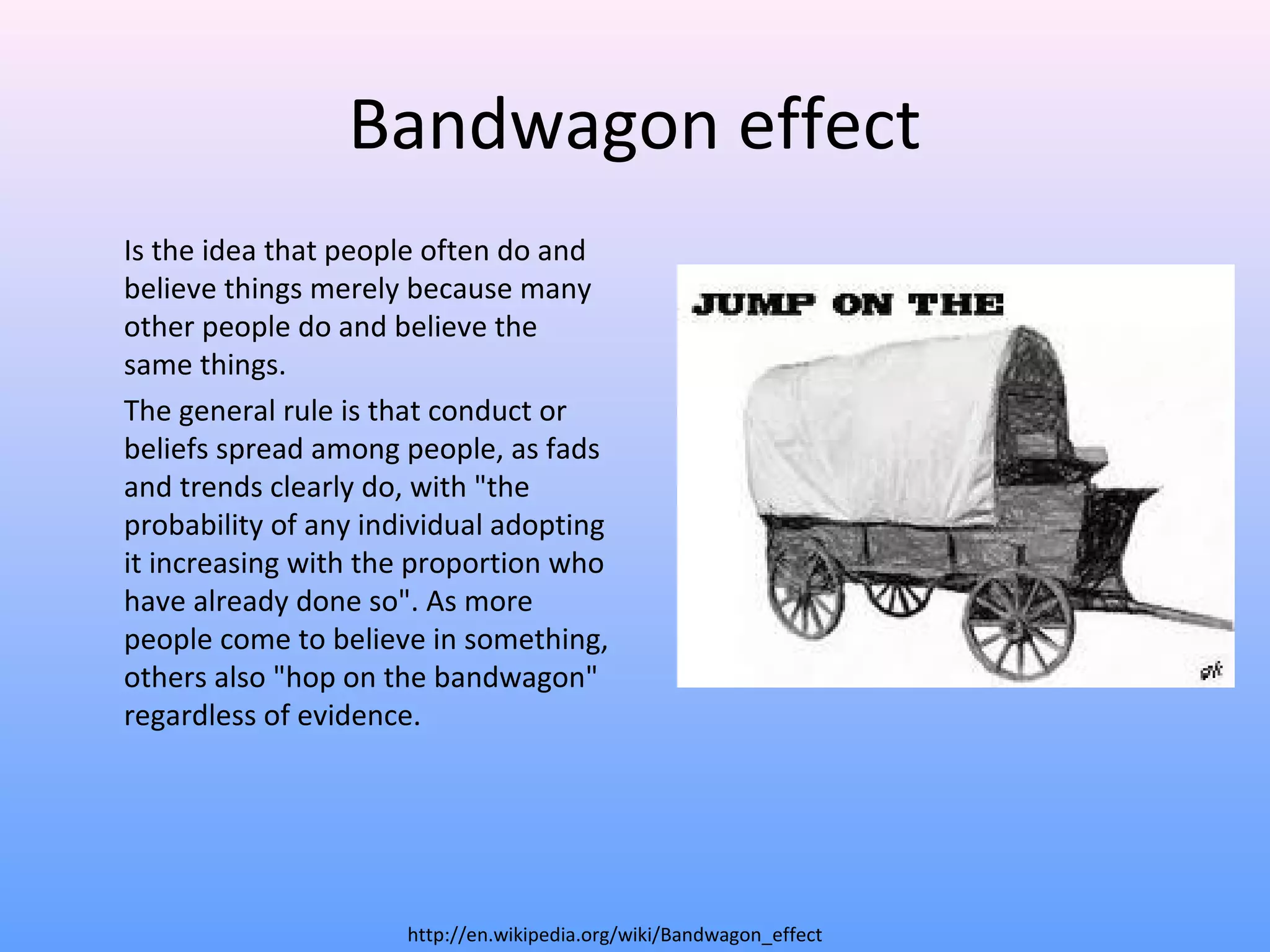
Bandwagon effect
Is theidea that people often do and
believe things merely because many
other people do and believe the
same things.
The general rule is that conduct or
beliefs spread among people, as fads
and trends clearly do, with "the
probability of any individual adopting
it increasing with the proportion who
have already done so". As more
people come to believe in something,
others also "hop on the bandwagon"
regardless of evidence.
http://en.wikipedia.org/wiki/Bandwagon_effect



![Powerpoint meds 1101[1]](https://cdn.slidesharecdn.com/ss_thumbnails/powerpointmeds11011-110407080314-phpapp01-thumbnail.jpg?width=640&height=640&fit=bounds)


![Pillars of the Digital Age [v4] #AXASocial](https://cdn.slidesharecdn.com/ss_thumbnails/axadigitalpresentationv4-141209045816-conversion-gate01-thumbnail.jpg?width=640&height=640&fit=bounds)


