Skills for the Current and Future
Knowledge Worker
#NETC2014
National Extension Technology Community Conference
May 2014
@aafromaa
aadrian@extension.org
slideshare.net/aafromaa
1
Institute for The Future 2020 Knowledge
Work Skills Report http://www.iftf.org/futureworkskills
Signals methodology—
An extension of decades of practice aggregating
data, expert opinion, and trends research to
understand patterns of change.
Signals of new products, technologies, practices,
policies, and disruptions that can be scaled and that
have greater implications are considered in drawing
forecasts.
2
Six drivers of disruption
rise of smart machines and systems
globally connected world
superstructed organizations
new media ecology
computational world
extreme longevity
http://www.flickr.com/photos/kabanski/914928023
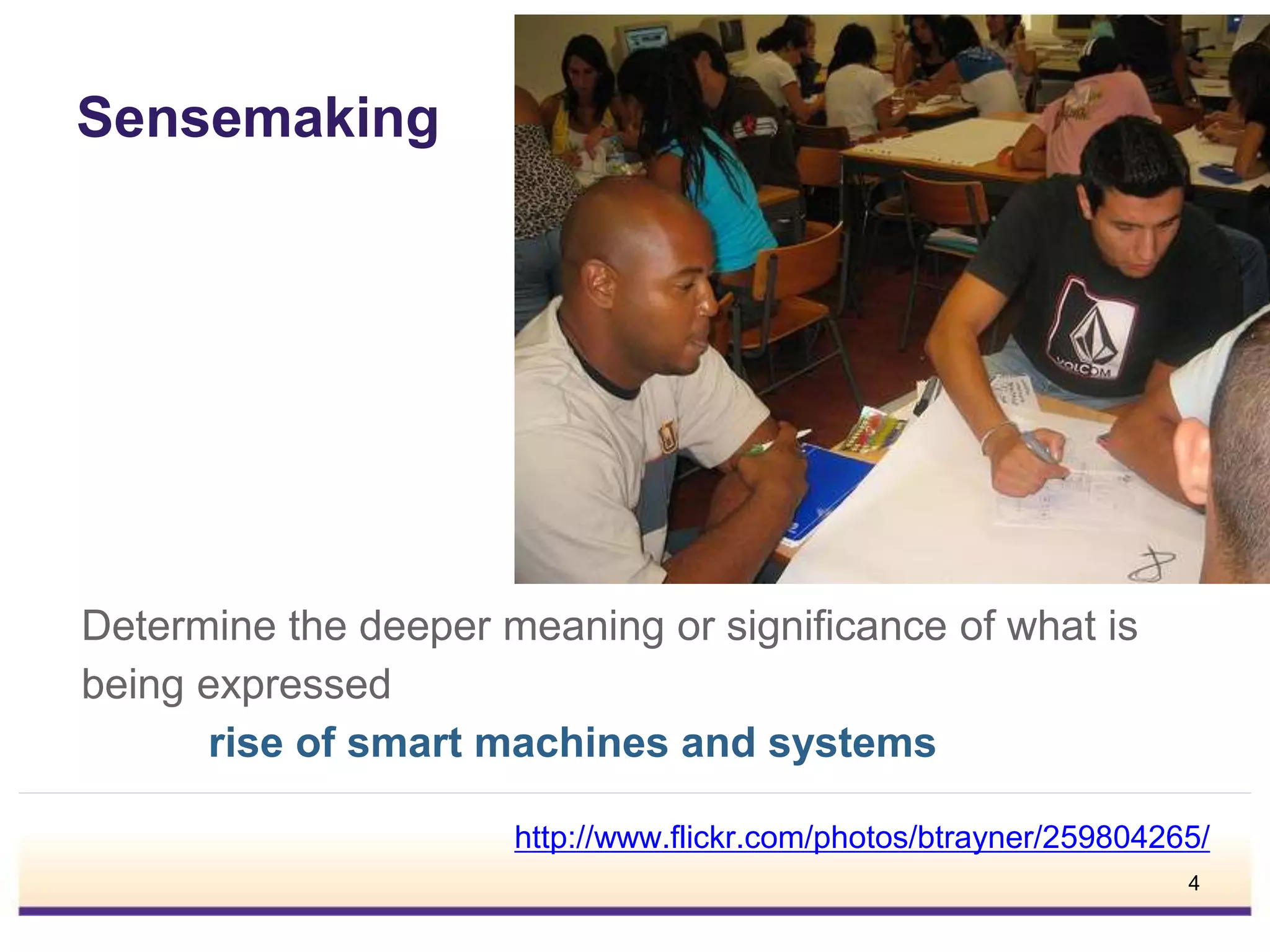
Sensemaking
Determine the deeper meaning or significance of what is
being expressed
rise of smart machines and systems
http://www.flickr.com/photos/btrayner/259804265/
4
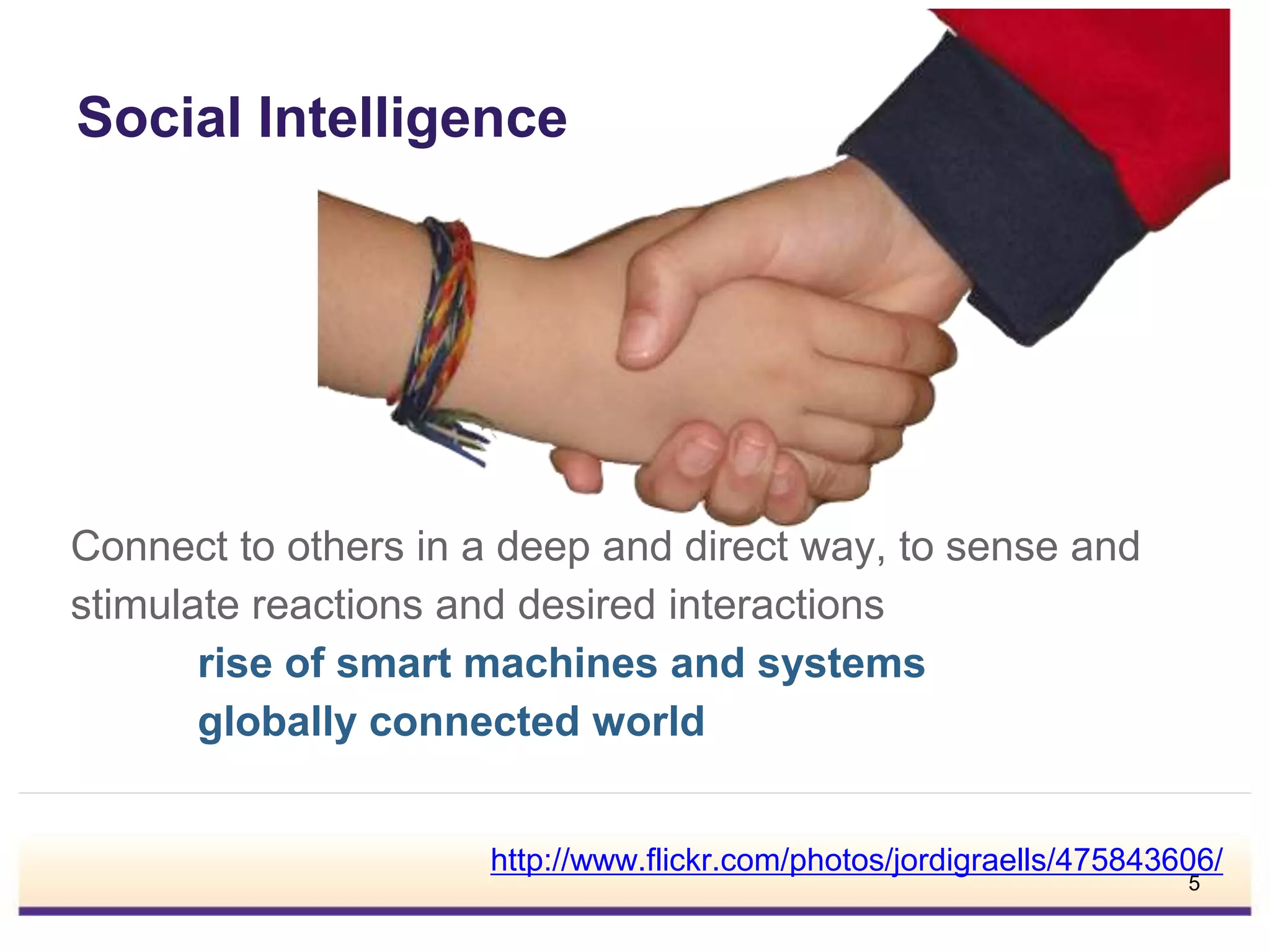
Social Intelligence
Connect to others in a deep and direct way, to sense and
stimulate reactions and desired interactions
rise of smart machines and systems
globally connected world
http://www.flickr.com/photos/jordigraells/475843606/
5
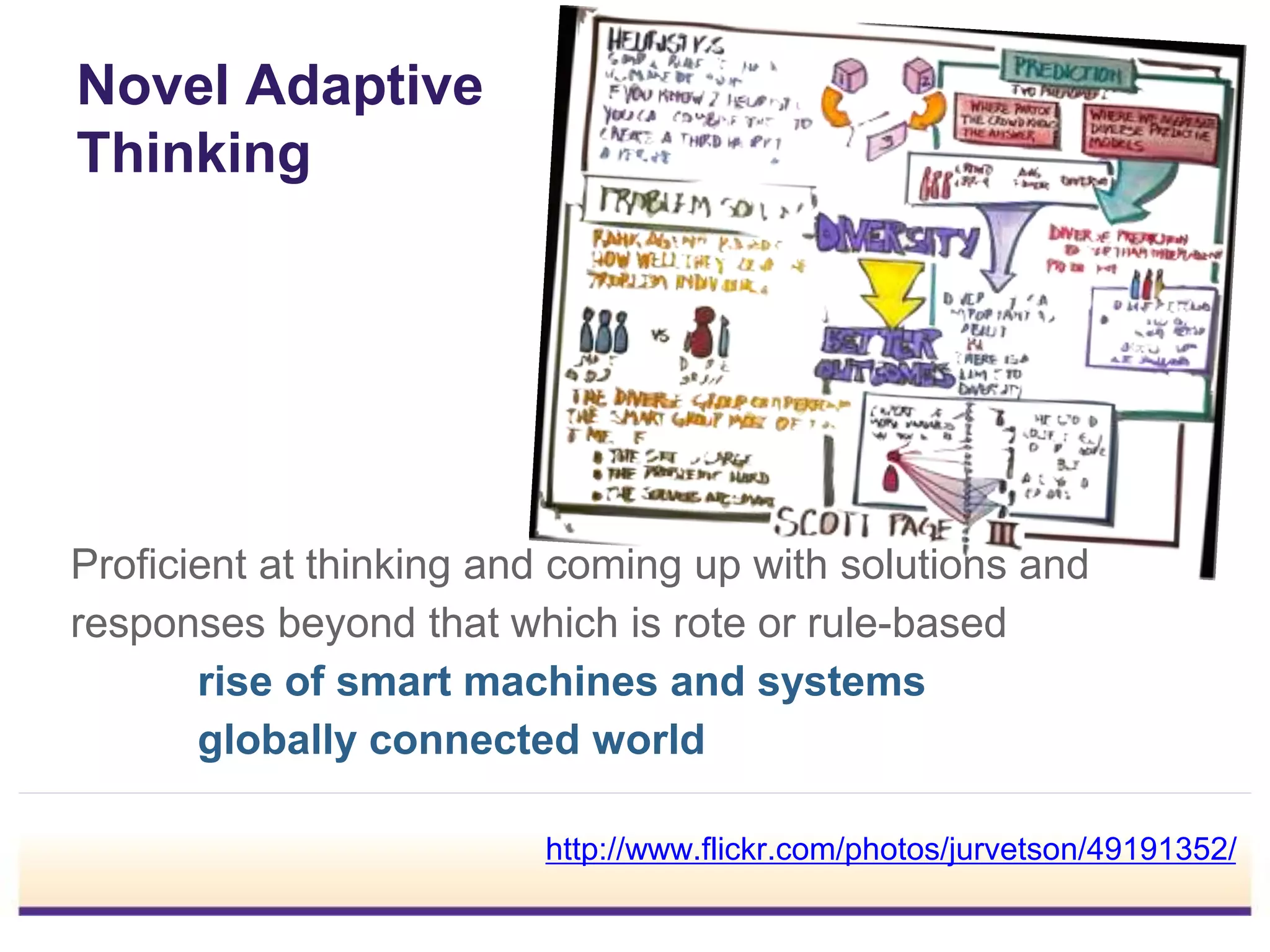
Novel Adaptive
Thinking
Proficient at thinking and coming up with solutions and
responses beyond that which is rote or rule-based
rise of smart machines and systems
globally connected world
http://www.flickr.com/photos/jurvetson/49191352/
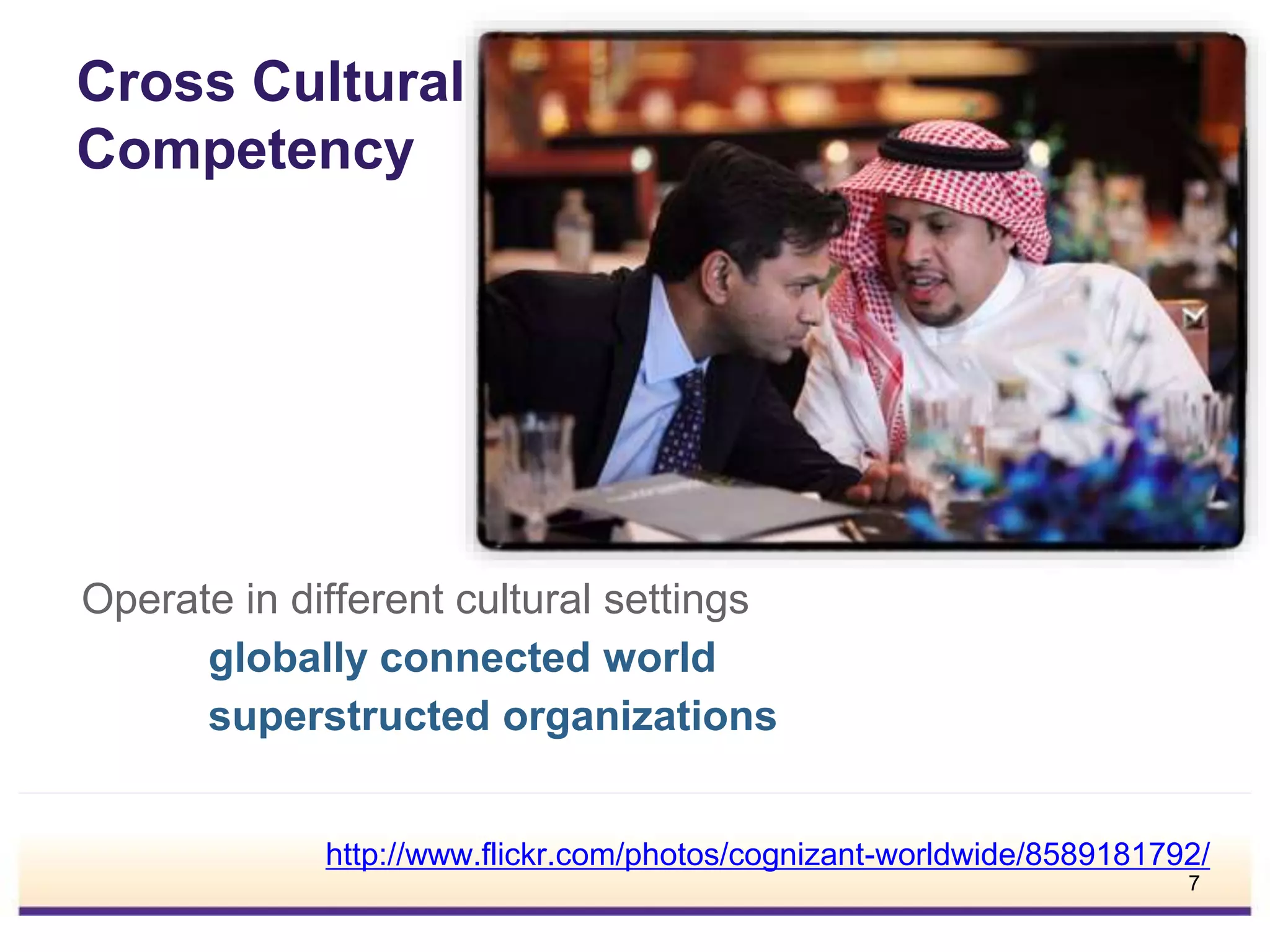
Cross Cultural
Competency
Operate in different cultural settings
globally connected world
superstructed organizations
http://www.flickr.com/photos/cognizant-worldwide/8589181792/
7
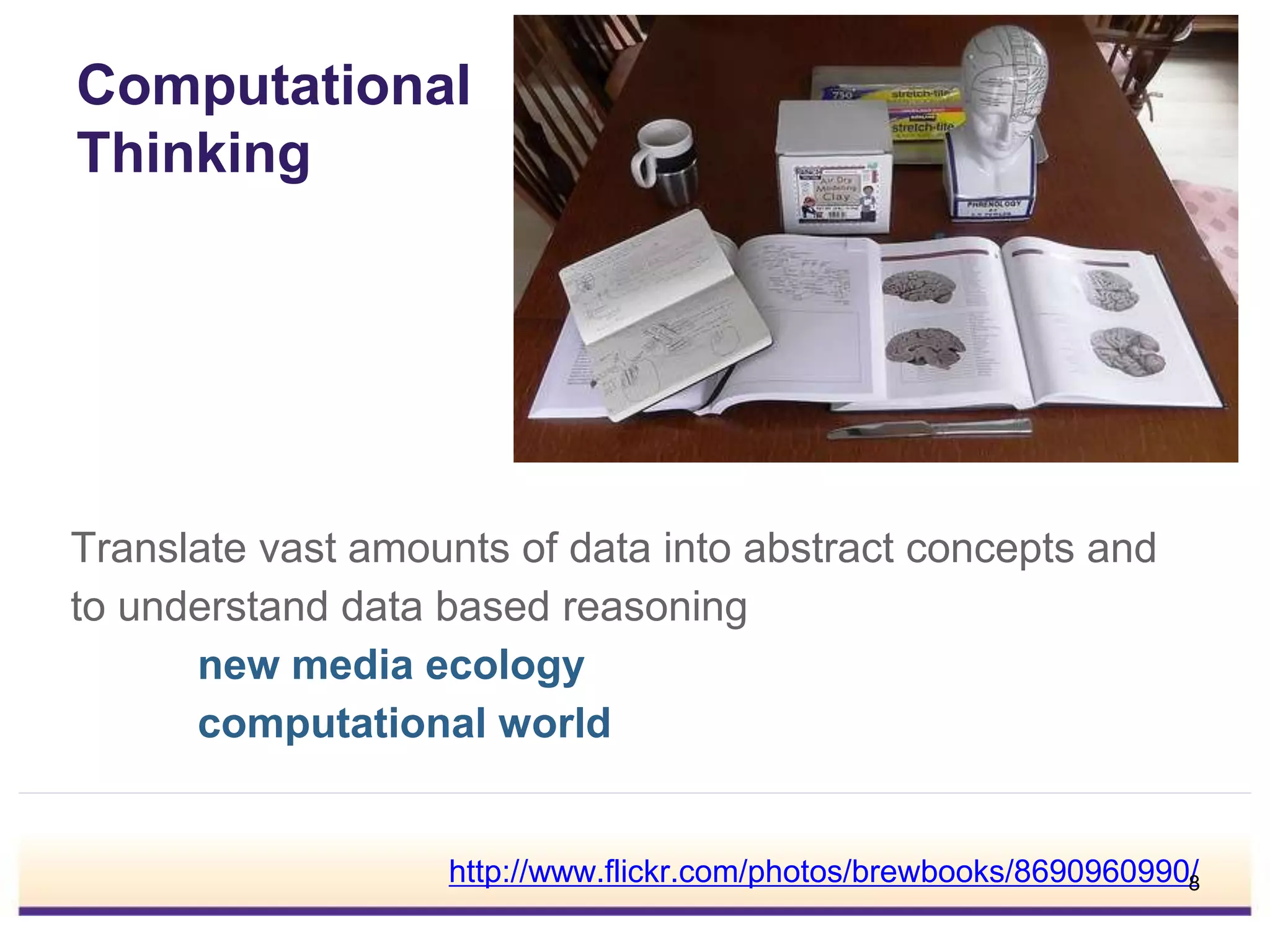
Computational
Thinking
Translate vast amounts of data into abstract concepts and
to understand data based reasoning
new media ecology
computational world
http://www.flickr.com/photos/brewbooks/8690960990/8
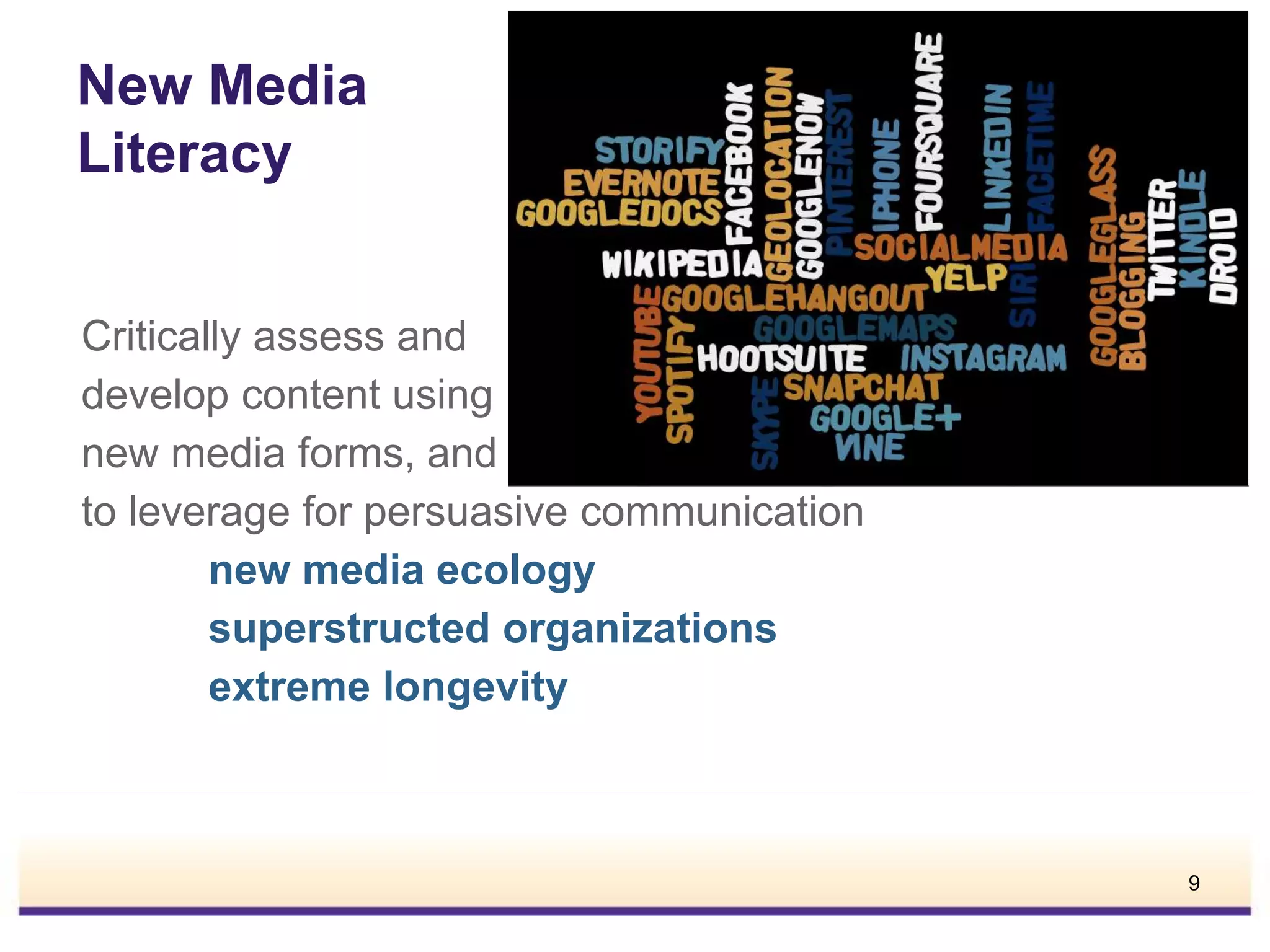
New Media
Literacy
Critically assess and
develop content using
new media forms, and
to leverage for persuasive communication
new media ecology
superstructed organizations
extreme longevity
9
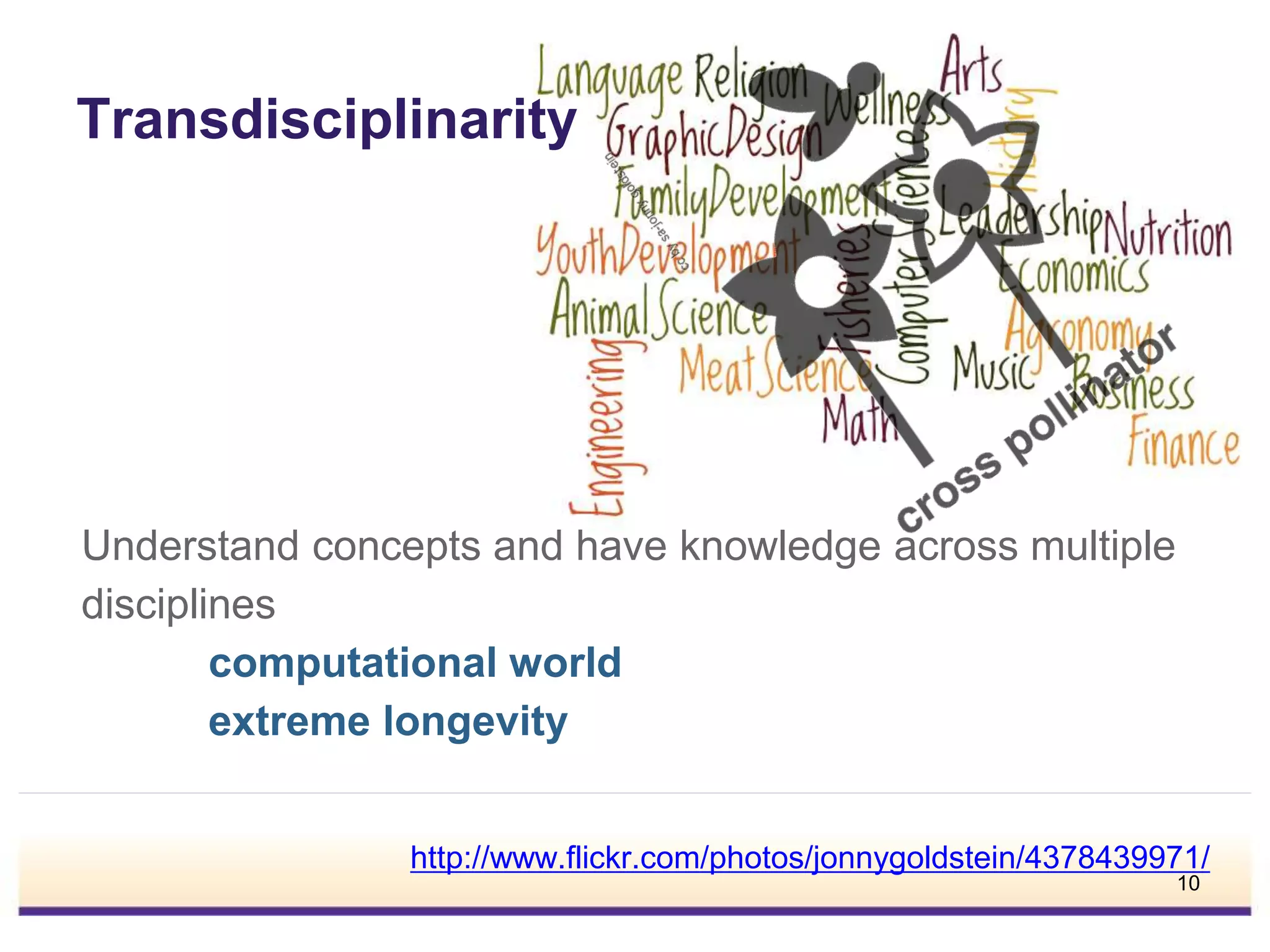
Transdisciplinarity
Understand concepts and have knowledge across multiple
disciplines
computational world
extreme longevity
http://www.flickr.com/photos/jonnygoldstein/4378439971/
10
Design Mindset
Represent and develop tasks and work processes for
desired outcomes
Drivers of disruption:
computational world
superstructed organizations
http://www.flickr.com/photos/designandtechnologydepartment/6828102552/11
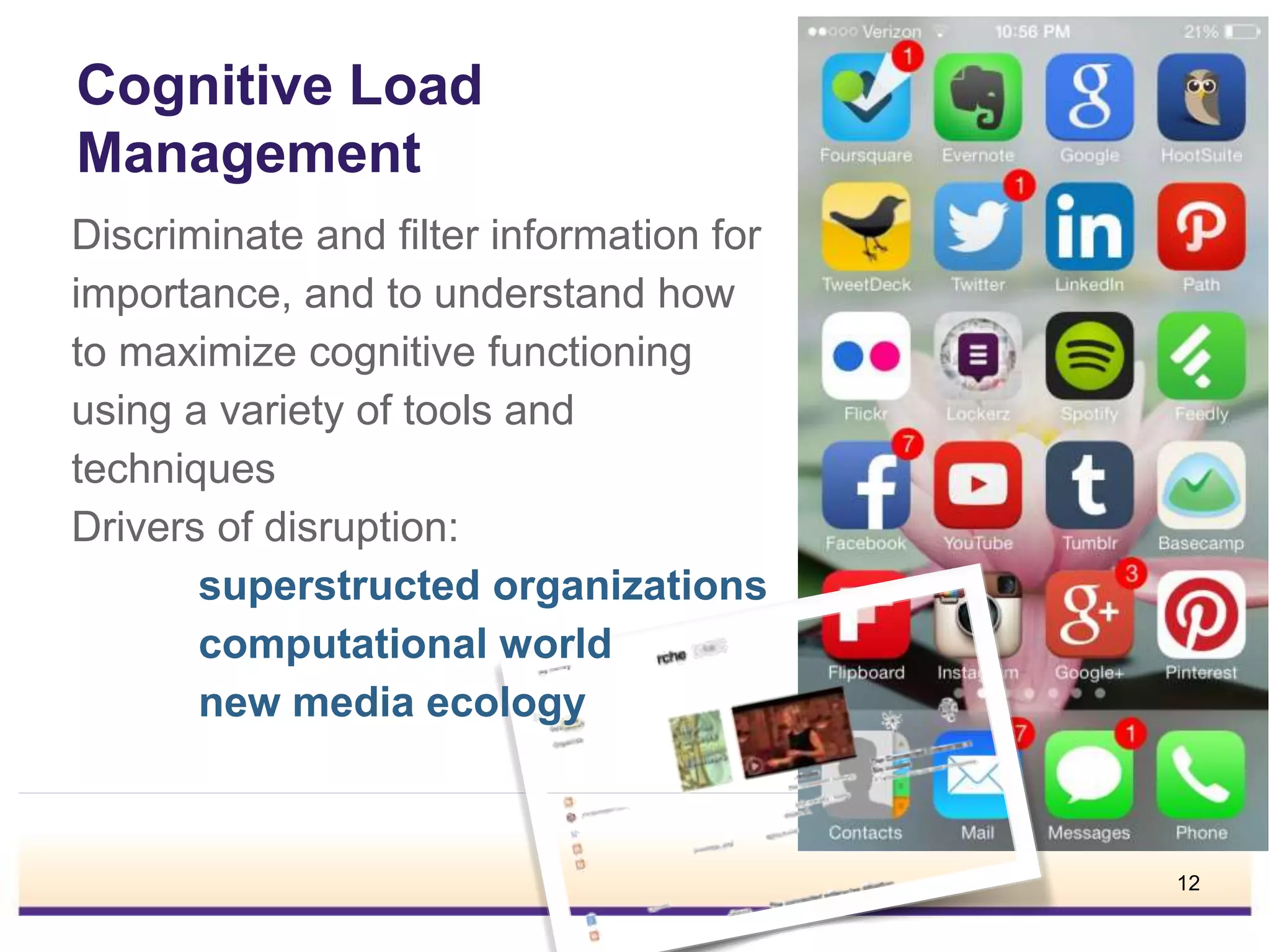
Cognitive Load
Management
Discriminate and filter information for
importance, and to understand how
to maximize cognitive functioning
using a variety of tools and
techniques
Drivers of disruption:
superstructed organizations
computational world
new media ecology
12
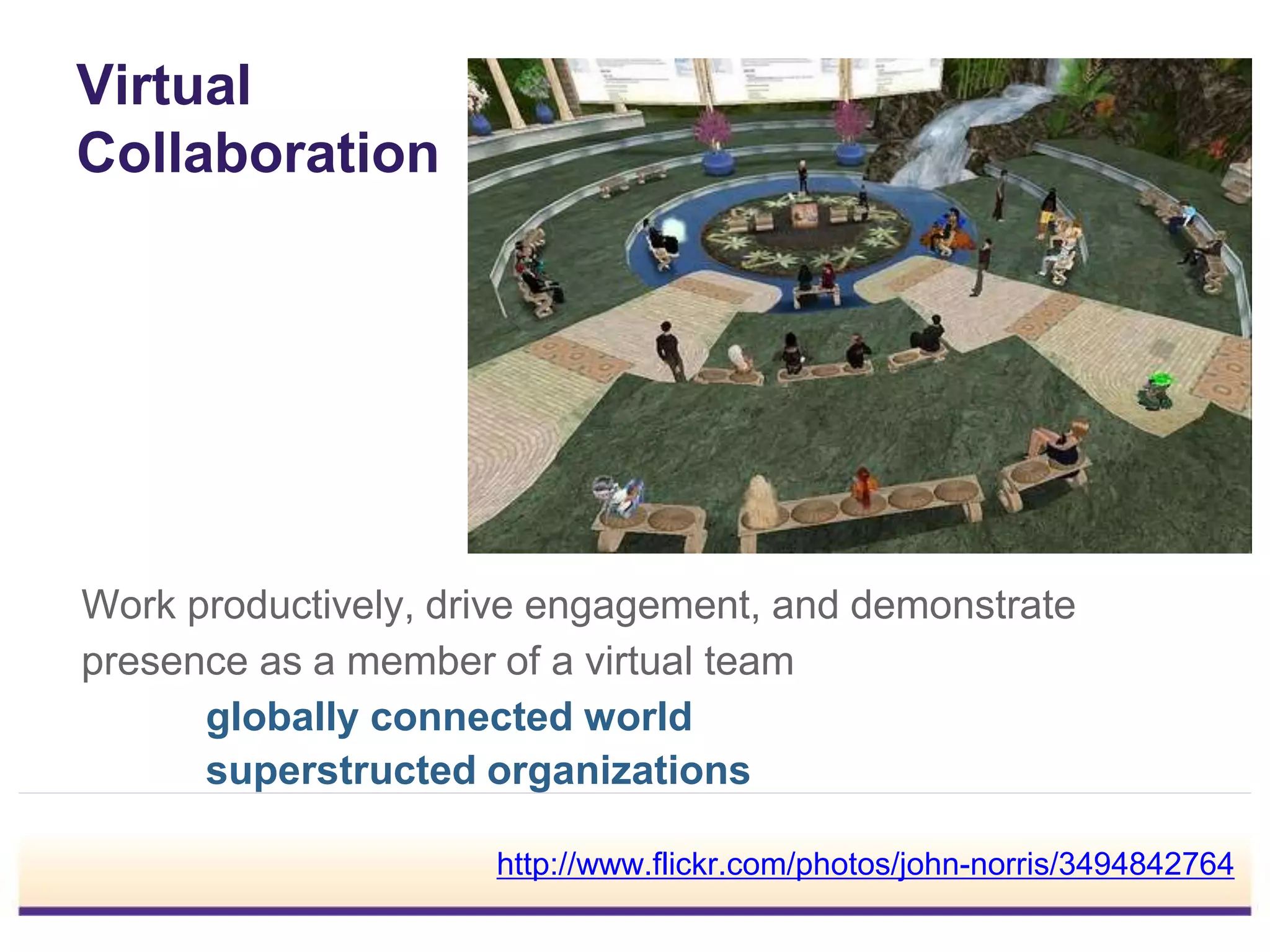
Virtual
Collaboration
Work productively, drive engagement, and demonstrate
presence as a member of a virtual team
globally connected world
superstructed organizations
http://www.flickr.com/photos/john-norris/3494842764
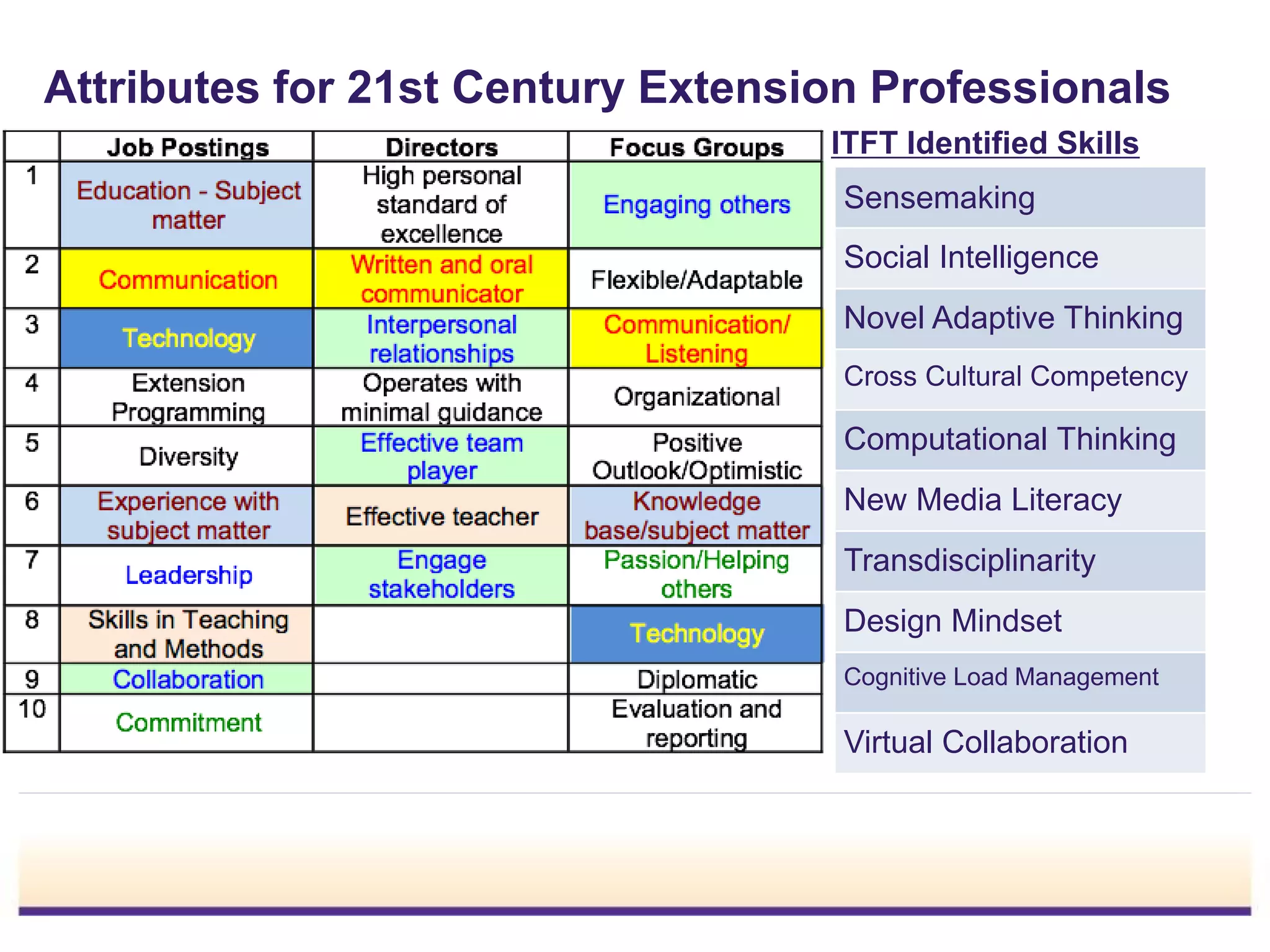
Reviewed 372 Extension job postings for
required and preferred skills or attributes
49 Extension Director/Administrators identified
important skills and/or attributes in survey
Focus groups (8) with highly effective
Extension professionals (33) identified by
Director/Administrators
ECOP sponsored study: Data Collection
14
ECOP sponsored study:
Differentiated skills and attributes
Skill: a learned power of doing something
competently; a developed aptitude or ability
Attribute: an inherent characteristic; a word
ascribing a quality
15
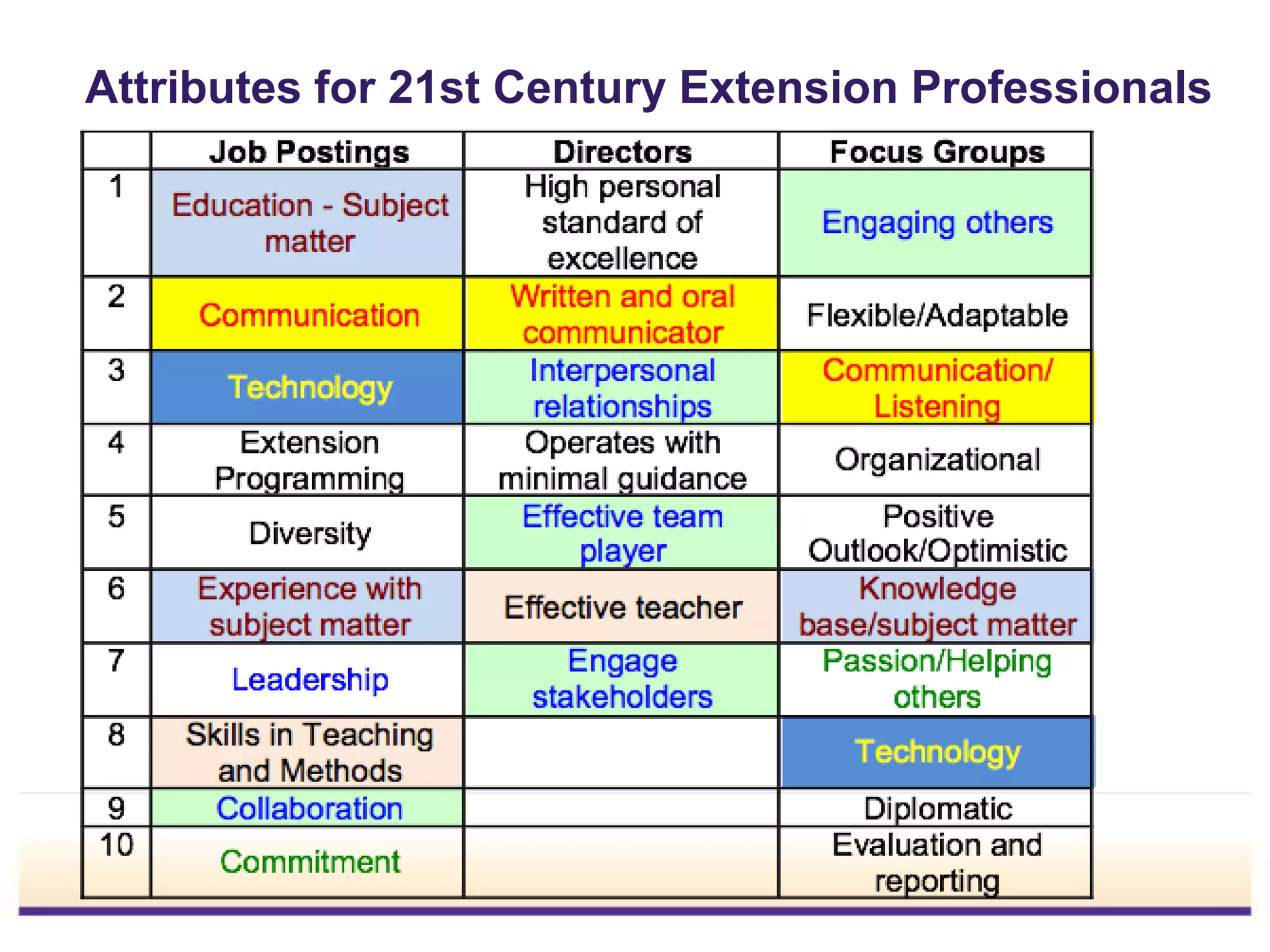
Attributes for 21st Century Extension Professionals
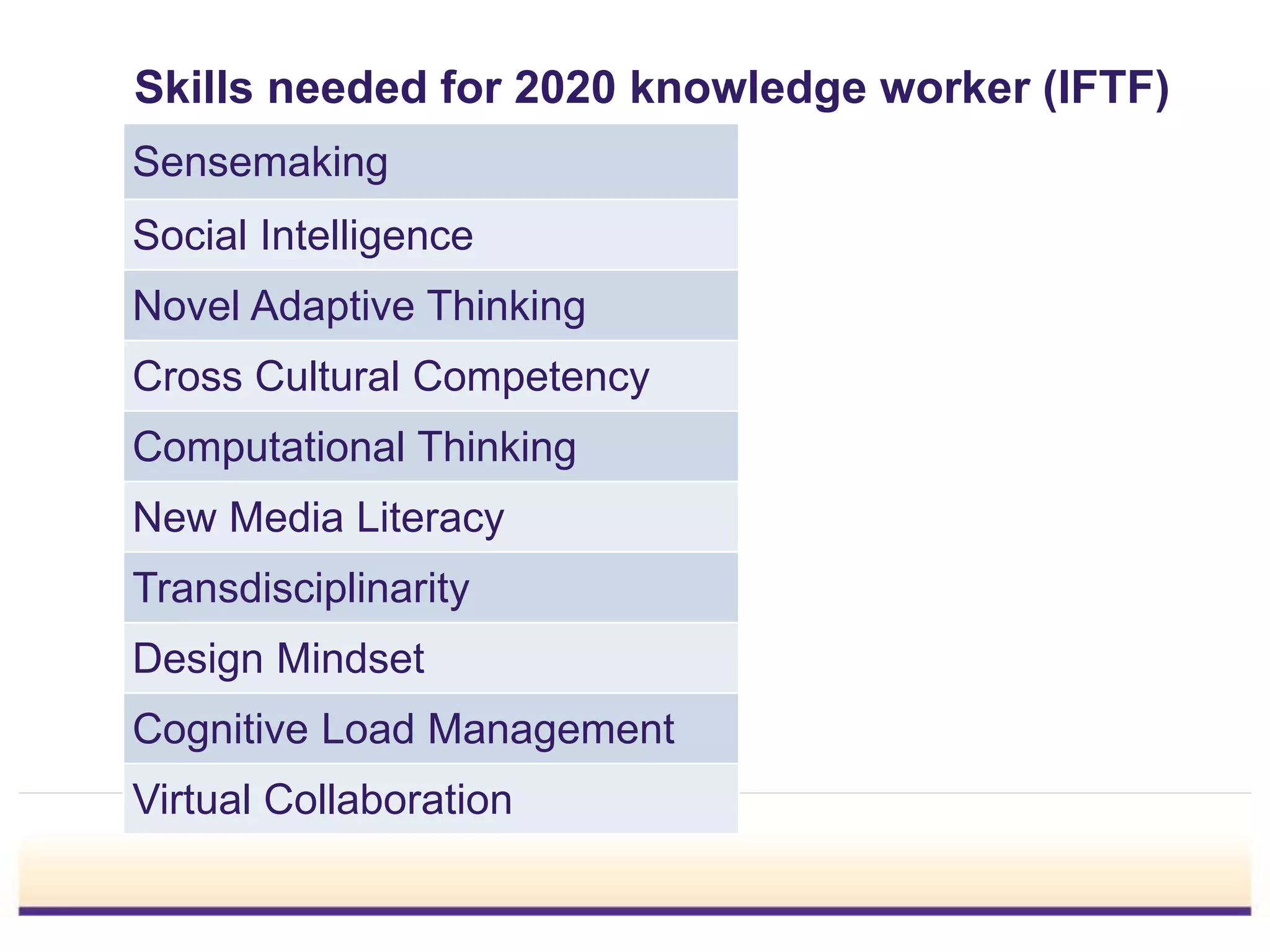
Skills needed for 2020 knowledge worker (IFTF)
Sensemaking
Social Intelligence
Novel Adaptive Thinking
Cross Cultural Competency
Computational Thinking
New Media Literacy
Transdisciplinarity
Design Mindset
Cognitive Load Management
Virtual Collaboration
Attributes for 21st Century Extension Professionals
ITFT Identified Skills
Sensemaking
Social Intelligence
Novel Adaptive Thinking
Cross Cultural Competency
Computational Thinking
New Media Literacy
Transdisciplinarity
Design Mindset
Cognitive Load Management
Virtual Collaboration
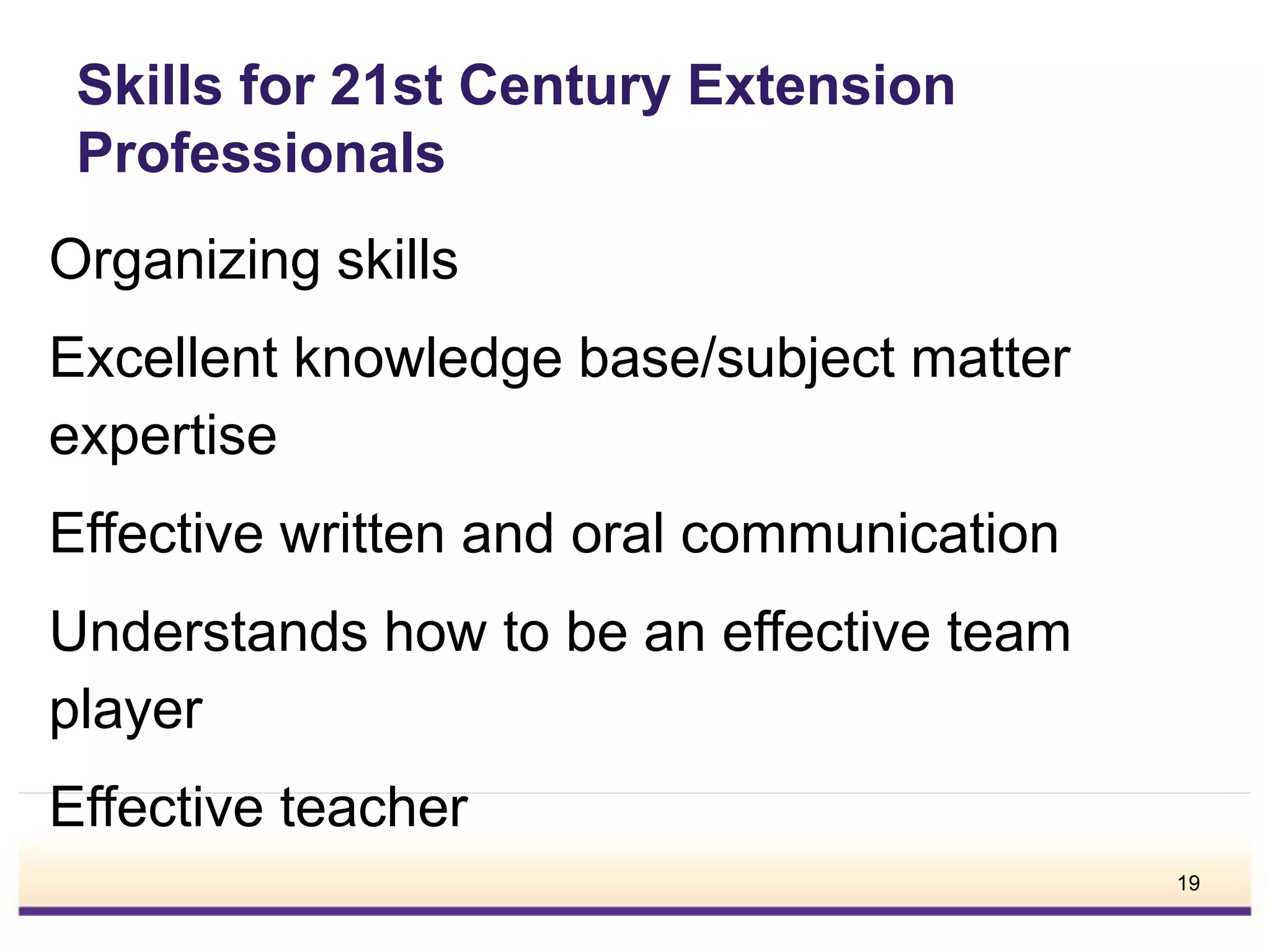
Skills for 21st Century Extension
Professionals
Organizing skills
Excellent knowledge base/subject matter
expertise
Effective written and oral communication
Understands how to be an effective team
player
Effective teacher
19
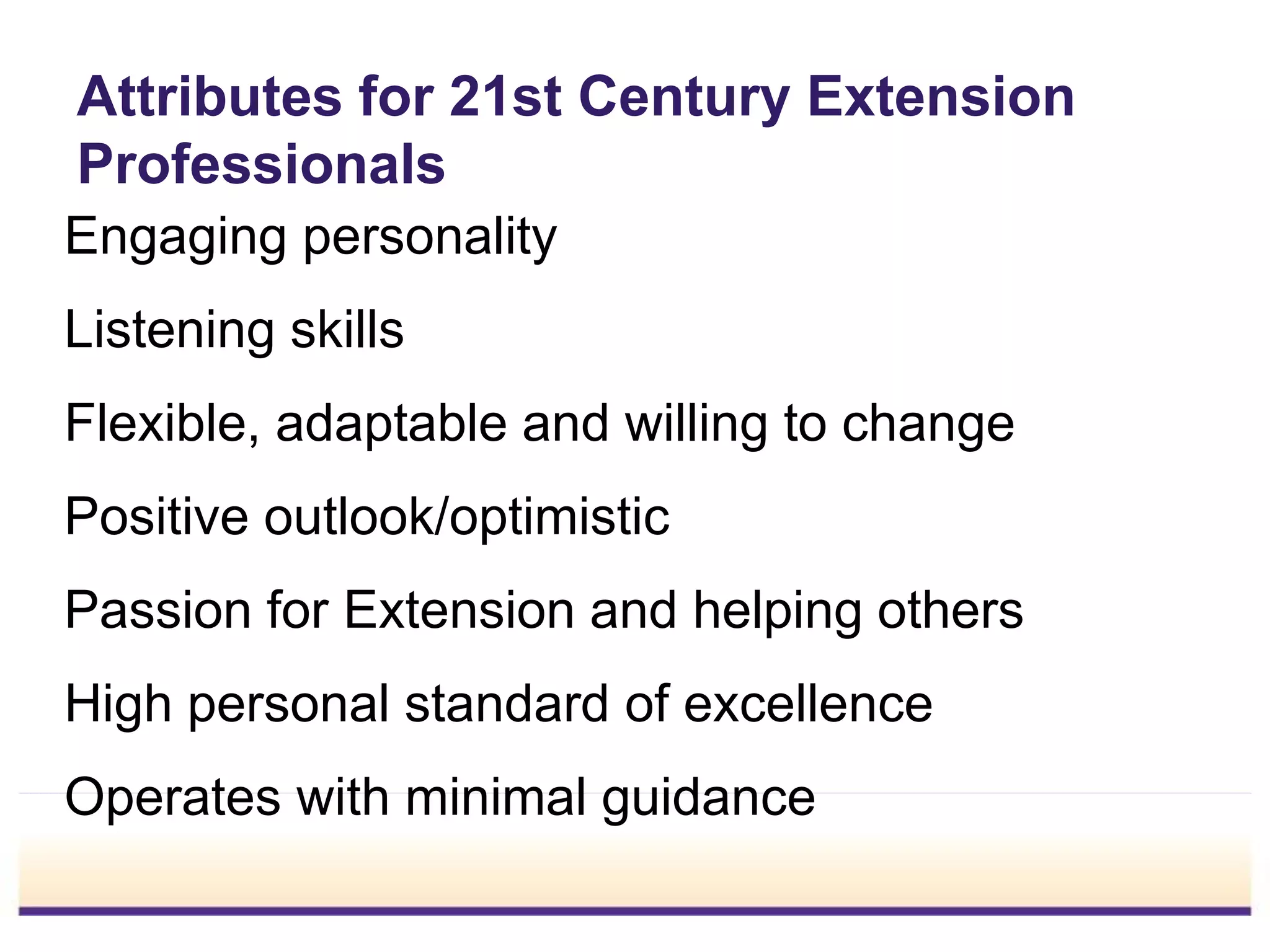
Attributes for 21st Century Extension
Professionals
Engaging personality
Listening skills
Flexible, adaptable and willing to change
Positive outlook/optimistic
Passion for Extension and helping others
High personal standard of excellence
Operates with minimal guidance
References
The 21st Century Extension Professional (the ECOP sponsored study) Webinar
and Slideset https://learn.extension.org/events/1073
Skills for 2020 Knowledge Workers http://www.iftf.org/futureworkskills
Other recommended readings:
Global landscape http://www.iftf.org/our-work/global-landscape/work/
People and Technology http://www.iftf.org/our-work/people-technology/
Harold Jarche’s blog: http://www.jarche.com/
Ongoing finds in connected organizations http://www.scoop.it/t/connected-communities
Ongoing finds in personal learning http://www.scoop.it/t/approachtolearning
Skills for the Current and Future
Knowledge Worker
#NETC2014
@aafromaa
aadrian@extension.org
slideshare.net/aafromaa
Creative Commons License
Skills for the Current and Future Knowledge Worker
by Anne Mims Adrian is licensed under a
Creative Commons Attribution-NonCommercial
3.0 Unported License.
22
Discussion
What are forces important for Extension and
land-grants to adjust to?
What are some points of either report or both
reports that stand out?
What should Extension focus on that will make
us successful in the future?
How do those focus areas affect our work
force?
23

Skills for the Current and Future Knowledge Worker

  • 1.
    Skills for theCurrent and Future Knowledge Worker #NETC2014 National Extension Technology Community Conference May 2014 @aafromaa aadrian@extension.org slideshare.net/aafromaa 1
  • 2.
    Institute for TheFuture 2020 Knowledge Work Skills Report http://www.iftf.org/futureworkskills Signals methodology— An extension of decades of practice aggregating data, expert opinion, and trends research to understand patterns of change. Signals of new products, technologies, practices, policies, and disruptions that can be scaled and that have greater implications are considered in drawing forecasts. 2
  • 3.
    Six drivers ofdisruption rise of smart machines and systems globally connected world superstructed organizations new media ecology computational world extreme longevity http://www.flickr.com/photos/kabanski/914928023
  • 4.
    Sensemaking Determine the deepermeaning or significance of what is being expressed rise of smart machines and systems http://www.flickr.com/photos/btrayner/259804265/ 4
  • 5.
    Social Intelligence Connect toothers in a deep and direct way, to sense and stimulate reactions and desired interactions rise of smart machines and systems globally connected world http://www.flickr.com/photos/jordigraells/475843606/ 5
  • 6.
    Novel Adaptive Thinking Proficient atthinking and coming up with solutions and responses beyond that which is rote or rule-based rise of smart machines and systems globally connected world http://www.flickr.com/photos/jurvetson/49191352/
  • 7.
    Cross Cultural Competency Operate indifferent cultural settings globally connected world superstructed organizations http://www.flickr.com/photos/cognizant-worldwide/8589181792/ 7
  • 8.
    Computational Thinking Translate vast amountsof data into abstract concepts and to understand data based reasoning new media ecology computational world http://www.flickr.com/photos/brewbooks/8690960990/8
  • 9.
    New Media Literacy Critically assessand develop content using new media forms, and to leverage for persuasive communication new media ecology superstructed organizations extreme longevity 9
  • 10.
    Transdisciplinarity Understand concepts andhave knowledge across multiple disciplines computational world extreme longevity http://www.flickr.com/photos/jonnygoldstein/4378439971/ 10
  • 11.
    Design Mindset Represent anddevelop tasks and work processes for desired outcomes Drivers of disruption: computational world superstructed organizations http://www.flickr.com/photos/designandtechnologydepartment/6828102552/11
  • 12.
    Cognitive Load Management Discriminate andfilter information for importance, and to understand how to maximize cognitive functioning using a variety of tools and techniques Drivers of disruption: superstructed organizations computational world new media ecology 12
  • 13.
    Virtual Collaboration Work productively, driveengagement, and demonstrate presence as a member of a virtual team globally connected world superstructed organizations http://www.flickr.com/photos/john-norris/3494842764
  • 14.
    Reviewed 372 Extensionjob postings for required and preferred skills or attributes 49 Extension Director/Administrators identified important skills and/or attributes in survey Focus groups (8) with highly effective Extension professionals (33) identified by Director/Administrators ECOP sponsored study: Data Collection 14
  • 15.
    ECOP sponsored study: Differentiatedskills and attributes Skill: a learned power of doing something competently; a developed aptitude or ability Attribute: an inherent characteristic; a word ascribing a quality 15
  • 16.
    Attributes for 21stCentury Extension Professionals
  • 17.
    Skills needed for2020 knowledge worker (IFTF) Sensemaking Social Intelligence Novel Adaptive Thinking Cross Cultural Competency Computational Thinking New Media Literacy Transdisciplinarity Design Mindset Cognitive Load Management Virtual Collaboration
  • 18.
    Attributes for 21stCentury Extension Professionals ITFT Identified Skills Sensemaking Social Intelligence Novel Adaptive Thinking Cross Cultural Competency Computational Thinking New Media Literacy Transdisciplinarity Design Mindset Cognitive Load Management Virtual Collaboration
  • 19.
    Skills for 21stCentury Extension Professionals Organizing skills Excellent knowledge base/subject matter expertise Effective written and oral communication Understands how to be an effective team player Effective teacher 19
  • 20.
    Attributes for 21stCentury Extension Professionals Engaging personality Listening skills Flexible, adaptable and willing to change Positive outlook/optimistic Passion for Extension and helping others High personal standard of excellence Operates with minimal guidance
  • 21.
    References The 21st CenturyExtension Professional (the ECOP sponsored study) Webinar and Slideset https://learn.extension.org/events/1073 Skills for 2020 Knowledge Workers http://www.iftf.org/futureworkskills Other recommended readings: Global landscape http://www.iftf.org/our-work/global-landscape/work/ People and Technology http://www.iftf.org/our-work/people-technology/ Harold Jarche’s blog: http://www.jarche.com/ Ongoing finds in connected organizations http://www.scoop.it/t/connected-communities Ongoing finds in personal learning http://www.scoop.it/t/approachtolearning
  • 22.
    Skills for theCurrent and Future Knowledge Worker #NETC2014 @aafromaa aadrian@extension.org slideshare.net/aafromaa Creative Commons License Skills for the Current and Future Knowledge Worker by Anne Mims Adrian is licensed under a Creative Commons Attribution-NonCommercial 3.0 Unported License. 22
  • 23.
    Discussion What are forcesimportant for Extension and land-grants to adjust to? What are some points of either report or both reports that stand out? What should Extension focus on that will make us successful in the future? How do those focus areas affect our work force? 23

Editor's Notes

  • #3 An independent, nonprofit strategic research group. In this report, they found 6 drivers of disruption and 10 skills needed for 2020 knowledge workers.
  • #4 IFTF is an independent, nonprofit strategic research group. In this report, they found 6 drivers of disruption and 10 skills needed for 2020 knowledge workers. Extreme longevity - Increasing global lifespans change the nature of careers and learning Rise of smart machines and systems - Workplace automation nudges human workers out of rote, repetitive tasks Computational world - Massive increases in sensors and processing power make the world a programmable system New media ecology - New communication tools require new media literacies beyond text Superstructed organizations - Social technologies drive new forms of production and value creation Globally connected world - Increased global interconnectivity puts diversity and adaptability at the center of organizational operations
  • #15 Conduct an evidence-based study to identify important characteristics of evolving 21st Century Extension professionals to inform our hiring, professional development, educational and support systems. We expect that study results and conclusions will help us more rapidly move our Extension programs into the 21st Century. Expected Outcomes: A clear understanding of the expectations of modern Extension professionals. Enhanced hiring processes facilitated by better identification of 21st Century Extension attributes in applicants. Better design and effectiveness of orientation and staff development programs for new and current employees. Improved job satisfaction leading to better retention of new hires. Informed academic programs who develop enhanced educational experiences focused on important characteristics of 21st Century Extension professionals. A clear understanding of the expectations of modern Extension professionals. Enhanced hiring processes facilitated by better identification of 21st Century Extension attributes in applicants. Better design and effectiveness of orientation and staff development programs for new and current employees. Improved job satisfaction leading to better retention of new hires. Informed academic programs who develop enhanced educational experiences focused on important characteristics of 21st Century Extension professionals.