Men and Caregiving 
Ruti Levtov 
Promundo-US 
EXPERT CONSULTATION ON FAMILY AND PARENTING SUPPORT 
UNICEF INNOCENTI CENTER, May 26-27
About Promundo 
Founded in Rio de Janeiro in 
1997 to engage men and 
boys in gender equality and 
violence prevention 
Offices in Brazil, US, Portugal, 
Great Lakes Region 
Using research to inform and 
drive practice and policy 
Promoting care work and 
men’s Involvement in MCH 
via public health sector 
Engaging men via women’s 
economic empowerment and 
conditional cash transfers 
Using the education sector to 
reach boys and girls to change 
gender norms 
Preventing violence & sexual 
exploitation of children 
Working with the peace and 
security sector to build 
lasting, gender-equitable 
peace
Our Approach 
• Understanding men and boys as 
enmeshed in gender norms and 
social expectations 
• Aspects of masculinity that are harmful to 
both men and women 
• Men too often seen from a deficit 
perspective and not enough as 
agents of change 
• Strong evidence that when done 
right, brings benefits for women, 
children and men themselves
Rationale 
Why Fatherhood?
Rationale 
Why Fatherhood? 
1. Breaking intergenerational cycles of violence… with the 
promotion of caregiving, emotional connection and love.
Rationale 
Why Fatherhood? 
2. “The caregiving divide is still one 
of the primary drivers in the gender 
pay and employment gap” – World 
Bank 
Women represent 40% of paid 
workforce and more than half the 
world’s food producers 
Yet, average time women spend on 
unpaid care work is 2 to 10 times 
that of men
Rationale 
Why Fatherhood? 
3. An early entry point to promote 
maternal & child health and prevent 
violence against women and children 
IMAGES data: 76-92% of men went to at 
least one pre-natal visit 
- Improvements in birth preparedness, 
postnatal care attendance, couple 
communications. 
- Early fatherhood involvement more 
likely to be sustained
Rationale 
Why Fatherhood? 
4. Fatherhood an a turning point... 
…As a pathway out of urban violence and conflict 
…As a way to better health (cardiovascular and mental health, 
in particular) 
…As a means to express emotional connection with others 
(Men Who Care, 2012)
The MenCare campaign
Coordinated by: Steering Commitee:
MenCare Aims to Work at Multiple Levels 
What
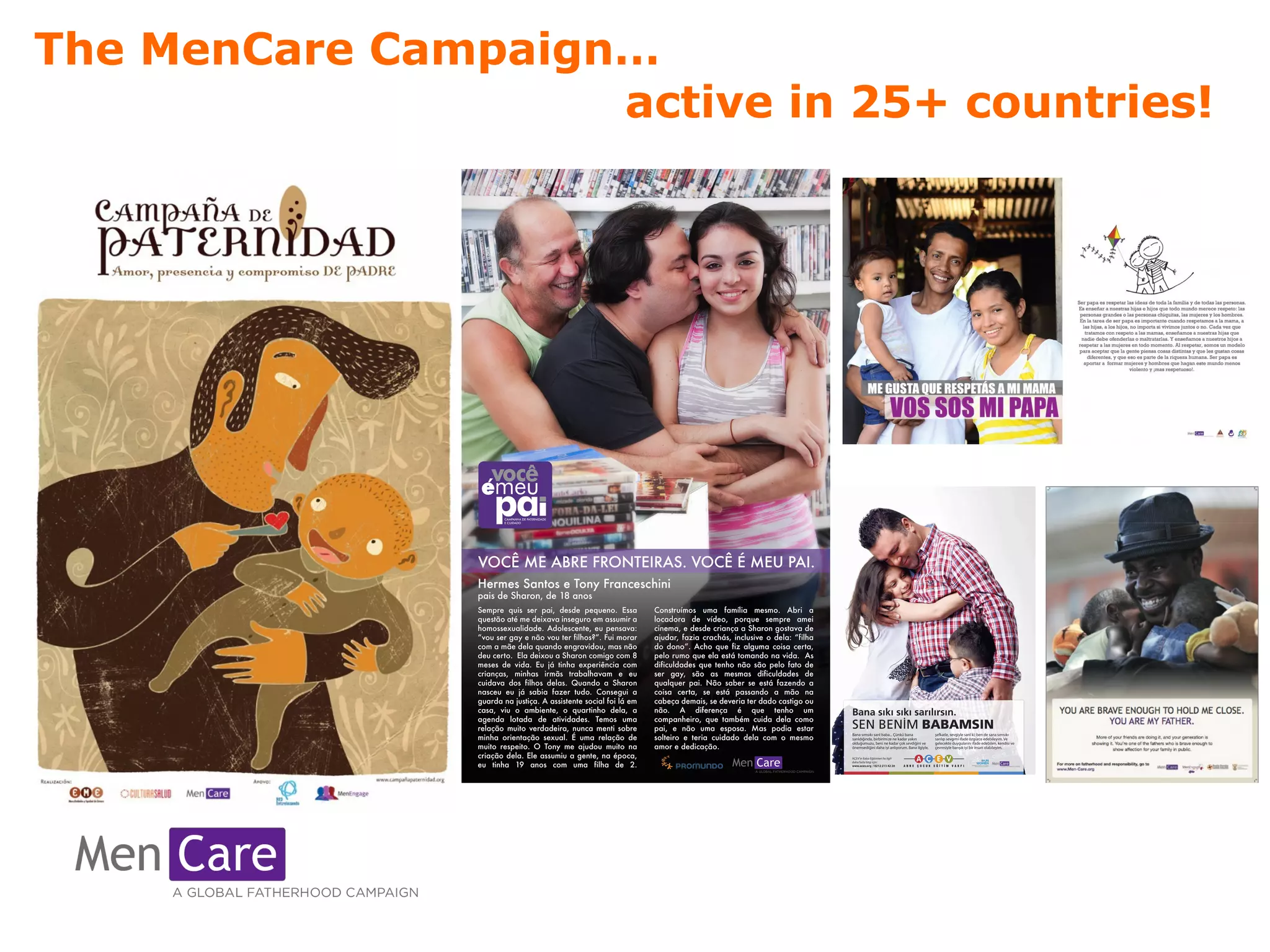
The MenCare Campaign… 
active in 25+ countries! 
Active in over 25 countries…
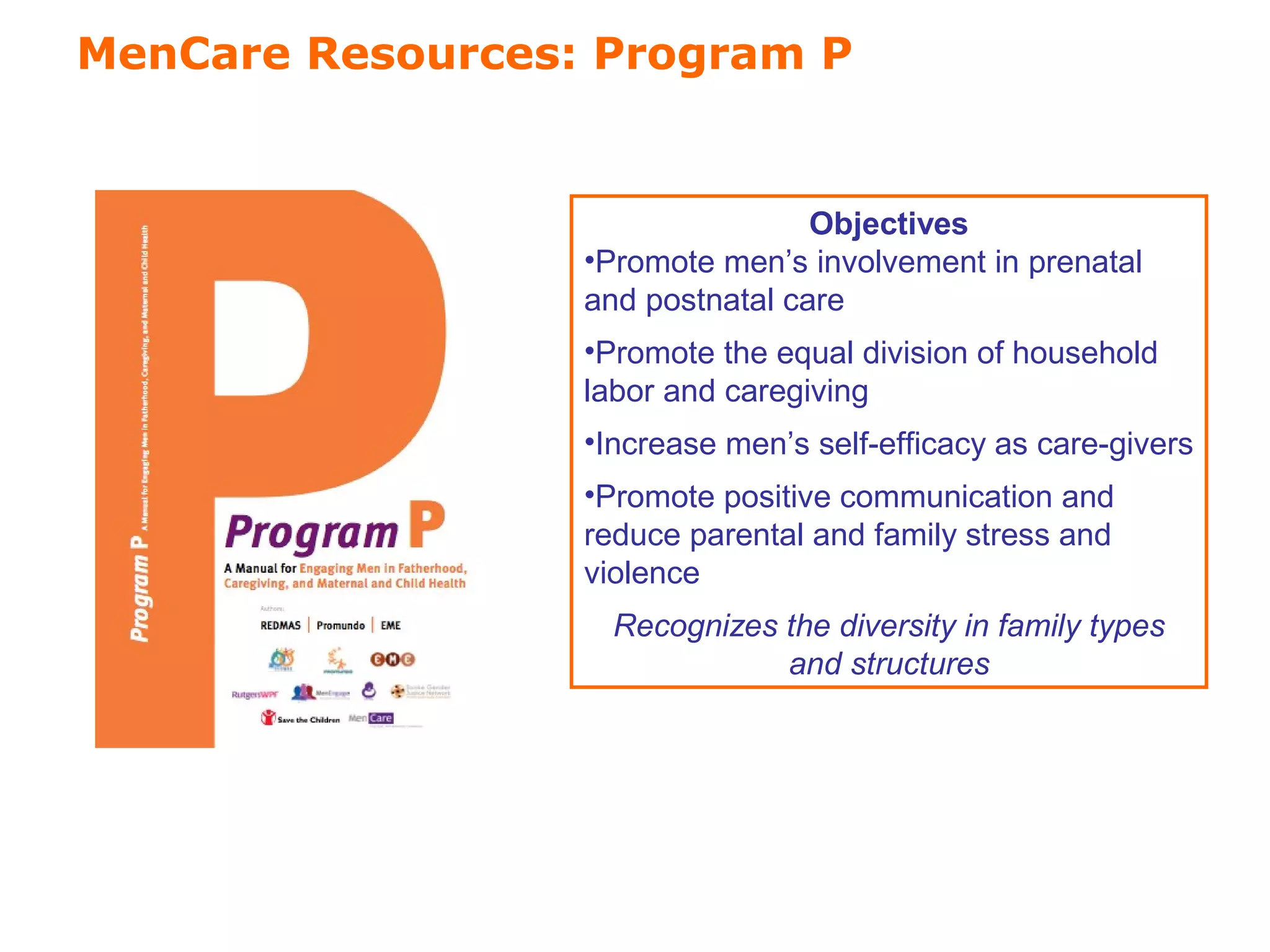
MenCare Resources: Program P 
Program P (“P” for 
Objectives 
•Promote men’s involvement in prenatal 
and postnatal care 
•Promote the equal division of household 
labor and caregiving 
•Increase men’s self-efficacy as care-givers 
•Promote positive communication and 
reduce parental and family stress and 
violence 
Recognizes the diversity in family types 
and structures
1. Fatherhood in the Health Sector: A 
Guide for Health Professionals on 
Engaging Men 
2. Engaged Fatherhood: Group 
Education for Fathers and their 
Partners 
3. MenCare Campaigns: Community 
Mobilization Strategies
Normalizing Men’s Caregiving
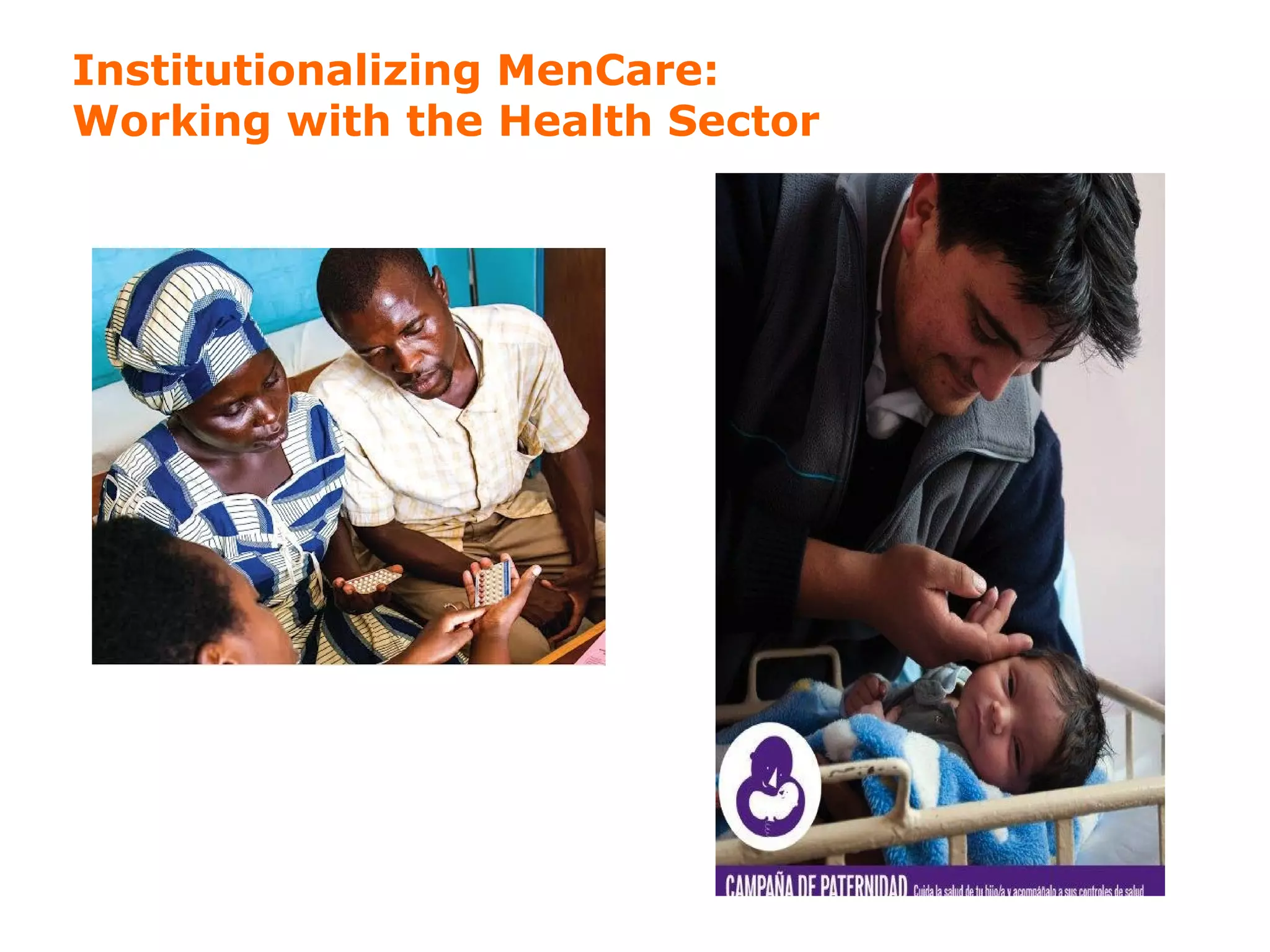
Institutionalizing MenCare: 
Working with the Health Sector
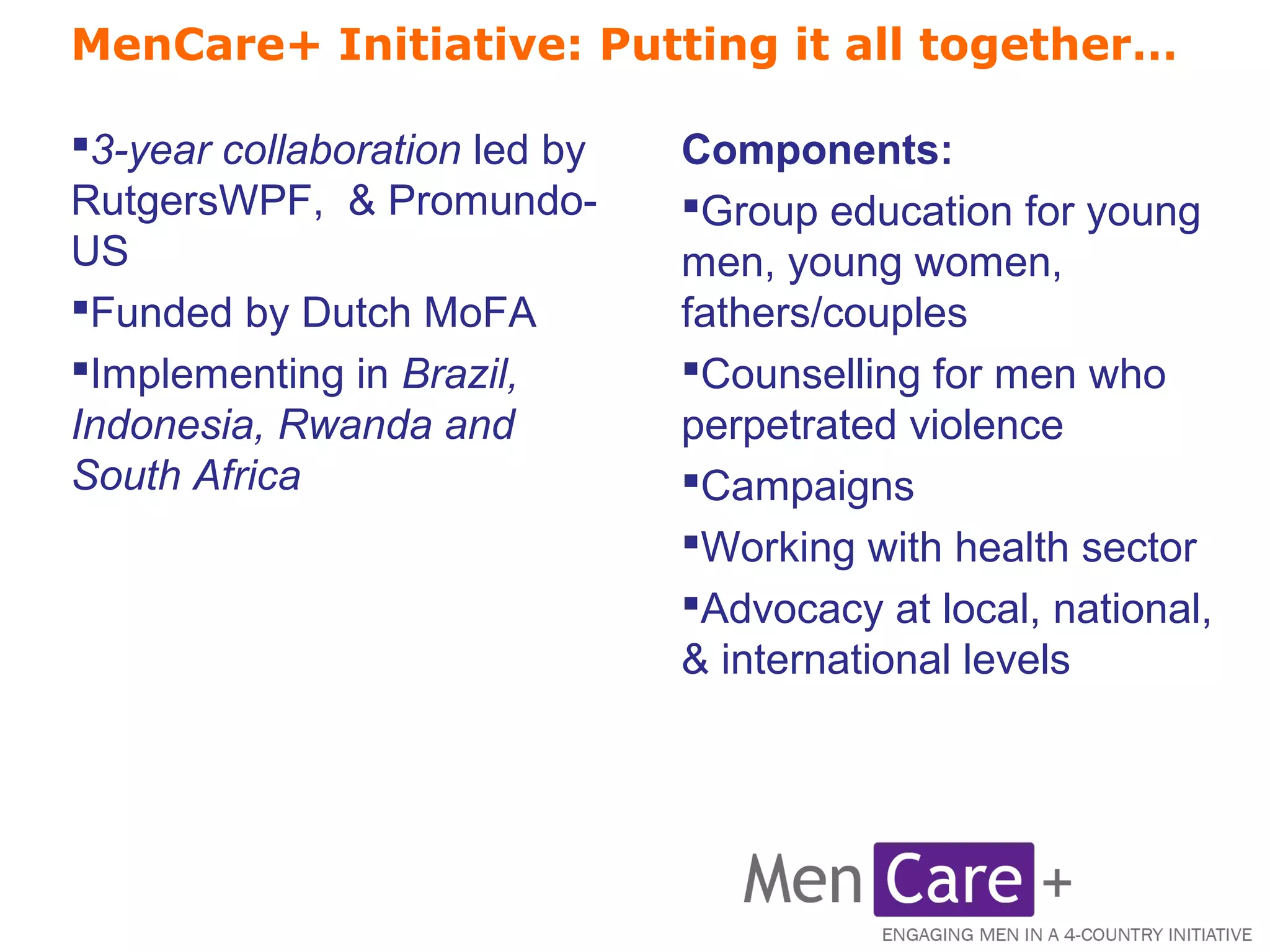
MenCare+ Initiative: Putting it all together… 
Components: 
Group education for young 
men, young women, 
fathers/couples 
Counselling for men who 
perpetrated violence 
Campaigns 
Working with health sector 
Advocacy at local, national, 
& international levels 
3-year collaboration led by 
RutgersWPF, & Promundo- 
US 
Funded by Dutch MoFA 
Implementing in Brazil, 
Indonesia, Rwanda and 
South Africa
State of the world’s fathers 
a new global report
Why State of the World’s Fathers? 
 Making the case for equitable, involved fatherhood 
 Highlighting data, policies, programs and research 
 Defining a global agenda 
 Launch: June 2015
Three Sections 
1. Men’s participation in 
caregiving 
1. Men’s participation in SRH/MCH 
1. Violence 
Child well-being 
Family diversity
Into the Future… 
• Adaptations of Program P for parents with children with 
different age groups, nutrition, etc. 
• RCTs of Program P in South Africa and Rwanda 
• Online training portal 
• Conceptual framework linking violence against women 
and violence against children 
• Expanding MenCare to new countries and across other 
cross-cutting initiatives
Thank you! 
For more information: 
www.men-care.org 
Ruti Levtov: 
r.levtov@promundo.org.br

Men and Caregiving

  • 1.
    Men and Caregiving Ruti Levtov Promundo-US EXPERT CONSULTATION ON FAMILY AND PARENTING SUPPORT UNICEF INNOCENTI CENTER, May 26-27
  • 2.
    About Promundo Foundedin Rio de Janeiro in 1997 to engage men and boys in gender equality and violence prevention Offices in Brazil, US, Portugal, Great Lakes Region Using research to inform and drive practice and policy Promoting care work and men’s Involvement in MCH via public health sector Engaging men via women’s economic empowerment and conditional cash transfers Using the education sector to reach boys and girls to change gender norms Preventing violence & sexual exploitation of children Working with the peace and security sector to build lasting, gender-equitable peace
  • 3.
    Our Approach •Understanding men and boys as enmeshed in gender norms and social expectations • Aspects of masculinity that are harmful to both men and women • Men too often seen from a deficit perspective and not enough as agents of change • Strong evidence that when done right, brings benefits for women, children and men themselves
  • 4.
  • 5.
    Rationale Why Fatherhood? 1. Breaking intergenerational cycles of violence… with the promotion of caregiving, emotional connection and love.
  • 6.
    Rationale Why Fatherhood? 2. “The caregiving divide is still one of the primary drivers in the gender pay and employment gap” – World Bank Women represent 40% of paid workforce and more than half the world’s food producers Yet, average time women spend on unpaid care work is 2 to 10 times that of men
  • 7.
    Rationale Why Fatherhood? 3. An early entry point to promote maternal & child health and prevent violence against women and children IMAGES data: 76-92% of men went to at least one pre-natal visit - Improvements in birth preparedness, postnatal care attendance, couple communications. - Early fatherhood involvement more likely to be sustained
  • 8.
    Rationale Why Fatherhood? 4. Fatherhood an a turning point... …As a pathway out of urban violence and conflict …As a way to better health (cardiovascular and mental health, in particular) …As a means to express emotional connection with others (Men Who Care, 2012)
  • 9.
  • 10.
  • 11.
    MenCare Aims toWork at Multiple Levels What
  • 12.
    The MenCare Campaign… active in 25+ countries! Active in over 25 countries…
  • 13.
    MenCare Resources: ProgramP Program P (“P” for Objectives •Promote men’s involvement in prenatal and postnatal care •Promote the equal division of household labor and caregiving •Increase men’s self-efficacy as care-givers •Promote positive communication and reduce parental and family stress and violence Recognizes the diversity in family types and structures
  • 14.
    1. Fatherhood inthe Health Sector: A Guide for Health Professionals on Engaging Men 2. Engaged Fatherhood: Group Education for Fathers and their Partners 3. MenCare Campaigns: Community Mobilization Strategies
  • 15.
  • 16.
  • 17.
    MenCare+ Initiative: Puttingit all together… Components: Group education for young men, young women, fathers/couples Counselling for men who perpetrated violence Campaigns Working with health sector Advocacy at local, national, & international levels 3-year collaboration led by RutgersWPF, & Promundo- US Funded by Dutch MoFA Implementing in Brazil, Indonesia, Rwanda and South Africa
  • 18.
    State of theworld’s fathers a new global report
  • 19.
    Why State ofthe World’s Fathers?  Making the case for equitable, involved fatherhood  Highlighting data, policies, programs and research  Defining a global agenda  Launch: June 2015
  • 20.
    Three Sections 1.Men’s participation in caregiving 1. Men’s participation in SRH/MCH 1. Violence Child well-being Family diversity
  • 21.
    Into the Future… • Adaptations of Program P for parents with children with different age groups, nutrition, etc. • RCTs of Program P in South Africa and Rwanda • Online training portal • Conceptual framework linking violence against women and violence against children • Expanding MenCare to new countries and across other cross-cutting initiatives
  • 22.
    Thank you! Formore information: www.men-care.org Ruti Levtov: r.levtov@promundo.org.br

Editor's Notes

  • #7 Women’s participation in the labour force has increased in dramatic ways, it is clear that full equality for women can be sped up and achieved only if care work and domestic activities are shared more equally between women and men
  • #17 - Guatemala, Nicaragua, Chile, Brazil, Rwanda, South Africa