Basics in Process Design
Mass balances for process system
analysis/modeling/design
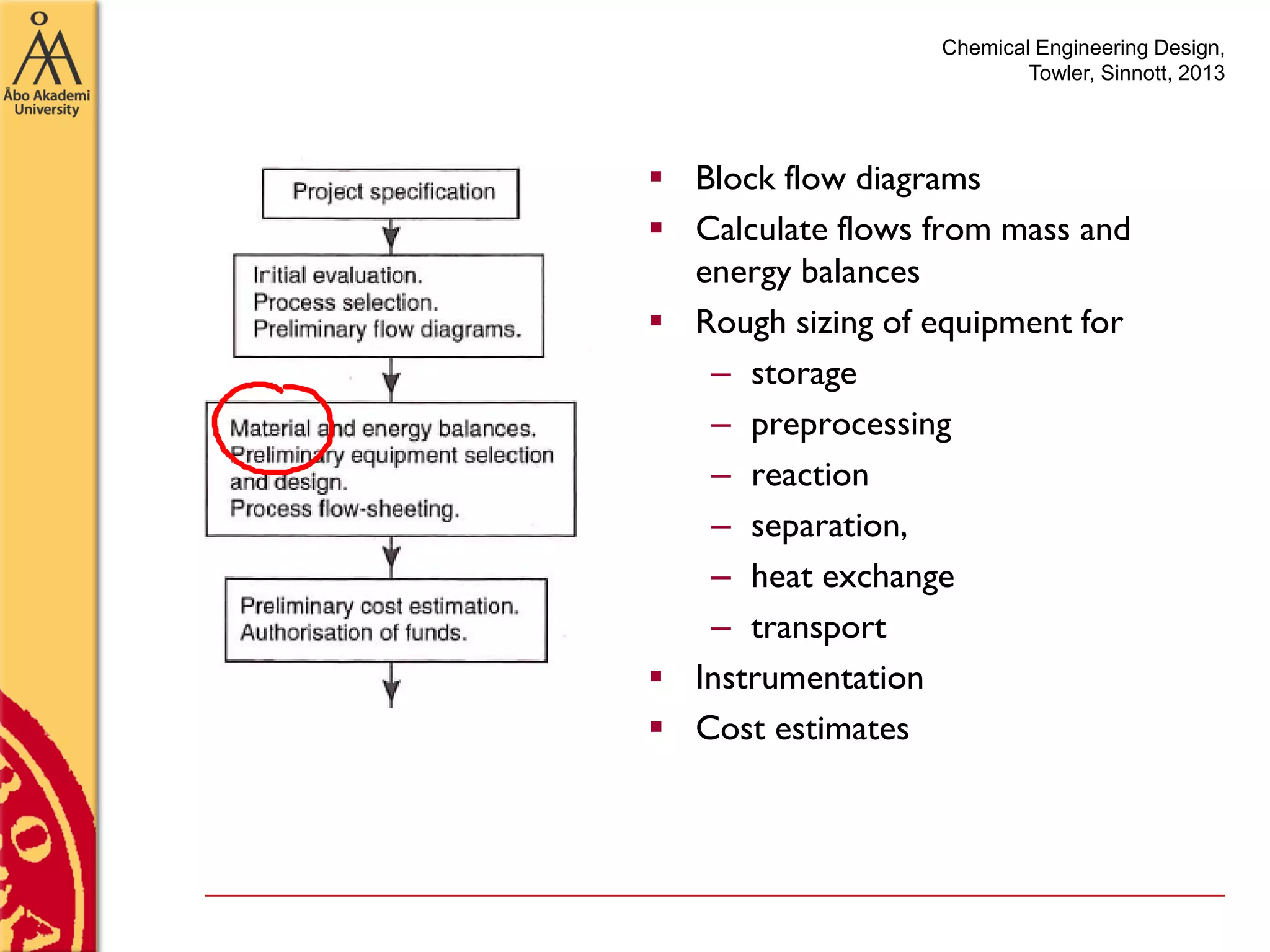
Chemical Engineering Design,
Towler, Sinnott, 2013
 Block flow diagrams
 Calculate flows from mass and
energy balances
 Rough sizing of equipment for
– storage
– preprocessing
– reaction
– separation,
– heat exchange
– transport
 Instrumentation
 Cost estimates
Today
 Basic mass balance
 Process system
 Balance modeling
 Example
 Exercise
 Questions?
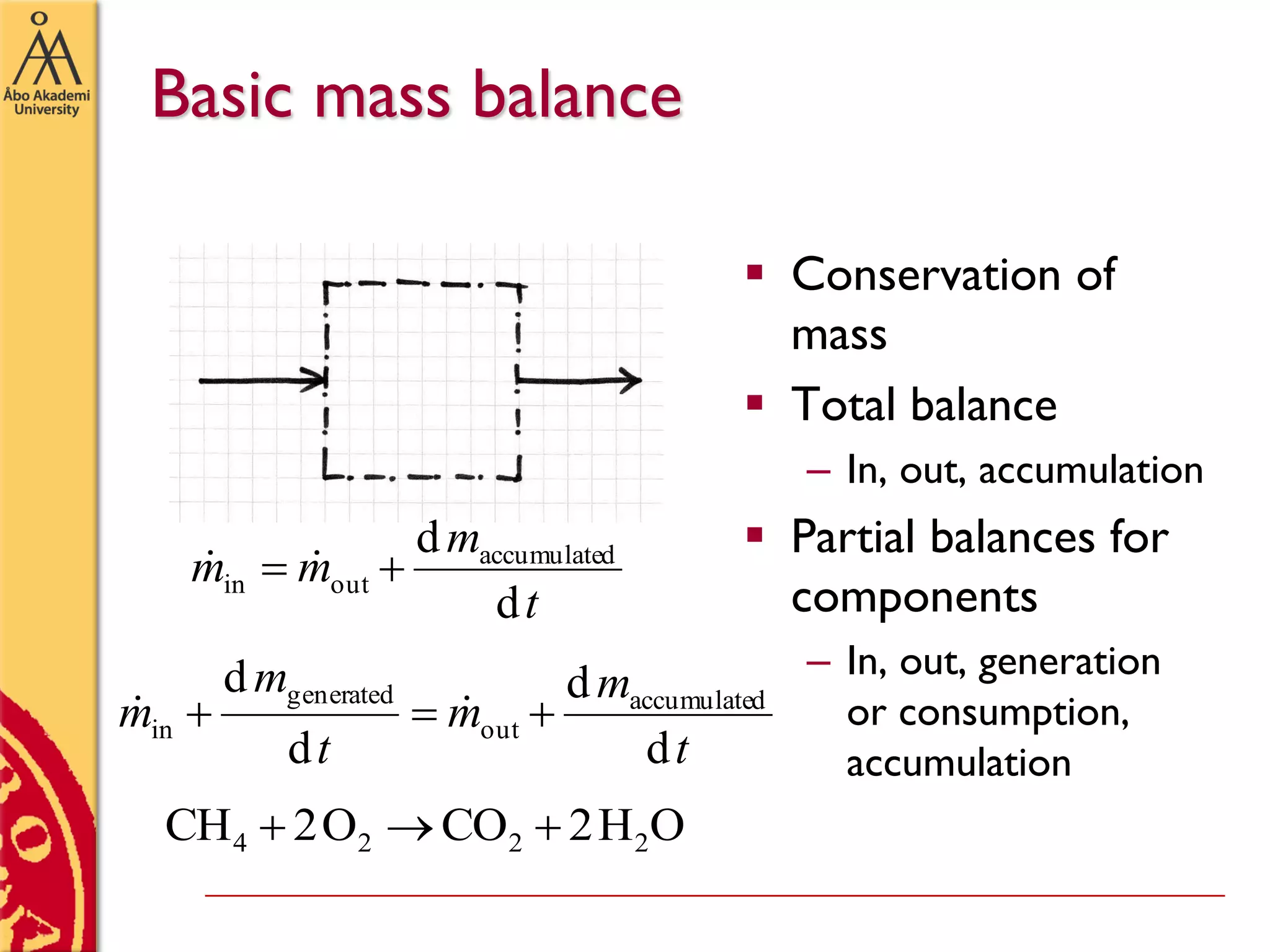
Basic mass balance
 Conservation of
mass
 Total balance
– In, out, accumulation
 Partial balances for
components
– In, out, generation
or consumption,
accumulation
t
m
mm
d
d daccumulate
outin  
OH2COO2CH 2224 
t
m
m
t
m
m
d
d
d
d daccumulate
out
generated
in  
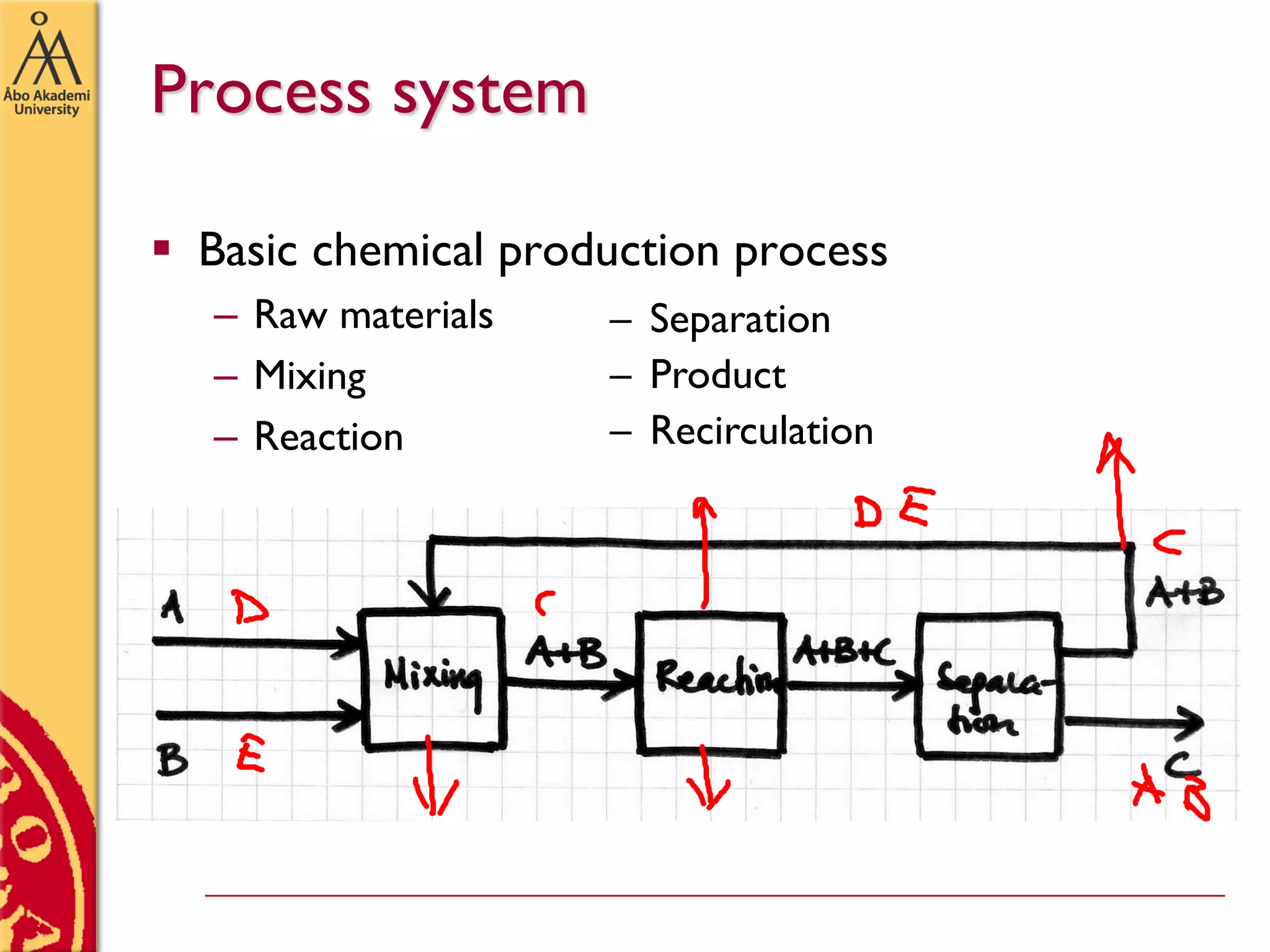
Process system
 Basic chemical production process
– Raw materials
– Mixing
– Reaction
– Separation
– Product
– Recirculation
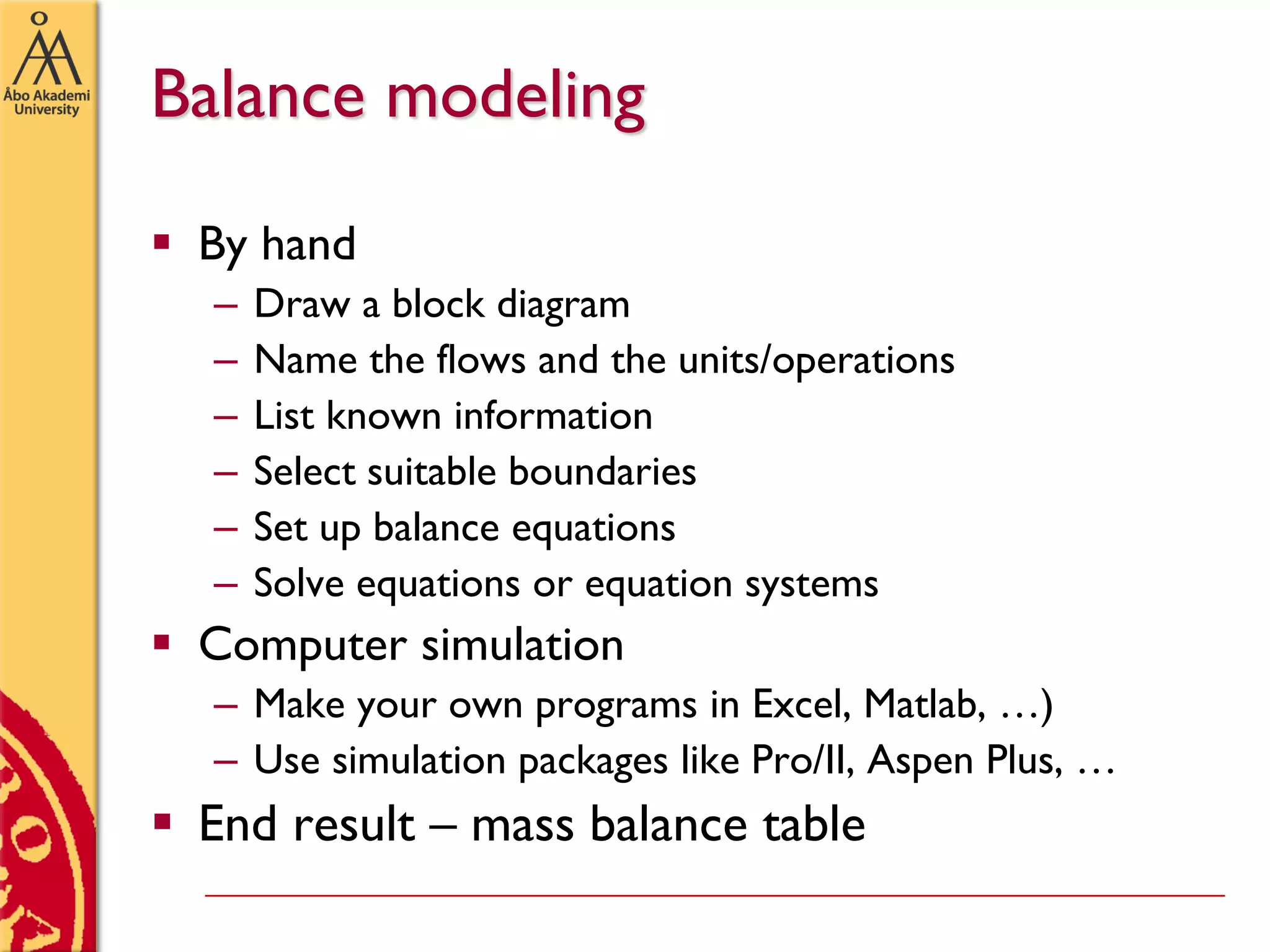
Balance modeling
 By hand
– Draw a block diagram
– Name the flows and the units/operations
– List known information
– Select suitable boundaries
– Set up balance equations
– Solve equations or equation systems
 Computer simulation
– Make your own programs in Excel, Matlab, …)
– Use simulation packages like Pro/II, Aspen Plus, …
 End result – mass balance table
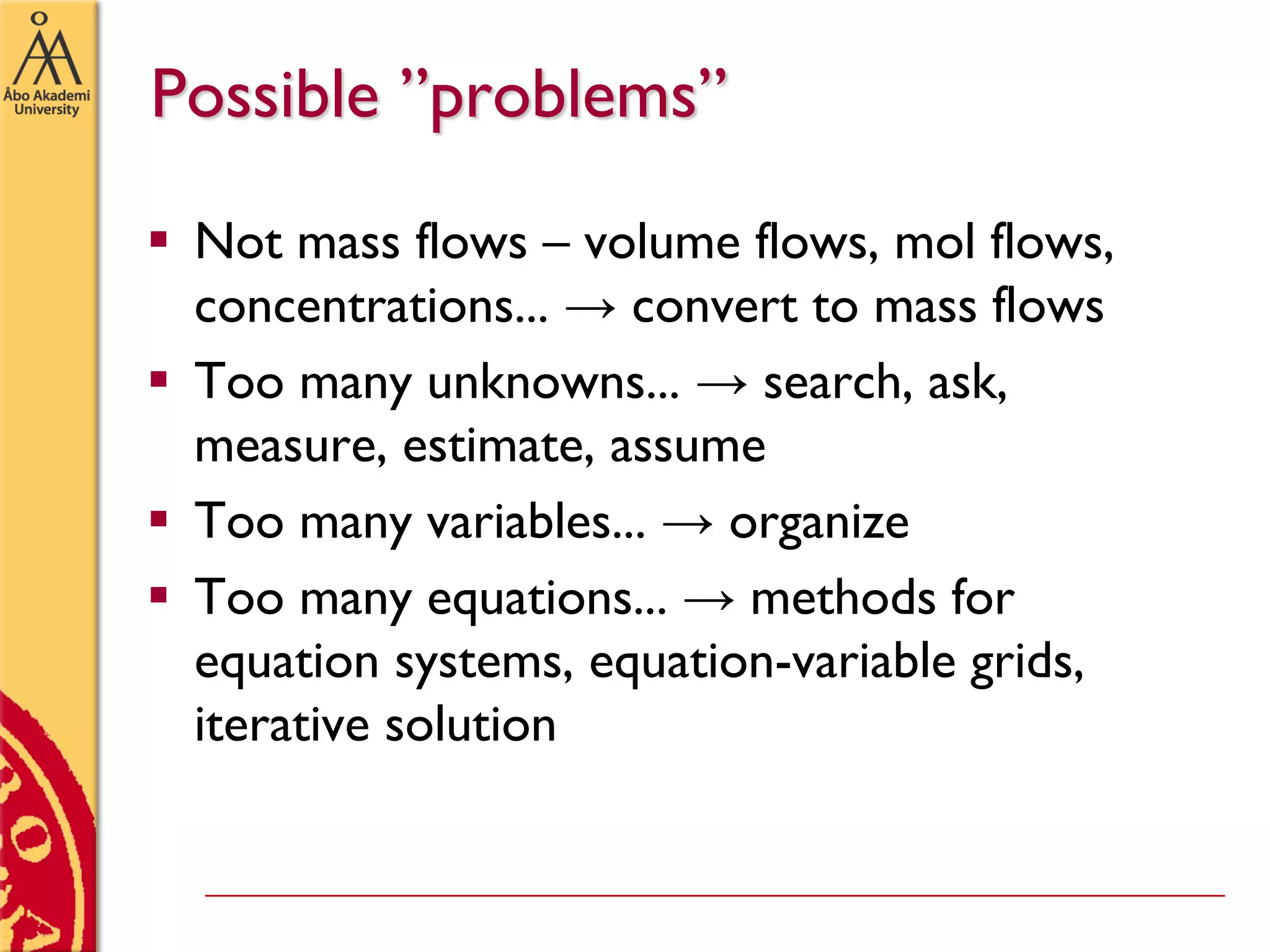
Possible ”problems”
 Not mass flows – volume flows, mol flows,
concentrations... → convert to mass flows
 Too many unknowns... → search, ask,
measure, estimate, assume
 Too many variables... → organize
 Too many equations... → methods for
equation systems, equation-variable grids,
iterative solution
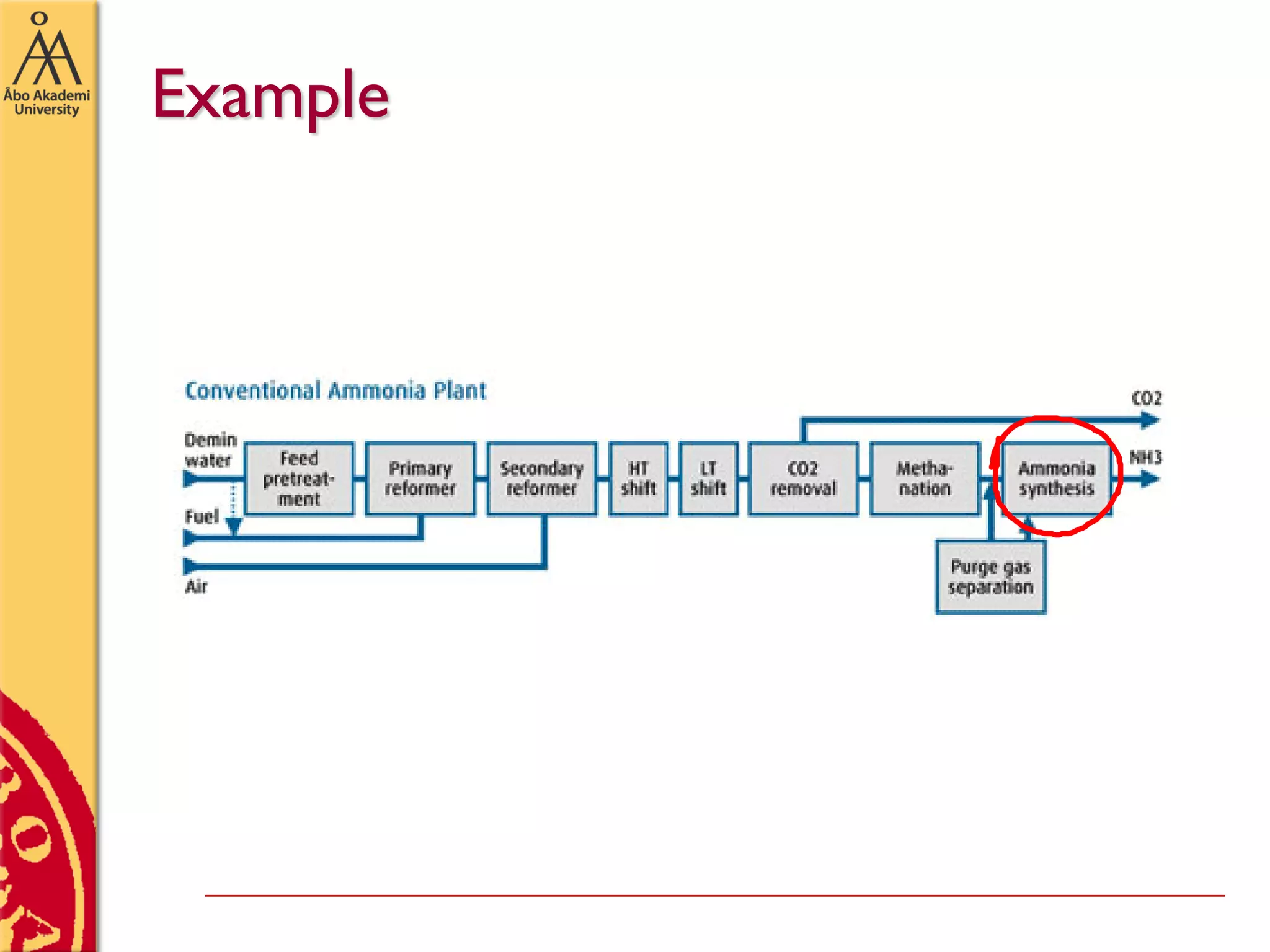
Example
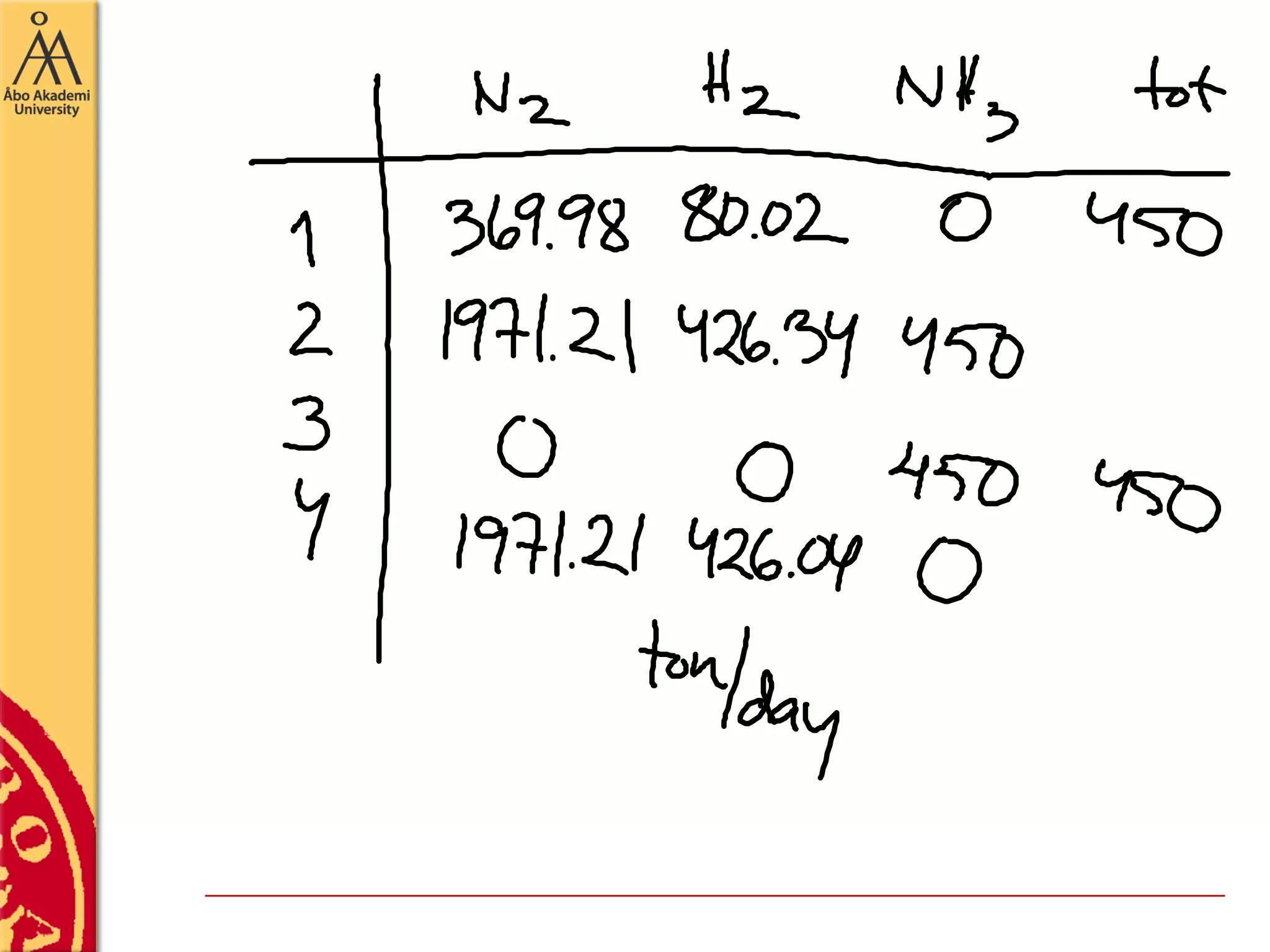
Example
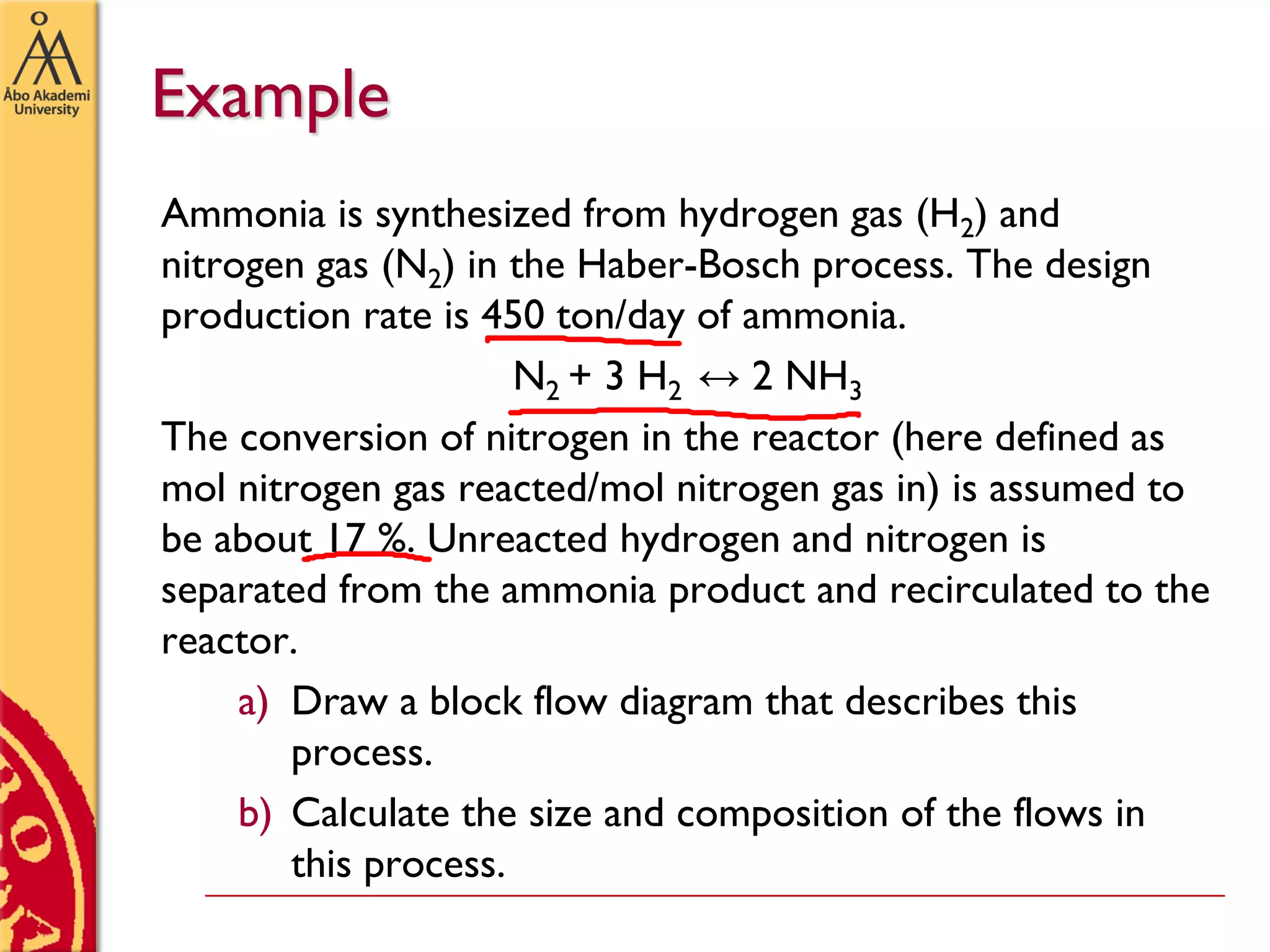
Ammonia is synthesized from hydrogen gas (H2) and
nitrogen gas (N2) in the Haber-Bosch process. The design
production rate is 450 ton/day of ammonia.
N2 + 3 H2 ↔ 2 NH3
The conversion of nitrogen in the reactor (here defined as
mol nitrogen gas reacted/mol nitrogen gas in) is assumed to
be about 17 %. Unreacted hydrogen and nitrogen is
separated from the ammonia product and recirculated to the
reactor.
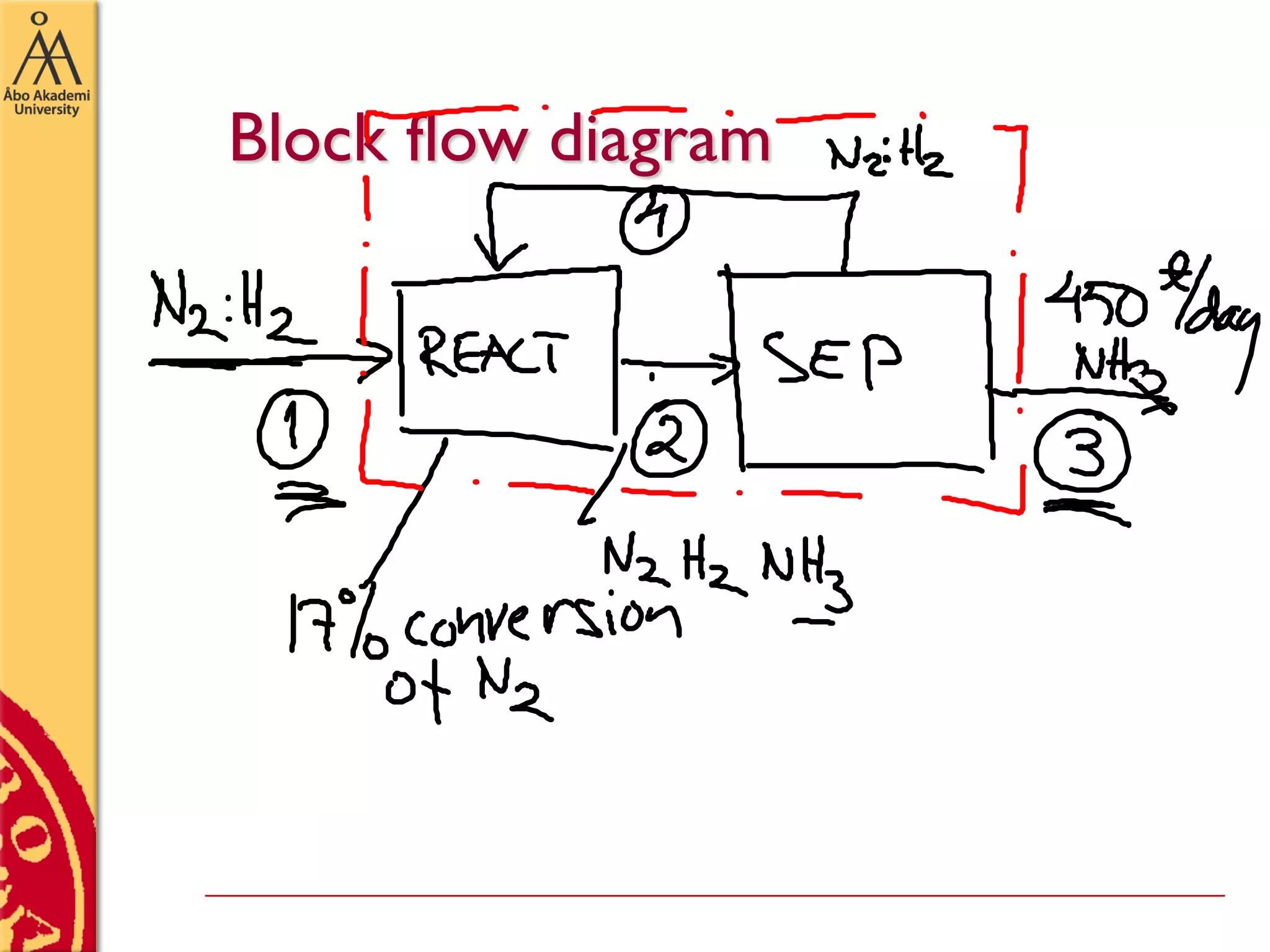
a) Draw a block flow diagram that describes this
process.
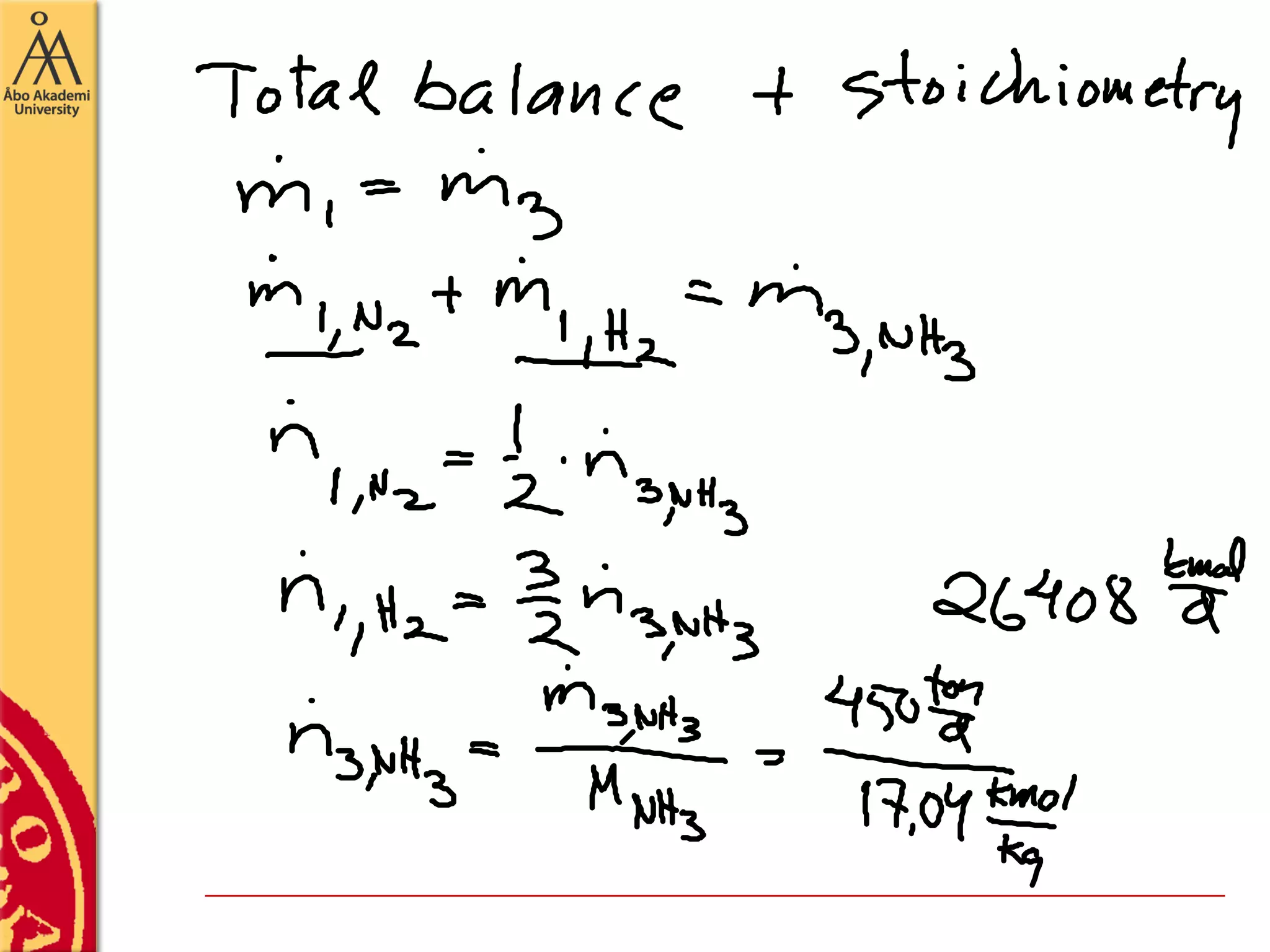
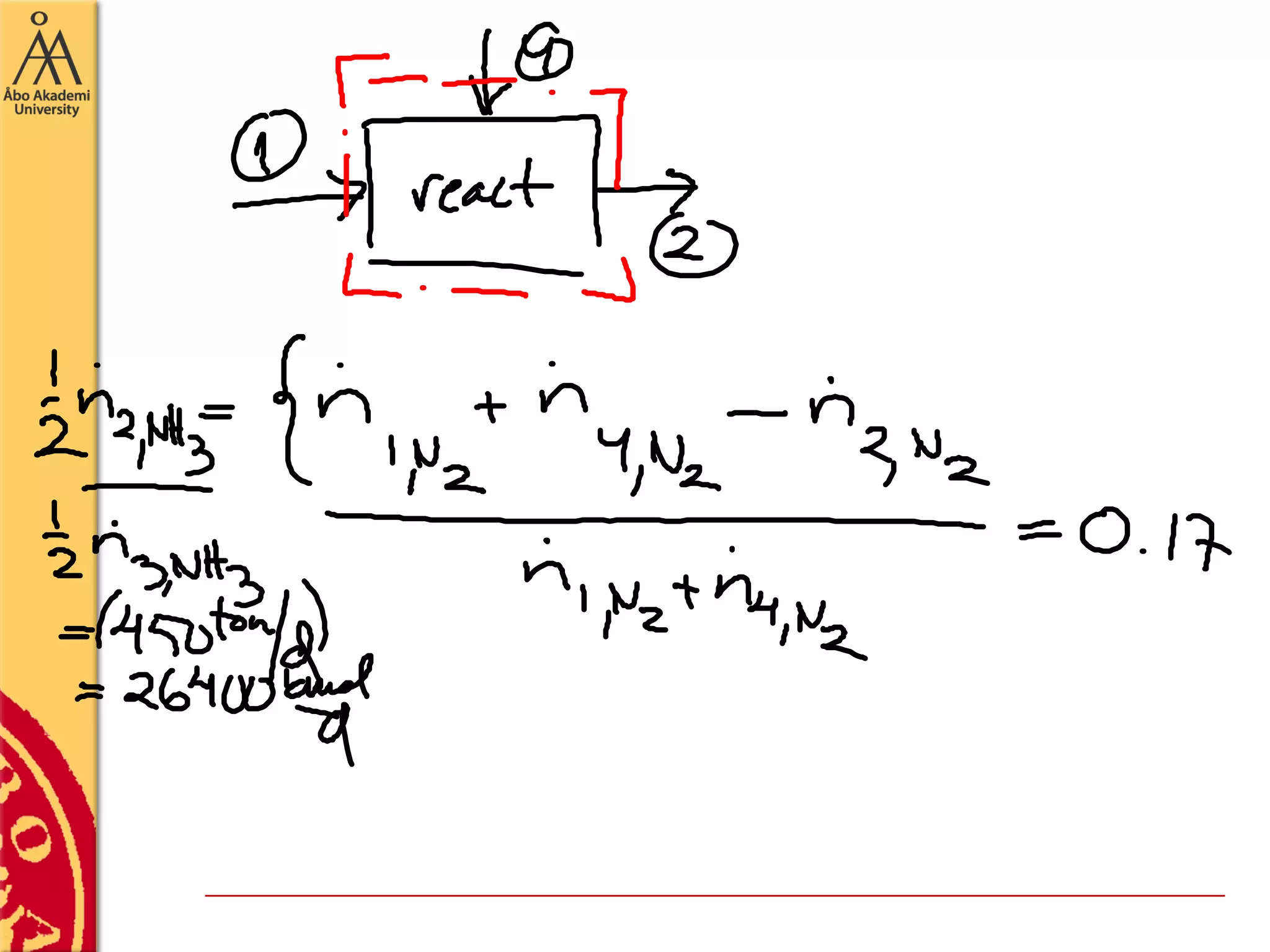
b) Calculate the size and composition of the flows in
this process.
Block flow diagram
Questions?

02 mass balances with notes (1)

  • 1.
    Basics in ProcessDesign Mass balances for process system analysis/modeling/design
  • 2.
    Chemical Engineering Design, Towler,Sinnott, 2013  Block flow diagrams  Calculate flows from mass and energy balances  Rough sizing of equipment for – storage – preprocessing – reaction – separation, – heat exchange – transport  Instrumentation  Cost estimates
  • 3.
    Today  Basic massbalance  Process system  Balance modeling  Example  Exercise  Questions?
  • 4.
    Basic mass balance Conservation of mass  Total balance – In, out, accumulation  Partial balances for components – In, out, generation or consumption, accumulation t m mm d d daccumulate outin   OH2COO2CH 2224  t m m t m m d d d d daccumulate out generated in  
  • 5.
    Process system  Basicchemical production process – Raw materials – Mixing – Reaction – Separation – Product – Recirculation
  • 6.
    Balance modeling  Byhand – Draw a block diagram – Name the flows and the units/operations – List known information – Select suitable boundaries – Set up balance equations – Solve equations or equation systems  Computer simulation – Make your own programs in Excel, Matlab, …) – Use simulation packages like Pro/II, Aspen Plus, …  End result – mass balance table
  • 7.
    Possible ”problems”  Notmass flows – volume flows, mol flows, concentrations... → convert to mass flows  Too many unknowns... → search, ask, measure, estimate, assume  Too many variables... → organize  Too many equations... → methods for equation systems, equation-variable grids, iterative solution
  • 8.
  • 9.
    Example Ammonia is synthesizedfrom hydrogen gas (H2) and nitrogen gas (N2) in the Haber-Bosch process. The design production rate is 450 ton/day of ammonia. N2 + 3 H2 ↔ 2 NH3 The conversion of nitrogen in the reactor (here defined as mol nitrogen gas reacted/mol nitrogen gas in) is assumed to be about 17 %. Unreacted hydrogen and nitrogen is separated from the ammonia product and recirculated to the reactor. a) Draw a block flow diagram that describes this process. b) Calculate the size and composition of the flows in this process.
  • 10.
  • 17.