Architecture for
B2B models in
Ecommerce
Ecommerce in B2B
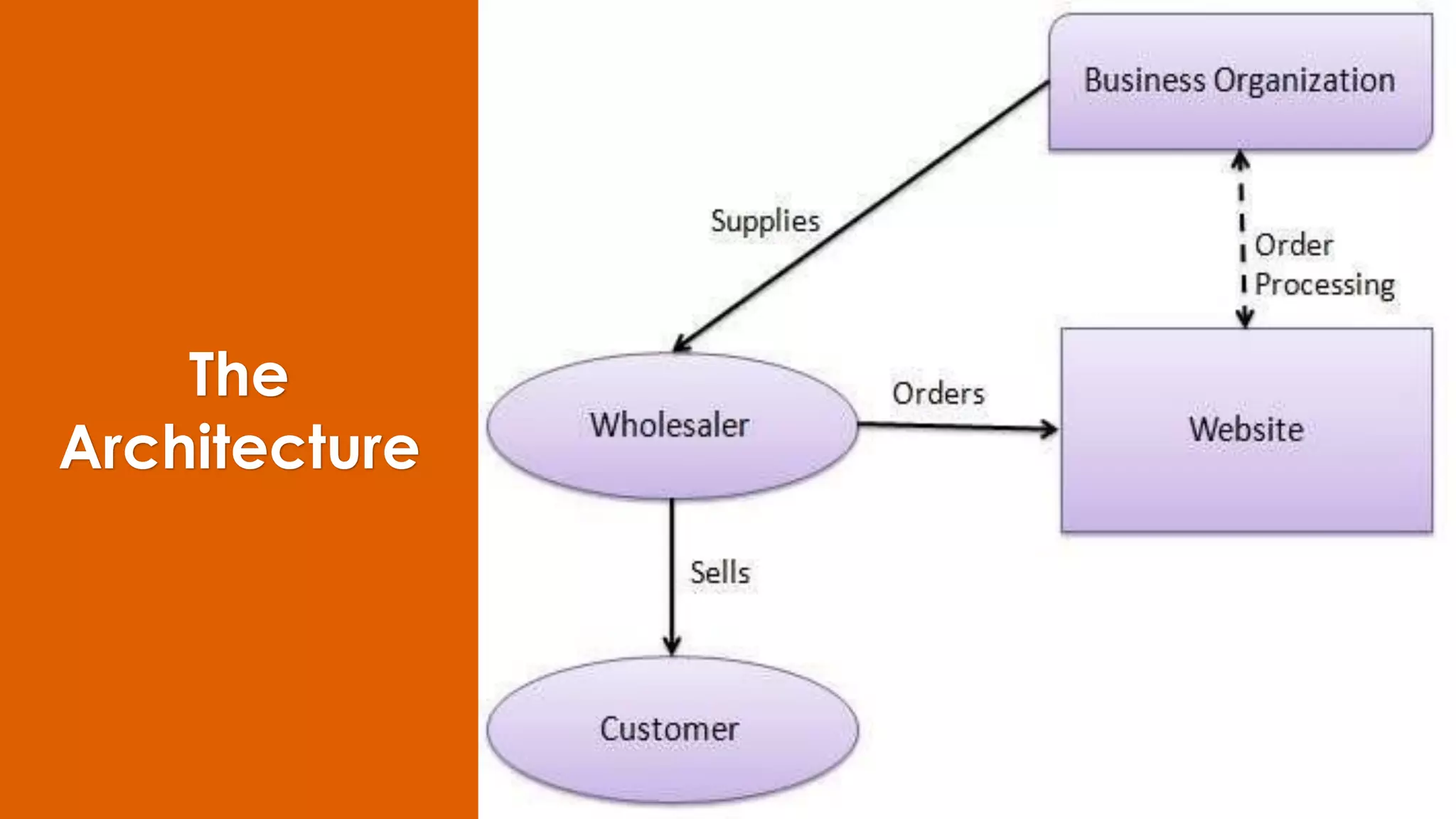
Website following B2B business model sells its product
to an intermediate buyer who then sells the product
to the final customer. As an example, a wholesaler
places an order from a company's website and after
receiving the consignment, sells the end product to
final customer who comes to buy the product at
wholesaler's retail outlet.
The
Architecture
B2B implies that seller as well as buyer is business entity.
B2B covers large number of applications which enables
business to form relationships with their distributors,
resellers, suppliers etc. Following are the leading items in
B2B e-Commerce.
• Electronics
• Shipping and Warehousing
• Motor Vehicles
• Petrochemicals
• Paper
• Office products
• Food
• Agriculture
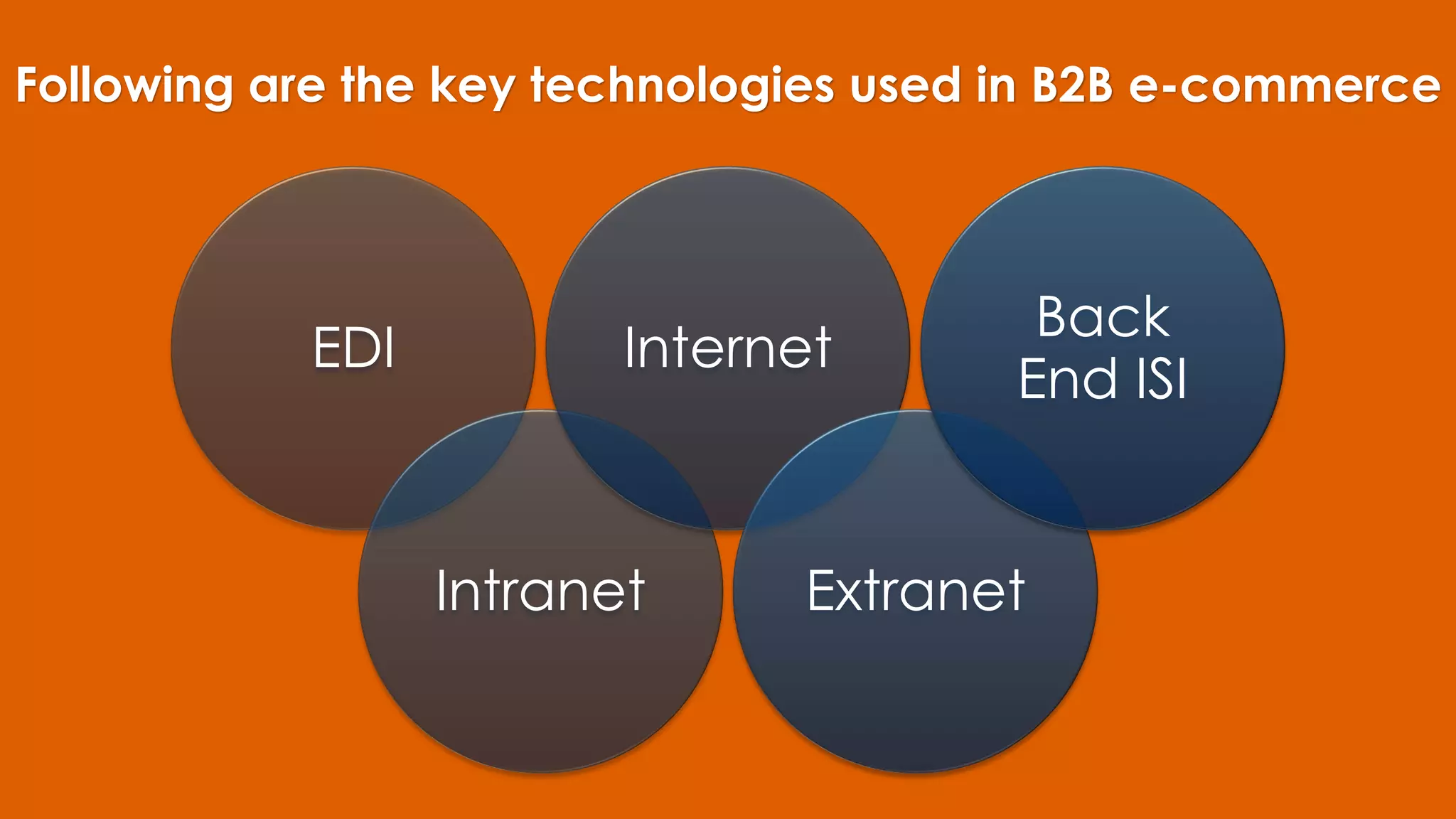
Following are the key technologies used in B2B e-commerce
EDI
Intranet
Internet
Extranet
Back
End ISI
• Electronic Data Interchange EDI − EDI is an inter organizational exchange of
business documents in a structured and machine process-able format.
• Internet − Internet represents world wide web or network of networks
connecting computers across the world.
• Intranet − Intranet represents a dedicated network of computers within a
single organization
• Extranet − Extranet represents a network where outside business partners,
supplier or customers can have limited access to a portion of enterprise
intranet/network.
• Back-End Information System Integration − Back End information systems are
database management systems used to manage the business data.
Architectural Models
Following are the Architectural Models in B2B E-commerce:
• Supplier Oriented marketplace − In this type of model, a common
marketplace provided by supplier is used by both individual customers as
well as business users. A supplier offers an e-stores for sales promotion
• Buyer Oriented marketplace − In this type of model, buyer has his/her own
market place or e-market. He invites suppliers to bid on product's catalog. A
Buyer company opens a bidding site
• Intermediary Oriented marketplace − In this type of model, an intermediary
company runs a market place where business buyers and sellers can
transact with each other.
B2B & EcommerceNext
Slide
NIRBHIK JANGID
Connect with me just by one click

Architecture for B2B models in Ecommerce

  • 1.
  • 2.
    Ecommerce in B2B Websitefollowing B2B business model sells its product to an intermediate buyer who then sells the product to the final customer. As an example, a wholesaler places an order from a company's website and after receiving the consignment, sells the end product to final customer who comes to buy the product at wholesaler's retail outlet.
  • 3.
  • 4.
    B2B implies thatseller as well as buyer is business entity. B2B covers large number of applications which enables business to form relationships with their distributors, resellers, suppliers etc. Following are the leading items in B2B e-Commerce. • Electronics • Shipping and Warehousing • Motor Vehicles • Petrochemicals • Paper • Office products • Food • Agriculture
  • 5.
    Following are thekey technologies used in B2B e-commerce EDI Intranet Internet Extranet Back End ISI
  • 6.
    • Electronic DataInterchange EDI − EDI is an inter organizational exchange of business documents in a structured and machine process-able format. • Internet − Internet represents world wide web or network of networks connecting computers across the world. • Intranet − Intranet represents a dedicated network of computers within a single organization • Extranet − Extranet represents a network where outside business partners, supplier or customers can have limited access to a portion of enterprise intranet/network. • Back-End Information System Integration − Back End information systems are database management systems used to manage the business data.
  • 7.
    Architectural Models Following arethe Architectural Models in B2B E-commerce: • Supplier Oriented marketplace − In this type of model, a common marketplace provided by supplier is used by both individual customers as well as business users. A supplier offers an e-stores for sales promotion • Buyer Oriented marketplace − In this type of model, buyer has his/her own market place or e-market. He invites suppliers to bid on product's catalog. A Buyer company opens a bidding site • Intermediary Oriented marketplace − In this type of model, an intermediary company runs a market place where business buyers and sellers can transact with each other.
  • 9.
  • 10.
    NIRBHIK JANGID Connect withme just by one click