Getting Out Into the Real World: alternative curricula and the school library
What’s an alternative curriculum? Breaks away from subject-based learning Focuses on developing skills not imparting information Most learning is based around interdisciplinary projects. Emphasises  ‘Learning to Learn’
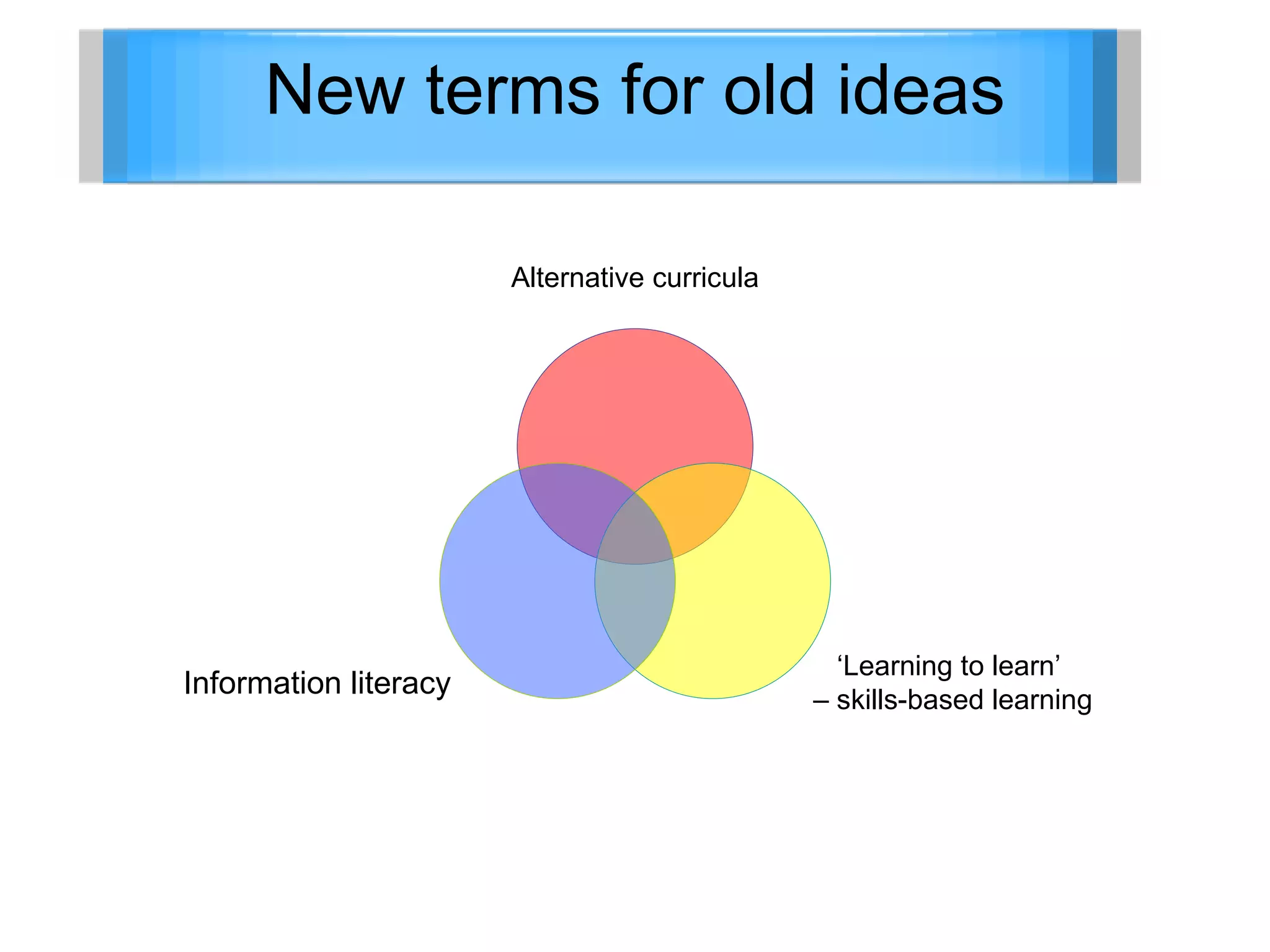
New terms for old ideas Alternative curricula ‘ Learning to learn’  –  skills-based learning Information literacy
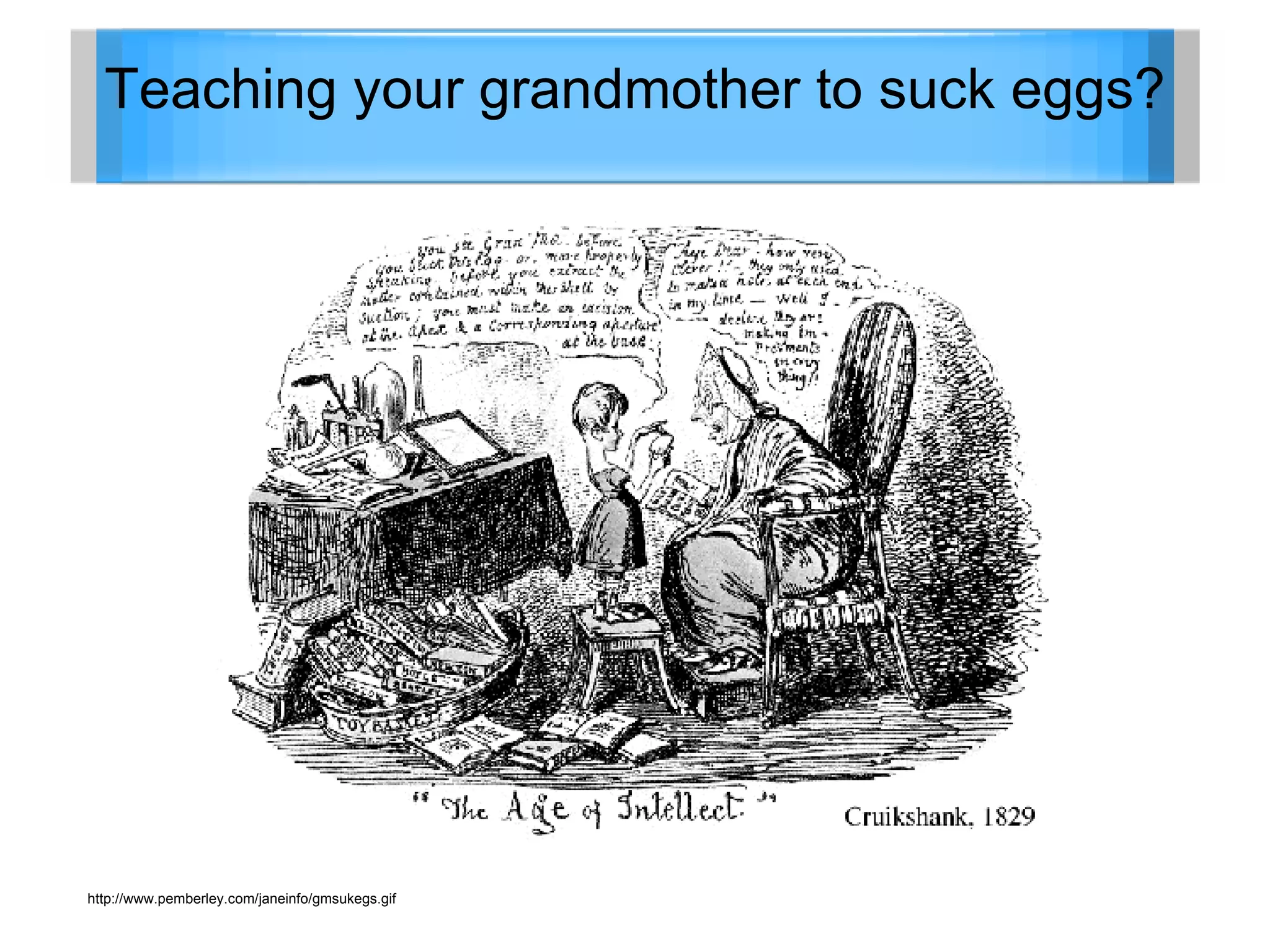
http://www.pemberley.com/janeinfo/gmsukegs.gif Teaching your grandmother to suck eggs?
John Cabot CTC Learning to Learn The Cabot Competency Curriculum CITY TECHNOLOGY COLLEGE OHN CABOT J BRINGING LEARNING TO LIFE AND LIFE TO LEARNING
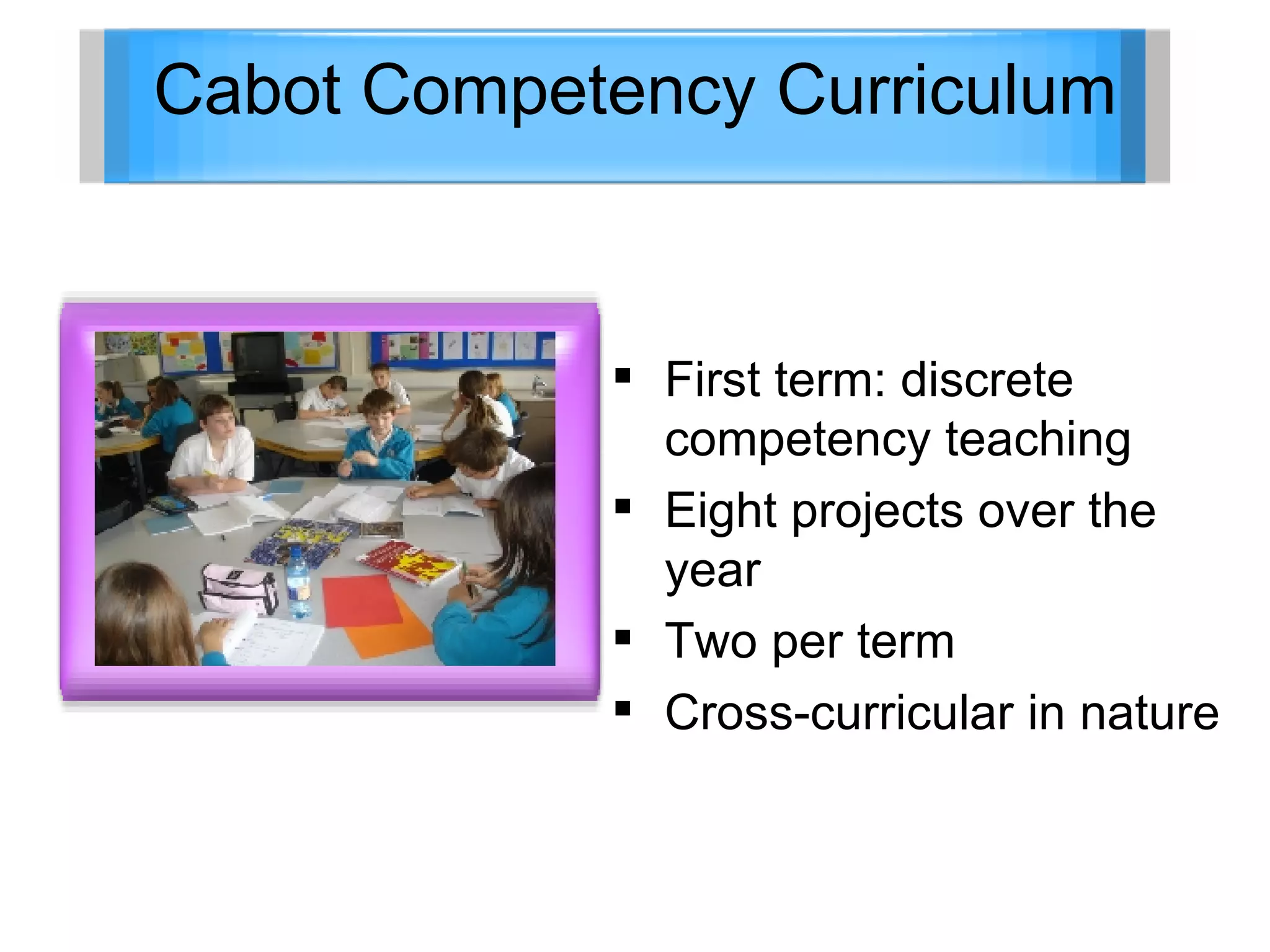
Cabot Competency Curriculum First term: discrete competency teaching Eight projects over the year Two per term Cross-curricular in nature
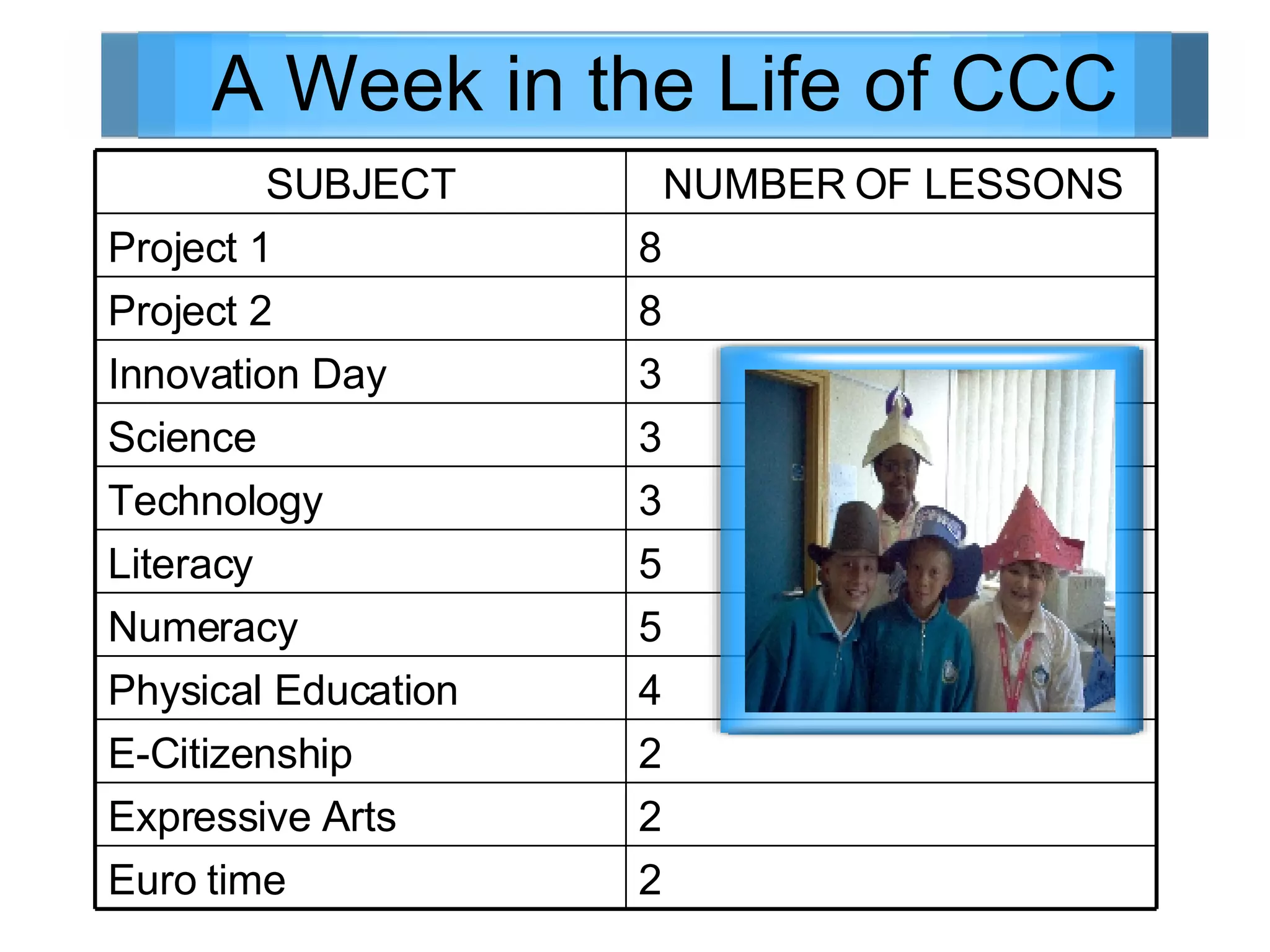
A Week in the Life of CCC 3 Technology 5 Literacy 5 Numeracy 4 Physical Education 2 E-Citizenship 2 Expressive Arts 2 Euro time 3 Science 3 Innovation Day 8 Project 2 8 Project 1 NUMBER OF LESSONS SUBJECT
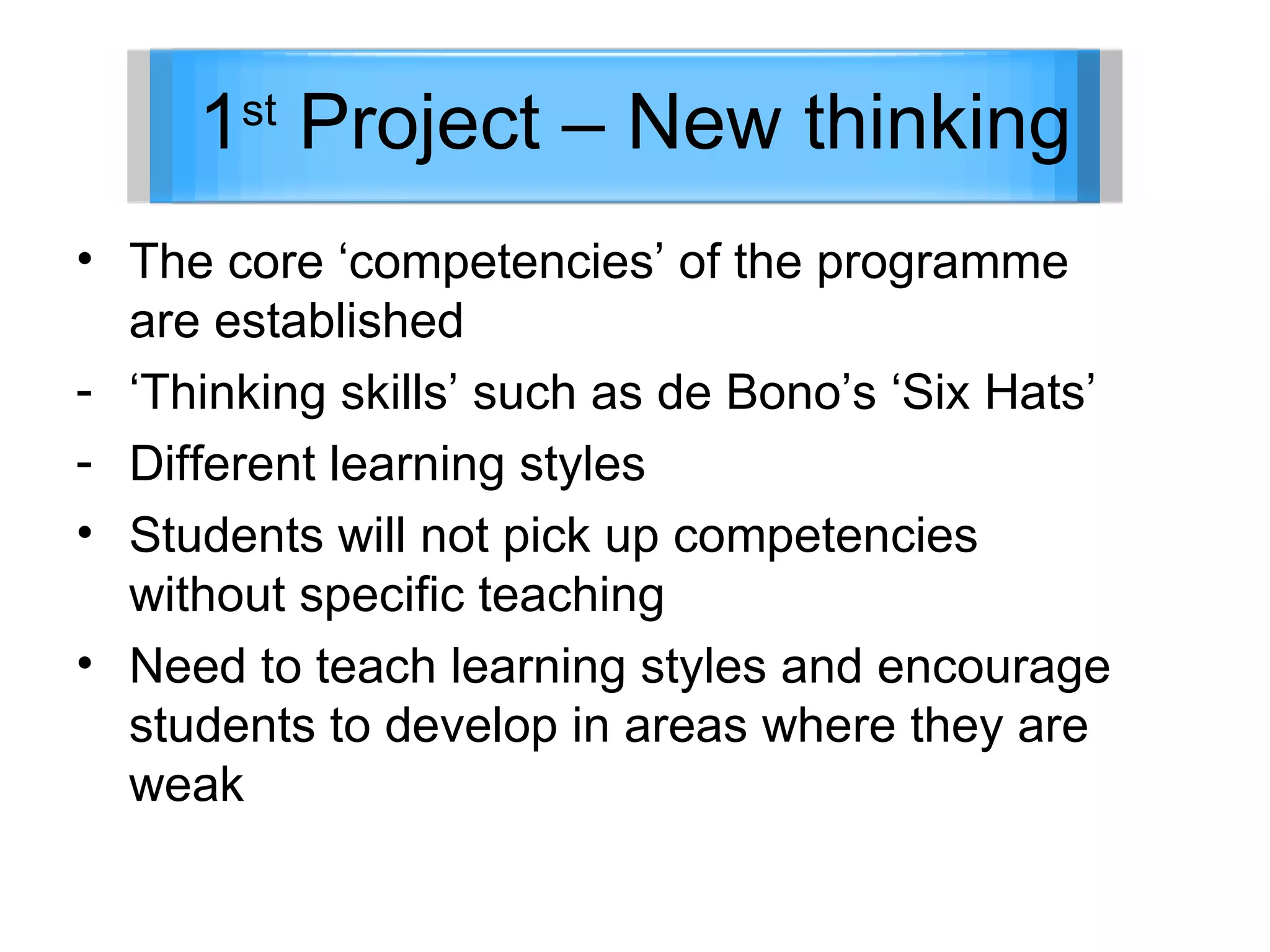
1 st  Project – New thinking The core ‘competencies’ of the programme are established ‘ Thinking skills’ such as de Bono’s ‘Six Hats’ Different learning styles Students will not pick up competencies without specific teaching Need to teach learning styles and encourage students to develop in areas where they are weak
Learning to Learn – Balancing Skills and Knowledge Learning-styles awareness Citizenship Managing information, people and situations Research and study skills Leadership and team skills Skills for independent learning Thinking skills Good communication skills Skills of reflection and evaluation
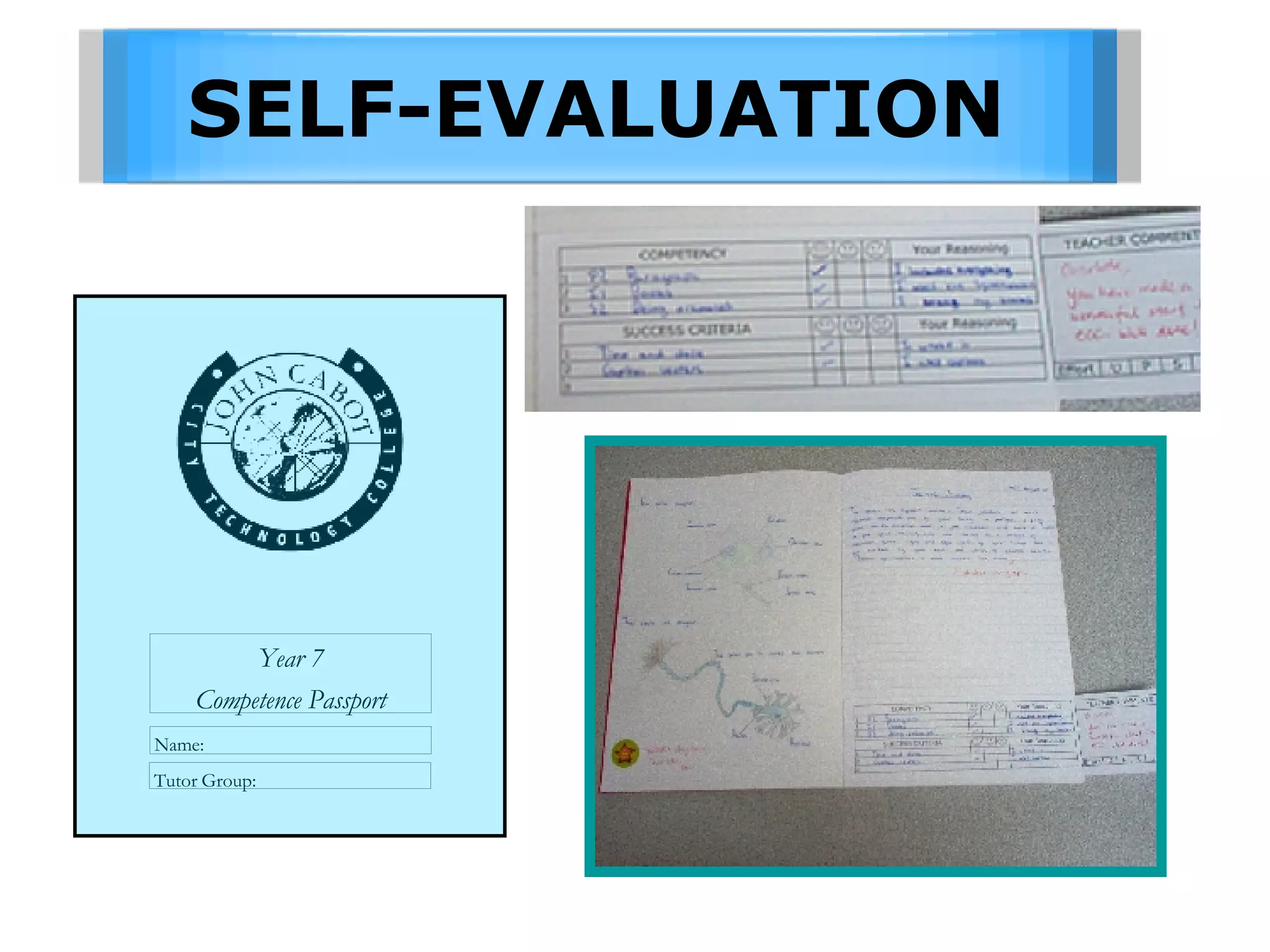
SELF-EVALUATION Tutor Group: Name: Year 7 Competence Passport
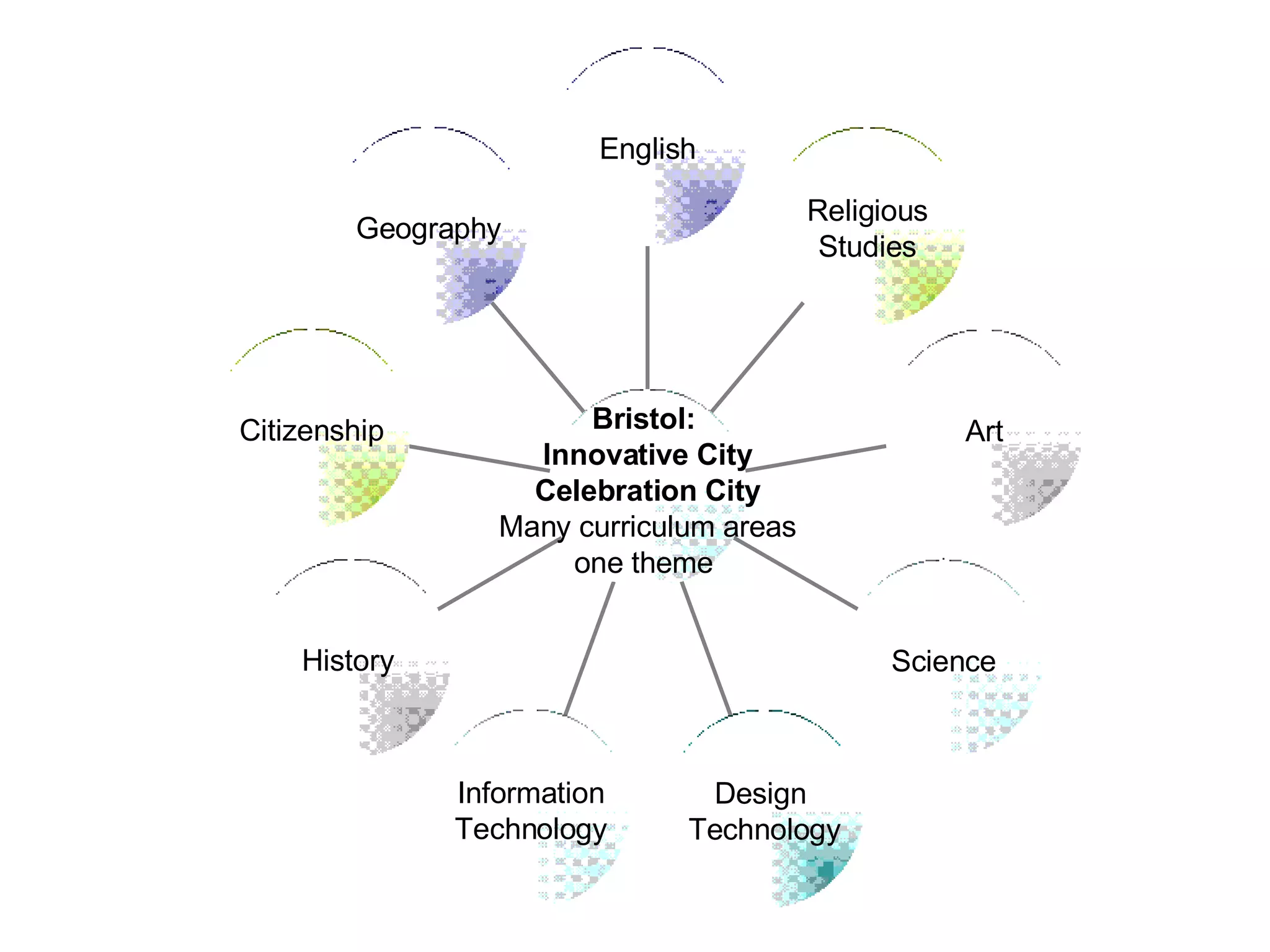
Geography Citizenship History  Information Technology Design  Technology Science Art Religious Studies English Bristol:  Innovative City Celebration City   Many curriculum areas one theme
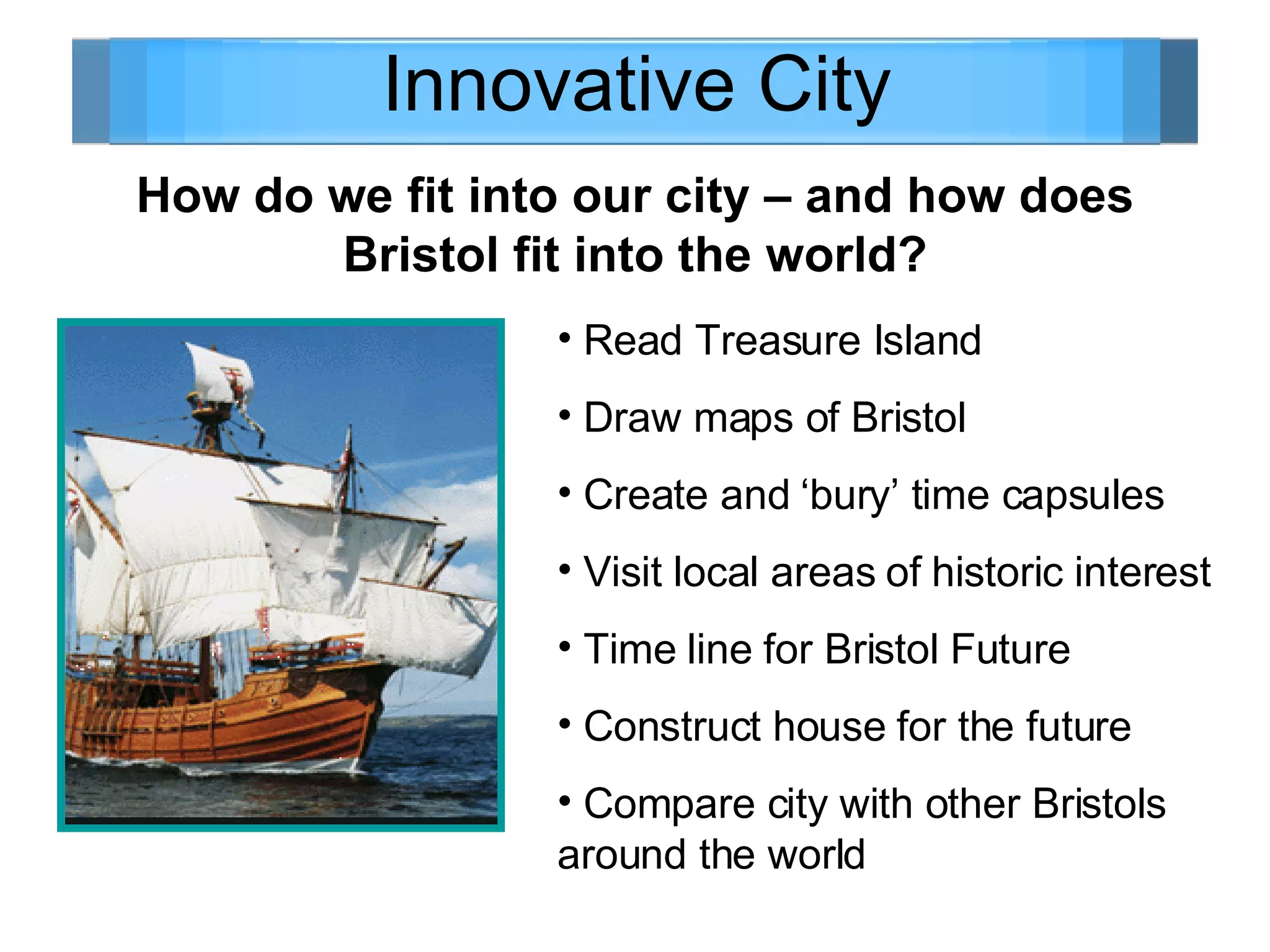
Innovative City How do we fit into our city – and how does Bristol fit into the world? Read Treasure Island Draw maps of Bristol Create and ‘bury’ time capsules  Visit local areas of historic interest Time line for Bristol Future Construct house for the future Compare city with other Bristols around the world
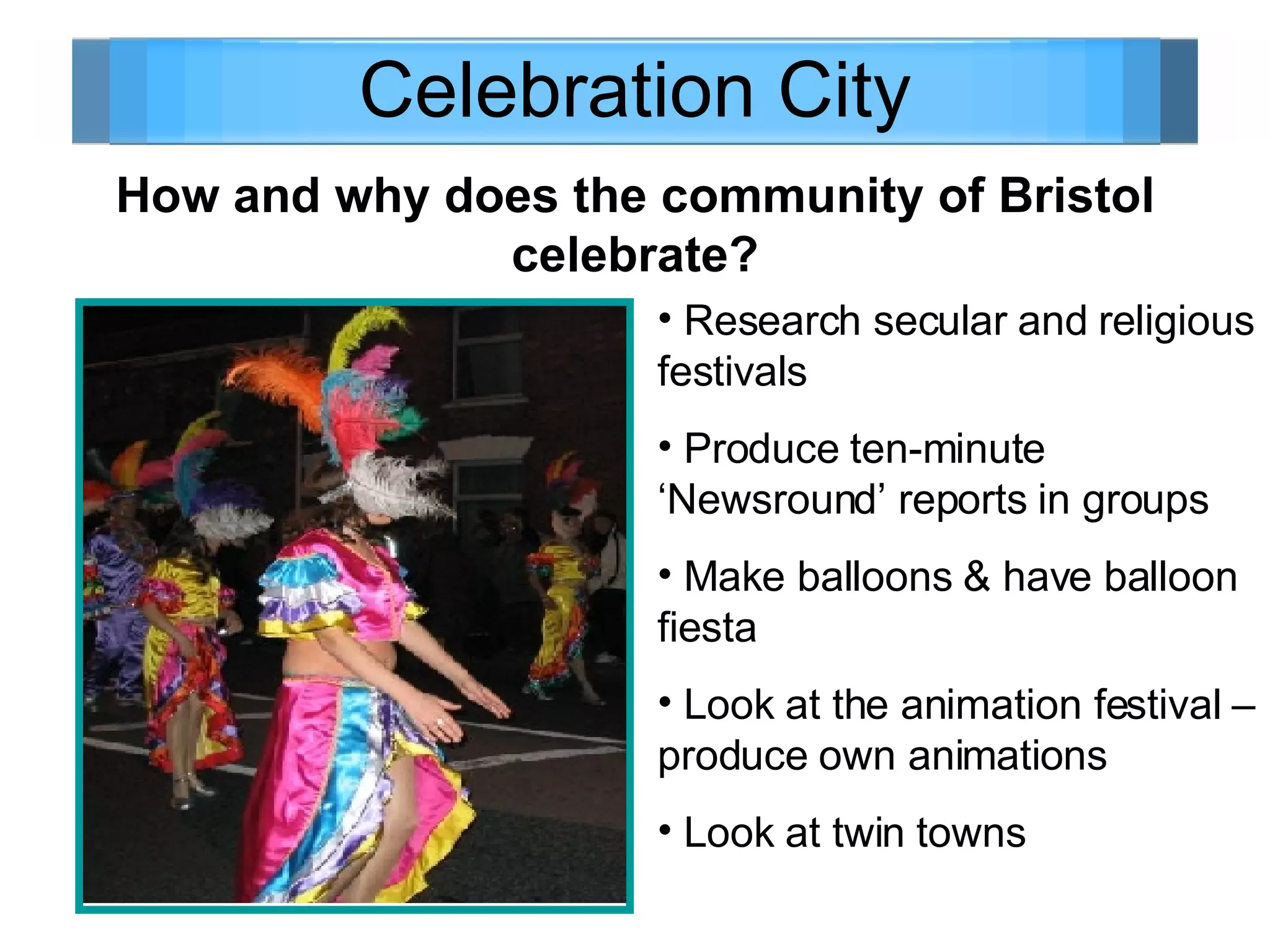
Celebration City How and why does the community of Bristol celebrate? Research secular and religious festivals Produce ten-minute ‘Newsround’ reports in groups Make balloons & have balloon fiesta Look at the animation festival – produce own animations Look at twin towns
What makes a good project? The task must be big and have a real life feel The teacher and students develop the project The task challenges and develops multiple intelligences The task has clear and worthwhile outcomes The task uses content from 2 or more subjects The task takes some time to complete The task is not entirely classroom-based The task involves making consequential decisions Completion depends on teamwork Completion depends on adult help/advice Completion demands high levels of feedback Completion is celebrated and evaluated by an appropriate audience
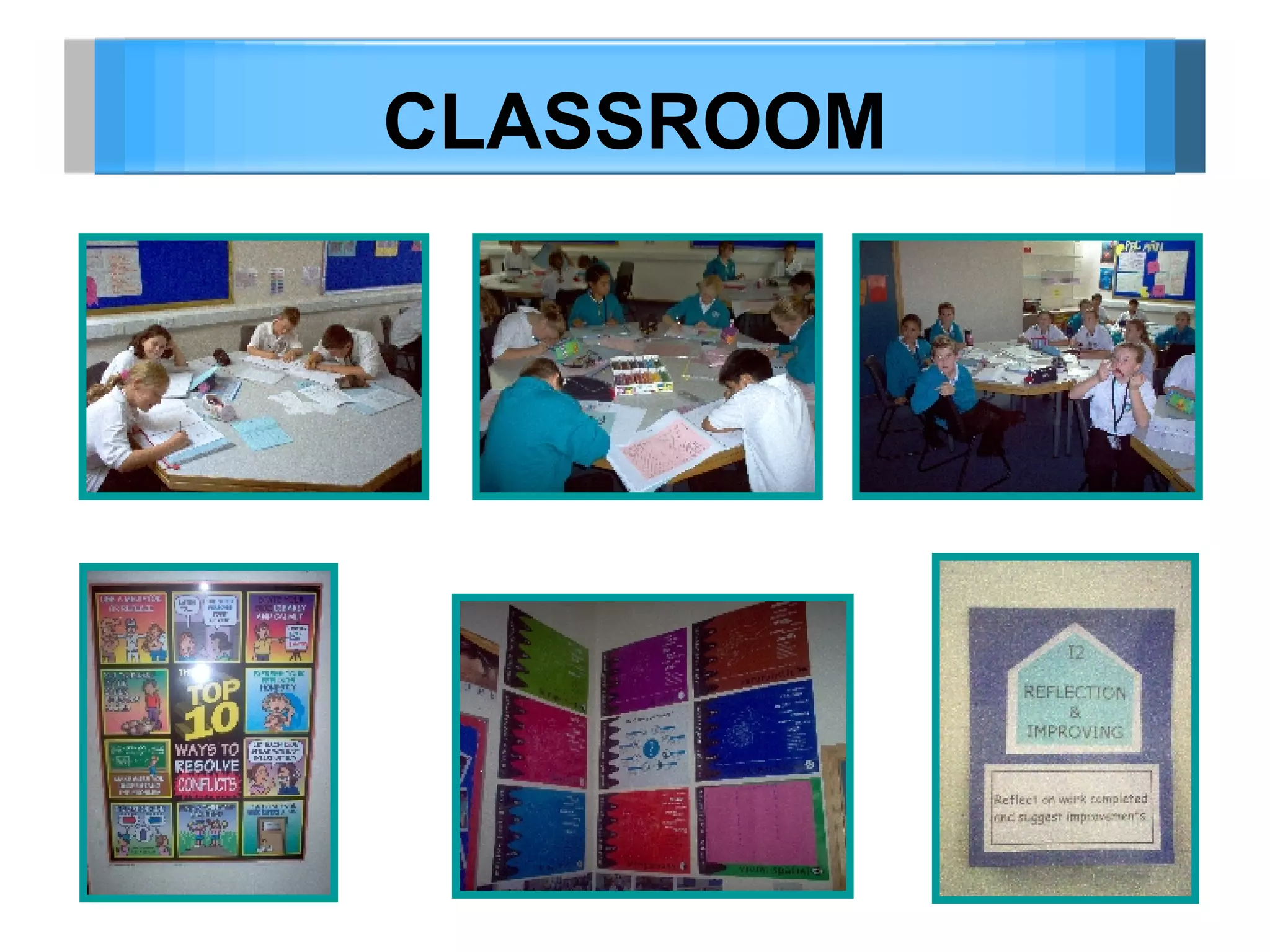
CLASSROOM
The Key Aspects Students frequently work in teams Students actively solve problems Students publicly exhibit their learning  Students reflect on what they are doing Students are taught strategies for learning Students develop social skills through the curriculum Staff can use a wider range of teaching and learning  strategies Staff are freed from the National Curriculum
Opinions on CCC
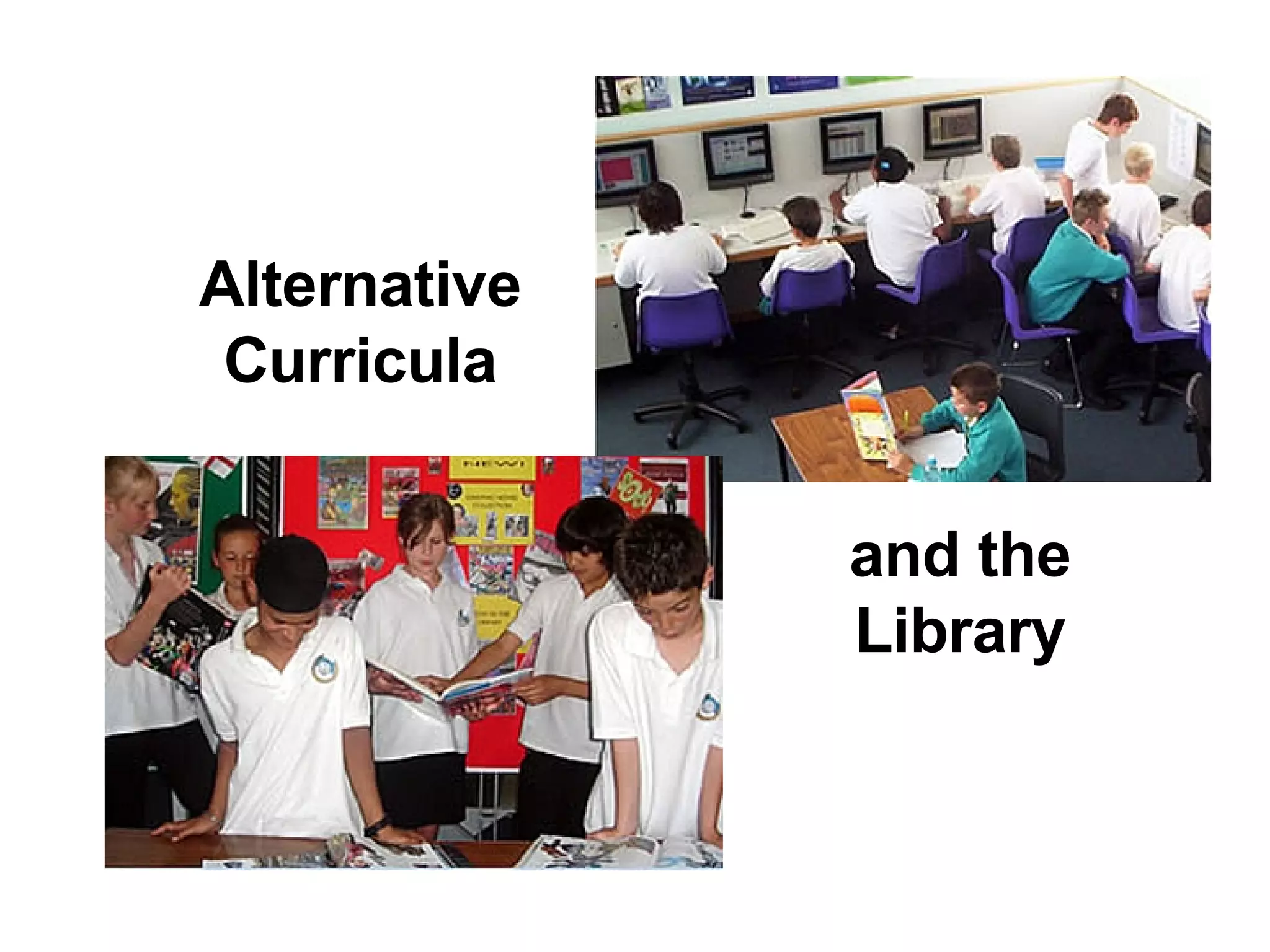
Alternative Curricula and the Library
Practical Issues Project-based learning means a greater demand for library resources, often with many students needing the same resources at the same time. Emphasis on independent study results in students using the library more, often without a teacher. Projects can be difficult to resource – topics are often very different from traditional curriculum topics. Especially difficult to find relevant books.
Opportunities for librarians The need for more, and more diverse, resources helps to make the Library ‘star of the moment’ Experience of teaching information literacy is directly relevant, so librarians are in the position of being resident experts Being released from the National Curriculum makes it easier to create integrated information literacy projects It is possible to remodel your role – you can become an information literacy coordinator rather than delivering the whole IL programme yourself
Taking control It’s easy for an alternative curriculum to make you feel overwhelmed, left out of the loop, or redundant Take control – make it work for you!
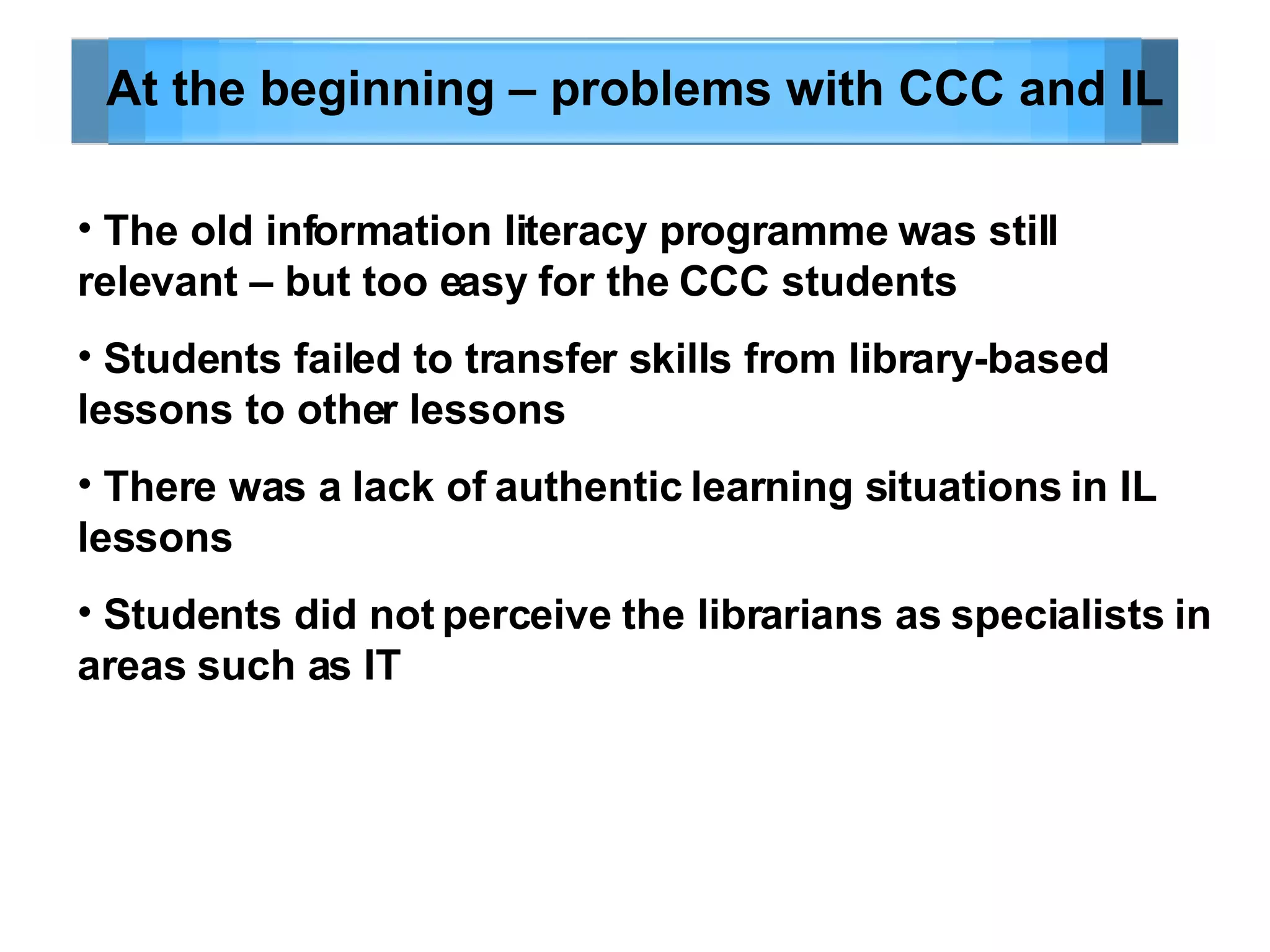
At the beginning – problems with CCC and IL The old information literacy programme was still relevant – but too easy for the CCC students Students failed to transfer skills from library-based lessons to other lessons There was a lack of authentic learning situations in IL lessons Students did not perceive the librarians as specialists in areas such as IT
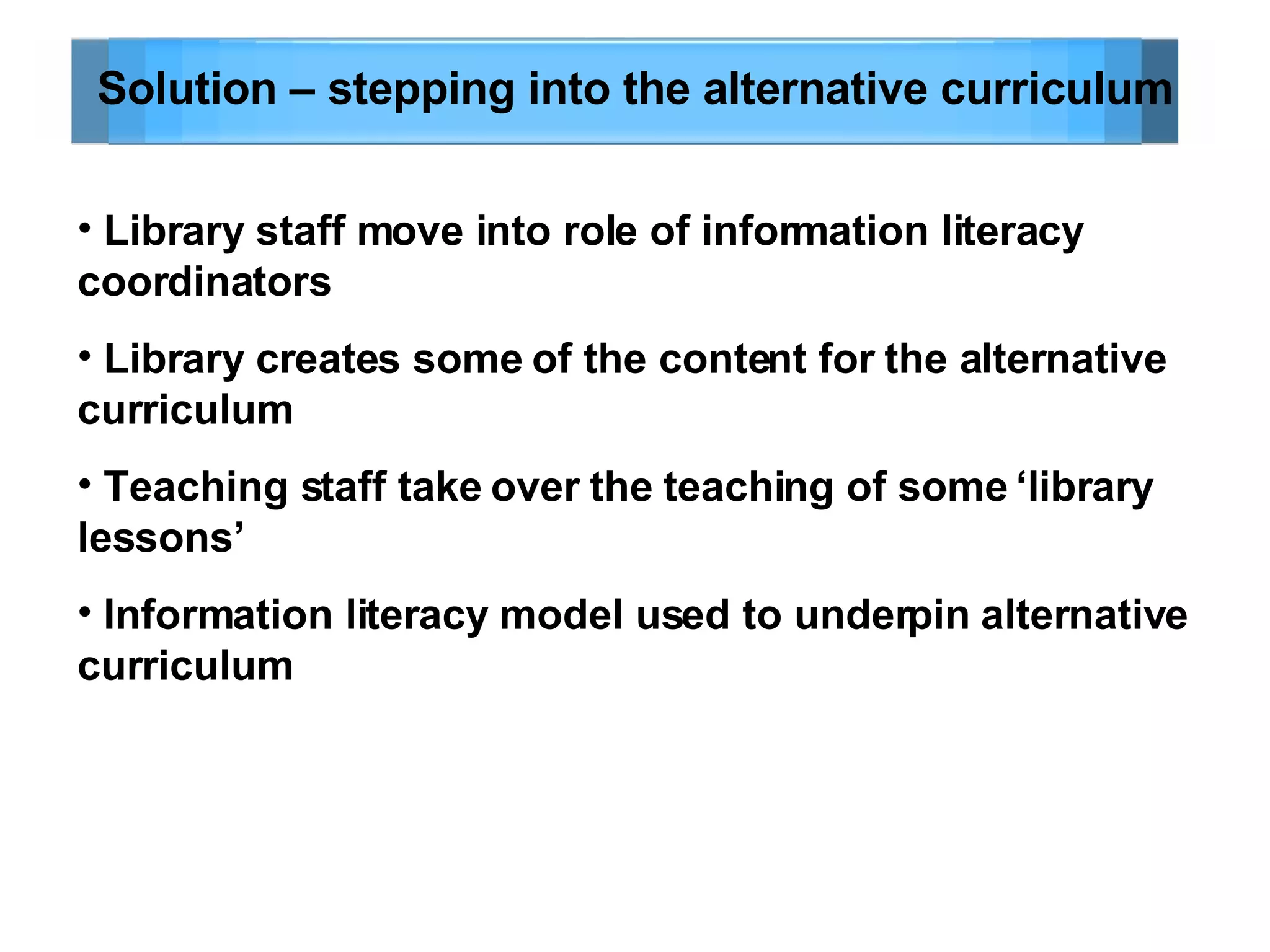
Solution – stepping into the alternative curriculum Library staff move into role of information literacy coordinators Library creates some of the content for the alternative curriculum Teaching staff take over the teaching of some ‘library lessons’ Information literacy model used to underpin alternative curriculum
 
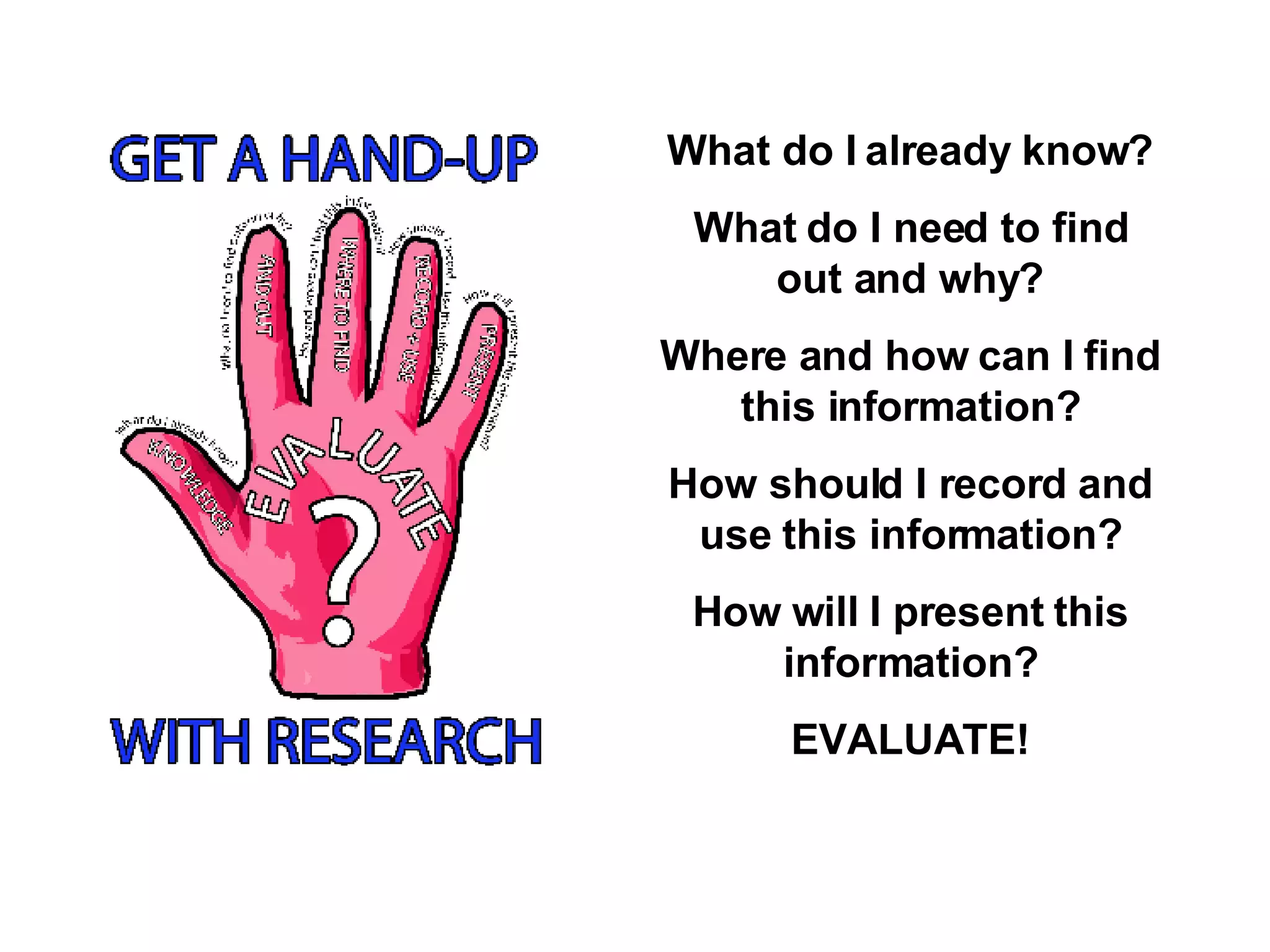
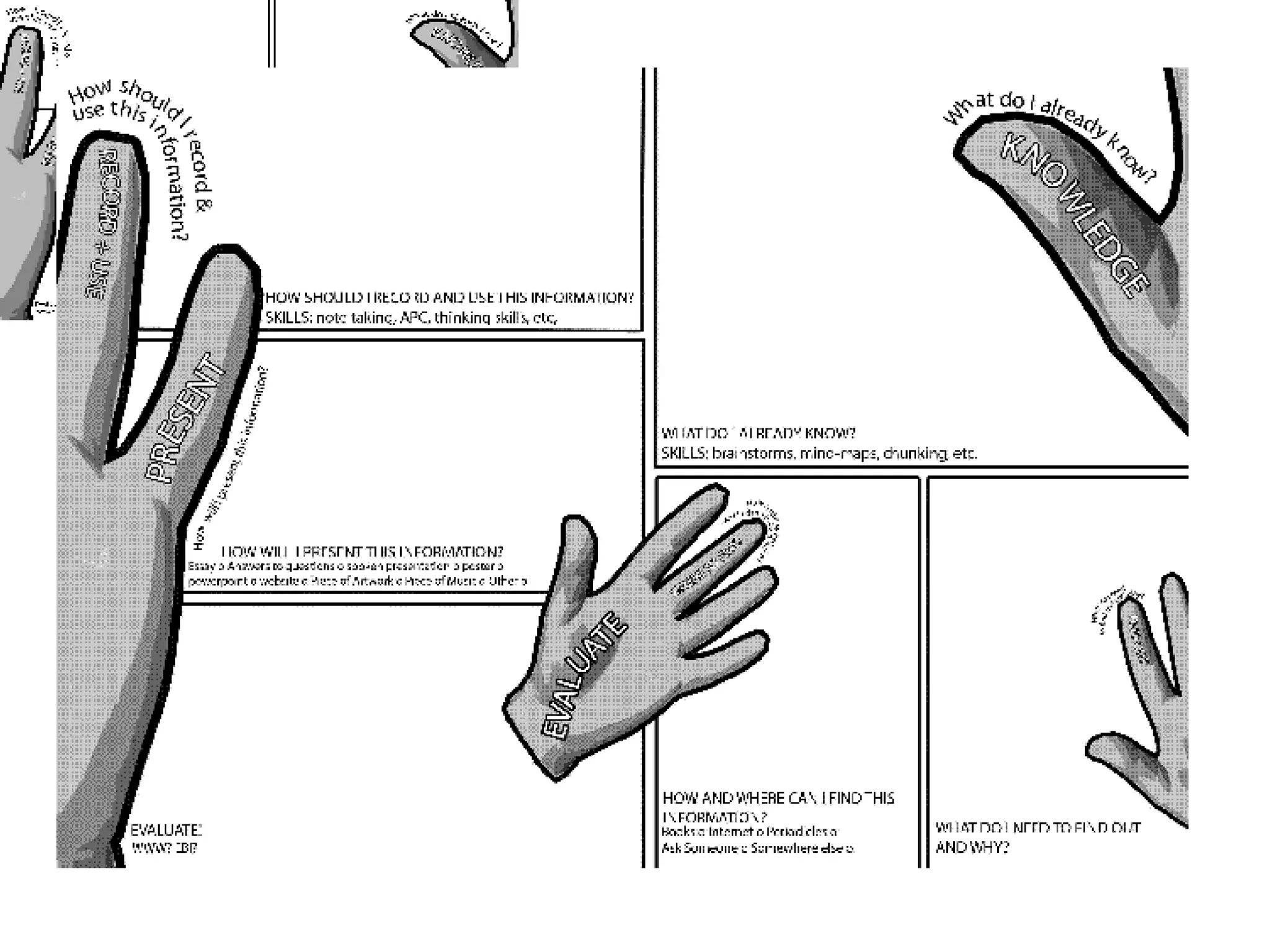
What do I already know? What do I need to find out and why? Where and how can I find this information? How should I record and use this information? How will I present this information? EVALUATE!
 
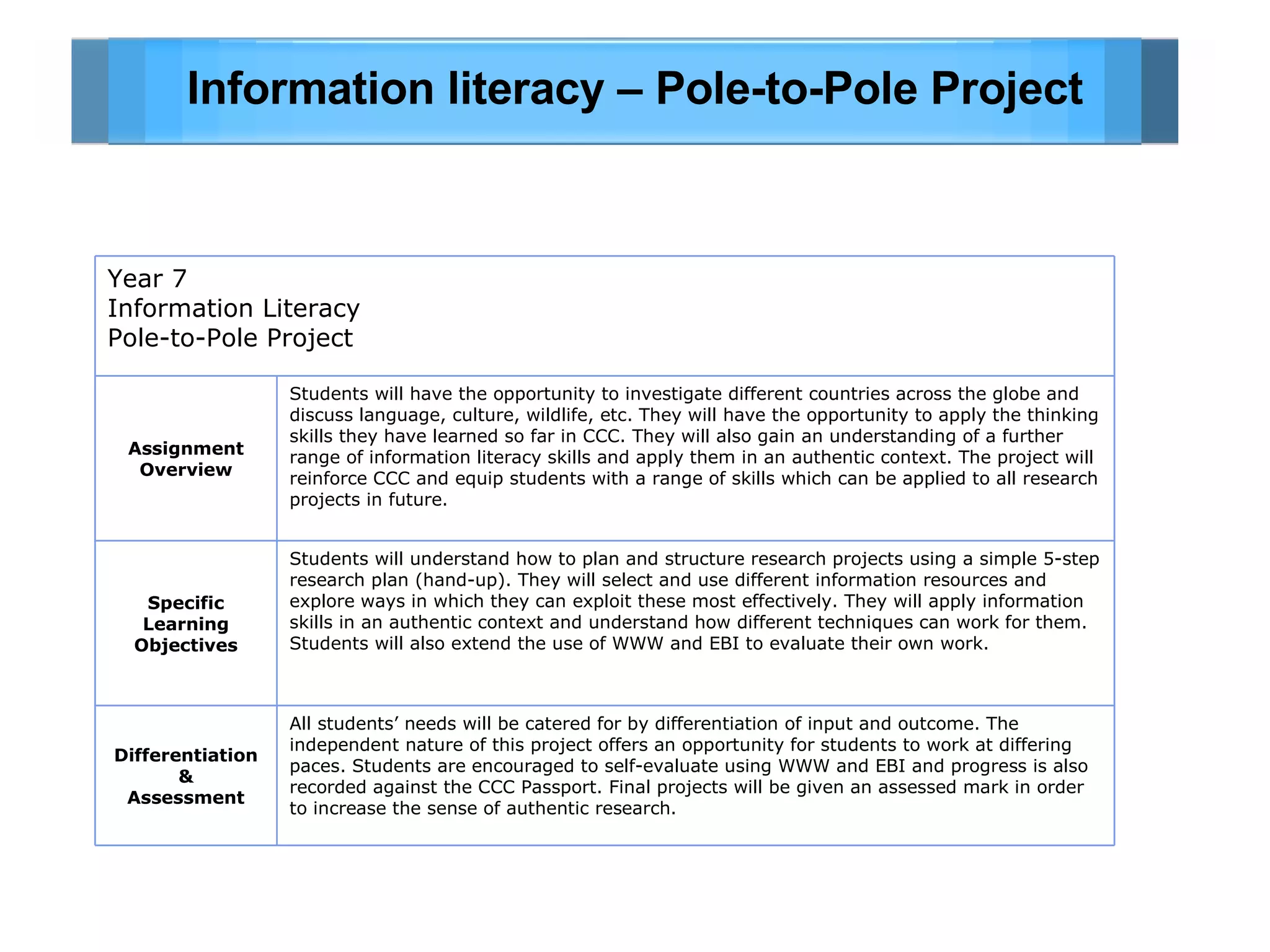
Information literacy – Pole-to-Pole Project All students’ needs will be catered for by differentiation of input and outcome. The independent nature of this project offers an opportunity for students to work at differing paces. Students are encouraged to self-evaluate using WWW and EBI and progress is also recorded against the CCC Passport. Final projects will be given an assessed mark in order to increase the sense of authentic research. Differentiation & Assessment Students will understand how to plan and structure research projects using a simple 5-step research plan (hand-up). They will select and use different information resources and explore ways in which they can exploit these most effectively. They will apply information skills in an authentic context and understand how different techniques can work for them. Students will also extend the use of WWW and EBI to evaluate their own work.  Specific Learning Objectives Students will have the opportunity to investigate different countries across the globe and discuss language, culture, wildlife, etc. They will have the opportunity to apply the thinking skills they have learned so far in CCC. They will also gain an understanding of a further range of information literacy skills and apply them in an authentic context. The project will reinforce CCC and equip students with a range of skills which can be applied to all research projects in future.  Assignment Overview Year 7 Information Literacy Pole-to-Pole Project
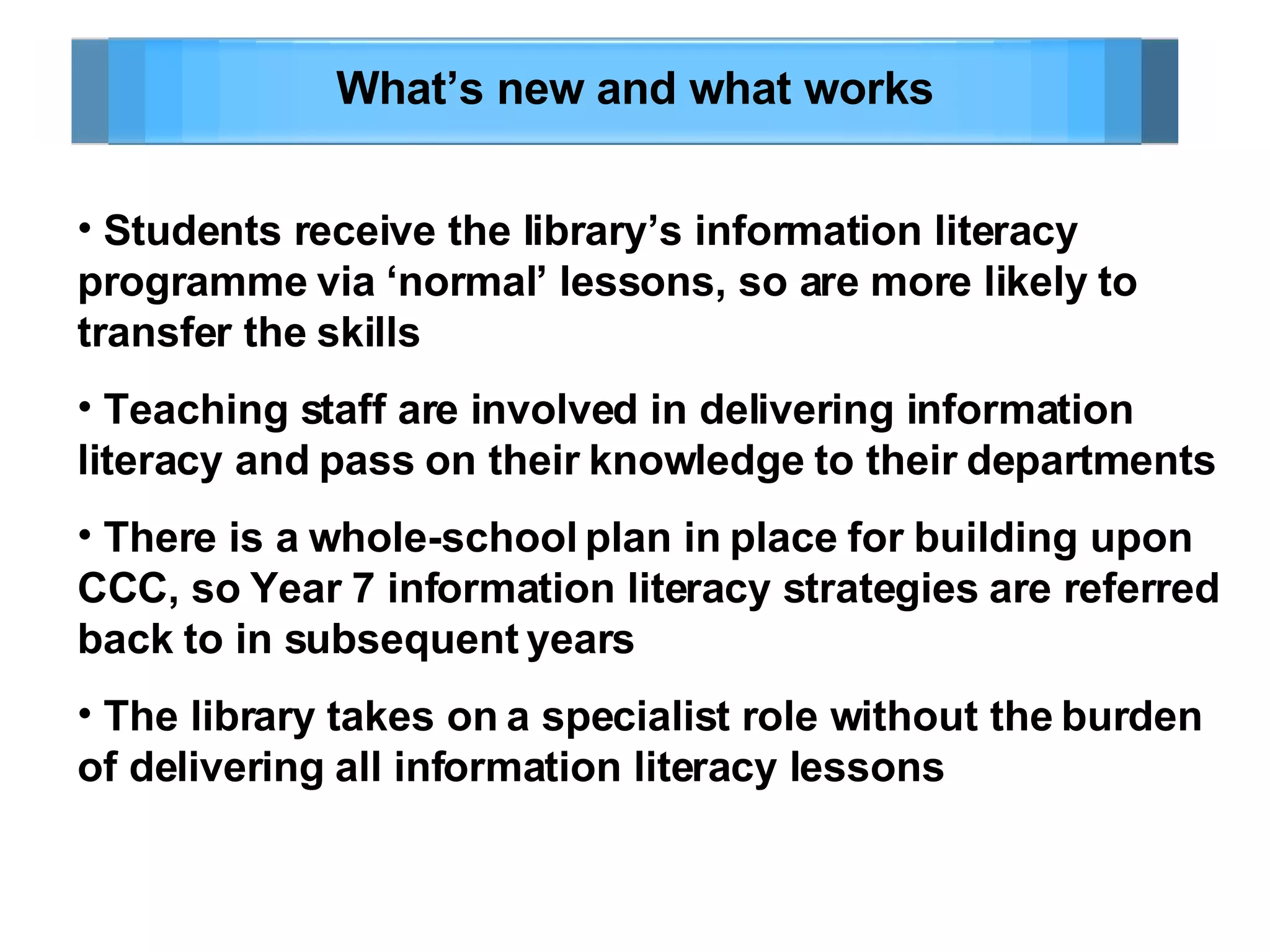
What’s new and what works Students receive the library’s information literacy programme via ‘normal’ lessons, so are more likely to transfer the skills Teaching staff are involved in delivering information literacy and pass on their knowledge to their departments There is a whole-school plan in place for building upon CCC, so Year 7 information literacy strategies are referred back to in subsequent years The library takes on a specialist role without the burden of delivering all information literacy lessons
Lucy Pearson    AHRC Collaborative PhD Student Seven Stories: the Centre for Children’s Books  &  Newcastle University [email_address] http://informationliteracy.stikipad.com

Getting Out Into The Real World

  • 1.
    Getting Out Intothe Real World: alternative curricula and the school library
  • 2.
    What’s an alternativecurriculum? Breaks away from subject-based learning Focuses on developing skills not imparting information Most learning is based around interdisciplinary projects. Emphasises ‘Learning to Learn’
  • 3.
    New terms forold ideas Alternative curricula ‘ Learning to learn’ – skills-based learning Information literacy
  • 4.
  • 5.
    John Cabot CTCLearning to Learn The Cabot Competency Curriculum CITY TECHNOLOGY COLLEGE OHN CABOT J BRINGING LEARNING TO LIFE AND LIFE TO LEARNING
  • 6.
    Cabot Competency CurriculumFirst term: discrete competency teaching Eight projects over the year Two per term Cross-curricular in nature
  • 7.
    A Week inthe Life of CCC 3 Technology 5 Literacy 5 Numeracy 4 Physical Education 2 E-Citizenship 2 Expressive Arts 2 Euro time 3 Science 3 Innovation Day 8 Project 2 8 Project 1 NUMBER OF LESSONS SUBJECT
  • 8.
    1 st Project – New thinking The core ‘competencies’ of the programme are established ‘ Thinking skills’ such as de Bono’s ‘Six Hats’ Different learning styles Students will not pick up competencies without specific teaching Need to teach learning styles and encourage students to develop in areas where they are weak
  • 9.
    Learning to Learn– Balancing Skills and Knowledge Learning-styles awareness Citizenship Managing information, people and situations Research and study skills Leadership and team skills Skills for independent learning Thinking skills Good communication skills Skills of reflection and evaluation
  • 10.
    SELF-EVALUATION Tutor Group:Name: Year 7 Competence Passport
  • 11.
    Geography Citizenship History Information Technology Design Technology Science Art Religious Studies English Bristol: Innovative City Celebration City Many curriculum areas one theme
  • 12.
    Innovative City Howdo we fit into our city – and how does Bristol fit into the world? Read Treasure Island Draw maps of Bristol Create and ‘bury’ time capsules Visit local areas of historic interest Time line for Bristol Future Construct house for the future Compare city with other Bristols around the world
  • 13.
    Celebration City Howand why does the community of Bristol celebrate? Research secular and religious festivals Produce ten-minute ‘Newsround’ reports in groups Make balloons & have balloon fiesta Look at the animation festival – produce own animations Look at twin towns
  • 14.
    What makes agood project? The task must be big and have a real life feel The teacher and students develop the project The task challenges and develops multiple intelligences The task has clear and worthwhile outcomes The task uses content from 2 or more subjects The task takes some time to complete The task is not entirely classroom-based The task involves making consequential decisions Completion depends on teamwork Completion depends on adult help/advice Completion demands high levels of feedback Completion is celebrated and evaluated by an appropriate audience
  • 15.
  • 16.
    The Key AspectsStudents frequently work in teams Students actively solve problems Students publicly exhibit their learning Students reflect on what they are doing Students are taught strategies for learning Students develop social skills through the curriculum Staff can use a wider range of teaching and learning strategies Staff are freed from the National Curriculum
  • 17.
  • 18.
  • 19.
    Practical Issues Project-basedlearning means a greater demand for library resources, often with many students needing the same resources at the same time. Emphasis on independent study results in students using the library more, often without a teacher. Projects can be difficult to resource – topics are often very different from traditional curriculum topics. Especially difficult to find relevant books.
  • 20.
    Opportunities for librariansThe need for more, and more diverse, resources helps to make the Library ‘star of the moment’ Experience of teaching information literacy is directly relevant, so librarians are in the position of being resident experts Being released from the National Curriculum makes it easier to create integrated information literacy projects It is possible to remodel your role – you can become an information literacy coordinator rather than delivering the whole IL programme yourself
  • 21.
    Taking control It’seasy for an alternative curriculum to make you feel overwhelmed, left out of the loop, or redundant Take control – make it work for you!
  • 22.
    At the beginning– problems with CCC and IL The old information literacy programme was still relevant – but too easy for the CCC students Students failed to transfer skills from library-based lessons to other lessons There was a lack of authentic learning situations in IL lessons Students did not perceive the librarians as specialists in areas such as IT
  • 23.
    Solution – steppinginto the alternative curriculum Library staff move into role of information literacy coordinators Library creates some of the content for the alternative curriculum Teaching staff take over the teaching of some ‘library lessons’ Information literacy model used to underpin alternative curriculum
  • 24.
  • 25.
    What do Ialready know? What do I need to find out and why? Where and how can I find this information? How should I record and use this information? How will I present this information? EVALUATE!
  • 26.
  • 27.
    Information literacy –Pole-to-Pole Project All students’ needs will be catered for by differentiation of input and outcome. The independent nature of this project offers an opportunity for students to work at differing paces. Students are encouraged to self-evaluate using WWW and EBI and progress is also recorded against the CCC Passport. Final projects will be given an assessed mark in order to increase the sense of authentic research. Differentiation & Assessment Students will understand how to plan and structure research projects using a simple 5-step research plan (hand-up). They will select and use different information resources and explore ways in which they can exploit these most effectively. They will apply information skills in an authentic context and understand how different techniques can work for them. Students will also extend the use of WWW and EBI to evaluate their own work. Specific Learning Objectives Students will have the opportunity to investigate different countries across the globe and discuss language, culture, wildlife, etc. They will have the opportunity to apply the thinking skills they have learned so far in CCC. They will also gain an understanding of a further range of information literacy skills and apply them in an authentic context. The project will reinforce CCC and equip students with a range of skills which can be applied to all research projects in future. Assignment Overview Year 7 Information Literacy Pole-to-Pole Project
  • 28.
    What’s new andwhat works Students receive the library’s information literacy programme via ‘normal’ lessons, so are more likely to transfer the skills Teaching staff are involved in delivering information literacy and pass on their knowledge to their departments There is a whole-school plan in place for building upon CCC, so Year 7 information literacy strategies are referred back to in subsequent years The library takes on a specialist role without the burden of delivering all information literacy lessons
  • 29.
    Lucy Pearson AHRC Collaborative PhD Student Seven Stories: the Centre for Children’s Books & Newcastle University [email_address] http://informationliteracy.stikipad.com