Prepared by: N. JYOTI THREE SECTOR MODEL  CIRCULAR FLOW OF INCOME & EXPENDITURE WITH GOVERNMENT
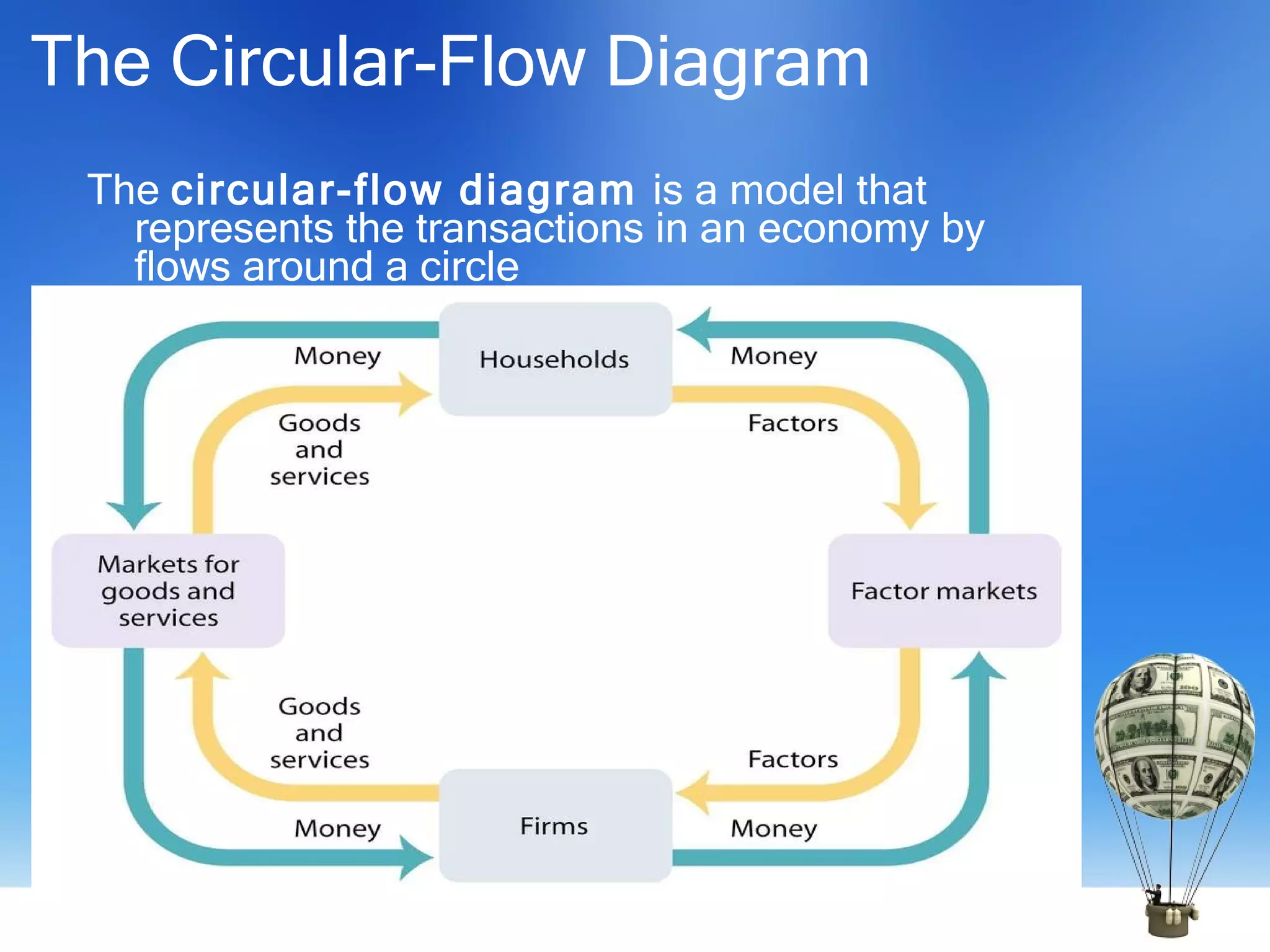
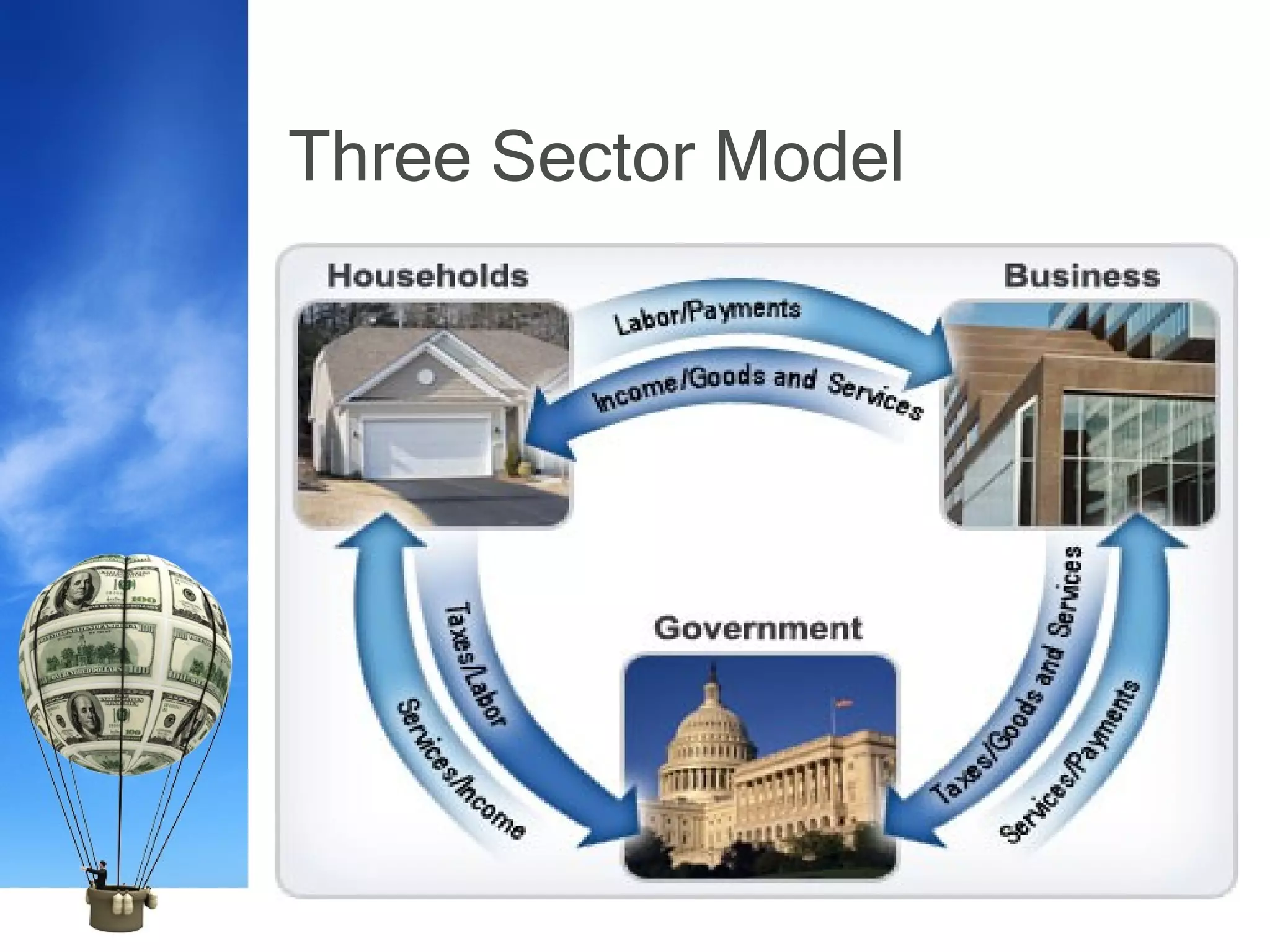
The Circular-Flow Diagram The  circular-flow diagram  is a model that represents the transactions in an economy by flows around a circle
Circular-Flow of Economic Activities A  household  is a person or a group of people that share their income. A  firm  is an organization that produces goods and services for sale. Firms sell goods and services that they produce to households in  markets for goods and services . Firms buy the resources they need to produce— factors of production —in  factor markets .
The Government Sector  Government taxation ( T)  reduces households’ disposable income and business funds Government spending ( G)   includes expenditure on collective goods and services and goods and services provided by the business sector, plus transfer payments
Three Sector Model
Leakages and Injections Leakages  in the circular flow:  Flows out of circular flow when resource income is received and not spend directly on purchases from domestic firms  Savings(S) Taxes(T) Injections  in the circular flow:  Added spending in circular flow that does not come out of current resource income Investment(I) Government spending(G)
Savings and Investment If planned (I+G) = planned (S+T) so that  injections = leakages and  total spending = total income and  demand = supply then we have a stable economy
Contracting Economy If leakages are  Higher  than injections ( Planned  S+T   > Planned  I+G ) , economy contracts resulting in inventory accumulation too little spending drop in prices
Expanding Economy If injections are  Higher   than leakages  (Planned  I+G   >  Planned  S+T) , economy expands resulting in more goods and services produced higher prices
Government and the  Circular Flow Balanced budget: amount spent by government (G)= amount collected in taxes(T) Surplus budget amount spent by government (G)< amount collected in taxes(T) Deficit budget amount spent by government (G)>  amount collected in taxes (T)
Any Queries

Three sector model

  • 1.
    Prepared by: N.JYOTI THREE SECTOR MODEL CIRCULAR FLOW OF INCOME & EXPENDITURE WITH GOVERNMENT
  • 2.
    The Circular-Flow DiagramThe circular-flow diagram is a model that represents the transactions in an economy by flows around a circle
  • 3.
    Circular-Flow of EconomicActivities A household is a person or a group of people that share their income. A firm is an organization that produces goods and services for sale. Firms sell goods and services that they produce to households in markets for goods and services . Firms buy the resources they need to produce— factors of production —in factor markets .
  • 4.
    The Government Sector Government taxation ( T) reduces households’ disposable income and business funds Government spending ( G) includes expenditure on collective goods and services and goods and services provided by the business sector, plus transfer payments
  • 5.
  • 6.
    Leakages and InjectionsLeakages in the circular flow: Flows out of circular flow when resource income is received and not spend directly on purchases from domestic firms Savings(S) Taxes(T) Injections in the circular flow: Added spending in circular flow that does not come out of current resource income Investment(I) Government spending(G)
  • 7.
    Savings and InvestmentIf planned (I+G) = planned (S+T) so that injections = leakages and total spending = total income and demand = supply then we have a stable economy
  • 8.
    Contracting Economy Ifleakages are Higher than injections ( Planned S+T > Planned I+G ) , economy contracts resulting in inventory accumulation too little spending drop in prices
  • 9.
    Expanding Economy Ifinjections are Higher than leakages (Planned I+G > Planned S+T) , economy expands resulting in more goods and services produced higher prices
  • 10.
    Government and the Circular Flow Balanced budget: amount spent by government (G)= amount collected in taxes(T) Surplus budget amount spent by government (G)< amount collected in taxes(T) Deficit budget amount spent by government (G)> amount collected in taxes (T)
  • 11.