Lessons Learnt from a Heat
Stroke Death
BRIG Stephan Rudzki (Rtd)
MBBS, Grad Dip Sport Sc, MPH, PhD , FACSEP
Consultant Medical Advisor – Directorate of Army Health
Background
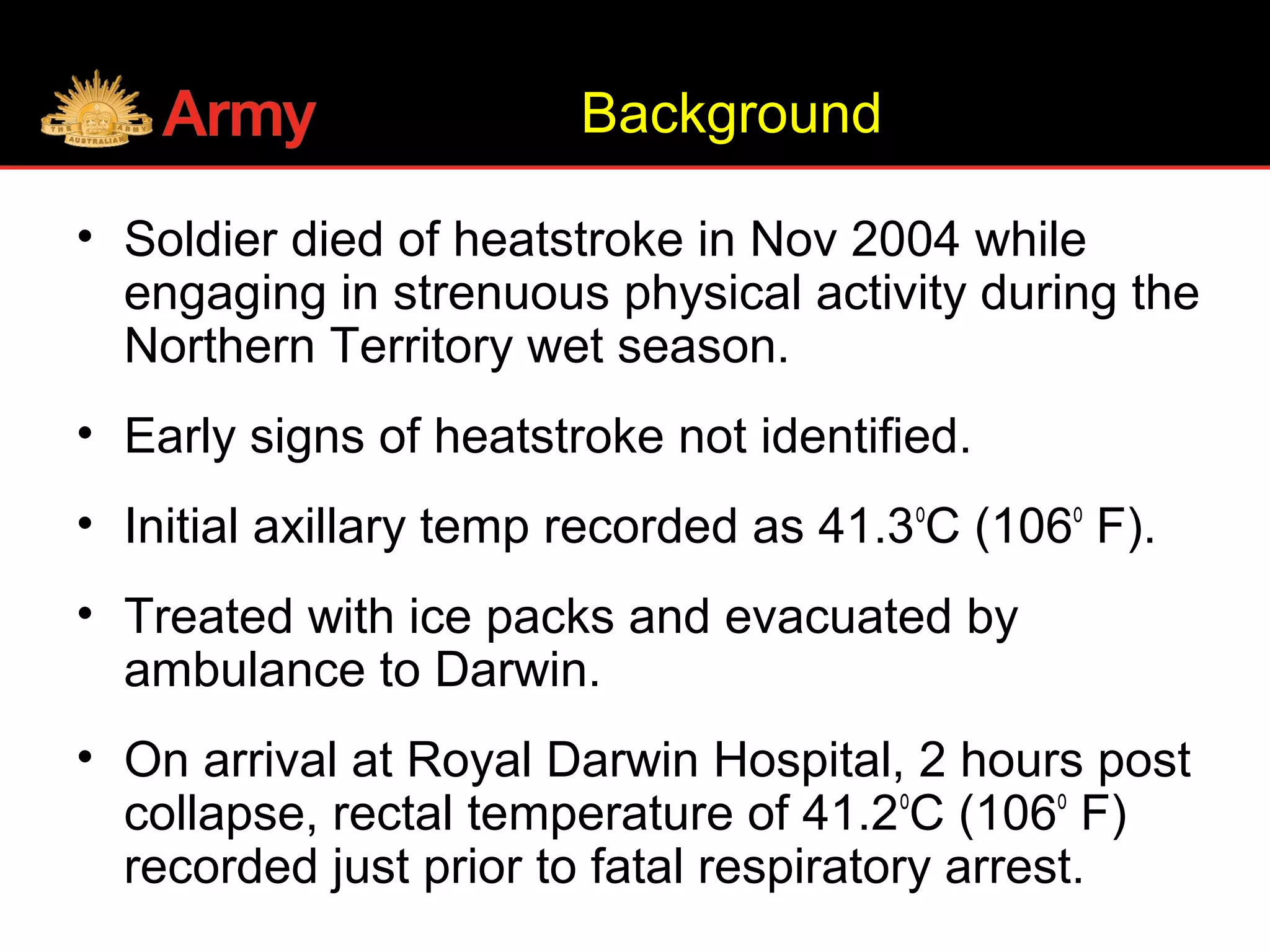
• Soldier died of heatstroke in Nov 2004 while
engaging in strenuous physical activity during the
Northern Territory wet season.
• Early signs of heatstroke not identified.
• Initial axillary temp recorded as 41.3o
C (106o
F).
• Treated with ice packs and evacuated by
ambulance to Darwin.
• On arrival at Royal Darwin Hospital, 2 hours post
collapse, rectal temperature of 41.2o
C (106o
F)
recorded just prior to fatal respiratory arrest.
Lesson Areas identified
• Prevention
• Diagnosis
• Treatment
Prevention: Acclimatisation
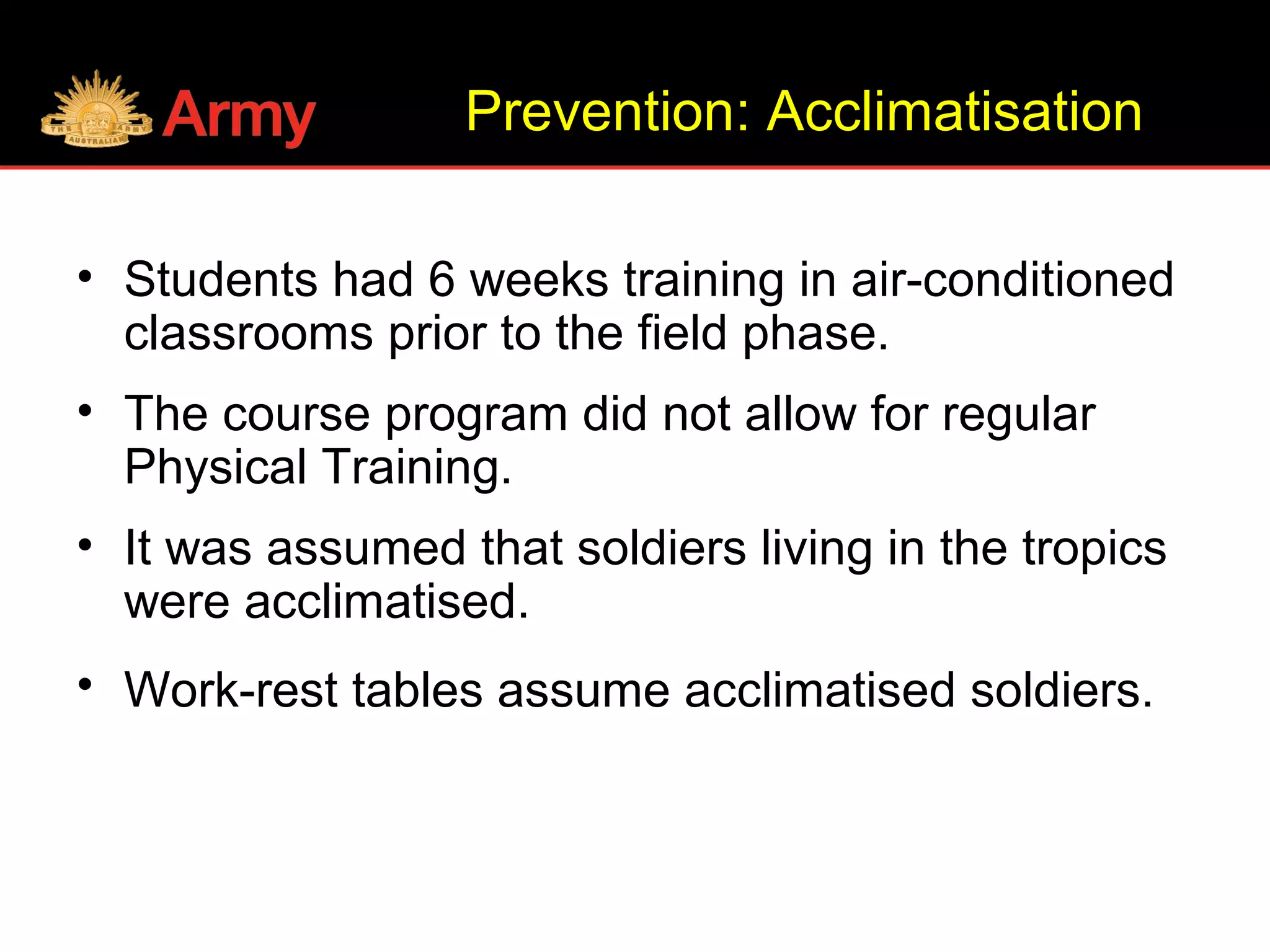
• Students had 6 weeks training in air-conditioned
classrooms prior to the field phase.
• The course program did not allow for regular
Physical Training.
• It was assumed that soldiers living in the tropics
were acclimatised.
• Work-rest tables assume acclimatised soldiers.
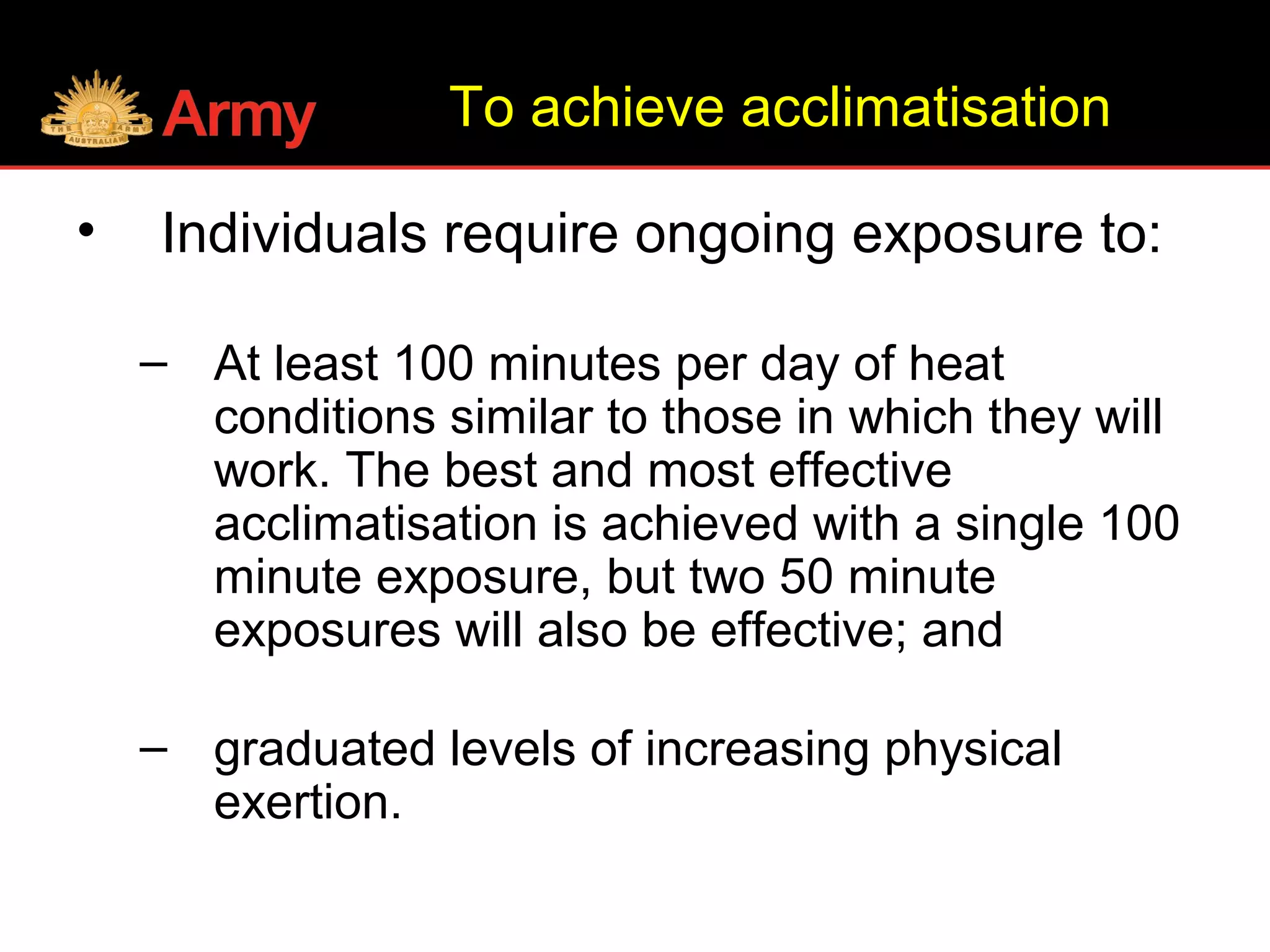
To achieve acclimatisation
• Individuals require ongoing exposure to:
– At least 100 minutes per day of heat
conditions similar to those in which they will
work. The best and most effective
acclimatisation is achieved with a single 100
minute exposure, but two 50 minute
exposures will also be effective; and
– graduated levels of increasing physical
exertion.
Exercising in the morning to
acclimatise for work in the heat
of the day is a recipe for failed
acclimatisation.
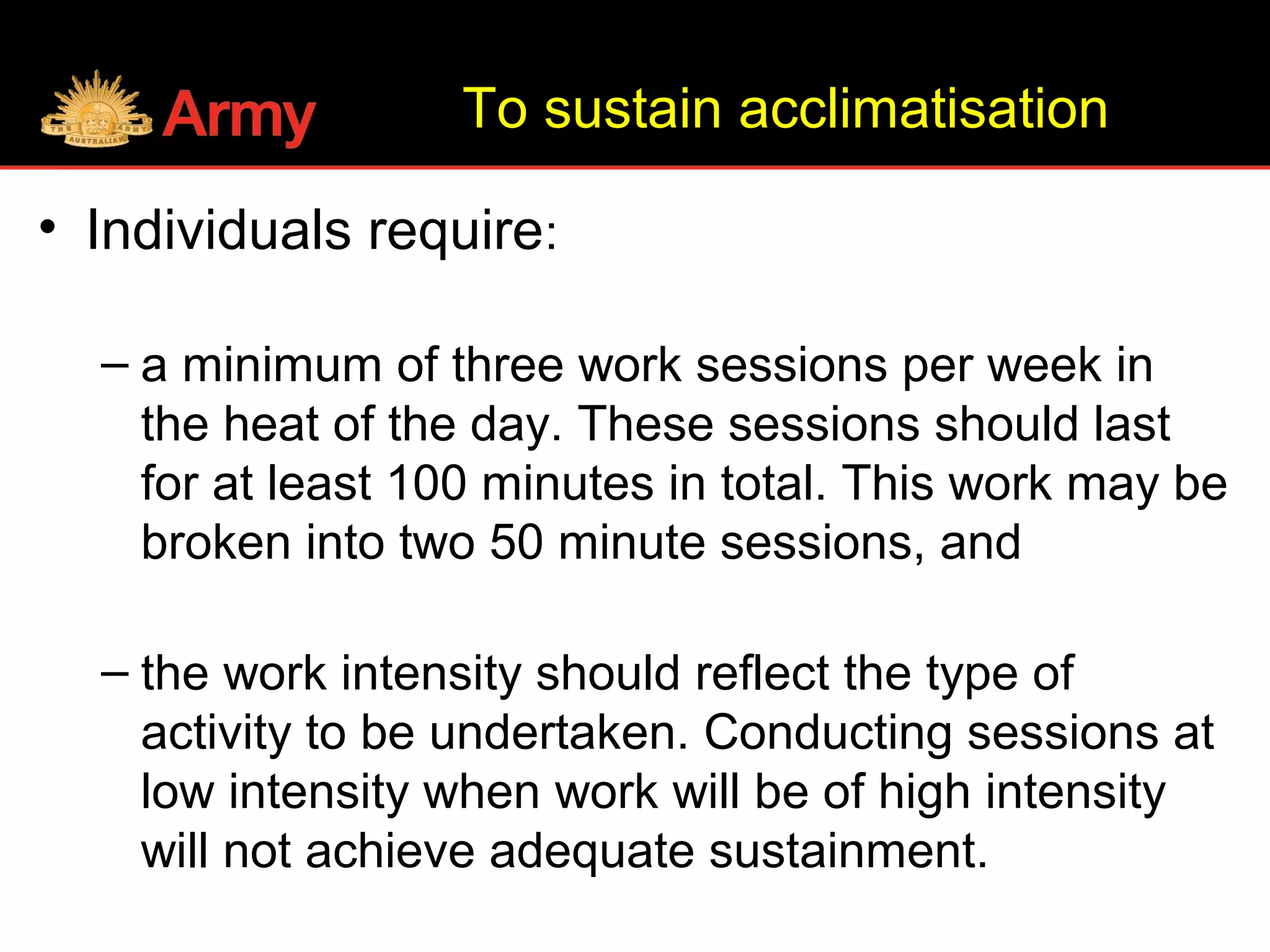
To sustain acclimatisation
• Individuals require:
– a minimum of three work sessions per week in
the heat of the day. These sessions should last
for at least 100 minutes in total. This work may be
broken into two 50 minute sessions, and
– the work intensity should reflect the type of
activity to be undertaken. Conducting sessions at
low intensity when work will be of high intensity
will not achieve adequate sustainment.
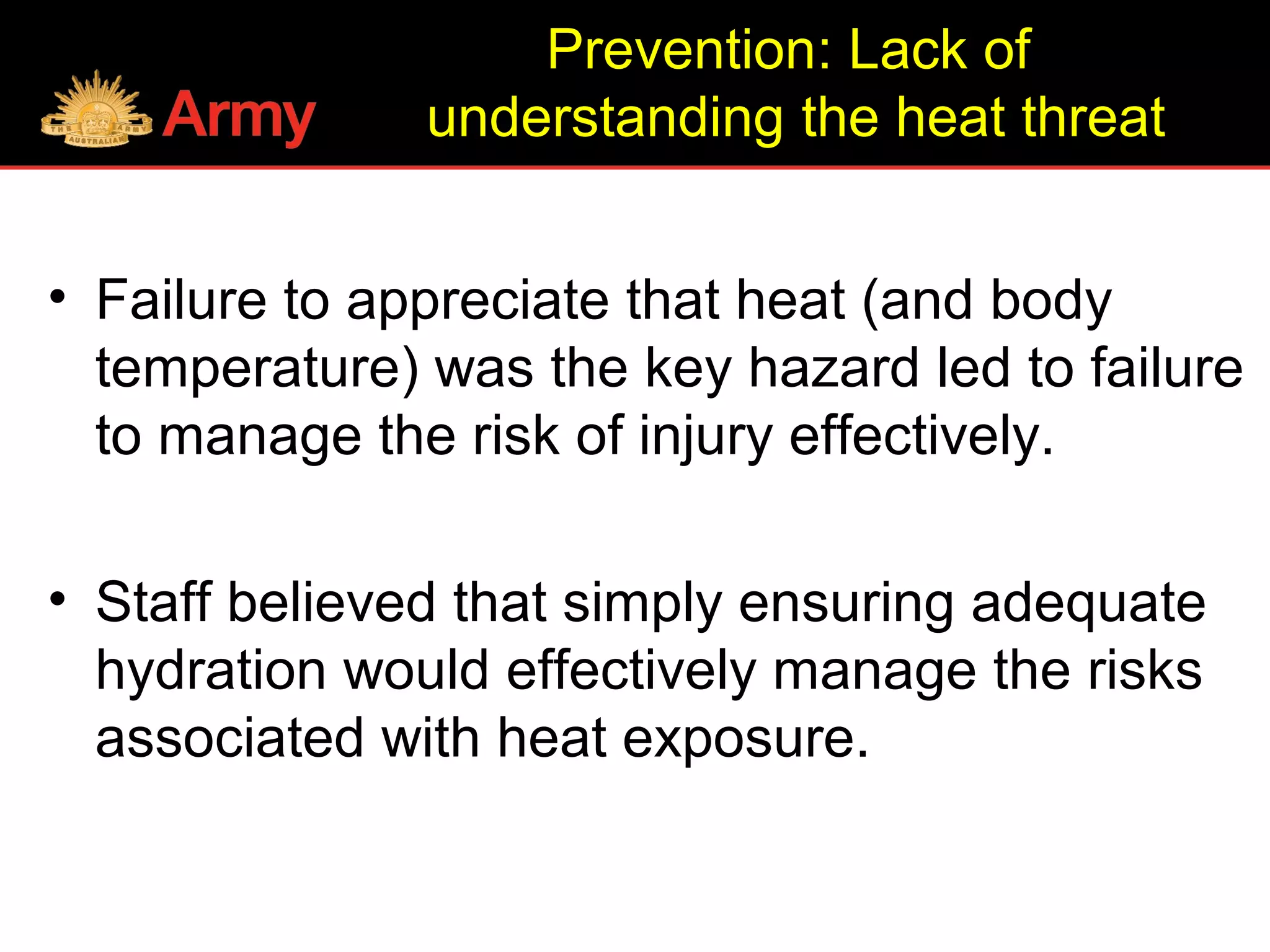
Prevention: Lack of
understanding the heat threat
• Failure to appreciate that heat (and body
temperature) was the key hazard led to failure
to manage the risk of injury effectively.
• Staff believed that simply ensuring adequate
hydration would effectively manage the risks
associated with heat exposure.
• Water was freely available and all soldiers
were encouraged to drink frequently.
Numerous briefings throughout the training
reinforced this message.
• There was no understanding that you could
become a heat casualty even if well hydrated.
• A full radiator can still boil !
Prevention: Lack of
understanding the heat threat
Dehydration
• Humans are the only mammal to have salt in
their sweat.
• Thirst is driven by the concentration of
sodium [Na+
] in the plasma.
• Animals just lose water and increase their
plasma [Na+
] concentration. They then drink
to end their thirst, which occurs when their
[Na+
] concentration returns to normal.
• Humans lose salt and water, so [Na+] can
change little, despite the loss of significant
fluid.
• The thirst reflex in humans does not kick in
until a person is 2-3% dehydrated.
• If you just drink WATER to thirst you will
always be around 2% dehydrated after
exercise.
Dehydration
• Extra water you drink will not stay in the
plasma unless consumed with sufficient
salt [Na+].
• If you wish to avoid dehydration after
activity
You MUST replace your salt losses.
Dehydration
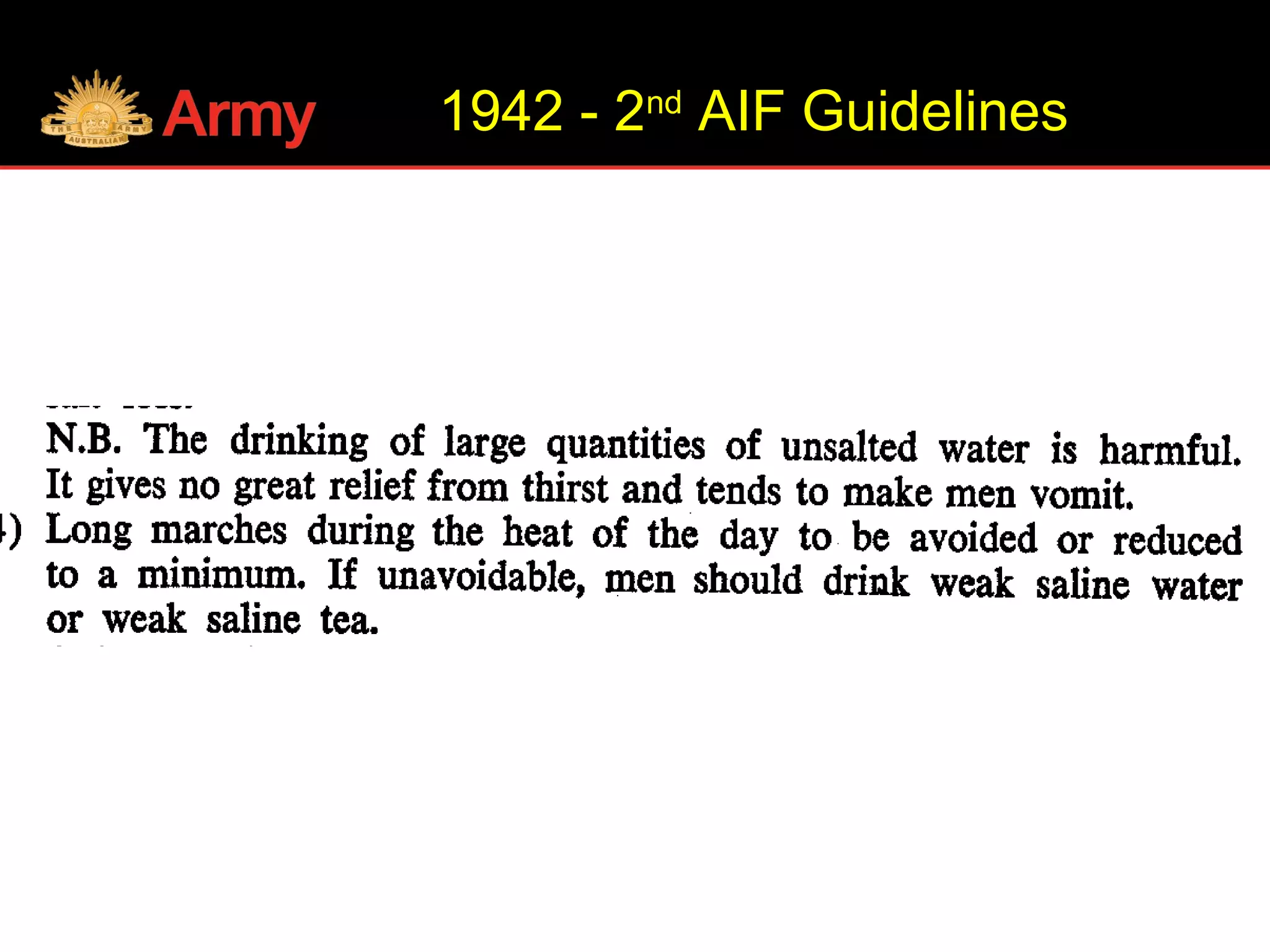
1942 - 2nd
AIF Guidelines
Salt and Sweat
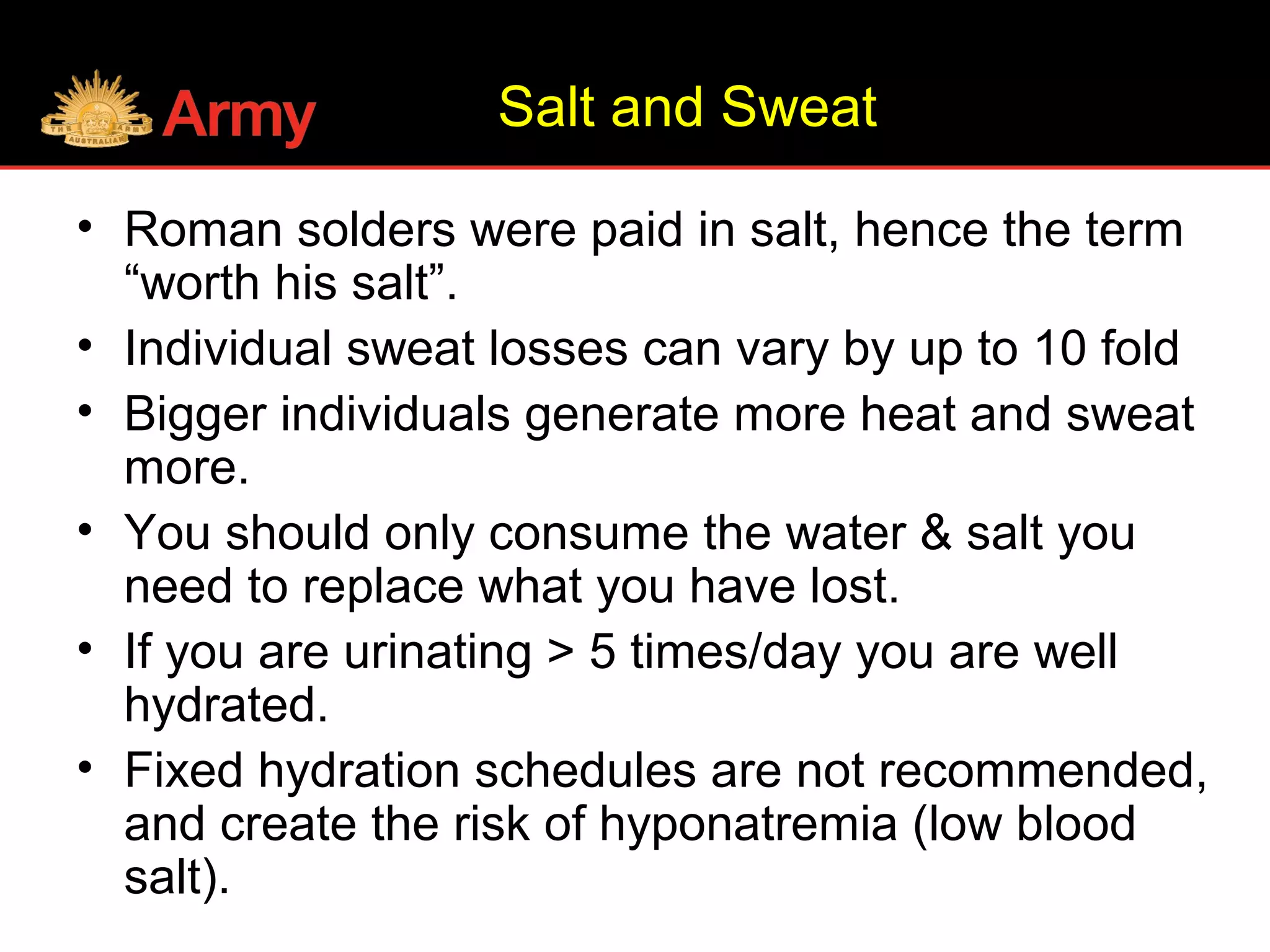
• Roman solders were paid in salt, hence the term
“worth his salt”.
• Individual sweat losses can vary by up to 10 fold
• Bigger individuals generate more heat and sweat
more.
• You should only consume the water & salt you
need to replace what you have lost.
• If you are urinating > 5 times/day you are well
hydrated.
• Fixed hydration schedules are not recommended,
and create the risk of hyponatremia (low blood
salt).
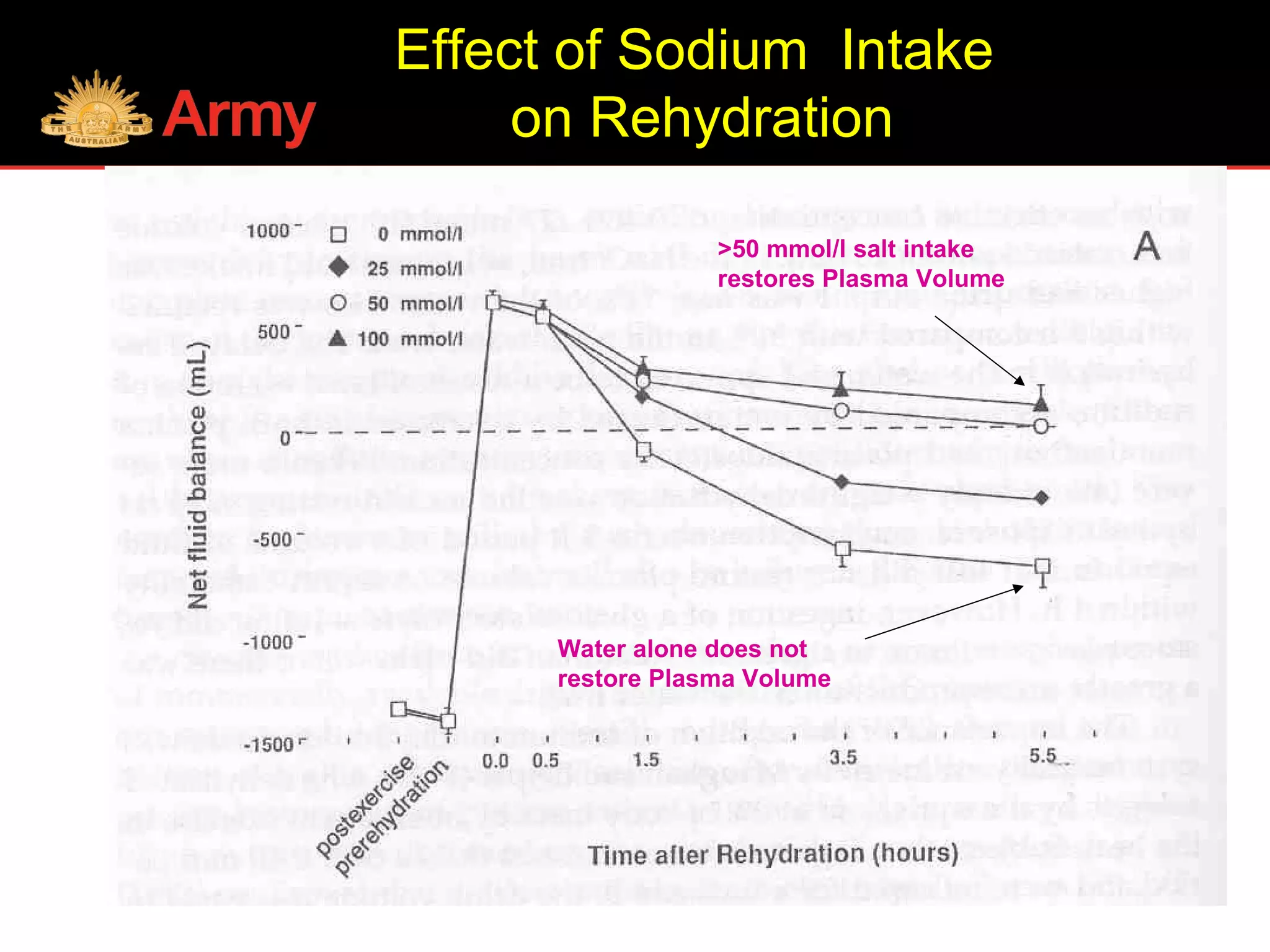
Effect of Sodium Intake
on Rehydration
>50 mmol/l salt intake
restores Plasma Volume
Water alone does not
restore Plasma Volume
• Increased salt intake increases thirst.
(that’s why bars serve you chips & nuts).
• Why does increased salt intake cause high
blood pressure? – because it leads to fluid
retention and increased plasma volume.
• Salt should come from your food, but
many use sports drinks. This is a very
expensive (and inadequate) way to obtain
salt!
Dehydration
Prevention: Manage Risk
of Heat Injury
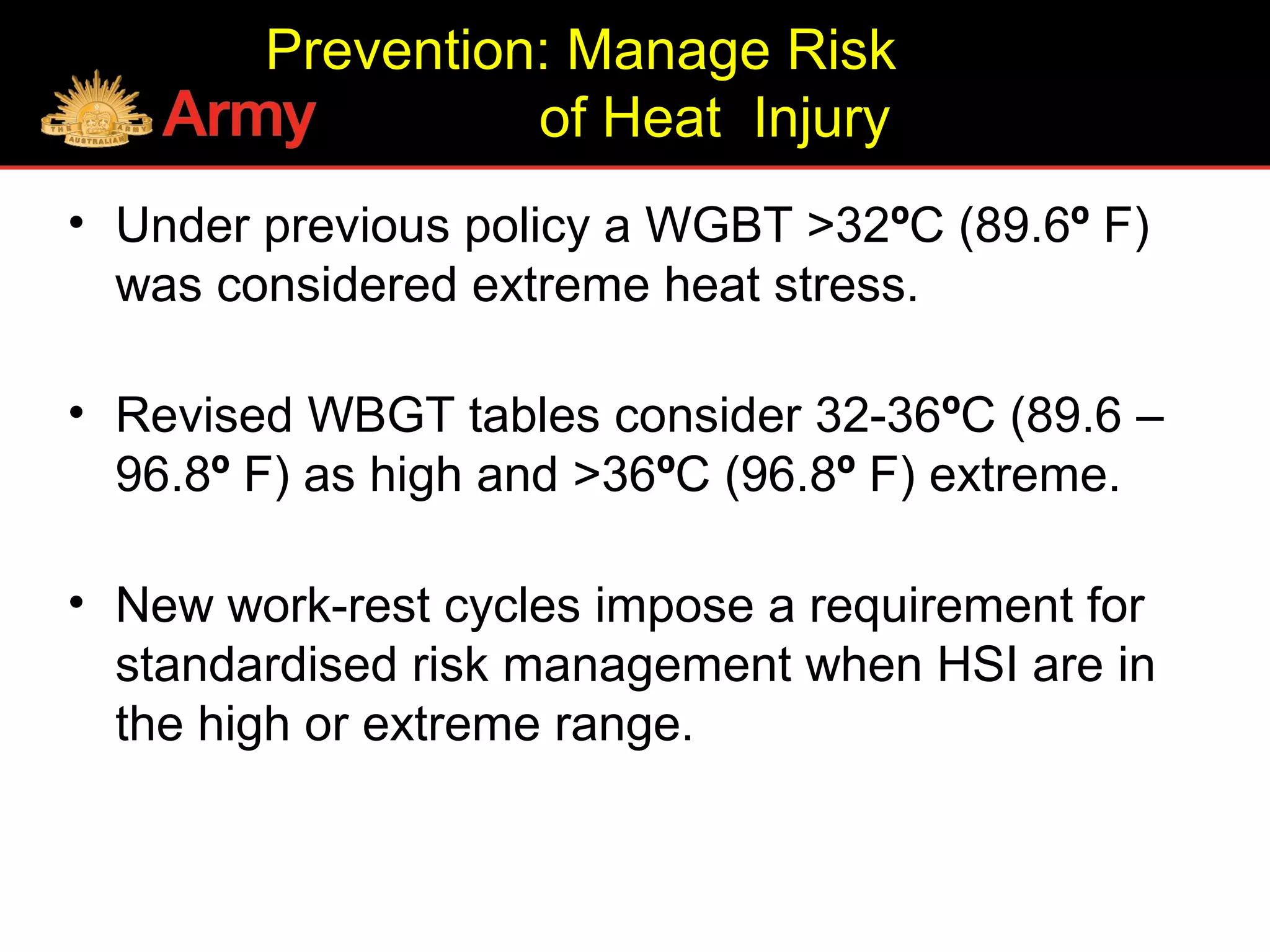
• Under previous policy a WGBT >32ºC (89.6º F)
was considered extreme heat stress.
• Revised WBGT tables consider 32-36ºC (89.6 –
96.8º F) as high and >36ºC (96.8º F) extreme.
• New work-rest cycles impose a requirement for
standardised risk management when HSI are in
the high or extreme range.
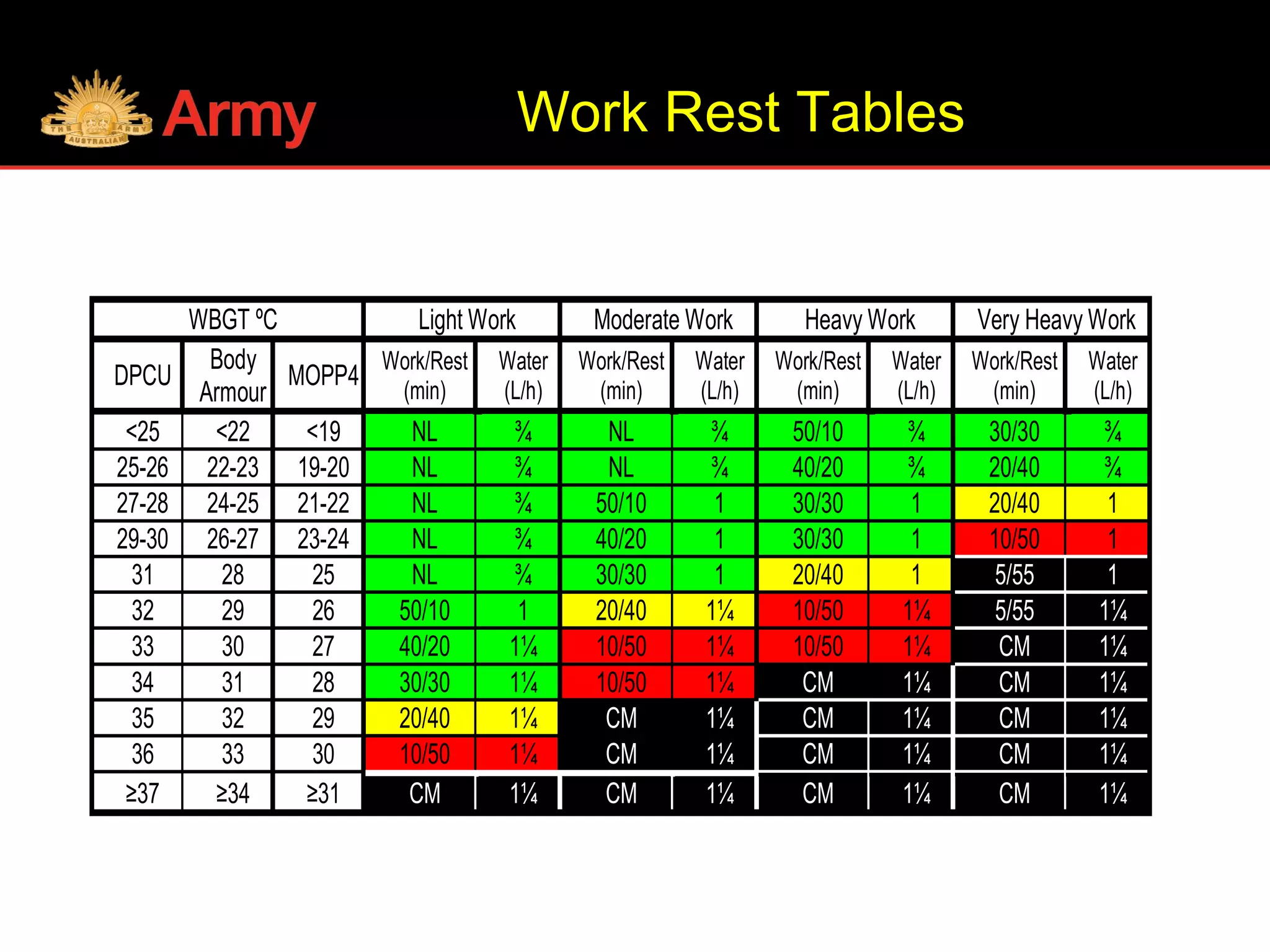
Work Rest Tables
WBGT ºC Light Work Moderate Work Heavy Work Very Heavy Work
DPCU
Body
Armour
MOPP4
Work/Rest
(min)
Water
(L/h)
Work/Rest
(min)
Water
(L/h)
Work/Rest
(min)
Water
(L/h)
Work/Rest
(min)
Water
(L/h)
<25 <22 <19 NL ¾ NL ¾ 50/10 ¾ 30/30 ¾
25-26 22-23 19-20 NL ¾ NL ¾ 40/20 ¾ 20/40 ¾
27-28 24-25 21-22 NL ¾ 50/10 1 30/30 1 20/40 1
29-30 26-27 23-24 NL ¾ 40/20 1 30/30 1 10/50 1
31 28 25 NL ¾ 30/30 1 20/40 1 5/55 1
32 29 26 50/10 1 20/40 1¼ 10/50 1¼ 5/55 1¼
33 30 27 40/20 1¼ 10/50 1¼ 10/50 1¼ CM 1¼
34 31 28 30/30 1¼ 10/50 1¼ CM 1¼ CM 1¼
35 32 29 20/40 1¼ CM 1¼ CM 1¼ CM 1¼
36 33 30 10/50 1¼ CM 1¼ CM 1¼ CM 1¼
≥37 ≥34 ≥31 CM 1¼ CM 1¼ CM 1¼ CM 1¼
Standardised Risk management
• Quality is defined as the absence of variation.
• We had significant variation in how the risk of
heat was managed.
• The policy sought to defined the required
level of risk management and place that
requirement on Commanders
• The next slide shows the required level of risk
management.
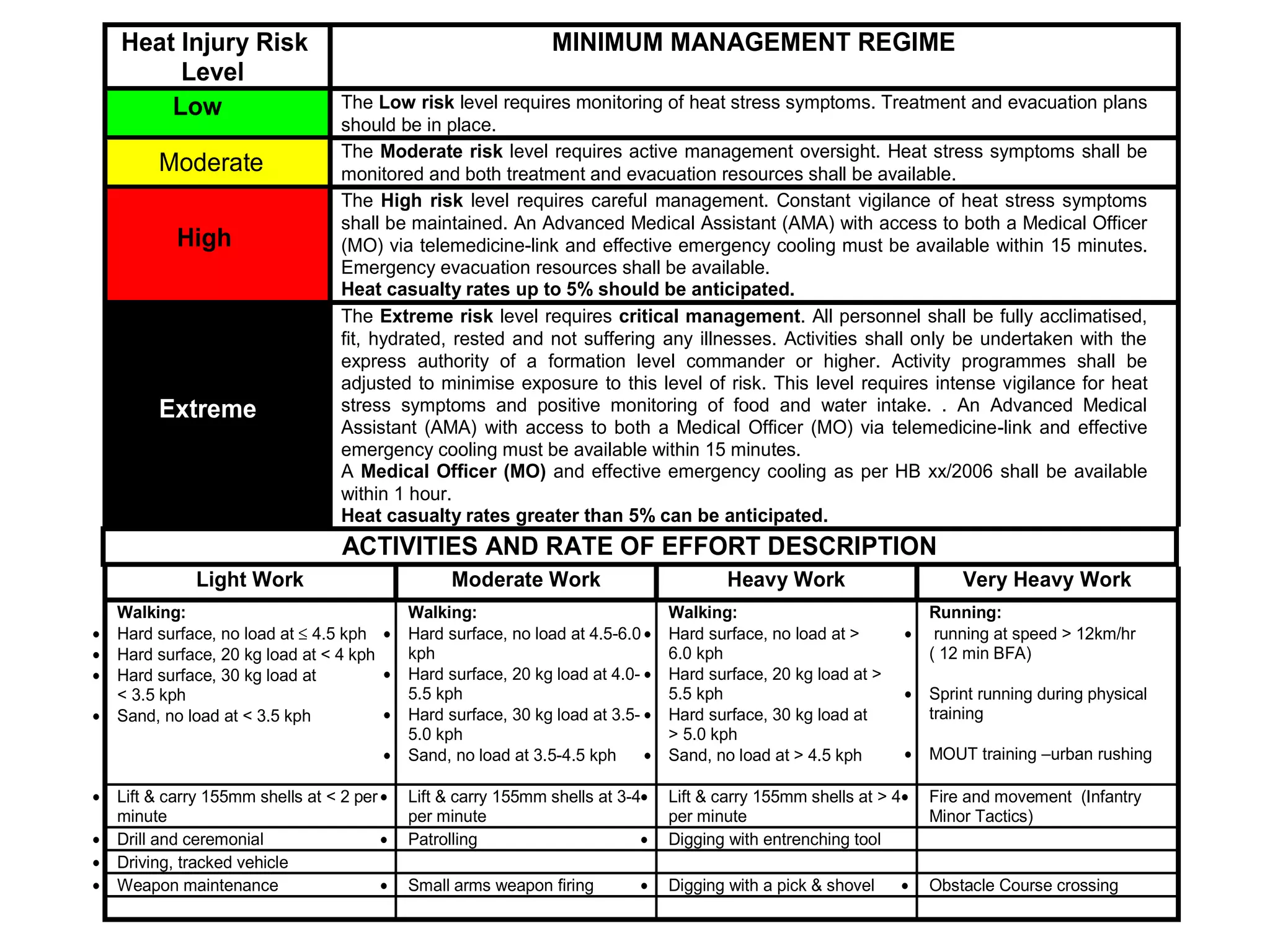
Heat Injury Risk
Level
MINIMUM MANAGEMENT REGIME
Low The Low risk level requires monitoring of heat stress symptoms. Treatment and evacuation plans
should be in place.
Moderate
The Moderate risk level requires active management oversight. Heat stress symptoms shall be
monitored and both treatment and evacuation resources shall be available.
High
The High risk level requires careful management. Constant vigilance of heat stress symptoms
shall be maintained. An Advanced Medical Assistant (AMA) with access to both a Medical Officer
(MO) via telemedicine-link and effective emergency cooling must be available within 15 minutes.
Emergency evacuation resources shall be available.
Heat casualty rates up to 5% should be anticipated.
Extreme
The Extreme risk level requires critical management. All personnel shall be fully acclimatised,
fit, hydrated, rested and not suffering any illnesses. Activities shall only be undertaken with the
express authority of a formation level commander or higher. Activity programmes shall be
adjusted to minimise exposure to this level of risk. This level requires intense vigilance for heat
stress symptoms and positive monitoring of food and water intake. . An Advanced Medical
Assistant (AMA) with access to both a Medical Officer (MO) via telemedicine-link and effective
emergency cooling must be available within 15 minutes.
A Medical Officer (MO) and effective emergency cooling as per HB xx/2006 shall be available
within 1 hour.
Heat casualty rates greater than 5% can be anticipated.
ACTIVITIES AND RATE OF EFFORT DESCRIPTION
Light Work Moderate Work Heavy Work Very Heavy Work
Walking:
• Hard surface, no load at ≤ 4.5 kph
• Hard surface, 20 kg load at < 4 kph
• Hard surface, 30 kg load at
< 3.5 kph
• Sand, no load at < 3.5 kph
Walking:
• Hard surface, no load at 4.5-6.0
kph
• Hard surface, 20 kg load at 4.0-
5.5 kph
• Hard surface, 30 kg load at 3.5-
5.0 kph
• Sand, no load at 3.5-4.5 kph
Walking:
• Hard surface, no load at >
6.0 kph
• Hard surface, 20 kg load at >
5.5 kph
• Hard surface, 30 kg load at
> 5.0 kph
• Sand, no load at > 4.5 kph
Running:
• running at speed > 12km/hr
( 12 min BFA)
• Sprint running during physical
training
• MOUT training –urban rushing
• Lift & carry 155mm shells at < 2 per
minute
• Lift & carry 155mm shells at 3-4
per minute
• Lift & carry 155mm shells at > 4
per minute
• Fire and movement (Infantry
Minor Tactics)
• Drill and ceremonial • Patrolling • Digging with entrenching tool
• Driving, tracked vehicle
• Weapon maintenance • Small arms weapon firing • Digging with a pick & shovel • Obstacle Course crossing
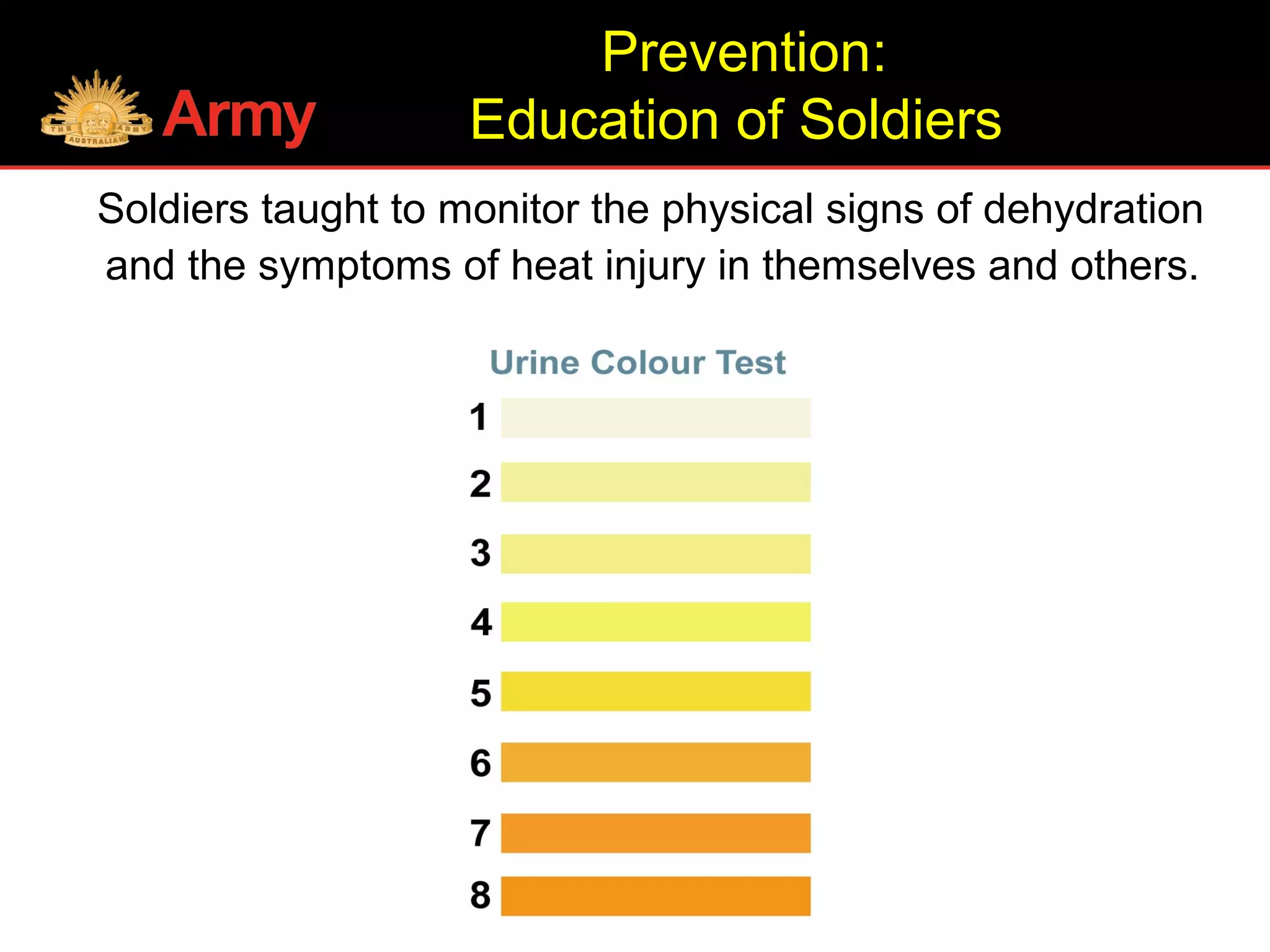
Prevention:
Education of Soldiers
Soldiers taught to monitor the physical signs of dehydration
and the symptoms of heat injury in themselves and others.
Dehydrated
“Pee Clear
Twice a day”
Diagnostic Confusion
• No appreciation of the difference between
self-limiting heat illnesses such as heat
exhaustion and life threatening heat
injuries such as heatstroke.
• No appreciation of temperature difference
between the axillary and rectal methods.
Heat Exhaustion
• Heat exhaustion is caused by strain on the
cardiovascular system as the unacclimatised
body tries to lose heat.
• Main method of losing heat is an increase of
blood flow to the skin (hot and flushed).
• This reduces blood flow to the organs (core)
resulting in low blood pressure, rapid pulse
and fainting (exhaustion).
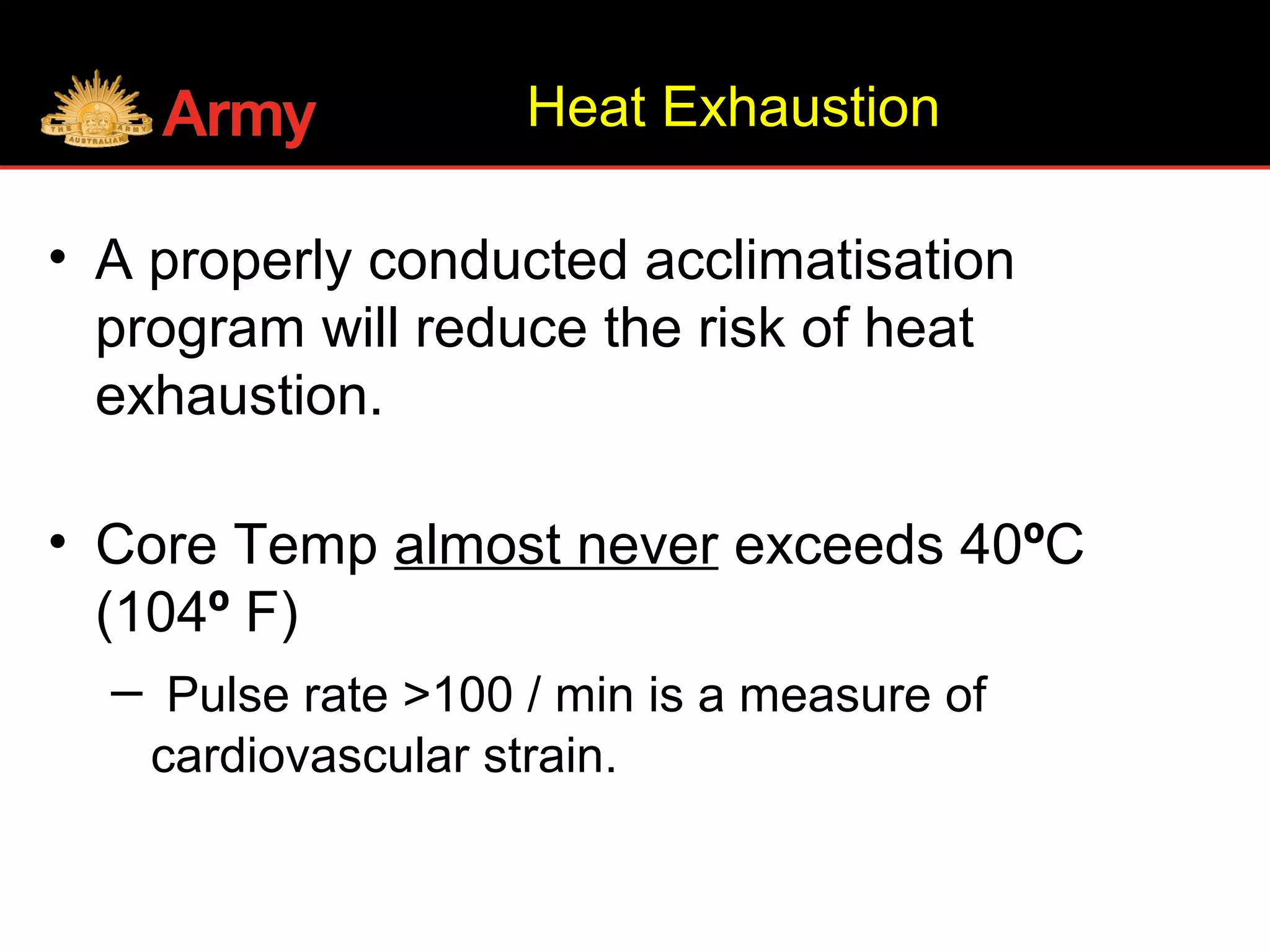
• A properly conducted acclimatisation
program will reduce the risk of heat
exhaustion.
• Core Temp almost never exceeds 40ºC
(104º F)
– Pulse rate >100 / min is a measure of
cardiovascular strain.
Heat Exhaustion
Heat Stroke
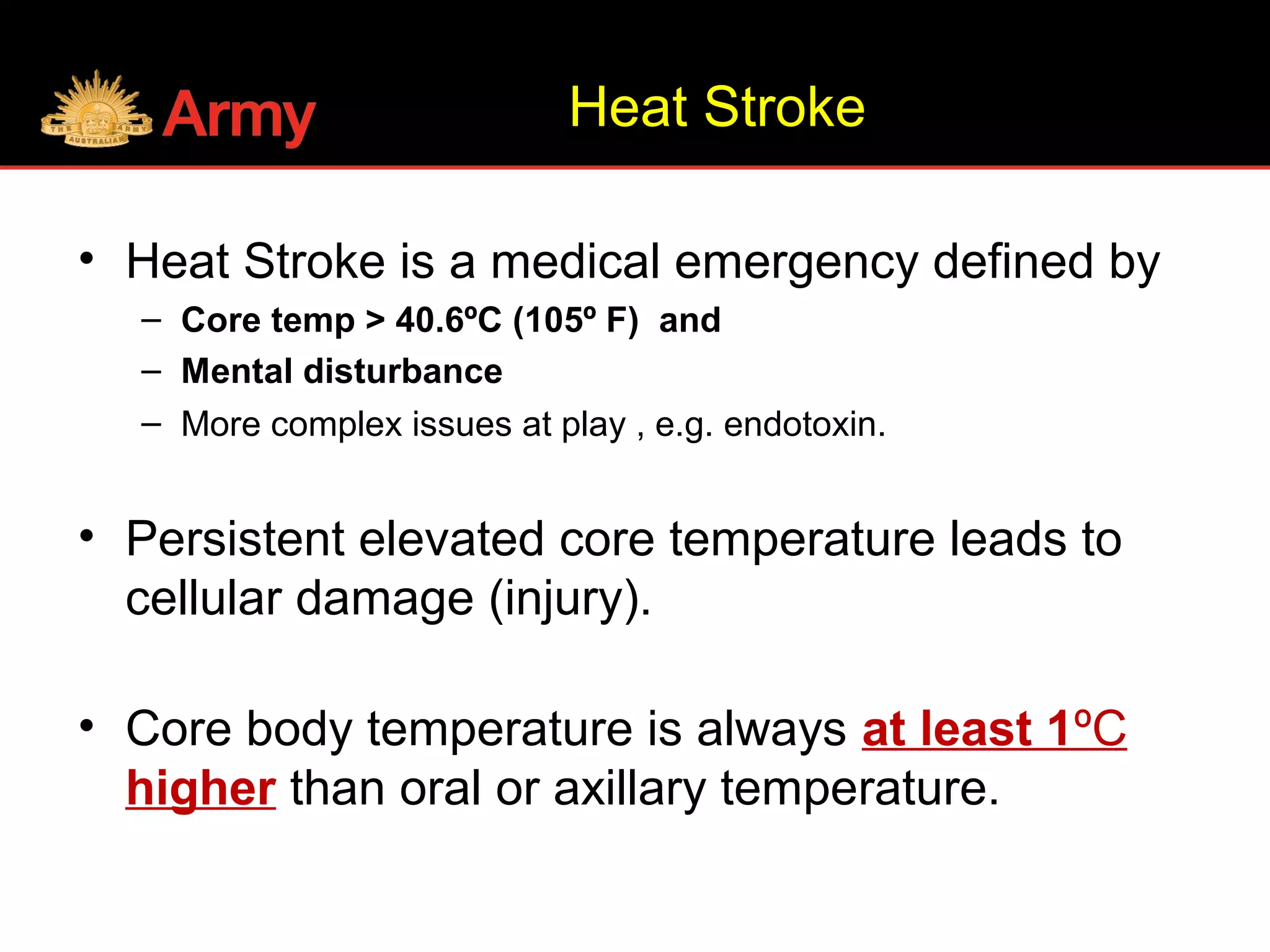
• Heat Stroke is a medical emergency defined by
– Core temp > 40.6ºC (105º F) and
– Mental disturbance
– More complex issues at play , e.g. endotoxin.
• Persistent elevated core temperature leads to
cellular damage (injury).
• Core body temperature is always at least 1ºC
higher than oral or axillary temperature.
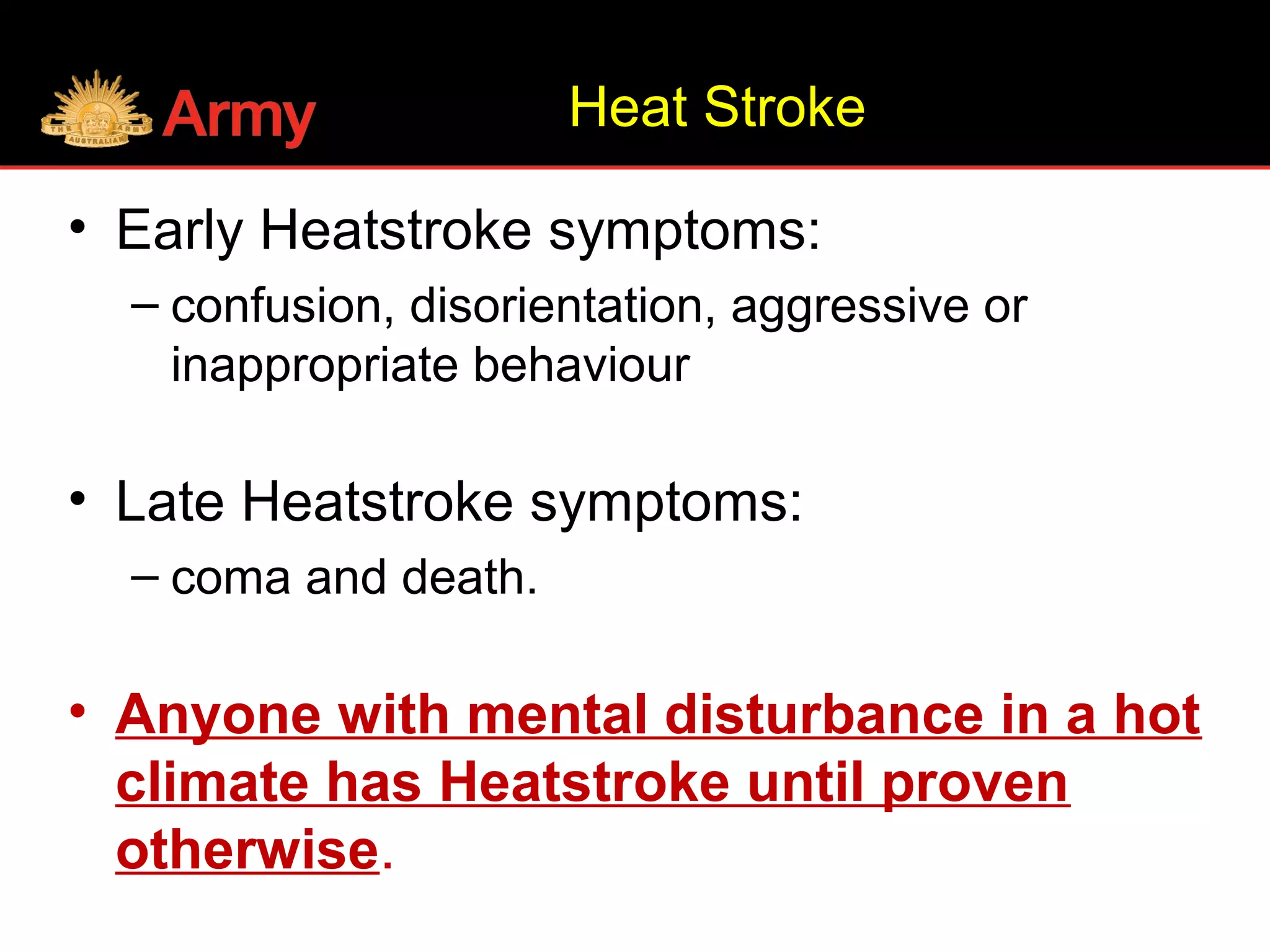
• Early Heatstroke symptoms:
– confusion, disorientation, aggressive or
inappropriate behaviour
• Late Heatstroke symptoms:
– coma and death.
• Anyone with mental disturbance in a hot
climate has Heatstroke until proven
otherwise.
Heat Stroke
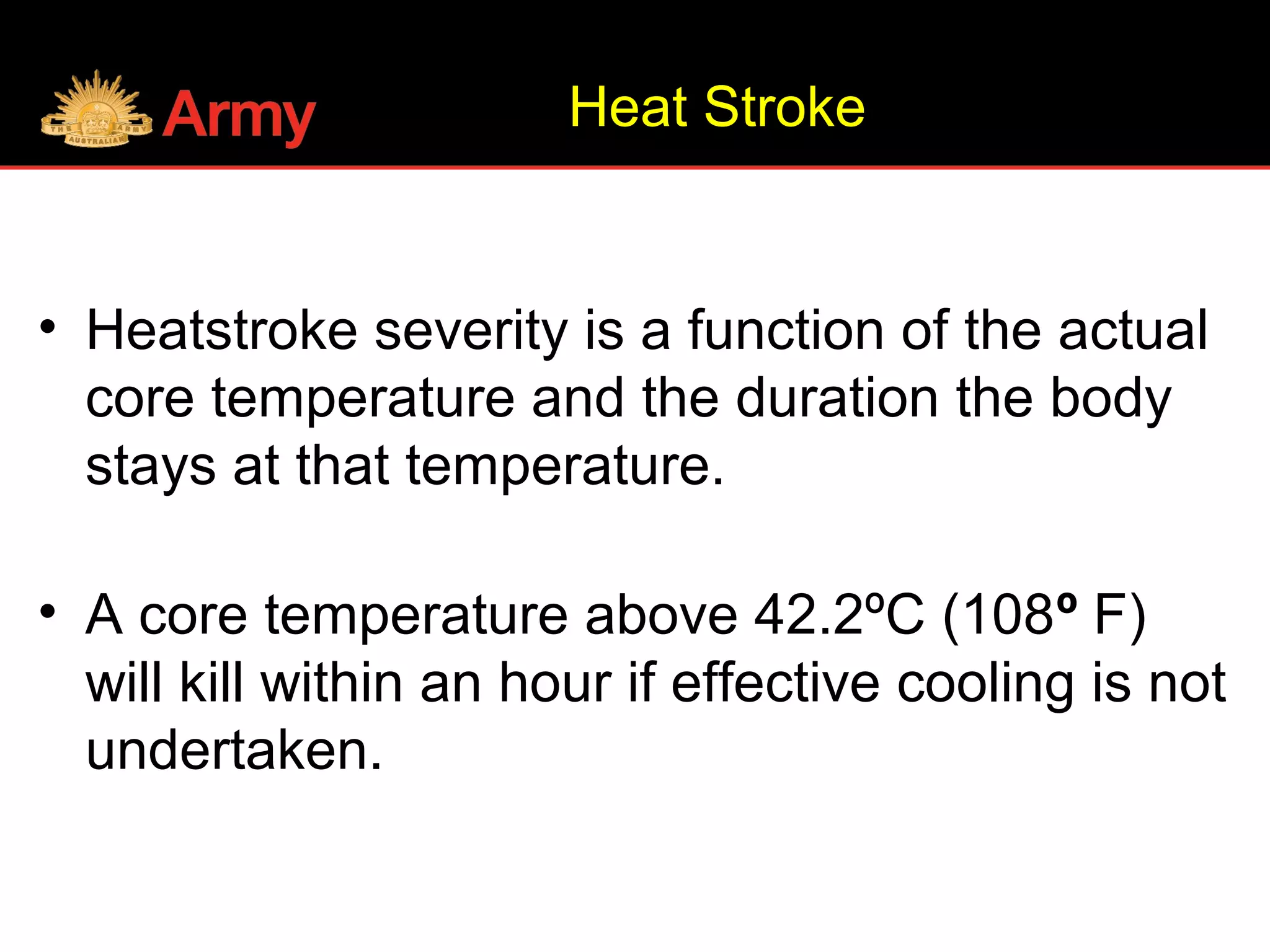
• Heatstroke severity is a function of the actual
core temperature and the duration the body
stays at that temperature.
• A core temperature above 42.2ºC (108º F)
will kill within an hour if effective cooling is not
undertaken.
Heat Stroke
Treatment
The key to the treatment of
heatstroke is to use the
most rapid and effective
means of cooling available.
Treatment
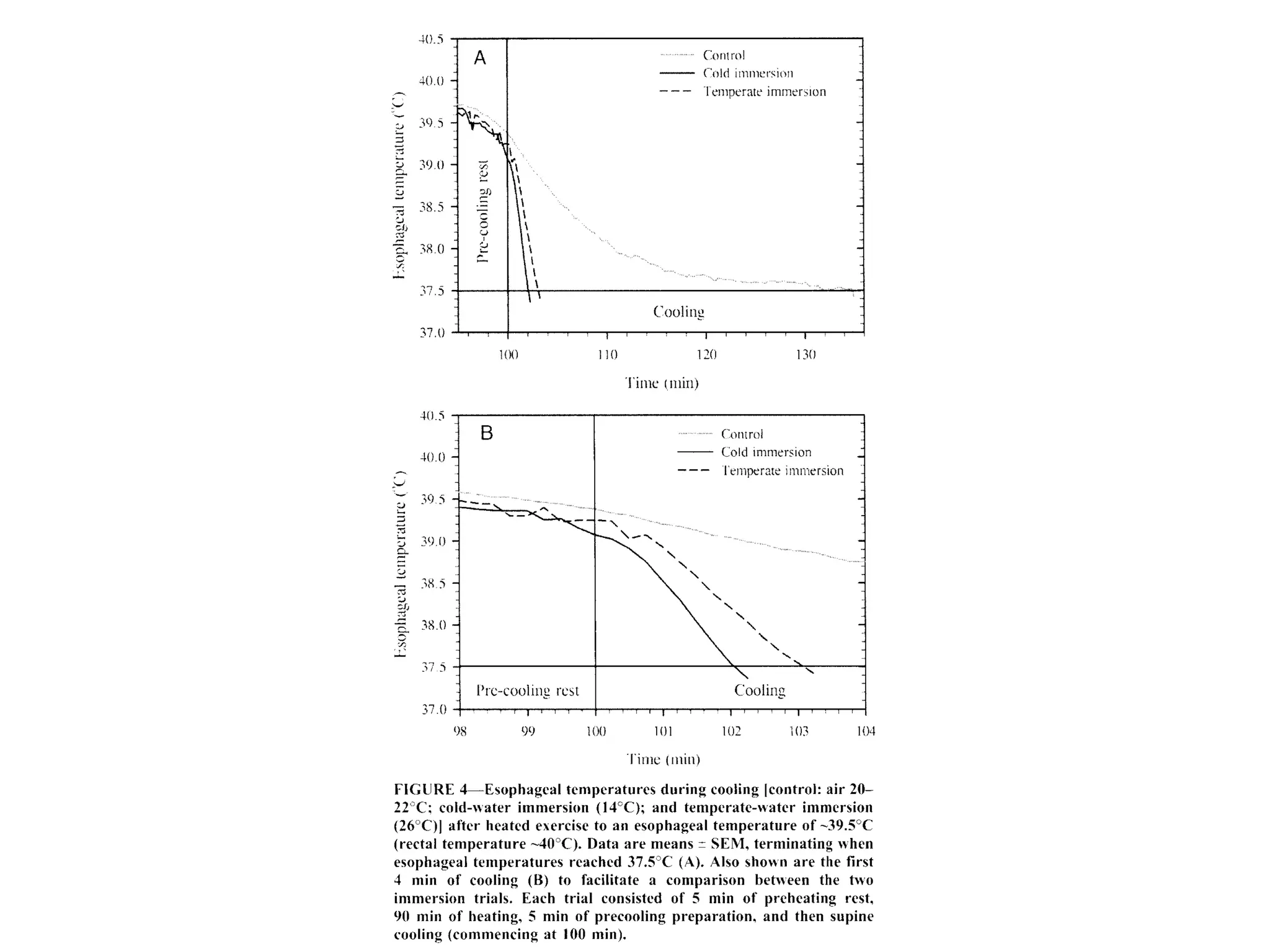
• Effectiveness of different cooling methods
was not understood.
• Use of ice packs applied to the groin, axilla
and neck were utilised as standard practice
despite the literature showing this is the
slowest method of reducing core
temperature.
• The key to the treatment of heatstroke is to
use the most rapid and effective means of
cooling available.
Cooling
• Cooling occurs through:
• Radiation (direct heat loss)
• Convection (air flow over the skin)
• Evaporation (of sweat )
• High humidity reduces the efficiency and
effectiveness of evaporative cooling
significantly.
• Clothing reduces cooling efficiency by
restricting air flow over the skin and
increasing the air humidity near the skin.
Cooling
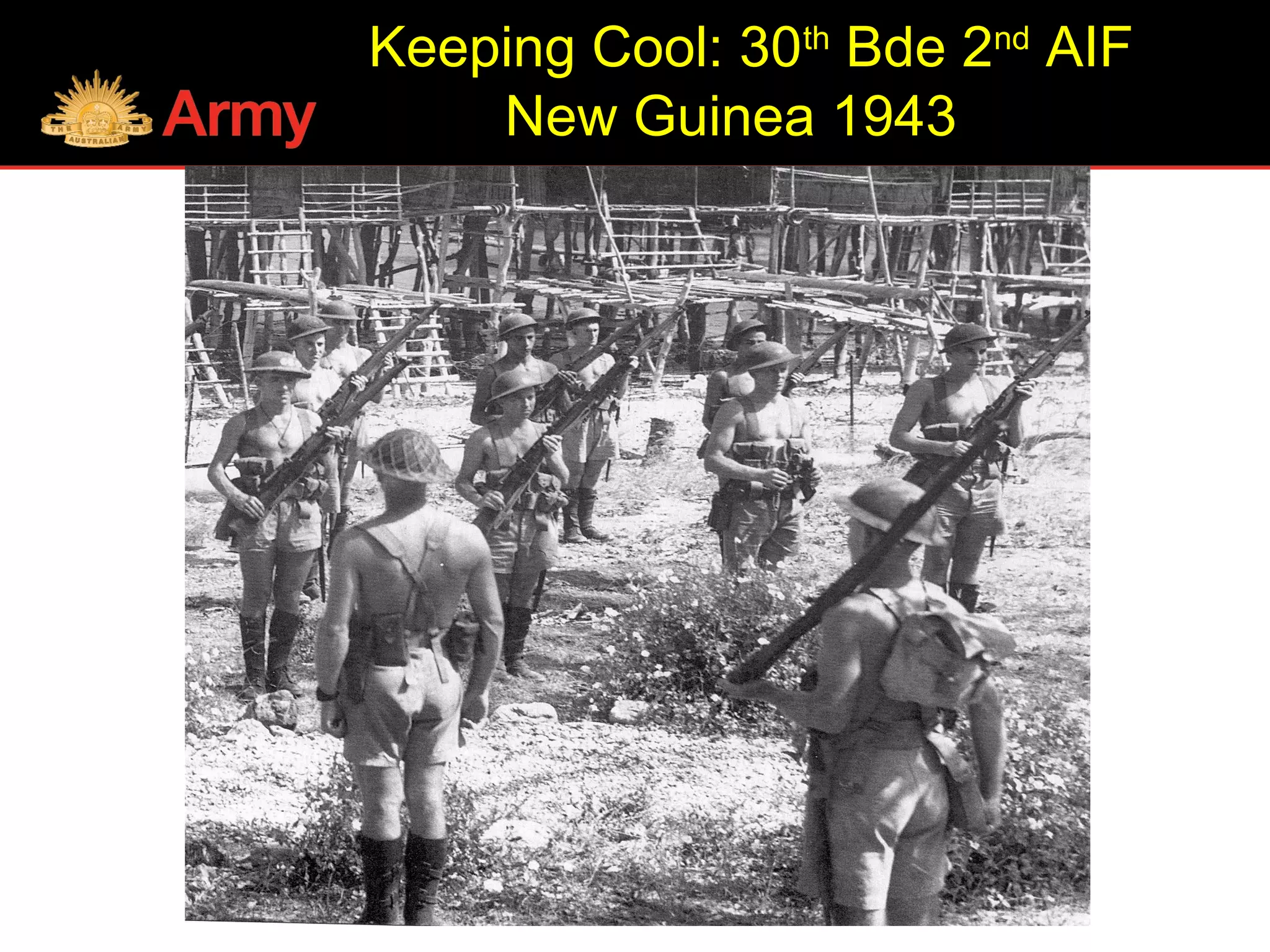
Keeping Cool: 30th
Bde 2nd
AIF
New Guinea 1943
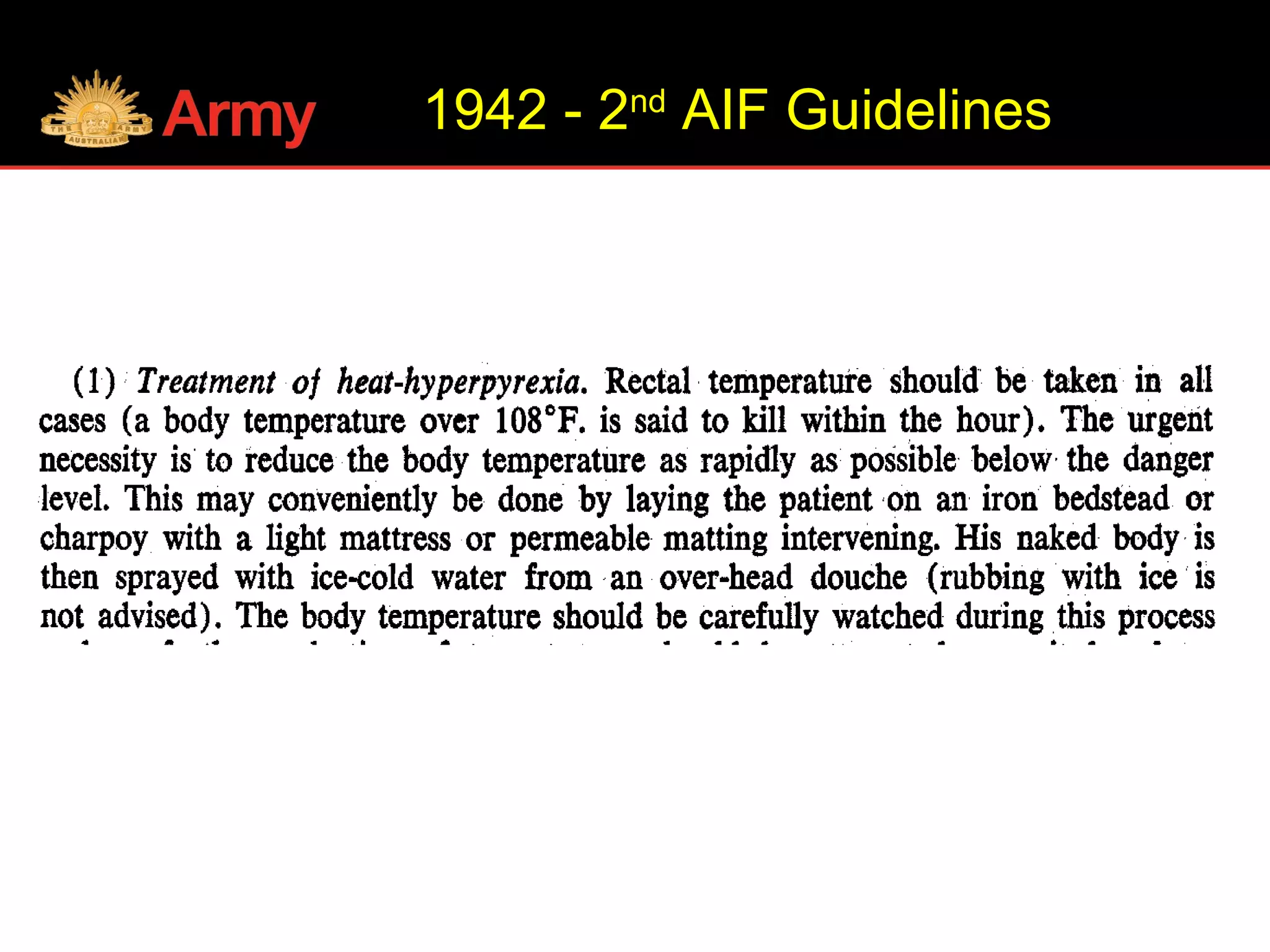
1942 - 2nd
AIF Guidelines
1942 - 2nd
AIF Guidelines
Cooling comparison
from the Literature
Cooling Method Cooling Rate
Ice Water Immersion 2-4 o
C 0.16o
C/min
Evaporative Cooling 0.08-0.14o
C/min
Chilled (4o
C) NS 40mls/kg 0.083o
C/min
Ice packs 0.027o
C/min
Cold Air Blanket 0.005o
C/min
Cooling Methods
LE Armstrong (Ed). Exertional heat Illnesses. Human Kinetics 2003
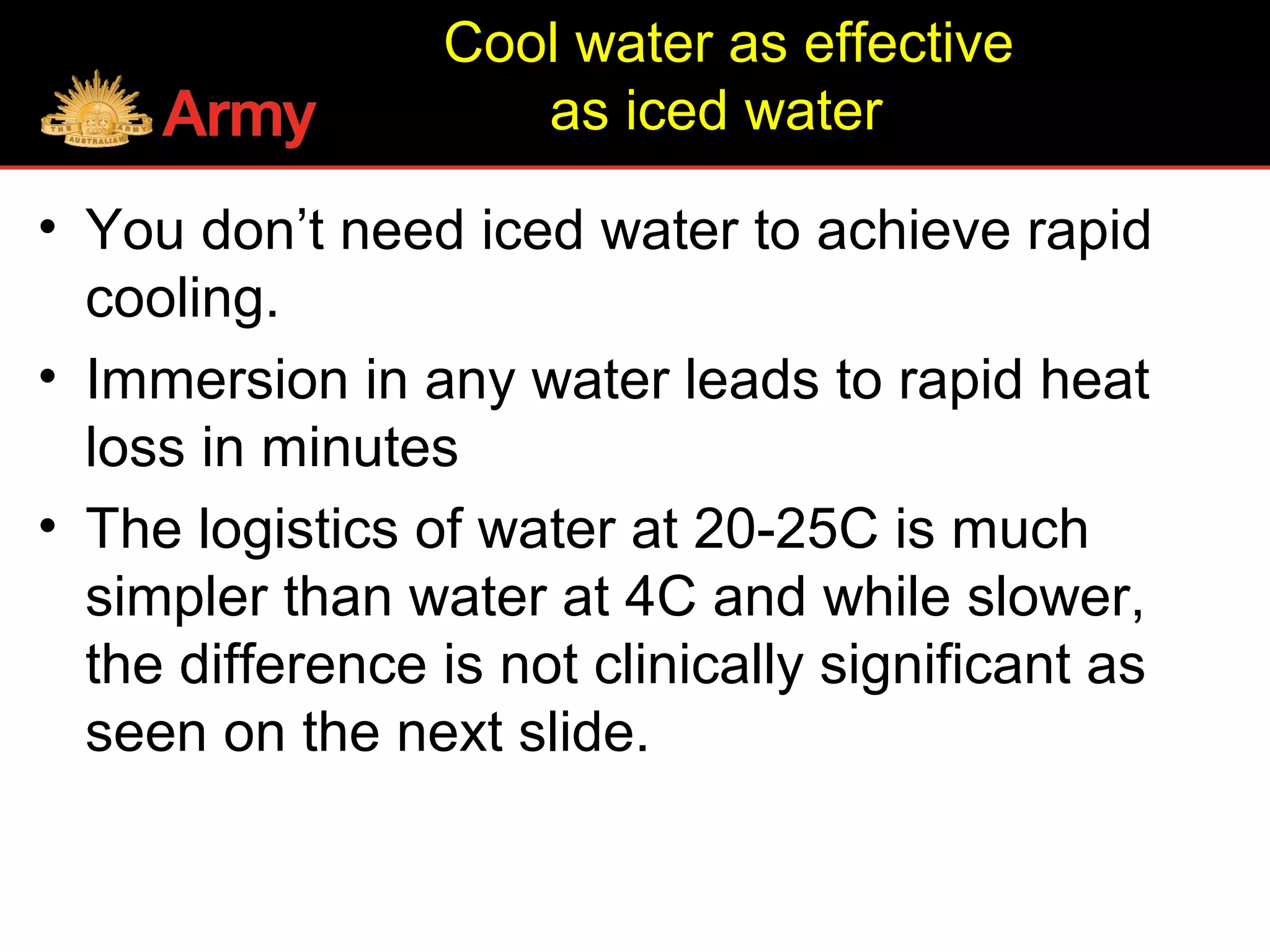
Cool water as effective
as iced water
• You don’t need iced water to achieve rapid
cooling.
• Immersion in any water leads to rapid heat
loss in minutes
• The logistics of water at 20-25C is much
simpler than water at 4C and while slower,
the difference is not clinically significant as
seen on the next slide.
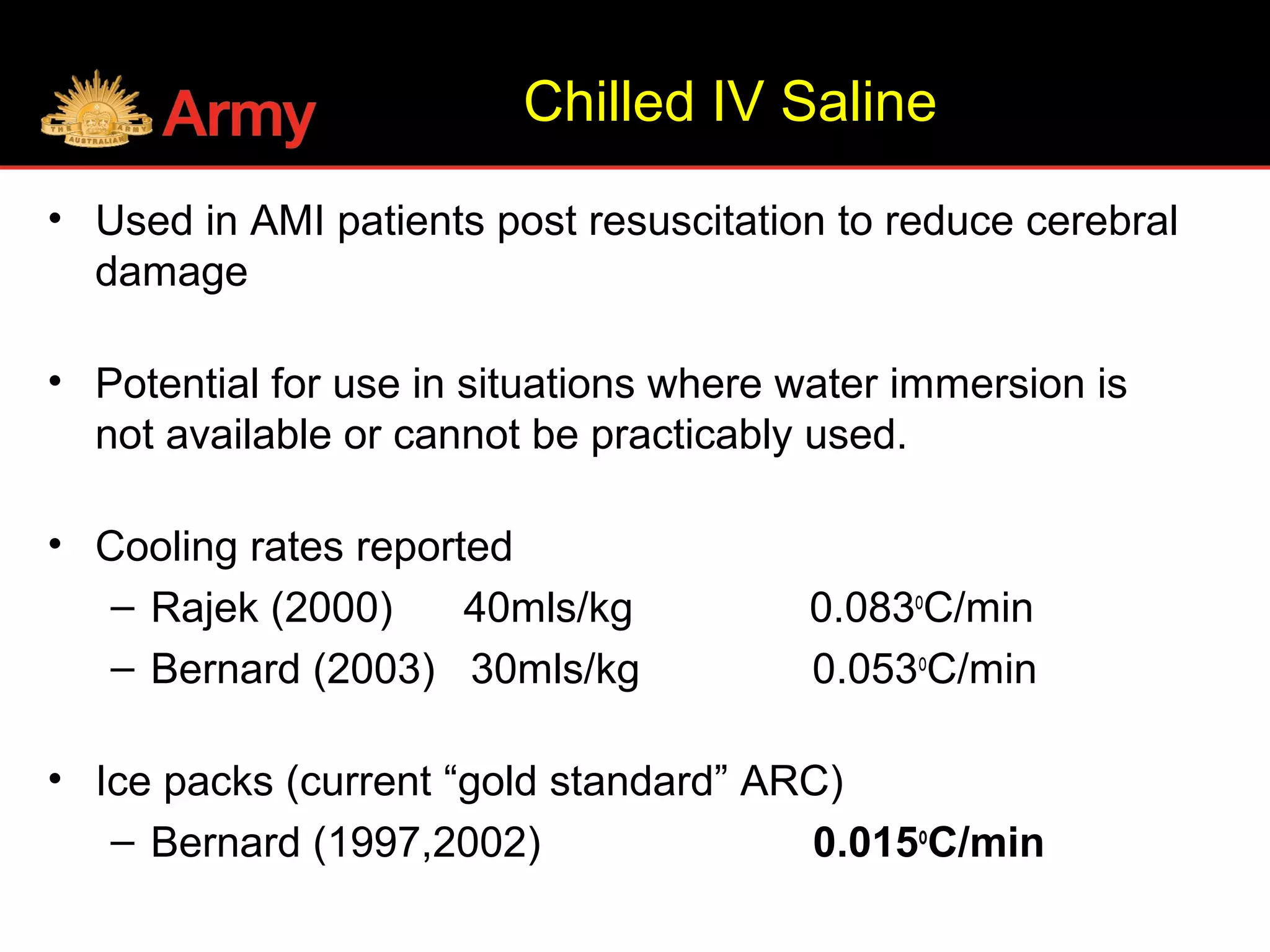
Chilled IV Saline
• Used in AMI patients post resuscitation to reduce cerebral
damage
• Potential for use in situations where water immersion is
not available or cannot be practicably used.
• Cooling rates reported
– Rajek (2000) 40mls/kg 0.083o
C/min
– Bernard (2003) 30mls/kg 0.053o
C/min
• Ice packs (current “gold standard” ARC)
– Bernard (1997,2002) 0.015o
C/min
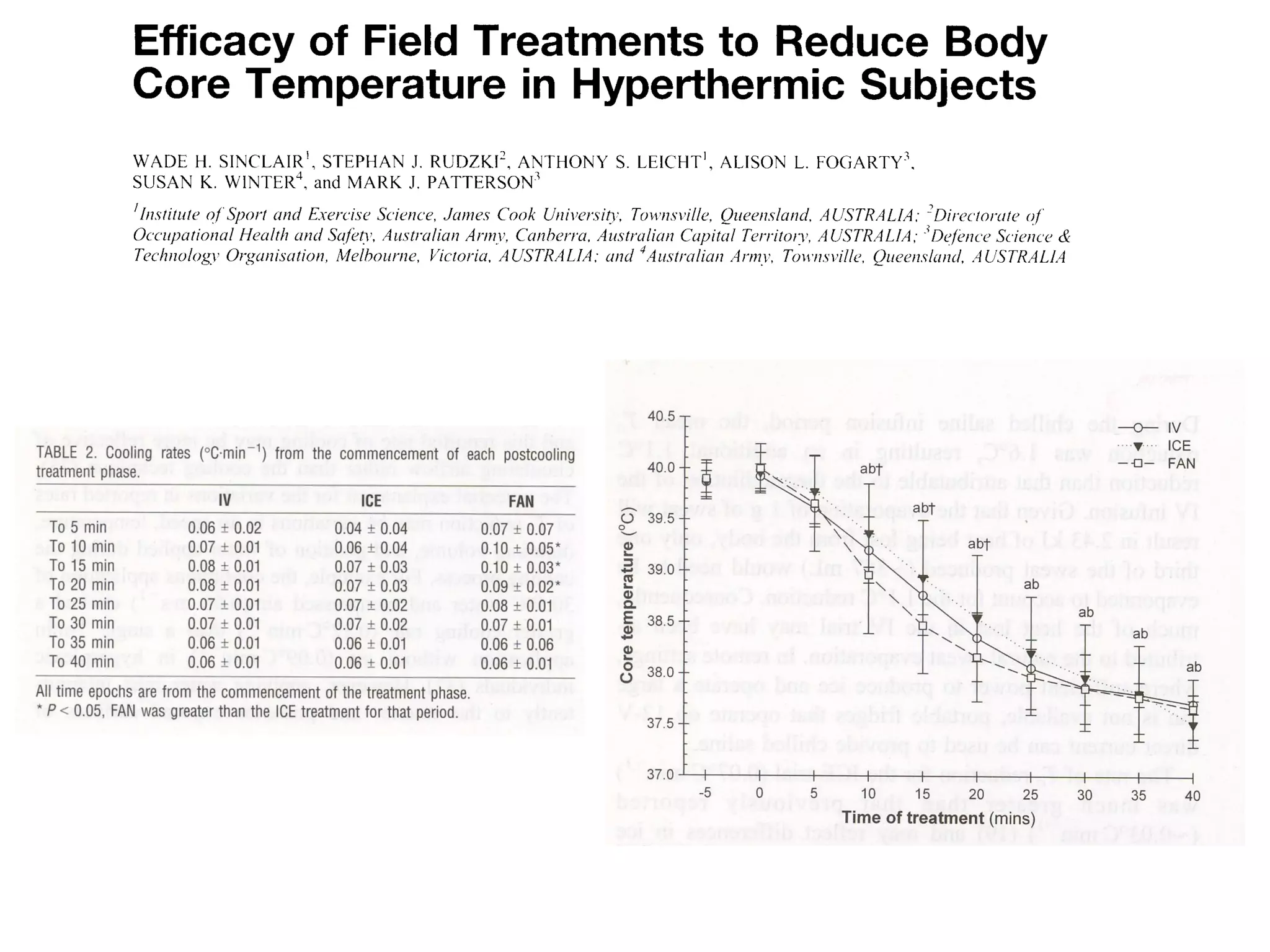
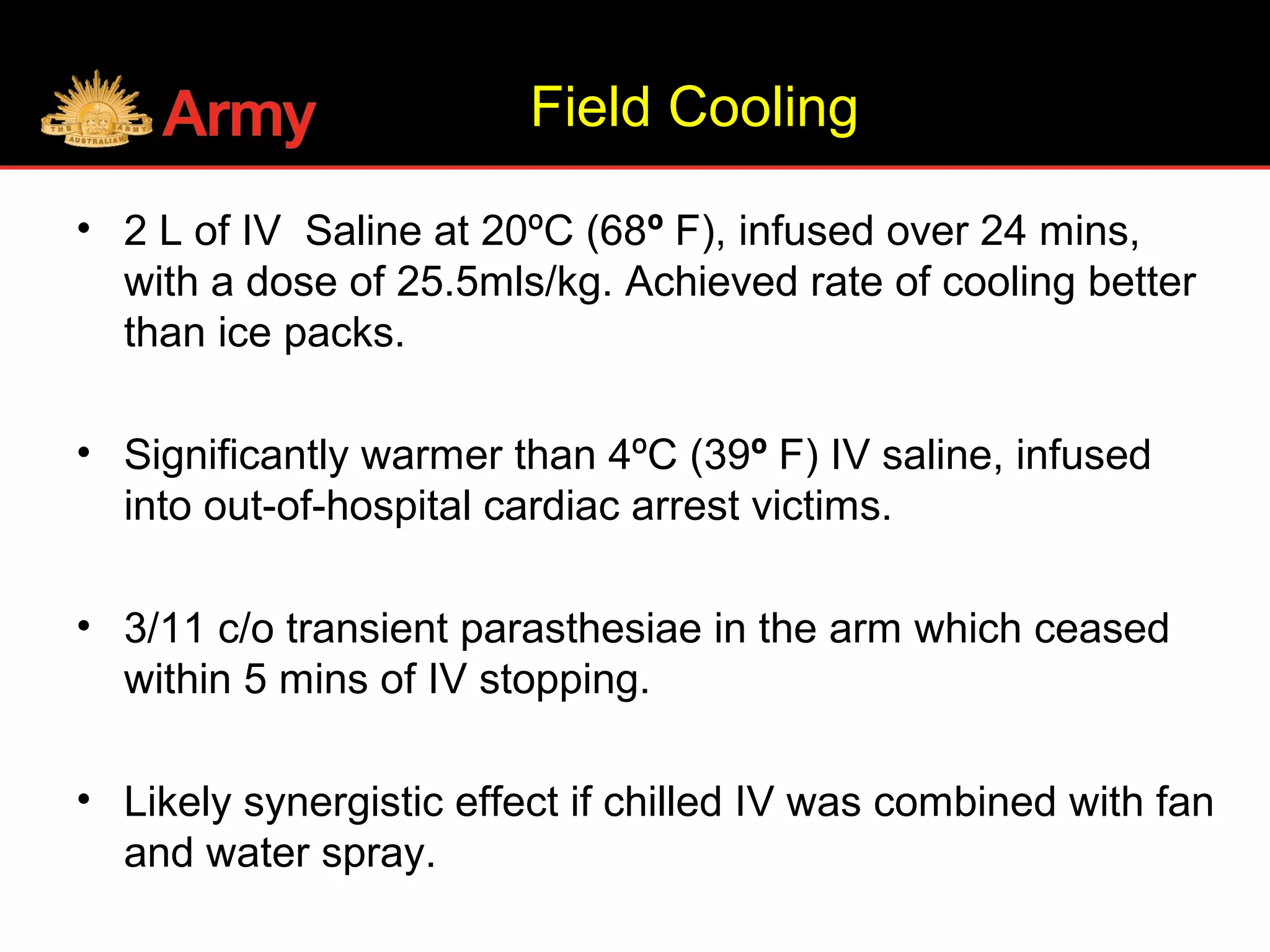
Field Cooling
• 2 L of IV Saline at 20ºC (68º F), infused over 24 mins,
with a dose of 25.5mls/kg. Achieved rate of cooling better
than ice packs.
• Significantly warmer than 4ºC (39º F) IV saline, infused
into out-of-hospital cardiac arrest victims.
• 3/11 c/o transient parasthesiae in the arm which ceased
within 5 mins of IV stopping.
• Likely synergistic effect if chilled IV was combined with fan
and water spray.
Field Heatstroke Treatment
• Aggressively cool the patient:
– remove all clothes bar underwear
– pour water over patient and fan
– measure core (rectal) temperature
– if Tc >40.6ºC (105º F) , cannulate with 2L IV Saline at 4-10ºC, as
quickly as possible and evacuate in open vehicle
– Ice or water bath if available, or
– Cold water spray and electric fan for evap cooling
– Cease active cooling when Tc reaches 38.5ºC (101º F)
Corrective Actions
• Army took steps to reduce both the likelihood
and consequence of sustaining a heat injury.
• Continuous measurement of environmental
heat stress (WBGT) is now mandated when
WBGT exceeds 25C.
• Comprehensive work-rest tables introduced to
link rate of physical effort to environmental
heat load.
• Thorough review of Army policies, training
and clinical management of Heat Injury.
• New evidence-based heat injury prevention
and management policy produced and
validated by an international group of
military heat injury experts.
• Policy represented “best practice”.
Corrective Actions
• Heat Injury training is now mandated for all soldiers
on an Annual basis.
• A short instructional video was shown to everyone
in the Army to provide consistent guidance on the
correct identification and management of heat
injury.
• This was ceased 3 years ago and there have been
3 significant heat injuries to my knowledge since.
• The OHS regulator is now conducting a formal
investigation into the management of heat injuries.
Corrective Actions
Conclusion
• A focus on hydration led to a loss of focus on
reducing the threat of heat itself.
• Poor understanding of the difference between
heatstroke and heat exhaustion.
• Effective methods of cooling not understood.
• Strenuous efforts undertaken to improve
systems of work, educate soldiers at all levels
and improve methods of treatment.
Postscript (BRIG Rudzki)
• In 2015 I was asked to provide expert witness
testimony for the Military Police who were planning
to prosecute two Commanders following an incident
where 2 soldiers nearly died of Heatstroke.
• I will be deliberately vague, but in the course of
reviewing the prosecution case a number of
systematic failures were identified.
• Army Heat Policy was embedded in a Joint DoD
Safety manual.
• This publication was cancelled without warning and
Single Services were required to embed Heat Policy
in their own policy documents.
• In this process transcription errors occurred that
altered key features of the previous policy.
Postscript (BRIG Rudzki)
• In addition , Joint Health Command issued their own
Heat Policy that varied in key risk management
areas from Army policy.
• The Commanders in question used Joint Health
Policy guidance and not Army Work rest tables.
• The Heat video which provided a standardised
information brief was withdrawn at the same time
and replaced by individual units delivering a
centrally developed powerpoint.
Postscript (BRIG Rudzki)
• The powerpoint presentation focussed on hydration
and did not place emphasis on heatstroke.
• Hard earned lessons were lost within a decade with
organisational turnover.
• The Heat video will be reintroduced and it has been
made clear to all Commanders that Army policy is to
be used in planning and conducting activities.
• All transcription errors were corrected.
Postscript (BRIG Rudzki)

Aus heatstroke lessons learnt

  • 1.
    Lessons Learnt froma Heat Stroke Death BRIG Stephan Rudzki (Rtd) MBBS, Grad Dip Sport Sc, MPH, PhD , FACSEP Consultant Medical Advisor – Directorate of Army Health
  • 2.
    Background • Soldier diedof heatstroke in Nov 2004 while engaging in strenuous physical activity during the Northern Territory wet season. • Early signs of heatstroke not identified. • Initial axillary temp recorded as 41.3o C (106o F). • Treated with ice packs and evacuated by ambulance to Darwin. • On arrival at Royal Darwin Hospital, 2 hours post collapse, rectal temperature of 41.2o C (106o F) recorded just prior to fatal respiratory arrest.
  • 3.
    Lesson Areas identified •Prevention • Diagnosis • Treatment
  • 4.
    Prevention: Acclimatisation • Studentshad 6 weeks training in air-conditioned classrooms prior to the field phase. • The course program did not allow for regular Physical Training. • It was assumed that soldiers living in the tropics were acclimatised. • Work-rest tables assume acclimatised soldiers.
  • 5.
    To achieve acclimatisation •Individuals require ongoing exposure to: – At least 100 minutes per day of heat conditions similar to those in which they will work. The best and most effective acclimatisation is achieved with a single 100 minute exposure, but two 50 minute exposures will also be effective; and – graduated levels of increasing physical exertion.
  • 6.
    Exercising in themorning to acclimatise for work in the heat of the day is a recipe for failed acclimatisation.
  • 7.
    To sustain acclimatisation •Individuals require: – a minimum of three work sessions per week in the heat of the day. These sessions should last for at least 100 minutes in total. This work may be broken into two 50 minute sessions, and – the work intensity should reflect the type of activity to be undertaken. Conducting sessions at low intensity when work will be of high intensity will not achieve adequate sustainment.
  • 8.
    Prevention: Lack of understandingthe heat threat • Failure to appreciate that heat (and body temperature) was the key hazard led to failure to manage the risk of injury effectively. • Staff believed that simply ensuring adequate hydration would effectively manage the risks associated with heat exposure.
  • 9.
    • Water wasfreely available and all soldiers were encouraged to drink frequently. Numerous briefings throughout the training reinforced this message. • There was no understanding that you could become a heat casualty even if well hydrated. • A full radiator can still boil ! Prevention: Lack of understanding the heat threat
  • 10.
    Dehydration • Humans arethe only mammal to have salt in their sweat. • Thirst is driven by the concentration of sodium [Na+ ] in the plasma. • Animals just lose water and increase their plasma [Na+ ] concentration. They then drink to end their thirst, which occurs when their [Na+ ] concentration returns to normal.
  • 11.
    • Humans losesalt and water, so [Na+] can change little, despite the loss of significant fluid. • The thirst reflex in humans does not kick in until a person is 2-3% dehydrated. • If you just drink WATER to thirst you will always be around 2% dehydrated after exercise. Dehydration
  • 12.
    • Extra wateryou drink will not stay in the plasma unless consumed with sufficient salt [Na+]. • If you wish to avoid dehydration after activity You MUST replace your salt losses. Dehydration
  • 13.
    1942 - 2nd AIFGuidelines
  • 14.
    Salt and Sweat •Roman solders were paid in salt, hence the term “worth his salt”. • Individual sweat losses can vary by up to 10 fold • Bigger individuals generate more heat and sweat more. • You should only consume the water & salt you need to replace what you have lost. • If you are urinating > 5 times/day you are well hydrated. • Fixed hydration schedules are not recommended, and create the risk of hyponatremia (low blood salt).
  • 15.
    Effect of SodiumIntake on Rehydration >50 mmol/l salt intake restores Plasma Volume Water alone does not restore Plasma Volume
  • 16.
    • Increased saltintake increases thirst. (that’s why bars serve you chips & nuts). • Why does increased salt intake cause high blood pressure? – because it leads to fluid retention and increased plasma volume. • Salt should come from your food, but many use sports drinks. This is a very expensive (and inadequate) way to obtain salt! Dehydration
  • 17.
    Prevention: Manage Risk ofHeat Injury • Under previous policy a WGBT >32ºC (89.6º F) was considered extreme heat stress. • Revised WBGT tables consider 32-36ºC (89.6 – 96.8º F) as high and >36ºC (96.8º F) extreme. • New work-rest cycles impose a requirement for standardised risk management when HSI are in the high or extreme range.
  • 18.
    Work Rest Tables WBGTºC Light Work Moderate Work Heavy Work Very Heavy Work DPCU Body Armour MOPP4 Work/Rest (min) Water (L/h) Work/Rest (min) Water (L/h) Work/Rest (min) Water (L/h) Work/Rest (min) Water (L/h) <25 <22 <19 NL ¾ NL ¾ 50/10 ¾ 30/30 ¾ 25-26 22-23 19-20 NL ¾ NL ¾ 40/20 ¾ 20/40 ¾ 27-28 24-25 21-22 NL ¾ 50/10 1 30/30 1 20/40 1 29-30 26-27 23-24 NL ¾ 40/20 1 30/30 1 10/50 1 31 28 25 NL ¾ 30/30 1 20/40 1 5/55 1 32 29 26 50/10 1 20/40 1¼ 10/50 1¼ 5/55 1¼ 33 30 27 40/20 1¼ 10/50 1¼ 10/50 1¼ CM 1¼ 34 31 28 30/30 1¼ 10/50 1¼ CM 1¼ CM 1¼ 35 32 29 20/40 1¼ CM 1¼ CM 1¼ CM 1¼ 36 33 30 10/50 1¼ CM 1¼ CM 1¼ CM 1¼ ≥37 ≥34 ≥31 CM 1¼ CM 1¼ CM 1¼ CM 1¼
  • 19.
    Standardised Risk management •Quality is defined as the absence of variation. • We had significant variation in how the risk of heat was managed. • The policy sought to defined the required level of risk management and place that requirement on Commanders • The next slide shows the required level of risk management.
  • 20.
    Heat Injury Risk Level MINIMUMMANAGEMENT REGIME Low The Low risk level requires monitoring of heat stress symptoms. Treatment and evacuation plans should be in place. Moderate The Moderate risk level requires active management oversight. Heat stress symptoms shall be monitored and both treatment and evacuation resources shall be available. High The High risk level requires careful management. Constant vigilance of heat stress symptoms shall be maintained. An Advanced Medical Assistant (AMA) with access to both a Medical Officer (MO) via telemedicine-link and effective emergency cooling must be available within 15 minutes. Emergency evacuation resources shall be available. Heat casualty rates up to 5% should be anticipated. Extreme The Extreme risk level requires critical management. All personnel shall be fully acclimatised, fit, hydrated, rested and not suffering any illnesses. Activities shall only be undertaken with the express authority of a formation level commander or higher. Activity programmes shall be adjusted to minimise exposure to this level of risk. This level requires intense vigilance for heat stress symptoms and positive monitoring of food and water intake. . An Advanced Medical Assistant (AMA) with access to both a Medical Officer (MO) via telemedicine-link and effective emergency cooling must be available within 15 minutes. A Medical Officer (MO) and effective emergency cooling as per HB xx/2006 shall be available within 1 hour. Heat casualty rates greater than 5% can be anticipated. ACTIVITIES AND RATE OF EFFORT DESCRIPTION Light Work Moderate Work Heavy Work Very Heavy Work Walking: • Hard surface, no load at ≤ 4.5 kph • Hard surface, 20 kg load at < 4 kph • Hard surface, 30 kg load at < 3.5 kph • Sand, no load at < 3.5 kph Walking: • Hard surface, no load at 4.5-6.0 kph • Hard surface, 20 kg load at 4.0- 5.5 kph • Hard surface, 30 kg load at 3.5- 5.0 kph • Sand, no load at 3.5-4.5 kph Walking: • Hard surface, no load at > 6.0 kph • Hard surface, 20 kg load at > 5.5 kph • Hard surface, 30 kg load at > 5.0 kph • Sand, no load at > 4.5 kph Running: • running at speed > 12km/hr ( 12 min BFA) • Sprint running during physical training • MOUT training –urban rushing • Lift & carry 155mm shells at < 2 per minute • Lift & carry 155mm shells at 3-4 per minute • Lift & carry 155mm shells at > 4 per minute • Fire and movement (Infantry Minor Tactics) • Drill and ceremonial • Patrolling • Digging with entrenching tool • Driving, tracked vehicle • Weapon maintenance • Small arms weapon firing • Digging with a pick & shovel • Obstacle Course crossing
  • 21.
    Prevention: Education of Soldiers Soldierstaught to monitor the physical signs of dehydration and the symptoms of heat injury in themselves and others. Dehydrated “Pee Clear Twice a day”
  • 22.
    Diagnostic Confusion • Noappreciation of the difference between self-limiting heat illnesses such as heat exhaustion and life threatening heat injuries such as heatstroke. • No appreciation of temperature difference between the axillary and rectal methods.
  • 23.
    Heat Exhaustion • Heatexhaustion is caused by strain on the cardiovascular system as the unacclimatised body tries to lose heat. • Main method of losing heat is an increase of blood flow to the skin (hot and flushed). • This reduces blood flow to the organs (core) resulting in low blood pressure, rapid pulse and fainting (exhaustion).
  • 24.
    • A properlyconducted acclimatisation program will reduce the risk of heat exhaustion. • Core Temp almost never exceeds 40ºC (104º F) – Pulse rate >100 / min is a measure of cardiovascular strain. Heat Exhaustion
  • 25.
    Heat Stroke • HeatStroke is a medical emergency defined by – Core temp > 40.6ºC (105º F) and – Mental disturbance – More complex issues at play , e.g. endotoxin. • Persistent elevated core temperature leads to cellular damage (injury). • Core body temperature is always at least 1ºC higher than oral or axillary temperature.
  • 26.
    • Early Heatstrokesymptoms: – confusion, disorientation, aggressive or inappropriate behaviour • Late Heatstroke symptoms: – coma and death. • Anyone with mental disturbance in a hot climate has Heatstroke until proven otherwise. Heat Stroke
  • 27.
    • Heatstroke severityis a function of the actual core temperature and the duration the body stays at that temperature. • A core temperature above 42.2ºC (108º F) will kill within an hour if effective cooling is not undertaken. Heat Stroke
  • 28.
    Treatment The key tothe treatment of heatstroke is to use the most rapid and effective means of cooling available.
  • 29.
    Treatment • Effectiveness ofdifferent cooling methods was not understood. • Use of ice packs applied to the groin, axilla and neck were utilised as standard practice despite the literature showing this is the slowest method of reducing core temperature. • The key to the treatment of heatstroke is to use the most rapid and effective means of cooling available.
  • 30.
    Cooling • Cooling occursthrough: • Radiation (direct heat loss) • Convection (air flow over the skin) • Evaporation (of sweat )
  • 31.
    • High humidityreduces the efficiency and effectiveness of evaporative cooling significantly. • Clothing reduces cooling efficiency by restricting air flow over the skin and increasing the air humidity near the skin. Cooling
  • 32.
    Keeping Cool: 30th Bde2nd AIF New Guinea 1943
  • 33.
    1942 - 2nd AIFGuidelines
  • 34.
    1942 - 2nd AIFGuidelines
  • 35.
    Cooling comparison from theLiterature Cooling Method Cooling Rate Ice Water Immersion 2-4 o C 0.16o C/min Evaporative Cooling 0.08-0.14o C/min Chilled (4o C) NS 40mls/kg 0.083o C/min Ice packs 0.027o C/min Cold Air Blanket 0.005o C/min
  • 36.
    Cooling Methods LE Armstrong(Ed). Exertional heat Illnesses. Human Kinetics 2003
  • 38.
    Cool water aseffective as iced water • You don’t need iced water to achieve rapid cooling. • Immersion in any water leads to rapid heat loss in minutes • The logistics of water at 20-25C is much simpler than water at 4C and while slower, the difference is not clinically significant as seen on the next slide.
  • 40.
    Chilled IV Saline •Used in AMI patients post resuscitation to reduce cerebral damage • Potential for use in situations where water immersion is not available or cannot be practicably used. • Cooling rates reported – Rajek (2000) 40mls/kg 0.083o C/min – Bernard (2003) 30mls/kg 0.053o C/min • Ice packs (current “gold standard” ARC) – Bernard (1997,2002) 0.015o C/min
  • 42.
    Field Cooling • 2L of IV Saline at 20ºC (68º F), infused over 24 mins, with a dose of 25.5mls/kg. Achieved rate of cooling better than ice packs. • Significantly warmer than 4ºC (39º F) IV saline, infused into out-of-hospital cardiac arrest victims. • 3/11 c/o transient parasthesiae in the arm which ceased within 5 mins of IV stopping. • Likely synergistic effect if chilled IV was combined with fan and water spray.
  • 43.
    Field Heatstroke Treatment •Aggressively cool the patient: – remove all clothes bar underwear – pour water over patient and fan – measure core (rectal) temperature – if Tc >40.6ºC (105º F) , cannulate with 2L IV Saline at 4-10ºC, as quickly as possible and evacuate in open vehicle – Ice or water bath if available, or – Cold water spray and electric fan for evap cooling – Cease active cooling when Tc reaches 38.5ºC (101º F)
  • 44.
    Corrective Actions • Armytook steps to reduce both the likelihood and consequence of sustaining a heat injury. • Continuous measurement of environmental heat stress (WBGT) is now mandated when WBGT exceeds 25C. • Comprehensive work-rest tables introduced to link rate of physical effort to environmental heat load.
  • 45.
    • Thorough reviewof Army policies, training and clinical management of Heat Injury. • New evidence-based heat injury prevention and management policy produced and validated by an international group of military heat injury experts. • Policy represented “best practice”. Corrective Actions
  • 46.
    • Heat Injurytraining is now mandated for all soldiers on an Annual basis. • A short instructional video was shown to everyone in the Army to provide consistent guidance on the correct identification and management of heat injury. • This was ceased 3 years ago and there have been 3 significant heat injuries to my knowledge since. • The OHS regulator is now conducting a formal investigation into the management of heat injuries. Corrective Actions
  • 47.
    Conclusion • A focuson hydration led to a loss of focus on reducing the threat of heat itself. • Poor understanding of the difference between heatstroke and heat exhaustion. • Effective methods of cooling not understood. • Strenuous efforts undertaken to improve systems of work, educate soldiers at all levels and improve methods of treatment.
  • 48.
    Postscript (BRIG Rudzki) •In 2015 I was asked to provide expert witness testimony for the Military Police who were planning to prosecute two Commanders following an incident where 2 soldiers nearly died of Heatstroke. • I will be deliberately vague, but in the course of reviewing the prosecution case a number of systematic failures were identified.
  • 49.
    • Army HeatPolicy was embedded in a Joint DoD Safety manual. • This publication was cancelled without warning and Single Services were required to embed Heat Policy in their own policy documents. • In this process transcription errors occurred that altered key features of the previous policy. Postscript (BRIG Rudzki)
  • 50.
    • In addition, Joint Health Command issued their own Heat Policy that varied in key risk management areas from Army policy. • The Commanders in question used Joint Health Policy guidance and not Army Work rest tables. • The Heat video which provided a standardised information brief was withdrawn at the same time and replaced by individual units delivering a centrally developed powerpoint. Postscript (BRIG Rudzki)
  • 51.
    • The powerpointpresentation focussed on hydration and did not place emphasis on heatstroke. • Hard earned lessons were lost within a decade with organisational turnover. • The Heat video will be reintroduced and it has been made clear to all Commanders that Army policy is to be used in planning and conducting activities. • All transcription errors were corrected. Postscript (BRIG Rudzki)