Searching the crime scene

    A systematic approach
Searching the scene
• The search for physical
  evidence must be
  thorough and systematic

• If the search is not done
  systematically, and in a
  timely manner, then
  charges of negligence or
  accusations of a cover up
  may be filed
How to search
• How a crime scene is processed depends
  largely on the locale and size of the crime
  scene
• When possible, it is beneficial to have a
  person for supervising and overlooking of
  collection procedures
• Some general rules apply to all
  investigations such as searching for points
  of entry and exit first and foremost.
How to search
       • There are several
         different methods for
         collecting physical
         evidence
       • Generally these are
         chosen based on
         experience and logic
Spiral search method
• Generally used for large search areas with
  very few individuals involved in the search.
Grid search method
Grid search method
• Generally used for large search areas with
  numerous searchers.

• Often used in open fields and woodland
  areas
Line search method
Line search method
• Generally used in medium sized search
  areas with very few searchers.
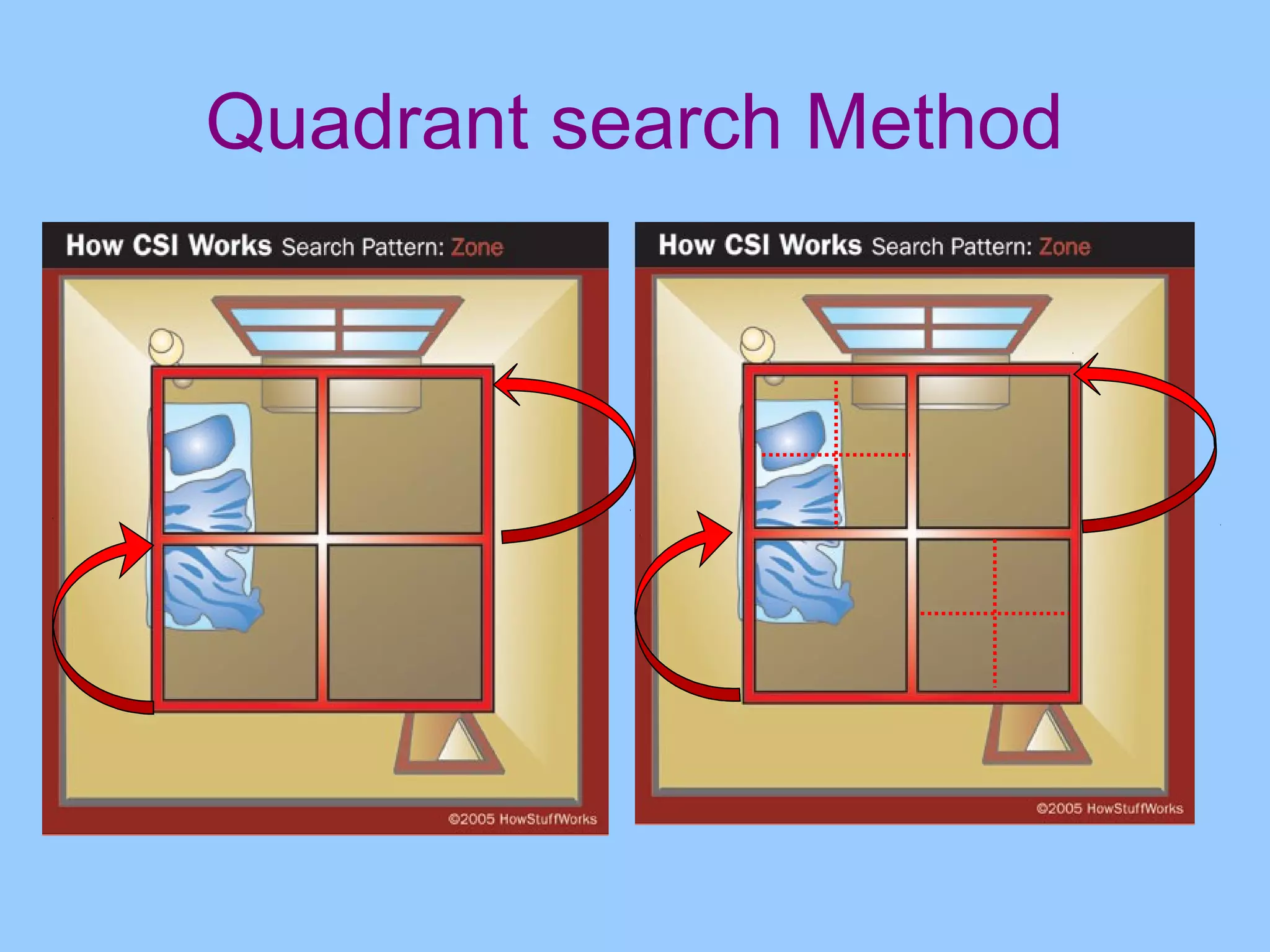
Quadrant search Method
• Used in small search areas where minute
  details are very important
Collection of evidence
• Evidence must be collected and handled in a way that
  prevents any change from taking place between the time
  it is removed and the time it arrives at the lab.
• Removal of any physical evidence, such
  as hairs, fibers, soil, etc., should not
  happen until the evidence is in the lab

• Each different item, or similar items
  collected at different locations, must
  placed in separate containers.
Collecting tools
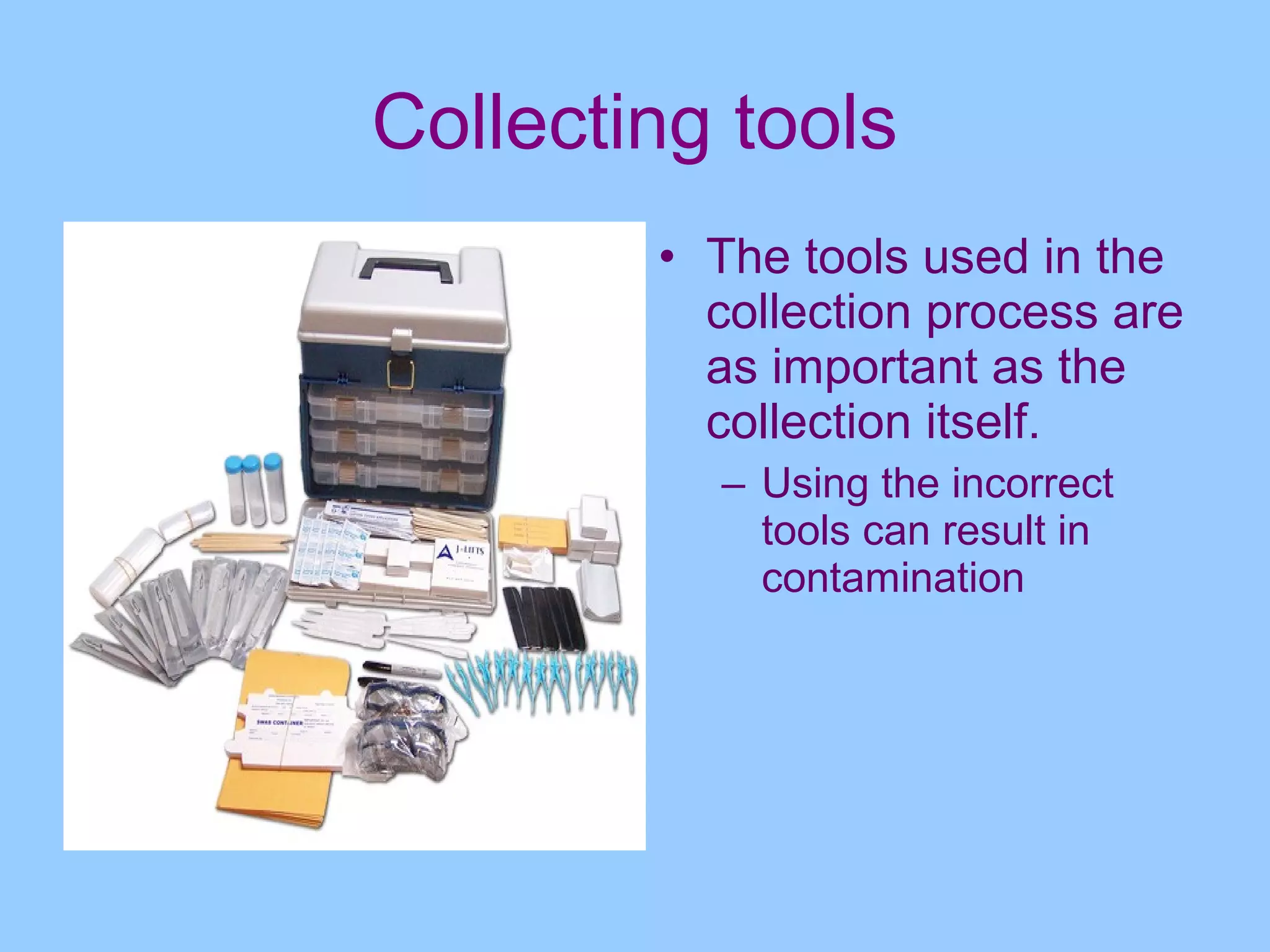
        • The tools used in the
          collection process are
          as important as the
          collection itself.
          – Using the incorrect
            tools can result in
            contamination
• Collection tools also
  include the packaging
  devices.
  – In general manila
    envelopes, pill bottles,
    and cardboard pill
    boxes are suitable
Collecting blood evidence
• When collecting blood evidence what type
  of container should you use?

• If you use an airtight container then the
  condensation is conducive to mold growth
  and can ruin evidence.
Collecting burned material
• Collection of burned material must be
  placed in an airtight container because of
  the possibility of losing volatile substances
  that could have been used in an arson
  case.
Chain of Custody
• A written log of where evidence is and
  who may have it, must be kept at all times.

• Any break in the chain will result in the
  evidence being inadmissible in court

Searching the crime scene

  • 1.
    Searching the crimescene A systematic approach
  • 2.
    Searching the scene •The search for physical evidence must be thorough and systematic • If the search is not done systematically, and in a timely manner, then charges of negligence or accusations of a cover up may be filed
  • 3.
    How to search •How a crime scene is processed depends largely on the locale and size of the crime scene • When possible, it is beneficial to have a person for supervising and overlooking of collection procedures • Some general rules apply to all investigations such as searching for points of entry and exit first and foremost.
  • 4.
    How to search • There are several different methods for collecting physical evidence • Generally these are chosen based on experience and logic
  • 5.
  • 6.
    Spiral search method •Generally used for large search areas with very few individuals involved in the search.
  • 7.
  • 8.
    Grid search method •Generally used for large search areas with numerous searchers. • Often used in open fields and woodland areas
  • 9.
  • 10.
    Line search method •Generally used in medium sized search areas with very few searchers.
  • 11.
  • 12.
    Quadrant search Method •Used in small search areas where minute details are very important
  • 13.
    Collection of evidence •Evidence must be collected and handled in a way that prevents any change from taking place between the time it is removed and the time it arrives at the lab.
  • 14.
    • Removal ofany physical evidence, such as hairs, fibers, soil, etc., should not happen until the evidence is in the lab • Each different item, or similar items collected at different locations, must placed in separate containers.
  • 15.
    Collecting tools • The tools used in the collection process are as important as the collection itself. – Using the incorrect tools can result in contamination
  • 16.
    • Collection toolsalso include the packaging devices. – In general manila envelopes, pill bottles, and cardboard pill boxes are suitable
  • 17.
    Collecting blood evidence •When collecting blood evidence what type of container should you use? • If you use an airtight container then the condensation is conducive to mold growth and can ruin evidence.
  • 18.
    Collecting burned material •Collection of burned material must be placed in an airtight container because of the possibility of losing volatile substances that could have been used in an arson case.
  • 19.
    Chain of Custody •A written log of where evidence is and who may have it, must be kept at all times. • Any break in the chain will result in the evidence being inadmissible in court