
An operating system manages computer hardware and software resources and allows applications to run. It performs basic functions like managing devices, files, memory, and providing an interface for other programs. Common operating systems include Ubuntu, Android, Windows, and Mac OS. Android has the largest market share in smartphones. Operating systems have evolved from early batch systems to today's multi-tasking, distributed, and real-time systems. An operating system is essential software that enables a computer to function and run other programs.
Introduction to operating systems and the presenters: Amit Suhag and Amit Garg.
An operating system is essential software that manages hardware and software. Types include single/multi-tasking, user, distributed, embedded, and real-time.
Details on OS types: single/multi-tasking, single/multi-user, distributed systems, templated, embedded, and real-time. Clarifies tasks each type can perform.
Basic functions include device configuration, file management, memory management, and providing an interface for application execution.
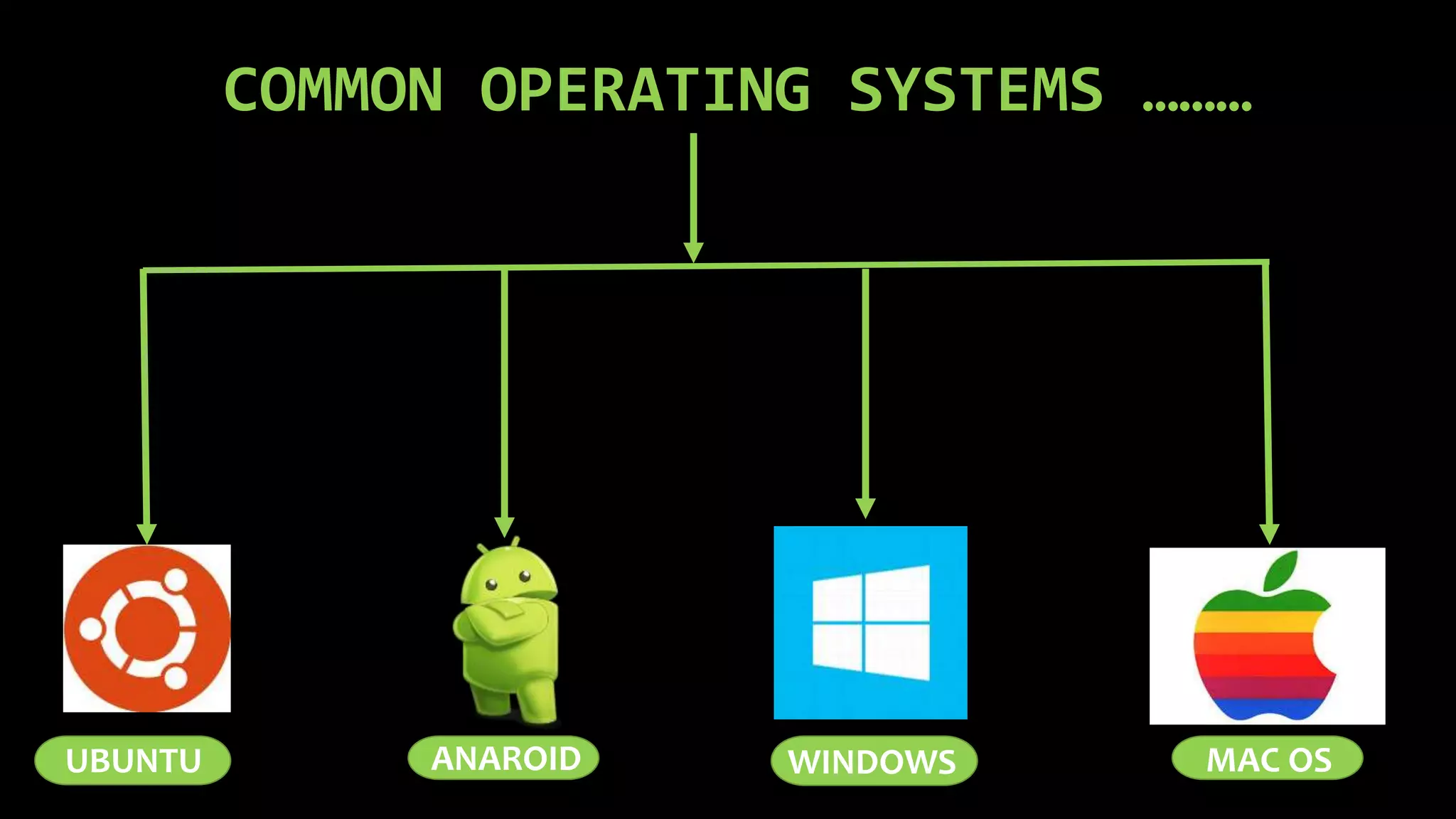
Examples of common operating systems: Ubuntu, Android, Windows, and macOS.
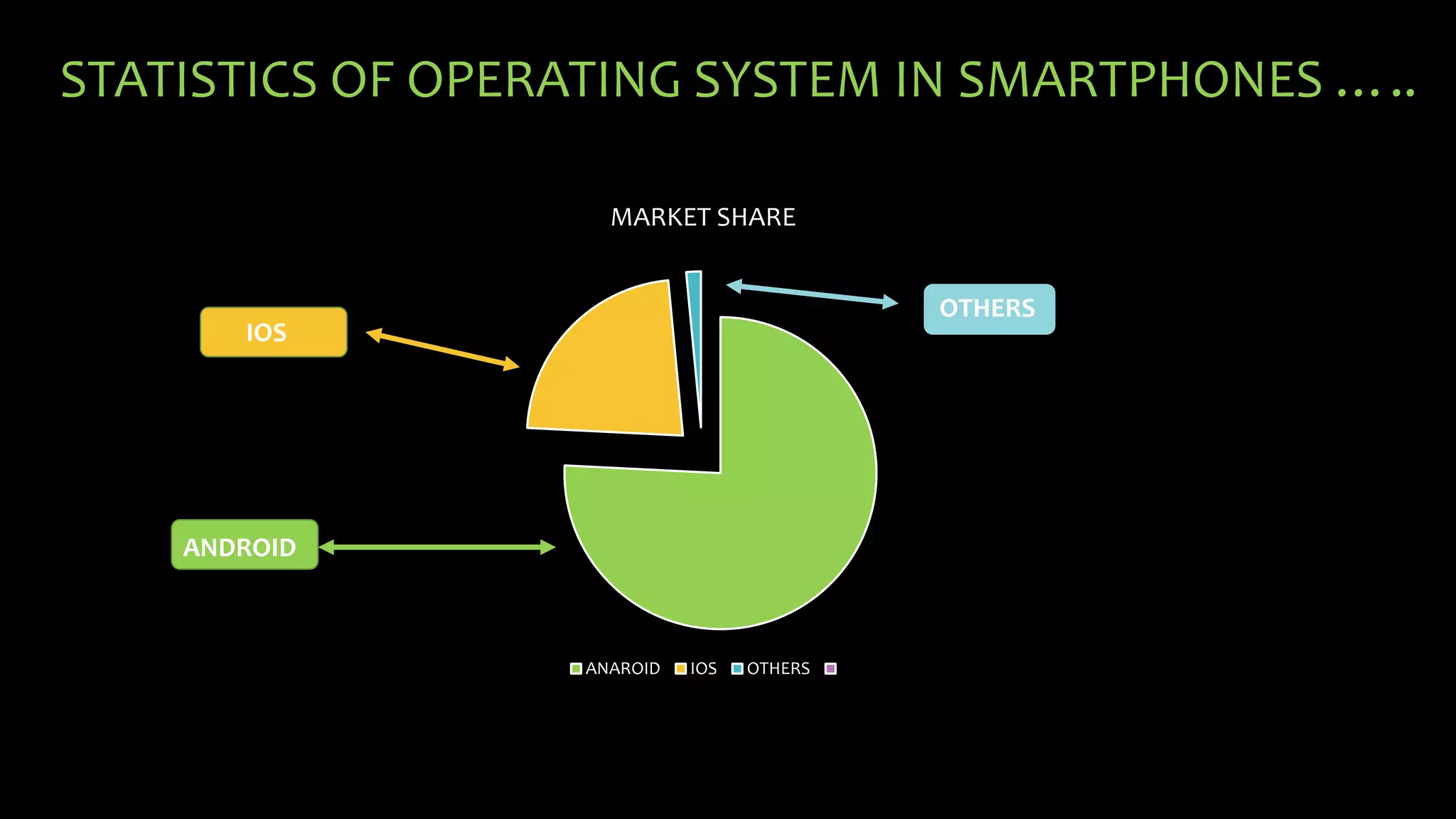
Statistics of smartphone operating systems showing market share for Android, iOS, and others.
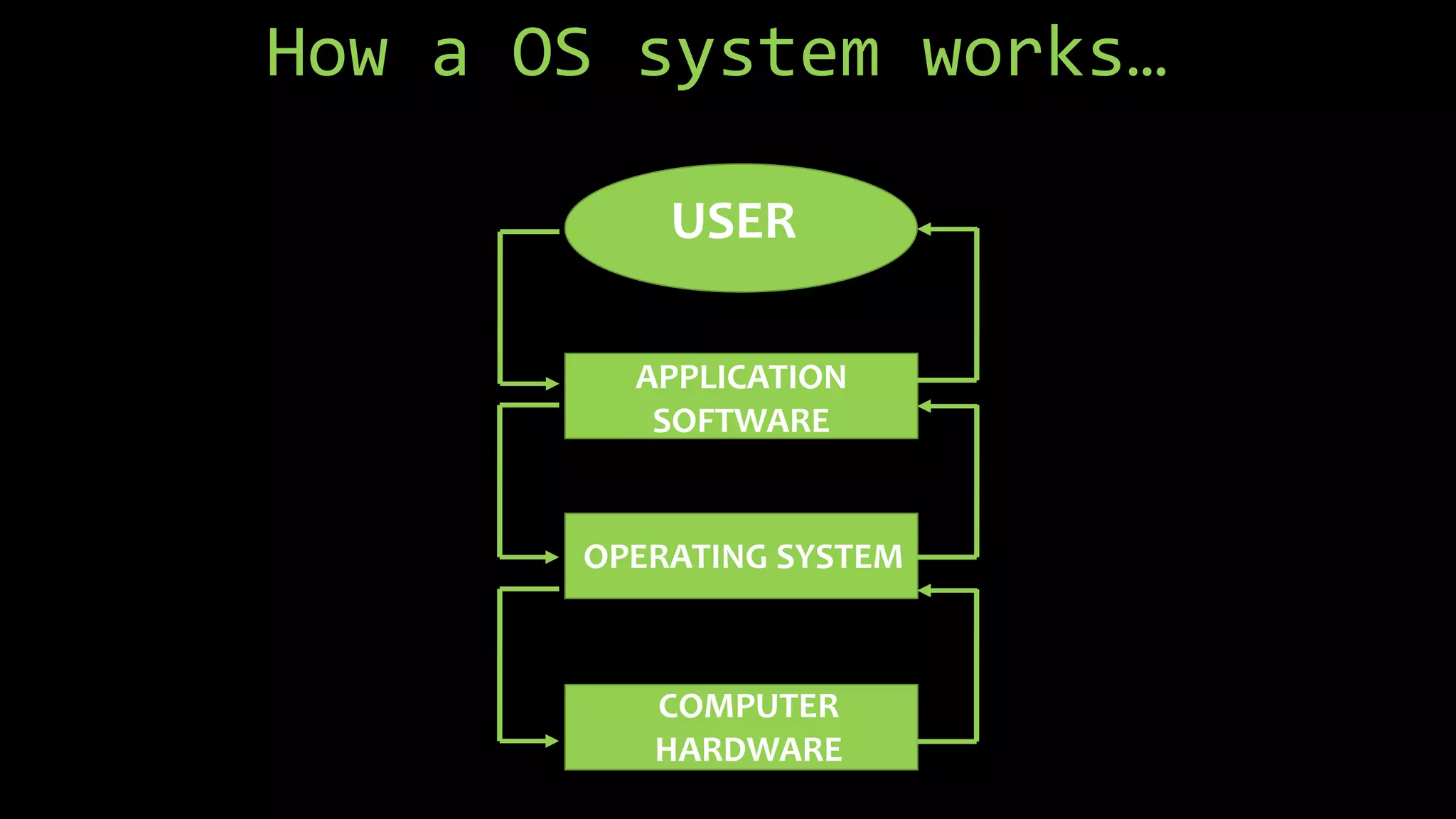
Illustrates how application software interacts with the operating system and computer hardware from the user's perspective.
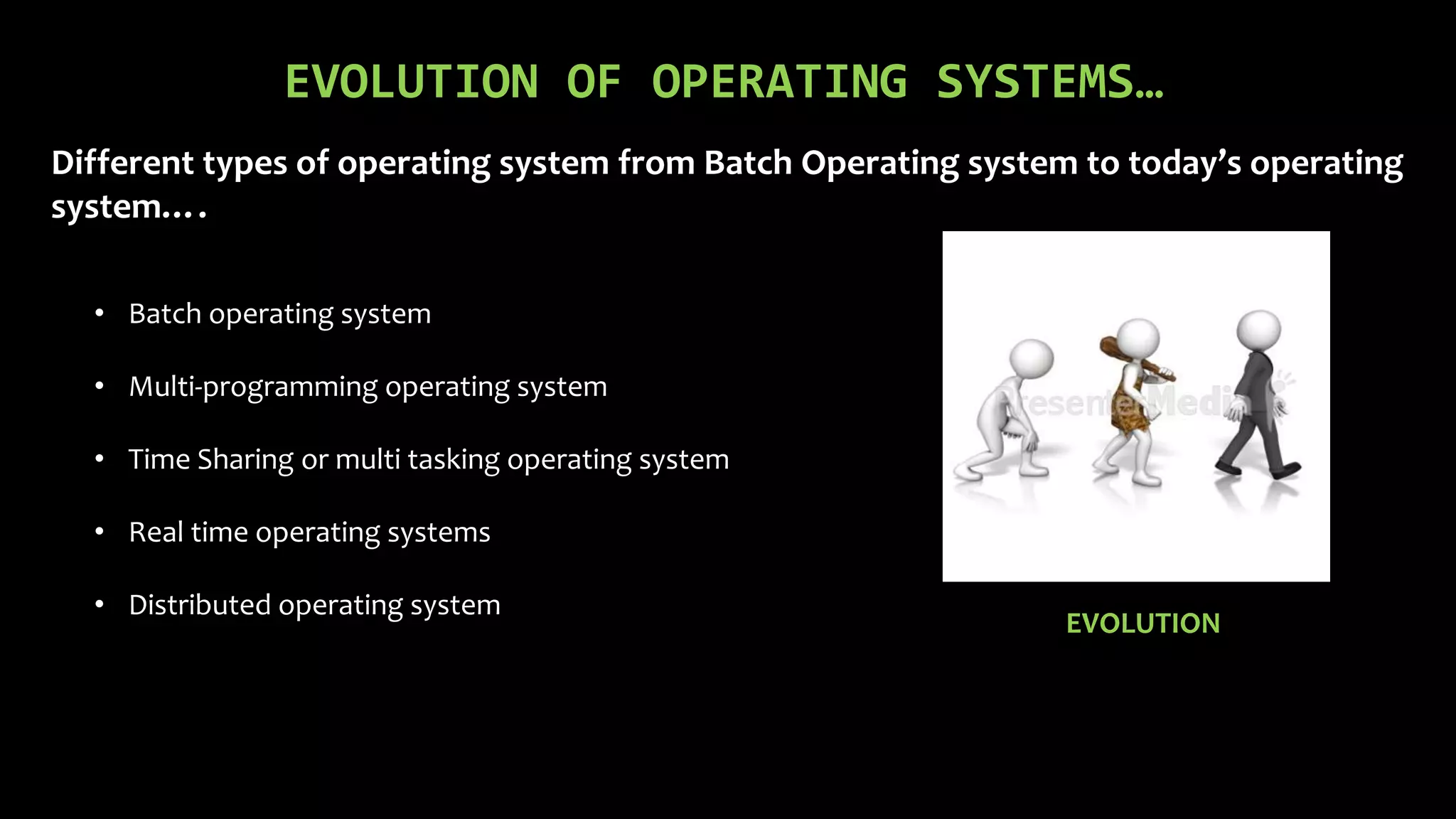
Chronological development of operating systems from batch systems to advanced types like distributed and real-time.
Conclusion and thanks to the audience for their attention.
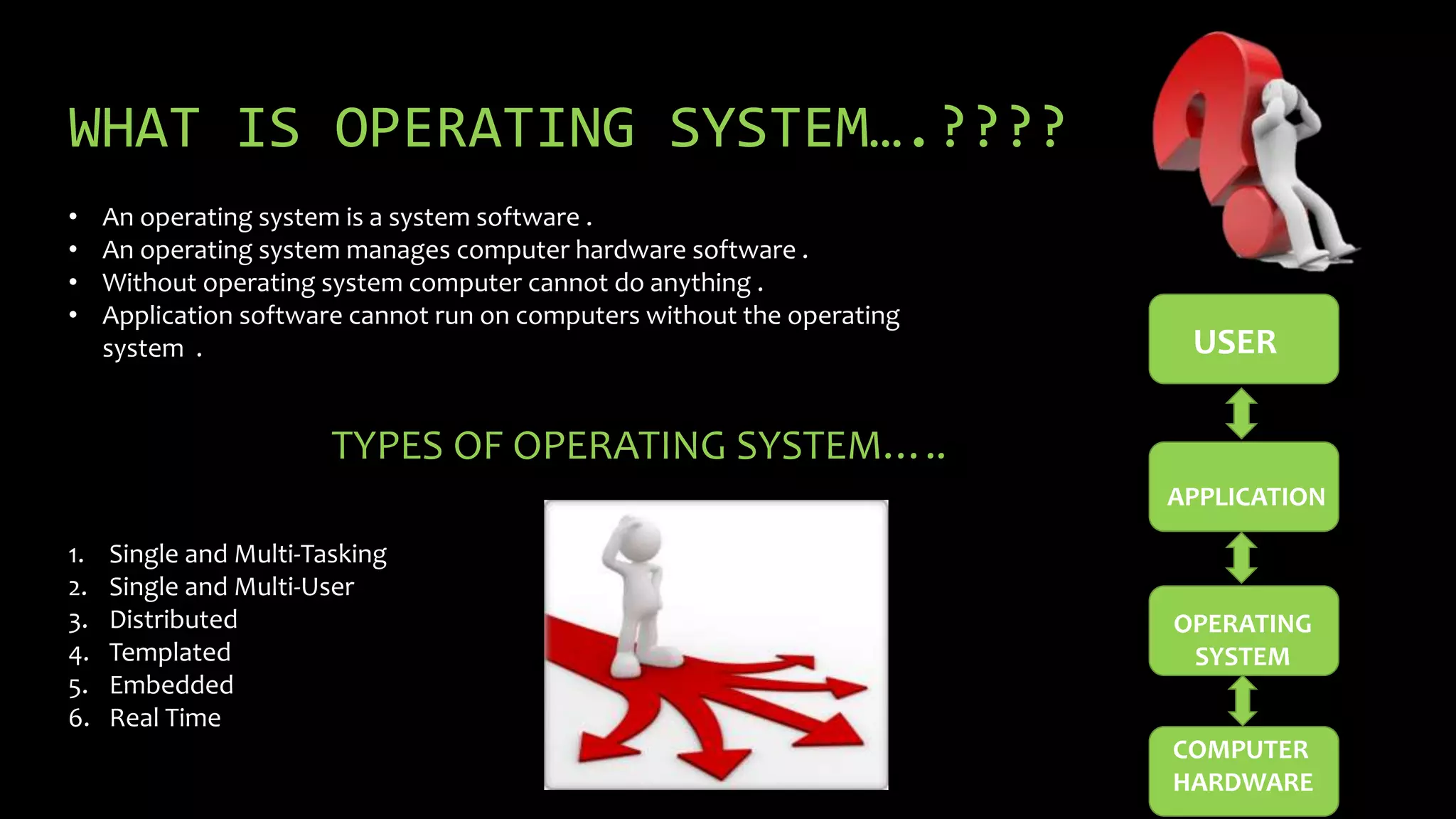
WHAT IS OPERATINGSYSTEM….????
• An operating system is a system software .
• An operating system manages computer hardware software .
• Without operating system computer cannot do anything .
• Application software cannot run on computers without the operating
system . USER
APPLICATION
OPERATING
SYSTEM
COMPUTER
HARDWARE
TYPES OF OPERATING SYSTEM…..
1. Single and Multi-Tasking
2. Single and Multi-User
3. Distributed
4. Templated
5. Embedded
6. Real Time
3.
DIFFERENT TYPES……
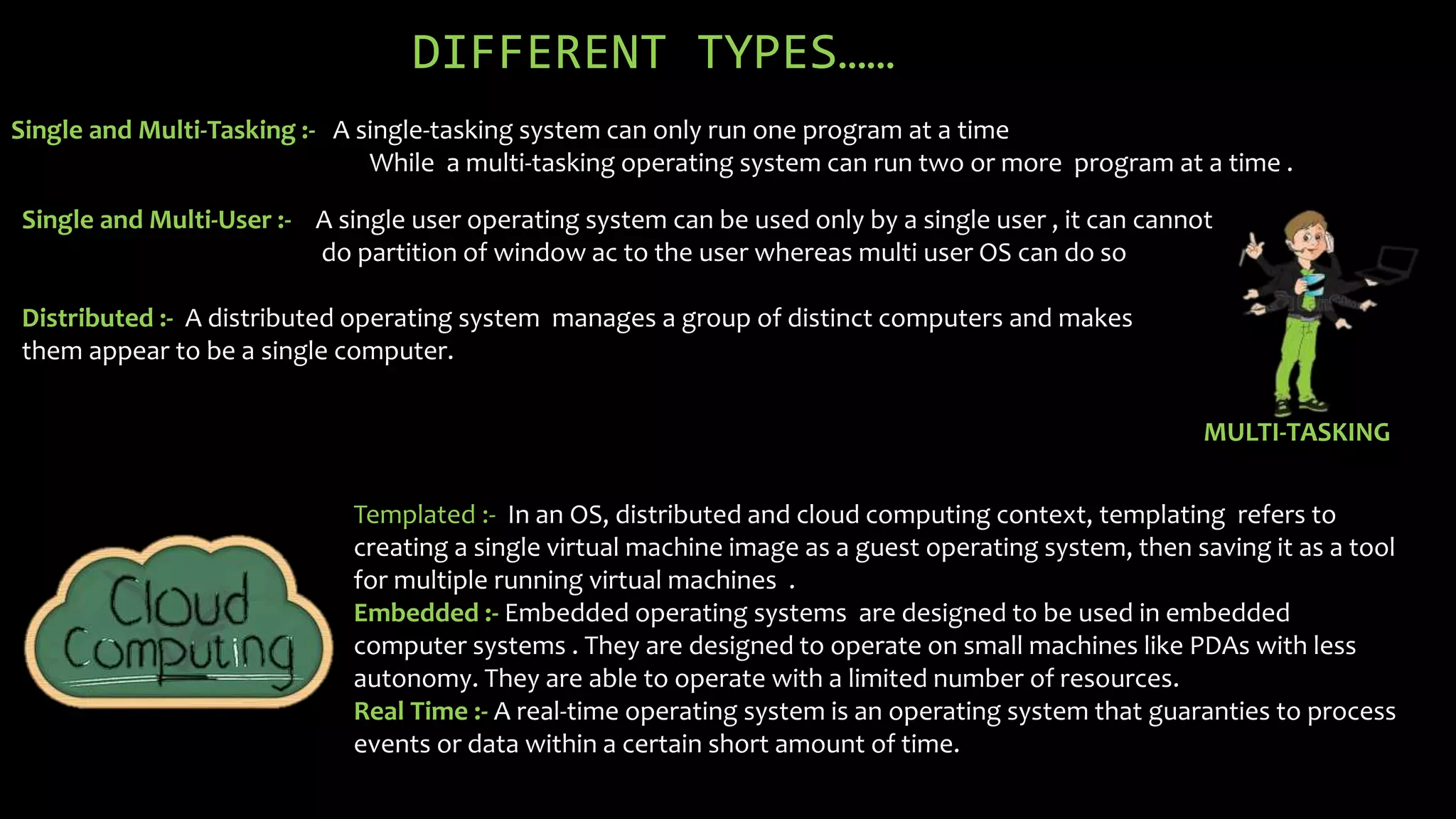
Single andMulti-Tasking :- A single-tasking system can only run one program at a time
While a multi-tasking operating system can run two or more program at a time .
Single and Multi-User :-
Distributed :- A distributed operating system manages a group of distinct computers and makes
them appear to be a single computer.
MULTI-TASKING
Templated :- In an OS, distributed and cloud computing context, templating refers to
creating a single virtual machine image as a guest operating system, then saving it as a tool
for multiple running virtual machines .
Embedded :- Embedded operating systems are designed to be used in embedded
computer systems . They are designed to operate on small machines like PDAs with less
autonomy. They are able to operate with a limited number of resources.
Real Time :- A real-time operating system is an operating system that guaranties to process
events or data within a certain short amount of time.
A single user operating system can be used only by a single user , it can cannot
do partition of window ac to the user whereas multi user OS can do so
4.
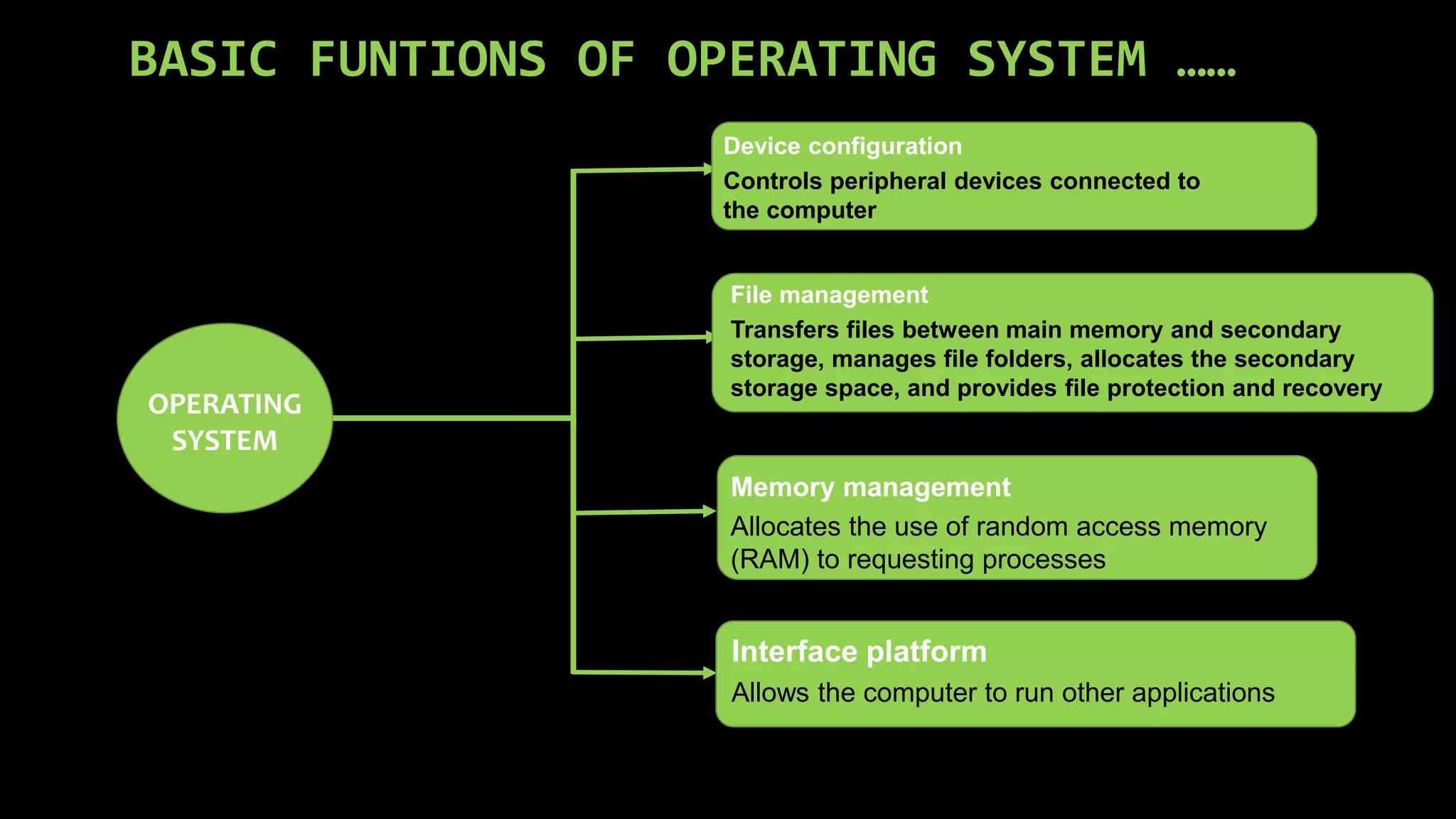
BASIC FUNTIONS OFOPERATING SYSTEM ……
OPERATING
SYSTEM
Device configuration
Controls peripheral devices connected to
the computer
File management
Transfers files between main memory and secondary
storage, manages file folders, allocates the secondary
storage space, and provides file protection and recovery
Memory management
Allocates the use of random access memory
(RAM) to requesting processes
Interface platform
Allows the computer to run other applications
STATISTICS OF OPERATINGSYSTEM IN SMARTPHONES …..
ANAROID IOS OTHERS
MARKET SHARE
ANDROID
IOS
OTHERS
7.
How a OSsystem works…
APPLICATION
SOFTWARE
USER
OPERATING SYSTEM
COMPUTER
HARDWARE
8.
EVOLUTION OF OPERATINGSYSTEMS…
Different types of operating system from Batch Operating system to today’s operating
system….
• Batch operating system
• Multi-programming operating system
• Time Sharing or multi tasking operating system
• Real time operating systems
• Distributed operating system
EVOLUTION