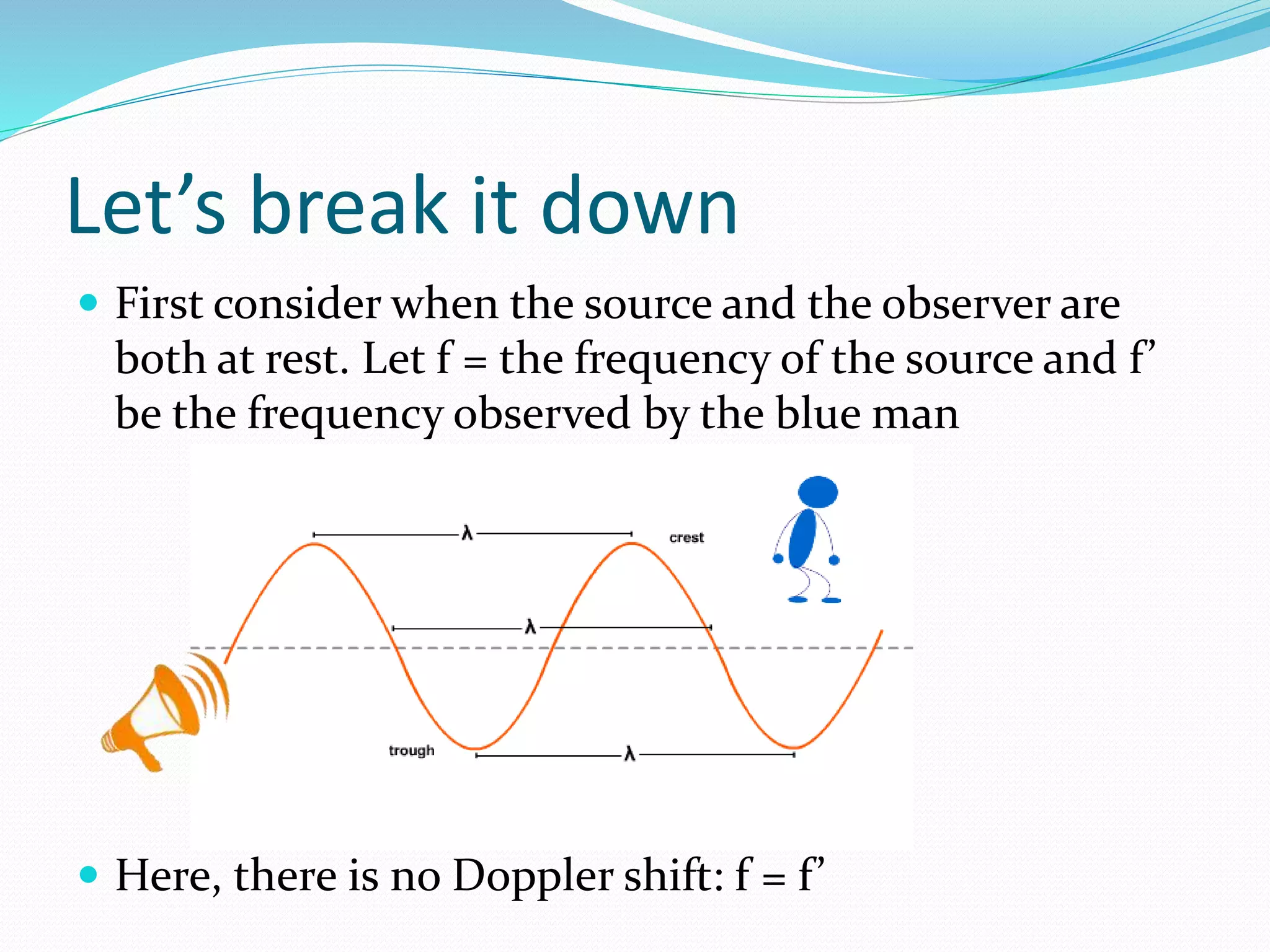
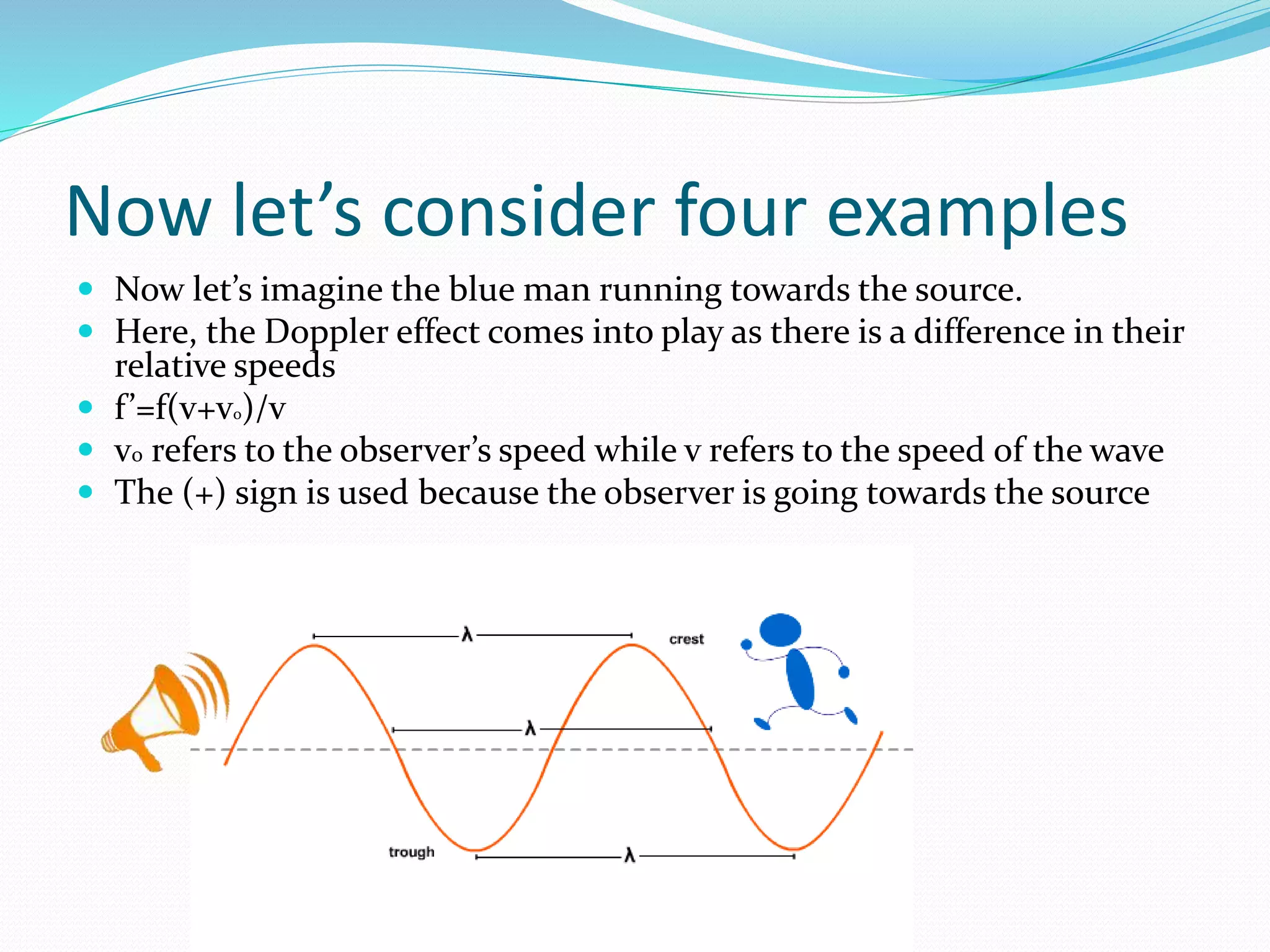
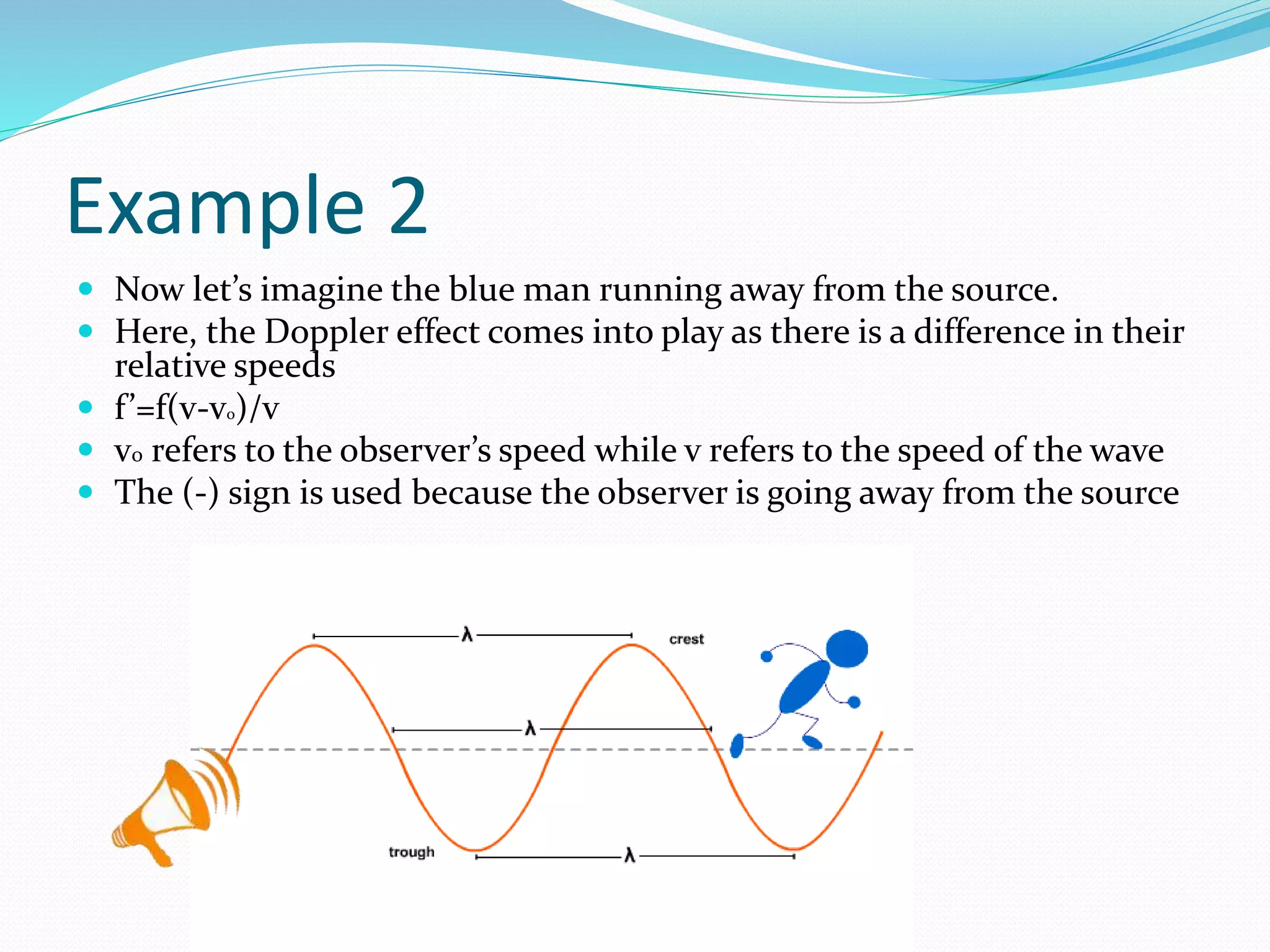
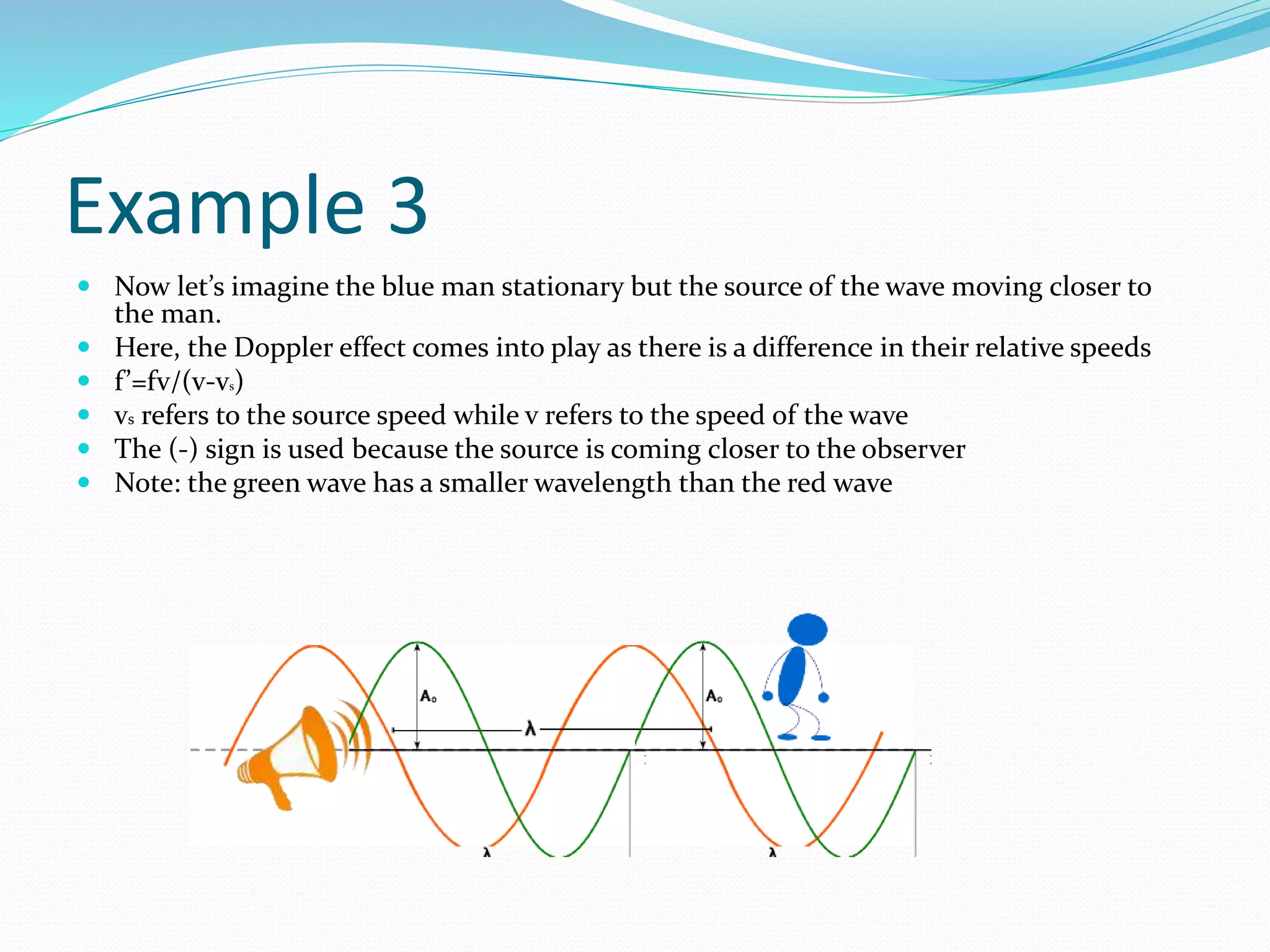
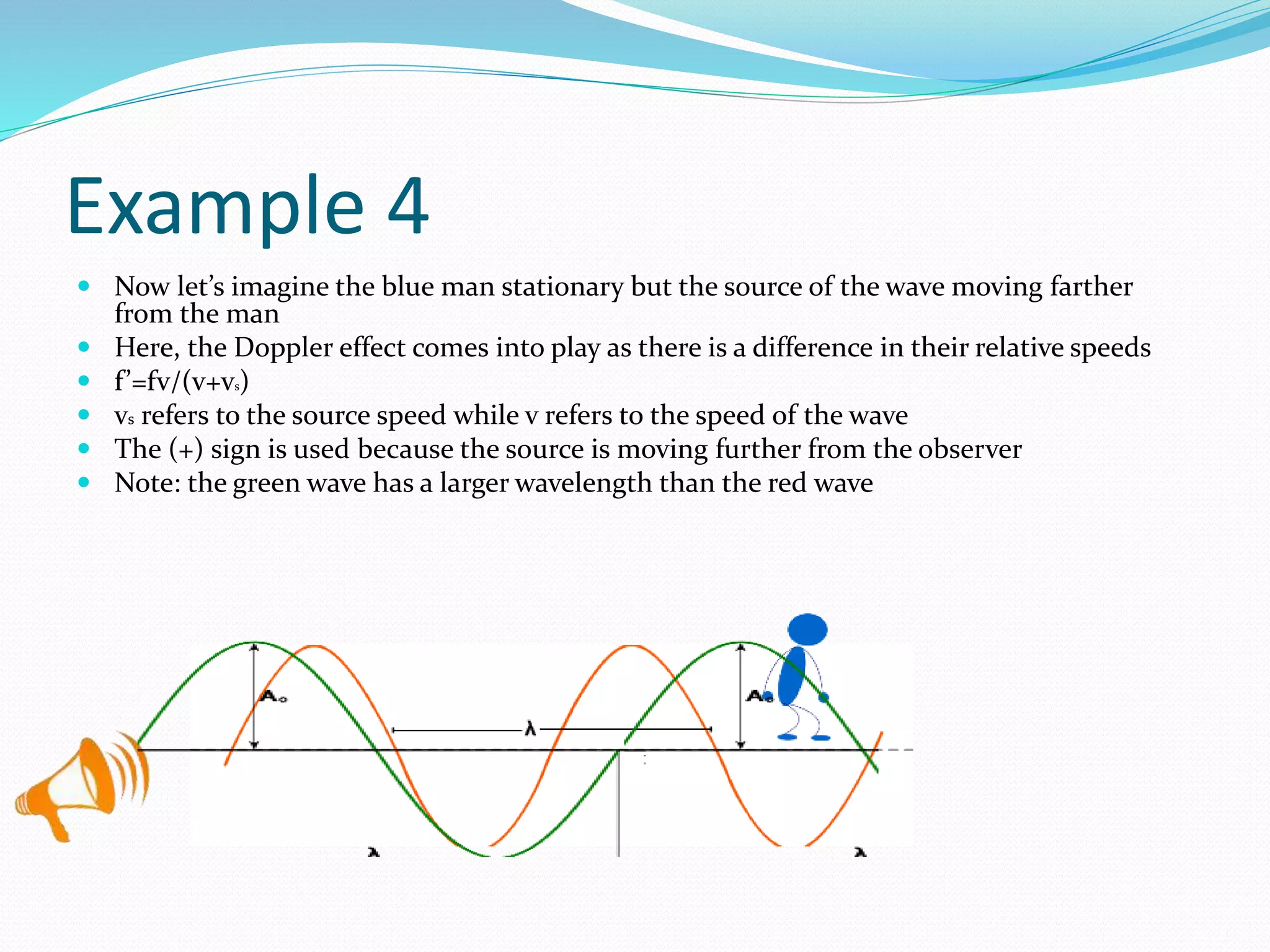
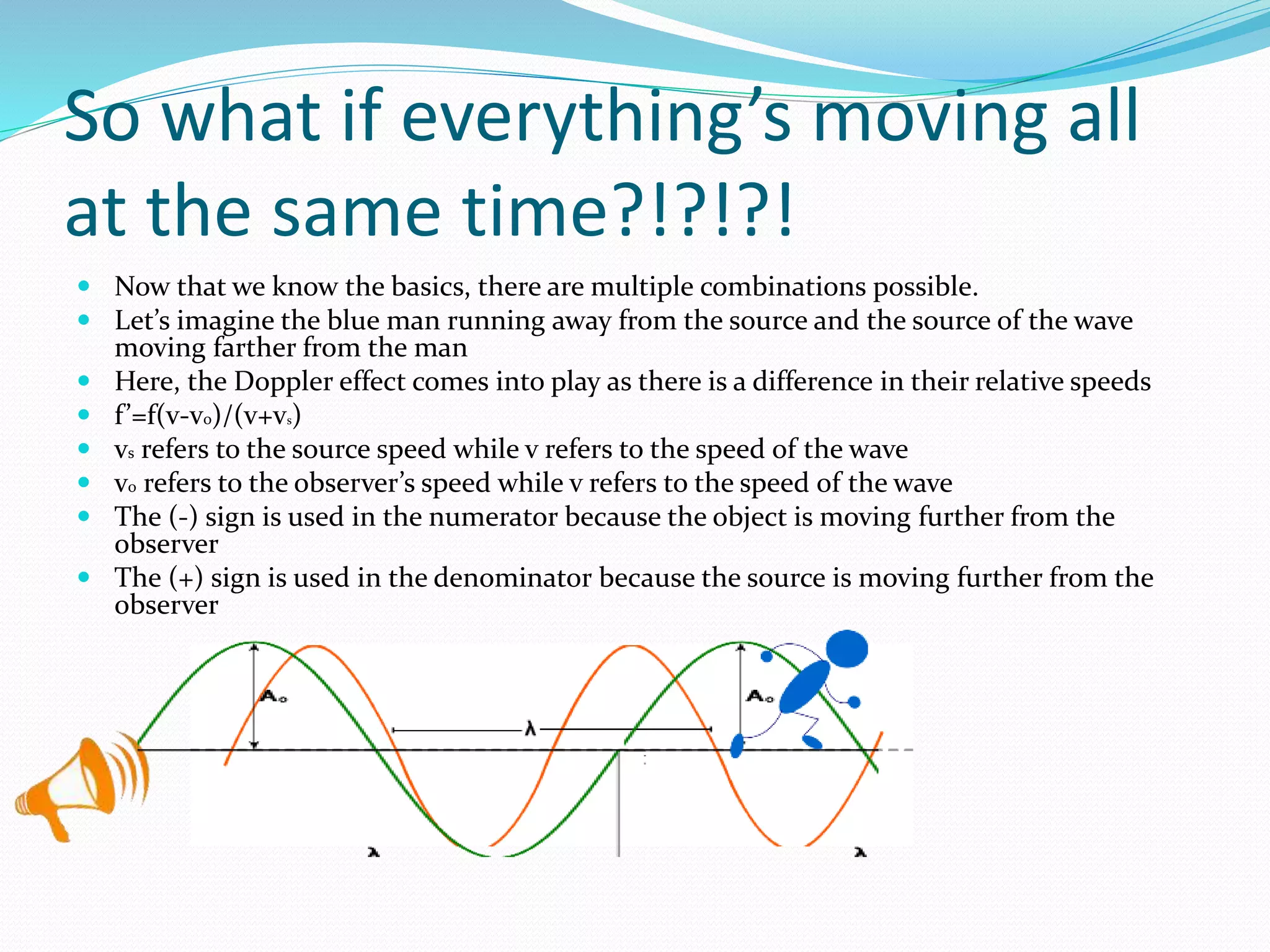
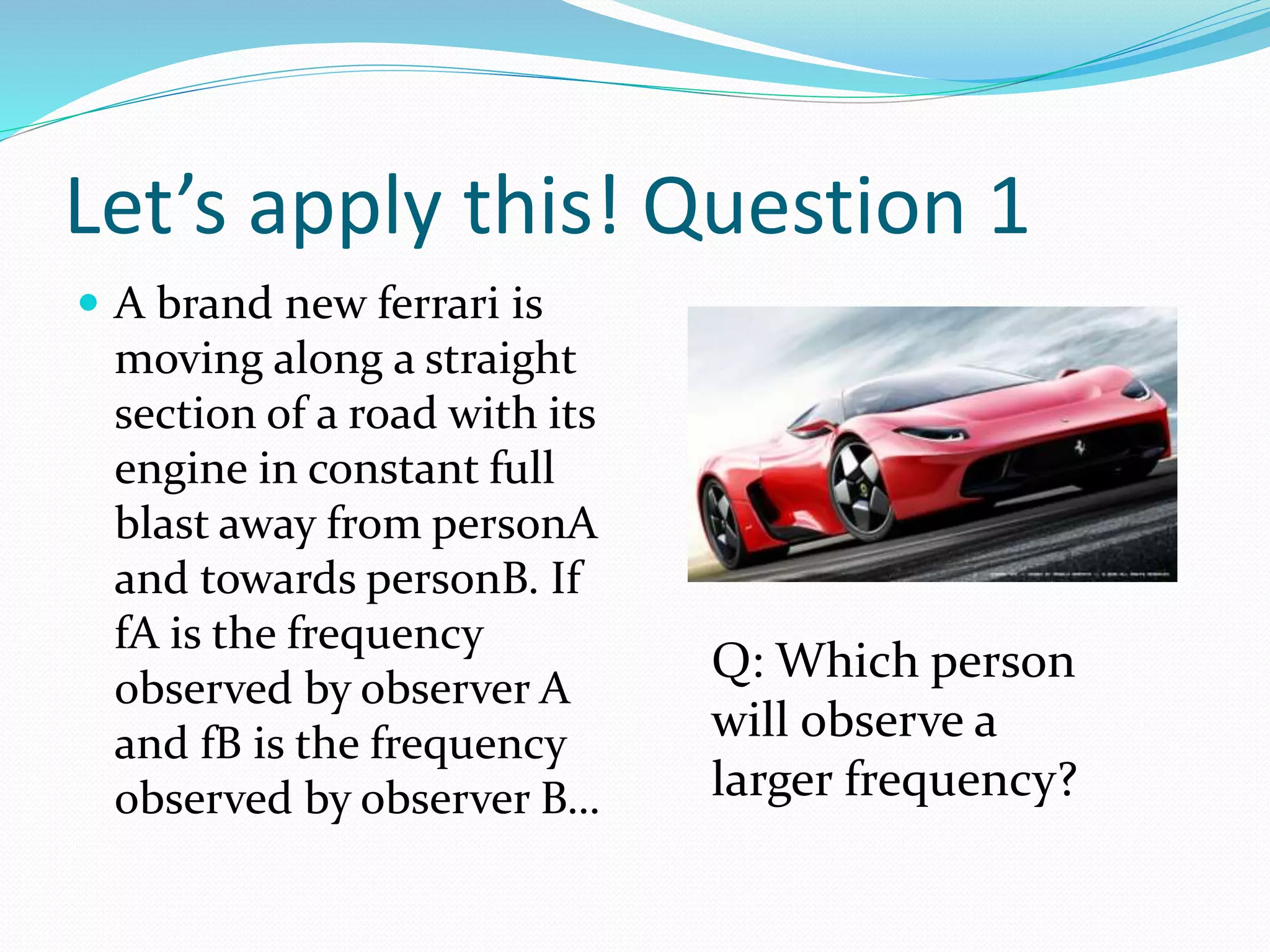
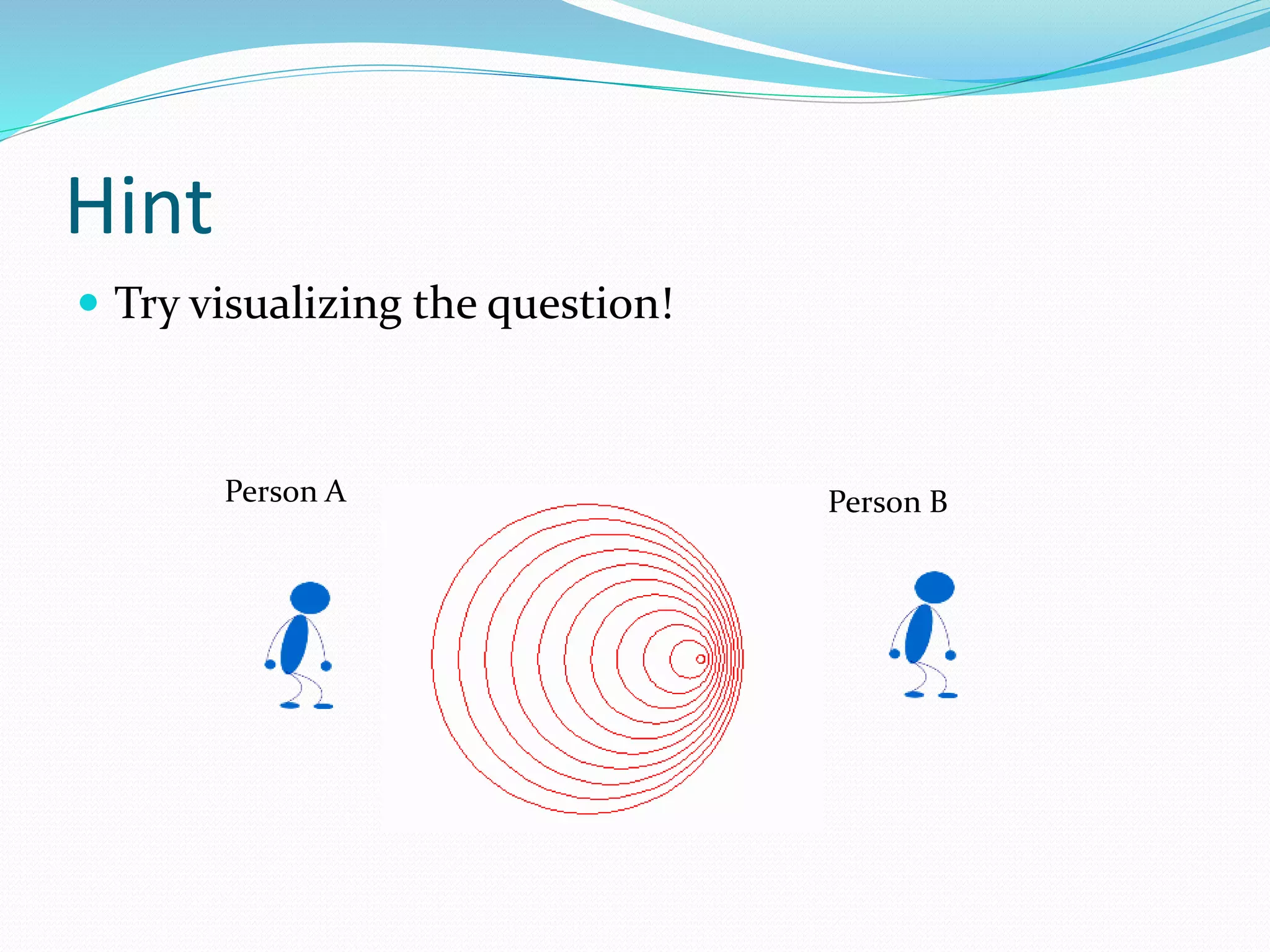
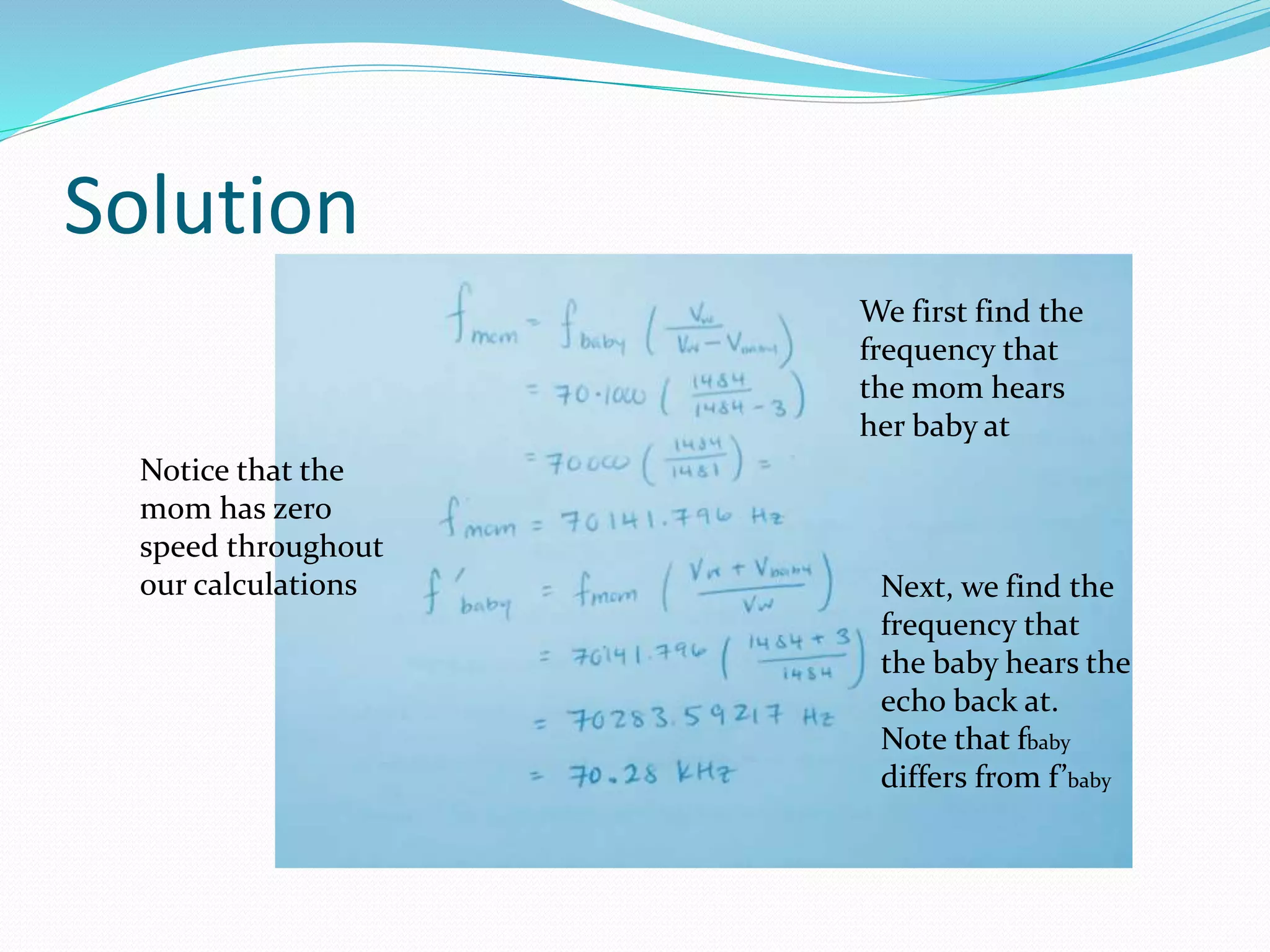
This document discusses the Doppler effect through examples of waves emitted from a source towards both a stationary and moving observer. It begins by defining the Doppler effect as a difference between the frequency of emitted waves and the observed frequency when the source and observer are in relative motion. Examples are then given of various scenarios where the observer or source is moving towards or away from the other. Equations for calculating the observed frequency are provided for each scenario. The document concludes by posing example problems applying the Doppler effect concepts and walking through the steps to solve them.