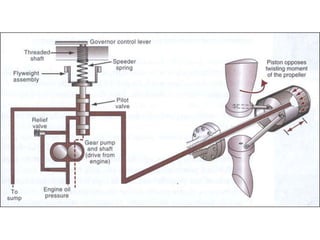
Over-speed: Level to Descending (or unscrewing prop knob)
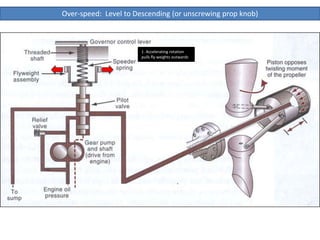
1. Accelerating rotation
pulls fly weights outwards
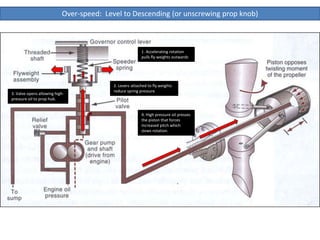
Over-speed: Level to Descending (or unscrewing prop knob)
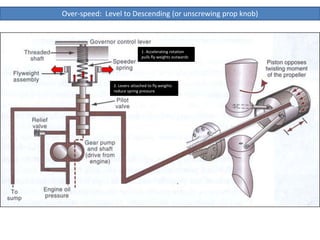
1. Accelerating rotation
pulls fly weights outwards
2. Levers attached to fly weights
reduce spring pressure
Over-speed: Level to Descending (or unscrewing prop knob)
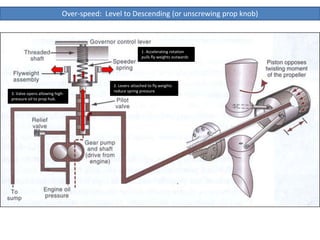
1. Accelerating rotation
pulls fly weights outwards
2. Levers attached to fly weights
reduce spring pressure
3. Valve opens allowing high-
pressure oil to prop hub.
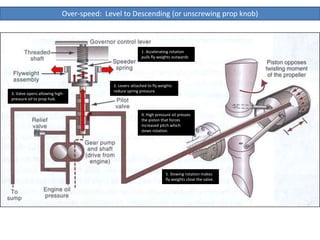
Over-speed: Level to Descending (or unscrewing prop knob)
4. High pressure oil presses
the piston that forces
increased pitch which
slows rotation.
1. Accelerating rotation
pulls fly weights outwards
2. Levers attached to fly weights
reduce spring pressure
3. Valve opens allowing high-
pressure oil to prop hub.
Over-speed: Level to Descending (or unscrewing prop knob)
4. High pressure oil presses
the piston that forces
increased pitch which
slows rotation.
1. Accelerating rotation
pulls fly weights outwards
2. Levers attached to fly weights
reduce spring pressure
3. Valve opens allowing high-
pressure oil to prop hub.
5. Slowing rotation makes
fly weights close the valve.
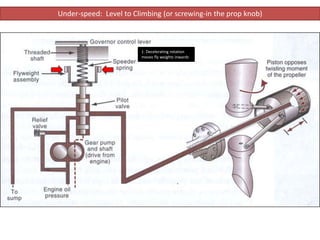
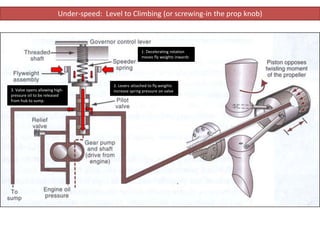
Under-speed: Level to Climbing (or screwing-in the prop knob)
1. Decelerating rotation
moves fly weights inwards
Under-speed: Level to Climbing (or screwing-in the prop knob)
1. Decelerating rotation
moves fly weights inwards
2. Levers attached to fly weights
increase spring pressure on valve
Under-speed: Level to Climbing (or screwing-in the prop knob)
1. Decelerating rotation
moves fly weights inwards
2. Levers attached to fly weights
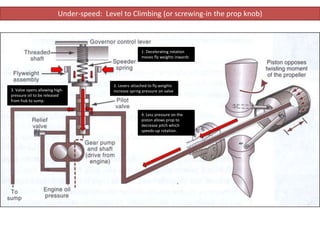
increase spring pressure on valve3. Valve opens allowing high-
pressure oil to be released
from hub to sump.
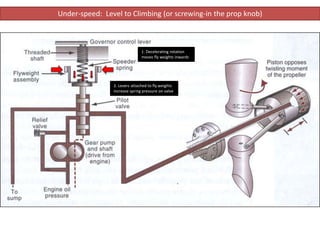
Under-speed: Level to Climbing (or screwing-in the prop knob)
4. Less pressure on the
piston allows prop to
decrease pitch which
speeds-up rotation.
1. Decelerating rotation
moves fly weights inwards
2. Levers attached to fly weights
increase spring pressure on valve3. Valve opens allowing high-
pressure oil to be released
from hub to sump.
Under-speed: Level to Climbing (or screwing-in the prop knob)
4. Less pressure on the
piston allows prop to
decrease pitch which
speeds-up rotation.
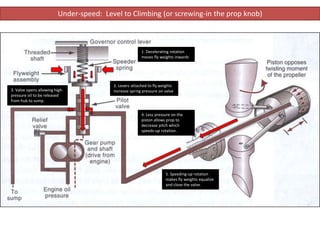
1. Decelerating rotation
moves fly weights inwards
2. Levers attached to fly weights
increase spring pressure on valve3. Valve opens allowing high-
pressure oil to be released
from hub to sump.
5. Speeding-up rotation
makes fly weights equalize
and close the valve.

Constant speed prop show

  • 2.
    Over-speed: Level toDescending (or unscrewing prop knob) 1. Accelerating rotation pulls fly weights outwards
  • 3.
    Over-speed: Level toDescending (or unscrewing prop knob) 1. Accelerating rotation pulls fly weights outwards 2. Levers attached to fly weights reduce spring pressure
  • 4.
    Over-speed: Level toDescending (or unscrewing prop knob) 1. Accelerating rotation pulls fly weights outwards 2. Levers attached to fly weights reduce spring pressure 3. Valve opens allowing high- pressure oil to prop hub.
  • 5.
    Over-speed: Level toDescending (or unscrewing prop knob) 4. High pressure oil presses the piston that forces increased pitch which slows rotation. 1. Accelerating rotation pulls fly weights outwards 2. Levers attached to fly weights reduce spring pressure 3. Valve opens allowing high- pressure oil to prop hub.
  • 6.
    Over-speed: Level toDescending (or unscrewing prop knob) 4. High pressure oil presses the piston that forces increased pitch which slows rotation. 1. Accelerating rotation pulls fly weights outwards 2. Levers attached to fly weights reduce spring pressure 3. Valve opens allowing high- pressure oil to prop hub. 5. Slowing rotation makes fly weights close the valve.
  • 7.
    Under-speed: Level toClimbing (or screwing-in the prop knob) 1. Decelerating rotation moves fly weights inwards
  • 8.
    Under-speed: Level toClimbing (or screwing-in the prop knob) 1. Decelerating rotation moves fly weights inwards 2. Levers attached to fly weights increase spring pressure on valve
  • 9.
    Under-speed: Level toClimbing (or screwing-in the prop knob) 1. Decelerating rotation moves fly weights inwards 2. Levers attached to fly weights increase spring pressure on valve3. Valve opens allowing high- pressure oil to be released from hub to sump.
  • 10.
    Under-speed: Level toClimbing (or screwing-in the prop knob) 4. Less pressure on the piston allows prop to decrease pitch which speeds-up rotation. 1. Decelerating rotation moves fly weights inwards 2. Levers attached to fly weights increase spring pressure on valve3. Valve opens allowing high- pressure oil to be released from hub to sump.
  • 11.
    Under-speed: Level toClimbing (or screwing-in the prop knob) 4. Less pressure on the piston allows prop to decrease pitch which speeds-up rotation. 1. Decelerating rotation moves fly weights inwards 2. Levers attached to fly weights increase spring pressure on valve3. Valve opens allowing high- pressure oil to be released from hub to sump. 5. Speeding-up rotation makes fly weights equalize and close the valve.