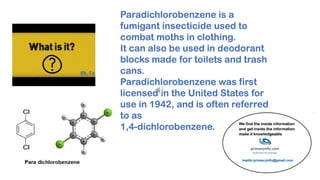
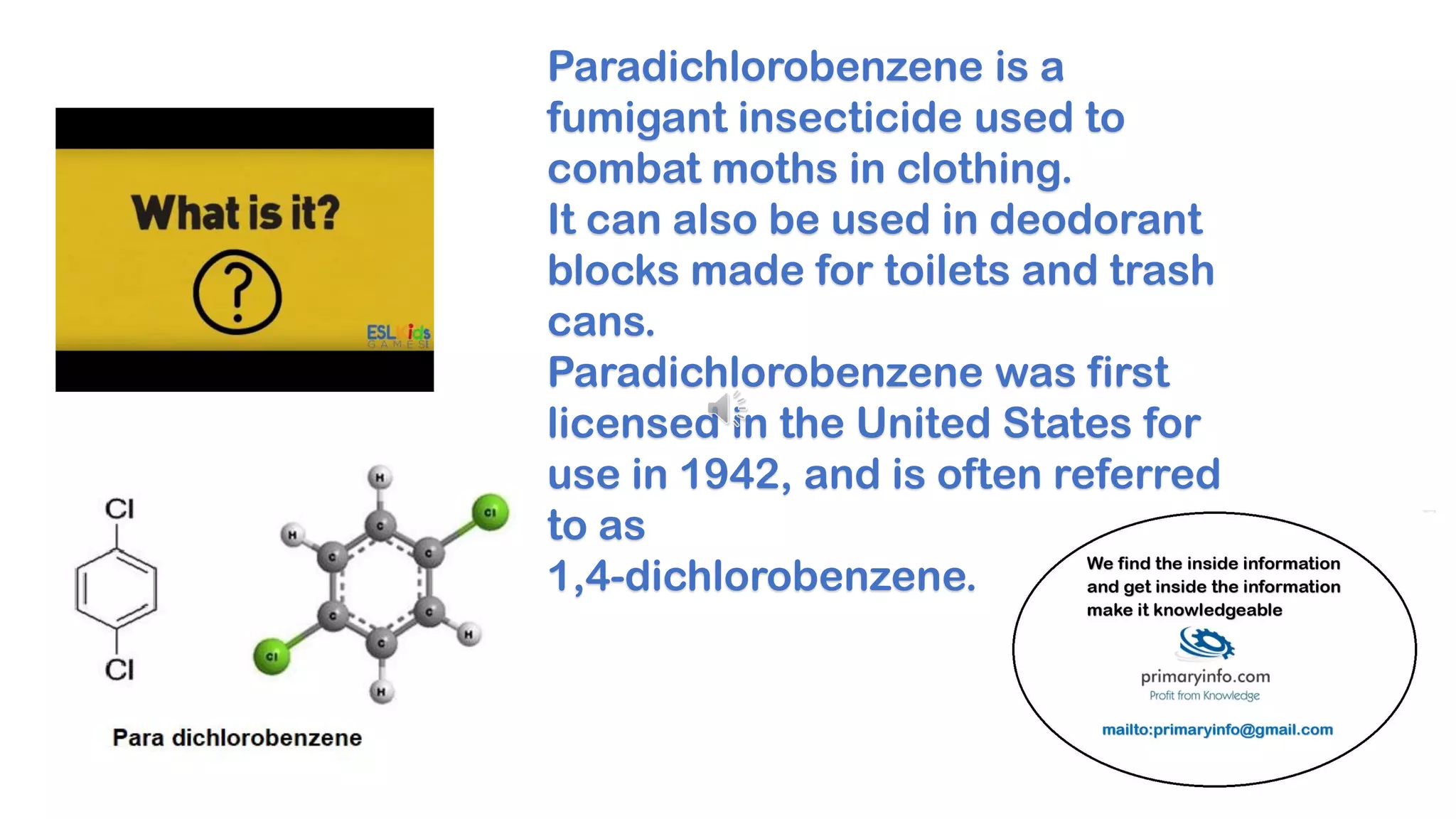
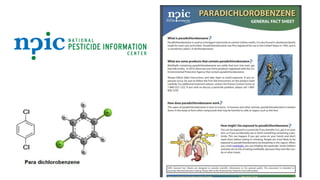
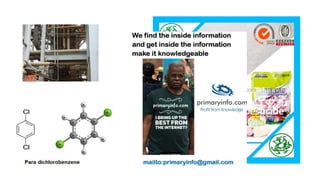
Paradichlorobenzene is a
fumigant insecticide used to
combat moths in clothing.
It can also be used in deodorant
blocks made for toilets and trash
cans.
Paradichlorobenzene was first
licensed in the United States for
use in 1942, and is often referred
to as
1,4-dichlorobenzene.
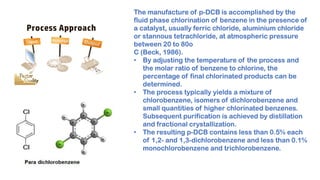
The manufacture of p-DCB is accomplished by the
fluid phase chlorination of benzene in the presence of
a catalyst, usually ferric chloride, aluminium chloride
or stannous tetrachloride, at atmospheric pressure
between 20 to 80o
C (Beck, 1986).
• By adjusting the temperature of the process and
the molar ratio of benzene to chlorine, the
percentage of final chlorinated products can be
determined.
• The process typically yields a mixture of
chlorobenzene, isomers of dichlorobenzene and
small quantities of higher chlorinated benzenes.
Subsequent purification is achieved by distillation
and fractional crystallization.
• The resulting p-DCB contains less than 0.5% each
of 1,2- and 1,3-dichlorobenzene and less than 0.1%
monochlorobenzene and trichlorobenzene.
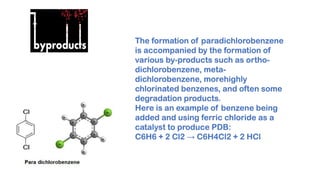
The formation of paradichlorobenzene
is accompanied by the formation of
various by-products such as ortho-
dichlorobenzene, meta-
dichlorobenzene, morehighly
chlorinated benzenes, and often some
degradation products.
Here is an example of benzene being
added and using ferric chloride as a
catalyst to produce PDB:
C6H6 + 2 Cl2 → C6H4Cl2 + 2 HCl
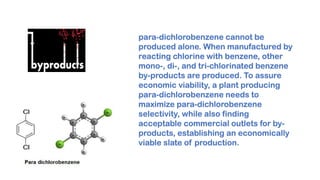
para-dichlorobenzene cannot be
produced alone. When manufactured by
reacting chlorine with benzene, other
mono-, di-, and tri-chlorinated benzene
by-products are produced. To assure
economic viability, a plant producing
para-dichlorobenzene needs to
maximize para-dichlorobenzene
selectivity, while also finding
acceptable commercial outlets for by-
products, establishing an economically
viable slate of production.
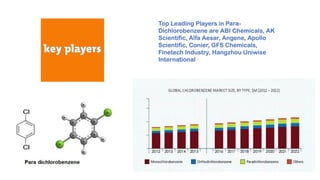
Top Leading Players in Para-
Dichlorobenzene are ABI Chemicals, AK
Scientific, Alfa Aesar, Angene, Apollo
Scientific, Conier, GFS Chemicals,
Finetech Industry, Hangzhou Uniwise
International
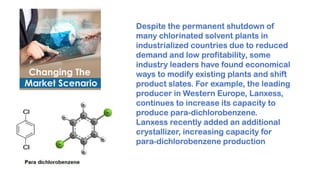
Despite the permanent shutdown of
many chlorinated solvent plants in
industrialized countries due to reduced
demand and low profitability, some
industry leaders have found economical
ways to modify existing plants and shift
product slates. For example, the leading
producer in Western Europe, Lanxess,
continues to increase its capacity to
produce para-dichlorobenzene.
Lanxess recently added an additional
crystallizer, increasing capacity for
para-dichlorobenzene production
Database offer
Paradichlorobenzene
Analysis, Products, Process, Patent,
Consultants, Company Profiles,
Suppliers, Report
Primary Information Services
https://www.primaryinfo.com/agro-
chemicals/paradichlorobenzene%20.htm
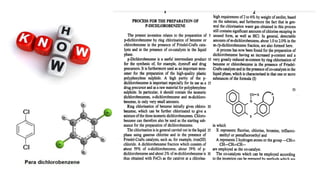
Para dichlorobenzene

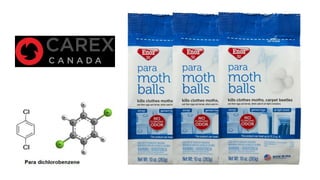
Para dichlorobenzene

  • 1.
    Paradichlorobenzene is a fumigantinsecticide used to combat moths in clothing. It can also be used in deodorant blocks made for toilets and trash cans. Paradichlorobenzene was first licensed in the United States for use in 1942, and is often referred to as 1,4-dichlorobenzene.
  • 3.
    The manufacture ofp-DCB is accomplished by the fluid phase chlorination of benzene in the presence of a catalyst, usually ferric chloride, aluminium chloride or stannous tetrachloride, at atmospheric pressure between 20 to 80o C (Beck, 1986). • By adjusting the temperature of the process and the molar ratio of benzene to chlorine, the percentage of final chlorinated products can be determined. • The process typically yields a mixture of chlorobenzene, isomers of dichlorobenzene and small quantities of higher chlorinated benzenes. Subsequent purification is achieved by distillation and fractional crystallization. • The resulting p-DCB contains less than 0.5% each of 1,2- and 1,3-dichlorobenzene and less than 0.1% monochlorobenzene and trichlorobenzene.
  • 4.
    The formation ofparadichlorobenzene is accompanied by the formation of various by-products such as ortho- dichlorobenzene, meta- dichlorobenzene, morehighly chlorinated benzenes, and often some degradation products. Here is an example of benzene being added and using ferric chloride as a catalyst to produce PDB: C6H6 + 2 Cl2 → C6H4Cl2 + 2 HCl
  • 5.
    para-dichlorobenzene cannot be producedalone. When manufactured by reacting chlorine with benzene, other mono-, di-, and tri-chlorinated benzene by-products are produced. To assure economic viability, a plant producing para-dichlorobenzene needs to maximize para-dichlorobenzene selectivity, while also finding acceptable commercial outlets for by- products, establishing an economically viable slate of production.
  • 6.
    Top Leading Playersin Para- Dichlorobenzene are ABI Chemicals, AK Scientific, Alfa Aesar, Angene, Apollo Scientific, Conier, GFS Chemicals, Finetech Industry, Hangzhou Uniwise International
  • 7.
    Despite the permanentshutdown of many chlorinated solvent plants in industrialized countries due to reduced demand and low profitability, some industry leaders have found economical ways to modify existing plants and shift product slates. For example, the leading producer in Western Europe, Lanxess, continues to increase its capacity to produce para-dichlorobenzene. Lanxess recently added an additional crystallizer, increasing capacity for para-dichlorobenzene production
  • 10.
    Database offer Paradichlorobenzene Analysis, Products,Process, Patent, Consultants, Company Profiles, Suppliers, Report Primary Information Services https://www.primaryinfo.com/agro- chemicals/paradichlorobenzene%20.htm