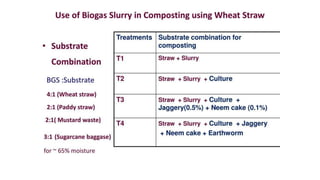
Biogas from
Wheat Straw
Presentation by
Primary Information Services
www.primaryinfo.com
mailto:primaryinfo@gmail.com
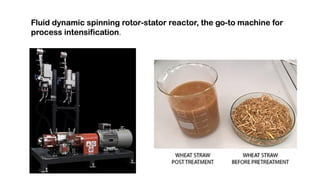
Fluid dynamic spinning rotor-stator reactor, the go-to machine for
process intensification.
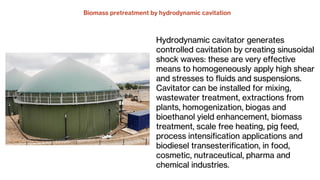
Hydrodynamic cavitator generates
controlled cavitation by creating sinusoidal
shock waves: these are very effective
means to homogeneously apply high shear
and stresses to fluids and suspensions.
Cavitator can be installed for mixing,
wastewater treatment, extractions from
plants, homogenization, biogas and
bioethanol yield enhancement, biomass
treatment, scale free heating, pig feed,
process intensification applications and
biodiesel transesterification, in food,
cosmetic, nutraceutical, pharma and
chemical industries.
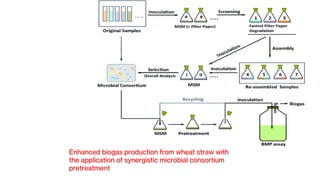
Enhanced biogas production from wheat straw with
the application of synergistic microbial consortium
pretreatment
Abstract
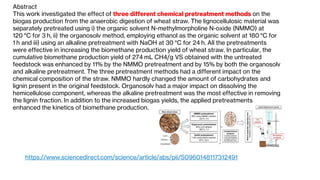
This work investigated the effect of three different chemical pretreatment methods on the
biogas production from the anaerobic digestion of wheat straw. The lignocellulosic material was
separately pretreated using i) the organic solvent N-methylmorpholine N-oxide (NMMO) at
120 °C for 3 h, ii) the organosolv method, employing ethanol as the organic solvent at 180 °C for
1 h and iii) using an alkaline pretreatment with NaOH at 30 °C for 24 h. All the pretreatments
were effective in increasing the biomethane production yield of wheat straw. In particular, the
cumulative biomethane production yield of 274 mL CH4/g VS obtained with the untreated
feedstock was enhanced by 11% by the NMMO pretreatment and by 15% by both the organosolv
and alkaline pretreatment. The three pretreatment methods had a different impact on the
chemical composition of the straw. NMMO hardly changed the amount of carbohydrates and
lignin present in the original feedstock. Organosolv had a major impact on dissolving the
hemicellulose component, whereas the alkaline pretreatment was the most effective in removing
the lignin fraction. In addition to the increased biogas yields, the applied pretreatments
enhanced the kinetics of biomethane production.
https://www.sciencedirect.com/science/article/abs/pii/S0960148117312491
Abstract
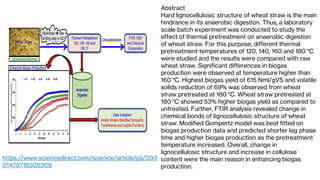
Hard lignocellulosic structure of wheat straw is the main
hindrance in its anaerobic digestion. Thus, a laboratory
scale batch experiment was conducted to study the
effect of thermal pretreatment on anaerobic digestion
of wheat straw. For this purpose, different thermal
pretreatment temperatures of 120, 140, 160 and 180 °C
were studied and the results were compared with raw
wheat straw. Significant differences in biogas
production were observed at temperature higher than
160 °C. Highest biogas yield of 615 Nml/gVS and volatile
solids reduction of 69% was observed from wheat
straw pretreated at 180 °C. Wheat straw pretreated at
180 °C showed 53% higher biogas yield as compared to
untreated. Further, FTIR analysis revealed change in
chemical bonds of lignocellulosic structure of wheat
straw. Modified Gompertz model was best fitted on
biogas production data and predicted shorter lag phase
time and higher biogas production as the pretreatment
temperature increased. Overall, change in
lignocellulosic structure and increase in cellulose
content were the main reason in enhancing biogas
production.
https://www.sciencedirect.com/science/article/pii/S03
01479718305309
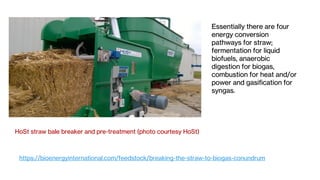
HoSt straw bale breaker and pre-treatment (photo courtesy HoSt)
Essentially there are four
energy conversion
pathways for straw;
fermentation for liquid
biofuels, anaerobic
digestion for biogas,
combustion for heat and/or
power and gasification for
syngas.
https://bioenergyinternational.com/feedstock/breaking-the-straw-to-biogas-conundrum
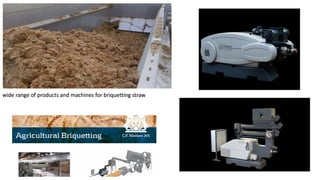
wide range of products and machines for briquetting straw
Primary Information Services
We Find the Primary Information
that is Reliable Categorize it, index it
Adsense and make it Knowledgeable
to every one Who is willing to Pay for it
Questions?
mailto:primaryinfo@gmail.com

Biogas from Wheat Straw

  • 1.
    Biogas from Wheat Straw Presentationby Primary Information Services www.primaryinfo.com mailto:primaryinfo@gmail.com
  • 2.
    Fluid dynamic spinningrotor-stator reactor, the go-to machine for process intensification.
  • 3.
    Hydrodynamic cavitator generates controlledcavitation by creating sinusoidal shock waves: these are very effective means to homogeneously apply high shear and stresses to fluids and suspensions. Cavitator can be installed for mixing, wastewater treatment, extractions from plants, homogenization, biogas and bioethanol yield enhancement, biomass treatment, scale free heating, pig feed, process intensification applications and biodiesel transesterification, in food, cosmetic, nutraceutical, pharma and chemical industries.
  • 5.
    Enhanced biogas productionfrom wheat straw with the application of synergistic microbial consortium pretreatment
  • 6.
    Abstract This work investigatedthe effect of three different chemical pretreatment methods on the biogas production from the anaerobic digestion of wheat straw. The lignocellulosic material was separately pretreated using i) the organic solvent N-methylmorpholine N-oxide (NMMO) at 120 °C for 3 h, ii) the organosolv method, employing ethanol as the organic solvent at 180 °C for 1 h and iii) using an alkaline pretreatment with NaOH at 30 °C for 24 h. All the pretreatments were effective in increasing the biomethane production yield of wheat straw. In particular, the cumulative biomethane production yield of 274 mL CH4/g VS obtained with the untreated feedstock was enhanced by 11% by the NMMO pretreatment and by 15% by both the organosolv and alkaline pretreatment. The three pretreatment methods had a different impact on the chemical composition of the straw. NMMO hardly changed the amount of carbohydrates and lignin present in the original feedstock. Organosolv had a major impact on dissolving the hemicellulose component, whereas the alkaline pretreatment was the most effective in removing the lignin fraction. In addition to the increased biogas yields, the applied pretreatments enhanced the kinetics of biomethane production. https://www.sciencedirect.com/science/article/abs/pii/S0960148117312491
  • 7.
    Abstract Hard lignocellulosic structureof wheat straw is the main hindrance in its anaerobic digestion. Thus, a laboratory scale batch experiment was conducted to study the effect of thermal pretreatment on anaerobic digestion of wheat straw. For this purpose, different thermal pretreatment temperatures of 120, 140, 160 and 180 °C were studied and the results were compared with raw wheat straw. Significant differences in biogas production were observed at temperature higher than 160 °C. Highest biogas yield of 615 Nml/gVS and volatile solids reduction of 69% was observed from wheat straw pretreated at 180 °C. Wheat straw pretreated at 180 °C showed 53% higher biogas yield as compared to untreated. Further, FTIR analysis revealed change in chemical bonds of lignocellulosic structure of wheat straw. Modified Gompertz model was best fitted on biogas production data and predicted shorter lag phase time and higher biogas production as the pretreatment temperature increased. Overall, change in lignocellulosic structure and increase in cellulose content were the main reason in enhancing biogas production. https://www.sciencedirect.com/science/article/pii/S03 01479718305309
  • 8.
    HoSt straw balebreaker and pre-treatment (photo courtesy HoSt) Essentially there are four energy conversion pathways for straw; fermentation for liquid biofuels, anaerobic digestion for biogas, combustion for heat and/or power and gasification for syngas. https://bioenergyinternational.com/feedstock/breaking-the-straw-to-biogas-conundrum
  • 10.
    wide range ofproducts and machines for briquetting straw
  • 12.
    Primary Information Services WeFind the Primary Information that is Reliable Categorize it, index it Adsense and make it Knowledgeable to every one Who is willing to Pay for it Questions? mailto:primaryinfo@gmail.com