Digital Scholarship at the University of York 
Facts & Figures on Training 
run by the 
Library & IT 
@ned_potter
At the University of York we run a 
converged Library & IT Service. Between us we’ve plugged a gap by providing training in the area of digital scholarship, via existing channels and our own workshops. 
These have been embraced 
whole-heartedly by the academic 
community. This presentation offers some 
facts and figures about what we’ve 
done, from January 2013 to 
July 2014.
Face to face training 
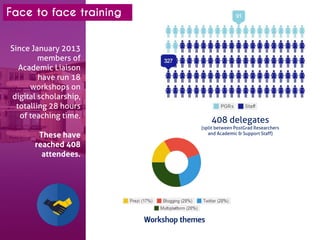
Since January 2013 members of Academic Liaison have run 18 workshops on digital scholarship, totalling 28 hours of teaching time. 
These have reached 408 attendees. 
408 delegates 
(split between PostGrad Researchers and Academic & Support Staff) 
Workshop themes
Face to face training 
Feedback 
“Great. Ready to conquer the blogging world! Thanks” 
“Excellent session, well presented and very friendly” 
“Totally recommended” 
“It saved me so much time, since I now know exactly what options I’m interested in… THANKS!” 
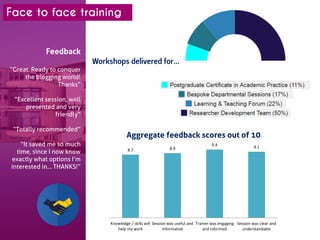
8.7 
8.9 
9.4 
9.1 
Knowledge / skills will 
help my work 
Session was useful and 
informative 
Trainer was engaging 
and informed 
Session was clear and 
understandable 
Aggregate feedback scores out of 10 
Workshops delivered for…
Face to face training 
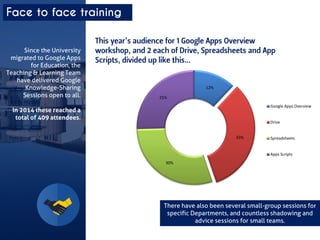
Since the University migrated to Google Apps for Education, the Teaching & Learning Team have delivered Google Knowledge-Sharing Sessions open to all. 
In 2014 these reached a total of 409 attendees. 
12% 
33% 
30% 
25% 
Google Apps Overview 
Drive 
Spreadsheets 
Apps Scripts 
This year’s audience for 1 Google Apps Overview workshop, and 2 each of Drive, Spreadsheets and App Scripts, divided up like this… 
There have also been several small-group sessions for specific Departments, and countless shadowing and advice sessions for small teams.
Online materials 
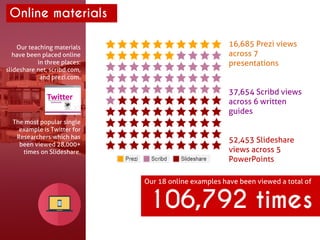
Our teaching materials have been placed online in three places: slideshare.net, scribd.com, and prezi.com. 
The most popular single example is Twitter for Researchers which has been viewed 28,000+ times on Slideshare. 
Our 18 online examples have been viewed a total of 
106,792 times 
16,685 Prezi views across 7 presentations 
37,654 Scribd views across 6 written guides 
52,453 Slideshare views across 5 PowerPoints
Writing about teaching 
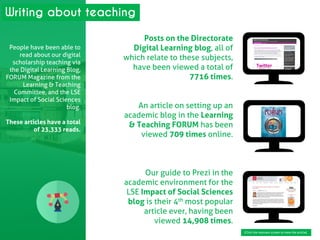
People have been able to read about our digital scholarship teaching via the Digital Learning Blog, FORUM Magazine from the Learning & Teaching Committee, and the LSE Impact of Social Sciences blog. 
These articles have a total of 23,333 reads. 
Posts on the Directorate Digital Learning blog, all of which relate to these subjects, have been viewed a total of 7716 times. 
An article on setting up an academic blog in the Learning & Teaching FORUM has been viewed 709 times online. 
Our guide to Prezi in the academic environment for the LSE Impact of Social Sciences blog is their 4th most popular article ever, having been viewed 14,908 times. 
(Click the relevant screen to view the article)
Social media stats 
Since September 2012 we’ve set up five social media related accounts for the Directorate, on YouTube, Prezi, Scribd, Blogger and Slideshare. 
(These figures reflect content in all areas, not just Digital Scholarship, which is what makes them different from the ‘Online materials’ stats in the earlier slide.) 
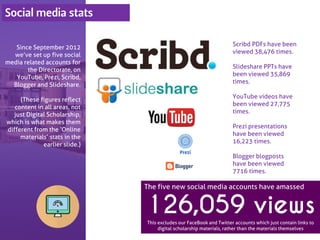
The five new social media accounts have amassed 
126,059 views 
This excludes our FaceBook and Twitter accounts which just contain links to digital scholarship materials, rather than the materials themselves 
Scribd PDFs have been viewed 38,476 times. 
Slideshare PPTs have been viewed 35,869 times. 
YouTube videos have been viewed 27,775 times. 
Prezi presentations have been viewed 16,223 times. 
Blogger blogposts have been viewed 7716 times.
Students Guide to Social Media 
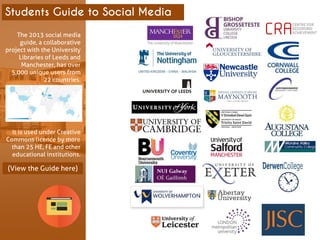
The 2013 social media guide, a collaborative project with the University Libraries of Leeds and Manchester, has over 5,000 unique users from 22 countries. 
It is used under Creative Commons licence by more than 25 HE, FE and other educational institutions. 
(View the Guide here.) 
(View the Guide here)
The point of this slide-deck is to say: if you can offer training in this area, do it! Staff and Researchers in Academic Departments are ready to engage with these sorts of tools via Library & IT run training, and as long as you communicate its value effectively, it should meet with huge demand.
More information 
Our Slideshare: 
Our Prezis: 
Our Scribds: 
Our Blog: 
Our SubjectGuides: 
Our Tweets: 
scribd.com/UniofYorkInformation 
digitallearningblog.york.ac.uk 
subjectguides.york.ac.uk 
prezi.com/user/uoyinformation 
slideshare.net/UniofYorkLibrary/ 
@UoYLibrary 
@UoYITServices
Credits 
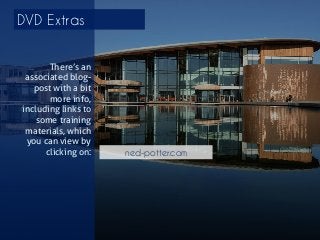
Heslington East Campus photograph (used with permission) by: 
Icons by: 
Sourced via: 
Paul Shields (University & Library Photographer) 
jozefkrajcovic.sk 
iconfinder.com
DVD Extras 
There’s an associated blog- post with a bit more info, including links to some training materials, which you can view by clicking on: 
ned-potter.com

Digital Scholarship at York

  • 1.
    Digital Scholarship atthe University of York Facts & Figures on Training run by the Library & IT @ned_potter
  • 2.
    At the Universityof York we run a converged Library & IT Service. Between us we’ve plugged a gap by providing training in the area of digital scholarship, via existing channels and our own workshops. These have been embraced whole-heartedly by the academic community. This presentation offers some facts and figures about what we’ve done, from January 2013 to July 2014.
  • 3.
    Face to facetraining Since January 2013 members of Academic Liaison have run 18 workshops on digital scholarship, totalling 28 hours of teaching time. These have reached 408 attendees. 408 delegates (split between PostGrad Researchers and Academic & Support Staff) Workshop themes
  • 4.
    Face to facetraining Feedback “Great. Ready to conquer the blogging world! Thanks” “Excellent session, well presented and very friendly” “Totally recommended” “It saved me so much time, since I now know exactly what options I’m interested in… THANKS!” 8.7 8.9 9.4 9.1 Knowledge / skills will help my work Session was useful and informative Trainer was engaging and informed Session was clear and understandable Aggregate feedback scores out of 10 Workshops delivered for…
  • 5.
    Face to facetraining Since the University migrated to Google Apps for Education, the Teaching & Learning Team have delivered Google Knowledge-Sharing Sessions open to all. In 2014 these reached a total of 409 attendees. 12% 33% 30% 25% Google Apps Overview Drive Spreadsheets Apps Scripts This year’s audience for 1 Google Apps Overview workshop, and 2 each of Drive, Spreadsheets and App Scripts, divided up like this… There have also been several small-group sessions for specific Departments, and countless shadowing and advice sessions for small teams.
  • 6.
    Online materials Ourteaching materials have been placed online in three places: slideshare.net, scribd.com, and prezi.com. The most popular single example is Twitter for Researchers which has been viewed 28,000+ times on Slideshare. Our 18 online examples have been viewed a total of 106,792 times 16,685 Prezi views across 7 presentations 37,654 Scribd views across 6 written guides 52,453 Slideshare views across 5 PowerPoints
  • 7.
    Writing about teaching People have been able to read about our digital scholarship teaching via the Digital Learning Blog, FORUM Magazine from the Learning & Teaching Committee, and the LSE Impact of Social Sciences blog. These articles have a total of 23,333 reads. Posts on the Directorate Digital Learning blog, all of which relate to these subjects, have been viewed a total of 7716 times. An article on setting up an academic blog in the Learning & Teaching FORUM has been viewed 709 times online. Our guide to Prezi in the academic environment for the LSE Impact of Social Sciences blog is their 4th most popular article ever, having been viewed 14,908 times. (Click the relevant screen to view the article)
  • 8.
    Social media stats Since September 2012 we’ve set up five social media related accounts for the Directorate, on YouTube, Prezi, Scribd, Blogger and Slideshare. (These figures reflect content in all areas, not just Digital Scholarship, which is what makes them different from the ‘Online materials’ stats in the earlier slide.) The five new social media accounts have amassed 126,059 views This excludes our FaceBook and Twitter accounts which just contain links to digital scholarship materials, rather than the materials themselves Scribd PDFs have been viewed 38,476 times. Slideshare PPTs have been viewed 35,869 times. YouTube videos have been viewed 27,775 times. Prezi presentations have been viewed 16,223 times. Blogger blogposts have been viewed 7716 times.
  • 9.
    Students Guide toSocial Media The 2013 social media guide, a collaborative project with the University Libraries of Leeds and Manchester, has over 5,000 unique users from 22 countries. It is used under Creative Commons licence by more than 25 HE, FE and other educational institutions. (View the Guide here.) (View the Guide here)
  • 10.
    The point ofthis slide-deck is to say: if you can offer training in this area, do it! Staff and Researchers in Academic Departments are ready to engage with these sorts of tools via Library & IT run training, and as long as you communicate its value effectively, it should meet with huge demand.
  • 11.
    More information OurSlideshare: Our Prezis: Our Scribds: Our Blog: Our SubjectGuides: Our Tweets: scribd.com/UniofYorkInformation digitallearningblog.york.ac.uk subjectguides.york.ac.uk prezi.com/user/uoyinformation slideshare.net/UniofYorkLibrary/ @UoYLibrary @UoYITServices
  • 12.
    Credits Heslington EastCampus photograph (used with permission) by: Icons by: Sourced via: Paul Shields (University & Library Photographer) jozefkrajcovic.sk iconfinder.com
  • 13.
    DVD Extras There’san associated blog- post with a bit more info, including links to some training materials, which you can view by clicking on: ned-potter.com