DFD, Decision Table, Decision Chart,
          Structure Charts


Souvagya Kumar Jena
Sec-B,Enroll-12BSP1971.
DFD(Data flow Diagram)
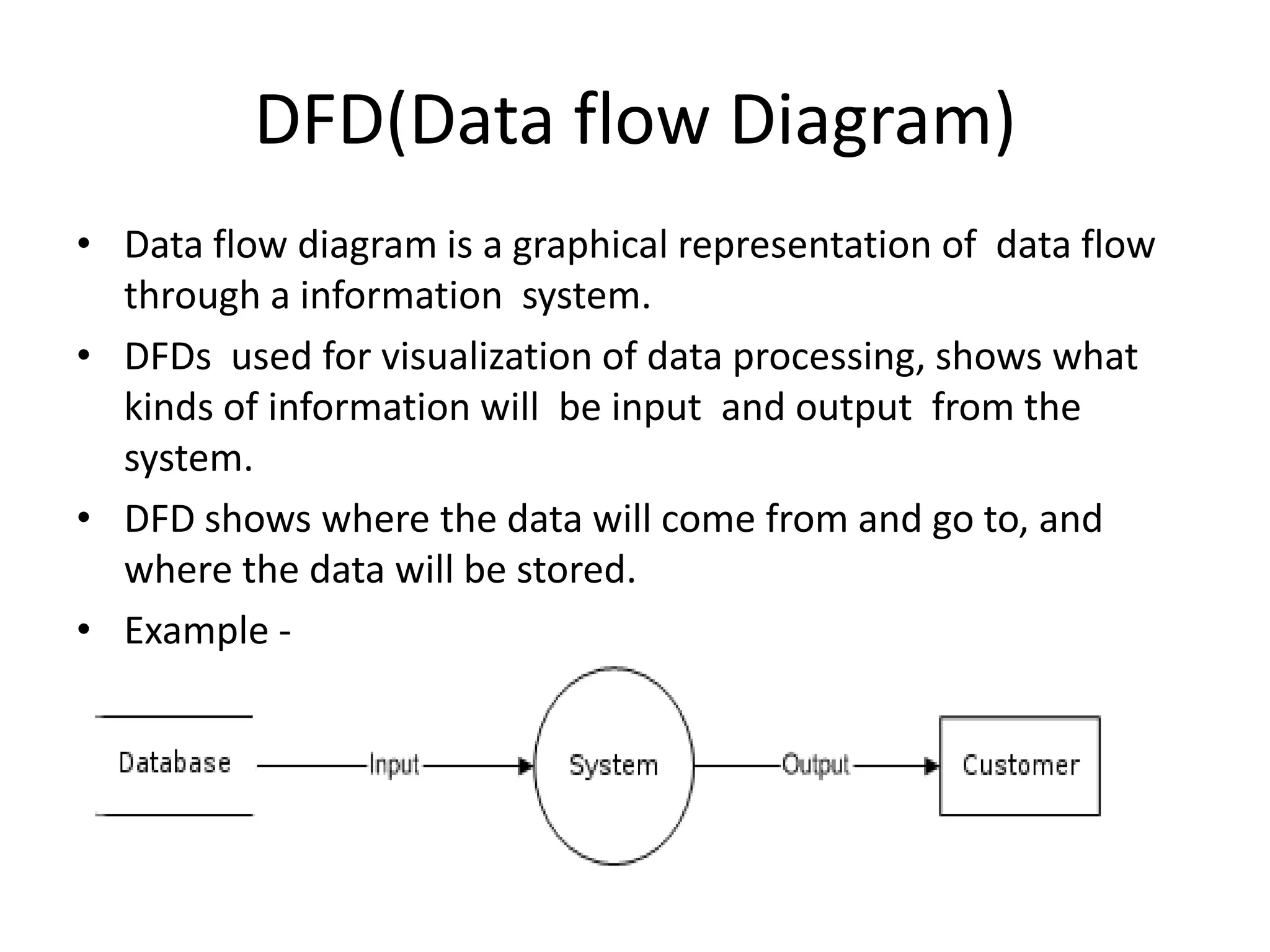
• Data flow diagram is a graphical representation of data flow
  through a information system.
• DFDs used for visualization of data processing, shows what
  kinds of information will be input and output from the
  system.
• DFD shows where the data will come from and go to, and
  where the data will be stored.
• Example -
DFD
•   Process
    Transform of incoming data flow(s) to
    outgoing flow(s).
•   Data Flow
    Movement of data in the system.
•   Data Store
    Data repositories for data that are
    not moving. It may be as simple as a
    buffer or a queue or a s sophisticated
    as a relational database.
•   External Entity
    Sources of destinations outside the
    specified system boundary.
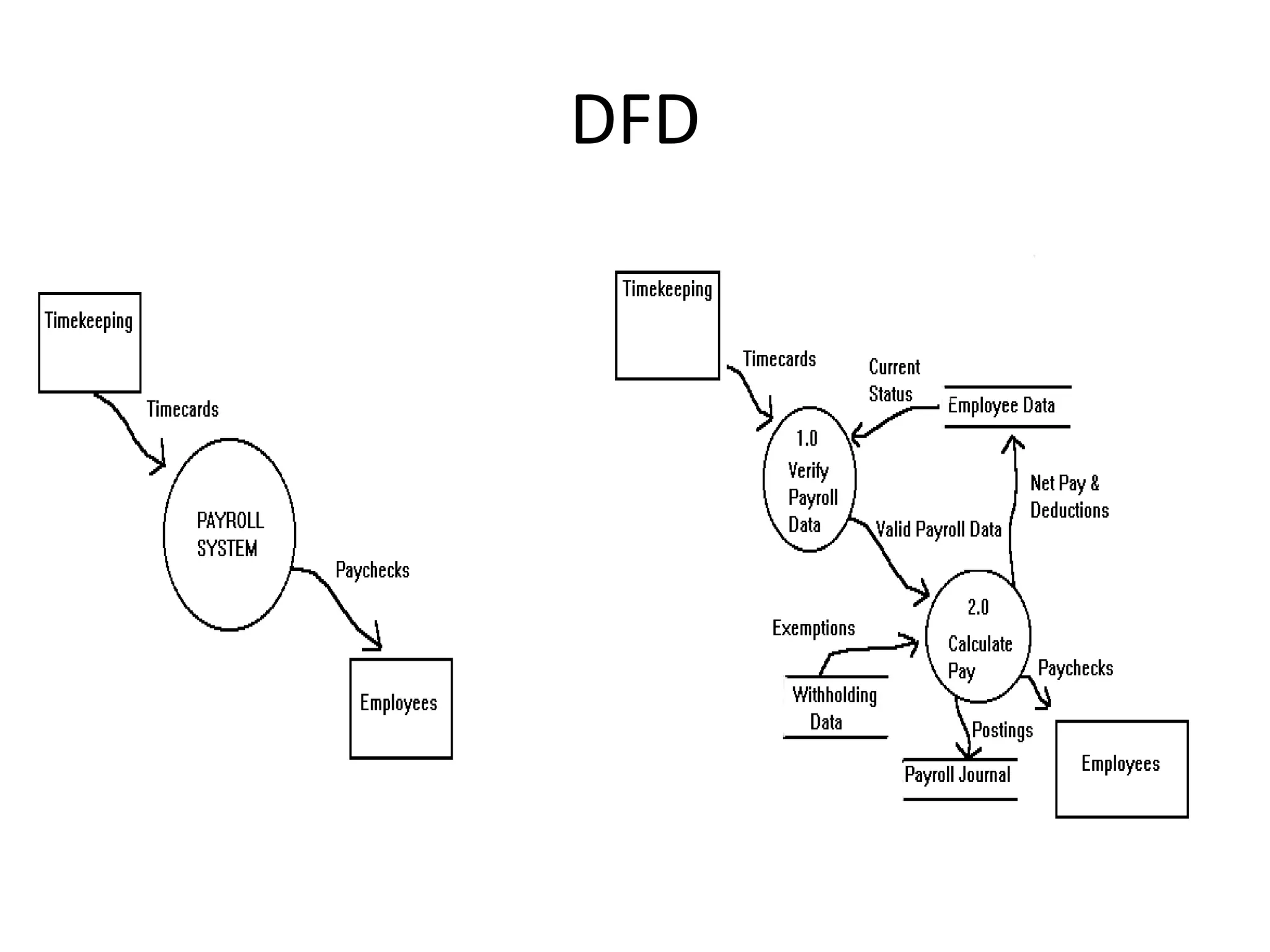
Levels of DFD
• The DFD may be used for any level of data
  abstraction. DFD can be partitioned into
  levels. Each level has more information flow
  and data functional details than the previous
  level.
• Like level 0 DFD
       level 1 DFD.
DFD
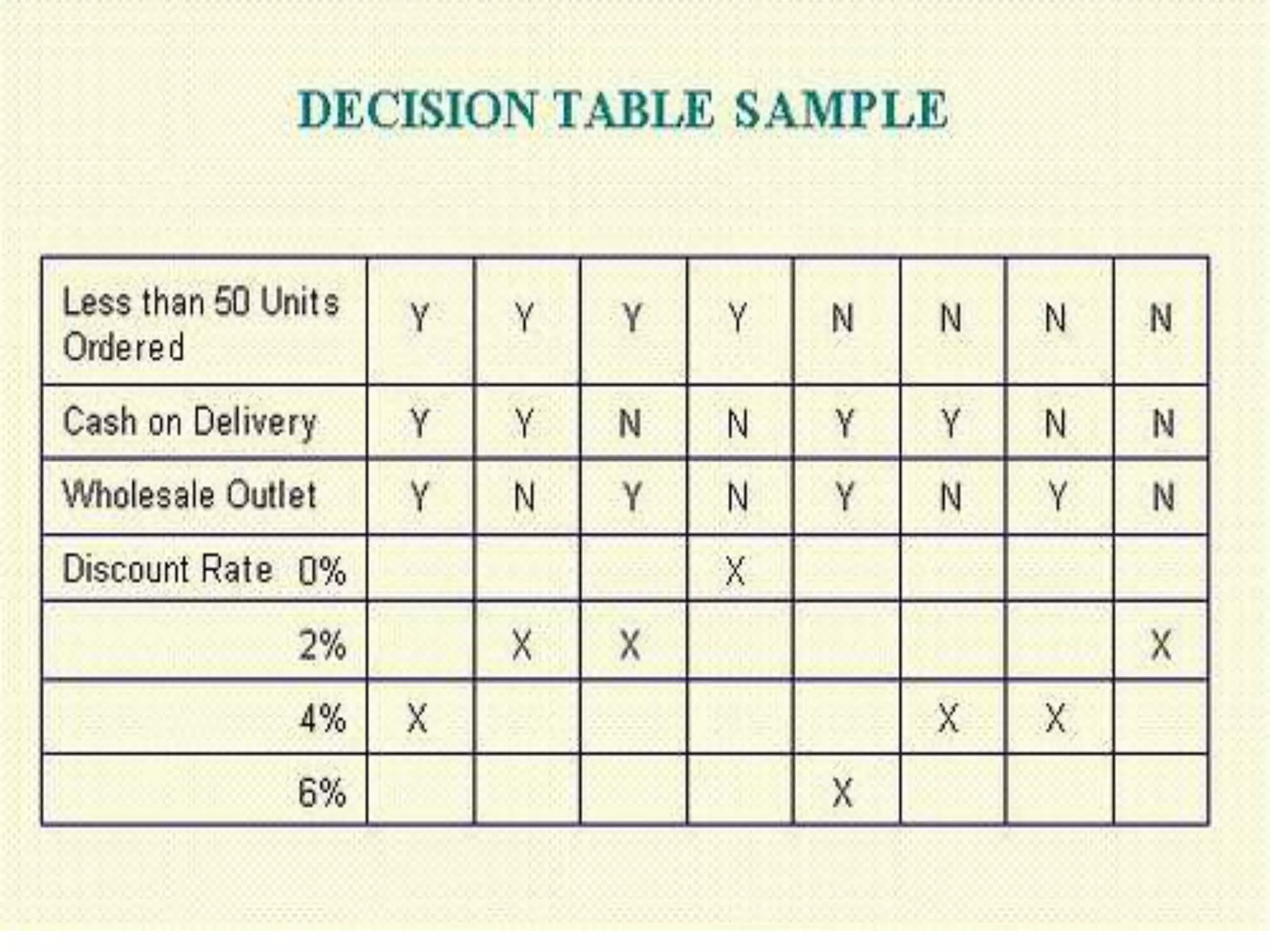
Decision Table
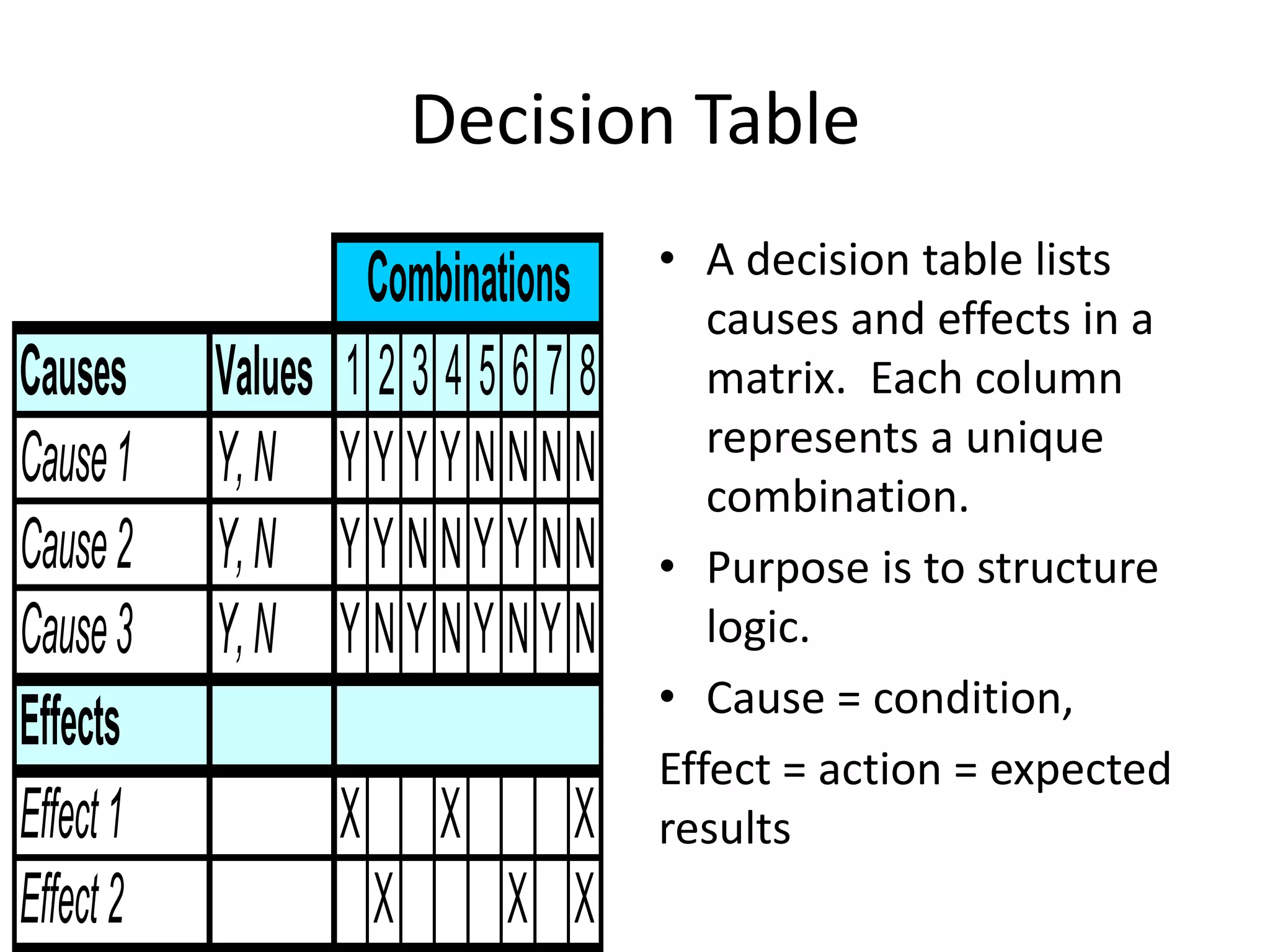
                                      • A decision table lists
                     Combinations        causes and effects in a
Causes     Values   12345678             matrix. Each column
                                         represents a unique
Cause 1    Y, N     YYYYNNNN             combination.
Cause 2    Y, N     YYNNYYNN          • Purpose is to structure
Cause 3    Y, N     YNYNYNYN             logic.
                                      • Cause = condition,
Effects
                                      Effect = action = expected
Effect 1            X       X     X   results
Effect 2                X       X X
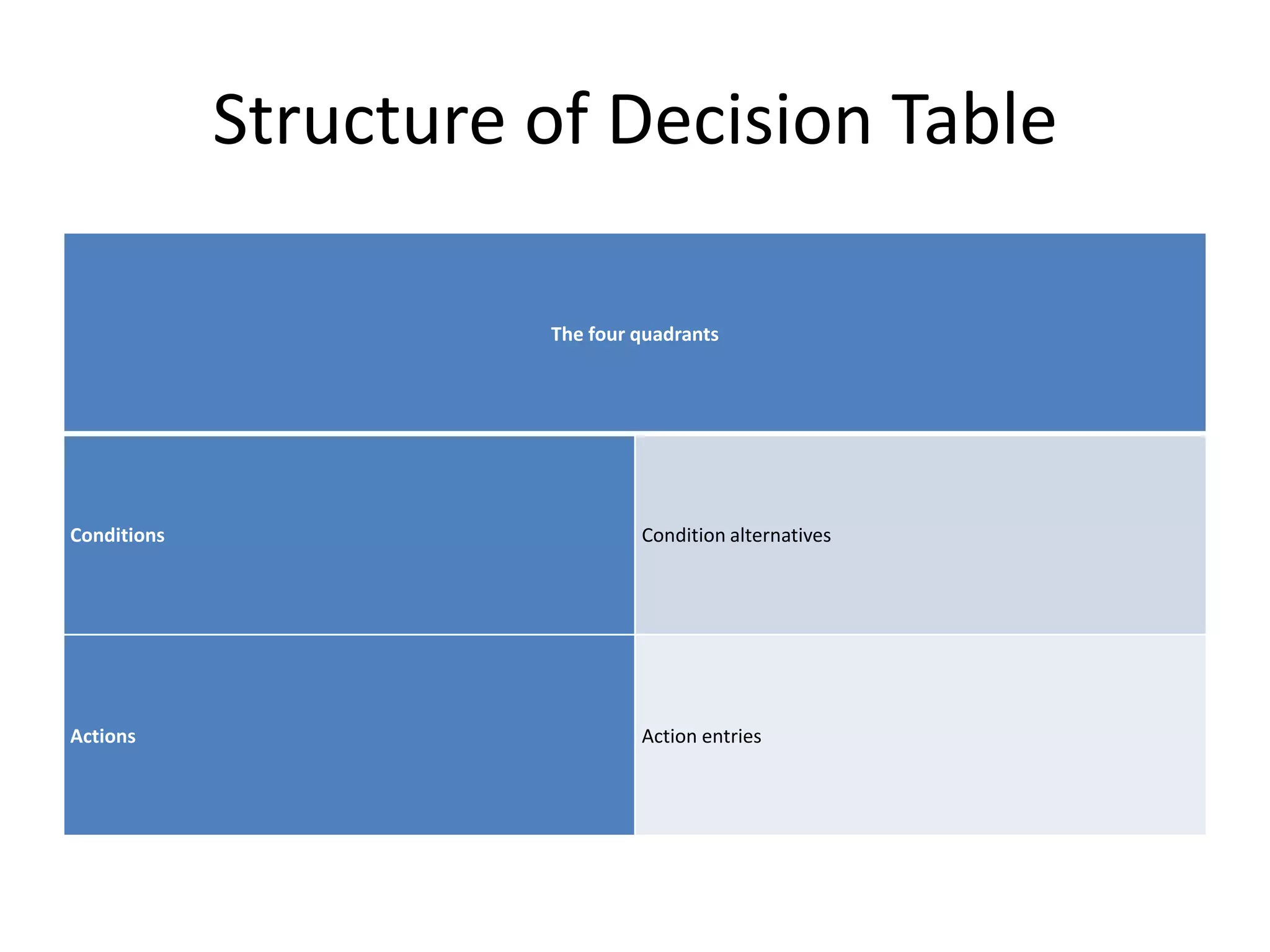
Structure of Decision Table

                       The four quadrants


Conditions                      Condition alternatives


Actions                         Action entries
Decision Chart
• A decision chart is a decision support tool that uses a
  graph or model of decisions and their possible
  consequences, including chance event outcomes,
  resource costs, and utility.
• Every decision chart begins with what is termed a
  root node, considered to be the "parent" of every
  other node. Each node in the tree evaluates an
  attribute in the data and determines which path it
  should follow.
• Decision chart helps for analysis the data.
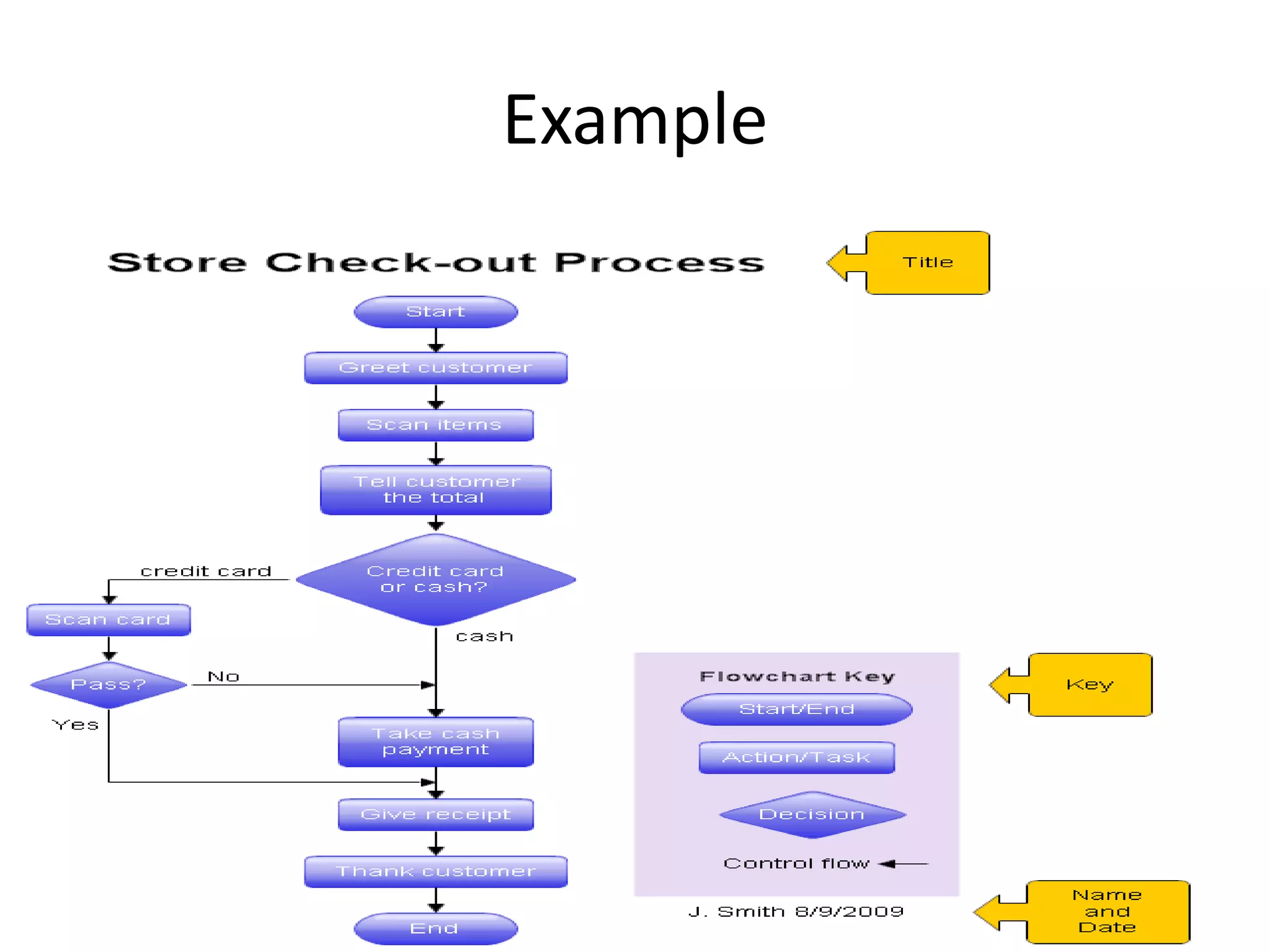
Example
Structure Chart
• Describe functions and sub-functions of each part
  of system (in more detail than a DFD)
• Show relationships between common and unique
  modules of a computer program
• Hierarchical, Modular structure
   – Each layer in a program performs specific activities
   – Each module performs a specific function
Steps in drawing a structure chart
•   Review the DFDs and object models
•   Identify modules and relationships
•   Add couples, loops, and conditions
•   Analyze the structure chart, the DFDs, and the
    data dictionary
Structure Chart
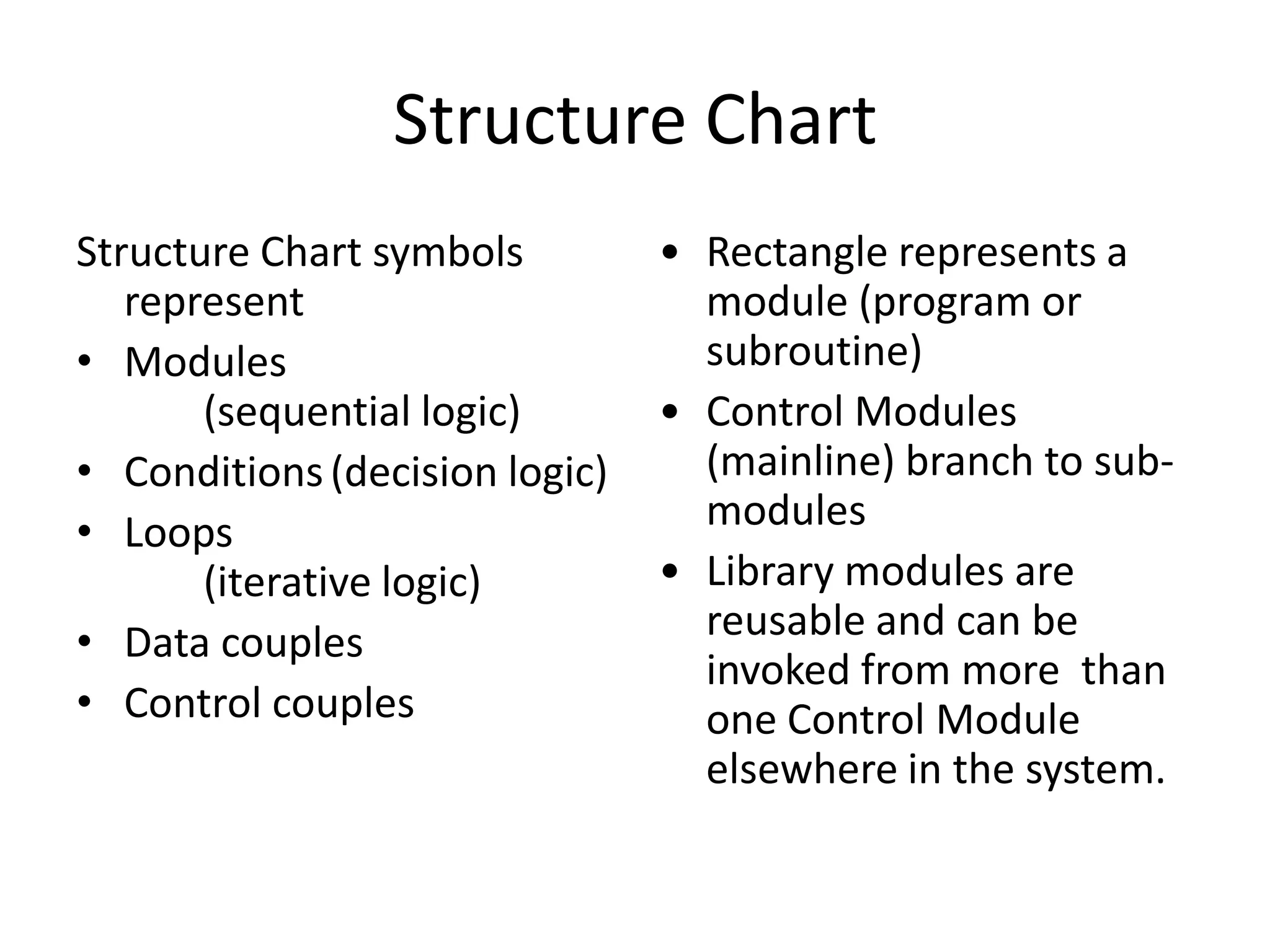
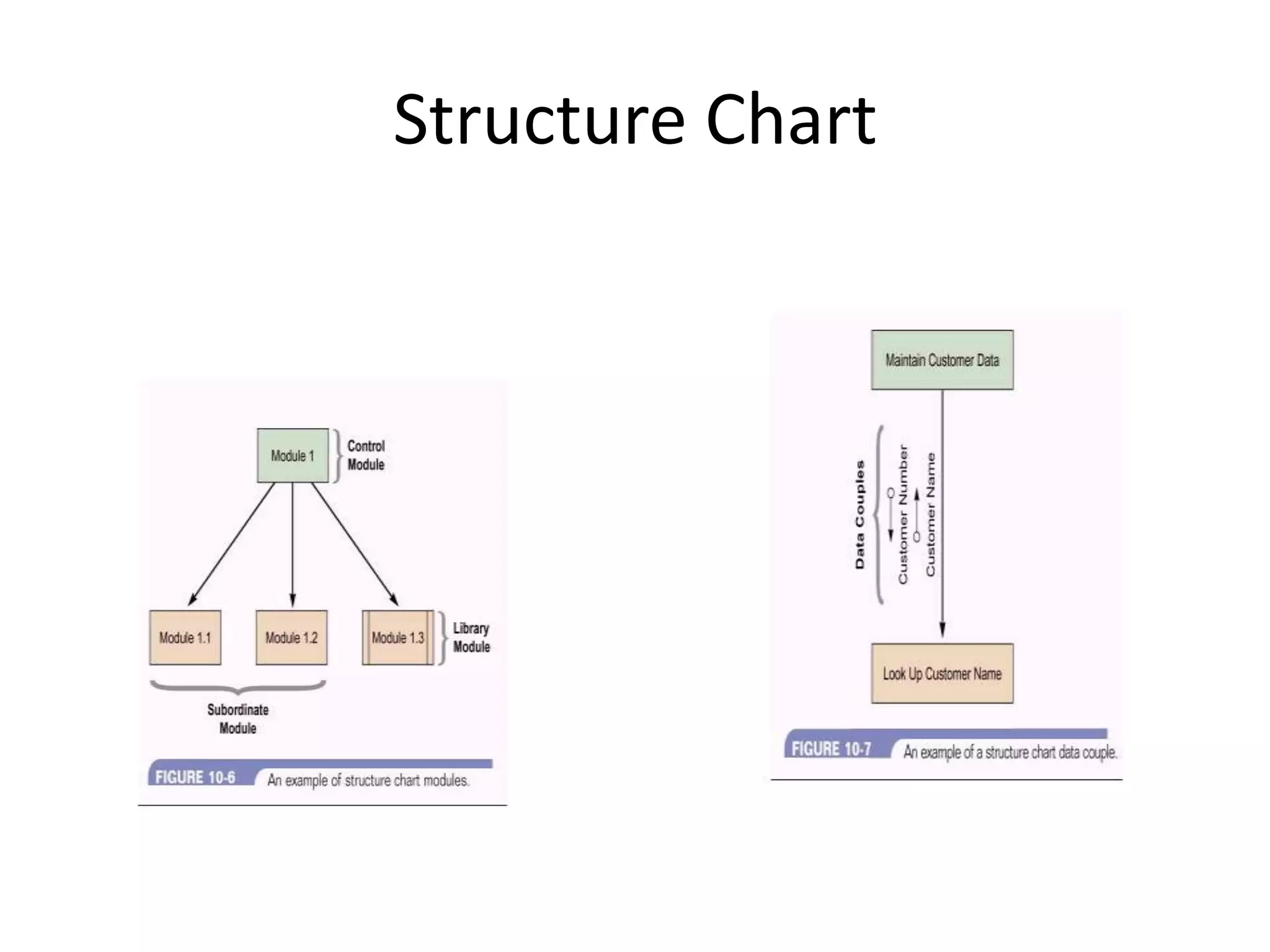
Structure Chart symbols         • Rectangle represents a
   represent                      module (program or
• Modules                         subroutine)
       (sequential logic)       • Control Modules
• Conditions (decision logic)     (mainline) branch to sub-
• Loops                           modules
       (iterative logic)        • Library modules are
• Data couples                    reusable and can be
                                  invoked from more than
• Control couples                 one Control Module
                                  elsewhere in the system.
Structure Chart
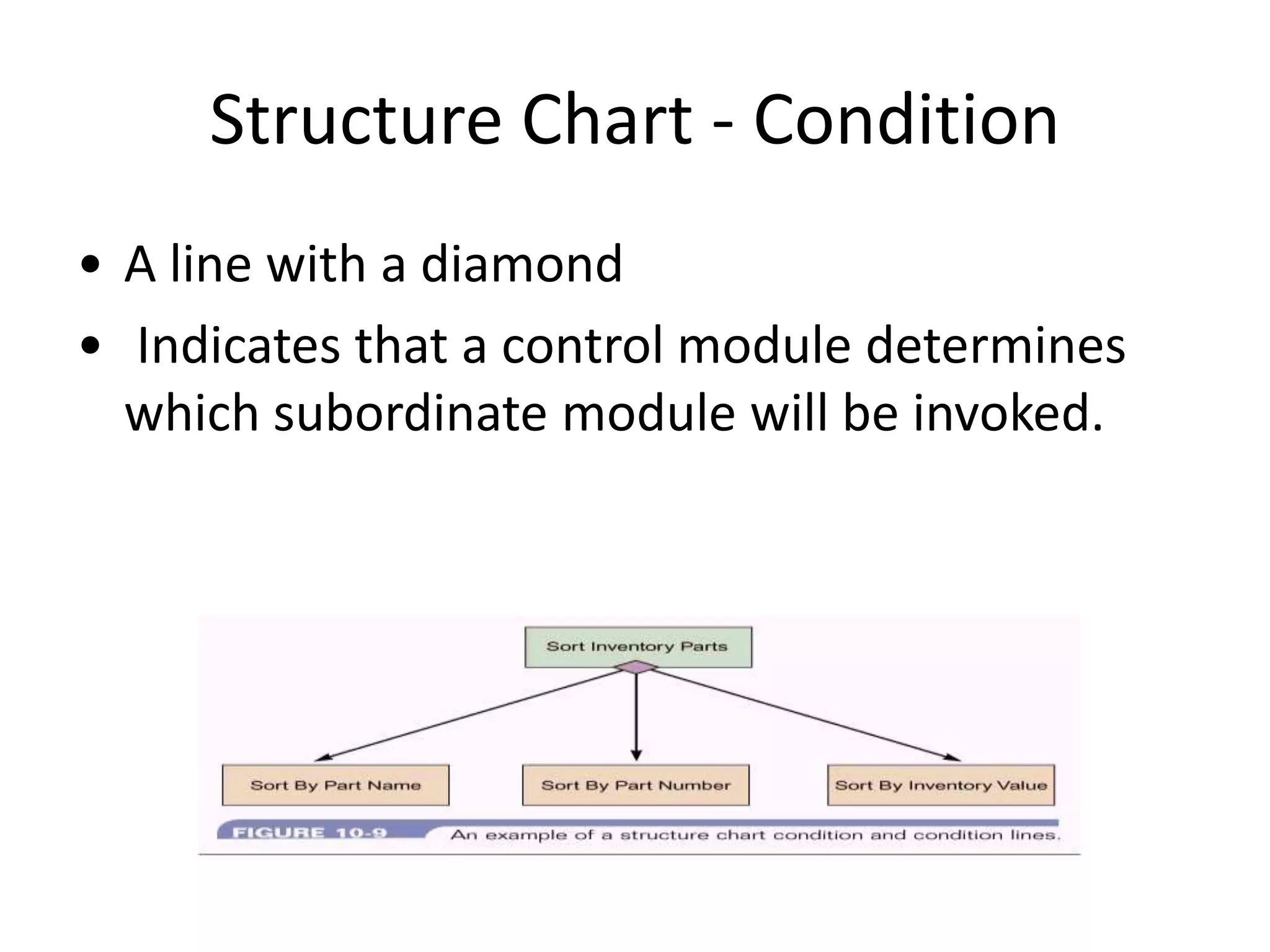
Structure Chart - Condition
• A line with a diamond
• Indicates that a control module determines
  which subordinate module will be invoked.
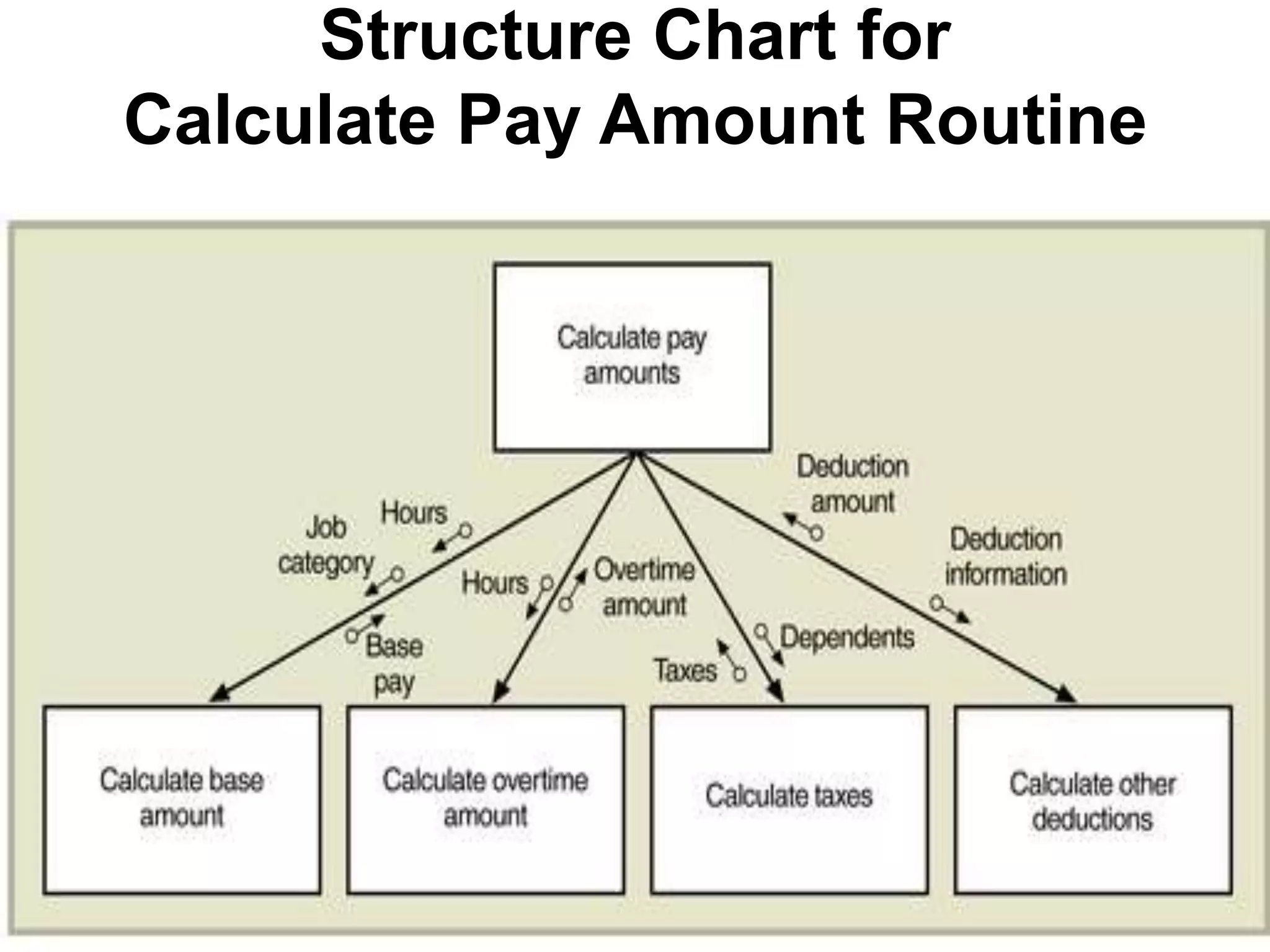
Structure Chart for
Calculate Pay Amount Routine
Structure Chart for Entire
Calculate Payroll Program
Summary - Structure Charts
– Show the relationships among program modules
– Structure Chart consists of:
   • Modules - Related program code organized into small units
      that are easy to understand and maintain
   • Data couples - Data passed between modules
   • Control couples - Data passed between modules that
      indicates a condition or action to another module (e.g. End
      of File)
   • Conditions - determines what subordinate module a control
      module will run
   • Loops - Indicates one or more subordinate modules are
      repeated
– Structure Charts are based on the DFD and Data Dictionary

DFD, Decision Table, Decision Chart, Structure Charts

  • 1.
    DFD, Decision Table,Decision Chart, Structure Charts Souvagya Kumar Jena Sec-B,Enroll-12BSP1971.
  • 2.
    DFD(Data flow Diagram) •Data flow diagram is a graphical representation of data flow through a information system. • DFDs used for visualization of data processing, shows what kinds of information will be input and output from the system. • DFD shows where the data will come from and go to, and where the data will be stored. • Example -
  • 3.
    DFD • Process Transform of incoming data flow(s) to outgoing flow(s). • Data Flow Movement of data in the system. • Data Store Data repositories for data that are not moving. It may be as simple as a buffer or a queue or a s sophisticated as a relational database. • External Entity Sources of destinations outside the specified system boundary.
  • 4.
    Levels of DFD •The DFD may be used for any level of data abstraction. DFD can be partitioned into levels. Each level has more information flow and data functional details than the previous level. • Like level 0 DFD level 1 DFD.
  • 5.
  • 6.
    Decision Table • A decision table lists Combinations causes and effects in a Causes Values 12345678 matrix. Each column represents a unique Cause 1 Y, N YYYYNNNN combination. Cause 2 Y, N YYNNYYNN • Purpose is to structure Cause 3 Y, N YNYNYNYN logic. • Cause = condition, Effects Effect = action = expected Effect 1 X X X results Effect 2 X X X
  • 7.
    Structure of DecisionTable The four quadrants Conditions Condition alternatives Actions Action entries
  • 9.
    Decision Chart • Adecision chart is a decision support tool that uses a graph or model of decisions and their possible consequences, including chance event outcomes, resource costs, and utility. • Every decision chart begins with what is termed a root node, considered to be the "parent" of every other node. Each node in the tree evaluates an attribute in the data and determines which path it should follow. • Decision chart helps for analysis the data.
  • 10.
  • 11.
    Structure Chart • Describefunctions and sub-functions of each part of system (in more detail than a DFD) • Show relationships between common and unique modules of a computer program • Hierarchical, Modular structure – Each layer in a program performs specific activities – Each module performs a specific function
  • 12.
    Steps in drawinga structure chart • Review the DFDs and object models • Identify modules and relationships • Add couples, loops, and conditions • Analyze the structure chart, the DFDs, and the data dictionary
  • 13.
    Structure Chart Structure Chartsymbols • Rectangle represents a represent module (program or • Modules subroutine) (sequential logic) • Control Modules • Conditions (decision logic) (mainline) branch to sub- • Loops modules (iterative logic) • Library modules are • Data couples reusable and can be invoked from more than • Control couples one Control Module elsewhere in the system.
  • 14.
  • 15.
    Structure Chart -Condition • A line with a diamond • Indicates that a control module determines which subordinate module will be invoked.
  • 16.
  • 17.
    Structure Chart forEntire Calculate Payroll Program
  • 18.
    Summary - StructureCharts – Show the relationships among program modules – Structure Chart consists of: • Modules - Related program code organized into small units that are easy to understand and maintain • Data couples - Data passed between modules • Control couples - Data passed between modules that indicates a condition or action to another module (e.g. End of File) • Conditions - determines what subordinate module a control module will run • Loops - Indicates one or more subordinate modules are repeated – Structure Charts are based on the DFD and Data Dictionary