Charles River Watershed Association 
Low Impact Best Management Practice (BMP) Information Sheet 
www.charlesriver.org September 2008 
RECOMMENDED PLANTS FOR NEW ENGLAND 
RAIN GARDENS9: 
New England Aster 
Common Evening-Primrose 
Black-Eyed Susan 
Switchgrass 
Ostrich fern 
Summersweet clethra 
Red-osier dogwood 
Highbush blueberry 
Compact inkberry holly 
BENEFITS 
DESCRIPTION 
Rain gardens are landscaped areas that collect and treat 
stormwater runoff using bioretention. Bioretention systems 
collect and filter stormwater through layers of mulch, soil 
and plant root systems, where pollutants such as bacteria, 
nitrogen, phosphorus, heavy metals, oil and grease are 
retained, degraded and absorbed. Treated stormwater 
is then infiltrated into the ground as groundwater or, if 
infiltration is not appropriate, discharged into a traditional 
stormwater drainage system. Rain gardens may look 
similar to traditional landscaped areas, but they differ in 
design and function. Rain gardens can be planted with 
a variety of perennials, grasses, shrubs and small trees. 
Native plants are typically preferred. Rain gardens are 
a valuable addition to both residential and commercial 
sites. 
INSTALLATION COST 
Cost will vary depending on the garden’s size and the 
types of vegetation used, however, professional installation 
of a rain garden typically costs $10 - $12/square foot.10 
Residential rain gardens are typically 100 to 300 square 
feet in size.1 
Pollutant Removal 
Pollutant removal can be affected by many factors, such as 
the types of plantings and maintenance of the rain garden. 
Properly designed rain gardens can be very effective at 
eliminating many pollutants that are of concern in the 
Charles River watershed: 
• Total Suspended Solids: 23% - 81% 
• Total Phosphorus: 38% - 72% 
• Nitrate (as N): 8% - 80% 
• Lead: 62% - 91% 
• Zinc: 63% - 76% 
• Copper: 53% - 65%4, 7 
Volume Attenuation/Flow Reduction 
• 100% for small storms 
• 90% for large storms when antecedent conditions are 
dry 
• 30-90% when antecedent conditions are wet5 
MAINTENANCE 
Needs and Frequency 
Periodically and after rain events: 
• Check vegetation and drainage structures 
• Remove sediment and debris 
• Clean and repair inflow and outflow pipes 
As needed: 
• Maintain vegetation, more frequent watering and 
weeding may be required during the first two years 
• Replace plants 
• Replace mulch so built-up pollutants do not harm the 
vegetation 
Cost 
Similar to traditional landscaping 
Overall 
• Reduces stormwater runoff volume, flow rate and tem-perature 
• Increases groundwater infiltration and recharge 
• Provides local flood control 
• Treats stormwater runoff 
• Improves quality of local surface waterways 
• Enhances the beauty of residential or commercial sites 
• Provides wildlife habitat 
• Reduces soil erosion 
• Provides a cost-effective way of treating stormwater as 
the ratio of cost to volume of runoff treated is lower than 
many other stormwater best management practices 
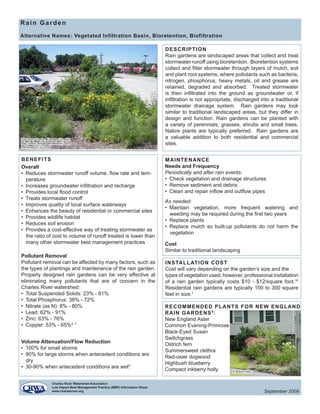
Discovery Center, Kansas City, MO 
http://www.raingardennetwork.com 
Retrieved 01/22/2008 
Franklin, MA 3 
Rain Garden 
Alternative Names: Vegetated Infiltration Basin, Bioretention, Biofiltration
Charles River Watershed Association 
Low Impact Best Management Practice (BMP) Information Sheet 
www.charlesriver.org September 2008 
Rain Garden 
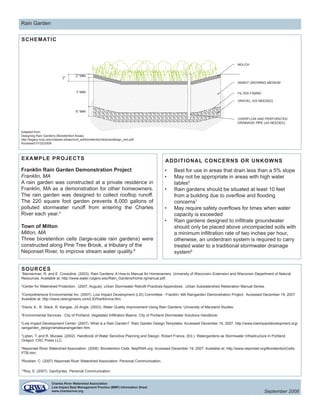
SCHEMATIC 
EXAMPLE PROJECTS 
Franklin Rain Garden Demonstration Project 
Franklin, MA 
A rain garden was constructed at a private residence in 
Franklin, MA as a demonstration for other homeowners. 
The rain garden was designed to collect rooftop runoff. 
The 220 square foot garden prevents 8,000 gallons of 
polluted stormwater runoff from entering the Charles 
River each year.3 
Town of Milton 
Milton, MA 
Three bioretention cells (large-scale rain gardens) were 
constructed along Pine Tree Brook, a tributary of the 
Neponset River, to improve stream water quality.8 
SOURCES 
1Bannerman, R. and E. Considine. (2003). Rain Gardens: A How-to Manual for Homeowners. University of Wisconsin–Extension and Wisconsin Department of Natural 
Resources. Available at: http://www.water.rutgers.edu/Rain_Gardens/home.rgmanual.pdf. 
2Center for Watershed Protection. (2007, August). Urban Stormwater Retrofit Practices Appendices. Urban Subwatershed Restoration Manual Series. 
3Comprehensive Environmental Inc. (2007). Low Impact Development (LID) Committee - Franklin, MA Raingarden Demonstration Project. Accessed December 19, 2007. 
Available at: http://www.ceiengineers.com/LID/franklinma.htm. 
4Davis, A., R. Stack, R. Kangas, JS Angle. (2003). Water Quality Improvement Using Rain Gardens: University of Maryland Studies. 
5Environmental Services - City of Portland. Vegetated Infiltration Basins. City of Portland Stormwater Solutions Handbook. 
6Low Impact Development Center. (2007). What is a Rain Garden? Rain Garden Design Templates. Accessed December 19, 2007. http://www.lowimpactdevelopment.org/ 
raingarden_design/whatisaraingarden.htm. 
7Liptan, T. and R. Murase. (2002). Handbook of Water Sensitive Planning and Design. Robert France, (Ed.), Watergardens as Stormwater Infrastructure in Portland, 
Oregon. CRC Press LLC. 
8Neponset River Watershed Association. (2006). Bioretention Cells. NepRWA.org. Accessed December 19, 2007. Available at: http://www.neponset.org/BioretentionCells- 
PTB.htm. 
9Rocklen, C. (2007) Neponset River Watershed Association. Personal Communication. 
10Roy, S. (2007). GeoSyntec. Personal Communication. 
ADDITIONAL CONCERNS OR UNKOWNS 
• Best for use in areas that drain less than a 5% slope 
• May not be appropriate in areas with high water 
tables5 
• Rain gardens should be situated at least 10 feet 
from a building due to overflow and flooding 
concerns1 
• May require safety overflows for times when water 
capacity is exceeded 
• Rain gardens designed to infiltrate groundwater 
should only be placed above uncompacted soils with 
a minimum infiltration rate of two inches per hour, 
otherwise, an underdrain system is required to carry 
treated water to a traditional stormwater drainage 
system5 
Adapted from: 
Designing Rain Gardens (Bioretention Areas) 
http://legacy.ncsu.edu/classes-a/bae/cont_ed/bioretention/lecture/design_rain.pdf 
Accessed 01/22/2008

Charles River Watershed Assoc, Massachusetts - Rain Garden Fact Sheet

  • 1.
    Charles River WatershedAssociation Low Impact Best Management Practice (BMP) Information Sheet www.charlesriver.org September 2008 RECOMMENDED PLANTS FOR NEW ENGLAND RAIN GARDENS9: New England Aster Common Evening-Primrose Black-Eyed Susan Switchgrass Ostrich fern Summersweet clethra Red-osier dogwood Highbush blueberry Compact inkberry holly BENEFITS DESCRIPTION Rain gardens are landscaped areas that collect and treat stormwater runoff using bioretention. Bioretention systems collect and filter stormwater through layers of mulch, soil and plant root systems, where pollutants such as bacteria, nitrogen, phosphorus, heavy metals, oil and grease are retained, degraded and absorbed. Treated stormwater is then infiltrated into the ground as groundwater or, if infiltration is not appropriate, discharged into a traditional stormwater drainage system. Rain gardens may look similar to traditional landscaped areas, but they differ in design and function. Rain gardens can be planted with a variety of perennials, grasses, shrubs and small trees. Native plants are typically preferred. Rain gardens are a valuable addition to both residential and commercial sites. INSTALLATION COST Cost will vary depending on the garden’s size and the types of vegetation used, however, professional installation of a rain garden typically costs $10 - $12/square foot.10 Residential rain gardens are typically 100 to 300 square feet in size.1 Pollutant Removal Pollutant removal can be affected by many factors, such as the types of plantings and maintenance of the rain garden. Properly designed rain gardens can be very effective at eliminating many pollutants that are of concern in the Charles River watershed: • Total Suspended Solids: 23% - 81% • Total Phosphorus: 38% - 72% • Nitrate (as N): 8% - 80% • Lead: 62% - 91% • Zinc: 63% - 76% • Copper: 53% - 65%4, 7 Volume Attenuation/Flow Reduction • 100% for small storms • 90% for large storms when antecedent conditions are dry • 30-90% when antecedent conditions are wet5 MAINTENANCE Needs and Frequency Periodically and after rain events: • Check vegetation and drainage structures • Remove sediment and debris • Clean and repair inflow and outflow pipes As needed: • Maintain vegetation, more frequent watering and weeding may be required during the first two years • Replace plants • Replace mulch so built-up pollutants do not harm the vegetation Cost Similar to traditional landscaping Overall • Reduces stormwater runoff volume, flow rate and tem-perature • Increases groundwater infiltration and recharge • Provides local flood control • Treats stormwater runoff • Improves quality of local surface waterways • Enhances the beauty of residential or commercial sites • Provides wildlife habitat • Reduces soil erosion • Provides a cost-effective way of treating stormwater as the ratio of cost to volume of runoff treated is lower than many other stormwater best management practices Discovery Center, Kansas City, MO http://www.raingardennetwork.com Retrieved 01/22/2008 Franklin, MA 3 Rain Garden Alternative Names: Vegetated Infiltration Basin, Bioretention, Biofiltration
  • 2.
    Charles River WatershedAssociation Low Impact Best Management Practice (BMP) Information Sheet www.charlesriver.org September 2008 Rain Garden SCHEMATIC EXAMPLE PROJECTS Franklin Rain Garden Demonstration Project Franklin, MA A rain garden was constructed at a private residence in Franklin, MA as a demonstration for other homeowners. The rain garden was designed to collect rooftop runoff. The 220 square foot garden prevents 8,000 gallons of polluted stormwater runoff from entering the Charles River each year.3 Town of Milton Milton, MA Three bioretention cells (large-scale rain gardens) were constructed along Pine Tree Brook, a tributary of the Neponset River, to improve stream water quality.8 SOURCES 1Bannerman, R. and E. Considine. (2003). Rain Gardens: A How-to Manual for Homeowners. University of Wisconsin–Extension and Wisconsin Department of Natural Resources. Available at: http://www.water.rutgers.edu/Rain_Gardens/home.rgmanual.pdf. 2Center for Watershed Protection. (2007, August). Urban Stormwater Retrofit Practices Appendices. Urban Subwatershed Restoration Manual Series. 3Comprehensive Environmental Inc. (2007). Low Impact Development (LID) Committee - Franklin, MA Raingarden Demonstration Project. Accessed December 19, 2007. Available at: http://www.ceiengineers.com/LID/franklinma.htm. 4Davis, A., R. Stack, R. Kangas, JS Angle. (2003). Water Quality Improvement Using Rain Gardens: University of Maryland Studies. 5Environmental Services - City of Portland. Vegetated Infiltration Basins. City of Portland Stormwater Solutions Handbook. 6Low Impact Development Center. (2007). What is a Rain Garden? Rain Garden Design Templates. Accessed December 19, 2007. http://www.lowimpactdevelopment.org/ raingarden_design/whatisaraingarden.htm. 7Liptan, T. and R. Murase. (2002). Handbook of Water Sensitive Planning and Design. Robert France, (Ed.), Watergardens as Stormwater Infrastructure in Portland, Oregon. CRC Press LLC. 8Neponset River Watershed Association. (2006). Bioretention Cells. NepRWA.org. Accessed December 19, 2007. Available at: http://www.neponset.org/BioretentionCells- PTB.htm. 9Rocklen, C. (2007) Neponset River Watershed Association. Personal Communication. 10Roy, S. (2007). GeoSyntec. Personal Communication. ADDITIONAL CONCERNS OR UNKOWNS • Best for use in areas that drain less than a 5% slope • May not be appropriate in areas with high water tables5 • Rain gardens should be situated at least 10 feet from a building due to overflow and flooding concerns1 • May require safety overflows for times when water capacity is exceeded • Rain gardens designed to infiltrate groundwater should only be placed above uncompacted soils with a minimum infiltration rate of two inches per hour, otherwise, an underdrain system is required to carry treated water to a traditional stormwater drainage system5 Adapted from: Designing Rain Gardens (Bioretention Areas) http://legacy.ncsu.edu/classes-a/bae/cont_ed/bioretention/lecture/design_rain.pdf Accessed 01/22/2008