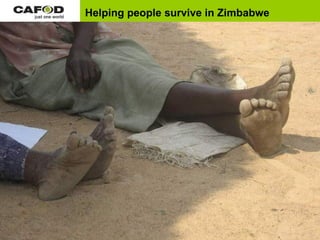
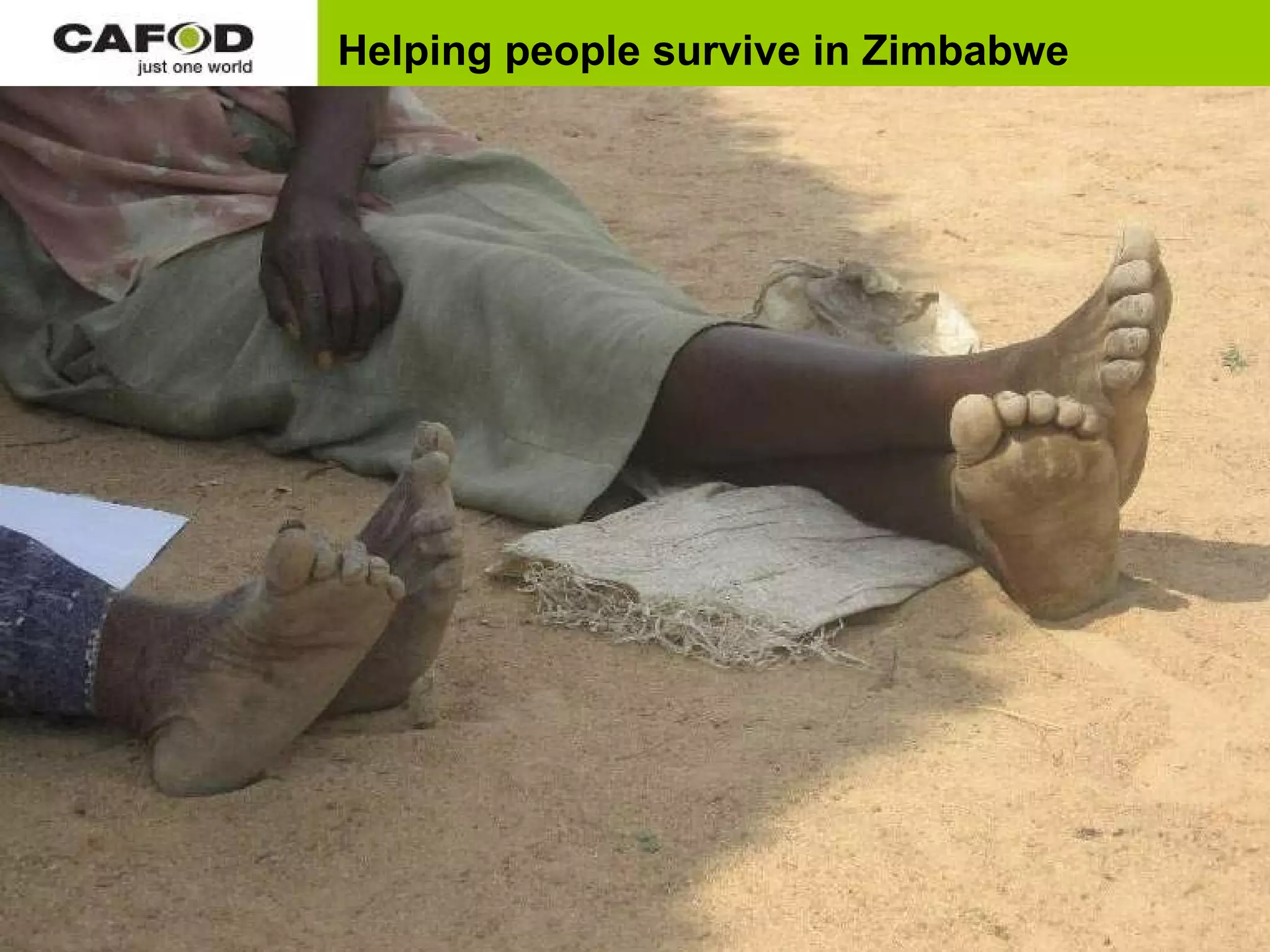

Helping people survive in Zimbabwe
Zimbabwe’s almost complete economic collapse led to widespread unemployment and poverty. Families are suffering food, medical and fuel shortages – and hyperinflation means even a loaf of bread can be completely unaffordable
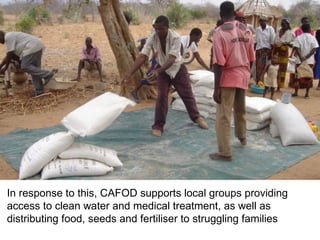
In response to this, CAFOD supports local groups providing access to clean water and medical treatment, as well as distributing food, seeds and fertiliser to struggling families
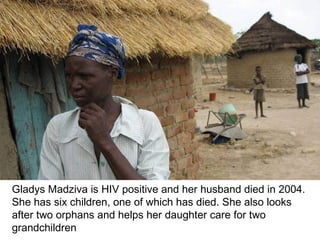
Gladys Madziva is HIV positive and her husband died in 2004. She has six children, one of which has died. She also looks after two orphans and helps her daughter care for two grandchildren
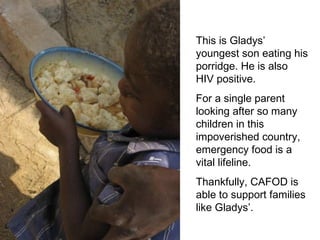
This is Gladys’ youngest son eating his porridge. He is also HIV positive.  For a single parent looking after so many children in this impoverished country, emergency food is a vital lifeline. Thankfully, CAFOD is able to support families like Gladys’.
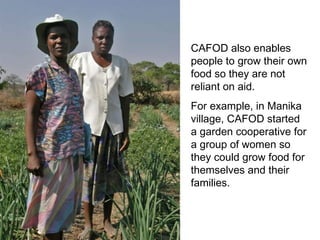
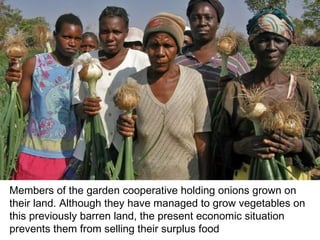
CAFOD also enables people to grow their own food so they are not reliant on aid.  For example, in Manika village, CAFOD started a garden cooperative for a group of women so they could grow food for themselves and their families.
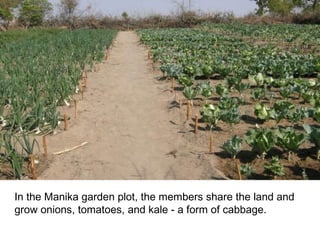
In the Manika garden plot, the members share the land and grow onions, tomatoes, and kale - a form of cabbage.
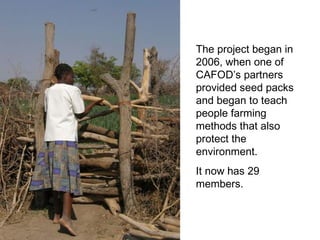
The project began in 2006,  when one of CAFOD’s partners provided seed packs and began to teach people farming methods that also protect the environment.  It  now has 29 members.
Members of the garden cooperative holding onions grown on their land. Although they have managed to grow vegetables on this previously barren land, the present economic situation prevents them from selling their surplus food
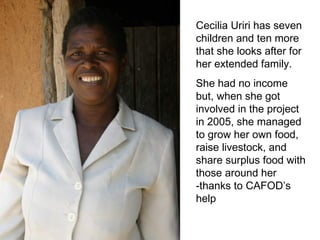
Cecilia Uriri has seven children and ten more that she looks after for her extended family. She had no income but, when she got involved in the project in 2005, she managed to grow her own food, raise livestock, and share surplus food with those around her -thanks to CAFOD’s help
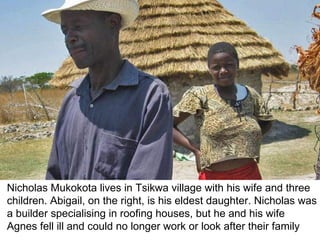
Nicholas Mukokota lives in Tsikwa village with his wife and three children. Abigail, on the right, is his eldest daughter. Nicholas was a builder specialising in roofing houses, but he and his wife Agnes fell ill and could no longer work or look after their family
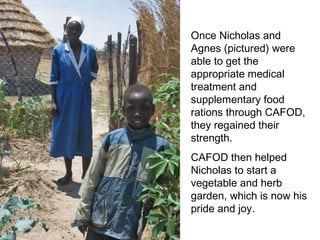
Once Nicholas and Agnes (pictured) were able to get the appropriate medical treatment and supplementary food rations through CAFOD, they regained their strength.  CAFOD then helped Nicholas to start a vegetable and herb garden, which is now his pride and joy.
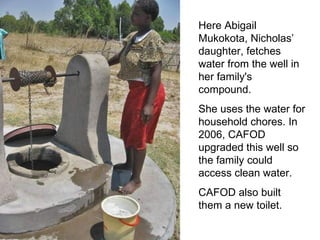
Here Abigail Mukokota, Nicholas’ daughter, fetches water from the well in her family's compound.  She uses the water for household chores.  In 2006, CAFOD upgraded this well so the family could access clean water.  CAFOD also built them a new toilet.
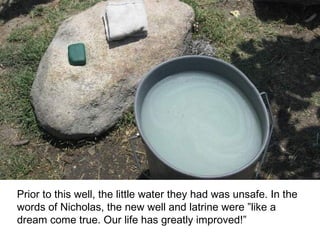
Prior to this well, the little water they had was unsafe. In the words of Nicholas, the new well and latrine were ”like a dream come true. Our life has greatly improved!”
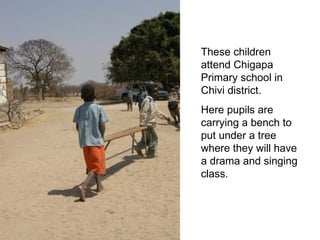
These children attend Chigapa Primary school in Chivi district.  Here pupils are carrying a bench to put under a tree where they will have a drama and singing class.
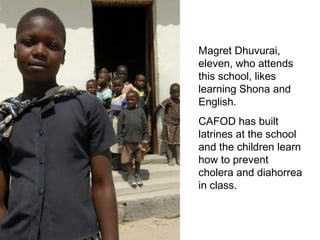
Magret Dhuvurai, eleven, who attends this school, likes learning Shona and English.  CAFOD has built latrines at the school and the children learn how to prevent cholera and diahorrea in class.
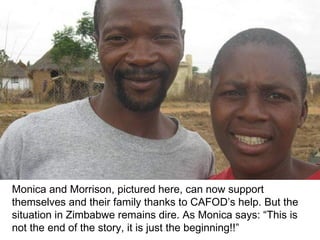
Monica and Morrison, pictured here, can now support themselves and their family thanks to CAFOD’s help. But the situation in Zimbabwe remains dire. As Monica says: “This is not the end of the story, it is just the beginning!!”
Photo credits Nana  Anto-Awuakye, Fiona Callister,  Alessandra Magri For more info, please see cafod.org.uk/zimbabwe

Zimbabwe: Helping people survive

  • 1.
  • 2.
    Zimbabwe’s almost completeeconomic collapse led to widespread unemployment and poverty. Families are suffering food, medical and fuel shortages – and hyperinflation means even a loaf of bread can be completely unaffordable
  • 3.
    In response tothis, CAFOD supports local groups providing access to clean water and medical treatment, as well as distributing food, seeds and fertiliser to struggling families
  • 4.
    Gladys Madziva isHIV positive and her husband died in 2004. She has six children, one of which has died. She also looks after two orphans and helps her daughter care for two grandchildren
  • 5.
    This is Gladys’youngest son eating his porridge. He is also HIV positive. For a single parent looking after so many children in this impoverished country, emergency food is a vital lifeline. Thankfully, CAFOD is able to support families like Gladys’.
  • 6.
    CAFOD also enablespeople to grow their own food so they are not reliant on aid. For example, in Manika village, CAFOD started a garden cooperative for a group of women so they could grow food for themselves and their families.
  • 7.
    In the Manikagarden plot, the members share the land and grow onions, tomatoes, and kale - a form of cabbage.
  • 8.
    The project beganin 2006, when one of CAFOD’s partners provided seed packs and began to teach people farming methods that also protect the environment. It now has 29 members.
  • 9.
    Members of thegarden cooperative holding onions grown on their land. Although they have managed to grow vegetables on this previously barren land, the present economic situation prevents them from selling their surplus food
  • 10.
    Cecilia Uriri hasseven children and ten more that she looks after for her extended family. She had no income but, when she got involved in the project in 2005, she managed to grow her own food, raise livestock, and share surplus food with those around her -thanks to CAFOD’s help
  • 11.
    Nicholas Mukokota livesin Tsikwa village with his wife and three children. Abigail, on the right, is his eldest daughter. Nicholas was a builder specialising in roofing houses, but he and his wife Agnes fell ill and could no longer work or look after their family
  • 12.
    Once Nicholas andAgnes (pictured) were able to get the appropriate medical treatment and supplementary food rations through CAFOD, they regained their strength. CAFOD then helped Nicholas to start a vegetable and herb garden, which is now his pride and joy.
  • 13.
    Here Abigail Mukokota,Nicholas’ daughter, fetches water from the well in her family's compound. She uses the water for household chores. In 2006, CAFOD upgraded this well so the family could access clean water. CAFOD also built them a new toilet.
  • 14.
    Prior to thiswell, the little water they had was unsafe. In the words of Nicholas, the new well and latrine were ”like a dream come true. Our life has greatly improved!”
  • 15.
    These children attendChigapa Primary school in Chivi district. Here pupils are carrying a bench to put under a tree where they will have a drama and singing class.
  • 16.
    Magret Dhuvurai, eleven,who attends this school, likes learning Shona and English. CAFOD has built latrines at the school and the children learn how to prevent cholera and diahorrea in class.
  • 17.
    Monica and Morrison,pictured here, can now support themselves and their family thanks to CAFOD’s help. But the situation in Zimbabwe remains dire. As Monica says: “This is not the end of the story, it is just the beginning!!”
  • 18.
    Photo credits Nana Anto-Awuakye, Fiona Callister, Alessandra Magri For more info, please see cafod.org.uk/zimbabwe

Editor's Notes

  • #2 Zimbabwe was once one of the richest countries in Africa, and yet it is now crippled by economic chaos and political repression. Many Zimbabweans have voted with their feet, with hundreds of thousands emigrating. But for most people in the crisis-torn country, life is still a daily struggle to put food on their families’ plates.