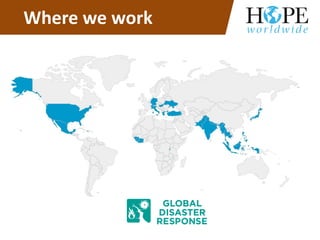
Where we work
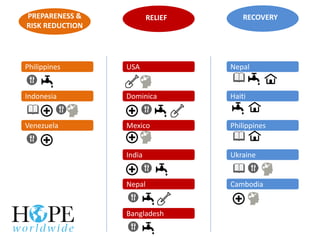
USA
Dominica
Mexico
India
Nepal
Bangladesh
Nepal
Haiti
Philippines
Ukraine
Cambodia
Philippines
Indonesia
Venezuela
PREPARENESS &
RISK REDUCTION
RELIEF RECOVERY
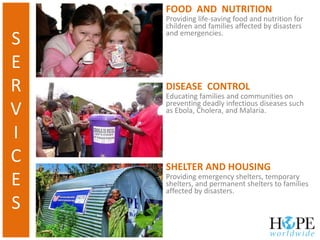
FOOD AND NUTRITION
Providing life-saving food and nutrition for
children and families affected by disasters
and emergencies.
DISEASE CONTROL
Educating families and communities on
preventing deadly infectious diseases such
as Ebola, Cholera, and Malaria.
SHELTER AND HOUSING
Providing emergency shelters, temporary
shelters, and permanent shelters to families
affected by disasters.
S
E
R
V
I
C
E
S
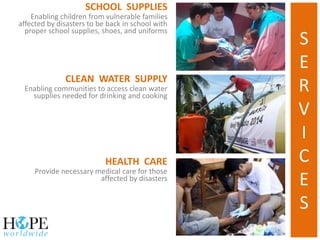
HEALTH CARE
Provide necessary medical care for those
affected by disasters
CLEAN WATER SUPPLY
Enabling communities to access clean water
supplies needed for drinking and cooking
SCHOOL SUPPLIES
Enabling children from vulnerable families
affected by disasters to be back in school with
proper school supplies, shoes, and uniforms
S
E
R
V
I
C
E
S
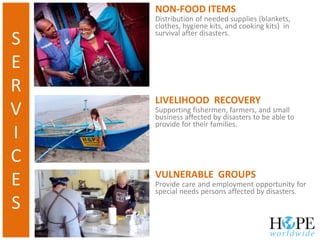
VULNERABLE GROUPS
Provide care and employment opportunity for
special needs persons affected by disasters.
LIVELIHOOD RECOVERY
Supporting fishermen, farmers, and small
business affected by disasters to be able to
provide for their families.
NON-FOOD ITEMS
Distribution of needed supplies (blankets,
clothes, hygiene kits, and cooking kits) in
survival after disasters.
S
E
R
V
I
C
E
S
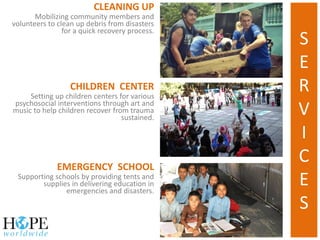
CLEANING UP
Mobilizing community members and
volunteers to clean up debris from disasters
for a quick recovery process.
CHILDREN CENTER
Setting up children centers for various
psychosocial interventions through art and
music to help children recover from trauma
sustained.
EMERGENCY SCHOOL
Supporting schools by providing tents and
supplies in delivering education in
emergencies and disasters.
S
E
R
V
I
C
E
S
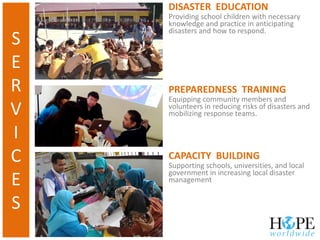
CAPACITY BUILDING
Supporting schools, universities, and local
government in increasing local disaster
management
PREPAREDNESS TRAINING
Equipping community members and
volunteers in reducing risks of disasters and
mobilizing response teams.
DISASTER EDUCATION
Providing school children with necessary
knowledge and practice in anticipating
disasters and how to respond.
S
E
R
V
I
C
E
S
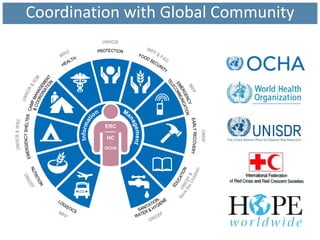
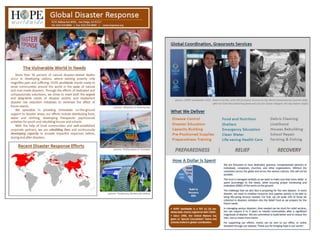
Coordination with Global Community
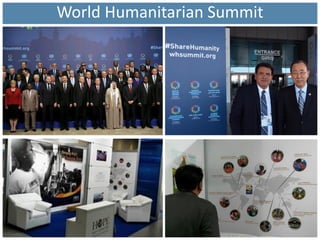
World Humanitarian Summit
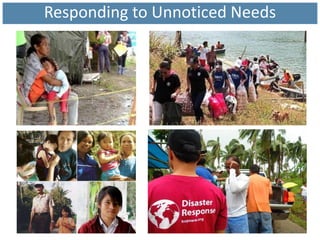
Responding to Unnoticed Needs
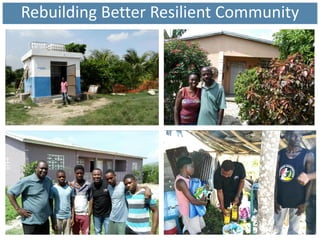
Rebuilding Better Resilient Community
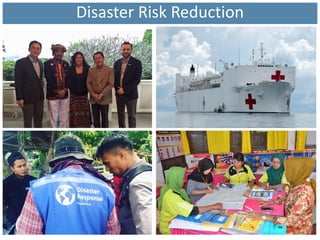
Disaster Risk Reduction
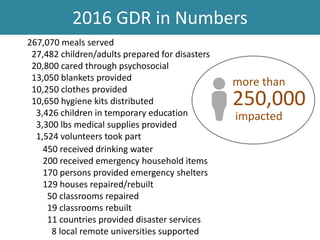
267,070 meals served
27,482 children/adults prepared for disasters
20,800 cared through psychosocial
13,050 blankets provided
10,250 clothes provided
10,650 hygiene kits distributed
3,426 children in temporary education
3,300 lbs medical supplies provided
1,524 volunteers took part
2016 GDR in Numbers
450 received drinking water
200 received emergency household items
170 persons provided emergency shelters
129 houses repaired/rebuilt
50 classrooms repaired
19 classrooms rebuilt
11 countries provided disaster services
8 local remote universities supported
250,000
more than
impacted
Gdr update one day chicago 2017

Gdr update one day chicago 2017

  • 2.
  • 3.
  • 4.
    FOOD AND NUTRITION Providinglife-saving food and nutrition for children and families affected by disasters and emergencies. DISEASE CONTROL Educating families and communities on preventing deadly infectious diseases such as Ebola, Cholera, and Malaria. SHELTER AND HOUSING Providing emergency shelters, temporary shelters, and permanent shelters to families affected by disasters. S E R V I C E S
  • 5.
    HEALTH CARE Provide necessarymedical care for those affected by disasters CLEAN WATER SUPPLY Enabling communities to access clean water supplies needed for drinking and cooking SCHOOL SUPPLIES Enabling children from vulnerable families affected by disasters to be back in school with proper school supplies, shoes, and uniforms S E R V I C E S
  • 6.
    VULNERABLE GROUPS Provide careand employment opportunity for special needs persons affected by disasters. LIVELIHOOD RECOVERY Supporting fishermen, farmers, and small business affected by disasters to be able to provide for their families. NON-FOOD ITEMS Distribution of needed supplies (blankets, clothes, hygiene kits, and cooking kits) in survival after disasters. S E R V I C E S
  • 7.
    CLEANING UP Mobilizing communitymembers and volunteers to clean up debris from disasters for a quick recovery process. CHILDREN CENTER Setting up children centers for various psychosocial interventions through art and music to help children recover from trauma sustained. EMERGENCY SCHOOL Supporting schools by providing tents and supplies in delivering education in emergencies and disasters. S E R V I C E S
  • 8.
    CAPACITY BUILDING Supporting schools,universities, and local government in increasing local disaster management PREPAREDNESS TRAINING Equipping community members and volunteers in reducing risks of disasters and mobilizing response teams. DISASTER EDUCATION Providing school children with necessary knowledge and practice in anticipating disasters and how to respond. S E R V I C E S
  • 9.
  • 10.
  • 11.
  • 12.
  • 13.
  • 14.
    267,070 meals served 27,482children/adults prepared for disasters 20,800 cared through psychosocial 13,050 blankets provided 10,250 clothes provided 10,650 hygiene kits distributed 3,426 children in temporary education 3,300 lbs medical supplies provided 1,524 volunteers took part 2016 GDR in Numbers 450 received drinking water 200 received emergency household items 170 persons provided emergency shelters 129 houses repaired/rebuilt 50 classrooms repaired 19 classrooms rebuilt 11 countries provided disaster services 8 local remote universities supported 250,000 more than impacted