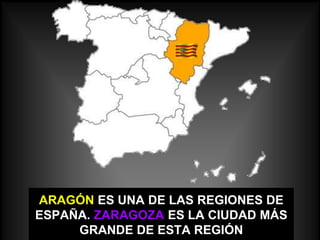
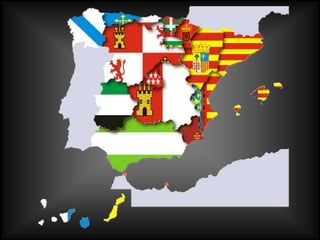
ARAGÓN ES UNA DE LAS REGIONES DE
ESPAÑA. ZARAGOZA ES LA CIUDAD MÁS
     GRANDE DE ESTA REGIÓN
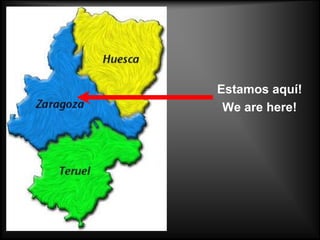
Estamos aquí!
 We are here!
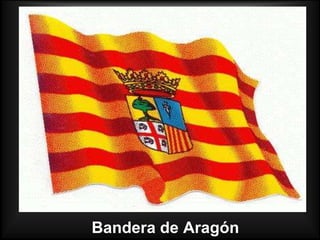
Bandera de Aragón
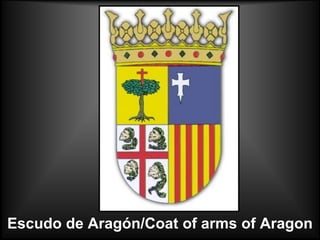
Escudo de Aragón/Coat of arms of Aragon
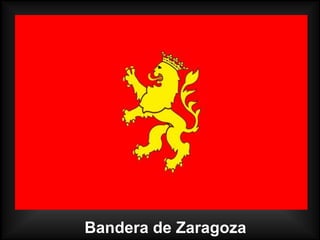
Bandera de Zaragoza
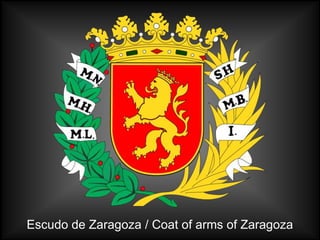
Escudo de Zaragoza / Coat of arms of Zaragoza
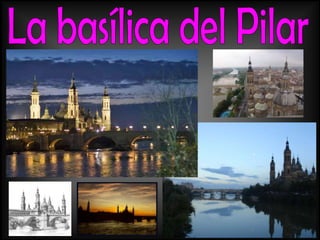
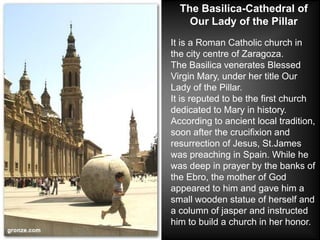
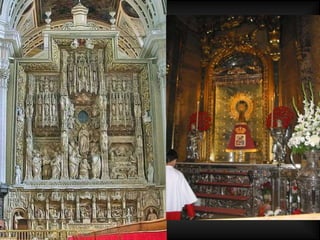
The Basilica-Cathedral of
    Our Lady of the Pillar
It is a Roman Catholic church in
the city centre of Zaragoza.
The Basilica venerates Blessed
Virgin Mary, under her title Our
Lady of the Pillar.
It is reputed to be the first church
dedicated to Mary in history.
According to ancient local tradition,
soon after the crucifixion and
resurrection of Jesus, St.James
was preaching in Spain. While he
was deep in prayer by the banks of
the Ebro, the mother of God
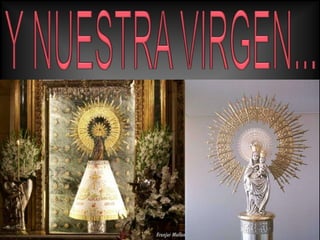
appeared to him and gave him a
small wooden statue of herself and
a column of jasper and instructed
him to build a church in her honor.
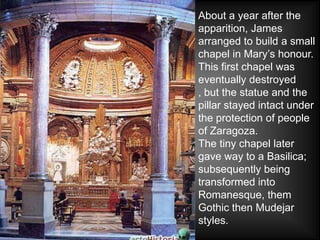
About a year after the
apparition, James
arranged to build a small
chapel in Mary’s honour.
This first chapel was
eventually destroyed
, but the statue and the
pillar stayed intact under
the protection of people
of Zaragoza.
The tiny chapel later
gave way to a Basilica;
subsequently being
transformed into
Romanesque, them
Gothic then Mudejar
styles.
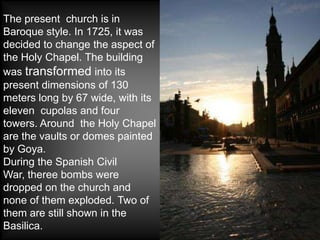
The present church is in
Baroque style. In 1725, it was
decided to change the aspect of
the Holy Chapel. The building
was transformed into its
present dimensions of 130
meters long by 67 wide, with its
eleven cupolas and four
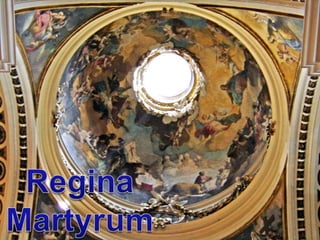
towers. Around the Holy Chapel
are the vaults or domes painted
by Goya.
During the Spanish Civil
War, theree bombs were
dropped on the church and
none of them exploded. Two of
them are still shown in the
Basilica.
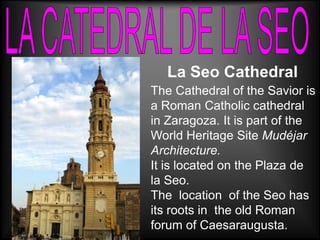
La Seo Cathedral
The Cathedral of the Savior is
a Roman Catholic cathedral
in Zaragoza. It is part of the
World Heritage Site Mudéjar
Architecture.
It is located on the Plaza de
la Seo.
The location of the Seo has
its roots in the old Roman
forum of Caesaraugusta.
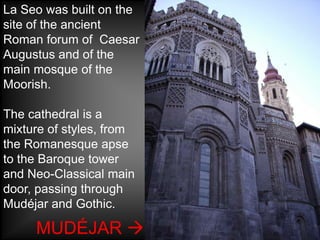
La Seo was built on the
site of the ancient
Roman forum of Caesar
Augustus and of the
main mosque of the
Moorish.

The cathedral is a
mixture of styles, from
the Romanesque apse
to the Baroque tower
and Neo-Classical main
door, passing through
Mudéjar and Gothic.

     MUDÉJAR 
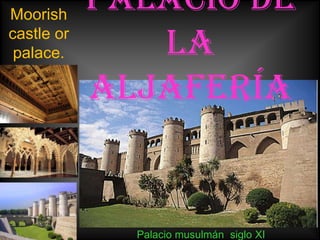
Moorish
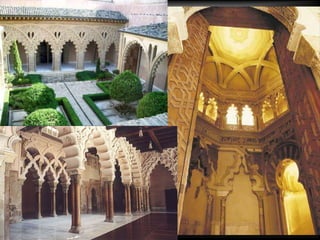
            PALACIO DE
castle or
 palace.       LA
            ALJAFERÍA


              Palacio musulmán siglo XI
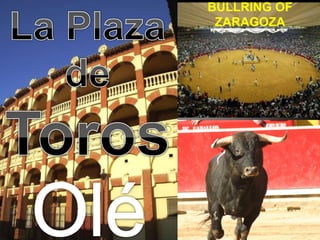
BULLRING OF
 ZARAGOZA
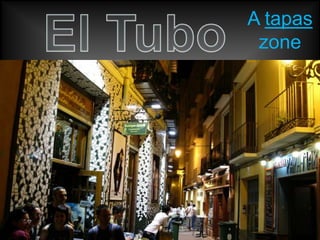
A tapas
 zone
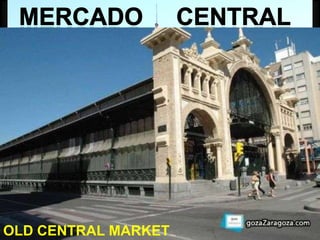
OLD CENTRAL MARKET
Romans invaded Spain
for 7 centuries . Social and
 political life changed from
  them on. They brought
their culture and customs,
       and their print is
  everywhere in our city.
        For example…
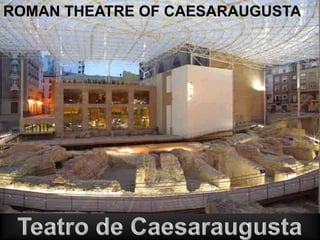
ROMAN THEATRE OF CAESARAUGUSTA
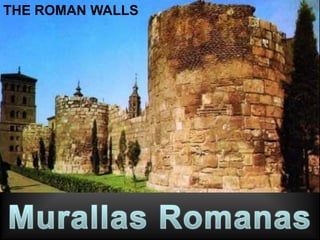
THE ROMAN WALLS
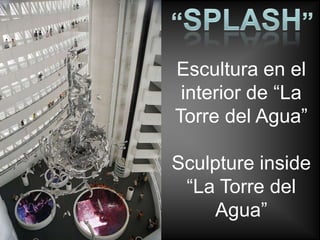
Escultura en el
 interior de “La
Torre del Agua”

Sculpture inside
 “La Torre del
    Agua”
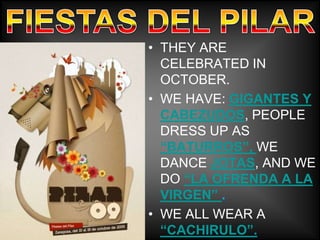
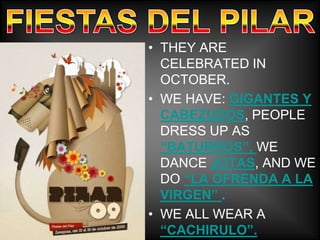
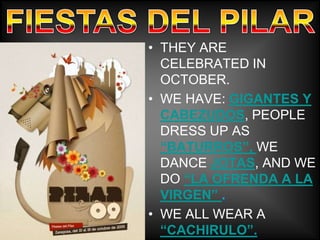
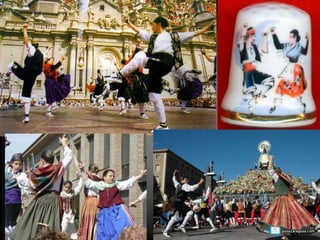
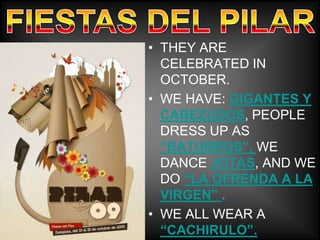
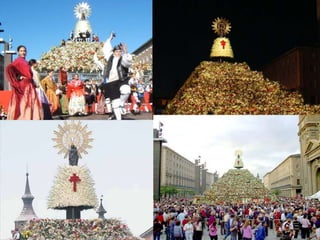
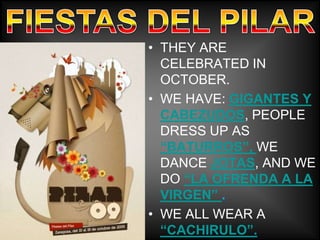
• THEY ARE
  CELEBRATED IN
  OCTOBER.
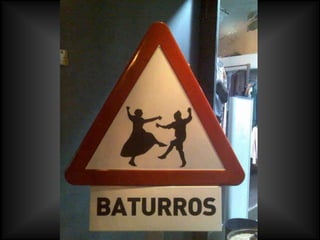
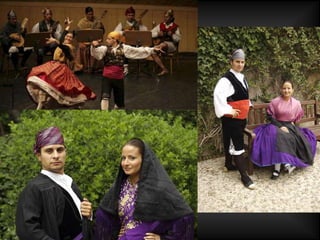
• WE HAVE: GIGANTES Y
  CABEZUDOS, PEOPLE
  DRESS UP AS
  “BATURROS”, WE
  DANCE JOTAS, AND WE
  DO “LA OFRENDA A LA
  VIRGEN” .
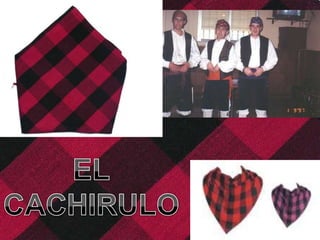
• WE ALL WEAR A
  “CACHIRULO”.
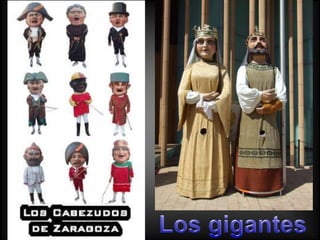
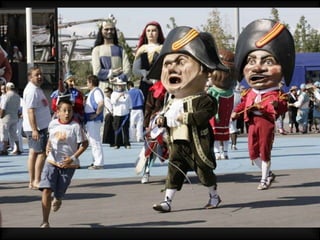
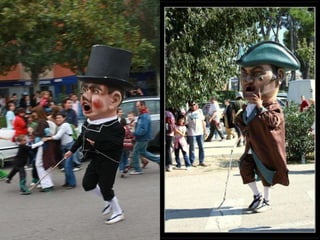
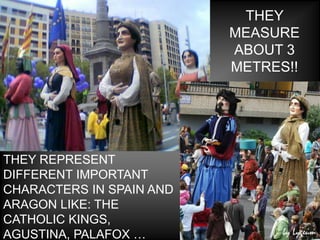
THEY
                          MEASURE
                          ABOUT 3
                          METRES!!


THEY REPRESENT
DIFFERENT IMPORTANT
CHARACTERS IN SPAIN AND
ARAGON LIKE: THE
CATHOLIC KINGS,
AGUSTINA, PALAFOX …
• THEY ARE
  CELEBRATED IN
  OCTOBER.
• WE HAVE: GIGANTES Y
  CABEZUDOS, PEOPLE
  DRESS UP AS
  “BATURROS”, WE
  DANCE JOTAS, AND WE
  DO “LA OFRENDA A LA
  VIRGEN” .
• WE ALL WEAR A
  “CACHIRULO”.
• THEY ARE
  CELEBRATED IN
  OCTOBER.
• WE HAVE: GIGANTES Y
  CABEZUDOS, PEOPLE
  DRESS UP AS
  “BATURROS”, WE
  DANCE JOTAS, AND WE
  DO “LA OFRENDA A LA
  VIRGEN” .
• WE ALL WEAR A
  “CACHIRULO”.
• THEY ARE
  CELEBRATED IN
  OCTOBER.
• WE HAVE: GIGANTES Y
  CABEZUDOS, PEOPLE
  DRESS UP AS
  “BATURROS”, WE
  DANCE JOTAS, AND WE
  DO “LA OFRENDA A LA
  VIRGEN” .
• WE ALL WEAR A
  “CACHIRULO”.
• THEY ARE
  CELEBRATED IN
  OCTOBER.
• WE HAVE: GIGANTES Y
  CABEZUDOS, PEOPLE
  DRESS UP AS
  “BATURROS”, WE
  DANCE JOTAS, AND WE
  DO “LA OFRENDA A LA
  VIRGEN” .
• WE ALL WEAR A
  “CACHIRULO”.
Zaragoza

Zaragoza

  • 3.
    ARAGÓN ES UNADE LAS REGIONES DE ESPAÑA. ZARAGOZA ES LA CIUDAD MÁS GRANDE DE ESTA REGIÓN
  • 4.
  • 6.
  • 7.
    Escudo de Aragón/Coatof arms of Aragon
  • 8.
  • 9.
    Escudo de Zaragoza/ Coat of arms of Zaragoza
  • 16.
    The Basilica-Cathedral of Our Lady of the Pillar It is a Roman Catholic church in the city centre of Zaragoza. The Basilica venerates Blessed Virgin Mary, under her title Our Lady of the Pillar. It is reputed to be the first church dedicated to Mary in history. According to ancient local tradition, soon after the crucifixion and resurrection of Jesus, St.James was preaching in Spain. While he was deep in prayer by the banks of the Ebro, the mother of God appeared to him and gave him a small wooden statue of herself and a column of jasper and instructed him to build a church in her honor.
  • 17.
    About a yearafter the apparition, James arranged to build a small chapel in Mary’s honour. This first chapel was eventually destroyed , but the statue and the pillar stayed intact under the protection of people of Zaragoza. The tiny chapel later gave way to a Basilica; subsequently being transformed into Romanesque, them Gothic then Mudejar styles.
  • 19.
    The present churchis in Baroque style. In 1725, it was decided to change the aspect of the Holy Chapel. The building was transformed into its present dimensions of 130 meters long by 67 wide, with its eleven cupolas and four towers. Around the Holy Chapel are the vaults or domes painted by Goya. During the Spanish Civil War, theree bombs were dropped on the church and none of them exploded. Two of them are still shown in the Basilica.
  • 23.
    La Seo Cathedral TheCathedral of the Savior is a Roman Catholic cathedral in Zaragoza. It is part of the World Heritage Site Mudéjar Architecture. It is located on the Plaza de la Seo. The location of the Seo has its roots in the old Roman forum of Caesaraugusta.
  • 24.
    La Seo wasbuilt on the site of the ancient Roman forum of Caesar Augustus and of the main mosque of the Moorish. The cathedral is a mixture of styles, from the Romanesque apse to the Baroque tower and Neo-Classical main door, passing through Mudéjar and Gothic. MUDÉJAR 
  • 25.
    Moorish PALACIO DE castle or palace. LA ALJAFERÍA Palacio musulmán siglo XI
  • 28.
  • 32.
  • 35.
  • 36.
    Romans invaded Spain for7 centuries . Social and political life changed from them on. They brought their culture and customs, and their print is everywhere in our city. For example…
  • 37.
    ROMAN THEATRE OFCAESARAUGUSTA
  • 38.
  • 56.
    Escultura en el interior de “La Torre del Agua” Sculpture inside “La Torre del Agua”
  • 59.
    • THEY ARE CELEBRATED IN OCTOBER. • WE HAVE: GIGANTES Y CABEZUDOS, PEOPLE DRESS UP AS “BATURROS”, WE DANCE JOTAS, AND WE DO “LA OFRENDA A LA VIRGEN” . • WE ALL WEAR A “CACHIRULO”.
  • 63.
    THEY MEASURE ABOUT 3 METRES!! THEY REPRESENT DIFFERENT IMPORTANT CHARACTERS IN SPAIN AND ARAGON LIKE: THE CATHOLIC KINGS, AGUSTINA, PALAFOX …
  • 64.
    • THEY ARE CELEBRATED IN OCTOBER. • WE HAVE: GIGANTES Y CABEZUDOS, PEOPLE DRESS UP AS “BATURROS”, WE DANCE JOTAS, AND WE DO “LA OFRENDA A LA VIRGEN” . • WE ALL WEAR A “CACHIRULO”.
  • 67.
    • THEY ARE CELEBRATED IN OCTOBER. • WE HAVE: GIGANTES Y CABEZUDOS, PEOPLE DRESS UP AS “BATURROS”, WE DANCE JOTAS, AND WE DO “LA OFRENDA A LA VIRGEN” . • WE ALL WEAR A “CACHIRULO”.
  • 69.
    • THEY ARE CELEBRATED IN OCTOBER. • WE HAVE: GIGANTES Y CABEZUDOS, PEOPLE DRESS UP AS “BATURROS”, WE DANCE JOTAS, AND WE DO “LA OFRENDA A LA VIRGEN” . • WE ALL WEAR A “CACHIRULO”.
  • 71.
    • THEY ARE CELEBRATED IN OCTOBER. • WE HAVE: GIGANTES Y CABEZUDOS, PEOPLE DRESS UP AS “BATURROS”, WE DANCE JOTAS, AND WE DO “LA OFRENDA A LA VIRGEN” . • WE ALL WEAR A “CACHIRULO”.