
Getting a Perfect Credit Score
Your Guide to...
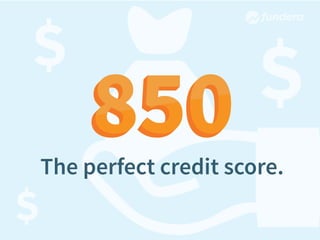
The perfect credit score.
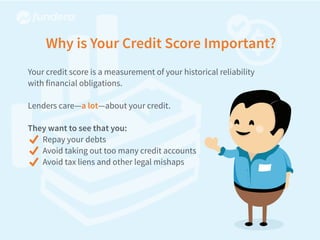
Why is Your Credit Score Important?
Your credit score is a measurement of your historical reliability
with financial obligations.
Lenders care—a lot—about your credit.
They want to see that you:
Repay your debts
Avoid taking out too many credit accounts
Avoid tax liens and other legal mishaps
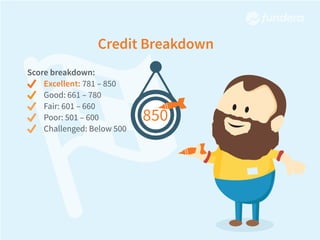
Credit Breakdown
Score breakdown:
Excellent: 781 – 850
Good: 661 – 780
Fair: 601 – 660
Poor: 501 – 600
Challenged: Below 500
850
Types of Credit Scores
1. Personal Credit Score
Affected by personal loans, automobile loans, mortgages, student
loans, and personal credit cards.
Types of Credit Scores
2. Business Credit Score
If your business has been an excellent borrower, your business credit
score might offset a less-than-great personal score.
Types of Credit Scores
3. FICO SBSS Score
FICO’s SBSS (Small Business Scoring Service) combines your personal
and business credit scores.
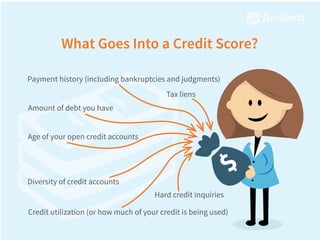
What Goes Into a Credit Score?
Amount of debt you have
Payment history (including bankruptcies and judgments)
Tax liens
Credit utilization (or how much of your credit is being used)
Hard credit inquiries
Age of your open credit accounts
Diversity of credit accounts
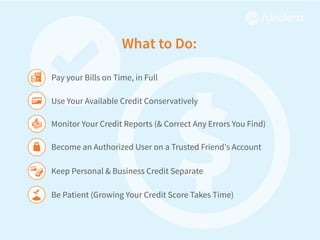
What to Do:
Pay your Bills on Time, in Full
Use Your Available Credit Conservatively
Monitor Your Credit Reports (& Correct Any Errors You Find)
Become an Authorized User on a Trusted Friend's Account
Keep Personal & Business Credit Separate
Be Patient (Growing Your Credit Score Takes Time)
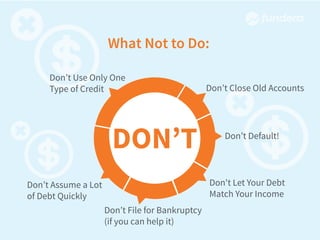
DON’T
What Not to Do:
Don’t Close Old Accounts
Don’t Default!
Don't Let Your Debt
Match Your Income
Don’t Assume a Lot
of Debt Quickly
Don’t File for Bankruptcy
(if you can help it)
Don’t Use Only One
Type of Credit
Do You Need to Be Perfect?
In the end, don’t worry too much if you only have a score of
There’s not much 850 can get you that 750 can’t
(apart from the satisfaction of being perfect).
Small Business Loans Made Easy

Your Guide to Getting a Perfect Credit Score

  • 1.
    Getting a PerfectCredit Score Your Guide to...
  • 2.
  • 3.
    Why is YourCredit Score Important? Your credit score is a measurement of your historical reliability with financial obligations. Lenders care—a lot—about your credit. They want to see that you: Repay your debts Avoid taking out too many credit accounts Avoid tax liens and other legal mishaps
  • 4.
    Credit Breakdown Score breakdown: Excellent:781 – 850 Good: 661 – 780 Fair: 601 – 660 Poor: 501 – 600 Challenged: Below 500 850
  • 5.
    Types of CreditScores 1. Personal Credit Score Affected by personal loans, automobile loans, mortgages, student loans, and personal credit cards.
  • 6.
    Types of CreditScores 2. Business Credit Score If your business has been an excellent borrower, your business credit score might offset a less-than-great personal score.
  • 7.
    Types of CreditScores 3. FICO SBSS Score FICO’s SBSS (Small Business Scoring Service) combines your personal and business credit scores.
  • 8.
    What Goes Intoa Credit Score? Amount of debt you have Payment history (including bankruptcies and judgments) Tax liens Credit utilization (or how much of your credit is being used) Hard credit inquiries Age of your open credit accounts Diversity of credit accounts
  • 9.
    What to Do: Payyour Bills on Time, in Full Use Your Available Credit Conservatively Monitor Your Credit Reports (& Correct Any Errors You Find) Become an Authorized User on a Trusted Friend's Account Keep Personal & Business Credit Separate Be Patient (Growing Your Credit Score Takes Time)
  • 10.
    DON’T What Not toDo: Don’t Close Old Accounts Don’t Default! Don't Let Your Debt Match Your Income Don’t Assume a Lot of Debt Quickly Don’t File for Bankruptcy (if you can help it) Don’t Use Only One Type of Credit
  • 11.
    Do You Needto Be Perfect? In the end, don’t worry too much if you only have a score of There’s not much 850 can get you that 750 can’t (apart from the satisfaction of being perfect).
  • 12.