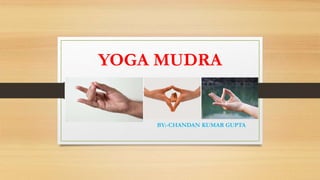
YOGA MUDRA
BY:-CHANDAN KUMAR GUPTA
-:Definition:-
The meaning of ‘mudra’, which is a Sanskrit
word, is ‘closure’ or ‘seal’. Mudra hand
positions are physical gestures that have an
effect on the energy flow of the body.
Benefits of mudras
• The mudras benefit the bio magnetic fields, psyche, body, and
mind in many ways Some of the benefits of mudras are as
follows:
• The mudras clear the psychic centers and subtle channels in the
body This allows the life force to flow freely to the various parts
of the body
• The mudras purify the body’s bio magnetic field and shield it
from negative forces
Types of mudras
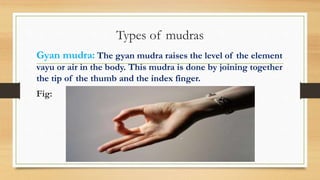
Gyan mudra: The gyan mudra raises the level of the element
vayu or air in the body. This mudra is done by joining together
the tip of the thumb and the index finger.
Fig:
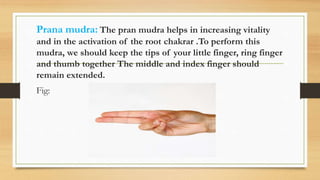
Prana mudra: The pran mudra helps in increasing vitality
and in the activation of the root chakrar .To perform this
mudra, we should keep the tips of your little finger, ring finger
and thumb together The middle and index finger should
remain extended.
Fig:
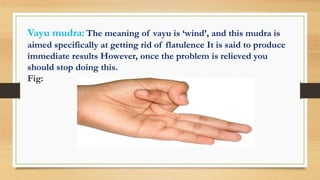
Vayu mudra: The meaning of vayu is ‘wind’, and this mudra is
aimed specifically at getting rid of flatulence It is said to produce
immediate results However, once the problem is relieved you
should stop doing this.
Fig:
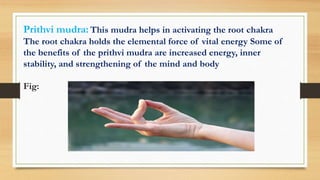
Prithvi mudra: This mudra helps in activating the root chakra
The root chakra holds the elemental force of vital energy Some of
the benefits of the prithvi mudra are increased energy, inner
stability, and strengthening of the mind and body
Fig:
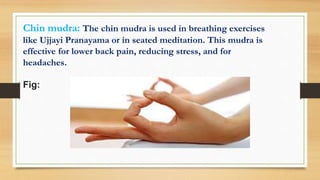
Chin mudra: The chin mudra is used in breathing exercises
like Ujjayi Pranayama or in seated meditation. This mudra is
effective for lower back pain, reducing stress, and for
headaches.
Fig:
Apaan mudra: The apaan mudra is a very useful and important
mudra that detoxifies the body and then energizes it Some of the
benefits of apaan mudra are for constipation, anuria, and delayed
child delivery.
Fig:
Surya mudra: The surya mudra helps decrease the earth element
and increase the fire element in the body It is effective in regulating
the metabolism and body temperature
Fig:
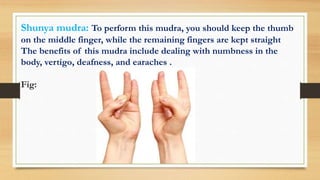
Shunya mudra: To perform this mudra, you should keep the thumb
on the middle finger, while the remaining fingers are kept straight
The benefits of this mudra include dealing with numbness in the
body, vertigo, deafness, and earaches .
Fig:
Linga mudra: The linga mudra strengthens the immune system
of the body and loosens the collected mucous in the body. This
mudra is also effective for weight loss because of the generation of
heat.
Fig:
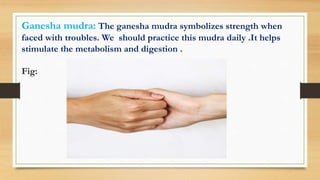
Ganesha mudra: The ganesha mudra symbolizes strength when
faced with troubles. We should practice this mudra daily .It helps
stimulate the metabolism and digestion .
Fig:
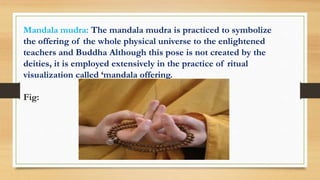
Mandala mudra: The mandala mudra is practiced to symbolize
the offering of the whole physical universe to the enlightened
teachers and Buddha Although this pose is not created by the
deities, it is employed extensively in the practice of ritual
visualization called ‘mandala offering.
Fig:
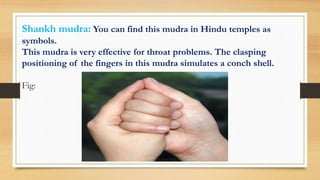
Shankh mudra: You can find this mudra in Hindu temples as
symbols.
This mudra is very effective for throat problems. The clasping
positioning of the fingers in this mudra simulates a conch shell.
Fig:
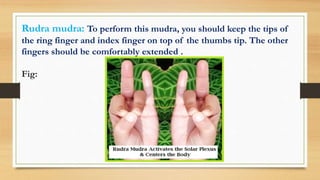
Rudra mudra: To perform this mudra, you should keep the tips of
the ring finger and index finger on top of the thumbs tip. The other
fingers should be comfortably extended .
Fig:
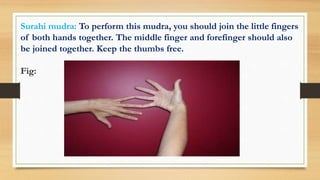
Surahi mudra: To perform this mudra, you should join the little fingers
of both hands together. The middle finger and forefinger should also
be joined together. Keep the thumbs free.
Fig:
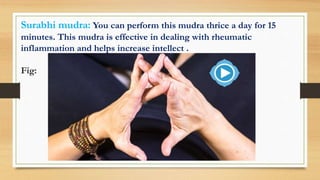
Surabhi mudra: You can perform this mudra thrice a day for 15
minutes. This mudra is effective in dealing with rheumatic
inflammation and helps increase intellect .
Fig:
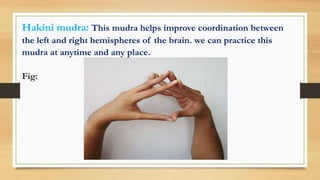
Hakini mudra: This mudra helps improve coordination between
the left and right hemispheres of the brain. we can practice this
mudra at anytime and any place.
Fig:
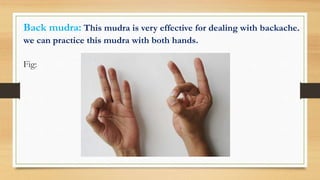
Back mudra: This mudra is very effective for dealing with backache.
we can practice this mudra with both hands.
Fig:
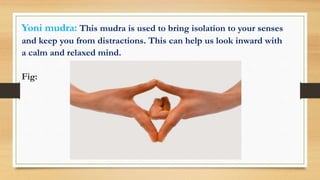
Yoni mudra: This mudra is used to bring isolation to your senses
and keep you from distractions. This can help us look inward with
a calm and relaxed mind.
Fig:
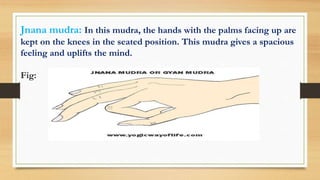
Jnana mudra: In this mudra, the hands with the palms facing up are
kept on the knees in the seated position. This mudra gives a spacious
feeling and uplifts the mind.
Fig:
Yoga mudra

Yoga mudra

  • 1.
  • 2.
    -:Definition:- The meaning of‘mudra’, which is a Sanskrit word, is ‘closure’ or ‘seal’. Mudra hand positions are physical gestures that have an effect on the energy flow of the body.
  • 3.
    Benefits of mudras •The mudras benefit the bio magnetic fields, psyche, body, and mind in many ways Some of the benefits of mudras are as follows: • The mudras clear the psychic centers and subtle channels in the body This allows the life force to flow freely to the various parts of the body • The mudras purify the body’s bio magnetic field and shield it from negative forces
  • 4.
    Types of mudras Gyanmudra: The gyan mudra raises the level of the element vayu or air in the body. This mudra is done by joining together the tip of the thumb and the index finger. Fig:
  • 5.
    Prana mudra: Thepran mudra helps in increasing vitality and in the activation of the root chakrar .To perform this mudra, we should keep the tips of your little finger, ring finger and thumb together The middle and index finger should remain extended. Fig:
  • 6.
    Vayu mudra: Themeaning of vayu is ‘wind’, and this mudra is aimed specifically at getting rid of flatulence It is said to produce immediate results However, once the problem is relieved you should stop doing this. Fig:
  • 7.
    Prithvi mudra: Thismudra helps in activating the root chakra The root chakra holds the elemental force of vital energy Some of the benefits of the prithvi mudra are increased energy, inner stability, and strengthening of the mind and body Fig:
  • 8.
    Chin mudra: Thechin mudra is used in breathing exercises like Ujjayi Pranayama or in seated meditation. This mudra is effective for lower back pain, reducing stress, and for headaches. Fig:
  • 9.
    Apaan mudra: Theapaan mudra is a very useful and important mudra that detoxifies the body and then energizes it Some of the benefits of apaan mudra are for constipation, anuria, and delayed child delivery. Fig:
  • 10.
    Surya mudra: Thesurya mudra helps decrease the earth element and increase the fire element in the body It is effective in regulating the metabolism and body temperature Fig:
  • 11.
    Shunya mudra: Toperform this mudra, you should keep the thumb on the middle finger, while the remaining fingers are kept straight The benefits of this mudra include dealing with numbness in the body, vertigo, deafness, and earaches . Fig:
  • 12.
    Linga mudra: Thelinga mudra strengthens the immune system of the body and loosens the collected mucous in the body. This mudra is also effective for weight loss because of the generation of heat. Fig:
  • 13.
    Ganesha mudra: Theganesha mudra symbolizes strength when faced with troubles. We should practice this mudra daily .It helps stimulate the metabolism and digestion . Fig:
  • 14.
    Mandala mudra: Themandala mudra is practiced to symbolize the offering of the whole physical universe to the enlightened teachers and Buddha Although this pose is not created by the deities, it is employed extensively in the practice of ritual visualization called ‘mandala offering. Fig:
  • 15.
    Shankh mudra: Youcan find this mudra in Hindu temples as symbols. This mudra is very effective for throat problems. The clasping positioning of the fingers in this mudra simulates a conch shell. Fig:
  • 16.
    Rudra mudra: Toperform this mudra, you should keep the tips of the ring finger and index finger on top of the thumbs tip. The other fingers should be comfortably extended . Fig:
  • 17.
    Surahi mudra: Toperform this mudra, you should join the little fingers of both hands together. The middle finger and forefinger should also be joined together. Keep the thumbs free. Fig:
  • 18.
    Surabhi mudra: Youcan perform this mudra thrice a day for 15 minutes. This mudra is effective in dealing with rheumatic inflammation and helps increase intellect . Fig:
  • 19.
    Hakini mudra: Thismudra helps improve coordination between the left and right hemispheres of the brain. we can practice this mudra at anytime and any place. Fig:
  • 20.
    Back mudra: Thismudra is very effective for dealing with backache. we can practice this mudra with both hands. Fig:
  • 21.
    Yoni mudra: Thismudra is used to bring isolation to your senses and keep you from distractions. This can help us look inward with a calm and relaxed mind. Fig:
  • 22.
    Jnana mudra: Inthis mudra, the hands with the palms facing up are kept on the knees in the seated position. This mudra gives a spacious feeling and uplifts the mind. Fig: