Session objectives:
To know and understand the
requirements regarding PSHE;
To be aware of a range of
approaches to teaching PSHE;
To understand how different areas
of the curriculum can contribute to
the aims of PSHE.
PSHE - Personal, Social and Health Education
 PSHE education is a planned, developmental
programme of learning designed to help learners
develop the knowledge, understanding and skills
they need to manage their lives, now and in the
future.
 It deals with real life issues which affect children
and young people, their families and their
communities, and engages with the
social and economic realities of their
lives, experiences and attitudes.
Wellbeing: defined in the Children Act 2004 as:
”the promotion of physical and mental health;
emotional wellbeing; social and economic well
being; education, training and recreation;
recognition of the contribution made by children
to society; and protection from harm and
neglect”.
Why is PSHE provision important to
schools?
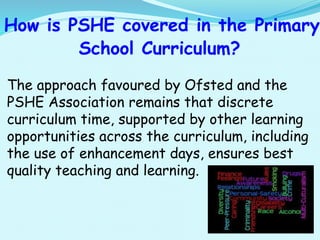
How is PSHE covered in the Primary
School Curriculum?
The approach favoured by Ofsted and the
PSHE Association remains that discrete
curriculum time, supported by other learning
opportunities across the curriculum, including
the use of enhancement days, ensures best
quality teaching and learning.
PSHE and the Wider Curriculum:
How do you
cater for PSHE
across the
curriculum?
What should I teach and where?
 PSHE is currently a non-statutory part of the
curriculum. Most schools choose to teach it
because they find their pupils benefit from learning
how to lead healthy lifestyles, manage their
feelings, build positive relationships and become
financially capable.
The content for primary schools is set out in the
Frameworks for PSHE for key stages 1 and 2 on the
DFE website:
 For more details visit
http://www.education.gov.uk/schools/teachingandlearni
ng/curriculum/primary
 Download end of key stage statements key stages 1 and
2
Where does Citizenship fit in?
In primary schools citizenship forms part of the non-
statutory framework for PSHE and Citizenship, and in
secondary schools it is a discrete statutory curriculum area
with national curriculum orders.
Citizenship is distinct from PSHE, although there are areas
that overlap.
http://education.gov.uk/schools/teachingandlearning/curricul
um/primary/b00198824/citizenship
Both emphasise the development of skills and exploration of
attitudes. A useful distinction is that citizenship supports
pupils' development in making a positive contribution to
society, such as political decision makers, as opposed to PSHE
which supports pupils' development in leading emotionally
confident, healthy and responsible lives as members of
society.
Personal, social, health and
economic education in schools
Ofsted - July 2010 and May 2013
 Teachers demonstrate very high levels of confidence
and expertise in their specialist knowledge and in their
understanding of effective learning in PSHE.
 Clear learning objectives are complemented by explicit
and appropriate learning outcomes.
 Teachers use a very wide range of imaginative
resources and strategies to stimulate pupils’ interest
and active participation and, as a result, secure rapid
and sustained progress.
 Highly effective and responsive teaching ensures the
needs of all pupils, including the most able are met.
 Teachers are confident and skilled in discussing
sensitive and/or controversial issues.
 Effective discussion is a very strong feature; pupils
are encouraged to investigate, express opinions and
listen to others.
 Consequently they develop excellent critical skills, can
evaluate information well and make informed
judgments.
Personal, social, health and
economic education in schools
Ofsted - July 2010 and May 2013
http://www.ofsted.gov.uk/inspection-reports/our-expert-
knowledge/personal-social-and-health-education-pshe
Examples of popular
materials
SEAL
 http://www.edu.dudley.gov.uk/primary/seal/SEALbox
/sealboxhome.htm
 http://www.primaryresources.co.uk/pshe/pshe.htm
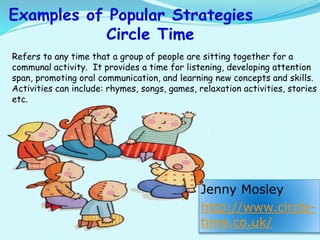
Jenny Mosley
http://www.circle-
time.co.uk/
Refers to any time that a group of people are sitting together for a
communal activity. It provides a time for listening, developing attention
span, promoting oral communication, and learning new concepts and skills.
Activities can include: rhymes, songs, games, relaxation activities, stories
etc.
Jenny Mosley’s Quality Circle Time model is a whole
class/school approach used for early years settings and
primary and secondary schools to:
• Promote positive relationships
• Encourage positive behaviour
• Create a caring and respectful ethos
• Help children develop their self-esteem and self-
confidence
• Support the emotional well-being of children and
adults
• Create calm and happy lunchtimes and playtimes
• Promote social and emotional development of all
children
• Nurture the creativity in all people in school
• Help teachers develop areas such as PSHE, SEAL
etc.
http://www.circle-time.co.uk/
Channelling Anger
Katie Jump 2004
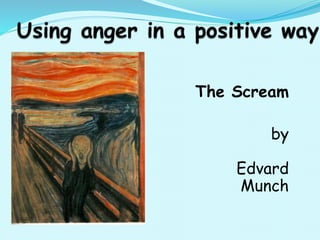
The Scream
by
Edvard
Munch
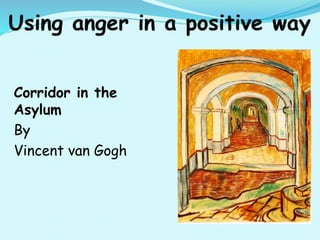
Corridor in the
Asylum
By
Vincent van Gogh
Unfairness? Bullying?
Stealing? Losing?
Other people fighting?
Brothers and Sisters?
See “red”?
Want to hurt someone?
Want to hurt yourself?
Want to break things?
Want to get away?
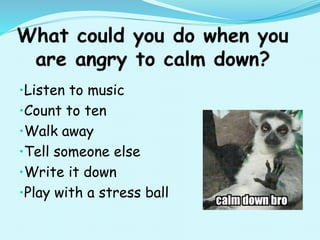
•Listen to music
•Count to ten
•Walk away
•Tell someone else
•Write it down
•Play with a stress ball
Directed tasks
1. Download the PSHE and Citizenship programmes of
study and end of key stage statements for your
reference.
2. Explore 2 or 3 of these websites and evaluate the
resources for use in school. Write up your reviews for
your Blogfolio.
 http://www.mylife4schools.org.uk/teachers
 http://www.primaryresources.co.uk/pshe/pshe.htm
 http://www.edu.dudley.gov.uk/primary/seal/SEALbox/
sealboxhome.htm
3. In pairs or 3’s create an activity for use in primary
PSHE. Upload to your Blogfolio.
Essential Reading
 McCreery E, Palmer S. & Voiels V. (2008)
Achieving QTS: Teaching Religious Education
Exeter: Learning Matters. Ch6
Listen to some calming music and
describe how it makes you feel.
http://www.youtube.com/watch?v=44YGF9fmEEo

Y1 re session 4finalnile 2014 pshe(4)

  • 2.
    Session objectives: To knowand understand the requirements regarding PSHE; To be aware of a range of approaches to teaching PSHE; To understand how different areas of the curriculum can contribute to the aims of PSHE.
  • 3.
    PSHE - Personal,Social and Health Education  PSHE education is a planned, developmental programme of learning designed to help learners develop the knowledge, understanding and skills they need to manage their lives, now and in the future.  It deals with real life issues which affect children and young people, their families and their communities, and engages with the social and economic realities of their lives, experiences and attitudes.
  • 4.
    Wellbeing: defined inthe Children Act 2004 as: ”the promotion of physical and mental health; emotional wellbeing; social and economic well being; education, training and recreation; recognition of the contribution made by children to society; and protection from harm and neglect”. Why is PSHE provision important to schools?
  • 5.
    How is PSHEcovered in the Primary School Curriculum? The approach favoured by Ofsted and the PSHE Association remains that discrete curriculum time, supported by other learning opportunities across the curriculum, including the use of enhancement days, ensures best quality teaching and learning.
  • 6.
    PSHE and theWider Curriculum: How do you cater for PSHE across the curriculum?
  • 7.
    What should Iteach and where?  PSHE is currently a non-statutory part of the curriculum. Most schools choose to teach it because they find their pupils benefit from learning how to lead healthy lifestyles, manage their feelings, build positive relationships and become financially capable. The content for primary schools is set out in the Frameworks for PSHE for key stages 1 and 2 on the DFE website:  For more details visit http://www.education.gov.uk/schools/teachingandlearni ng/curriculum/primary  Download end of key stage statements key stages 1 and 2
  • 8.
    Where does Citizenshipfit in? In primary schools citizenship forms part of the non- statutory framework for PSHE and Citizenship, and in secondary schools it is a discrete statutory curriculum area with national curriculum orders. Citizenship is distinct from PSHE, although there are areas that overlap. http://education.gov.uk/schools/teachingandlearning/curricul um/primary/b00198824/citizenship Both emphasise the development of skills and exploration of attitudes. A useful distinction is that citizenship supports pupils' development in making a positive contribution to society, such as political decision makers, as opposed to PSHE which supports pupils' development in leading emotionally confident, healthy and responsible lives as members of society.
  • 9.
    Personal, social, healthand economic education in schools Ofsted - July 2010 and May 2013  Teachers demonstrate very high levels of confidence and expertise in their specialist knowledge and in their understanding of effective learning in PSHE.  Clear learning objectives are complemented by explicit and appropriate learning outcomes.  Teachers use a very wide range of imaginative resources and strategies to stimulate pupils’ interest and active participation and, as a result, secure rapid and sustained progress.
  • 10.
     Highly effectiveand responsive teaching ensures the needs of all pupils, including the most able are met.  Teachers are confident and skilled in discussing sensitive and/or controversial issues.  Effective discussion is a very strong feature; pupils are encouraged to investigate, express opinions and listen to others.  Consequently they develop excellent critical skills, can evaluate information well and make informed judgments. Personal, social, health and economic education in schools Ofsted - July 2010 and May 2013 http://www.ofsted.gov.uk/inspection-reports/our-expert- knowledge/personal-social-and-health-education-pshe
  • 11.
    Examples of popular materials SEAL http://www.edu.dudley.gov.uk/primary/seal/SEALbox /sealboxhome.htm  http://www.primaryresources.co.uk/pshe/pshe.htm
  • 12.
    Jenny Mosley http://www.circle- time.co.uk/ Refers toany time that a group of people are sitting together for a communal activity. It provides a time for listening, developing attention span, promoting oral communication, and learning new concepts and skills. Activities can include: rhymes, songs, games, relaxation activities, stories etc.
  • 13.
    Jenny Mosley’s QualityCircle Time model is a whole class/school approach used for early years settings and primary and secondary schools to: • Promote positive relationships • Encourage positive behaviour • Create a caring and respectful ethos • Help children develop their self-esteem and self- confidence • Support the emotional well-being of children and adults • Create calm and happy lunchtimes and playtimes • Promote social and emotional development of all children • Nurture the creativity in all people in school • Help teachers develop areas such as PSHE, SEAL etc. http://www.circle-time.co.uk/
  • 14.
  • 15.
  • 16.
  • 17.
    Unfairness? Bullying? Stealing? Losing? Otherpeople fighting? Brothers and Sisters?
  • 18.
    See “red”? Want tohurt someone? Want to hurt yourself? Want to break things? Want to get away?
  • 19.
    •Listen to music •Countto ten •Walk away •Tell someone else •Write it down •Play with a stress ball
  • 20.
    Directed tasks 1. Downloadthe PSHE and Citizenship programmes of study and end of key stage statements for your reference. 2. Explore 2 or 3 of these websites and evaluate the resources for use in school. Write up your reviews for your Blogfolio.  http://www.mylife4schools.org.uk/teachers  http://www.primaryresources.co.uk/pshe/pshe.htm  http://www.edu.dudley.gov.uk/primary/seal/SEALbox/ sealboxhome.htm 3. In pairs or 3’s create an activity for use in primary PSHE. Upload to your Blogfolio.
  • 21.
    Essential Reading  McCreeryE, Palmer S. & Voiels V. (2008) Achieving QTS: Teaching Religious Education Exeter: Learning Matters. Ch6
  • 22.
    Listen to somecalming music and describe how it makes you feel. http://www.youtube.com/watch?v=44YGF9fmEEo