Capital Punishment
                             History of Capital Punishment


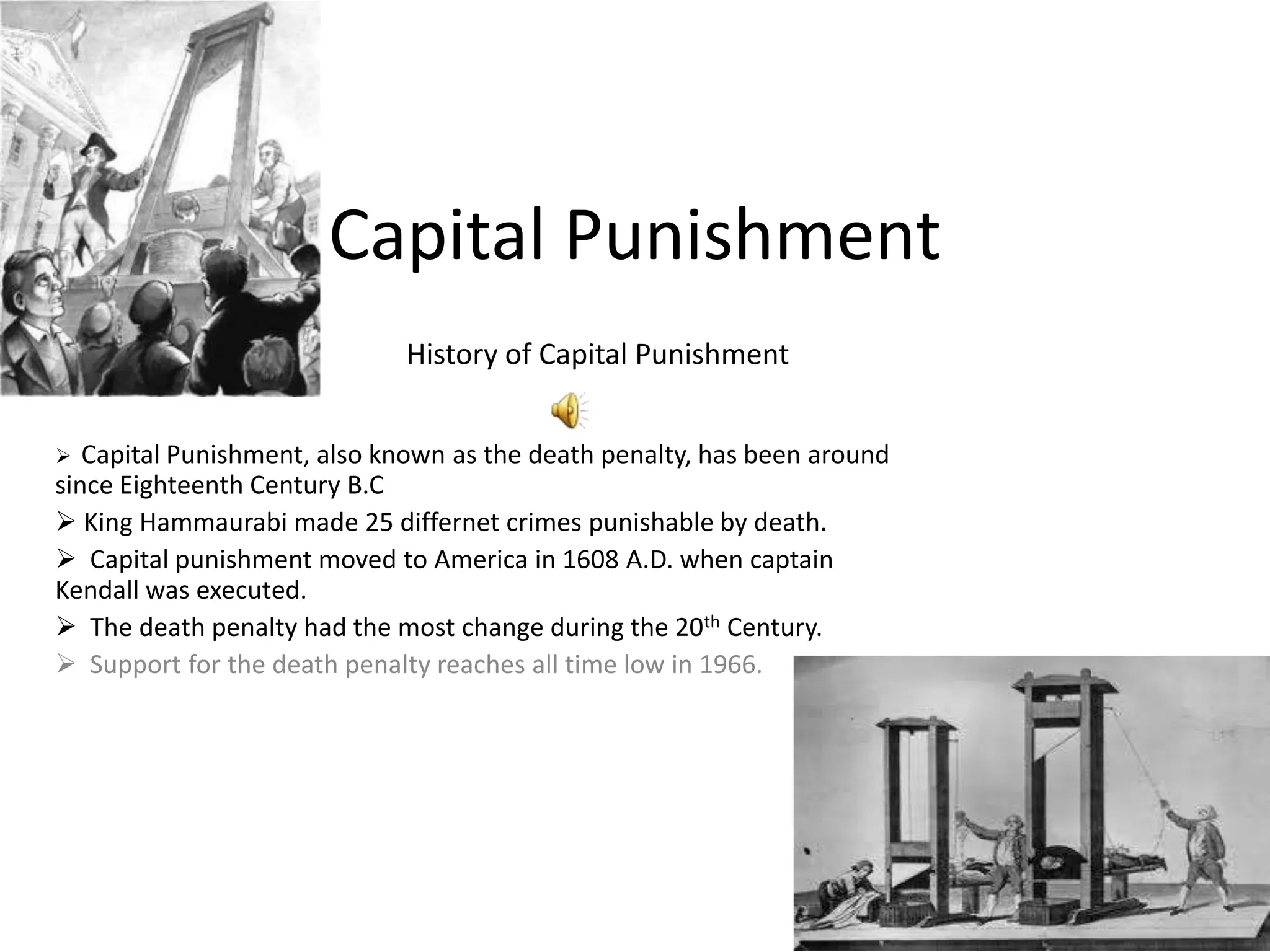
  Capital Punishment, also known as the death penalty, has been around
since Eighteenth Century B.C
 King Hammaurabi made 25 differnet crimes punishable by death.
 Capital punishment moved to America in 1608 A.D. when captain
Kendall was executed.
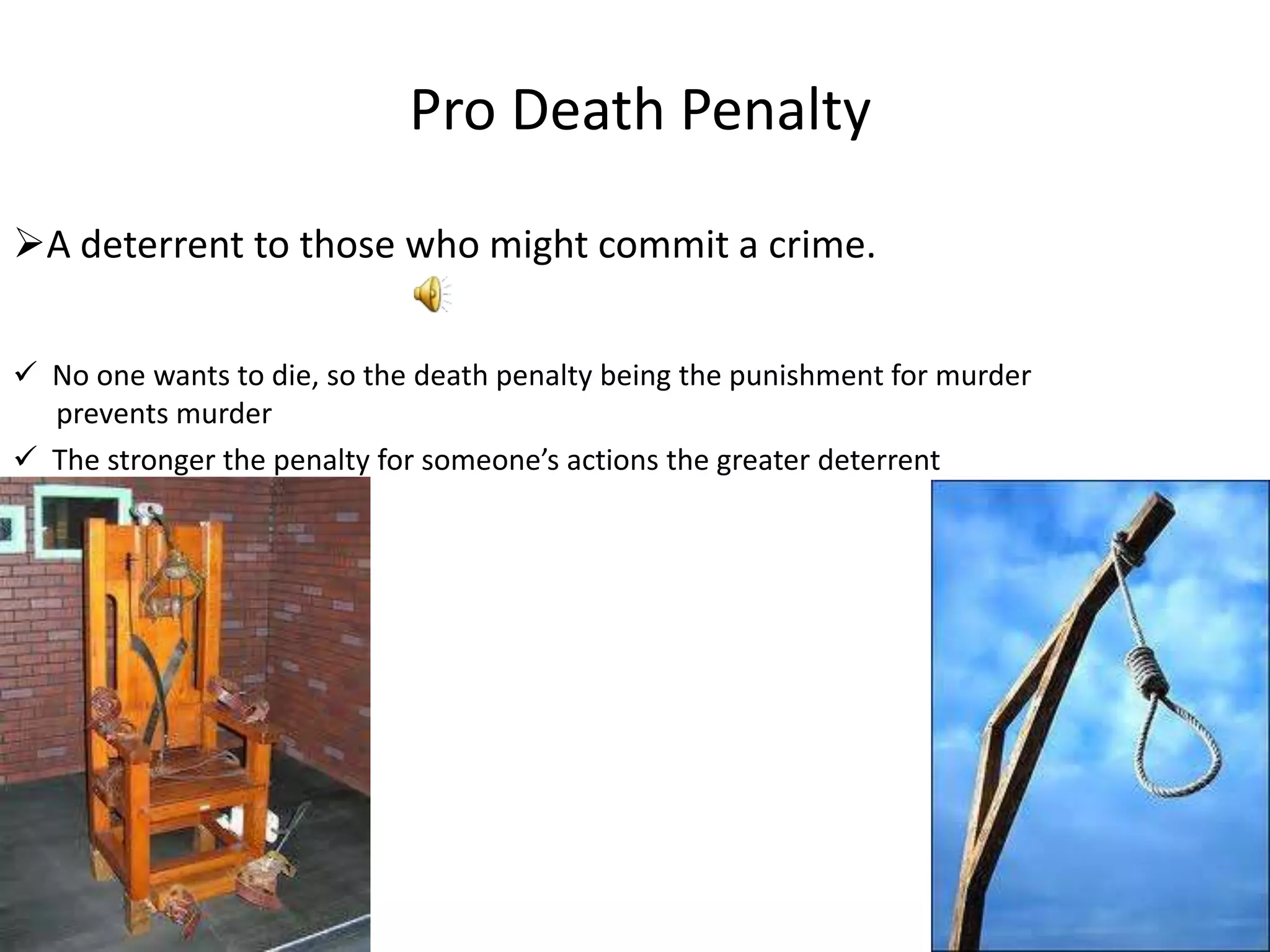
 The death penalty had the most change during the 20th Century.
 Support for the death penalty reaches all time low in 1966.
Pro Death Penalty

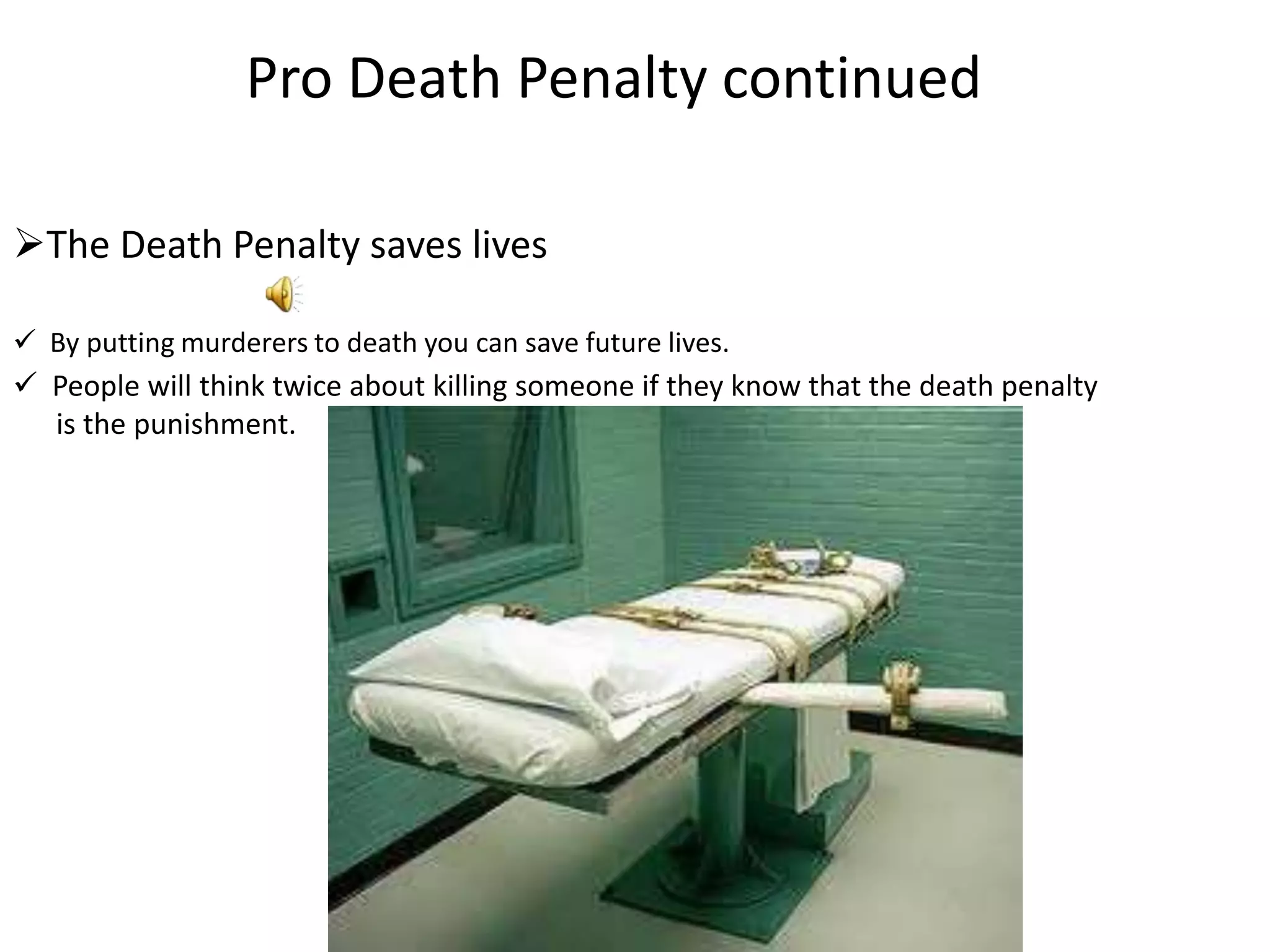
A deterrent to those who might commit a crime.


 No one wants to die, so the death penalty being the punishment for murder
  prevents murder
 The stronger the penalty for someone’s actions the greater deterrent
Pro Death Penalty continued

The Death Penalty saves lives

 By putting murderers to death you can save future lives.
 People will think twice about killing someone if they know that the death penalty
  is the punishment.
Pro Death Penalty continued

Sense of conclusion the family feels

 Once a criminal is put to death the family can finally feel free of
  the murderer who killed their loved one
 The safety and relief a family gets when the criminal is put to
  death is far better than life in prison.
Pro Death Penalty continued

 Overcrowding in jails

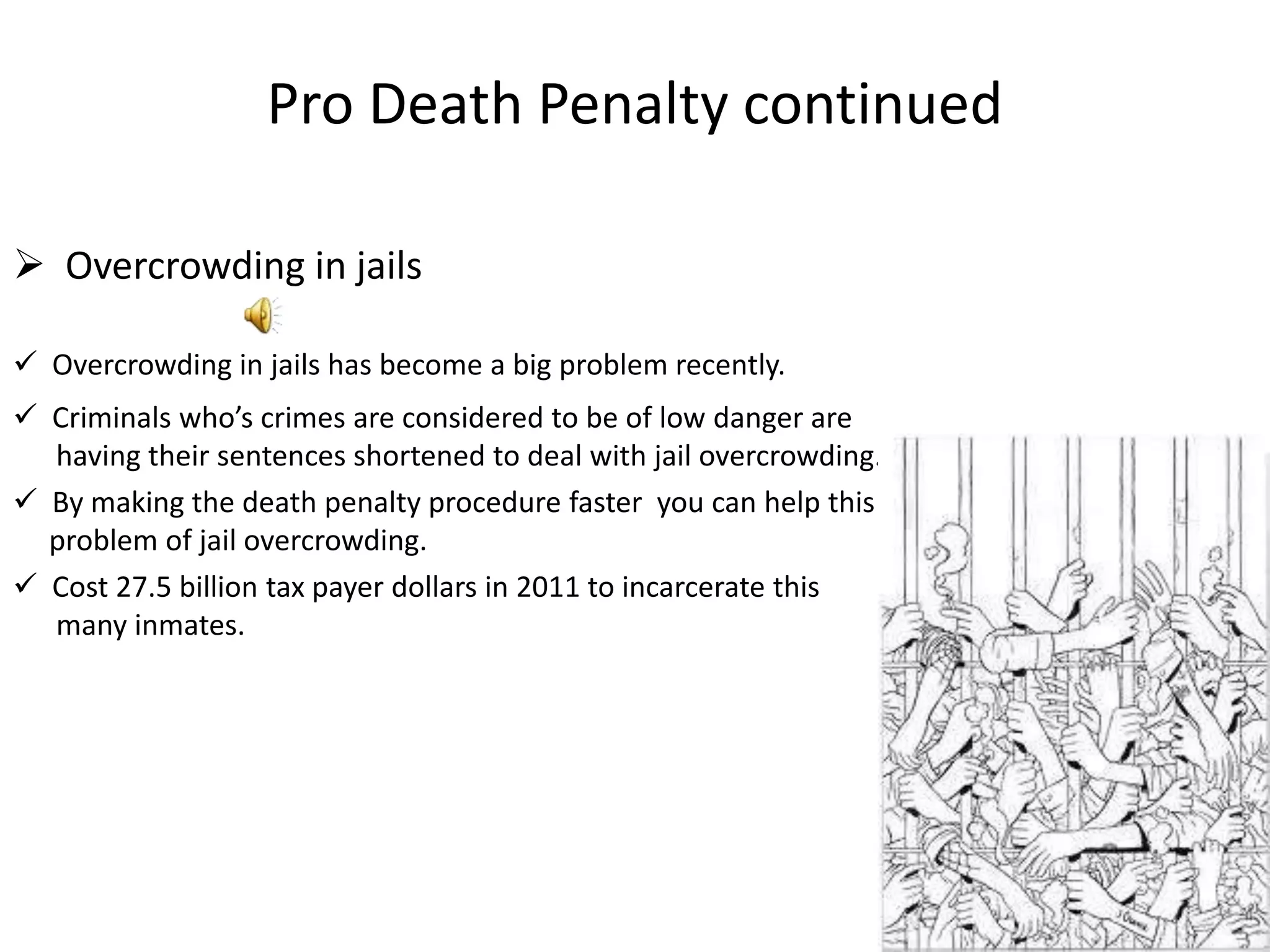
 Overcrowding in jails has become a big problem recently.
 Criminals who’s crimes are considered to be of low danger are
  having their sentences shortened to deal with jail overcrowding.
 By making the death penalty procedure faster you can help this
  problem of jail overcrowding.
 Cost 27.5 billion tax payer dollars in 2011 to incarcerate this
  many inmates.
No Death Penalty
 Cost of Putting someone to death

 Death penalty is 2.5 times more costly than to put someone in prison for life.
 Cost of multiple trials and the cost of appeals.
 The extra cost of putting someone to death gives the option of just putting
  someone in prison without the possibility of parole.
No Death Penalty continued

 Putting someone to death who is innocent

 The chance of putting someone to death who is falsely accused.
 The chance of someone incorrectly accused being put to death
  outweighs putting the right criminal to death
 Since 1973, one hundred thirty people have been released form death row
  due to evidence that shows their wrongful conviction.
No Death Penalty continued
 Publicity of crime

 The publicity of a crime and the long trials that come with it cause more crimes.
 Life in Prison is more of a deterrent than the Death Penalty
No Death Penalty Continued
 Rehabilitation Failure

 By putting someone to death it does not give them time to acknowledge their mistakes.
 The murder does not have the ability to ask for forgiveness.
 Death of a murderer does not bring back a loved one.
Conclusion

 In conclusion both sides have strong arguments, and it is very
  important to understand both sides of the argument before
  you decide your stance on the topic.

Capital punishment power point

  • 1.
    Capital Punishment History of Capital Punishment  Capital Punishment, also known as the death penalty, has been around since Eighteenth Century B.C  King Hammaurabi made 25 differnet crimes punishable by death.  Capital punishment moved to America in 1608 A.D. when captain Kendall was executed.  The death penalty had the most change during the 20th Century.  Support for the death penalty reaches all time low in 1966.
  • 2.
    Pro Death Penalty Adeterrent to those who might commit a crime.  No one wants to die, so the death penalty being the punishment for murder prevents murder  The stronger the penalty for someone’s actions the greater deterrent
  • 3.
    Pro Death Penaltycontinued The Death Penalty saves lives  By putting murderers to death you can save future lives.  People will think twice about killing someone if they know that the death penalty is the punishment.
  • 4.
    Pro Death Penaltycontinued Sense of conclusion the family feels  Once a criminal is put to death the family can finally feel free of the murderer who killed their loved one  The safety and relief a family gets when the criminal is put to death is far better than life in prison.
  • 5.
    Pro Death Penaltycontinued  Overcrowding in jails  Overcrowding in jails has become a big problem recently.  Criminals who’s crimes are considered to be of low danger are having their sentences shortened to deal with jail overcrowding.  By making the death penalty procedure faster you can help this problem of jail overcrowding.  Cost 27.5 billion tax payer dollars in 2011 to incarcerate this many inmates.
  • 6.
    No Death Penalty Cost of Putting someone to death  Death penalty is 2.5 times more costly than to put someone in prison for life.  Cost of multiple trials and the cost of appeals.  The extra cost of putting someone to death gives the option of just putting someone in prison without the possibility of parole.
  • 7.
    No Death Penaltycontinued  Putting someone to death who is innocent  The chance of putting someone to death who is falsely accused.  The chance of someone incorrectly accused being put to death outweighs putting the right criminal to death  Since 1973, one hundred thirty people have been released form death row due to evidence that shows their wrongful conviction.
  • 8.
    No Death Penaltycontinued  Publicity of crime  The publicity of a crime and the long trials that come with it cause more crimes.  Life in Prison is more of a deterrent than the Death Penalty
  • 9.
    No Death PenaltyContinued  Rehabilitation Failure  By putting someone to death it does not give them time to acknowledge their mistakes.  The murder does not have the ability to ask for forgiveness.  Death of a murderer does not bring back a loved one.
  • 10.
    Conclusion  In conclusionboth sides have strong arguments, and it is very important to understand both sides of the argument before you decide your stance on the topic.