WILMS TUMOR
IN
WAGR SYNDROME
What Is WAGR syndrome?
WAGR syndrome is a rare genetic condition which
includes
• Wilms Tumor
• Aniridia
• Genital and urinary tract abnormalities
• Range of developmental delays
WILMS TUMOR IN WAGR SYNDROME
• A form of kidney cancer
• Occurs mostly in children
• Also called “nephroblastoma”
What is Wilms tumor?
• Typical child
1 in 10,000
• Child with WAGR syndrome
1 in 2
WILMS TUMOR IN WAGR SYNDROME
Who is at risk for Wilms tumor?
• Immature cells in the kidney called
nephrogenic rests
• These cells are more common in children with
genetic disorders like WAGR syndrome
What causes Wilms tumor?
WILMS TUMOR IN WAGR SYNDROME
• Immature cells in the kidney
• Have the potential to develop into Wilms
tumor
• Clusters of these cells may look like Wilms
tumor on ultrasound
What are nephrogenic rests?
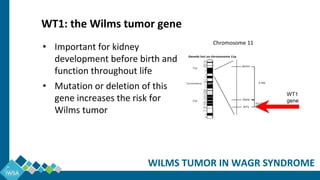
• Important for kidney
development before birth and
function throughout life
• Mutation or deletion of this
gene increases the risk for
Wilms tumor
WILMS TUMOR IN WAGR SYNDROME
WT1: the Wilms tumor gene
Chromosome 11
WT1
gene
● Ultrasound imaging every 3 months beginning at
birth/diagnosis of WAGR syndrome
● If a mass is detected, additional imaging such as MRI or CT
may be needed
● Definitive diagnosis is made by examining the cells under a
microscope
WILMS TUMOR IN WAGR SYNDROME
How is Wilms tumor diagnosed?
Nephrogenic rests
• Are very common in children with WAGR syndrome
• Are benign (not cancer)
• May or may not progress to Wilms tumor
• May be present at the same time as Wilms tumor
• Often hard to tell the difference on ultrasound or MRI
• May require same treatment as Wilms tumor
WILMS TUMOR IN WAGR SYNDROME
Nephrogenic rest or Wilms tumor?
Treatment is tailored to the individual and may include
• Surgery
• Chemotherapy
• Radiation therapy
WILMS TUMOR IN WAGR SYNDROME
Treatment
WILMS TUMOR IN WAGR SYNDROME
Types of Surgery
• Radical nephrectomy
Tumor, kidney, and ureter are removed
• Partial nephrectomy
Only the tumor is removed
• Biopsy
A tumor sample is removed to examine the cells under a microscope
Chemotherapy may be given
• Before surgery
• After surgery
• Before and after surgery
A combination of drugs may be used, including
• Actinomycin D (dactinomycin)
• Vincristine
• Adriamycin (doxorubicin)
WILMS TUMOR IN WAGR SYNDROME
Chemotherapy
• Long-term survival rates are high
• Surveillance for Wilms tumor should
continue throughout life
• Guidelines for long-term follow-up care
for childhood cancer survivors:
http://www.survivorshipguidelines.org
WILMS TUMOR IN WAGR SYNDROME
Post-treatment Care
The IWSA is working with researchers around the world
to improve diagnosis and treatment
www.wagr.org
The mission of the International WAGR Syndrome Association is to
promote awareness, stimulate research, and to support families affected
by WAGR syndrome
WILMS TUMOR IN WAGR SYNDROME

WTinWS_Parent_Powerpoint_Final_1_14_2019.pptx

  • 1.
  • 2.
    What Is WAGRsyndrome? WAGR syndrome is a rare genetic condition which includes • Wilms Tumor • Aniridia • Genital and urinary tract abnormalities • Range of developmental delays
  • 3.
    WILMS TUMOR INWAGR SYNDROME • A form of kidney cancer • Occurs mostly in children • Also called “nephroblastoma” What is Wilms tumor?
  • 4.
    • Typical child 1in 10,000 • Child with WAGR syndrome 1 in 2 WILMS TUMOR IN WAGR SYNDROME Who is at risk for Wilms tumor?
  • 5.
    • Immature cellsin the kidney called nephrogenic rests • These cells are more common in children with genetic disorders like WAGR syndrome What causes Wilms tumor? WILMS TUMOR IN WAGR SYNDROME
  • 6.
    WILMS TUMOR INWAGR SYNDROME • Immature cells in the kidney • Have the potential to develop into Wilms tumor • Clusters of these cells may look like Wilms tumor on ultrasound What are nephrogenic rests?
  • 7.
    • Important forkidney development before birth and function throughout life • Mutation or deletion of this gene increases the risk for Wilms tumor WILMS TUMOR IN WAGR SYNDROME WT1: the Wilms tumor gene Chromosome 11 WT1 gene
  • 8.
    ● Ultrasound imagingevery 3 months beginning at birth/diagnosis of WAGR syndrome ● If a mass is detected, additional imaging such as MRI or CT may be needed ● Definitive diagnosis is made by examining the cells under a microscope WILMS TUMOR IN WAGR SYNDROME How is Wilms tumor diagnosed?
  • 9.
    Nephrogenic rests • Arevery common in children with WAGR syndrome • Are benign (not cancer) • May or may not progress to Wilms tumor • May be present at the same time as Wilms tumor • Often hard to tell the difference on ultrasound or MRI • May require same treatment as Wilms tumor WILMS TUMOR IN WAGR SYNDROME Nephrogenic rest or Wilms tumor?
  • 10.
    Treatment is tailoredto the individual and may include • Surgery • Chemotherapy • Radiation therapy WILMS TUMOR IN WAGR SYNDROME Treatment
  • 11.
    WILMS TUMOR INWAGR SYNDROME Types of Surgery • Radical nephrectomy Tumor, kidney, and ureter are removed • Partial nephrectomy Only the tumor is removed • Biopsy A tumor sample is removed to examine the cells under a microscope
  • 12.
    Chemotherapy may begiven • Before surgery • After surgery • Before and after surgery A combination of drugs may be used, including • Actinomycin D (dactinomycin) • Vincristine • Adriamycin (doxorubicin) WILMS TUMOR IN WAGR SYNDROME Chemotherapy
  • 13.
    • Long-term survivalrates are high • Surveillance for Wilms tumor should continue throughout life • Guidelines for long-term follow-up care for childhood cancer survivors: http://www.survivorshipguidelines.org WILMS TUMOR IN WAGR SYNDROME Post-treatment Care
  • 14.
    The IWSA isworking with researchers around the world to improve diagnosis and treatment www.wagr.org The mission of the International WAGR Syndrome Association is to promote awareness, stimulate research, and to support families affected by WAGR syndrome WILMS TUMOR IN WAGR SYNDROME