Language A – Language and Literature
 Written task 1 is an 'imaginative piece' in which
you demonstrate your understanding of the course
work and a type of text. For example you could
write a letter from one character to another
character from a novel that you have read for Part
3 or 4. Or you could write a journalistic review of a
speech that was studied in Part 1 or 2. Because
the possibilities are endless, it is easy to write
irrelevant work. 
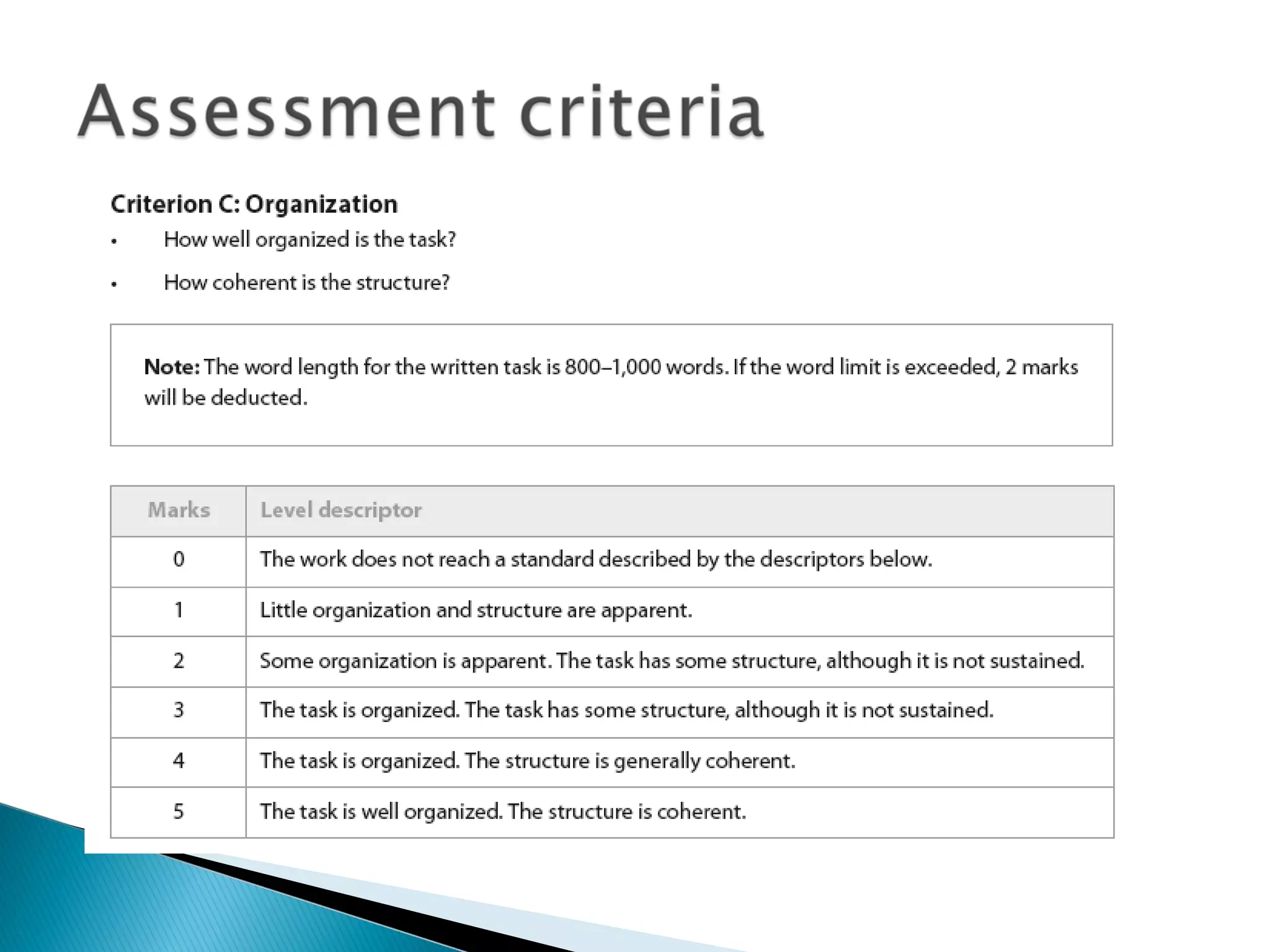
 Written task 1s are between 800-1000 words long.
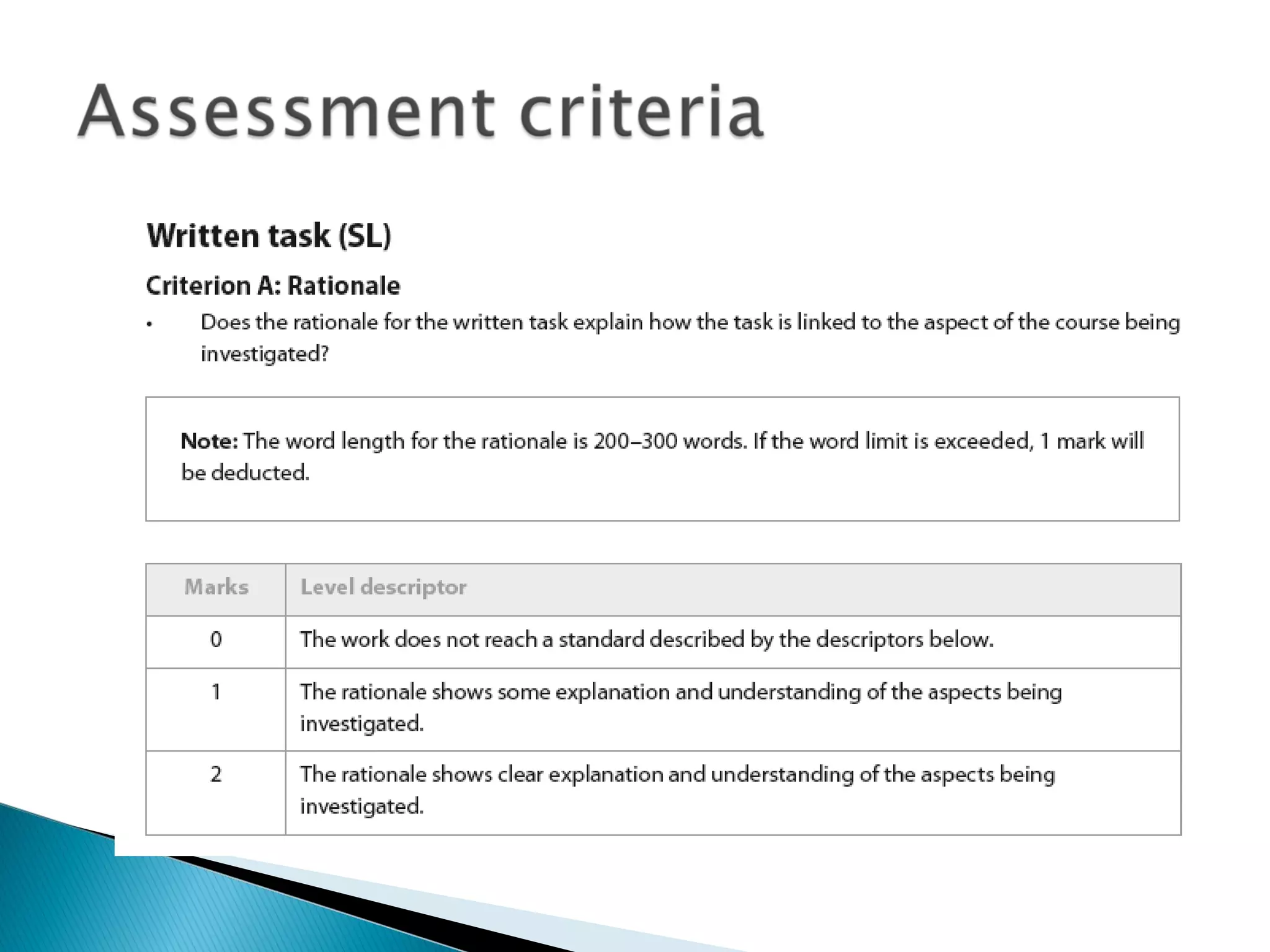
 Students must write a rationale of 200-300 words,
explaining the decision making process behind the
task. The rationale should offer the examiner the
necessary background information for a good
understanding of the task. 
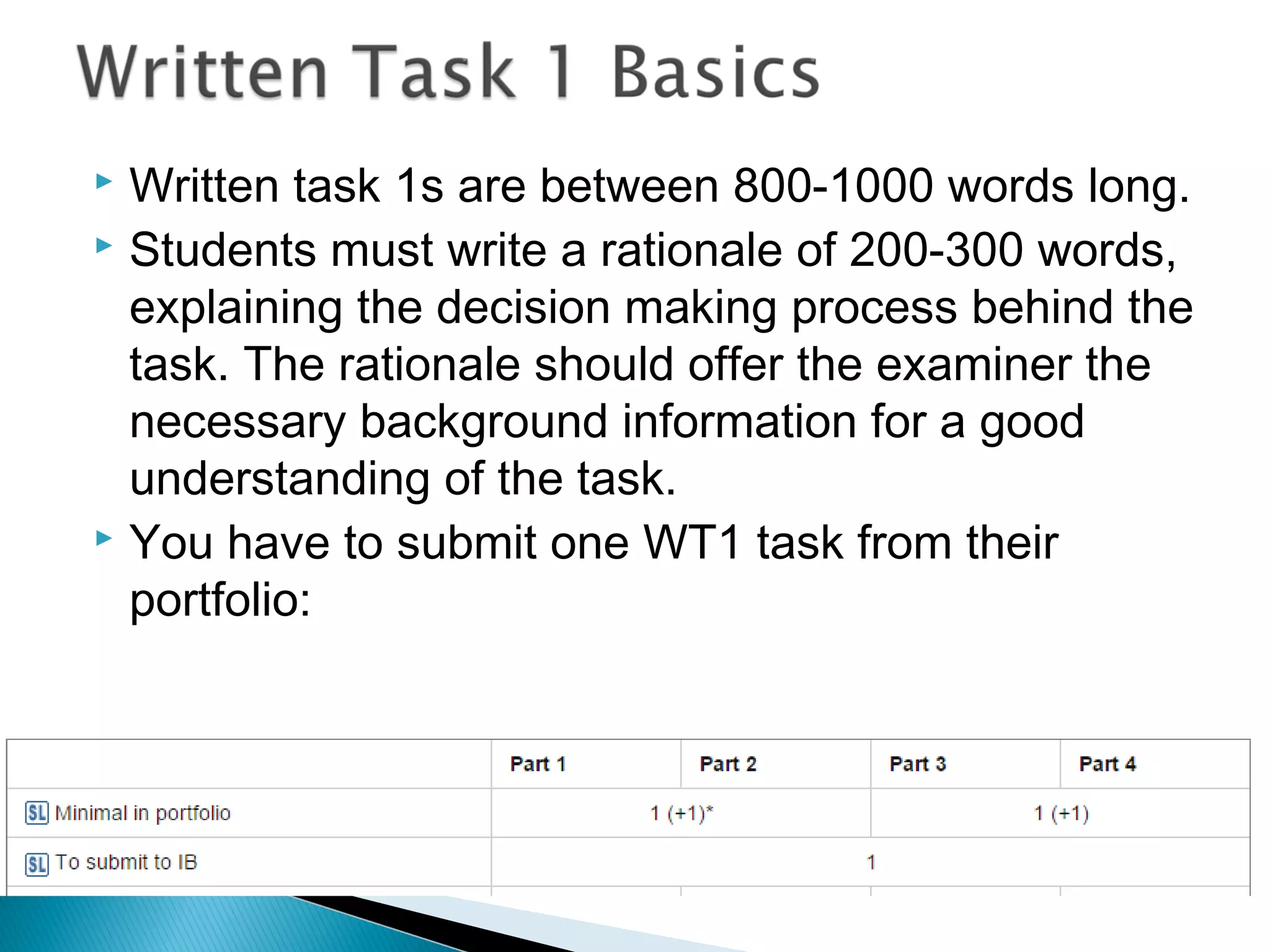
 You have to submit one WT1 task from their
portfolio:
 The written task 1 can be tricky. With so much
freedom, there can be many pitfalls. The
requirements ask you to imitate a writing style or
construct a specific type of text.
 On the next slides, you will find some of the
common pitfalls that students often fall into,
followed by three tips on how to avoid them.
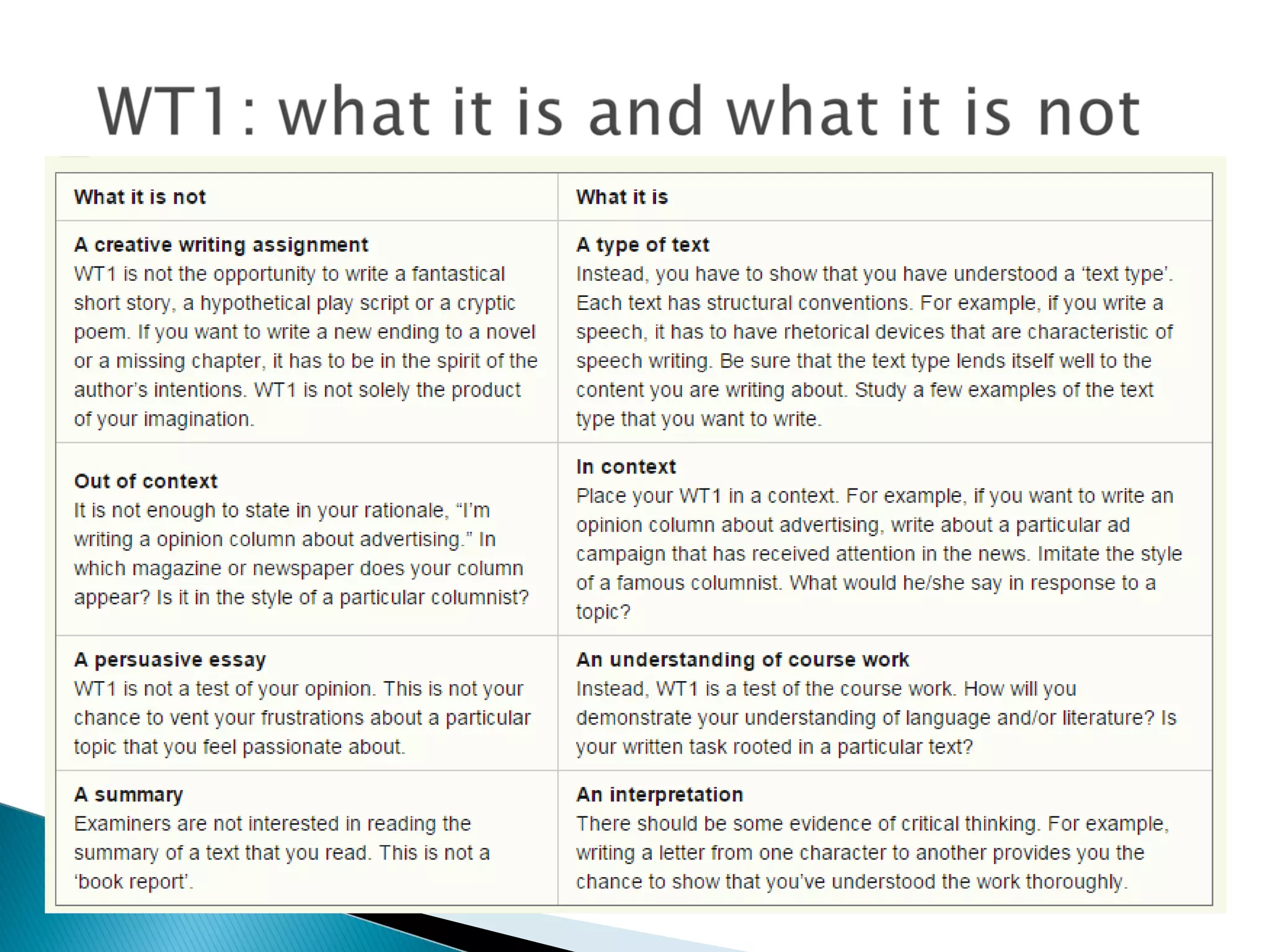
1. The written task is not an essay writing assignment.
Unfortunately, many 'opinion columns' and 'blogs' end up
sounding like essays.
2. The context of the text is not clear. If you write an opinion
column, ask yourself how it is characteristic of an opinion
column from a specific newspaper or magazine. Who
does it target?
3. The content of the task has nothing to do with course
content. For example, a brochure warning against the
health dangers of bulimia, does not reflect course work
that explored the role of advertising in shaping young
women's sense of beauty.
 Although there is no one guaranteed recipe for a
successful written task 1, you can avoid these
'pitfalls' by including all of the following ingredients:
1. Text type - If you write a speech, your speech
should look and sound like a speech. If you write a
letter to the editor, it should look and sound like a
letter to the editor. In other words, each type of text
has its own set of stylistic and structural
conventions. Ask yourself what characteristics
define the type of text you plan to write.
2. Primary source - Your written task should be
rooted in a primary source. If you are writing about a
literary work for Part 3 or 4, the poem, novel or play
is the primary source. Your task should reflect your
understanding of it. For the non-literary parts of the
syllabus, be sure you comment on a primary text. If
you looked at the representation of women in
advertising, comment on an actual ad. If you looked
at a political campaign, focus on one ad, website or
poster.
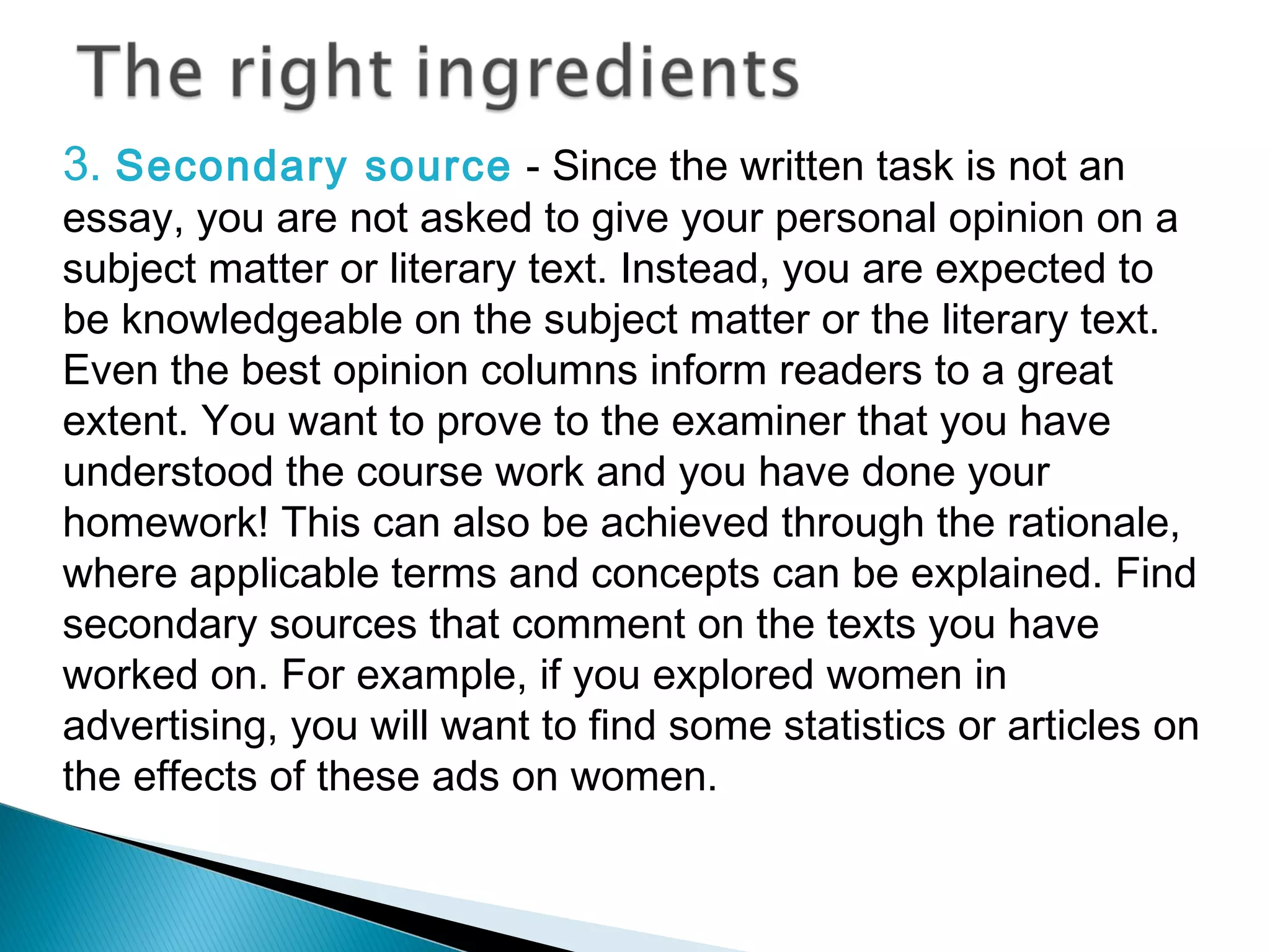
3. Secondary source - Since the written task is not an
essay, you are not asked to give your personal opinion on a
subject matter or literary text. Instead, you are expected to
be knowledgeable on the subject matter or the literary text.
Even the best opinion columns inform readers to a great
extent. You want to prove to the examiner that you have
understood the course work and you have done your
homework! This can also be achieved through the rationale,
where applicable terms and concepts can be explained. Find
secondary sources that comment on the texts you have
worked on. For example, if you explored women in
advertising, you will want to find some statistics or articles on
the effects of these ads on women.
Written task 1
Written task 1
Written task 1
Written task 1
Written task 1

Written task 1

  • 1.
    Language A –Language and Literature
  • 2.
     Written task1 is an 'imaginative piece' in which you demonstrate your understanding of the course work and a type of text. For example you could write a letter from one character to another character from a novel that you have read for Part 3 or 4. Or you could write a journalistic review of a speech that was studied in Part 1 or 2. Because the possibilities are endless, it is easy to write irrelevant work. 
  • 3.
     Written task1s are between 800-1000 words long.  Students must write a rationale of 200-300 words, explaining the decision making process behind the task. The rationale should offer the examiner the necessary background information for a good understanding of the task.   You have to submit one WT1 task from their portfolio:
  • 5.
     The writtentask 1 can be tricky. With so much freedom, there can be many pitfalls. The requirements ask you to imitate a writing style or construct a specific type of text.  On the next slides, you will find some of the common pitfalls that students often fall into, followed by three tips on how to avoid them.
  • 6.
    1. The writtentask is not an essay writing assignment. Unfortunately, many 'opinion columns' and 'blogs' end up sounding like essays. 2. The context of the text is not clear. If you write an opinion column, ask yourself how it is characteristic of an opinion column from a specific newspaper or magazine. Who does it target? 3. The content of the task has nothing to do with course content. For example, a brochure warning against the health dangers of bulimia, does not reflect course work that explored the role of advertising in shaping young women's sense of beauty.
  • 7.
     Although thereis no one guaranteed recipe for a successful written task 1, you can avoid these 'pitfalls' by including all of the following ingredients: 1. Text type - If you write a speech, your speech should look and sound like a speech. If you write a letter to the editor, it should look and sound like a letter to the editor. In other words, each type of text has its own set of stylistic and structural conventions. Ask yourself what characteristics define the type of text you plan to write.
  • 8.
    2. Primary source -Your written task should be rooted in a primary source. If you are writing about a literary work for Part 3 or 4, the poem, novel or play is the primary source. Your task should reflect your understanding of it. For the non-literary parts of the syllabus, be sure you comment on a primary text. If you looked at the representation of women in advertising, comment on an actual ad. If you looked at a political campaign, focus on one ad, website or poster.
  • 9.
    3. Secondary source -Since the written task is not an essay, you are not asked to give your personal opinion on a subject matter or literary text. Instead, you are expected to be knowledgeable on the subject matter or the literary text. Even the best opinion columns inform readers to a great extent. You want to prove to the examiner that you have understood the course work and you have done your homework! This can also be achieved through the rationale, where applicable terms and concepts can be explained. Find secondary sources that comment on the texts you have worked on. For example, if you explored women in advertising, you will want to find some statistics or articles on the effects of these ads on women.