The Evolution of Automotive Financial Services in Canada
The Start


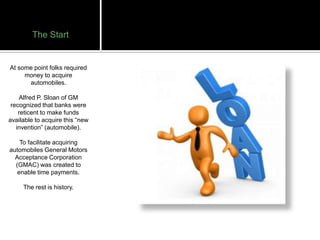
At some point folks required
     money to acquire
      automobiles.

    Alfred P. Sloan of GM
 recognized that banks were
    reticent to make funds
available to acquire this “new
   invention” (automobile).

    To facilitate acquiring
automobiles General Motors
  Acceptance Corporation
  (GMAC) was created to
   enable time payments.

     The rest is history.
Capital Intensive


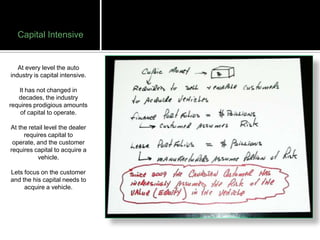
   At every level the auto
industry is capital intensive.

   It has not changed in
   decades, the industry
requires prodigious amounts
    of capital to operate.

At the retail level the dealer
     requires capital to
 operate, and the customer
requires capital to acquire a
           vehicle.

Lets focus on the customer
and the his capital needs to
     acquire a vehicle.
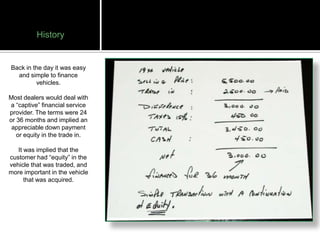
History


Back in the day it was easy
  and simple to finance
         vehicles.

Most dealers would deal with
a “captive” financial service
provider. The terms were 24
or 36 months and implied an
 appreciable down payment
   or equity in the trade in.

   It was implied that the
customer had “equity” in the
vehicle that was traded, and
more important in the vehicle
      that was acquired.
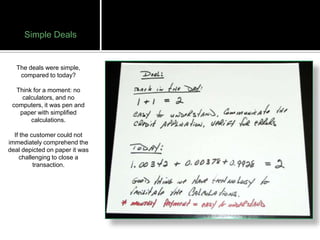
Simple Deals


   The deals were simple,
    compared to today?

  Think for a moment: no
    calculators, and no
 computers, it was pen and
   paper with simplified
       calculations.

  If the customer could not
immediately comprehend the
deal depicted on paper it was
    challenging to close a
          transaction.
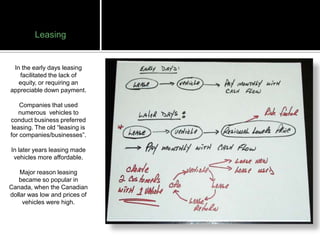
Leasing


 In the early days leasing
   facilitated the lack of
   equity, or requiring an
appreciable down payment.

    Companies that used
   numerous vehicles to
conduct business preferred
 leasing. The old “leasing is
for companies/businesses”.

In later years leasing made
 vehicles more affordable.

    Major reason leasing
   became so popular in
Canada, when the Canadian
dollar was low and prices of
     vehicles were high.
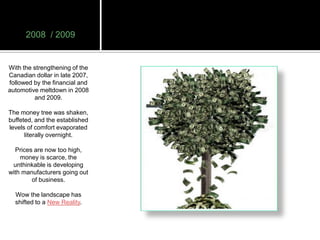
2008 / 2009


With the strengthening of the
Canadian dollar in late 2007,
followed by the financial and
automotive meltdown in 2008
         and 2009.

The money tree was shaken,
buffeted, and the established
levels of comfort evaporated
      literally overnight.

  Prices are now too high,
    money is scarce, the
 unthinkable is developing
with manufacturers going out
        of business.

  Wow the landscape has
  shifted to a New Reality.
The Unknown


     In 2009 it becomes
challenging to have potential
  customers approved for
        credit – really?

  Money is scarcer – for
 certain manufacturers not
          others.

 The unknown engenders a
   sense of higher risk.

 Canadian banks have cubic
   money to lend, and are
anxious to get a bigger share
 of the automotive financial
      services business.
Business


In the meantime everyone is
            still in
business, selling, leasing, fin
       ancing vehicles.

  From the global financial
crisis, Canada barely gets a
 dent and keeps on going.

 Obvious that everyone is
more cautious – just in case.

Everyone has done their own
 risk analysis – just in case.
Risk


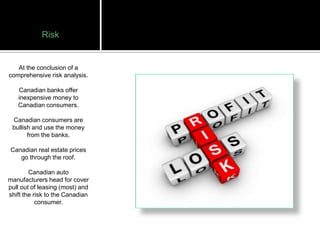
   At the conclusion of a
comprehensive risk analysis.

   Canadian banks offer
   inexpensive money to
   Canadian consumers.

 Canadian consumers are
 bullish and use the money
       from the banks.

Canadian real estate prices
   go through the roof.

        Canadian auto
manufacturers head for cover
pull out of leasing (most) and
shift the risk to the Canadian
           consumer.
Automotive Finance
      Risk


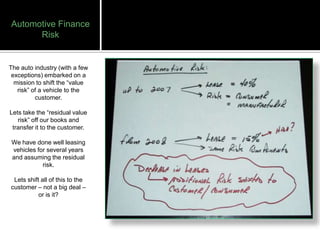
The auto industry (with a few
 exceptions) embarked on a
  mission to shift the “value
   risk” of a vehicle to the
          customer.

Lets take the “residual value
   risk” off our books and
 transfer it to the customer.

We have done well leasing
vehicles for several years
and assuming the residual
           risk.

 Lets shift all of this to the
customer – not a big deal –
           or is it?
Magic Number


 The ideal number for retail
  finance or lease is a 36
        month term.

 The industry works well, is
efficient on a 36 month basis.

    In Canada leasing
complemented the 36 month
  cycle, while improving
       affordability.

    Starting in 2009…how
 manufacturers, dealers, cust
omers positioned themselves
  in relation to the 36 month
term influenced the business.
Affordability


 The “brave thinkers” of the
  day who shifted the value
risk. The customer faced an
      affordability issue.

Easy…lengthen the term of
       the loan.

Increase the cash incentives.

 Shifting the emphasis from
   lease to retail finance.

 From J.D. Power we know
  that the average monthly
payment for a finance sale is
 $520/month for an average
   selling price of $30,000.
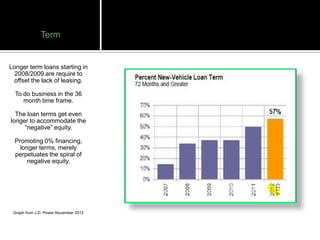
Term


Longer term loans starting in
  2008/2009 are require to
 offset the lack of leasing.

  To do business in the 36
     month time frame.

  The loan terms get even
longer to accommodate the
     “negative” equity.

  Promoting 0% financing,
    longer terms, merely
  perpetuates the spiral of
       negative equity.


 Graph from J.D. Power November 2012
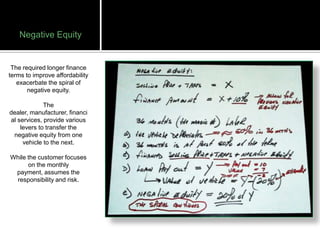
Negative Equity


 The required longer finance
terms to improve affordability
   exacerbate the spiral of
       negative equity.

             The
dealer, manufacturer, financi
al services, provide various
    levers to transfer the
 negative equity from one
     vehicle to the next.

While the customer focuses
      on the monthly
 payment, assumes the
 responsibility and risk.
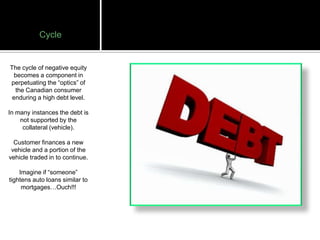
Cycle


The cycle of negative equity
  becomes a component in
perpetuating the “optics” of
  the Canadian consumer
 enduring a high debt level.

In many instances the debt is
    not supported by the
     collateral (vehicle).

  Customer finances a new
 vehicle and a portion of the
vehicle traded in to continue.

    Imagine if “someone”
tightens auto loans similar to
     mortgages…Ouch!!!
Leasing


  The manufacturers that
   remained in leasing in
2008/2009, and continued to
 assume the residual risk.

Are they in a better position,
are the customers in a better
          position?

    What do you think?

Look at the sales success of
 MerBimAu during the past
  few years, and the ever
  increasing sales of their
    Certified Pre Owned.


   MerBimAu=Mercedes, BMW, Audi
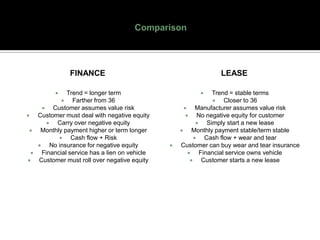
FINANCE                                           LEASE

                   Trend = longer term                               Trend = stable terms
                     Farther from 36                                     Closer to 36
              Customer assumes value risk                     Manufacturer assumes value risk
       Customer must deal with negative equity                 No negative equity for customer
               Carry over negative equity                          Simply start a new lease
        Monthly payment higher or term longer               Monthly payment stable/term stable
                    Cash flow + Risk                              Cash flow + wear and tear
             No insurance for negative equity         Customer can buy wear and tear insurance
         Financial service has a lien on vehicle                Financial service owns vehicle
       Customer must roll over negative equity                   Customer starts a new lease
Technology in the
    Business Office


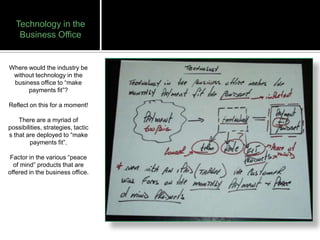
Where would the industry be
 without technology in the
 business office to “make
      payments fit”?

Reflect on this for a moment!

    There are a myriad of
possibilities, strategies, tactic
s that are deployed to “make
        payments fit”.

 Factor in the various “peace
  of mind” products that are
offered in the business office.
Financial Products


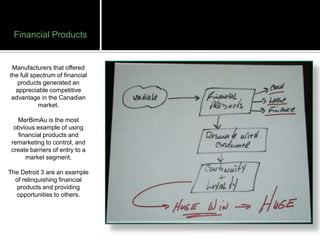
 Manufacturers that offered
the full spectrum of financial
   products generated an
  appreciable competitive
 advantage in the Canadian
           market.

   MerBimAu is the most
  obvious example of using
    financial products and
 remarketing to control, and
 create barriers of entry to a
       market segment.

The Detroit 3 are an example
  of relinquishing financial
   products and providing
  opportunities to others.

Money for the Deal

  • 1.
    The Evolution ofAutomotive Financial Services in Canada
  • 2.
    The Start At somepoint folks required money to acquire automobiles. Alfred P. Sloan of GM recognized that banks were reticent to make funds available to acquire this “new invention” (automobile). To facilitate acquiring automobiles General Motors Acceptance Corporation (GMAC) was created to enable time payments. The rest is history.
  • 3.
    Capital Intensive At every level the auto industry is capital intensive. It has not changed in decades, the industry requires prodigious amounts of capital to operate. At the retail level the dealer requires capital to operate, and the customer requires capital to acquire a vehicle. Lets focus on the customer and the his capital needs to acquire a vehicle.
  • 4.
    History Back in theday it was easy and simple to finance vehicles. Most dealers would deal with a “captive” financial service provider. The terms were 24 or 36 months and implied an appreciable down payment or equity in the trade in. It was implied that the customer had “equity” in the vehicle that was traded, and more important in the vehicle that was acquired.
  • 5.
    Simple Deals The deals were simple, compared to today? Think for a moment: no calculators, and no computers, it was pen and paper with simplified calculations. If the customer could not immediately comprehend the deal depicted on paper it was challenging to close a transaction.
  • 6.
    Leasing In theearly days leasing facilitated the lack of equity, or requiring an appreciable down payment. Companies that used numerous vehicles to conduct business preferred leasing. The old “leasing is for companies/businesses”. In later years leasing made vehicles more affordable. Major reason leasing became so popular in Canada, when the Canadian dollar was low and prices of vehicles were high.
  • 7.
    2008 / 2009 Withthe strengthening of the Canadian dollar in late 2007, followed by the financial and automotive meltdown in 2008 and 2009. The money tree was shaken, buffeted, and the established levels of comfort evaporated literally overnight. Prices are now too high, money is scarce, the unthinkable is developing with manufacturers going out of business. Wow the landscape has shifted to a New Reality.
  • 8.
    The Unknown In 2009 it becomes challenging to have potential customers approved for credit – really? Money is scarcer – for certain manufacturers not others. The unknown engenders a sense of higher risk. Canadian banks have cubic money to lend, and are anxious to get a bigger share of the automotive financial services business.
  • 9.
    Business In the meantimeeveryone is still in business, selling, leasing, fin ancing vehicles. From the global financial crisis, Canada barely gets a dent and keeps on going. Obvious that everyone is more cautious – just in case. Everyone has done their own risk analysis – just in case.
  • 10.
    Risk At the conclusion of a comprehensive risk analysis. Canadian banks offer inexpensive money to Canadian consumers. Canadian consumers are bullish and use the money from the banks. Canadian real estate prices go through the roof. Canadian auto manufacturers head for cover pull out of leasing (most) and shift the risk to the Canadian consumer.
  • 11.
    Automotive Finance Risk The auto industry (with a few exceptions) embarked on a mission to shift the “value risk” of a vehicle to the customer. Lets take the “residual value risk” off our books and transfer it to the customer. We have done well leasing vehicles for several years and assuming the residual risk. Lets shift all of this to the customer – not a big deal – or is it?
  • 12.
    Magic Number Theideal number for retail finance or lease is a 36 month term. The industry works well, is efficient on a 36 month basis. In Canada leasing complemented the 36 month cycle, while improving affordability. Starting in 2009…how manufacturers, dealers, cust omers positioned themselves in relation to the 36 month term influenced the business.
  • 13.
    Affordability The “bravethinkers” of the day who shifted the value risk. The customer faced an affordability issue. Easy…lengthen the term of the loan. Increase the cash incentives. Shifting the emphasis from lease to retail finance. From J.D. Power we know that the average monthly payment for a finance sale is $520/month for an average selling price of $30,000.
  • 14.
    Term Longer term loansstarting in 2008/2009 are require to offset the lack of leasing. To do business in the 36 month time frame. The loan terms get even longer to accommodate the “negative” equity. Promoting 0% financing, longer terms, merely perpetuates the spiral of negative equity. Graph from J.D. Power November 2012
  • 15.
    Negative Equity Therequired longer finance terms to improve affordability exacerbate the spiral of negative equity. The dealer, manufacturer, financi al services, provide various levers to transfer the negative equity from one vehicle to the next. While the customer focuses on the monthly payment, assumes the responsibility and risk.
  • 16.
    Cycle The cycle ofnegative equity becomes a component in perpetuating the “optics” of the Canadian consumer enduring a high debt level. In many instances the debt is not supported by the collateral (vehicle). Customer finances a new vehicle and a portion of the vehicle traded in to continue. Imagine if “someone” tightens auto loans similar to mortgages…Ouch!!!
  • 17.
    Leasing Themanufacturers that remained in leasing in 2008/2009, and continued to assume the residual risk. Are they in a better position, are the customers in a better position? What do you think? Look at the sales success of MerBimAu during the past few years, and the ever increasing sales of their Certified Pre Owned. MerBimAu=Mercedes, BMW, Audi
  • 18.
    FINANCE LEASE  Trend = longer term  Trend = stable terms  Farther from 36  Closer to 36  Customer assumes value risk  Manufacturer assumes value risk  Customer must deal with negative equity  No negative equity for customer  Carry over negative equity  Simply start a new lease  Monthly payment higher or term longer  Monthly payment stable/term stable  Cash flow + Risk  Cash flow + wear and tear  No insurance for negative equity  Customer can buy wear and tear insurance  Financial service has a lien on vehicle  Financial service owns vehicle  Customer must roll over negative equity  Customer starts a new lease
  • 19.
    Technology in the Business Office Where would the industry be without technology in the business office to “make payments fit”? Reflect on this for a moment! There are a myriad of possibilities, strategies, tactic s that are deployed to “make payments fit”. Factor in the various “peace of mind” products that are offered in the business office.
  • 20.
    Financial Products Manufacturersthat offered the full spectrum of financial products generated an appreciable competitive advantage in the Canadian market. MerBimAu is the most obvious example of using financial products and remarketing to control, and create barriers of entry to a market segment. The Detroit 3 are an example of relinquishing financial products and providing opportunities to others.