Wound dressing selection
-based on healing phase
General surgery IC: Lao Chi Tong
Tutor: Dr Pang Heong Keong
Date: 2022/06/17
Department: general surgery
Ancient dressing
 According to one of the oldest medical papers
dated 2200 BC, the science of wound healing is
reported as “three healing gestures.” The three
healing gestures are cleaning the wound, sticking
plaster, and bandaging the wound
 Mesopotamian used clay tablet to treat wounds in
2500 BC. They washed wounds with milk or water
before dressing with the resin and honey.
 Hippocrates of ancient Greece used wine or
vinegar to clean wounds in 460–370 BC.21
Injury
Physical Chemical Biology
The requirement in wound healing
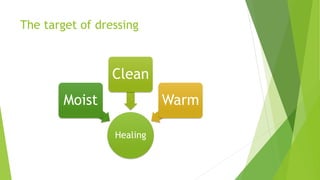
The target of dressing
Healing
Moist
Clean
Warm
Principle of dressing choice
 Every wound is unique
 Should be assessed and treated individually, principally correcting the underlying
causes and systematically ~ by Halim, Khoo & Saad, 2012
 Accurate, ongoing assessment of the needs of the wound
 No single product is suitable for all wounds or all stage of healing process
 Adequate knowledge of the functions and performance of the dressing
Journal wound care Vol 15, Feb 2006. Jones AM, San Miguel L
Pathophysiology of Wound Healing
 Hemostasis
 Inflammation
 Proliferation (Migration)
 Maturation (Remodeling)
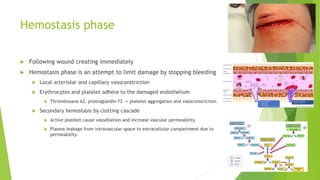
Hemostasis phase
 Following wound creating immediately
 Hemostasis phase is an attempt to limit damage by stopping bleeding
 Local arteriolar and capillary vasoconstriction
 Erythrocytes and platelet adhere to the damaged endothelium
 Thromboxane A2, prostaglandin F2 -> platelet aggregation and vasoconstriction
 Secondary hemostasis by clotting cascade
 Active platelet cause vasodilation and increase vascular permeability
 Plasma leakage from intravascular space to extracellular compartment due to
permeability
Hemostasis phase
 For hemostasis:
 Collagen patch (Hemopatch)
 Fibrinogen and thrombin sponge patch (Tachosil)
 Oxidized regenerated cellulose (Surgicel)
 Provide frame for platelet aggregation
Hemostasis phase
 Dressing target in hemostasis phase:
 Cover and protection
 Provide moist wound healing environment
 Loss of skin barrier function
 Absorb exudate/blood
Hemostasis phase
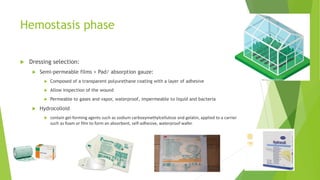
 Dressing selection:
 Semi-permeable films + Pad/ absorption gauze:
 Composed of a transparent polyurethane coating with a layer of adhesive
 Allow inspection of the wound
 Permeable to gases and vapor, waterproof, impermeable to liquid and bacteria
 Hydrocolloid
 contain gel-forming agents such as sodium carboxymethylcellulose and gelatin, applied to a carrier
such as foam or film to form an absorbent, self-adhesive, waterproof wafer.
Pathophysiology of Wound Healing
 Hemostasis
 Inflammation
 Proliferation (Migration)
 Maturation (Remodeling)
Inflammation phase
 Activated innate immune: Macrophage,
polymorphonuclear cells
 Chemokines: Interleukin, Interferon, TNF…
 Complement system
 Bacteria, dead immune cells, & damaged
tissue accumulation
 Impaired micro-circulation
 Appearance: red, hot, swollen, slough,
much exudate
Inflammation phase
 Control infection
 Minimal inflammation
 Maintain moist
Inflammation phase
 Necrotic tissue is a proinflammatory stimulus and a culture medium for
bacterial growth
 Debridement is defined as the removal of necrotic tissue, exudate, bacteria,
and metabolic waste from a wound in order to improve or facilitate the
healing process
 Mechanical, sharp/surgical, enzymatic, and autolytic are the common
methods of debridement
 Autolytic debridement can be facilitated with appropriate dressings under moist
wound environment
Inflammation phase
 Control infection
 Debridement
 Cation dressing: Mesalt(Na+), Sorbalgon(Ca2+), Melgisorb (Ca2+), Aquacel Ag (Ag+)
 electrostatic attraction, bacteriostatic
 Minimal inflammation
 Maintain moist
Inflammation phase
 Control infection
 Minimal inflammation
 Non-adhesion dressing
 Polyester mesh: UrgoTui
 Biodegradable material
 Collagen, Gelatin(Hydrocoll), polysaccharide, polyethylene glycol (Intrasite)
 Nature material (Sorbalgon)
 Maintain moist
Inflammation phase
 Control infection
 Minimal inflammation
 Maintain moist
 Exudate absorption
 Foam (Allevyn),
 Hydrofiber technology: Alginate dressing(Sorbalgon), Hydrofiber(Aquacel)
1. Breathable Top Film
2. Highly Absorbent Foam
3. Non-Adherent Wound
Contact Layer
Pathophysiology of Wound Healing
 Hemostasis
 Inflammation
 Proliferation (Migration)
 Maturation (Remodeling)
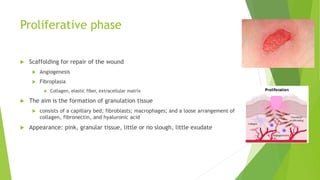
Proliferative phase
 Scaffolding for repair of the wound
 Angiogenesis
 Fibroplasia
 Collagen, elastic fiber, extracellular matrix
 The aim is the formation of granulation tissue
 consists of a capillary bed; fibroblasts; macrophages; and a loose arrangement of
collagen, fibronectin, and hyaluronic acid
 Appearance: pink, granular tissue, little or no slough, little exudate
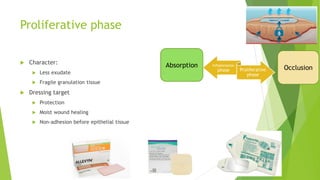
Proliferative phase
Inflammation
phase Proliferative
phase
 Character:
 Less exudate
 Fragile granulation tissue
 Dressing target
 Protection
 Moist wound healing
 Non-adhesion before epithelial tissue
Absorption Occlusion
Pathophysiology of Wound Healing
 Hemostasis
 Inflammation
 Proliferation (Migration)
 Maturation (Remodeling)
Maturation phase
 Cross linking of collagen>increase strength
 Wound contraction
 Reduce cellular activity and blood vessels
 Paler and flatten scar
 Skin function deficiency
 Lotion
 Sunscreen
 Non-adherent pad
Summary
 Every wound is unique
 Should be assessed and treated individually, principally correcting the underlying
causes and systematically ~ by Halim, Khoo & Saad, 2012
 Accurate, ongoing assessment of the needs of the wound
 No single product is suitable for all wounds or all stage of healing process
 Adequate knowledge of the functions and performance of the dressing
Journal wound care Vol 15, Feb 2006. Jones AM, San Miguel L
Reference
Thank you for listening

wound dressing selection.pdf

  • 1.
    Wound dressing selection -basedon healing phase General surgery IC: Lao Chi Tong Tutor: Dr Pang Heong Keong Date: 2022/06/17 Department: general surgery
  • 2.
    Ancient dressing  Accordingto one of the oldest medical papers dated 2200 BC, the science of wound healing is reported as “three healing gestures.” The three healing gestures are cleaning the wound, sticking plaster, and bandaging the wound  Mesopotamian used clay tablet to treat wounds in 2500 BC. They washed wounds with milk or water before dressing with the resin and honey.  Hippocrates of ancient Greece used wine or vinegar to clean wounds in 460–370 BC.21
  • 3.
  • 5.
    The requirement inwound healing
  • 6.
    The target ofdressing Healing Moist Clean Warm
  • 8.
    Principle of dressingchoice  Every wound is unique  Should be assessed and treated individually, principally correcting the underlying causes and systematically ~ by Halim, Khoo & Saad, 2012  Accurate, ongoing assessment of the needs of the wound  No single product is suitable for all wounds or all stage of healing process  Adequate knowledge of the functions and performance of the dressing Journal wound care Vol 15, Feb 2006. Jones AM, San Miguel L
  • 10.
    Pathophysiology of WoundHealing  Hemostasis  Inflammation  Proliferation (Migration)  Maturation (Remodeling)
  • 11.
    Hemostasis phase  Followingwound creating immediately  Hemostasis phase is an attempt to limit damage by stopping bleeding  Local arteriolar and capillary vasoconstriction  Erythrocytes and platelet adhere to the damaged endothelium  Thromboxane A2, prostaglandin F2 -> platelet aggregation and vasoconstriction  Secondary hemostasis by clotting cascade  Active platelet cause vasodilation and increase vascular permeability  Plasma leakage from intravascular space to extracellular compartment due to permeability
  • 12.
    Hemostasis phase  Forhemostasis:  Collagen patch (Hemopatch)  Fibrinogen and thrombin sponge patch (Tachosil)  Oxidized regenerated cellulose (Surgicel)  Provide frame for platelet aggregation
  • 13.
    Hemostasis phase  Dressingtarget in hemostasis phase:  Cover and protection  Provide moist wound healing environment  Loss of skin barrier function  Absorb exudate/blood
  • 14.
    Hemostasis phase  Dressingselection:  Semi-permeable films + Pad/ absorption gauze:  Composed of a transparent polyurethane coating with a layer of adhesive  Allow inspection of the wound  Permeable to gases and vapor, waterproof, impermeable to liquid and bacteria  Hydrocolloid  contain gel-forming agents such as sodium carboxymethylcellulose and gelatin, applied to a carrier such as foam or film to form an absorbent, self-adhesive, waterproof wafer.
  • 15.
    Pathophysiology of WoundHealing  Hemostasis  Inflammation  Proliferation (Migration)  Maturation (Remodeling)
  • 16.
    Inflammation phase  Activatedinnate immune: Macrophage, polymorphonuclear cells  Chemokines: Interleukin, Interferon, TNF…  Complement system  Bacteria, dead immune cells, & damaged tissue accumulation  Impaired micro-circulation  Appearance: red, hot, swollen, slough, much exudate
  • 17.
    Inflammation phase  Controlinfection  Minimal inflammation  Maintain moist
  • 18.
    Inflammation phase  Necrotictissue is a proinflammatory stimulus and a culture medium for bacterial growth  Debridement is defined as the removal of necrotic tissue, exudate, bacteria, and metabolic waste from a wound in order to improve or facilitate the healing process  Mechanical, sharp/surgical, enzymatic, and autolytic are the common methods of debridement  Autolytic debridement can be facilitated with appropriate dressings under moist wound environment
  • 19.
    Inflammation phase  Controlinfection  Debridement  Cation dressing: Mesalt(Na+), Sorbalgon(Ca2+), Melgisorb (Ca2+), Aquacel Ag (Ag+)  electrostatic attraction, bacteriostatic  Minimal inflammation  Maintain moist
  • 20.
    Inflammation phase  Controlinfection  Minimal inflammation  Non-adhesion dressing  Polyester mesh: UrgoTui  Biodegradable material  Collagen, Gelatin(Hydrocoll), polysaccharide, polyethylene glycol (Intrasite)  Nature material (Sorbalgon)  Maintain moist
  • 21.
    Inflammation phase  Controlinfection  Minimal inflammation  Maintain moist  Exudate absorption  Foam (Allevyn),  Hydrofiber technology: Alginate dressing(Sorbalgon), Hydrofiber(Aquacel) 1. Breathable Top Film 2. Highly Absorbent Foam 3. Non-Adherent Wound Contact Layer
  • 22.
    Pathophysiology of WoundHealing  Hemostasis  Inflammation  Proliferation (Migration)  Maturation (Remodeling)
  • 23.
    Proliferative phase  Scaffoldingfor repair of the wound  Angiogenesis  Fibroplasia  Collagen, elastic fiber, extracellular matrix  The aim is the formation of granulation tissue  consists of a capillary bed; fibroblasts; macrophages; and a loose arrangement of collagen, fibronectin, and hyaluronic acid  Appearance: pink, granular tissue, little or no slough, little exudate
  • 24.
    Proliferative phase Inflammation phase Proliferative phase Character:  Less exudate  Fragile granulation tissue  Dressing target  Protection  Moist wound healing  Non-adhesion before epithelial tissue Absorption Occlusion
  • 25.
    Pathophysiology of WoundHealing  Hemostasis  Inflammation  Proliferation (Migration)  Maturation (Remodeling)
  • 26.
    Maturation phase  Crosslinking of collagen>increase strength  Wound contraction  Reduce cellular activity and blood vessels  Paler and flatten scar  Skin function deficiency  Lotion  Sunscreen  Non-adherent pad
  • 28.
    Summary  Every woundis unique  Should be assessed and treated individually, principally correcting the underlying causes and systematically ~ by Halim, Khoo & Saad, 2012  Accurate, ongoing assessment of the needs of the wound  No single product is suitable for all wounds or all stage of healing process  Adequate knowledge of the functions and performance of the dressing Journal wound care Vol 15, Feb 2006. Jones AM, San Miguel L
  • 29.
  • 30.
    Thank you forlistening