Hello is a digital creative agency. 
We create intelligent, living systems for people to experience. 
We believe in building systems that are useful, usable, and desirable.
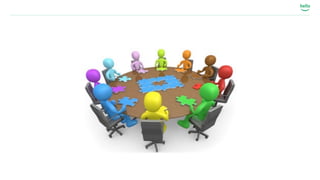
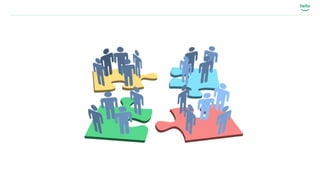
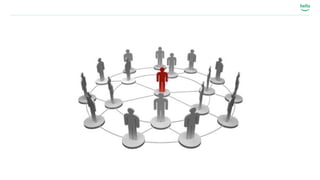
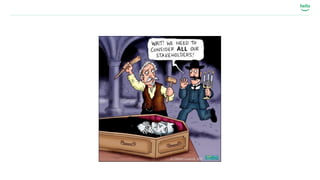
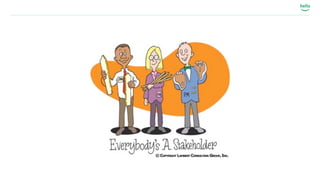
Stakeholders!
Stakeholder? 
The stakeholder concept was first used in a 1963 internal memorandum at 
the Stanford Research Institute. It defined stakeholders as “those groups 
without whose support the organization would cease to exist.”
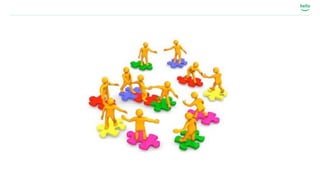
10 Ways to Solving the Puzzle
01 
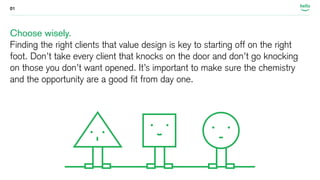
Choose wisely. 
Finding the right clients that value design is key to starting off on the right 
foot. Don’t take every client that knocks on the door and don’t go knocking 
on those you don’t want opened. It’s important to make sure the chemistry 
and the opportunity are a good fit from day one.
02 
Do your homework. 
Read as much as you can. Buy books, check out all the links, and dive deep 
into the Internet. There is so much information it can be overwhelming so take 
notes. Be a sponge and soak up as much as you can. Have a constant pulse 
on culture and what’s happening around you.
03 
Listen carefully. 
Start off by asking the right questions. Be curious. Really listen and 
understand the client’s challenges from their perspective. Understand what is 
important—the business goals and objectives—before getting into the tactics. 
Ask what success will look like as it is often different for everyone. Make sure 
you agree. Never assume, know.
04 
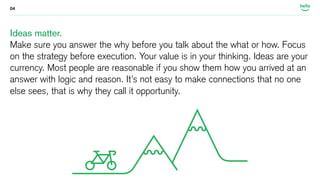
Ideas matter. 
Make sure you answer the why before you talk about the what or how. Focus 
on the strategy before execution. Your value is in your thinking. Ideas are your 
currency. Most people are reasonable if you show them how you arrived at an 
answer with logic and reason. It’s not easy to make connections that no one 
else sees, that is why they call it opportunity.
05 
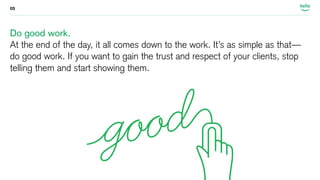
Do good work. 
At the end of the day, it all comes down to the work. It’s as simple as that— 
do good work. If you want to gain the trust and respect of your clients, stop 
telling them and start showing them.
06 
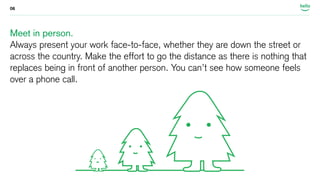
Meet in person. 
Always present your work face-to-face, whether they are down the street or 
across the country. Make the effort to go the distance as there is nothing that 
replaces being in front of another person. You can’t see how someone feels 
over a phone call.
07 
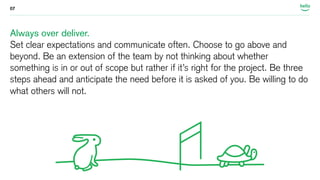
Always over deliver. 
Set clear expectations and communicate often. Choose to go above and 
beyond. Be an extension of the team by not thinking about whether 
something is in or out of scope but rather if it’s right for the project. Be three 
steps ahead and anticipate the need before it is asked of you. Be willing to do 
what others will not.
08 
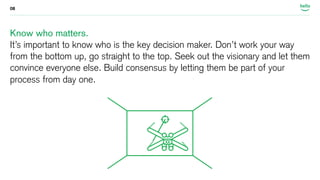
Know who matters. 
It’s important to know who is the key decision maker. Don’t work your way 
from the bottom up, go straight to the top. Seek out the visionary and let them 
convince everyone else. Build consensus by letting them be part of your 
process from day one.
09 
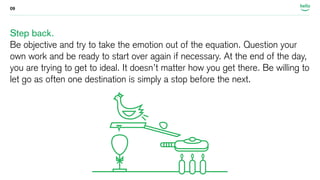
Step back. 
Be objective and try to take the emotion out of the equation. Question your 
own work and be ready to start over again if necessary. At the end of the day, 
you are trying to get to ideal. It doesn’t matter how you get there. Be willing to 
let go as often one destination is simply a stop before the next.
10 
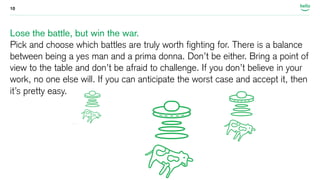
Lose the battle, but win the war. 
Pick and choose which battles are truly worth fighting for. There is a balance 
between being a yes man and a prima donna. Don’t be either. Bring a point of 
view to the table and don’t be afraid to challenge. If you don’t believe in your 
work, no one else will. If you can anticipate the worst case and accept it, then 
it’s pretty easy.
Thank you, questions?
Say hello! 
hello@hellodesign.com 
facebook.com/hellodesign 
twitter/instagram: @hellodsgn

World Usability Day 2014 - David Lai — Stakeholders!

  • 2.
    Hello is adigital creative agency. We create intelligent, living systems for people to experience. We believe in building systems that are useful, usable, and desirable.
  • 3.
  • 4.
    Stakeholder? The stakeholderconcept was first used in a 1963 internal memorandum at the Stanford Research Institute. It defined stakeholders as “those groups without whose support the organization would cease to exist.”
  • 13.
    10 Ways toSolving the Puzzle
  • 14.
    01 Choose wisely. Finding the right clients that value design is key to starting off on the right foot. Don’t take every client that knocks on the door and don’t go knocking on those you don’t want opened. It’s important to make sure the chemistry and the opportunity are a good fit from day one.
  • 15.
    02 Do yourhomework. Read as much as you can. Buy books, check out all the links, and dive deep into the Internet. There is so much information it can be overwhelming so take notes. Be a sponge and soak up as much as you can. Have a constant pulse on culture and what’s happening around you.
  • 16.
    03 Listen carefully. Start off by asking the right questions. Be curious. Really listen and understand the client’s challenges from their perspective. Understand what is important—the business goals and objectives—before getting into the tactics. Ask what success will look like as it is often different for everyone. Make sure you agree. Never assume, know.
  • 17.
    04 Ideas matter. Make sure you answer the why before you talk about the what or how. Focus on the strategy before execution. Your value is in your thinking. Ideas are your currency. Most people are reasonable if you show them how you arrived at an answer with logic and reason. It’s not easy to make connections that no one else sees, that is why they call it opportunity.
  • 18.
    05 Do goodwork. At the end of the day, it all comes down to the work. It’s as simple as that— do good work. If you want to gain the trust and respect of your clients, stop telling them and start showing them.
  • 19.
    06 Meet inperson. Always present your work face-to-face, whether they are down the street or across the country. Make the effort to go the distance as there is nothing that replaces being in front of another person. You can’t see how someone feels over a phone call.
  • 20.
    07 Always overdeliver. Set clear expectations and communicate often. Choose to go above and beyond. Be an extension of the team by not thinking about whether something is in or out of scope but rather if it’s right for the project. Be three steps ahead and anticipate the need before it is asked of you. Be willing to do what others will not.
  • 21.
    08 Know whomatters. It’s important to know who is the key decision maker. Don’t work your way from the bottom up, go straight to the top. Seek out the visionary and let them convince everyone else. Build consensus by letting them be part of your process from day one.
  • 22.
    09 Step back. Be objective and try to take the emotion out of the equation. Question your own work and be ready to start over again if necessary. At the end of the day, you are trying to get to ideal. It doesn’t matter how you get there. Be willing to let go as often one destination is simply a stop before the next.
  • 23.
    10 Lose thebattle, but win the war. Pick and choose which battles are truly worth fighting for. There is a balance between being a yes man and a prima donna. Don’t be either. Bring a point of view to the table and don’t be afraid to challenge. If you don’t believe in your work, no one else will. If you can anticipate the worst case and accept it, then it’s pretty easy.
  • 24.
  • 25.
    Say hello! hello@hellodesign.com facebook.com/hellodesign twitter/instagram: @hellodsgn