Preface and Intro
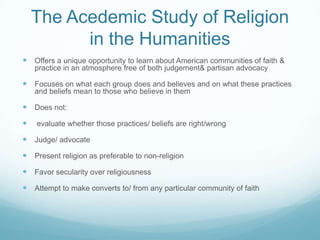
The Acedemic Study of Religion
          in the Humanities
 Offers a unique opportunity to learn about American communities of faith &
    practice in an atmosphere free of both judgement& partisan advocacy

 Focuses on what each group does and believes and on what these practices
    and beliefs mean to those who believe in them

 Does not:
   evaluate whether those practices/ beliefs are right/wrong

 Judge/ advocate
 Present religion as preferable to non-religion
 Favor secularity over religiousness
 Attempt to make converts to/ from any particular community of faith
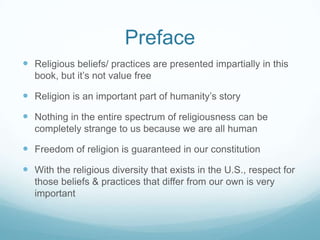
Preface
 Religious beliefs/ practices are presented impartially in this
   book, but it’s not value free

 Religion is an important part of humanity’s story
 Nothing in the entire spectrum of religiousness can be
   completely strange to us because we are all human

 Freedom of religion is guaranteed in our constitution
 With the religious diversity that exists in the U.S., respect for
   those beliefs & practices that differ from our own is very
   important
Preface
 There is a vast distinction between religion as it is
  described in the books and as people actually live it

 -Many Religions break their own rules
 -We chose from our religions teachings the things that
  are personally meaningful to us & feel free to leave the
  rest alone
Preface
 This book continues the emphasis on religious diversity
  in the U.S. & less emphasis on the majority

 Attention is also given to responding to the religious
  diversity that surrounds us

 Religious diversity make the U.S. an ideal place to
  learn about religion, not only in books, but as it is
  embodied in the people who we come into contact with
  every day
This edition of the book
 First introduces students to the dicipline of religious
  studies then describes issues and concerns that cut
  across a variety of communities of faith
 Part 2 then describes specific Christian communities of
  faith, recognizing that Christians make up the majority of
  religious people here
 Part 3 describes the ever widening diversity that
  characterizes religion in the U.S.
 Is not a book about the religious history of the U.S.
 Focuses on the diversity of what people believe and
  practice today
Religion
 Helps to make life meaningful and good for many america
 Is a rewarding subject to study
 Is about people because religion is about people
 About something transcends people, such as God or
  another high reality: but, always always about people, what
  people believe, and how they respond to those beliefs
 This is a book about us, all of us because even if we are not
  personally religious, our lives are influenced by the
  religiousness around us
Intro Religious America: Diversity
            &Freedoom
 Religious diversity in the U.S. & throughout the world is
   increasing

 The development & growth of this diversity is an important
   social phenomenon & one that extends for beyond the
   confines of religion

 Particular feature of religious diversity: most-not-all religions
   make claims to absolute truth

 The existence of wide-ranging diversity coupled with
   absolute truth claims poses a particularly interesting
   challenge for thoughtful, reflective response.
5 Responses to Religious
                Diversity
 Exclusivism: you only agree with one religion
 Relativism: all perspectives are limited
 Inclusivism there is one true religion but some others
  ay agree

 Synthesis: all relgions are the same
 The affirmation of religious diversity: all religions are
  true
Tolerance
 Tolerance: the willingness to grant basic civil liberties to
  members of a faith other than one’s own

 Encompasses willingness to grant freedom to gather
  for religious meetings/ speak publicly in the hope of
  winning over other people to one’s viewpoint; avoiding
  religious discrimination

 A person who is tolerant may disagree/ think
  someone’s position is wrong, but is still willing to see
  the other person’s point
Chapter 1: Why study
              religion?
 Study our own religion to understand ourselves better
 Study religion of others to understand others & prejudices
 Has an important roll in history
 Significant impact on contemporary events
 Impact on cultural forms such as: literature, art, & music
 Discipline of religious studies helps to stabalize the public
  rolled religion
What is the Difference between
 the study of theology & the study
             of religion
 Theology is a study by members of a community of
  faith learning or studying the practices & beliefs of their
  own religion

 Religion promotes an awareness of the diversity of
  religious beliefs, practices, & experiences people have
4 Dimensions of Religion
• Belief: ideas of a religion
• Lifestyle: conduct; standards; ethics
• Ritual Activities: ceremonial actions-
  prayer, chanting, meditating, lighting candles

• Social Institutions: like-minded people join together for
  instruction
What is Popular Religion?
 Different from institutional religion
 Occurs outside the formal boundaries of religious
  institutions
Chapter 2
Influencing factors that shaped
   religious freedom in the U.S.
 European settlers fleeing established religion in their
  homeland

 Experience with power/ privelege of churches led to
  problems

 Several views of Religion
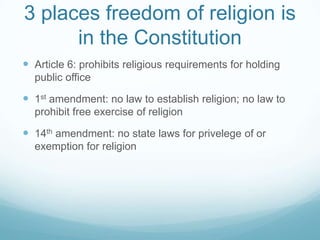
3 places freedom of religion is
      in the Constitution
 Article 6: prohibits religious requirements for holding
  public office

 1st amendment: no law to establish religion; no law to
  prohibit free exercise of religion

 14th amendment: no state laws for privelege of or
  exemption for religion
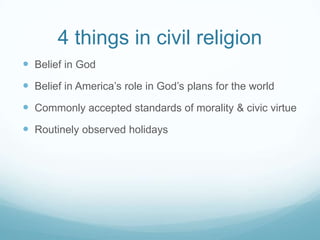
4 things in civil religion
 Belief in God
 Belief in America’s role in God’s plans for the world
 Commonly accepted standards of morality & civic virtue
 Routinely observed holidays
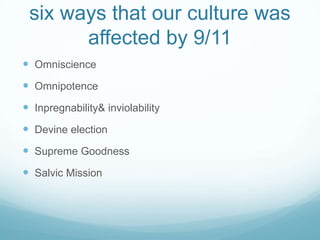
six ways that our culture was
       affected by 9/11
 Omniscience
 Omnipotence
 Inpregnability& inviolability
 Devine election
 Supreme Goodness
 Salvic Mission
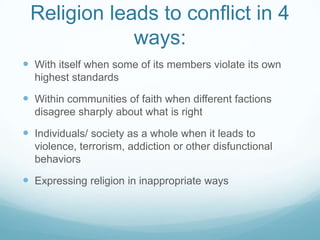
Religion leads to conflict in 4
             ways:
 With itself when some of its members violate its own
  highest standards

 Within communities of faith when different factions
  disagree sharply about what is right

 Individuals/ society as a whole when it leads to
  violence, terrorism, addiction or other disfunctional
  behaviors

 Expressing religion in inappropriate ways
Common factors contributing
    to religious violence
 Dualistic worldview
 Divine or cosmic warfare
Jihad
 The Greater Jihad: daily struggle of individual muslims
  to submit their wills to Allah (God)

 The Lesser Jihad: related to doing better for the faith

World Religion

  • 1.
  • 2.
    The Acedemic Studyof Religion in the Humanities  Offers a unique opportunity to learn about American communities of faith & practice in an atmosphere free of both judgement& partisan advocacy  Focuses on what each group does and believes and on what these practices and beliefs mean to those who believe in them  Does not:  evaluate whether those practices/ beliefs are right/wrong  Judge/ advocate  Present religion as preferable to non-religion  Favor secularity over religiousness  Attempt to make converts to/ from any particular community of faith
  • 3.
    Preface  Religious beliefs/practices are presented impartially in this book, but it’s not value free  Religion is an important part of humanity’s story  Nothing in the entire spectrum of religiousness can be completely strange to us because we are all human  Freedom of religion is guaranteed in our constitution  With the religious diversity that exists in the U.S., respect for those beliefs & practices that differ from our own is very important
  • 4.
    Preface  There isa vast distinction between religion as it is described in the books and as people actually live it  -Many Religions break their own rules  -We chose from our religions teachings the things that are personally meaningful to us & feel free to leave the rest alone
  • 5.
    Preface  This bookcontinues the emphasis on religious diversity in the U.S. & less emphasis on the majority  Attention is also given to responding to the religious diversity that surrounds us  Religious diversity make the U.S. an ideal place to learn about religion, not only in books, but as it is embodied in the people who we come into contact with every day
  • 6.
    This edition ofthe book  First introduces students to the dicipline of religious studies then describes issues and concerns that cut across a variety of communities of faith  Part 2 then describes specific Christian communities of faith, recognizing that Christians make up the majority of religious people here  Part 3 describes the ever widening diversity that characterizes religion in the U.S.  Is not a book about the religious history of the U.S.  Focuses on the diversity of what people believe and practice today
  • 7.
    Religion  Helps tomake life meaningful and good for many america  Is a rewarding subject to study  Is about people because religion is about people  About something transcends people, such as God or another high reality: but, always always about people, what people believe, and how they respond to those beliefs  This is a book about us, all of us because even if we are not personally religious, our lives are influenced by the religiousness around us
  • 8.
    Intro Religious America:Diversity &Freedoom  Religious diversity in the U.S. & throughout the world is increasing  The development & growth of this diversity is an important social phenomenon & one that extends for beyond the confines of religion  Particular feature of religious diversity: most-not-all religions make claims to absolute truth  The existence of wide-ranging diversity coupled with absolute truth claims poses a particularly interesting challenge for thoughtful, reflective response.
  • 9.
    5 Responses toReligious Diversity  Exclusivism: you only agree with one religion  Relativism: all perspectives are limited  Inclusivism there is one true religion but some others ay agree  Synthesis: all relgions are the same  The affirmation of religious diversity: all religions are true
  • 10.
    Tolerance  Tolerance: thewillingness to grant basic civil liberties to members of a faith other than one’s own  Encompasses willingness to grant freedom to gather for religious meetings/ speak publicly in the hope of winning over other people to one’s viewpoint; avoiding religious discrimination  A person who is tolerant may disagree/ think someone’s position is wrong, but is still willing to see the other person’s point
  • 11.
    Chapter 1: Whystudy religion?  Study our own religion to understand ourselves better  Study religion of others to understand others & prejudices  Has an important roll in history  Significant impact on contemporary events  Impact on cultural forms such as: literature, art, & music  Discipline of religious studies helps to stabalize the public rolled religion
  • 12.
    What is theDifference between the study of theology & the study of religion  Theology is a study by members of a community of faith learning or studying the practices & beliefs of their own religion  Religion promotes an awareness of the diversity of religious beliefs, practices, & experiences people have
  • 13.
    4 Dimensions ofReligion • Belief: ideas of a religion • Lifestyle: conduct; standards; ethics • Ritual Activities: ceremonial actions- prayer, chanting, meditating, lighting candles • Social Institutions: like-minded people join together for instruction
  • 14.
    What is PopularReligion?  Different from institutional religion  Occurs outside the formal boundaries of religious institutions
  • 15.
  • 16.
    Influencing factors thatshaped religious freedom in the U.S.  European settlers fleeing established religion in their homeland  Experience with power/ privelege of churches led to problems  Several views of Religion
  • 17.
    3 places freedomof religion is in the Constitution  Article 6: prohibits religious requirements for holding public office  1st amendment: no law to establish religion; no law to prohibit free exercise of religion  14th amendment: no state laws for privelege of or exemption for religion
  • 18.
    4 things incivil religion  Belief in God  Belief in America’s role in God’s plans for the world  Commonly accepted standards of morality & civic virtue  Routinely observed holidays
  • 19.
    six ways thatour culture was affected by 9/11  Omniscience  Omnipotence  Inpregnability& inviolability  Devine election  Supreme Goodness  Salvic Mission
  • 20.
    Religion leads toconflict in 4 ways:  With itself when some of its members violate its own highest standards  Within communities of faith when different factions disagree sharply about what is right  Individuals/ society as a whole when it leads to violence, terrorism, addiction or other disfunctional behaviors  Expressing religion in inappropriate ways
  • 21.
    Common factors contributing to religious violence  Dualistic worldview  Divine or cosmic warfare
  • 22.
    Jihad  The GreaterJihad: daily struggle of individual muslims to submit their wills to Allah (God)  The Lesser Jihad: related to doing better for the faith