Workshop The girl child: witness and victim of domestic violence   Rudy Bonnet Senior advisor Stade Advies B.V. Utrecht Director foundation for the Prevention of Child Abuse  Sietske Dijkstra Lector Shelter Work and Domestic Violence Vocational Education Avans and Shelter Valkenhorst, Breda
Definition violence against women: any act of gender-based violence that results in, or is likely to result in, physical, sexual or psychological harm or suffering to women, including threats of such acts, coercion or arbitrary deprivation of liberty, whether occurring in public  or in private life ( The United Nations Declaration on the Elimination of Violence against Women:1993)
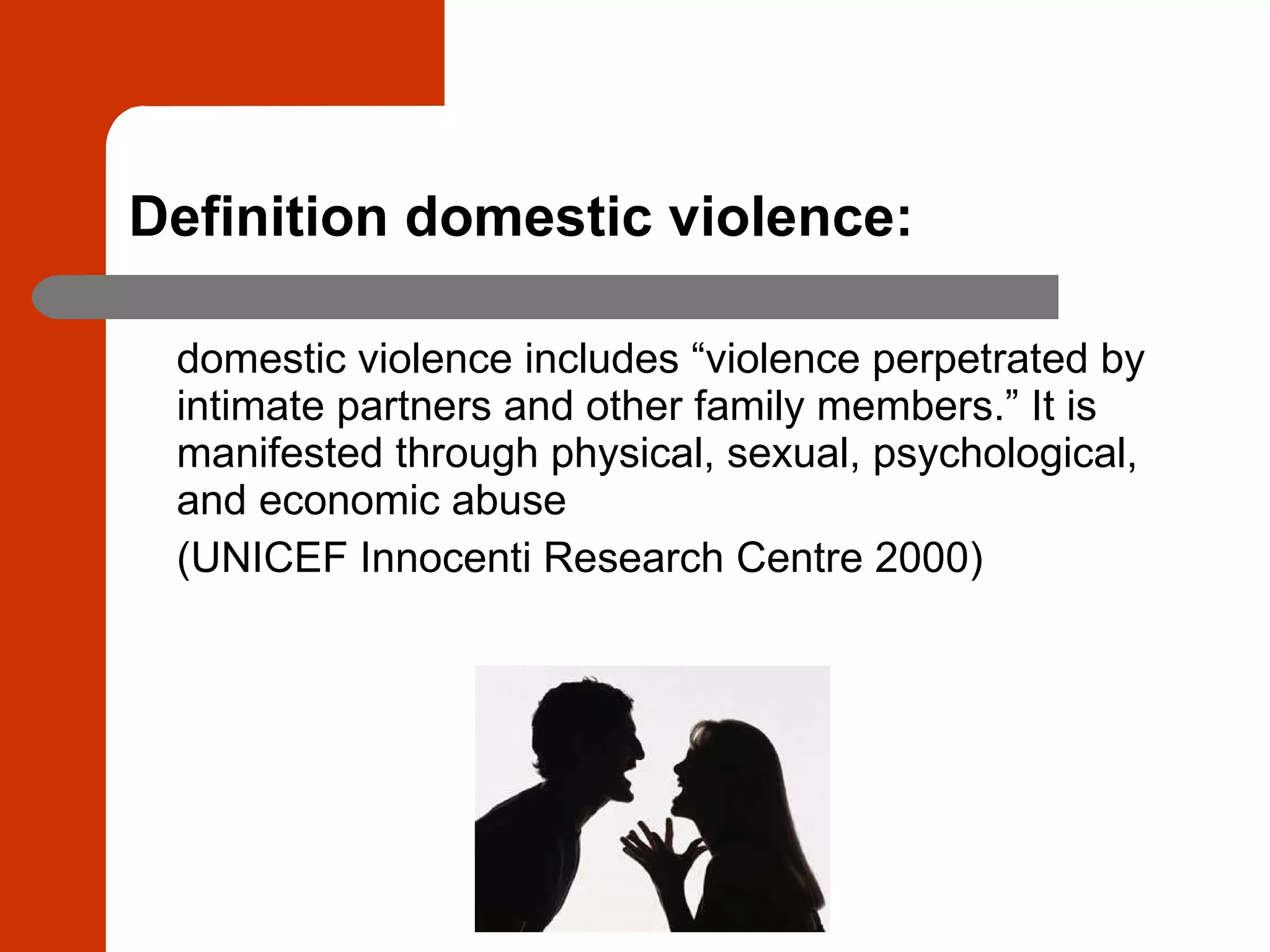
Definition domestic violence: domestic violence includes “violence perpetrated by intimate partners and other family members.” It is manifested through physical, sexual, psychological, and economic abuse   (UNICEF Innocenti Research Centre 2000)
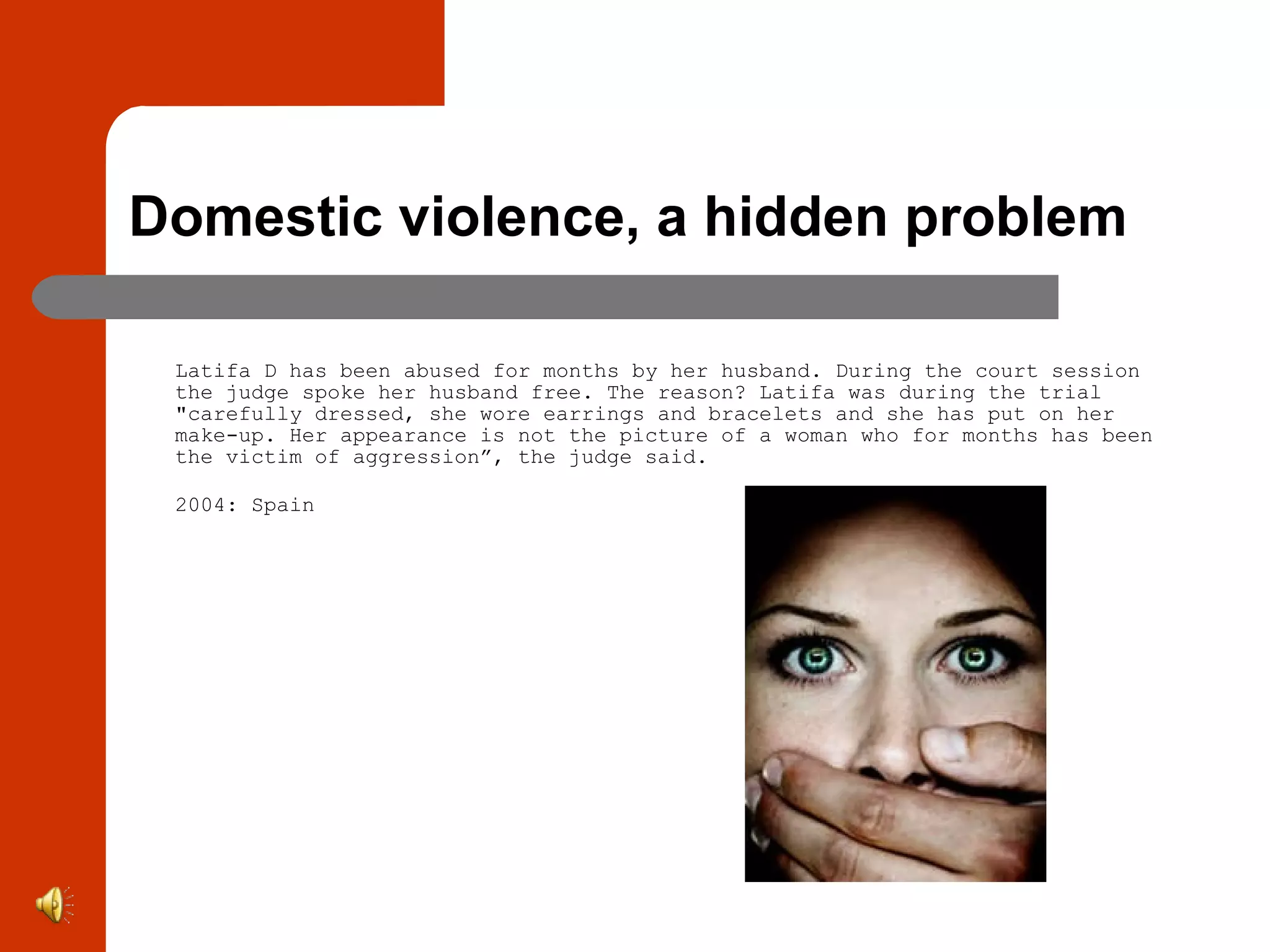
Domestic violence, a hidden problem Latifa D has been abused for months by her husband. During the court session the judge spoke her husband free. The reason? Latifa was during the trial "carefully dressed, she wore earrings and bracelets and she has put on her make-up. Her appearance is not the picture of a woman who for months has been the victim of aggression”, the judge said.  2004: Spain
Effects in general:   Common Feelings for children exposed to Domestic Violence: Anger:  at the abuser for the violence, at the victim or themselves for not being able to stop the violence, and at the world for allowing this to happen Fear/Terror:  that the mother or father will be seriously injured or killed, that they or their siblings will be hurt, that others will find out and then the parents will be “in trouble,” or that they will be removed from the family Powerless:  because they are unable to keep the fights from happening or to stop them when they do occur, and because the community, including law enforcement, often does nothing to stop the abuse Distrust:  of adults, even teachers, because their experience tells them that adults are unpredictable, that they break promises, and/or that they do not mean well
Effects in general: Confusion:  about why it happens, about choosing sides, about what they should do, about what is “right” and “wrong.” Additionally, they are confused about how the abuser can sometimes be loving and caring, and, at other times, be violent Loneliness:  feeling unable or afraid to reach out to others, feeling “different,” or feeling isolated Shame:  about what is happening in their home Guilt:  because they believe that they cause the fights or should be able to stop them
Facts and figures in general: -  Children are present and witness the abuse in 80% of domestic violence cases - Children of all age groups witness domestic violence - Young children are more likely to be abused by primary caregivers and other family members - Older children are more likely to be victimised by people outside their home and family  - 80% of domestic violence is committed by male perpetrators -  Approximately 40% of wife assault incidents begin during a woman’s first pregnancy -  Boys who witness domestic violence against their mothers are five times more likely to grow up to be abusers - Girls who witness violence are five times more likely to grow up to be victims of abuse -  Studies show that  girls face increased risk of murder by intimate partners -  30 to 40% become itself victim of abuse
Children as a witness, risks and needs: Children: Experience the same emotional and behavioral problems as children who are themselves abused Who witness   woman abuse frequently experience post traumatic stress disorder (40 to 60%)  Do often have concentration, behavioral and learning difficulties Are often incorrectly diagnosed (leading to attention disorders) Are more at risk to become perpetrators of violence (boys)  Are an increased risk to develop depressive symptoms  Truancy more, show more delinquent behavior and are often away from home  Are themselves at increased risk of falling victim to the perpetrator of violence in the home Need specific support and help
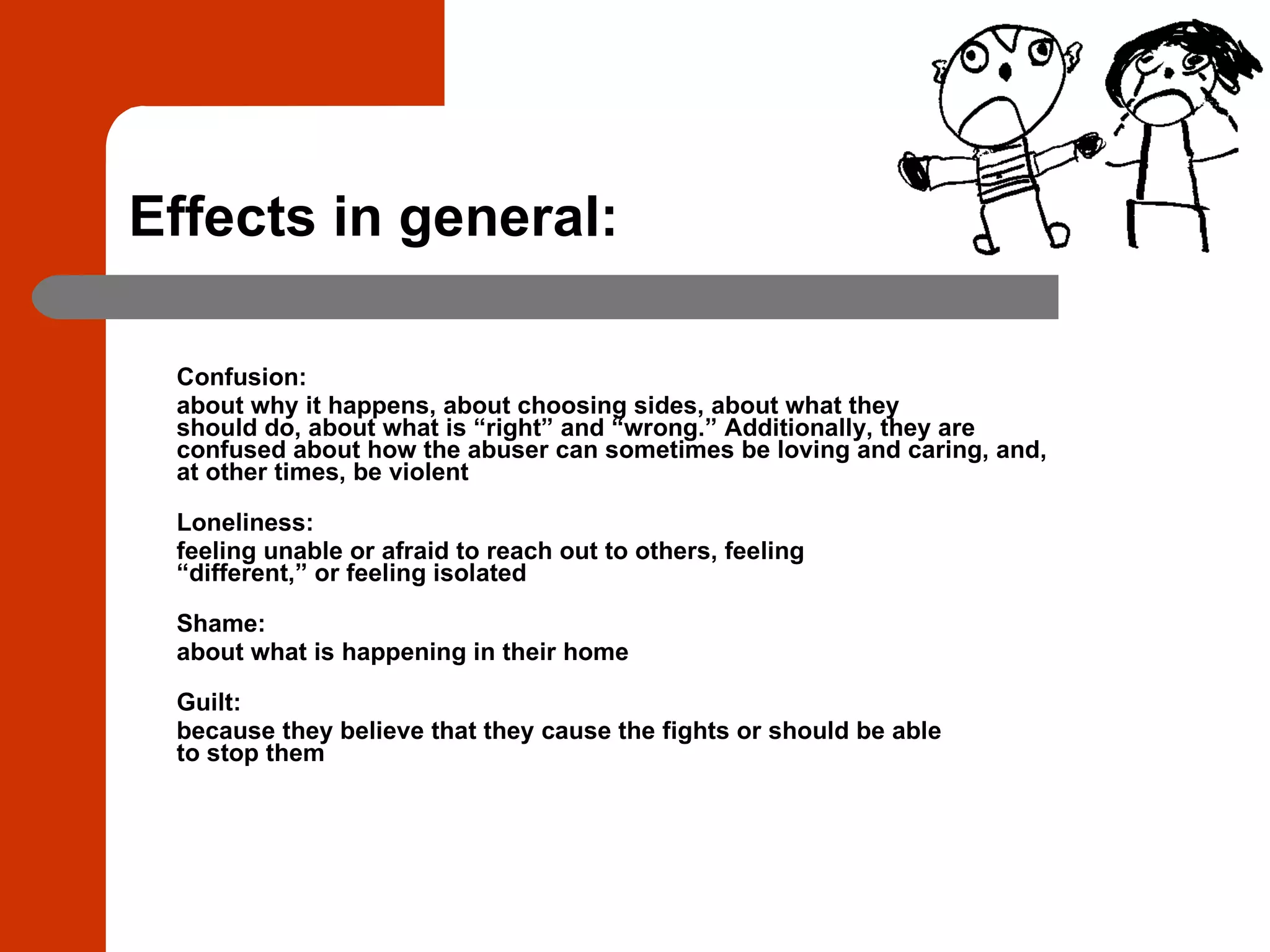
Silent witness drawings: Left: girl (6) her mother has been hit in the eye and is crying
Getting help, an example: The Netherlands (2007): A mother: ”My child has always witnessed any abuse of my ex husband. I am looking for help for my daughter since my divorce, two years ago.  I have been everywhere but there is almost no specialist help for our problem. Really unbelievable!  Now I finally have found a therapist and she wants to help, after three months on the waiting list it is finally our turn. That is, if her father agrees. We have joint custody and I am afraid that he will not allow her to monitor this therapy."
This conference: Sharing: Experience Knowledge Best practices
To obtain: Recommendations for the future: what will you do tomorrow  and what do you need?

Workshop geweld tegen meisjes

  • 1.
    Workshop The girlchild: witness and victim of domestic violence Rudy Bonnet Senior advisor Stade Advies B.V. Utrecht Director foundation for the Prevention of Child Abuse Sietske Dijkstra Lector Shelter Work and Domestic Violence Vocational Education Avans and Shelter Valkenhorst, Breda
  • 2.
    Definition violence againstwomen: any act of gender-based violence that results in, or is likely to result in, physical, sexual or psychological harm or suffering to women, including threats of such acts, coercion or arbitrary deprivation of liberty, whether occurring in public or in private life ( The United Nations Declaration on the Elimination of Violence against Women:1993)
  • 3.
    Definition domestic violence:domestic violence includes “violence perpetrated by intimate partners and other family members.” It is manifested through physical, sexual, psychological, and economic abuse (UNICEF Innocenti Research Centre 2000)
  • 4.
    Domestic violence, ahidden problem Latifa D has been abused for months by her husband. During the court session the judge spoke her husband free. The reason? Latifa was during the trial "carefully dressed, she wore earrings and bracelets and she has put on her make-up. Her appearance is not the picture of a woman who for months has been the victim of aggression”, the judge said. 2004: Spain
  • 5.
    Effects in general: Common Feelings for children exposed to Domestic Violence: Anger: at the abuser for the violence, at the victim or themselves for not being able to stop the violence, and at the world for allowing this to happen Fear/Terror: that the mother or father will be seriously injured or killed, that they or their siblings will be hurt, that others will find out and then the parents will be “in trouble,” or that they will be removed from the family Powerless: because they are unable to keep the fights from happening or to stop them when they do occur, and because the community, including law enforcement, often does nothing to stop the abuse Distrust: of adults, even teachers, because their experience tells them that adults are unpredictable, that they break promises, and/or that they do not mean well
  • 6.
    Effects in general:Confusion: about why it happens, about choosing sides, about what they should do, about what is “right” and “wrong.” Additionally, they are confused about how the abuser can sometimes be loving and caring, and, at other times, be violent Loneliness: feeling unable or afraid to reach out to others, feeling “different,” or feeling isolated Shame: about what is happening in their home Guilt: because they believe that they cause the fights or should be able to stop them
  • 7.
    Facts and figuresin general: - Children are present and witness the abuse in 80% of domestic violence cases - Children of all age groups witness domestic violence - Young children are more likely to be abused by primary caregivers and other family members - Older children are more likely to be victimised by people outside their home and family - 80% of domestic violence is committed by male perpetrators - Approximately 40% of wife assault incidents begin during a woman’s first pregnancy - Boys who witness domestic violence against their mothers are five times more likely to grow up to be abusers - Girls who witness violence are five times more likely to grow up to be victims of abuse - Studies show that girls face increased risk of murder by intimate partners - 30 to 40% become itself victim of abuse
  • 8.
    Children as awitness, risks and needs: Children: Experience the same emotional and behavioral problems as children who are themselves abused Who witness woman abuse frequently experience post traumatic stress disorder (40 to 60%) Do often have concentration, behavioral and learning difficulties Are often incorrectly diagnosed (leading to attention disorders) Are more at risk to become perpetrators of violence (boys) Are an increased risk to develop depressive symptoms Truancy more, show more delinquent behavior and are often away from home Are themselves at increased risk of falling victim to the perpetrator of violence in the home Need specific support and help
  • 9.
    Silent witness drawings:Left: girl (6) her mother has been hit in the eye and is crying
  • 10.
    Getting help, anexample: The Netherlands (2007): A mother: ”My child has always witnessed any abuse of my ex husband. I am looking for help for my daughter since my divorce, two years ago. I have been everywhere but there is almost no specialist help for our problem. Really unbelievable! Now I finally have found a therapist and she wants to help, after three months on the waiting list it is finally our turn. That is, if her father agrees. We have joint custody and I am afraid that he will not allow her to monitor this therapy."
  • 11.
    This conference: Sharing:Experience Knowledge Best practices
  • 12.
    To obtain: Recommendationsfor the future: what will you do tomorrow and what do you need?