Working with Trees
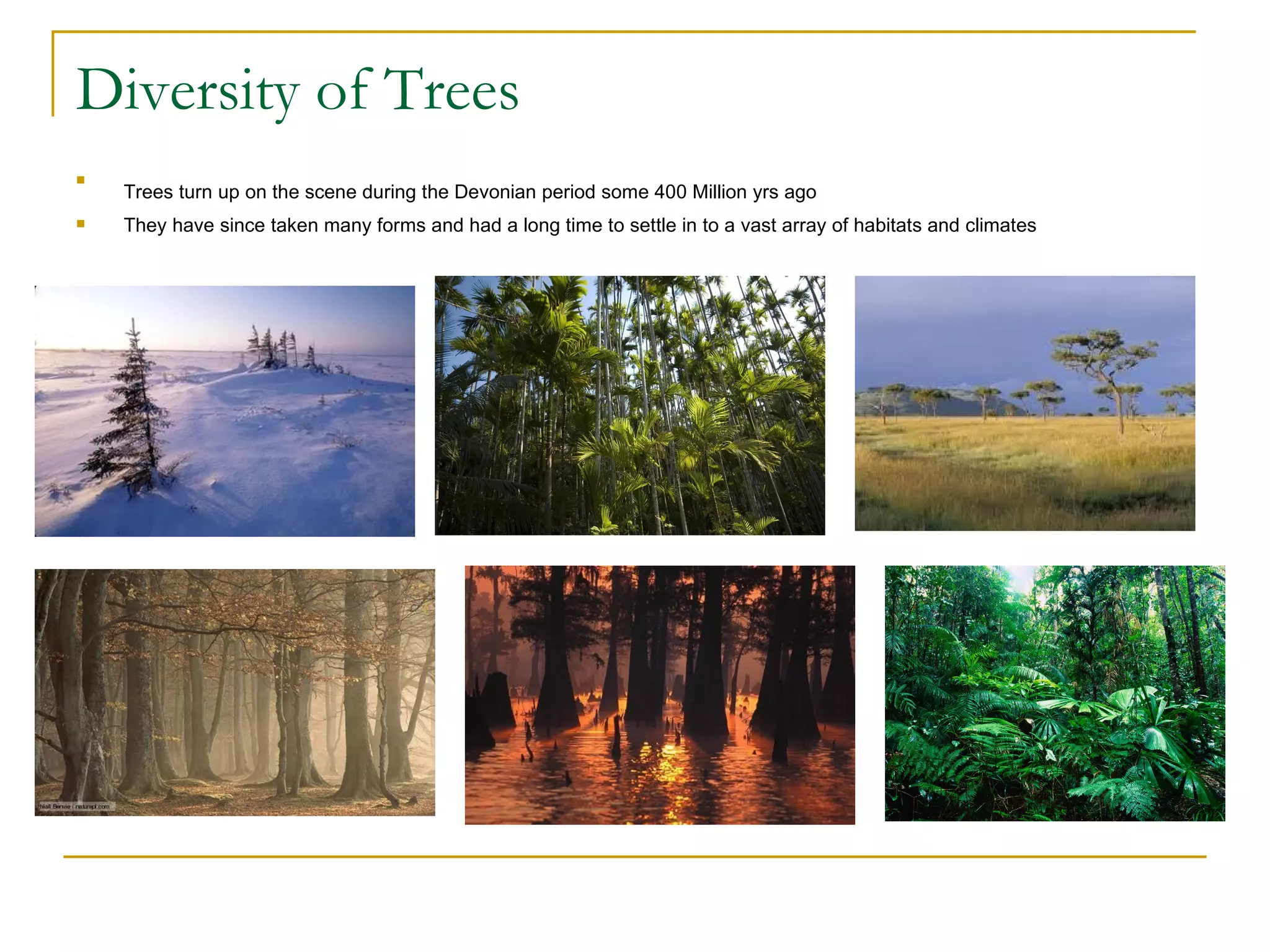
Diversity of Trees

    Trees turn up on the scene during the Devonian period some 400 Million yrs ago
   They have since taken many forms and had a long time to settle in to a vast array of habitats and climates
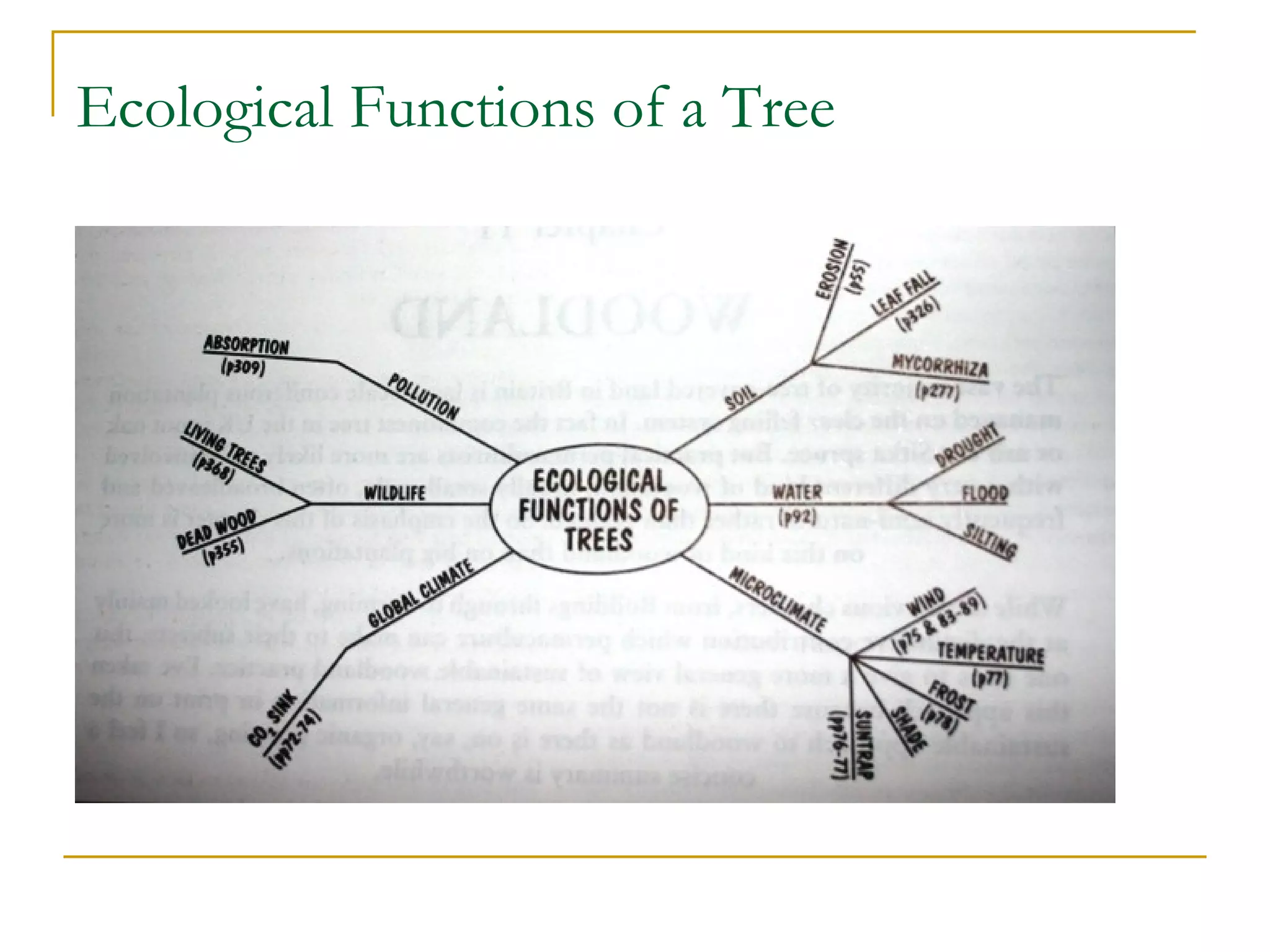
Ecological Functions of a Tree
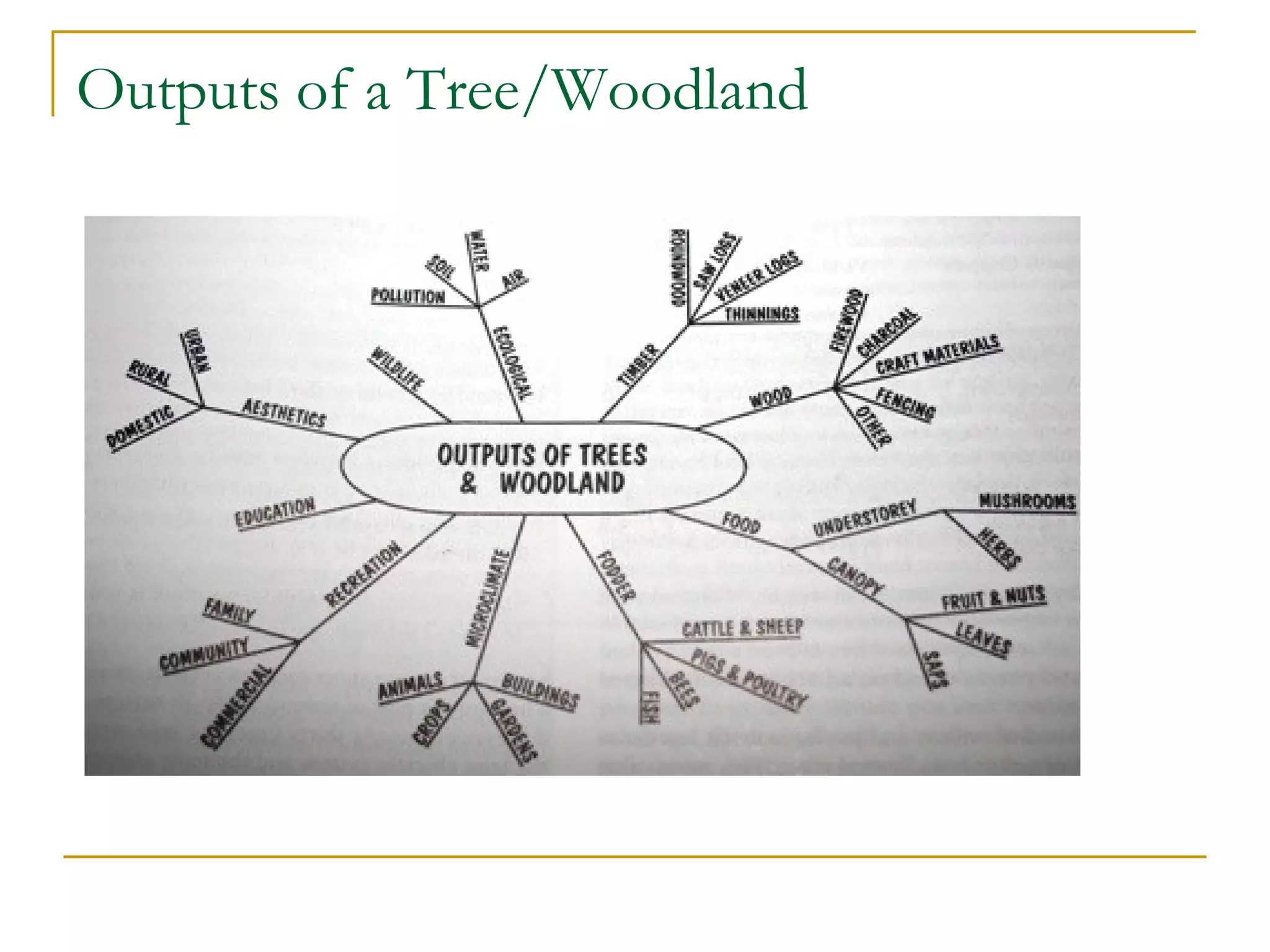
Outputs of a Tree/Woodland
Shelterbelt-Windbreak
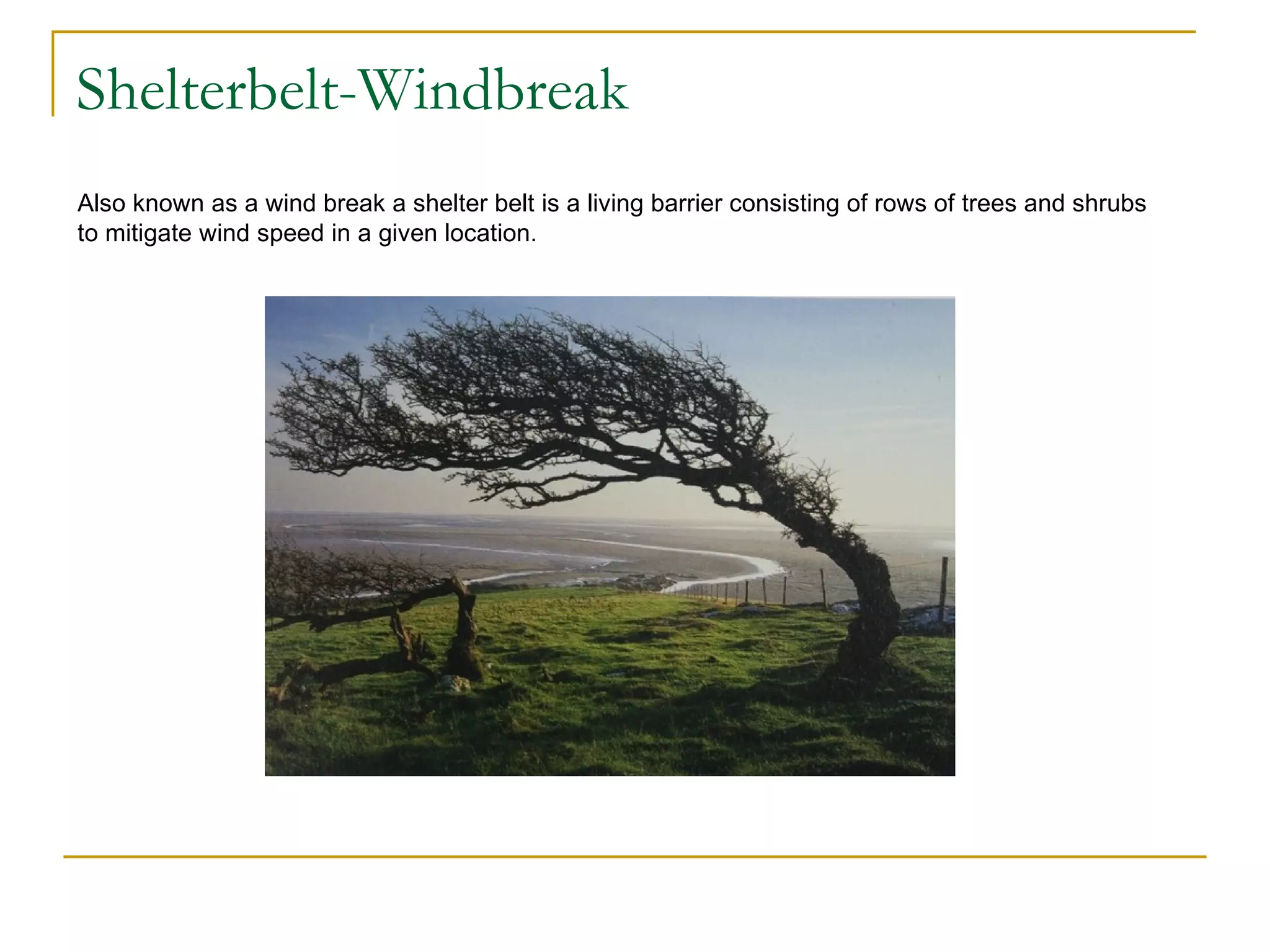
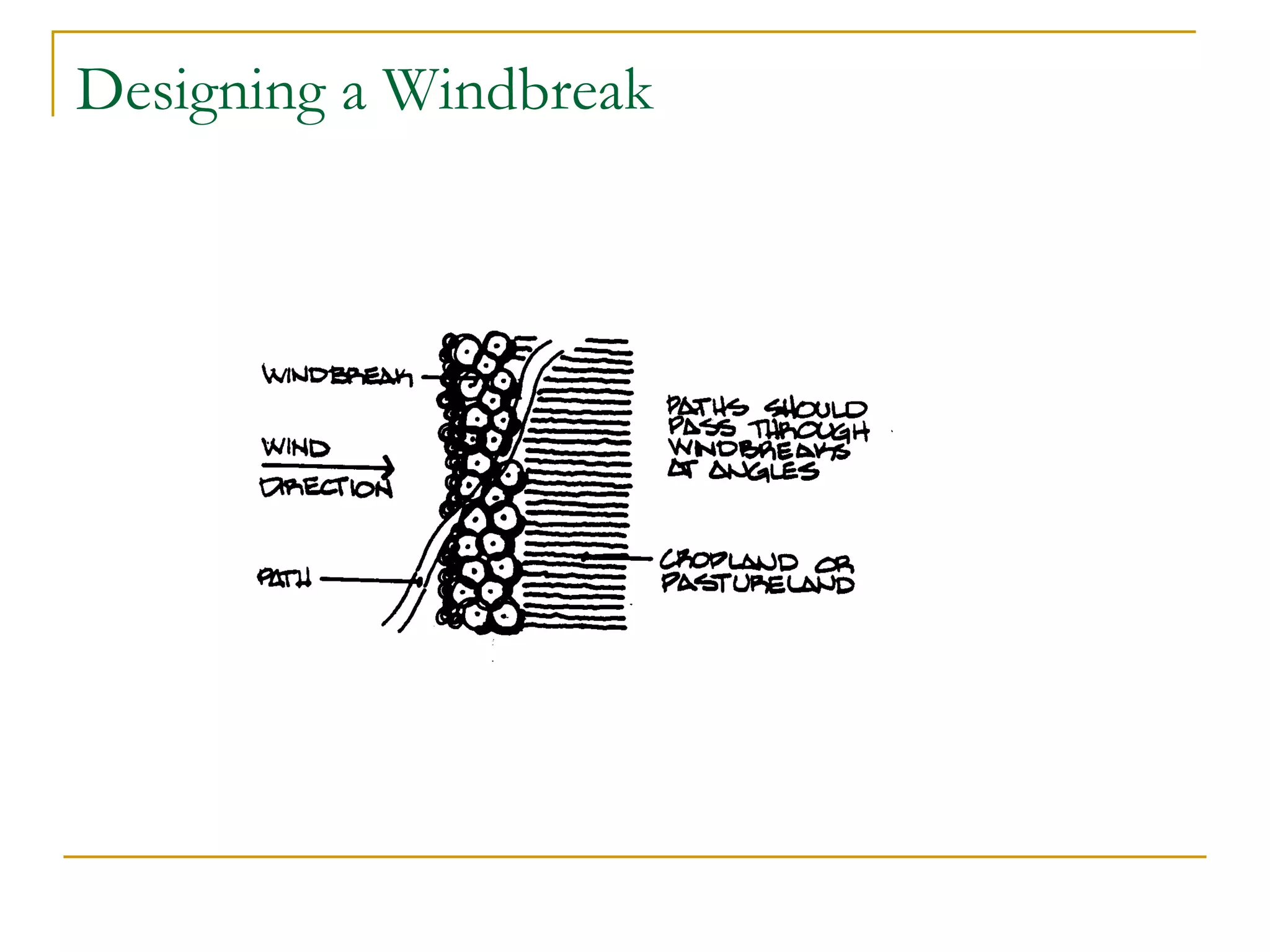
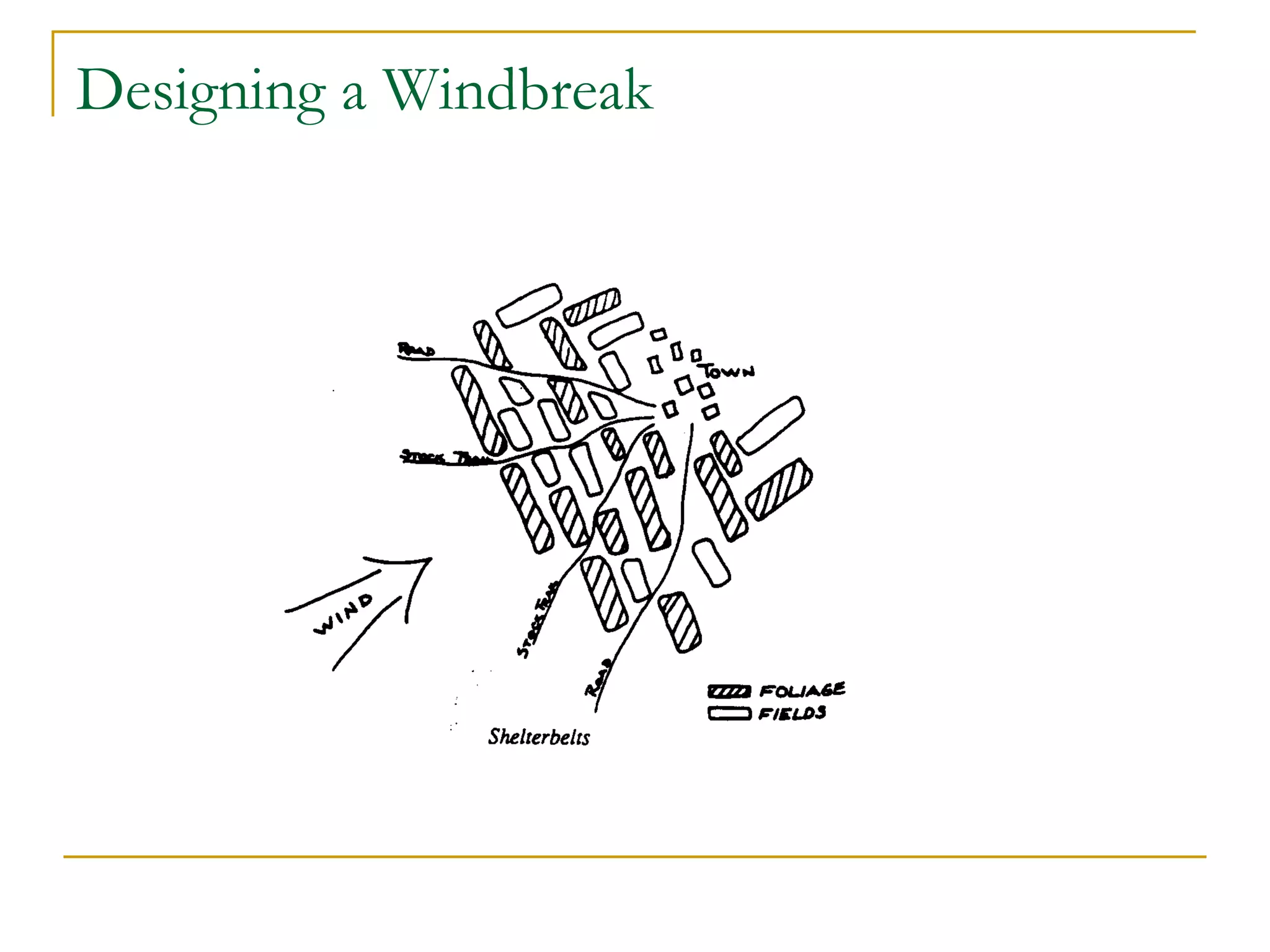
Also known as a wind break a shelter belt is a living barrier consisting of rows of trees and shrubs
to mitigate wind speed in a given location.
Shelterbelt-Windbreak
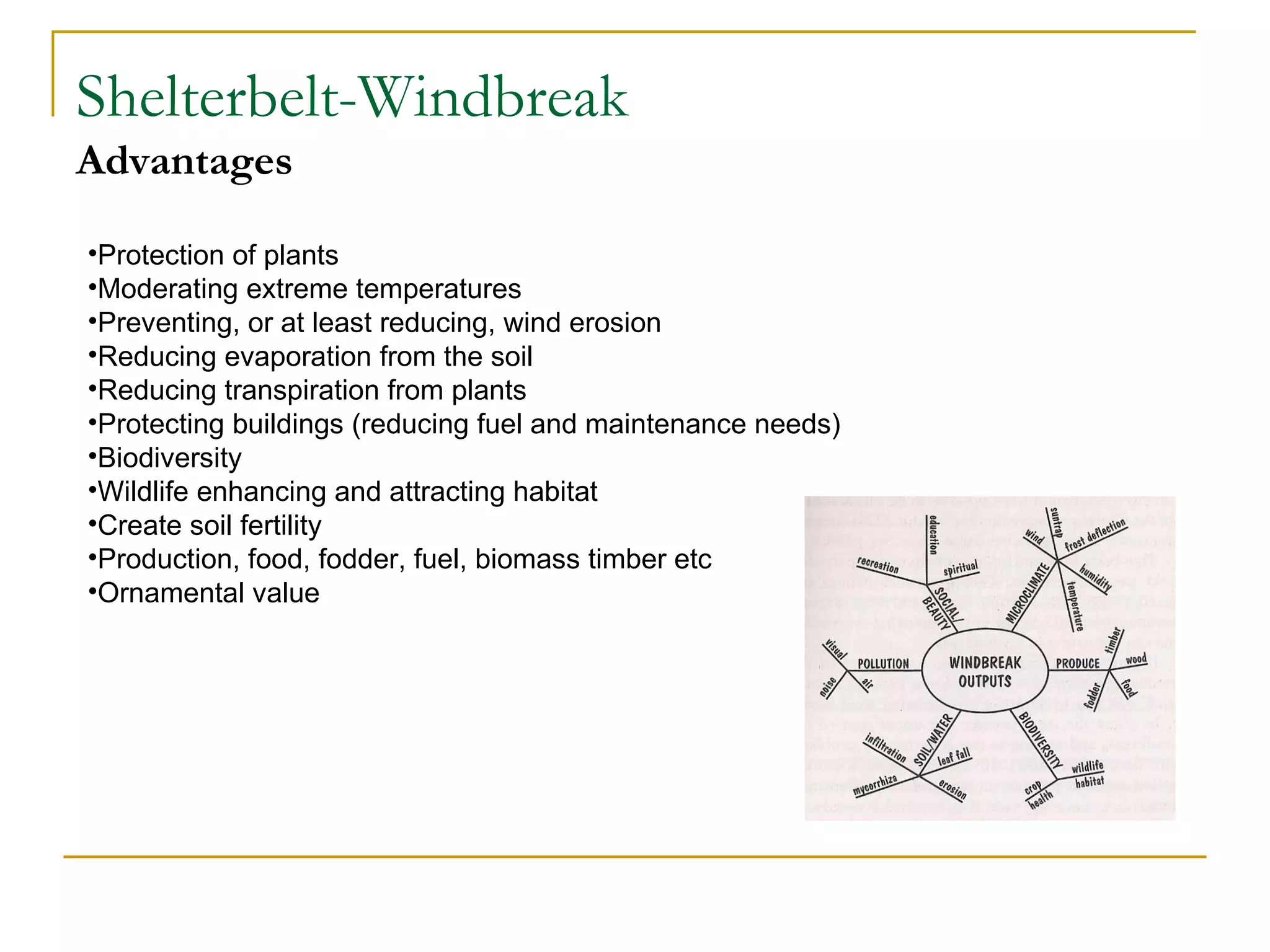
Advantages

•Protection of plants
•Moderating extreme temperatures
•Preventing, or at least reducing, wind erosion
•Reducing evaporation from the soil
•Reducing transpiration from plants
•Protecting buildings (reducing fuel and maintenance needs)
•Biodiversity
•Wildlife enhancing and attracting habitat
•Create soil fertility
•Production, food, fodder, fuel, biomass timber etc
•Ornamental value
Shelterbelt-Windbreak
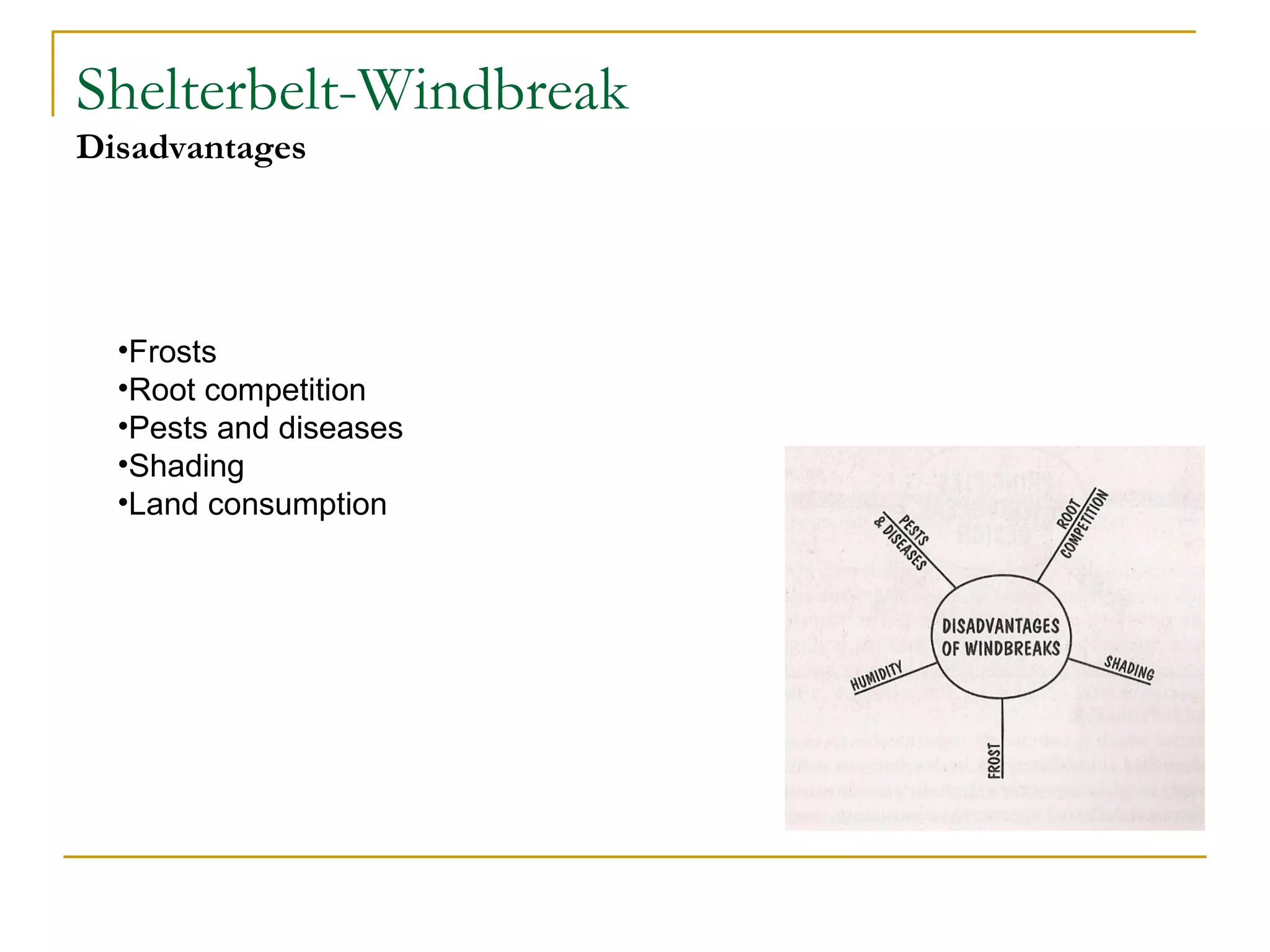
Disadvantages


  •Frosts
  •Root competition
  •Pests and diseases
  •Shading
  •Land consumption
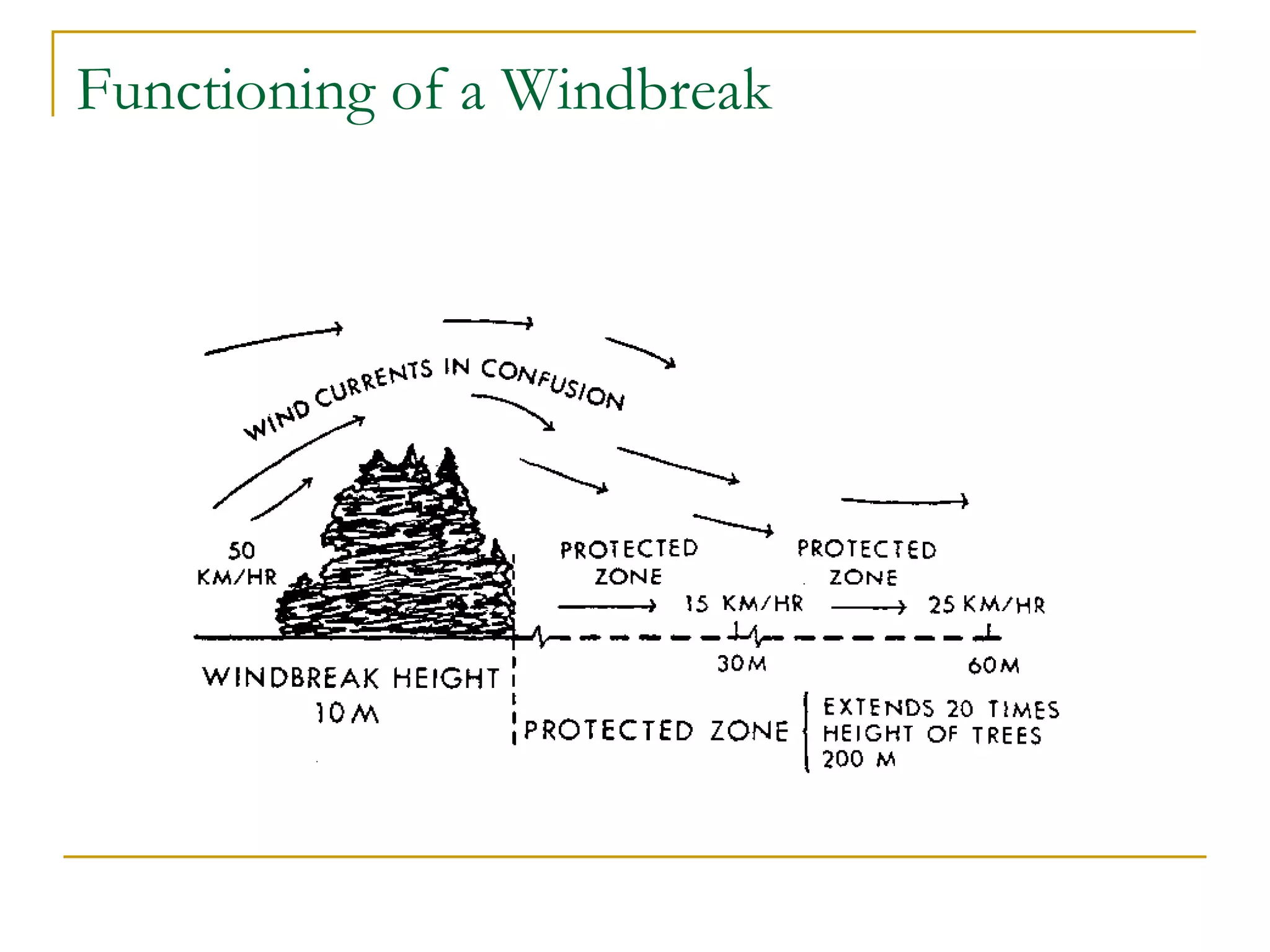
Functioning of a Windbreak
Designing a Windbreak
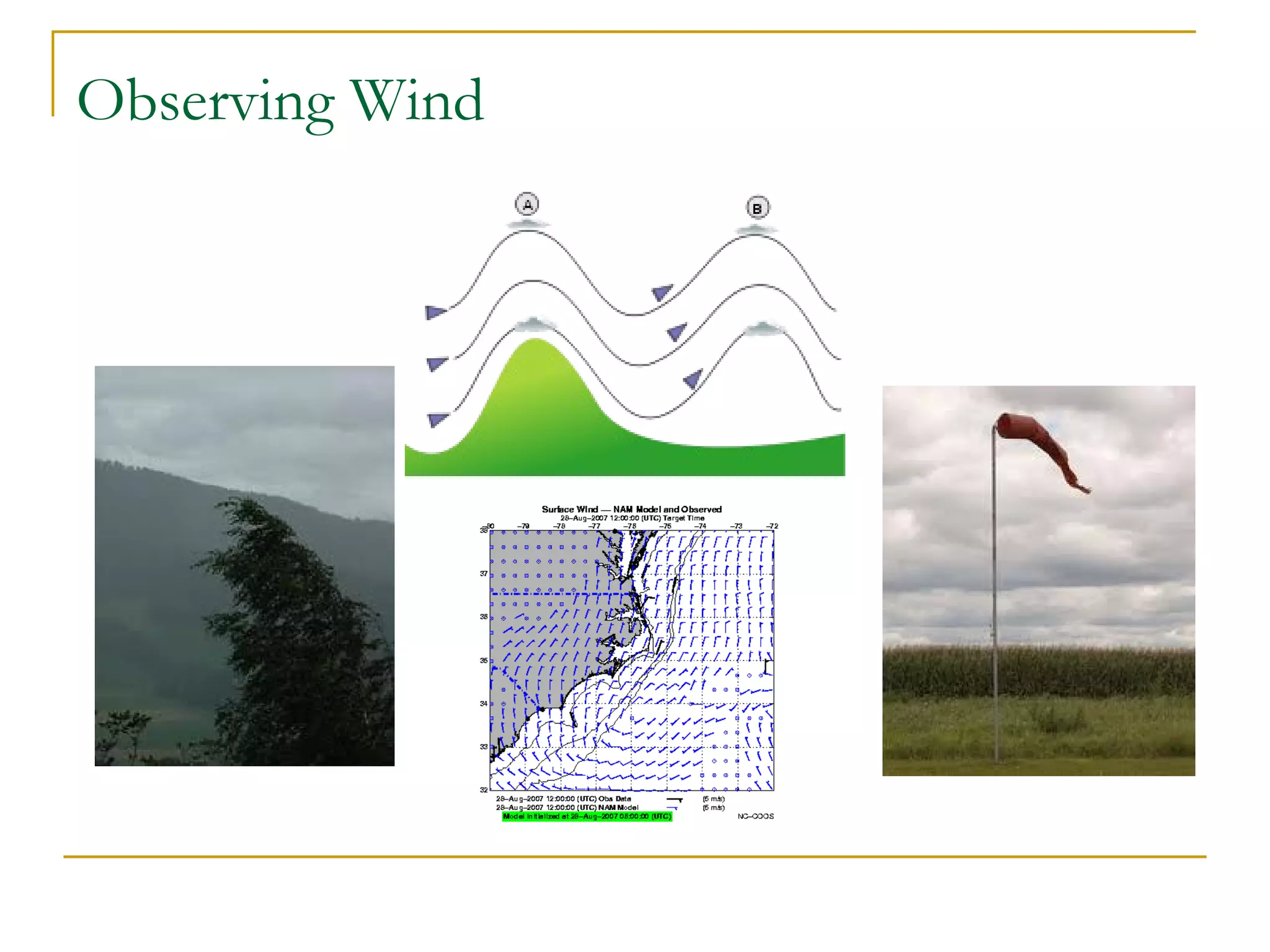
Observing Wind
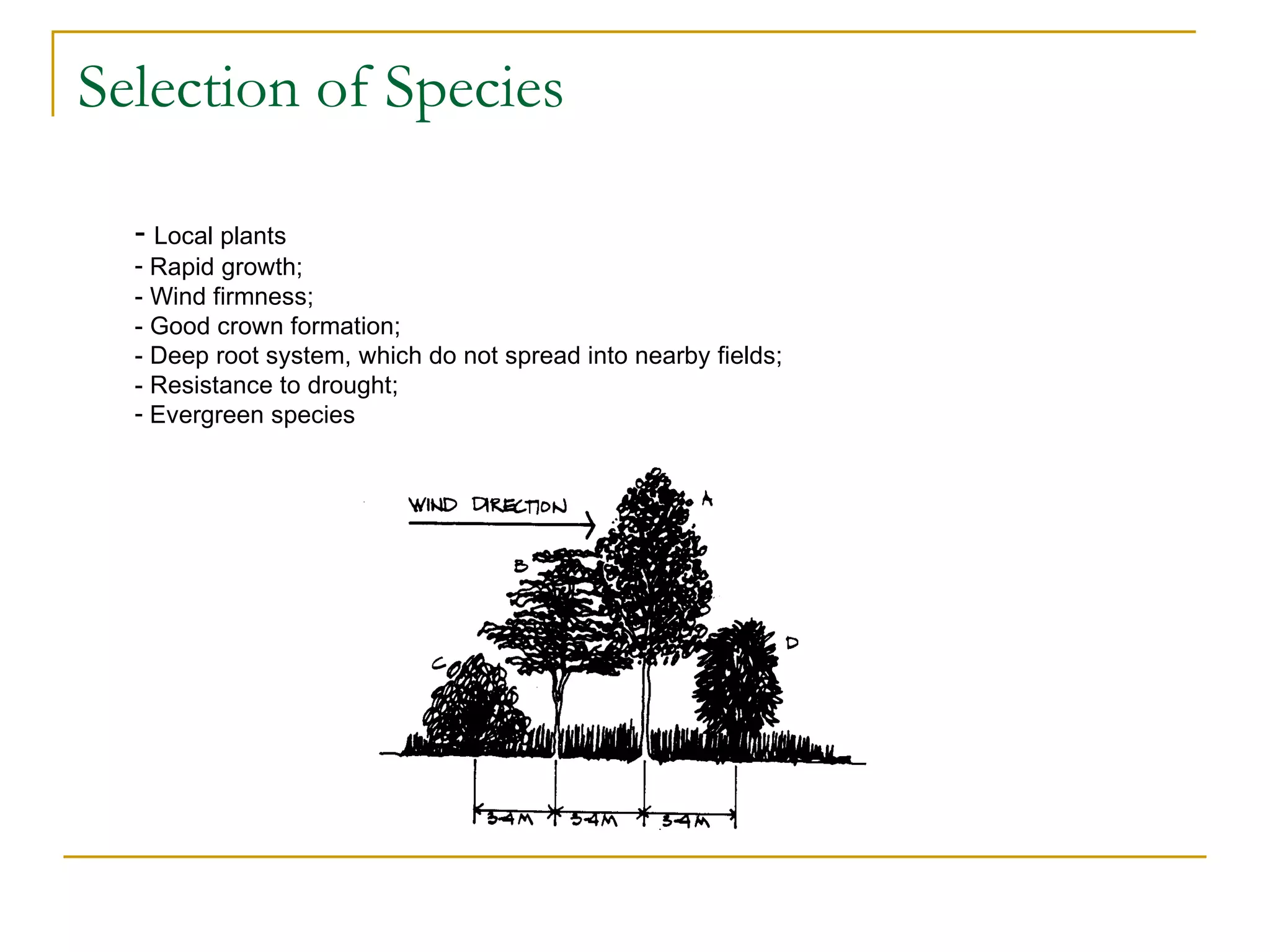
Selection of Species

  - Local plants
  - Rapid growth;
  - Wind firmness;
  - Good crown formation;
  - Deep root system, which do not spread into nearby fields;
  - Resistance to drought;
  - Evergreen species
Suitable Species for Windward edge
Temperate Europe
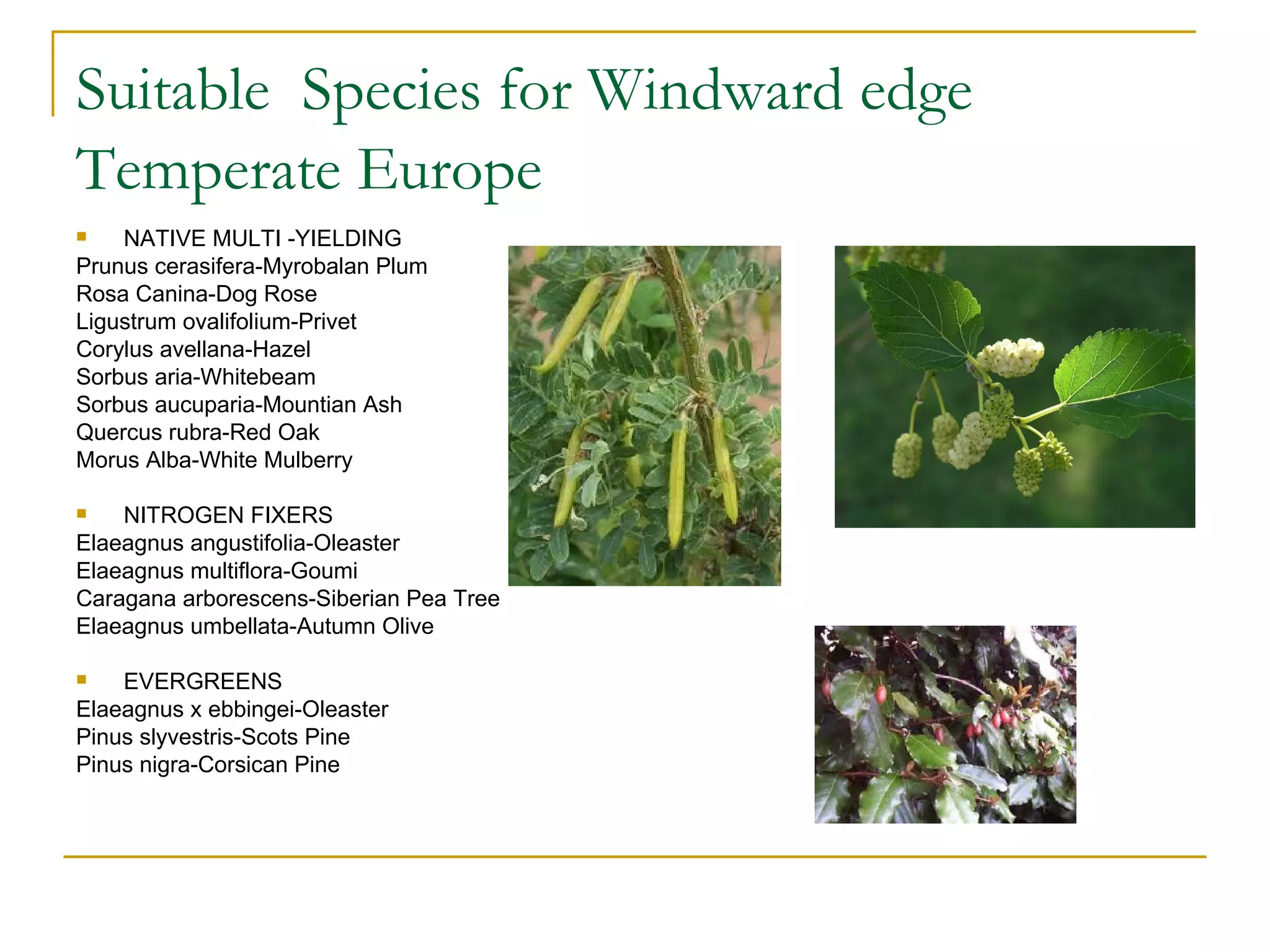
   NATIVE MULTI -YIELDING
Prunus cerasifera-Myrobalan Plum
Rosa Canina-Dog Rose
Ligustrum ovalifolium-Privet
Corylus avellana-Hazel
Sorbus aria-Whitebeam
Sorbus aucuparia-Mountian Ash
Quercus rubra-Red Oak
Morus Alba-White Mulberry

   NITROGEN FIXERS
Elaeagnus angustifolia-Oleaster
Elaeagnus multiflora-Goumi
Caragana arborescens-Siberian Pea Tree
Elaeagnus umbellata-Autumn Olive

   EVERGREENS
Elaeagnus x ebbingei-Oleaster
Pinus slyvestris-Scots Pine
Pinus nigra-Corsican Pine
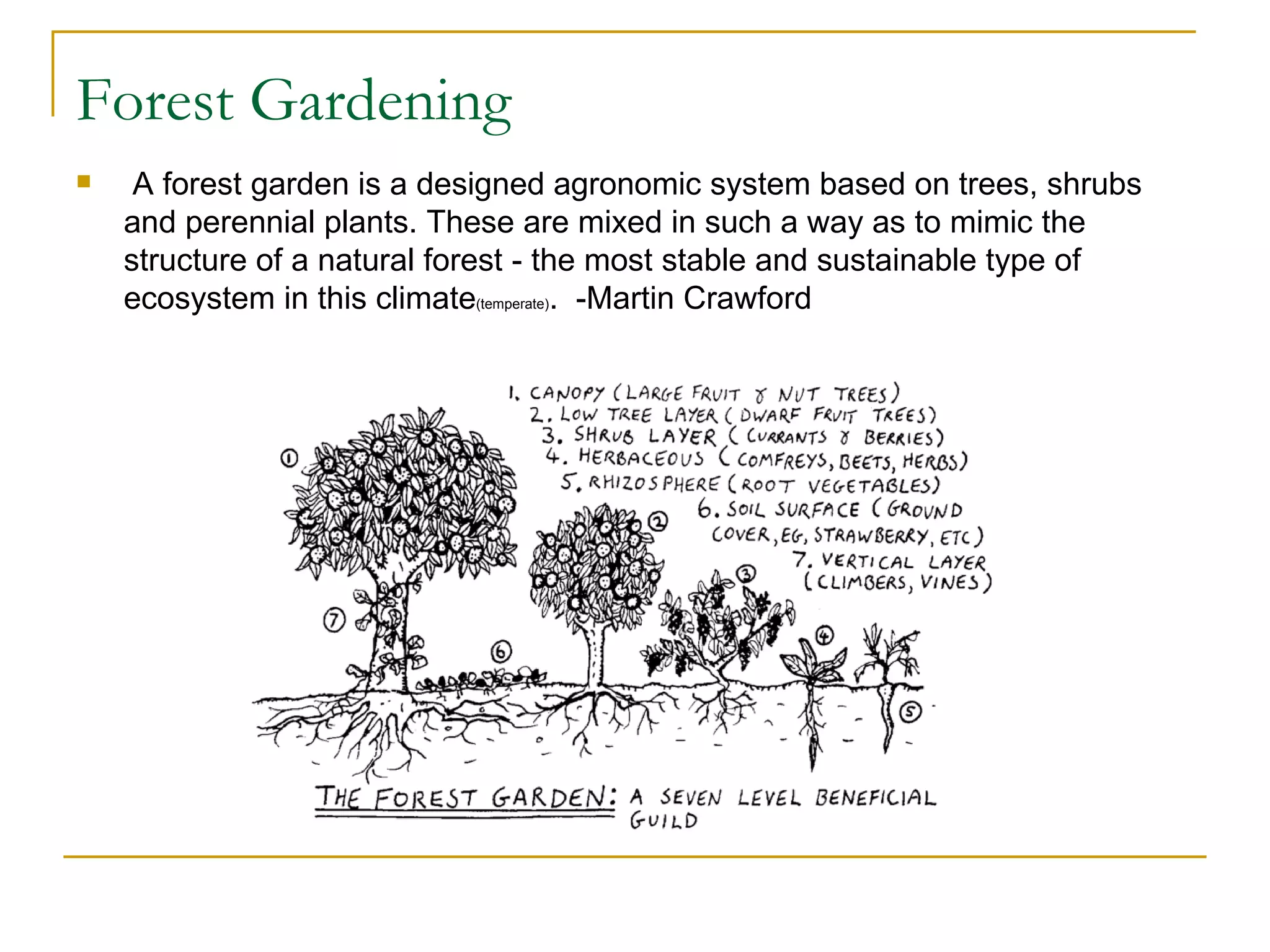
Forest Gardening
    A forest garden is a designed agronomic system based on trees, shrubs
    and perennial plants. These are mixed in such a way as to mimic the
    structure of a natural forest - the most stable and sustainable type of
    ecosystem in this climate(temperate). -Martin Crawford
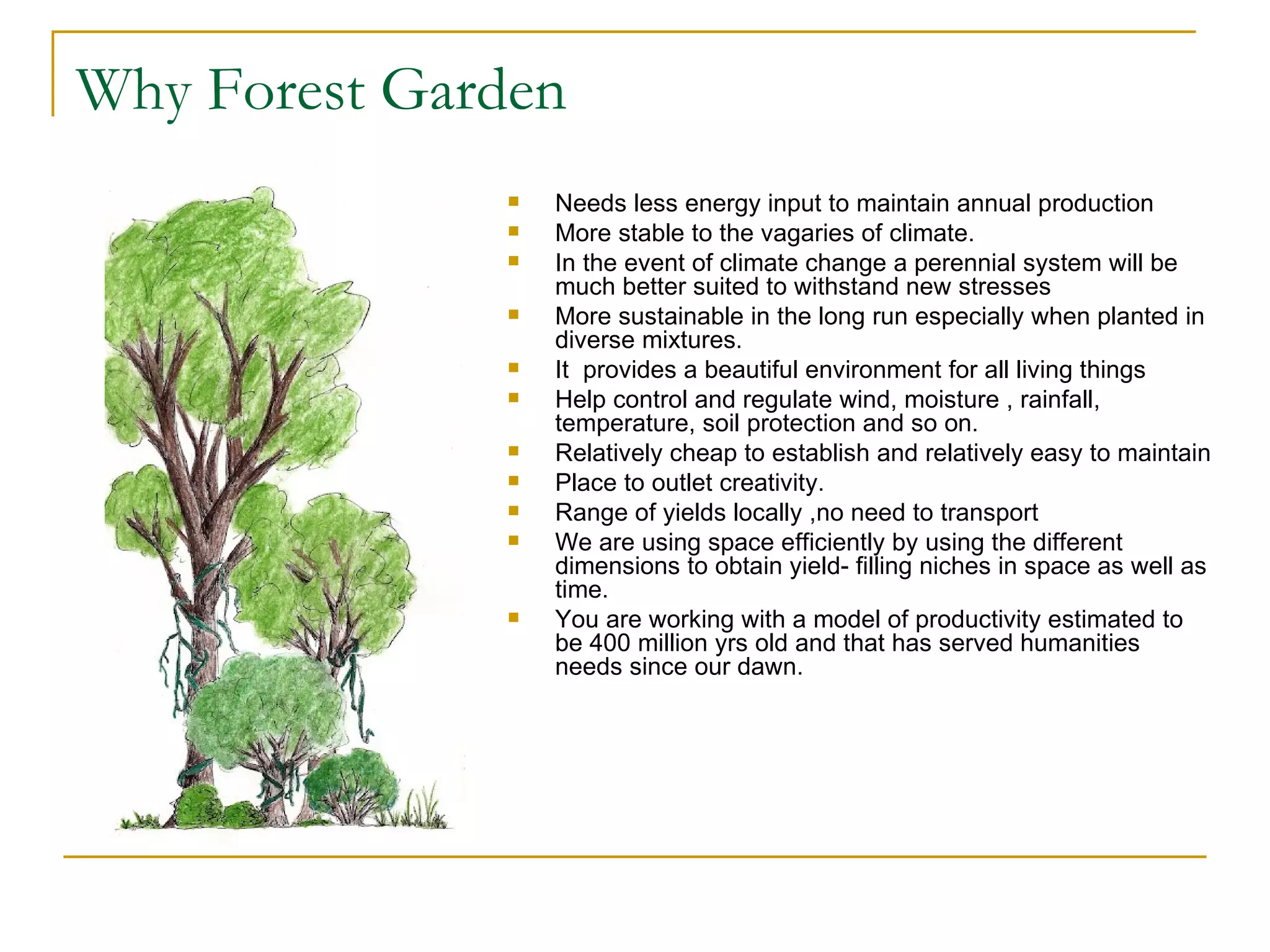
Why Forest Garden
                 Needs less energy input to maintain annual production
                 More stable to the vagaries of climate.
                 In the event of climate change a perennial system will be
                  much better suited to withstand new stresses
                 More sustainable in the long run especially when planted in
                  diverse mixtures.
                 It provides a beautiful environment for all living things
                 Help control and regulate wind, moisture , rainfall,
                  temperature, soil protection and so on.
                 Relatively cheap to establish and relatively easy to maintain
                 Place to outlet creativity.
                 Range of yields locally ,no need to transport
                 We are using space efficiently by using the different
                  dimensions to obtain yield- filling niches in space as well as
                  time.
                 You are working with a model of productivity estimated to
                  be 400 million yrs old and that has served humanities
                  needs since our dawn.
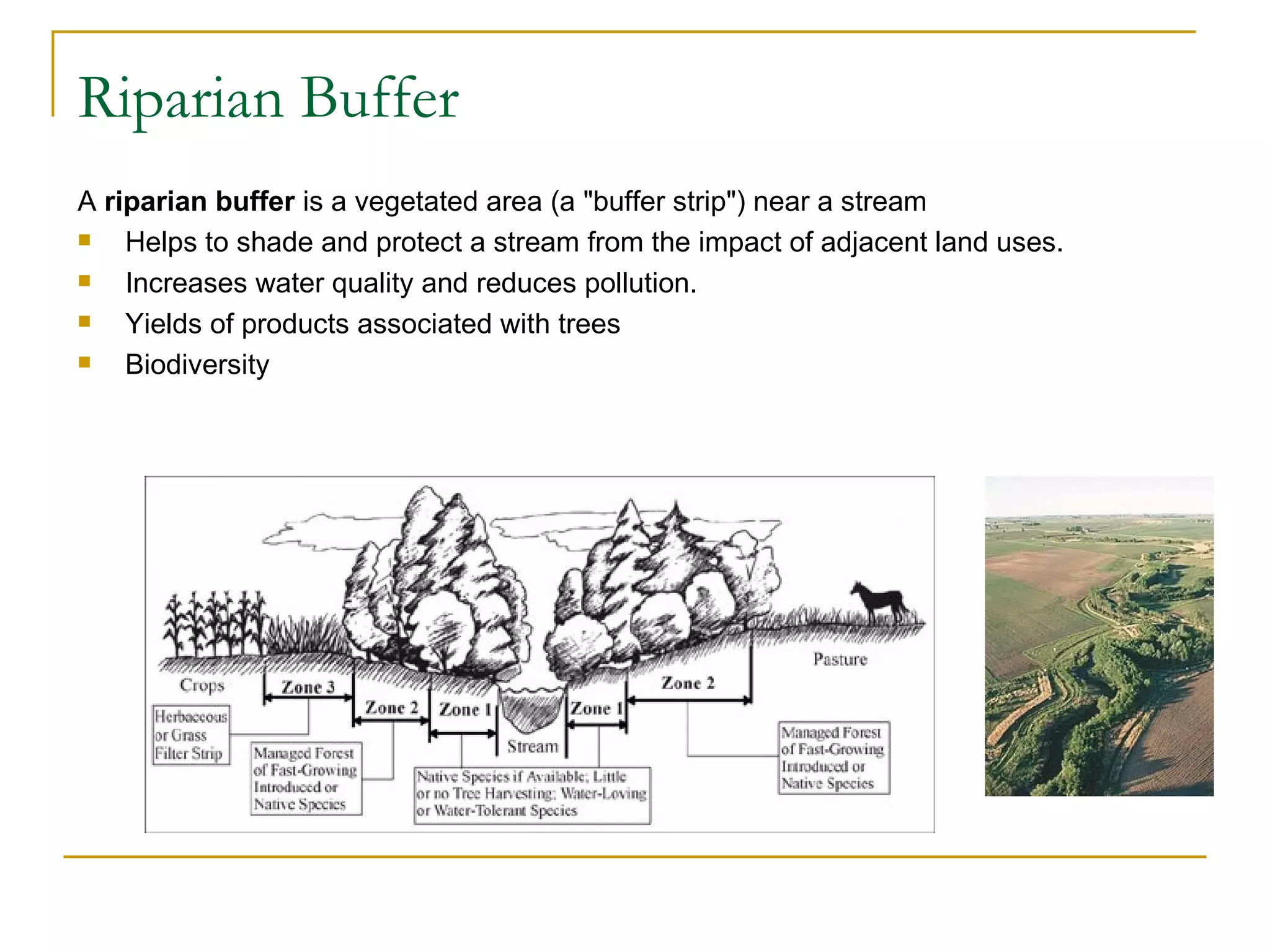
Riparian Buffer
A riparian buffer is a vegetated area (a "buffer strip") near a stream
   Helps to shade and protect a stream from the impact of adjacent land uses.
   Increases water quality and reduces pollution.
   Yields of products associated with trees
   Biodiversity
Silvoarable
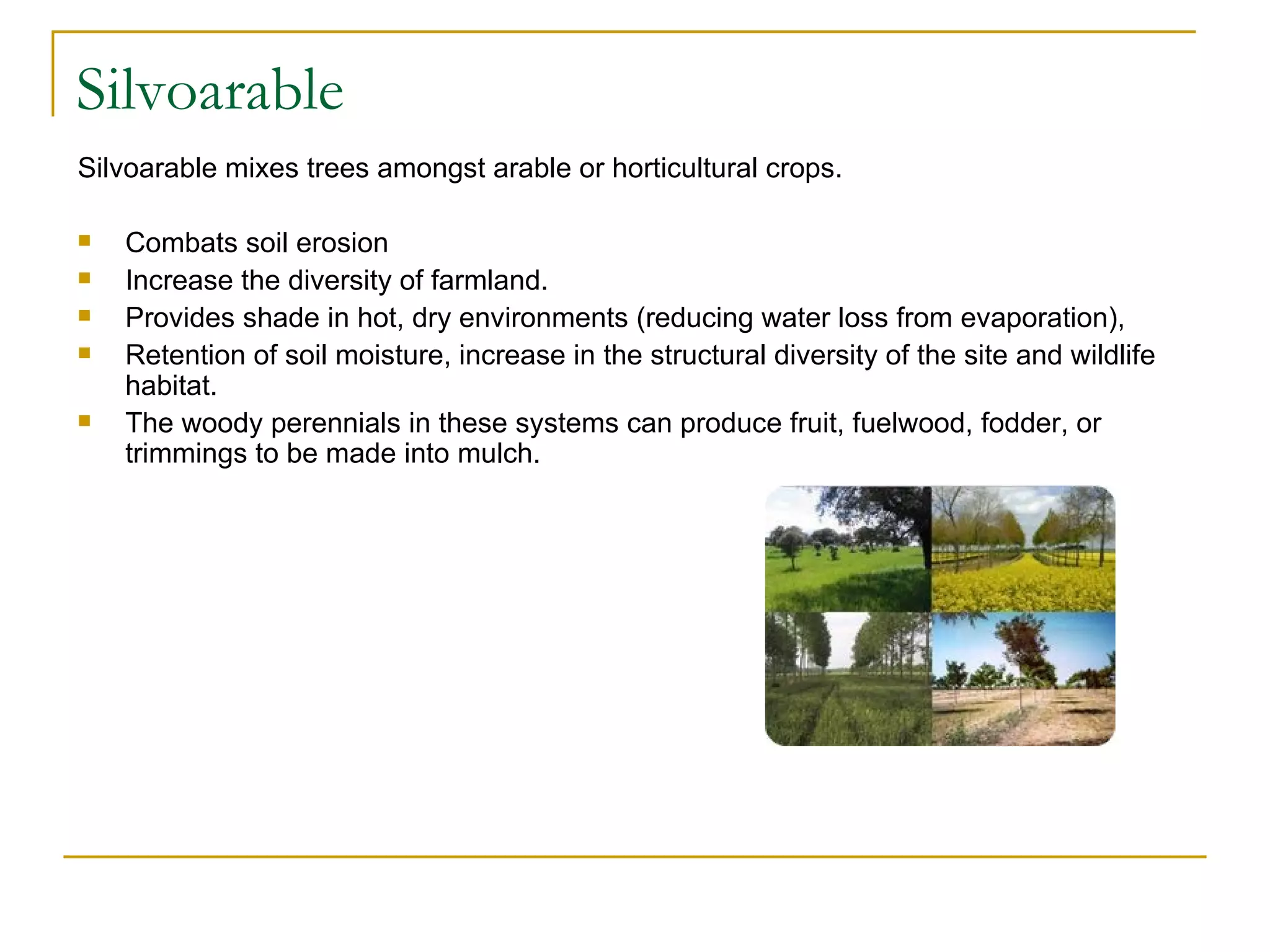
Silvoarable mixes trees amongst arable or horticultural crops.

   Combats soil erosion
   Increase the diversity of farmland.
   Provides shade in hot, dry environments (reducing water loss from evaporation),
   Retention of soil moisture, increase in the structural diversity of the site and wildlife
    habitat.
   The woody perennials in these systems can produce fruit, fuelwood, fodder, or
    trimmings to be made into mulch.
Silvopasture
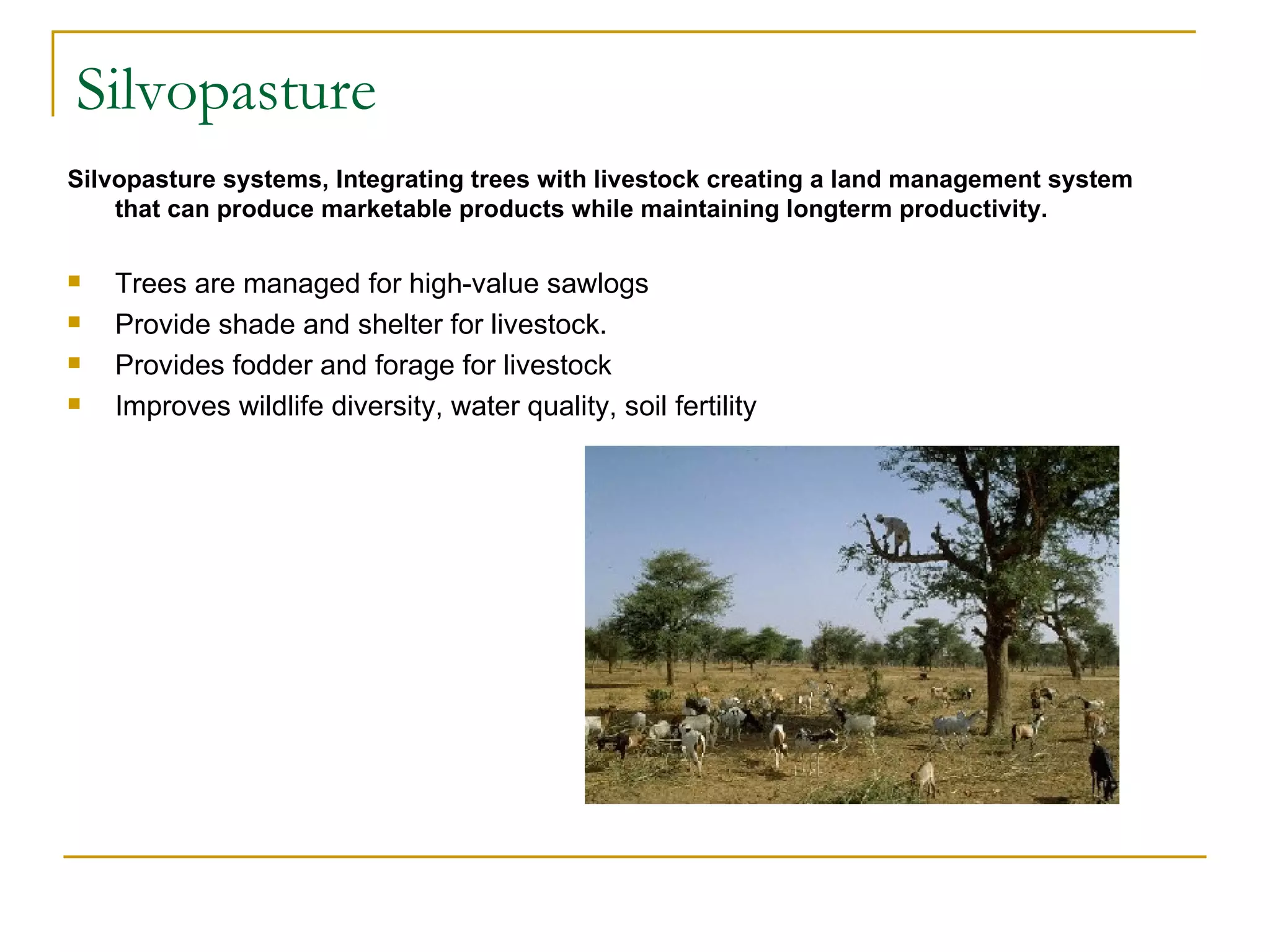
Silvopasture systems, Integrating trees with livestock creating a land management system 
    that can produce marketable products while maintaining longterm productivity.

   Trees are managed for high-value sawlogs
   Provide shade and shelter for livestock.
   Provides fodder and forage for livestock
   Improves wildlife diversity, water quality, soil fertility
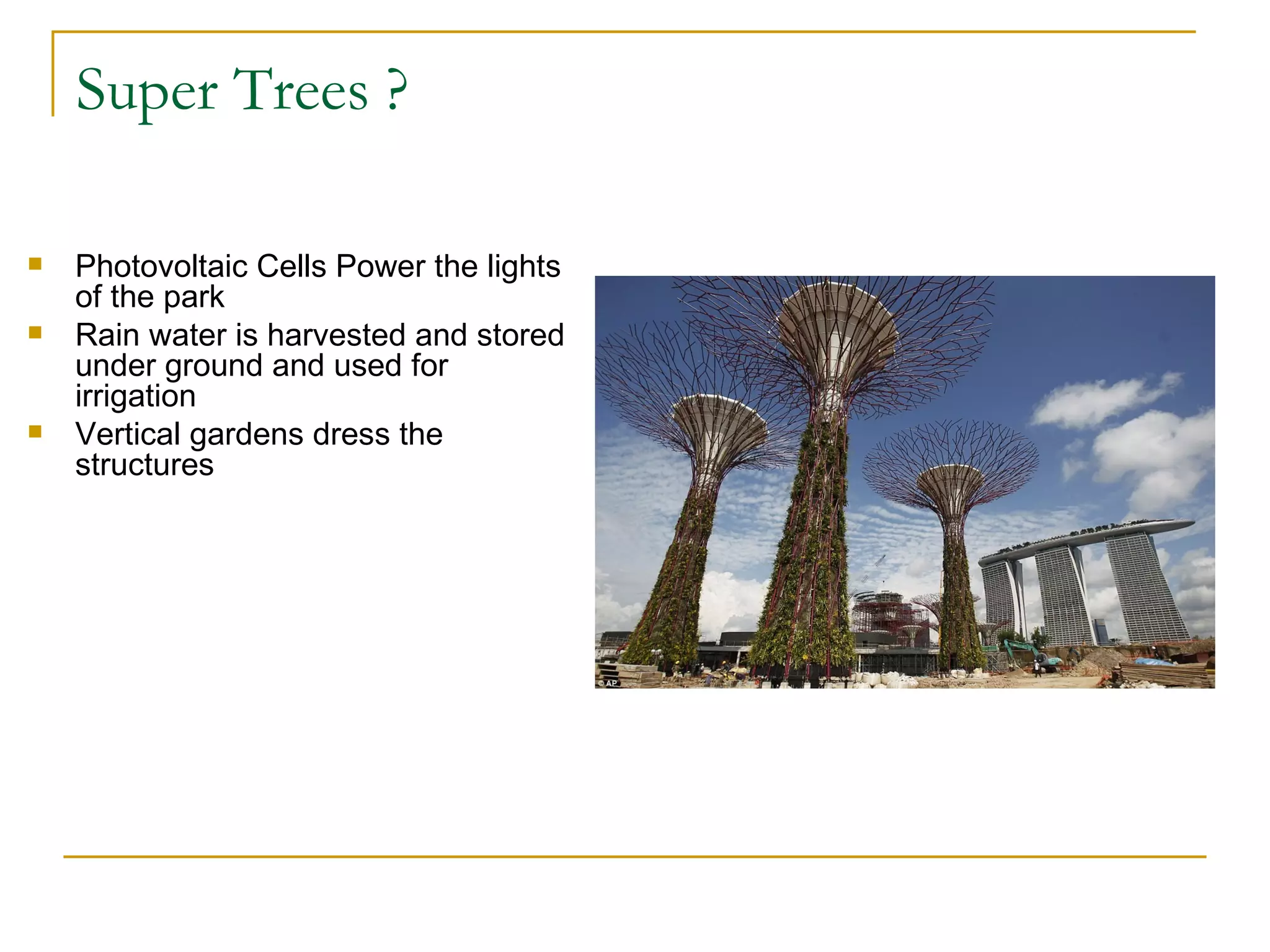
Super Trees ?

   Photovoltaic Cells Power the lights
    of the park
   Rain water is harvested and stored
    under ground and used for
    irrigation
   Vertical gardens dress the
    structures
Coppicing

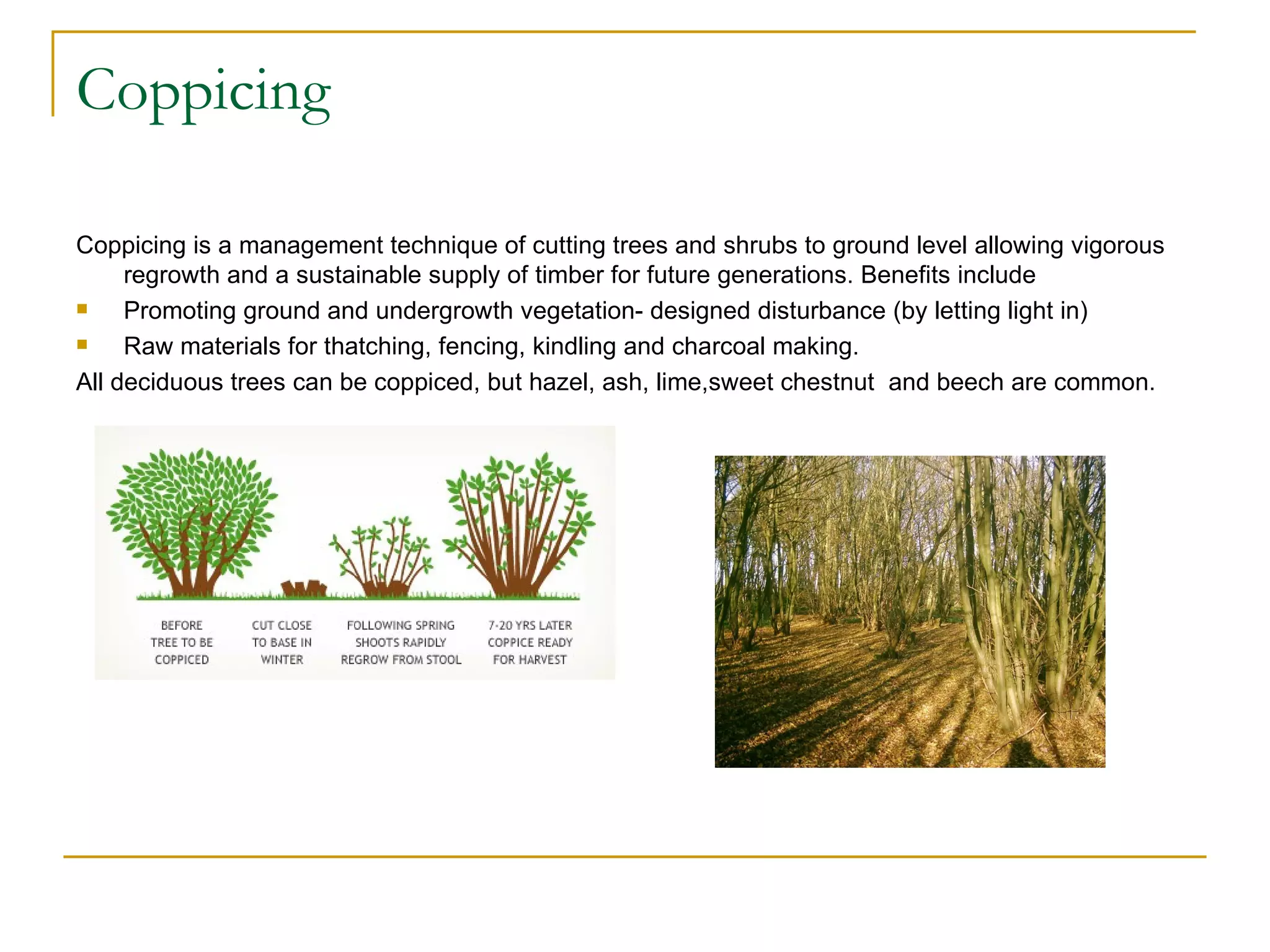
Coppicing is a management technique of cutting trees and shrubs to ground level allowing vigorous
     regrowth and a sustainable supply of timber for future generations. Benefits include
    Promoting ground and undergrowth vegetation- designed disturbance (by letting light in)
    Raw materials for thatching, fencing, kindling and charcoal making.
All deciduous trees can be coppiced, but hazel, ash, lime,sweet chestnut and beech are common.
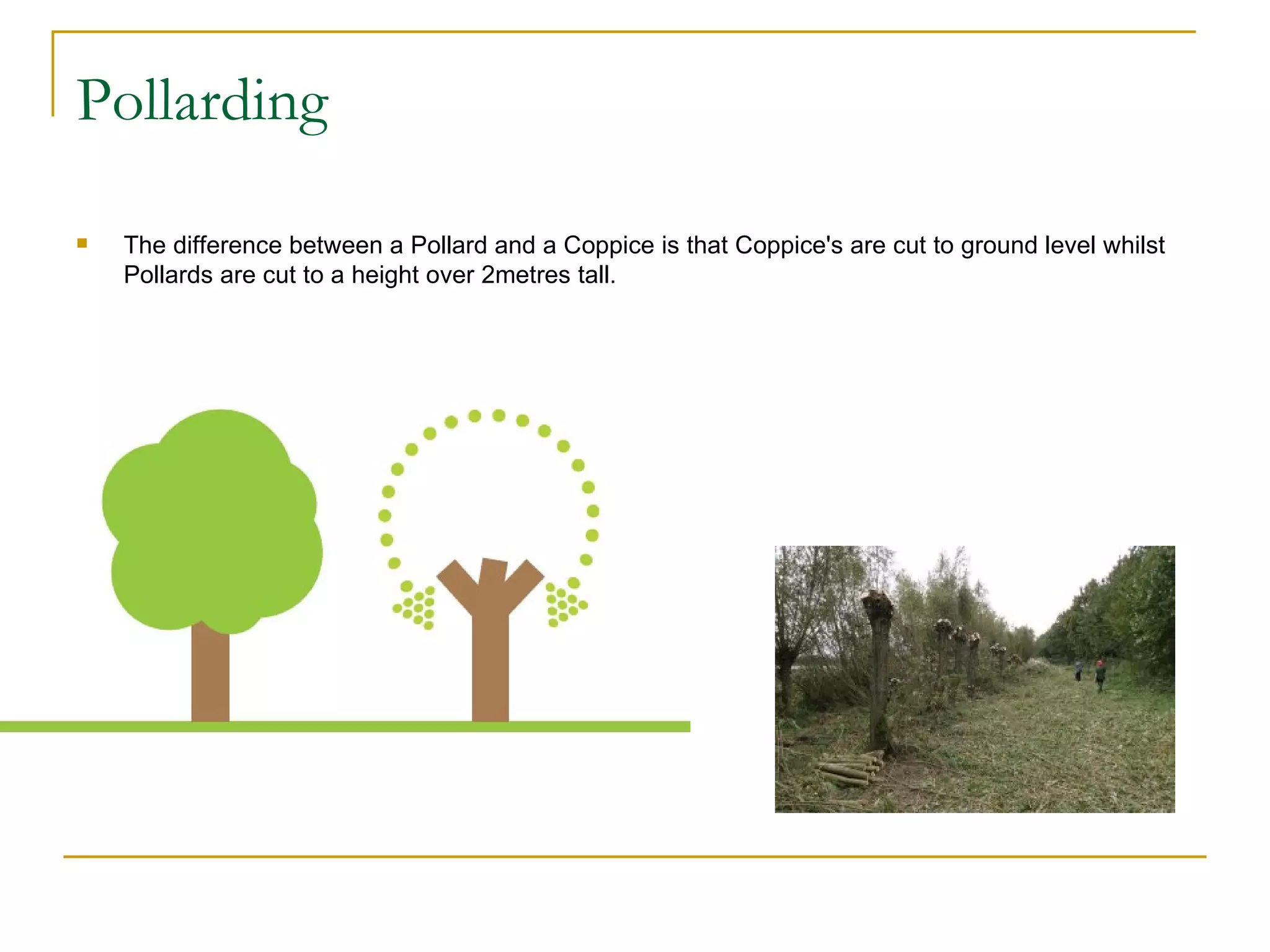
Pollarding

   The difference between a Pollard and a Coppice is that Coppice's are cut to ground level whilst
    Pollards are cut to a height over 2metres tall.

Working with trees

  • 1.
  • 2.
    Diversity of Trees  Trees turn up on the scene during the Devonian period some 400 Million yrs ago  They have since taken many forms and had a long time to settle in to a vast array of habitats and climates
  • 3.
  • 4.
    Outputs of aTree/Woodland
  • 5.
    Shelterbelt-Windbreak Also known asa wind break a shelter belt is a living barrier consisting of rows of trees and shrubs to mitigate wind speed in a given location.
  • 6.
    Shelterbelt-Windbreak Advantages •Protection of plants •Moderatingextreme temperatures •Preventing, or at least reducing, wind erosion •Reducing evaporation from the soil •Reducing transpiration from plants •Protecting buildings (reducing fuel and maintenance needs) •Biodiversity •Wildlife enhancing and attracting habitat •Create soil fertility •Production, food, fodder, fuel, biomass timber etc •Ornamental value
  • 7.
    Shelterbelt-Windbreak Disadvantages •Frosts •Root competition •Pests and diseases •Shading •Land consumption
  • 8.
  • 9.
  • 10.
  • 11.
  • 12.
    Selection of Species - Local plants - Rapid growth; - Wind firmness; - Good crown formation; - Deep root system, which do not spread into nearby fields; - Resistance to drought; - Evergreen species
  • 13.
    Suitable Species forWindward edge Temperate Europe  NATIVE MULTI -YIELDING Prunus cerasifera-Myrobalan Plum Rosa Canina-Dog Rose Ligustrum ovalifolium-Privet Corylus avellana-Hazel Sorbus aria-Whitebeam Sorbus aucuparia-Mountian Ash Quercus rubra-Red Oak Morus Alba-White Mulberry  NITROGEN FIXERS Elaeagnus angustifolia-Oleaster Elaeagnus multiflora-Goumi Caragana arborescens-Siberian Pea Tree Elaeagnus umbellata-Autumn Olive  EVERGREENS Elaeagnus x ebbingei-Oleaster Pinus slyvestris-Scots Pine Pinus nigra-Corsican Pine
  • 14.
    Forest Gardening  A forest garden is a designed agronomic system based on trees, shrubs and perennial plants. These are mixed in such a way as to mimic the structure of a natural forest - the most stable and sustainable type of ecosystem in this climate(temperate). -Martin Crawford
  • 15.
    Why Forest Garden  Needs less energy input to maintain annual production  More stable to the vagaries of climate.  In the event of climate change a perennial system will be much better suited to withstand new stresses  More sustainable in the long run especially when planted in diverse mixtures.  It provides a beautiful environment for all living things  Help control and regulate wind, moisture , rainfall, temperature, soil protection and so on.  Relatively cheap to establish and relatively easy to maintain  Place to outlet creativity.  Range of yields locally ,no need to transport  We are using space efficiently by using the different dimensions to obtain yield- filling niches in space as well as time.  You are working with a model of productivity estimated to be 400 million yrs old and that has served humanities needs since our dawn.
  • 16.
    Riparian Buffer A riparian bufferis a vegetated area (a "buffer strip") near a stream  Helps to shade and protect a stream from the impact of adjacent land uses.  Increases water quality and reduces pollution.  Yields of products associated with trees  Biodiversity
  • 17.
    Silvoarable Silvoarable mixes treesamongst arable or horticultural crops.  Combats soil erosion  Increase the diversity of farmland.  Provides shade in hot, dry environments (reducing water loss from evaporation),  Retention of soil moisture, increase in the structural diversity of the site and wildlife habitat.  The woody perennials in these systems can produce fruit, fuelwood, fodder, or trimmings to be made into mulch.
  • 18.
    Silvopasture Silvopasture systems, Integrating trees with livestock creating a land management system  that can produce marketable products while maintaining longterm productivity.  Trees are managed for high-value sawlogs  Provide shade and shelter for livestock.  Provides fodder and forage for livestock  Improves wildlife diversity, water quality, soil fertility
  • 19.
    Super Trees ?  Photovoltaic Cells Power the lights of the park  Rain water is harvested and stored under ground and used for irrigation  Vertical gardens dress the structures
  • 20.
    Coppicing Coppicing is amanagement technique of cutting trees and shrubs to ground level allowing vigorous regrowth and a sustainable supply of timber for future generations. Benefits include  Promoting ground and undergrowth vegetation- designed disturbance (by letting light in)  Raw materials for thatching, fencing, kindling and charcoal making. All deciduous trees can be coppiced, but hazel, ash, lime,sweet chestnut and beech are common.
  • 21.
    Pollarding  The difference between a Pollard and a Coppice is that Coppice's are cut to ground level whilst Pollards are cut to a height over 2metres tall.