Natural Landscape Design: Environmentally Friendly Landscape Design  for the Homeowner LISA MEDDIN Landscape Designer Harmony Design Northwest 757-207-6318 www.HarmonyDesignNW.com
4 Natural Design Principles: 1.  Use natural site conditions rather than “conquering” them by incorporating the existing site conditions of your space. 2.  Consider light, water, soil, slope, environmental conditions (sound,  neighbors, etc.) and your home’s architecture. 3.  Replicate nature – when left to her own devices, plants form symbiotic ecosystems that work in harmony.  For example, if you have a shady area, copy what nature does in the forest naturally by massing shade loving plants, creating different levels (groundcover, understory plants, small trees, large trees), and focusing on shape, texture and variegated foliage instead of blooms to add interest; 4.  Locate plants to conserve energy – use large shade trees on the western side of your property to cool, plant tall evergreen hedges to protect from prevailing winds
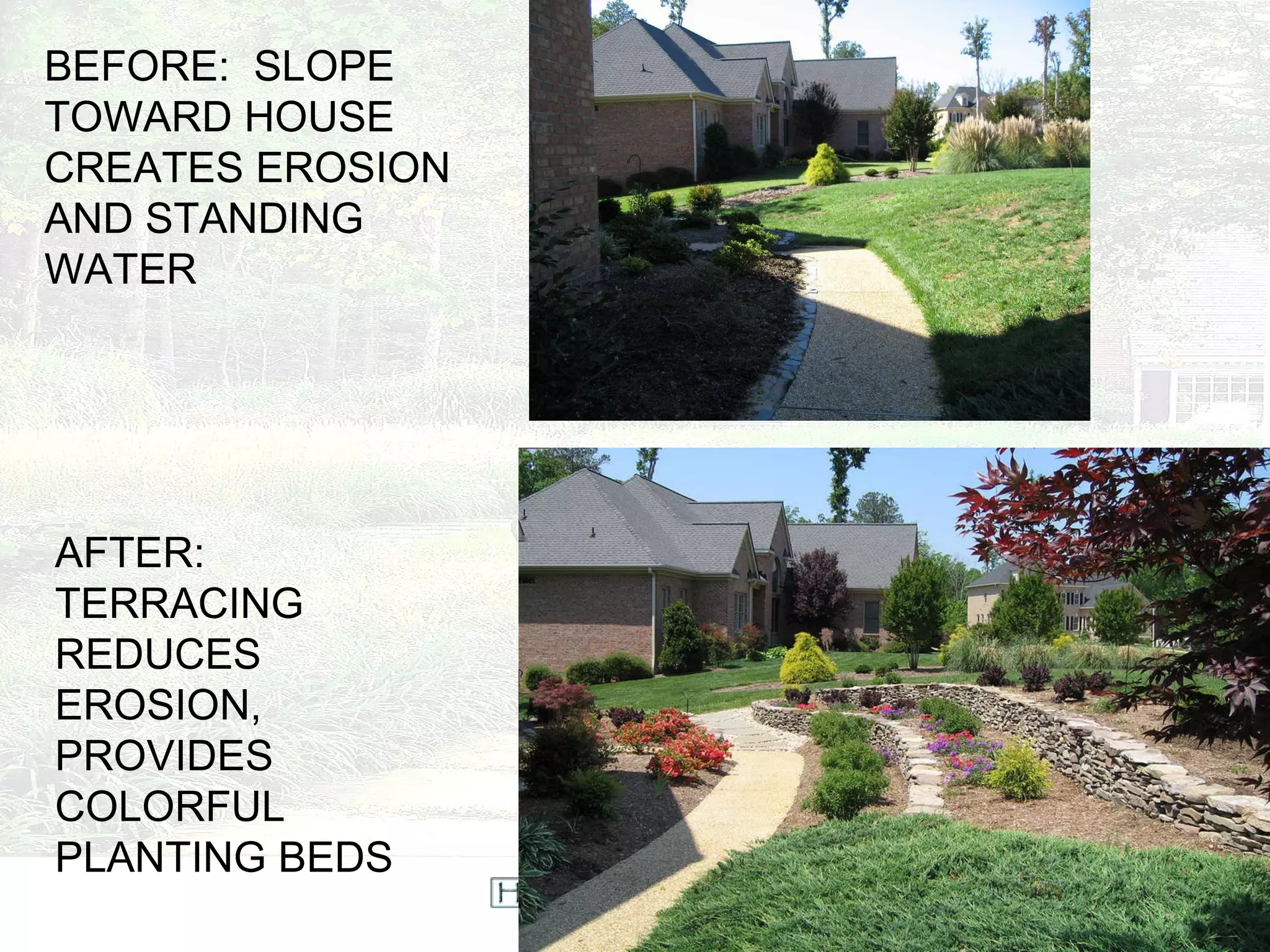
BEFORE:  SLOPE TOWARD HOUSE CREATES EROSION AND STANDING WATER AFTER:  TERRACING REDUCES EROSION, PROVIDES COLORFUL PLANTING BEDS
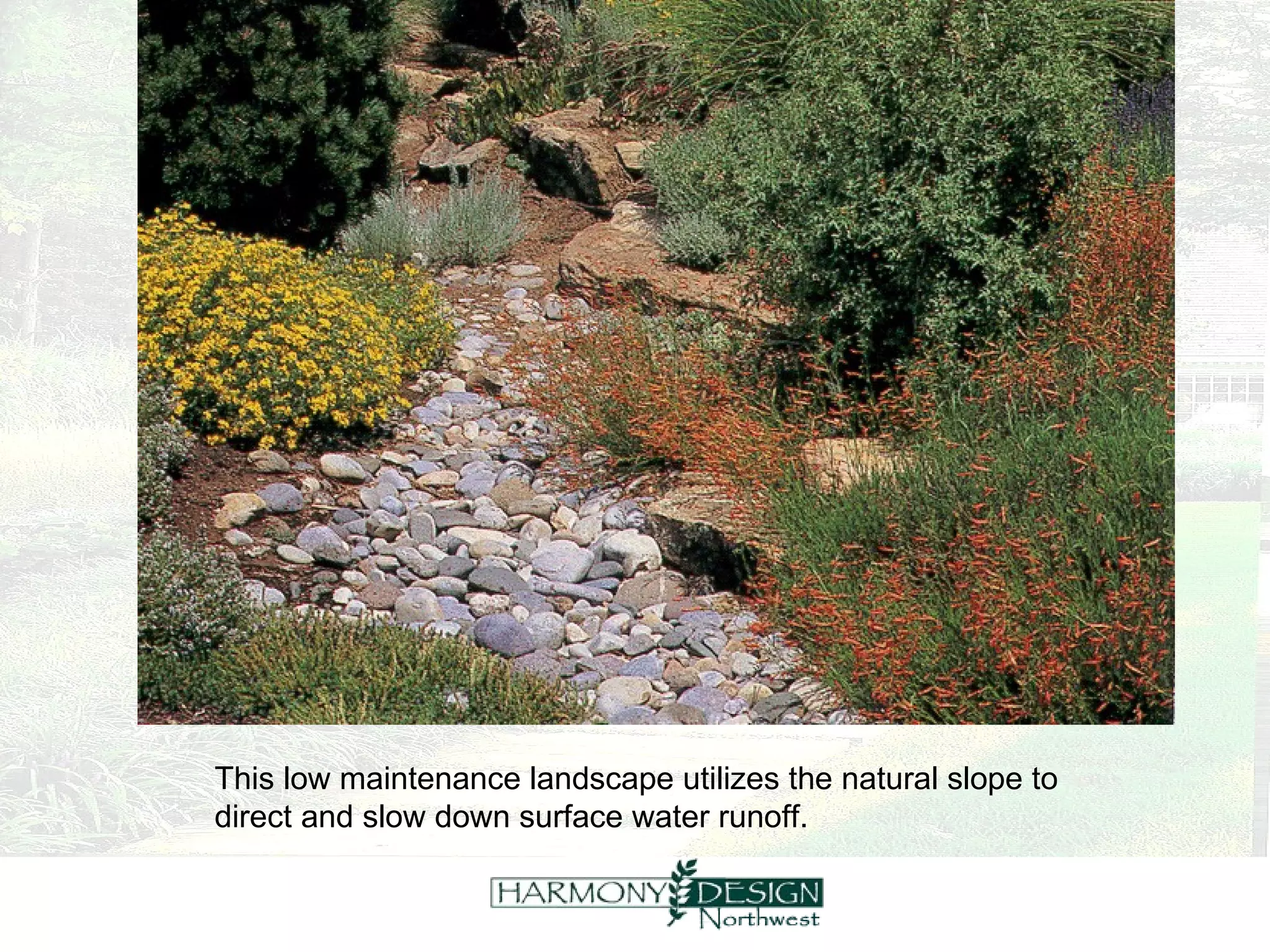
This low maintenance landscape utilizes the natural slope to  direct and slow down surface water runoff.
Create Diversity: Provide food, water and nesting sites  for wildlife Add water features Use evergreens for winter nesting  and food sources Reduce “monoculture,” which can  lead to disease and insect problems.
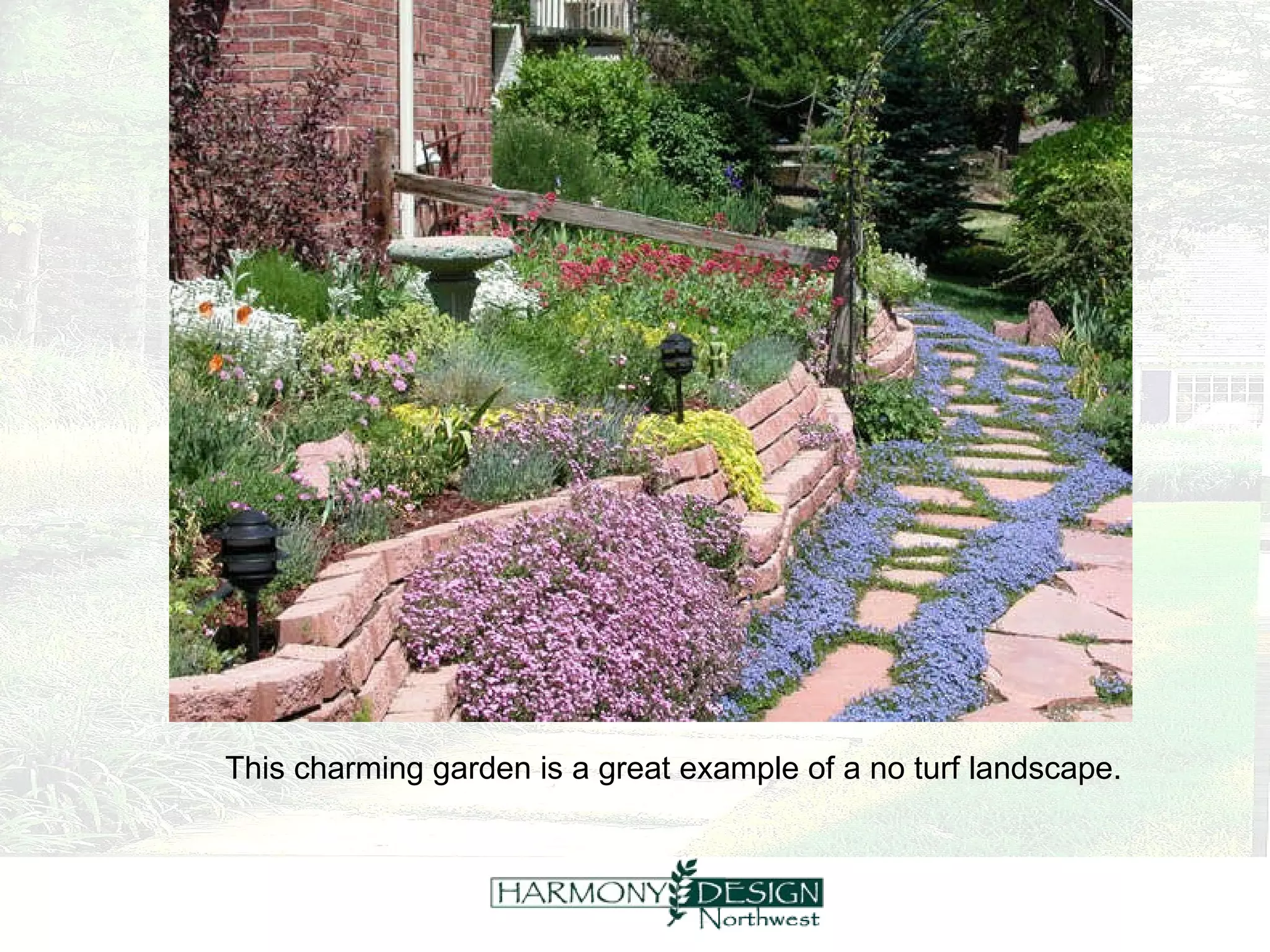
This charming garden is a great example of a no turf landscape.
Drought Resistant Landscaping: Use drought tolerant plants including native plants,  groundcovers, and ornamental grasses. Reduce water hungry turf by adding mulched planting beds  and permeable hardscapes.  Use turf as “green paths”  vs. huge lawns. Use drip irrigation for the first few years; then no irrigation. Enhance soil with compost. Reuse stormwater runoff by using rain barrels under gutters  and collecting air conditioning runoff. Group plants together by water needs.  Place highest need plants  near house for easy irrigation, lower needs farther away. Use 2-3” of shredded hardwood or pine needle mulch.  Avoid cypress mulch…it’s a threatened resource.
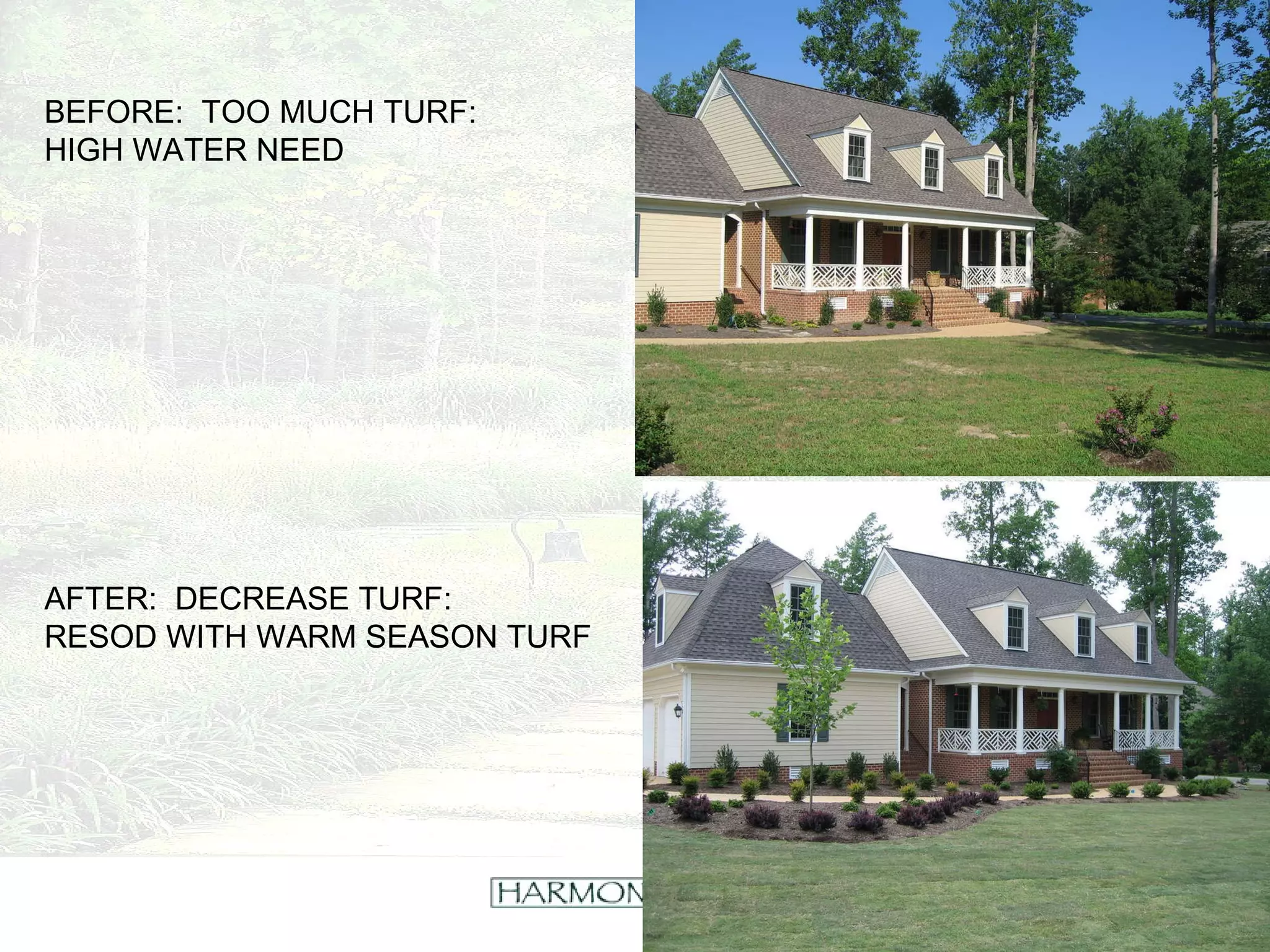
BEFORE:  TOO MUCH TURF: HIGH WATER NEED AFTER:  DECREASE TURF: RESOD WITH WARM SEASON TURF
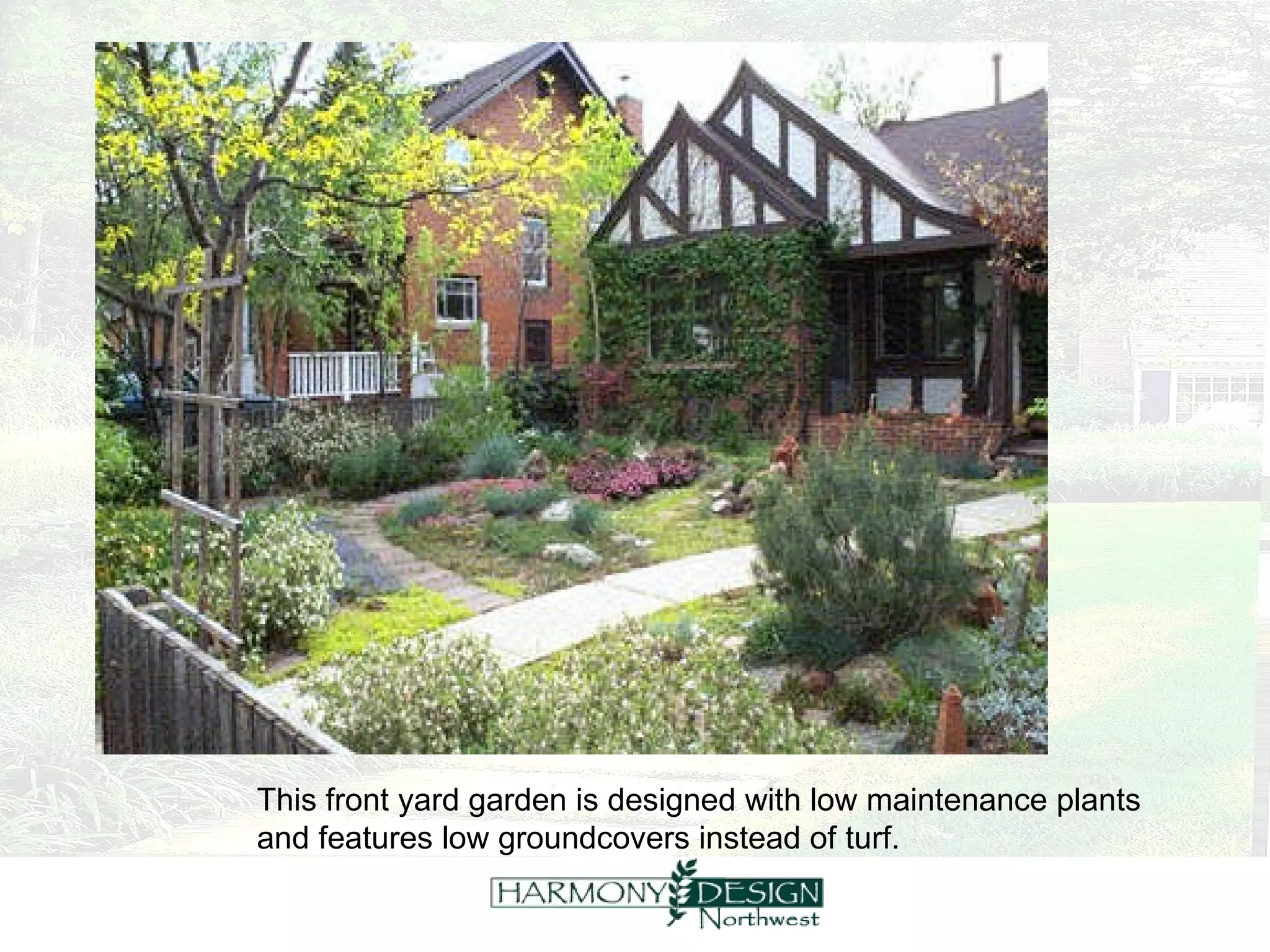
This front yard garden is designed with low maintenance plants and features low groundcovers instead of turf.
Use Beneficial & Native Plants:   Adapted to local climate and soil.  Require minimal maintenance such as watering,  fertilizer or pesticides.  Reduces pollutants that wash into local streams,  rivers and the ocean.  Help wildlife by providing food, shelter and  nesting sites.
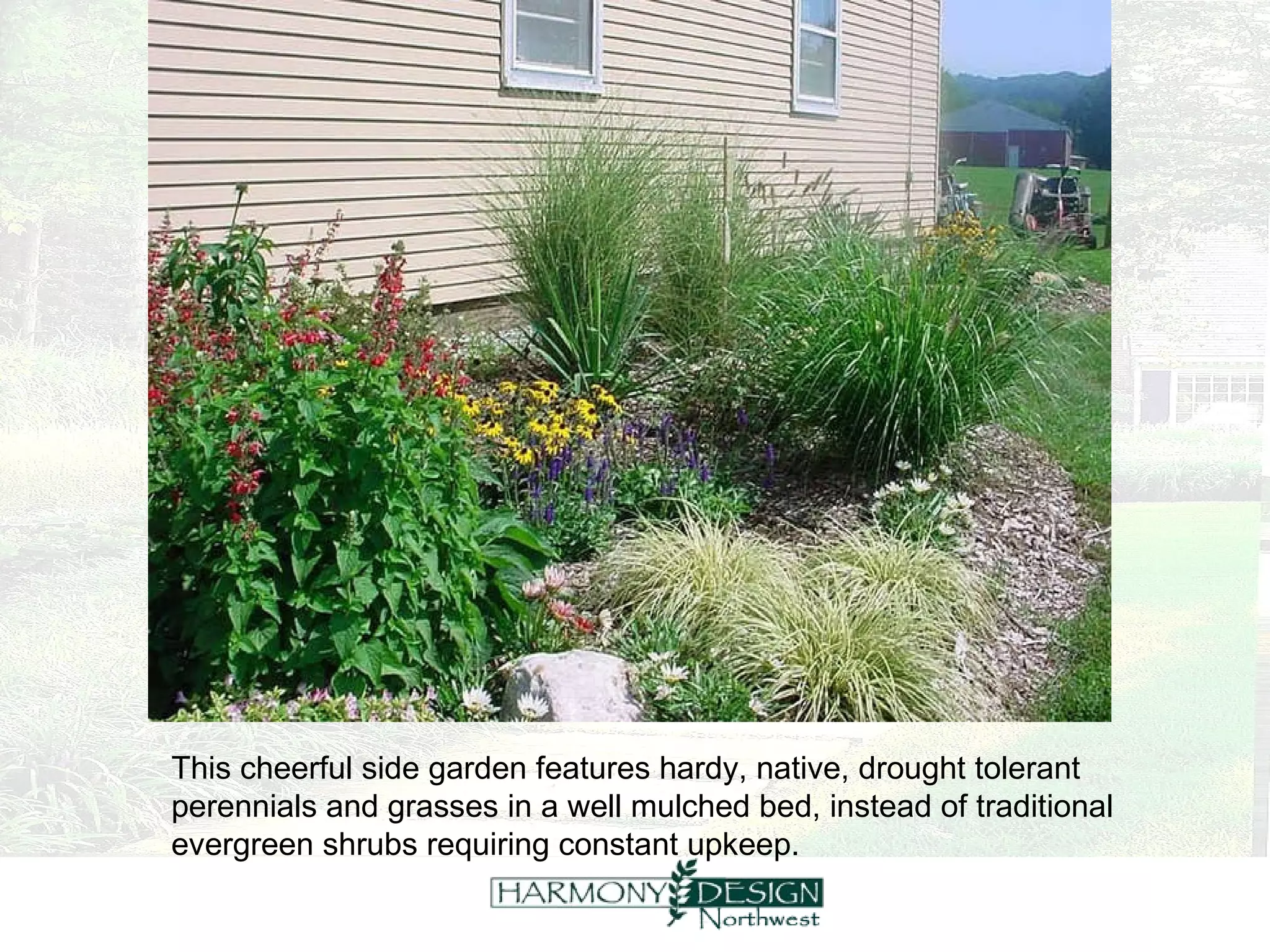
This cheerful side garden features hardy, native, drought tolerant perennials and grasses in a well mulched bed, instead of traditional evergreen shrubs requiring constant upkeep.
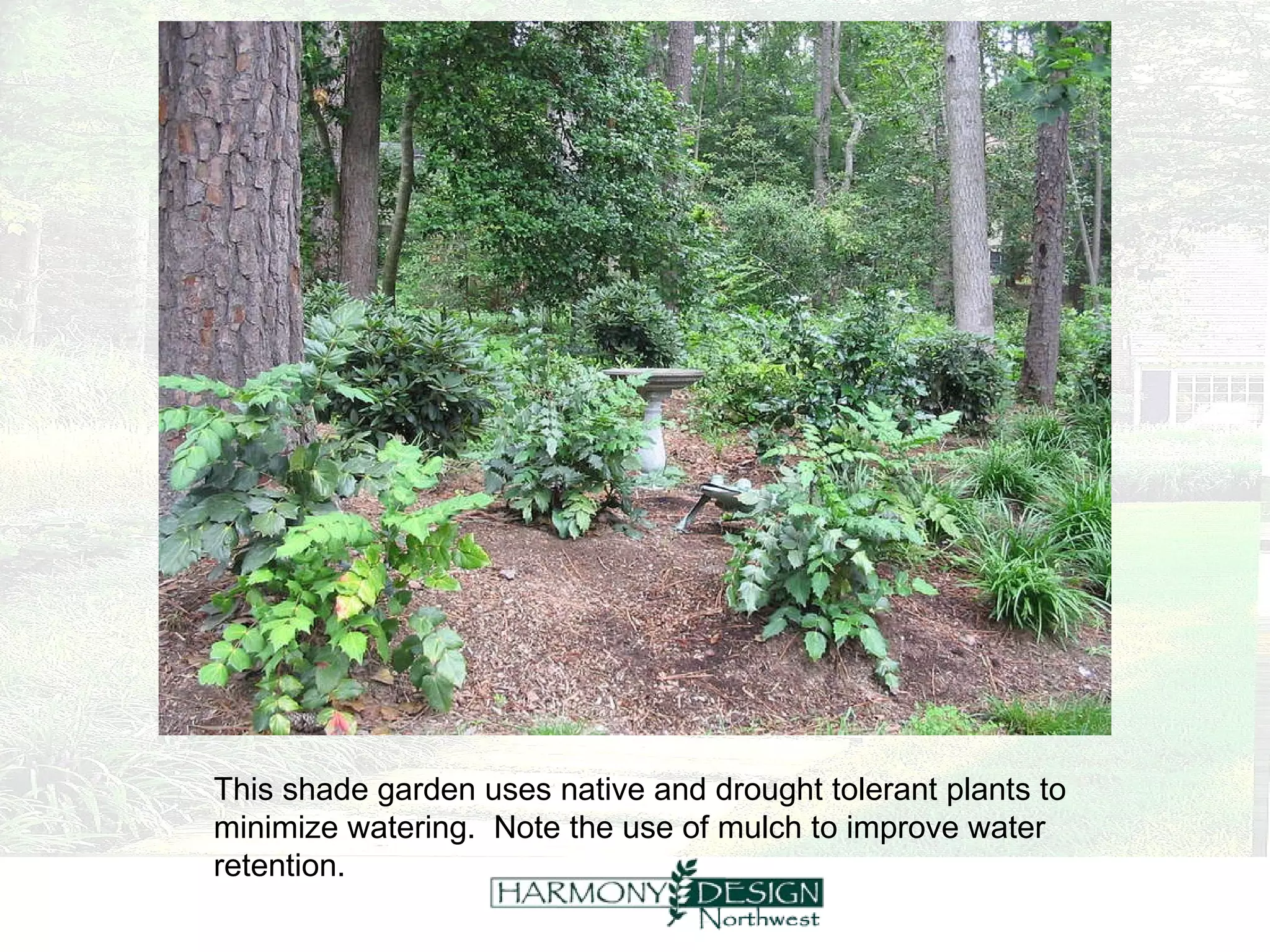
This shade garden uses native and drought tolerant plants to minimize watering.  Note the use of mulch to improve water retention.

Environmetally Sensitive Design 6.10.00

  • 1.
    Natural Landscape Design:Environmentally Friendly Landscape Design for the Homeowner LISA MEDDIN Landscape Designer Harmony Design Northwest 757-207-6318 www.HarmonyDesignNW.com
  • 2.
    4 Natural DesignPrinciples: 1. Use natural site conditions rather than “conquering” them by incorporating the existing site conditions of your space. 2. Consider light, water, soil, slope, environmental conditions (sound, neighbors, etc.) and your home’s architecture. 3. Replicate nature – when left to her own devices, plants form symbiotic ecosystems that work in harmony. For example, if you have a shady area, copy what nature does in the forest naturally by massing shade loving plants, creating different levels (groundcover, understory plants, small trees, large trees), and focusing on shape, texture and variegated foliage instead of blooms to add interest; 4. Locate plants to conserve energy – use large shade trees on the western side of your property to cool, plant tall evergreen hedges to protect from prevailing winds
  • 3.
    BEFORE: SLOPETOWARD HOUSE CREATES EROSION AND STANDING WATER AFTER: TERRACING REDUCES EROSION, PROVIDES COLORFUL PLANTING BEDS
  • 4.
    This low maintenancelandscape utilizes the natural slope to direct and slow down surface water runoff.
  • 5.
    Create Diversity: Providefood, water and nesting sites for wildlife Add water features Use evergreens for winter nesting and food sources Reduce “monoculture,” which can lead to disease and insect problems.
  • 6.
    This charming gardenis a great example of a no turf landscape.
  • 7.
    Drought Resistant Landscaping:Use drought tolerant plants including native plants, groundcovers, and ornamental grasses. Reduce water hungry turf by adding mulched planting beds and permeable hardscapes. Use turf as “green paths” vs. huge lawns. Use drip irrigation for the first few years; then no irrigation. Enhance soil with compost. Reuse stormwater runoff by using rain barrels under gutters and collecting air conditioning runoff. Group plants together by water needs. Place highest need plants near house for easy irrigation, lower needs farther away. Use 2-3” of shredded hardwood or pine needle mulch. Avoid cypress mulch…it’s a threatened resource.
  • 8.
    BEFORE: TOOMUCH TURF: HIGH WATER NEED AFTER: DECREASE TURF: RESOD WITH WARM SEASON TURF
  • 9.
    This front yardgarden is designed with low maintenance plants and features low groundcovers instead of turf.
  • 10.
    Use Beneficial &Native Plants: Adapted to local climate and soil. Require minimal maintenance such as watering, fertilizer or pesticides. Reduces pollutants that wash into local streams, rivers and the ocean. Help wildlife by providing food, shelter and nesting sites.
  • 11.
    This cheerful sidegarden features hardy, native, drought tolerant perennials and grasses in a well mulched bed, instead of traditional evergreen shrubs requiring constant upkeep.
  • 12.
    This shade gardenuses native and drought tolerant plants to minimize watering. Note the use of mulch to improve water retention.