

Work Psychology  Training
Training  The term training refers to the acquisition of knowledge, skills, and competencies as a result of the teaching of vocational or practical skills and knowledge that relate to specific useful competencies.
Training  The act of changing behaviors and attitude by imparting knowledge and skills – is an essential part of the strategy of any organization that needs to move forward. It is a way of changing the way a business works and of making sure that all its employees perform to the best of their abilities. However, deciding what training will benefit an organization is far from a simple process. It is not possible – because of financial and time constraints – to offer training to all staff. It must be a considered decision taken with the current and the future needs of the company in mind.
Goals of Training  The goals of the training program should relate directly to the needs determined by the assessment process outlined above. Course objectives should clearly state what behavior or skill will be changed as a result of the training and should relate to the mission and strategic plan of the company. Goals should include milestones to help take the employee from where he or she is today to where the firm wants him or her in the future. Setting goals, helps to evaluate the training program and also to motivate employees. Allowing employees to participate in setting goals increases the probability of success.
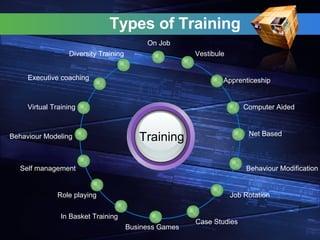
Types of Training  Training  Vestibule  In Basket Training Computer Aided Behaviour Modification Behaviour Modeling Role playing Executive coaching  Virtual Training Self management  Diversity Training  On Job  Apprenticeship  Net Based  Job Rotation Case Studies Business Games
Career development and planning
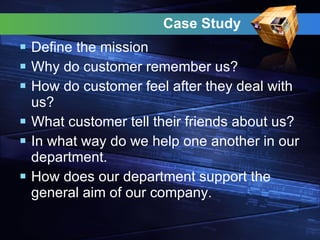
Case Study  Define the mission  Why do customer remember us? How do customer feel after they deal with us? What customer tell their friends about us? In what way do we help one another in our department. How does our department support the general aim of our company.
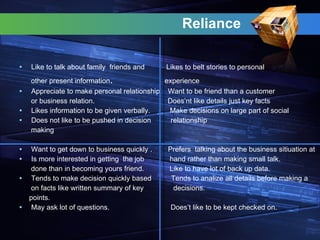
Reliance  Like to talk about family  friends and  Likes to belt stories to personal other present information .  experience   Appreciate to make personal relationship  Want to be friend than a customer or business relation.  Does’nt like details just key facts  Likes information to be given verbally.  Make decisions on large part of social  Does not like to be pushed in decision  relationship making Want to get down to business quickly .  Prefers  talking about the business sitiuation at Is more interested in getting  the job  hand rather than making small talk. done than in becoming yours friend.  Like to have lot of back up data. Tends to make decision quickly based  Tends to analize all details before making a on facts like written summary of key  decisions. points. May ask lot of questions.  Does’t like to be kept checked on.
Thank You !

Work Physiology

  • 1.
  • 2.
    Training Theterm training refers to the acquisition of knowledge, skills, and competencies as a result of the teaching of vocational or practical skills and knowledge that relate to specific useful competencies.
  • 3.
    Training Theact of changing behaviors and attitude by imparting knowledge and skills – is an essential part of the strategy of any organization that needs to move forward. It is a way of changing the way a business works and of making sure that all its employees perform to the best of their abilities. However, deciding what training will benefit an organization is far from a simple process. It is not possible – because of financial and time constraints – to offer training to all staff. It must be a considered decision taken with the current and the future needs of the company in mind.
  • 4.
    Goals of Training The goals of the training program should relate directly to the needs determined by the assessment process outlined above. Course objectives should clearly state what behavior or skill will be changed as a result of the training and should relate to the mission and strategic plan of the company. Goals should include milestones to help take the employee from where he or she is today to where the firm wants him or her in the future. Setting goals, helps to evaluate the training program and also to motivate employees. Allowing employees to participate in setting goals increases the probability of success.
  • 5.
    Types of Training Training Vestibule In Basket Training Computer Aided Behaviour Modification Behaviour Modeling Role playing Executive coaching Virtual Training Self management Diversity Training On Job Apprenticeship Net Based Job Rotation Case Studies Business Games
  • 6.
  • 7.
    Case Study Define the mission Why do customer remember us? How do customer feel after they deal with us? What customer tell their friends about us? In what way do we help one another in our department. How does our department support the general aim of our company.
  • 8.
    Reliance Liketo talk about family friends and Likes to belt stories to personal other present information . experience Appreciate to make personal relationship Want to be friend than a customer or business relation. Does’nt like details just key facts Likes information to be given verbally. Make decisions on large part of social Does not like to be pushed in decision relationship making Want to get down to business quickly . Prefers talking about the business sitiuation at Is more interested in getting the job hand rather than making small talk. done than in becoming yours friend. Like to have lot of back up data. Tends to make decision quickly based Tends to analize all details before making a on facts like written summary of key decisions. points. May ask lot of questions. Does’t like to be kept checked on.
  • 9.