The term
vocabulary comes
from the old Latin
word vocabulum,
meaning
“designation or
name.”
A. Collocations
to group or to
place together in
some order.
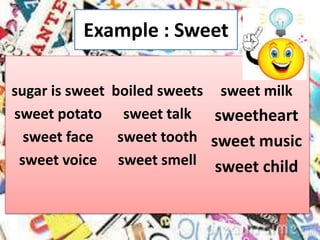
Example : Sweet
sugar is sweet
sweet potato
sweet face
sweet voice
boiled sweets
sweet talk
sweet tooth
sweet smell
sweet milk
sweetheart
sweet music
sweet child
B. Clines
• A graded sequence of difference within
a species
• Comes from the Greek klino meaning
“to slope”
• Words in a cline fit into the same
statement, but each would have a
different meaning.
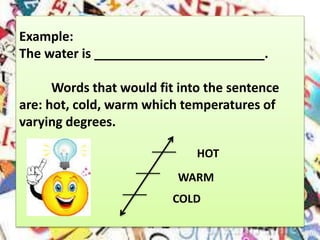
Example:
The water is ________________________.
Words that would fit into the sentence
are: hot, cold, warm which temperatures of
varying degrees.
HOT
WARM
COLD
C. Cluster
Group of similar or related things.
Such words may not be clined
because it is not easy to show a
sequential degree of meaning. Thus
they may be written around a word
which serves as a cover term.
Examples:
attractive, lovely, beautiful,
charming (synonyms)
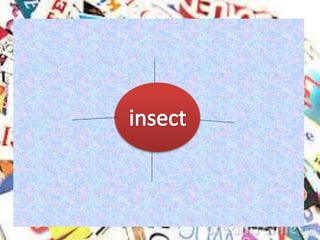
fly, mosquito, ant, locust (insect –
same group)
operating room, syringe, doctor,
emergency room ( word that are
evoked when you say hospital)
D. Configuration
It is the arrangement of the parts
of something.
It refers to the information given
through the size and shape of
the letter as well as through the
length or the number of letters
there are in the word.
It’s a Cheer !
Answer :
Hip Hip Hooray !
E. Creativity
To cause or to come into
existence.
This study technique is
characterized by originality of
thought or by the use of the
imagination.
This includes:
1.Neologism
2.Loan Words
3.Names of person or places
4.Words from literature
F. Context
Words and sentences which
surround the unfamiliar term
are used as clues in getting its
meaning as well as the way
which it should be
pronounced.
Example:
He is gregarious character,
always reaching out to others
and enjoying their company.
a. mature c. ignorant
b. sociable d. happy
Clipping
This is the process of
shortening a word in which
only part of it represents the
whole word.
Example: phone from the
world telephone
These processes are:
1. Acronym
This is the process by which the
beginning letters are used to
stand for the whole term which
is composed of several words.
Example: DECS stands of
Department of Culture and
Sports .
2. Blending
This is a process of getting
only a part of each word in
the phrase to form a new
word.
Example: smog –smoke – fog
Understanding the
relationship between
words or ideas in a
structure paves for a
better understanding
of those words or
ideas.
Word
relationships may
be classified as
follows:
Words have the same
meaning or a meaning about
the same.
Synonyms fall under this class
Example: talk – chat, speech, address, oration
unmarried – spinster, bachelorette,
old maid
1. Similarity
2. Contrast
 Words are opposite in meaning.
 Maybe referred to as antonyms.
Example:
volatile – calm
indigent – wealthy
3. Cause and Effect
Example:
Because of the jeepney and
bus strike, many people were
stranded, and some walked
many kilometres just to get
home.
4. Part - whole
 A part of something may stand for the
whole, or vice versa.
 In figurative language this would be
called synecdoche.
Example:
The sail was like a dot in the open sea.
(sail stands for the whole ship)
5. Classification
 Words belonging to the same genus may
also be called grouping because the
relationship between the words is one of
the similarity of certain characteristics.
Example:
animal – (four-legged beast), lion, elephant,
horse
stringed musical instruments – guitar, violin,
base
6. Predication
 This is the relationship between a
noun and its verb, a doer and its
action and the action and its
receiver.
Example:
Birds – fly; build-nest
Horse-neighs; gallops- across field
7. Derivation
 This refers to words that grow out
of other words.
Example:
friend-befriend, friendly,
friendliness, boyfriend, girl friend
8. Sound
 Words have exactly the same
sound or are similar in
pronunciation.
Example:
write- rite, right, wright
( homonyms)
read/ riyd/ – read/red/ heteronyms
cite- scythe (similarity, not
sameness)
9. Modification
 The relationship between the word
and its modifier.
Example: An anonymous letter
(adjective)
Helped arrive immediately, (adverb)
A most welcome aid (intensifier –
adjective)
10. Completion
 The relationship between the
words in a compound word.
Example:
back + ground = background
11. Association
 Includes the relationship between
words and ideas that are brought to
mind with a given word.
Example: Words like referee, court,
blocking, PBA, import, cager, 3-
point shot, fast ball, etc. are
associated with basketball game.
Thank you
for listening!

Word Builders and Word Association

  • 2.
    The term vocabulary comes fromthe old Latin word vocabulum, meaning “designation or name.”
  • 4.
    A. Collocations to groupor to place together in some order.
  • 5.
    Example : Sweet sugaris sweet sweet potato sweet face sweet voice boiled sweets sweet talk sweet tooth sweet smell sweet milk sweetheart sweet music sweet child
  • 6.
    B. Clines • Agraded sequence of difference within a species • Comes from the Greek klino meaning “to slope” • Words in a cline fit into the same statement, but each would have a different meaning.
  • 7.
    Example: The water is________________________. Words that would fit into the sentence are: hot, cold, warm which temperatures of varying degrees. HOT WARM COLD
  • 8.
    C. Cluster Group ofsimilar or related things. Such words may not be clined because it is not easy to show a sequential degree of meaning. Thus they may be written around a word which serves as a cover term.
  • 9.
    Examples: attractive, lovely, beautiful, charming(synonyms) fly, mosquito, ant, locust (insect – same group) operating room, syringe, doctor, emergency room ( word that are evoked when you say hospital)
  • 11.
    D. Configuration It isthe arrangement of the parts of something. It refers to the information given through the size and shape of the letter as well as through the length or the number of letters there are in the word.
  • 12.
  • 13.
  • 14.
    E. Creativity To causeor to come into existence. This study technique is characterized by originality of thought or by the use of the imagination.
  • 15.
    This includes: 1.Neologism 2.Loan Words 3.Namesof person or places 4.Words from literature
  • 16.
    F. Context Words andsentences which surround the unfamiliar term are used as clues in getting its meaning as well as the way which it should be pronounced.
  • 17.
    Example: He is gregariouscharacter, always reaching out to others and enjoying their company. a. mature c. ignorant b. sociable d. happy
  • 18.
    Clipping This is theprocess of shortening a word in which only part of it represents the whole word. Example: phone from the world telephone
  • 19.
    These processes are: 1.Acronym This is the process by which the beginning letters are used to stand for the whole term which is composed of several words. Example: DECS stands of Department of Culture and Sports .
  • 20.
    2. Blending This isa process of getting only a part of each word in the phrase to form a new word. Example: smog –smoke – fog
  • 21.
    Understanding the relationship between wordsor ideas in a structure paves for a better understanding of those words or ideas.
  • 22.
  • 23.
    Words have thesame meaning or a meaning about the same. Synonyms fall under this class Example: talk – chat, speech, address, oration unmarried – spinster, bachelorette, old maid 1. Similarity
  • 24.
    2. Contrast  Wordsare opposite in meaning.  Maybe referred to as antonyms. Example: volatile – calm indigent – wealthy
  • 25.
    3. Cause andEffect Example: Because of the jeepney and bus strike, many people were stranded, and some walked many kilometres just to get home.
  • 26.
    4. Part -whole  A part of something may stand for the whole, or vice versa.  In figurative language this would be called synecdoche. Example: The sail was like a dot in the open sea. (sail stands for the whole ship)
  • 27.
    5. Classification  Wordsbelonging to the same genus may also be called grouping because the relationship between the words is one of the similarity of certain characteristics. Example: animal – (four-legged beast), lion, elephant, horse stringed musical instruments – guitar, violin, base
  • 28.
    6. Predication  Thisis the relationship between a noun and its verb, a doer and its action and the action and its receiver. Example: Birds – fly; build-nest Horse-neighs; gallops- across field
  • 29.
    7. Derivation  Thisrefers to words that grow out of other words. Example: friend-befriend, friendly, friendliness, boyfriend, girl friend
  • 30.
    8. Sound  Wordshave exactly the same sound or are similar in pronunciation. Example: write- rite, right, wright ( homonyms) read/ riyd/ – read/red/ heteronyms cite- scythe (similarity, not sameness)
  • 31.
    9. Modification  Therelationship between the word and its modifier. Example: An anonymous letter (adjective) Helped arrive immediately, (adverb) A most welcome aid (intensifier – adjective)
  • 32.
    10. Completion  Therelationship between the words in a compound word. Example: back + ground = background
  • 33.
    11. Association  Includesthe relationship between words and ideas that are brought to mind with a given word. Example: Words like referee, court, blocking, PBA, import, cager, 3- point shot, fast ball, etc. are associated with basketball game.
  • 34.