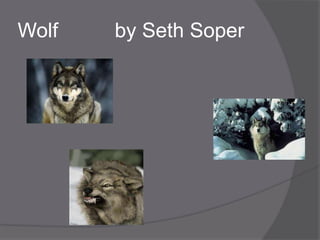
Wolf   by Seth Soper
Links
 Scientific name
 Range and habitat map
 Diet
 Physical description
 Breeding info
 Special behavior
 Weird info
 Conclusion
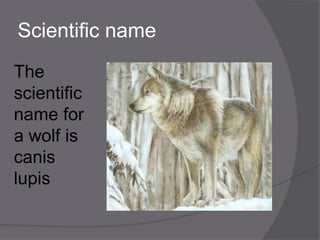
Scientific name
The
scientific
name for
a wolf is
canis
lupis
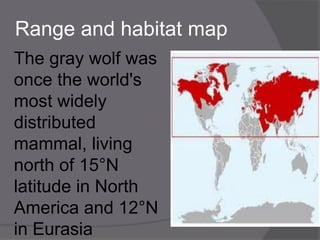
Range and habitat map
The gray wolf was
once the world's
most widely
distributed
mammal, living
north of 15°N
latitude in North
America and 12°N
in Eurasia
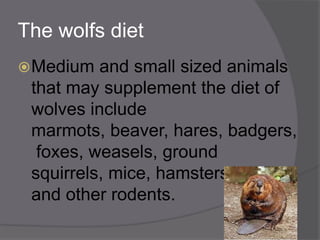
The wolfs diet
 Medium  and small sized animals
 that may supplement the diet of
 wolves include
 marmots, beaver, hares, badgers,
  foxes, weasels, ground
 squirrels, mice, hamsters, voles
 and other rodents.
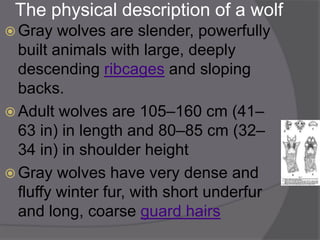
The physical description of a wolf
 Gray   wolves are slender, powerfully
  built animals with large, deeply
  descending ribcages and sloping
  backs.
 Adult wolves are 105–160 cm (41–
  63 in) in length and 80–85 cm (32–
  34 in) in shoulder height
 Gray wolves have very dense and
  fluffy winter fur, with short underfur
  and long, coarse guard hairs
Breeding info
 In areas with low wolf densities, wolves
  are generally monogamous.[71] Mated
  pairs usually remain together for life if
  one of the wolves does not die
 Multiple litters are rarely successful, due
  to infanticide by the pack's females.
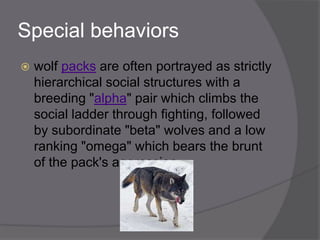
Special behaviors
   wolf packs are often portrayed as strictly
    hierarchical social structures with a
    breeding "alpha" pair which climbs the
    social ladder through fighting, followed
    by subordinate "beta" wolves and a low
    ranking "omega" which bears the brunt
    of the pack's aggression.
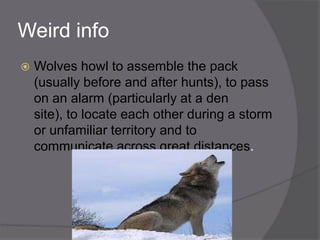
Weird info
   Wolves howl to assemble the pack
    (usually before and after hunts), to pass
    on an alarm (particularly at a den
    site), to locate each other during a storm
    or unfamiliar territory and to
    communicate across great distances.
Conclusion
   Wolfs have a lot of info on them and are
    cool the end.

Wolf by seth soper

  • 1.
    Wolf by Seth Soper
  • 2.
    Links  Scientific name Range and habitat map  Diet  Physical description  Breeding info  Special behavior  Weird info  Conclusion
  • 3.
  • 4.
    Range and habitatmap The gray wolf was once the world's most widely distributed mammal, living north of 15°N latitude in North America and 12°N in Eurasia
  • 5.
    The wolfs diet Medium and small sized animals that may supplement the diet of wolves include marmots, beaver, hares, badgers, foxes, weasels, ground squirrels, mice, hamsters, voles and other rodents.
  • 6.
    The physical descriptionof a wolf  Gray wolves are slender, powerfully built animals with large, deeply descending ribcages and sloping backs.  Adult wolves are 105–160 cm (41– 63 in) in length and 80–85 cm (32– 34 in) in shoulder height  Gray wolves have very dense and fluffy winter fur, with short underfur and long, coarse guard hairs
  • 7.
    Breeding info  Inareas with low wolf densities, wolves are generally monogamous.[71] Mated pairs usually remain together for life if one of the wolves does not die  Multiple litters are rarely successful, due to infanticide by the pack's females.
  • 8.
    Special behaviors  wolf packs are often portrayed as strictly hierarchical social structures with a breeding "alpha" pair which climbs the social ladder through fighting, followed by subordinate "beta" wolves and a low ranking "omega" which bears the brunt of the pack's aggression.
  • 9.
    Weird info  Wolves howl to assemble the pack (usually before and after hunts), to pass on an alarm (particularly at a den site), to locate each other during a storm or unfamiliar territory and to communicate across great distances.
  • 10.
    Conclusion  Wolfs have a lot of info on them and are cool the end.