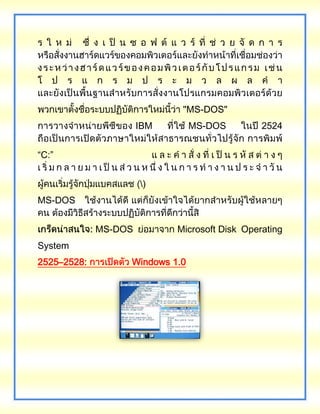
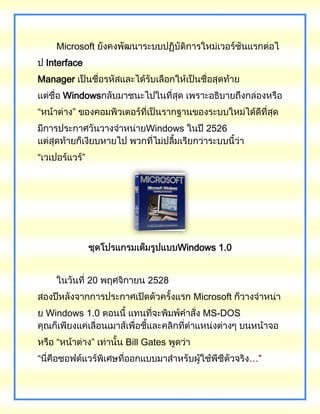
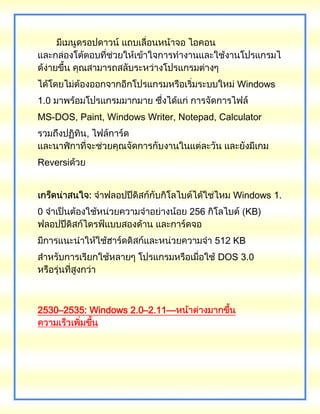
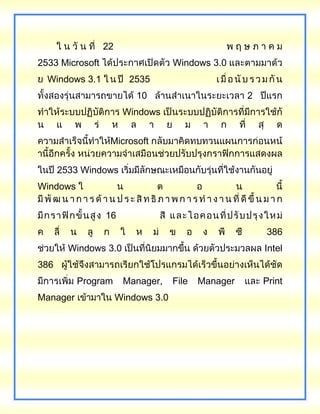
- Microsoft released the first version of Windows in 1985 to provide a graphical user interface for PCs that previously ran only command-line operating systems like MS-DOS. Windows 1.0 was rudimentary but introduced the desktop metaphor.
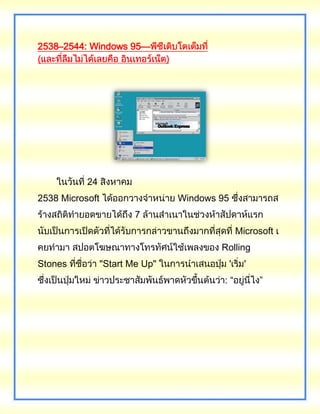
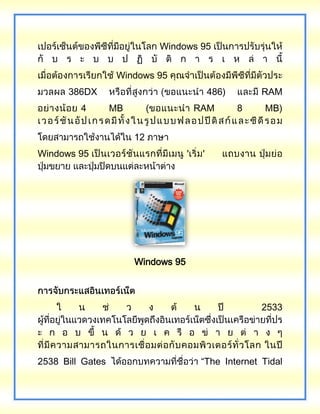
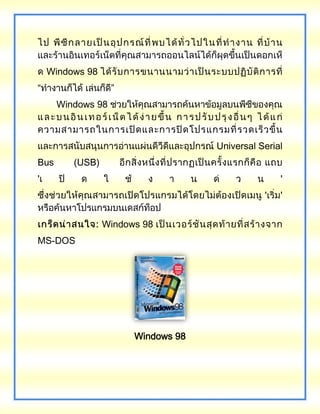
- Subsequent versions of Windows added more functionality and compatibility with newer hardware. Windows 3.0 included multitasking and support for 386 processors. Windows 95 was a major overhaul that phased out MS-DOS and introduced Plug and Play for easier hardware installation.
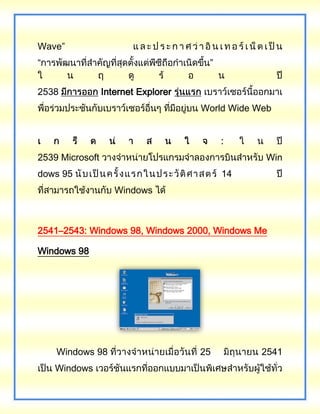
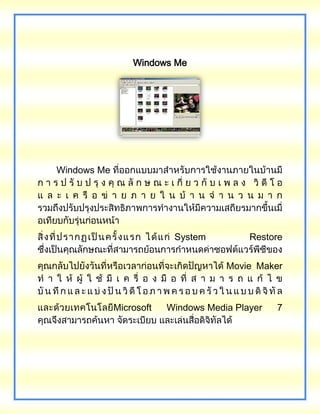
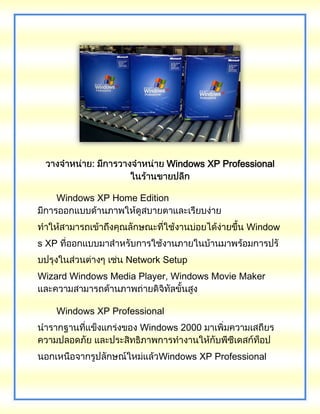
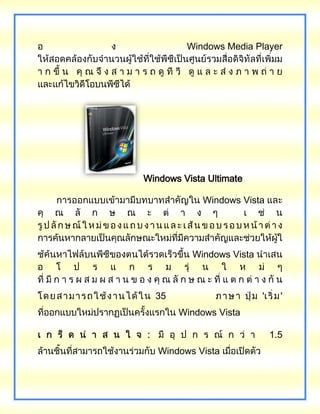
- Modern versions of Windows like Windows XP, Windows Vista, and Windows 8 have focused on usability improvements, security features, and support for new form factors and technologies while maintaining compatibility with older software and hardware