WINCHES
Presented by :
A.Seshu Kumar
Main View
What is a winch?
Types of winches
Capability of a winch
Avantages & Disadvantages
Applications
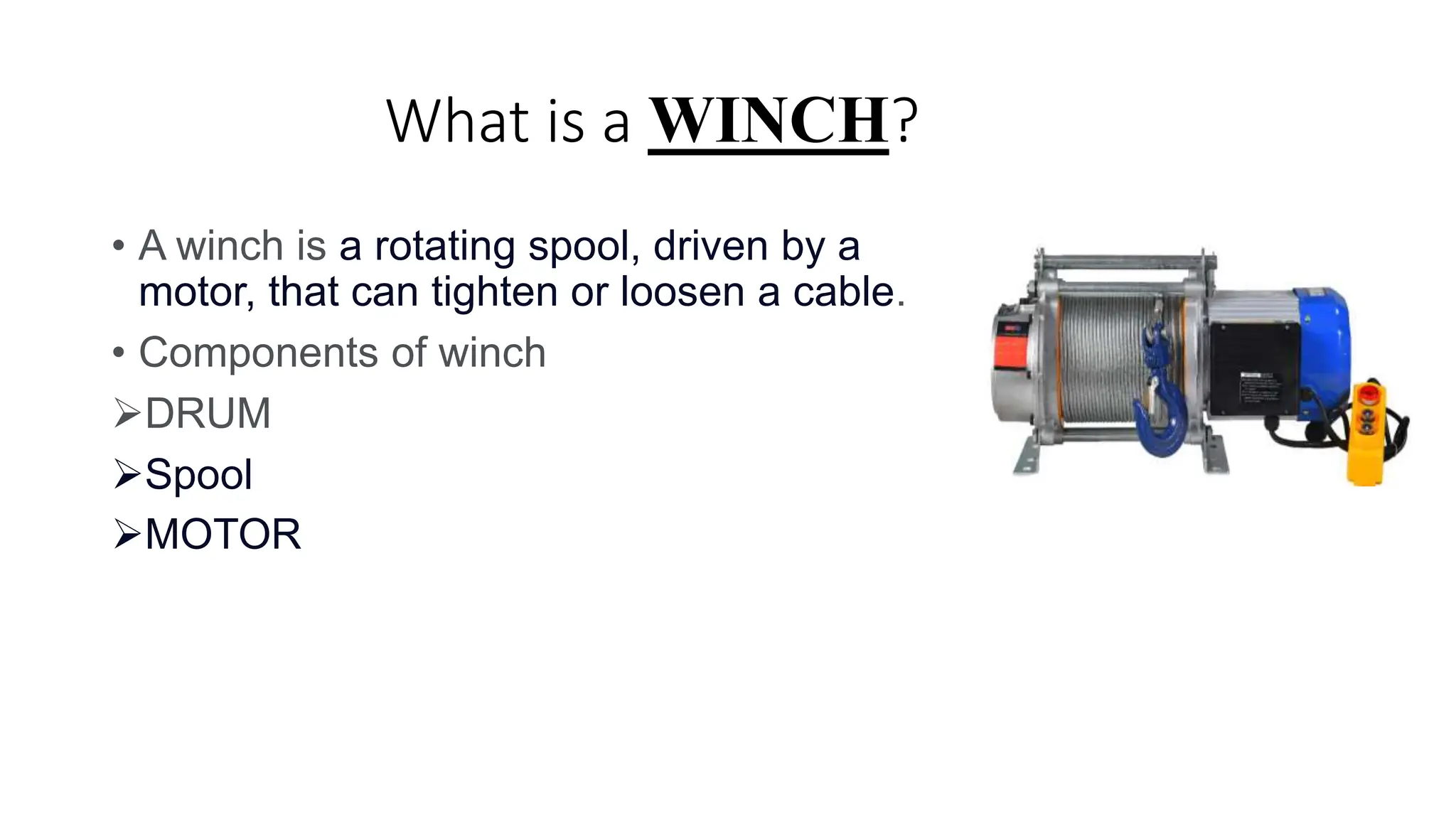
What is a WINCH?
• A winch is a rotating spool, driven by a
motor, that can tighten or loosen a cable.
• Components of winch
DRUM
Spool
MOTOR
Types of Winches
Manual winch
 operates a rotary handle
manually to lift, carry, tow,
etc. an object
Electric winch
 For vehicle recovery
 Operated by electric
motors
Hydraulic winch
 used to pull large, heavy objects over
long distances
 They use pressurized fluid to generate
immense force and torque. This force is
then used to drag, lift or push objects
Capability of a winch
• should be able to pull at least 1.5 times the weight of your
vehicle.
• built for a working temperature range of between -20°C and +50°C.
• One of the fundamental characteristics of the winch is the change in
working radius that occurs as the winch drum fills and empties. Along
with this change in working radius, the available line pull and line
speed will also vary depending on the fullness of the drum.
• The selection of speed ranges is crucial to the maximum performance
of the winch and is governed by a balancing of line speed versus
pulling power.
• Factor of safety for winch is around 3.
• A sudden winch rope failure is quite possible, especially if the
winch line is either shock loaded, or in this case the rope may
have been overstressed by an undersized corner radius.
Advantages Disadvantages
Speed
Efficiency
Reduces tension force
by 50%
Higher cost of
installation
requirement to lift the
weight at higher
speeds.
Maintenance
Complexity
Over heating
Applications
• Marine & fishing boats
• Vehicle recovery
• Construction equipment
• Drilling equipment
WINCHES BY tharun kumar malapati.pptx

WINCHES BY tharun kumar malapati.pptx

  • 1.
  • 2.
    Main View What isa winch? Types of winches Capability of a winch Avantages & Disadvantages Applications
  • 3.
    What is aWINCH? • A winch is a rotating spool, driven by a motor, that can tighten or loosen a cable. • Components of winch DRUM Spool MOTOR
  • 4.
    Types of Winches Manualwinch  operates a rotary handle manually to lift, carry, tow, etc. an object Electric winch  For vehicle recovery  Operated by electric motors Hydraulic winch  used to pull large, heavy objects over long distances  They use pressurized fluid to generate immense force and torque. This force is then used to drag, lift or push objects
  • 5.
    Capability of awinch • should be able to pull at least 1.5 times the weight of your vehicle. • built for a working temperature range of between -20°C and +50°C. • One of the fundamental characteristics of the winch is the change in working radius that occurs as the winch drum fills and empties. Along with this change in working radius, the available line pull and line speed will also vary depending on the fullness of the drum.
  • 6.
    • The selectionof speed ranges is crucial to the maximum performance of the winch and is governed by a balancing of line speed versus pulling power. • Factor of safety for winch is around 3. • A sudden winch rope failure is quite possible, especially if the winch line is either shock loaded, or in this case the rope may have been overstressed by an undersized corner radius.
  • 7.
    Advantages Disadvantages Speed Efficiency Reduces tensionforce by 50% Higher cost of installation requirement to lift the weight at higher speeds. Maintenance Complexity Over heating
  • 8.
    Applications • Marine &fishing boats • Vehicle recovery • Construction equipment • Drilling equipment