By:
Group:1
ID: 130501, 130502,
130504,130505,130506,130508,130509
,130510,130511,130512,130513
A presentation on
Principles and Roles of
Wildlife Conservation
Content
 Definition of Wildlife
 Wildlife Conservation & its goals
 Principles of wildlife conservation
 Roles of Wildlife Conservation
 Biodiversity Status
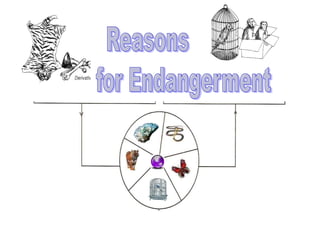
 Major causes of endangerment
 Conservation measures
 Recommendations
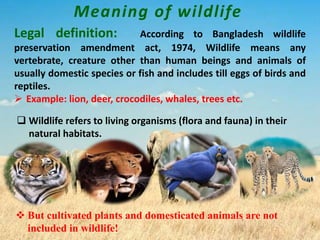
Meaning of wildlife
Legal definition: According to Bangladesh wildlife
preservation amendment act, 1974, Wildlife means any
vertebrate, creature other than human beings and animals of
usually domestic species or fish and includes till eggs of birds and
reptiles.
 Example: lion, deer, crocodiles, whales, trees etc.
 Wildlife refers to living organisms (flora and fauna) in their
natural habitats.
 But cultivated plants and domesticated animals are not
included in wildlife!
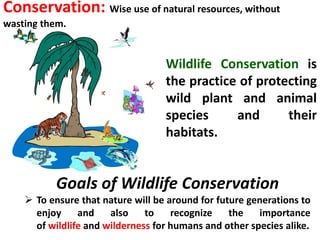
Wildlife Conservation is
the practice of protecting
wild plant and animal
species and their
habitats.
Goals of Wildlife Conservation
 To ensure that nature will be around for future generations to
enjoy and also to recognize the importance
of wildlife and wilderness for humans and other species alike.
Conservation: Wise use of natural resources, without
wasting them.
Principles of wildlife conservation
Protect the Breeding Stock
Harvest the "Surplus" Wisely
Balance Animals and Habitat
Protect the Breeding Stock
“Breeding stock” is a term used to describe the appropriate
mixture of young and adult animals needed to maintain a
population.
It is the task of the wildlife managers to determine how many
animals are surplus in a game population and to protect the
remaining animals.
Harvest the surplus wisely
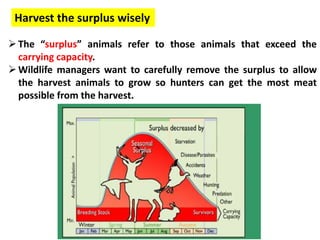
The “surplus” animals refer to those animals that exceed the
carrying capacity.
Wildlife managers want to carefully remove the surplus to allow
the harvest animals to grow so hunters can get the most meat
possible from the harvest.
Balance Animals and Habitat
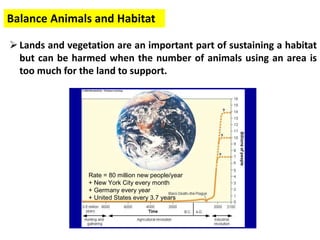
Lands and vegetation are an important part of sustaining a habitat
but can be harmed when the number of animals using an area is
too much for the land to support.
Rate = 80 million new people/year
+ New York City every month
+ Germany every year
+ United States every 3.7 years
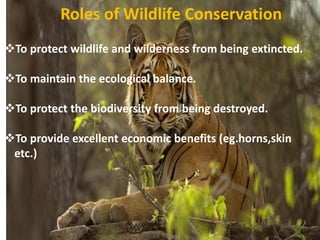
To protect wildlife and wilderness from being extincted.
To maintain the ecological balance.
To protect the biodiversity from being destroyed.
To provide excellent economic benefits (eg.horns,skin
etc.)
Roles of Wildlife Conservation
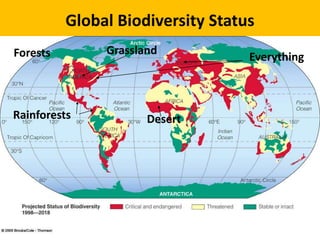
Global Biodiversity Status
Forests Grassland
Rainforests Desert
Everything
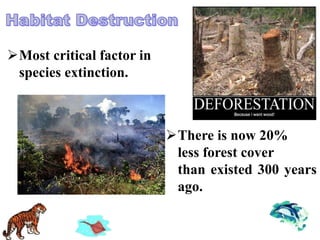
Most critical factor in
species extinction.
There is now 20%
less forest cover
than existed 300 years
ago.
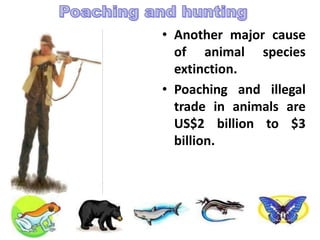
• Another major cause
of animal species
extinction.
• Poaching and illegal
trade in animals are
US$2 billion to $3
billion.
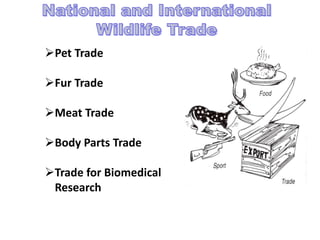
Pet Trade
Fur Trade
Meat Trade
Body Parts Trade
Trade for Biomedical
Research
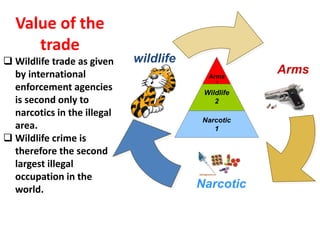
Arms
3
Wildlife
2
Narcotic
1
Arms
Narcotic
wildlife
Value of the
trade
 Wildlife trade as given
by international
enforcement agencies
is second only to
narcotics in the illegal
area.
 Wildlife crime is
therefore the second
largest illegal
occupation in the
world.
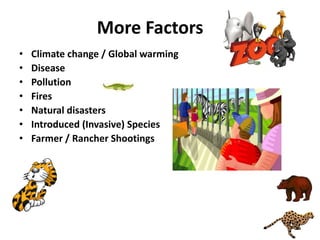
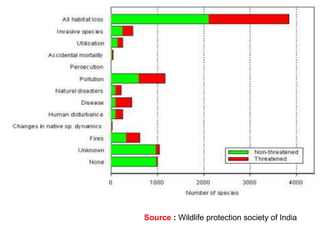
More Factors
• Climate change / Global warming
• Disease
• Pollution
• Fires
• Natural disasters
• Introduced (Invasive) Species
• Farmer / Rancher Shootings
Source : Wildlife protection society of India
Conservation measures
The conservation strategies should include the following
programmes and policies:
Protection of threatened/useful plants and animals species living
in natural habitats, zoological and botanical gardens, seed gene,
tissue culture and DNA banks.
Preservation of critical habitats of animal and plant species plus
the management of life supporting systems in the surrounding
habitats.
Hunting and international trade in wild animals and plants
products should be regulated and a strict vigil should be
maintained upon these actions.
Role of government and NGOs in spreading awareness
programmes among common people about values of wildlife
and it’s conservation.
IUCN(International Union for
Conservation of Nature)
• The organization publishes the IUCN Red List of Threatened
Species, which assesses the conservation status of species.
• It works for the enlistment and preservation of endangered
species of plants and animals.
Now known as the World Conservation Union, it aims to
impart information about the distribution and status of
threatened species, develop awareness about the importance of
threatened biodiversity and guide their conservation
programmes and actions.
International rules and laws
Many nations have reached bilateral/multilateral
agreements and have framed rules and regulations
for protection and conservation of wildlife.
Some of these are:
 Africanconventionontheconservationofnaturalresources,1968.
 Convention of wetlands of international importance (ramsar convention),
1971.
 Conservationandprotectionoftheworldcultureandnationalheritageact,
1972.
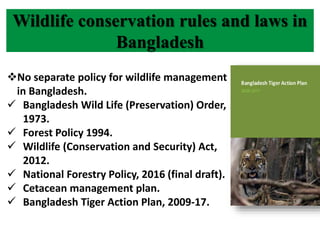
Wildlife conservation rules and laws in
Bangladesh
No separate policy for wildlife management
in Bangladesh.
 Bangladesh Wild Life (Preservation) Order,
1973.
 Forest Policy 1994.
 Wildlife (Conservation and Security) Act,
2012.
 National Forestry Policy, 2016 (final draft).
 Cetacean management plan.
 Bangladesh Tiger Action Plan, 2009-17.
How Can We Help?
Recommendations
 Love for Earth ,Nature & Animals.
Conservation laws for wildlife/forest practiced
properly.
Strict actions against ,who do not abide laws.
Non industrial activities besides reserve forest.
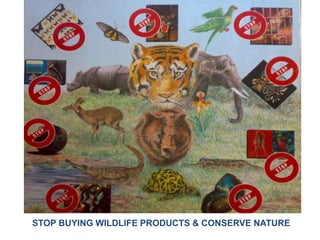
STOP BUYING WILDLIFE PRODUCTS & CONSERVE NATURE
Wildlife conservation

Wildlife conservation

  • 1.
  • 2.
    Content  Definition ofWildlife  Wildlife Conservation & its goals  Principles of wildlife conservation  Roles of Wildlife Conservation  Biodiversity Status  Major causes of endangerment  Conservation measures  Recommendations
  • 3.
    Meaning of wildlife Legaldefinition: According to Bangladesh wildlife preservation amendment act, 1974, Wildlife means any vertebrate, creature other than human beings and animals of usually domestic species or fish and includes till eggs of birds and reptiles.  Example: lion, deer, crocodiles, whales, trees etc.  Wildlife refers to living organisms (flora and fauna) in their natural habitats.  But cultivated plants and domesticated animals are not included in wildlife!
  • 4.
    Wildlife Conservation is thepractice of protecting wild plant and animal species and their habitats. Goals of Wildlife Conservation  To ensure that nature will be around for future generations to enjoy and also to recognize the importance of wildlife and wilderness for humans and other species alike. Conservation: Wise use of natural resources, without wasting them.
  • 5.
    Principles of wildlifeconservation Protect the Breeding Stock Harvest the "Surplus" Wisely Balance Animals and Habitat Protect the Breeding Stock “Breeding stock” is a term used to describe the appropriate mixture of young and adult animals needed to maintain a population. It is the task of the wildlife managers to determine how many animals are surplus in a game population and to protect the remaining animals.
  • 6.
    Harvest the surpluswisely The “surplus” animals refer to those animals that exceed the carrying capacity. Wildlife managers want to carefully remove the surplus to allow the harvest animals to grow so hunters can get the most meat possible from the harvest.
  • 7.
    Balance Animals andHabitat Lands and vegetation are an important part of sustaining a habitat but can be harmed when the number of animals using an area is too much for the land to support. Rate = 80 million new people/year + New York City every month + Germany every year + United States every 3.7 years
  • 8.
    To protect wildlifeand wilderness from being extincted. To maintain the ecological balance. To protect the biodiversity from being destroyed. To provide excellent economic benefits (eg.horns,skin etc.) Roles of Wildlife Conservation
  • 9.
    Global Biodiversity Status ForestsGrassland Rainforests Desert Everything
  • 12.
    Most critical factorin species extinction. There is now 20% less forest cover than existed 300 years ago.
  • 13.
    • Another majorcause of animal species extinction. • Poaching and illegal trade in animals are US$2 billion to $3 billion.
  • 14.
    Pet Trade Fur Trade MeatTrade Body Parts Trade Trade for Biomedical Research
  • 15.
    Arms 3 Wildlife 2 Narcotic 1 Arms Narcotic wildlife Value of the trade Wildlife trade as given by international enforcement agencies is second only to narcotics in the illegal area.  Wildlife crime is therefore the second largest illegal occupation in the world.
  • 16.
    More Factors • Climatechange / Global warming • Disease • Pollution • Fires • Natural disasters • Introduced (Invasive) Species • Farmer / Rancher Shootings
  • 17.
    Source : Wildlifeprotection society of India
  • 18.
    Conservation measures The conservationstrategies should include the following programmes and policies: Protection of threatened/useful plants and animals species living in natural habitats, zoological and botanical gardens, seed gene, tissue culture and DNA banks. Preservation of critical habitats of animal and plant species plus the management of life supporting systems in the surrounding habitats. Hunting and international trade in wild animals and plants products should be regulated and a strict vigil should be maintained upon these actions. Role of government and NGOs in spreading awareness programmes among common people about values of wildlife and it’s conservation.
  • 19.
    IUCN(International Union for Conservationof Nature) • The organization publishes the IUCN Red List of Threatened Species, which assesses the conservation status of species. • It works for the enlistment and preservation of endangered species of plants and animals. Now known as the World Conservation Union, it aims to impart information about the distribution and status of threatened species, develop awareness about the importance of threatened biodiversity and guide their conservation programmes and actions.
  • 20.
    International rules andlaws Many nations have reached bilateral/multilateral agreements and have framed rules and regulations for protection and conservation of wildlife. Some of these are:  Africanconventionontheconservationofnaturalresources,1968.  Convention of wetlands of international importance (ramsar convention), 1971.  Conservationandprotectionoftheworldcultureandnationalheritageact, 1972.
  • 21.
    Wildlife conservation rulesand laws in Bangladesh No separate policy for wildlife management in Bangladesh.  Bangladesh Wild Life (Preservation) Order, 1973.  Forest Policy 1994.  Wildlife (Conservation and Security) Act, 2012.  National Forestry Policy, 2016 (final draft).  Cetacean management plan.  Bangladesh Tiger Action Plan, 2009-17.
  • 22.
  • 23.
    Recommendations  Love forEarth ,Nature & Animals. Conservation laws for wildlife/forest practiced properly. Strict actions against ,who do not abide laws. Non industrial activities besides reserve forest.
  • 24.
    STOP BUYING WILDLIFEPRODUCTS & CONSERVE NATURE