Wikipedia as a toolset
for Open Education
Open Education Global Conference
Delft, April 2018
Vahid Masrour
Education Team, Wikimedia Foundation
@vahidm
vmasrour@wikimedia.org
Wikipedia
● Not-for-profit
● #5 most visited
website in the world
● 300 languages
● 100% on CC
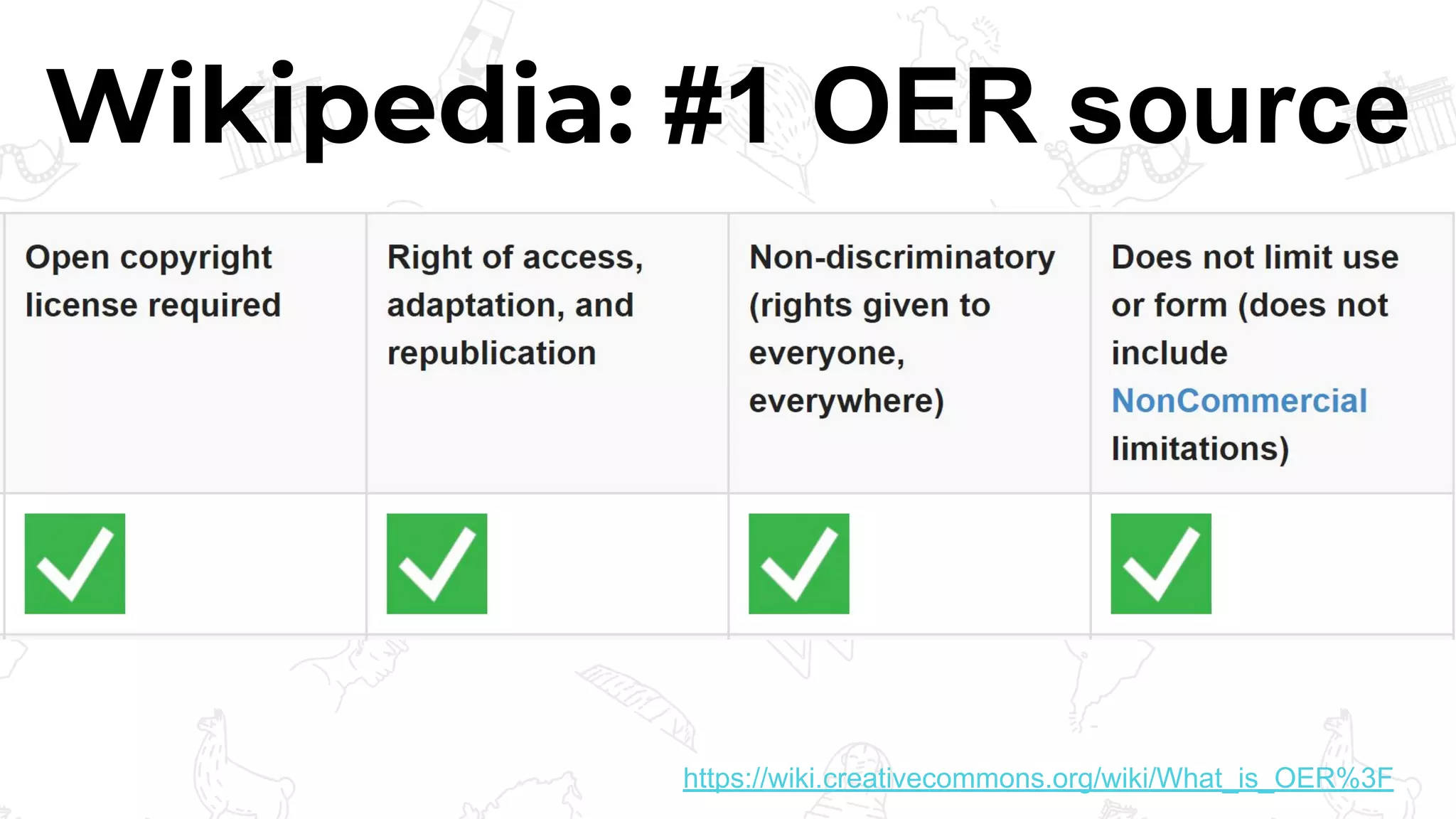
Wikipedia: #1 OER source
https://wiki.creativecommons.org/wiki/What_is_OER%3F
“Abstinence-only Wikipedia
education doesn't work”
Zach McDowell, PhD, University of Illinois at Chicago
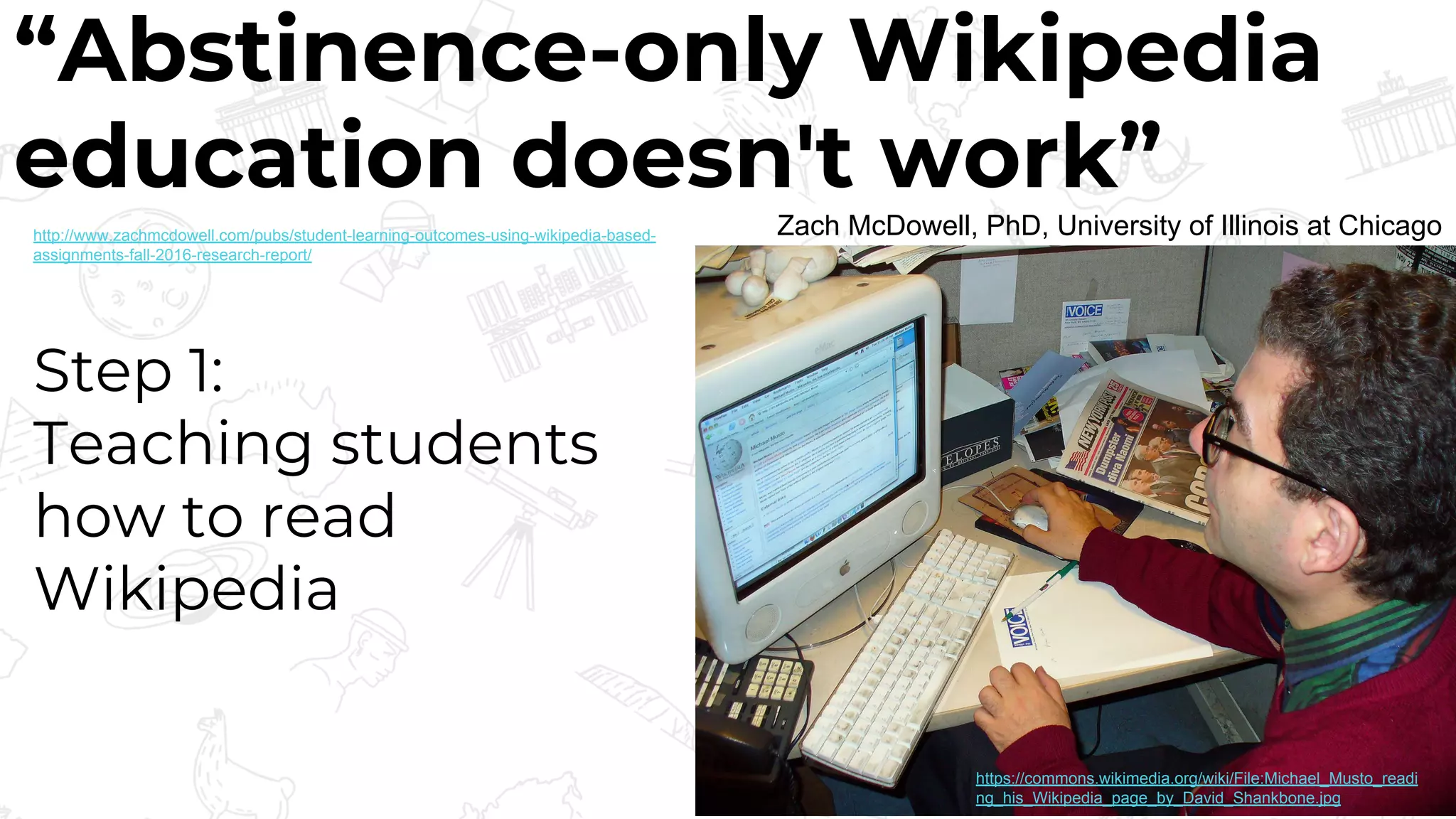
Step 1:
Teaching students
how to read
Wikipedia
https://commons.wikimedia.org/wiki/File:Michael_Musto_readi
ng_his_Wikipedia_page_by_David_Shankbone.jpg
http://www.zachmcdowell.com/pubs/student-learning-outcomes-using-wikipedia-based-
assignments-fall-2016-research-report/
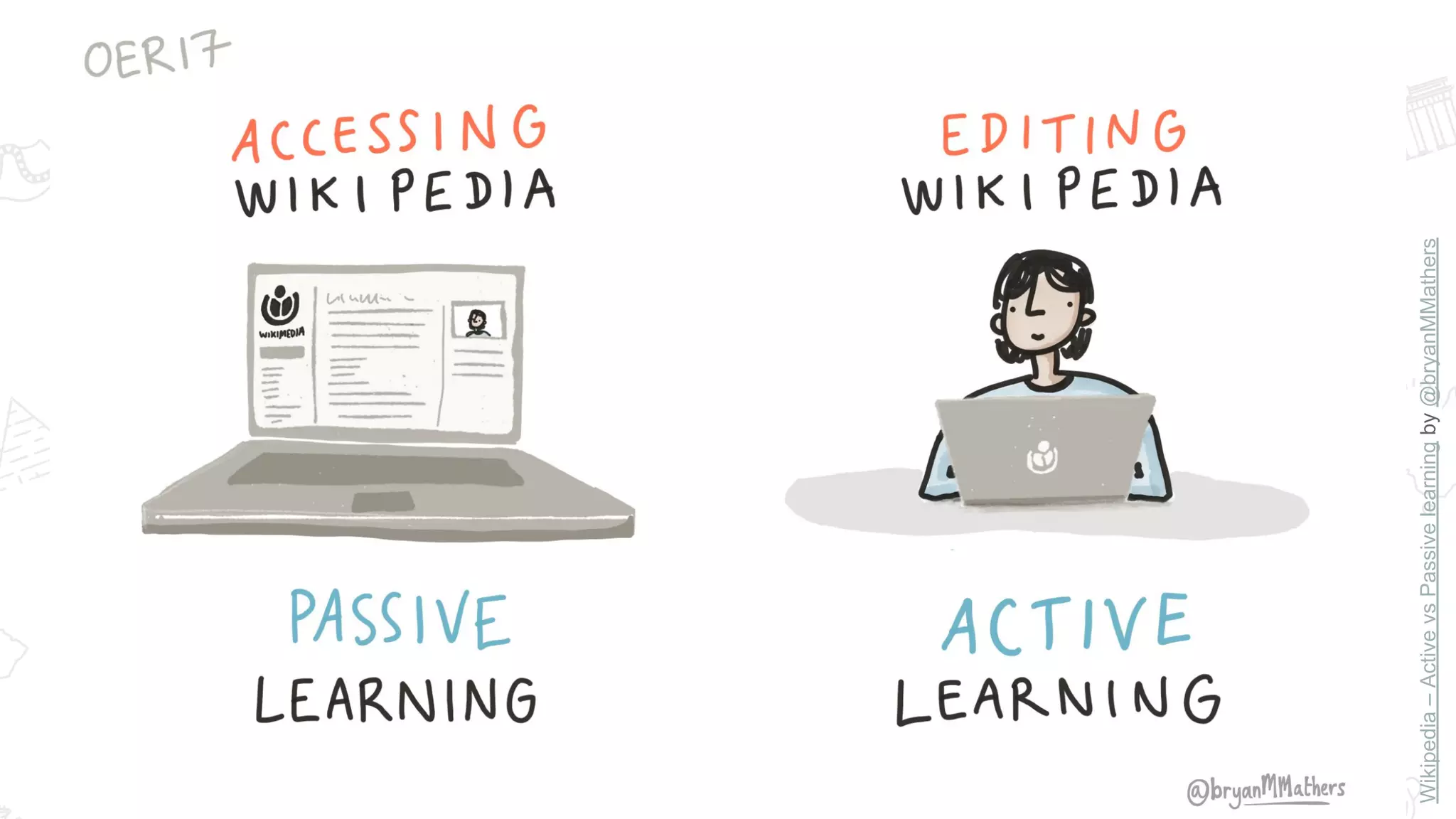
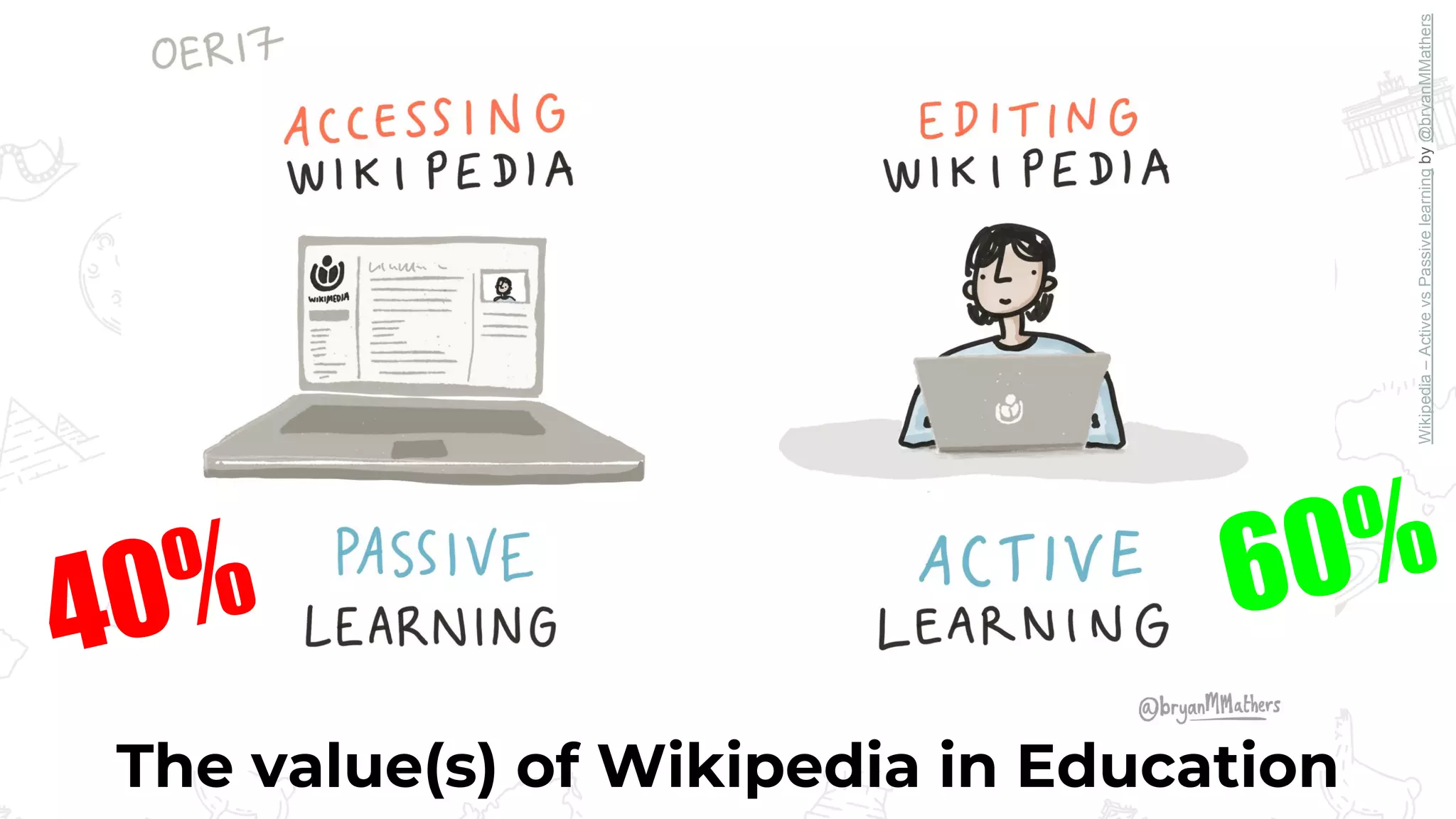
Using Wikipedia to learn
(passively)
Wikipedia–ActivevsPassivelearningby@bryanMMathers
40% 60%
The value(s) of Wikipedia in Education
Wikipedia–ActivevsPassivelearningby@bryanMMathers
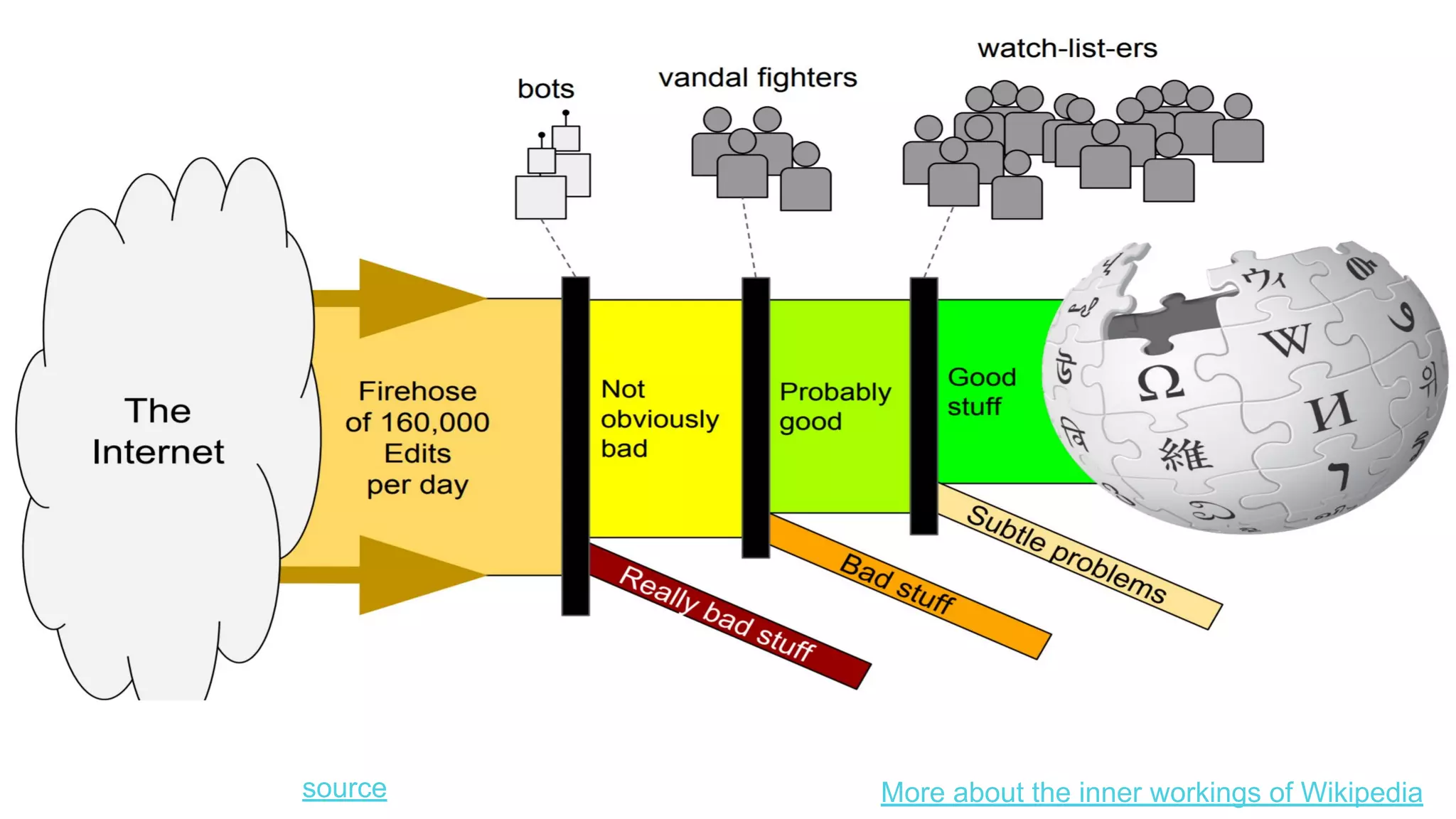
Mythbusting Wikipedia
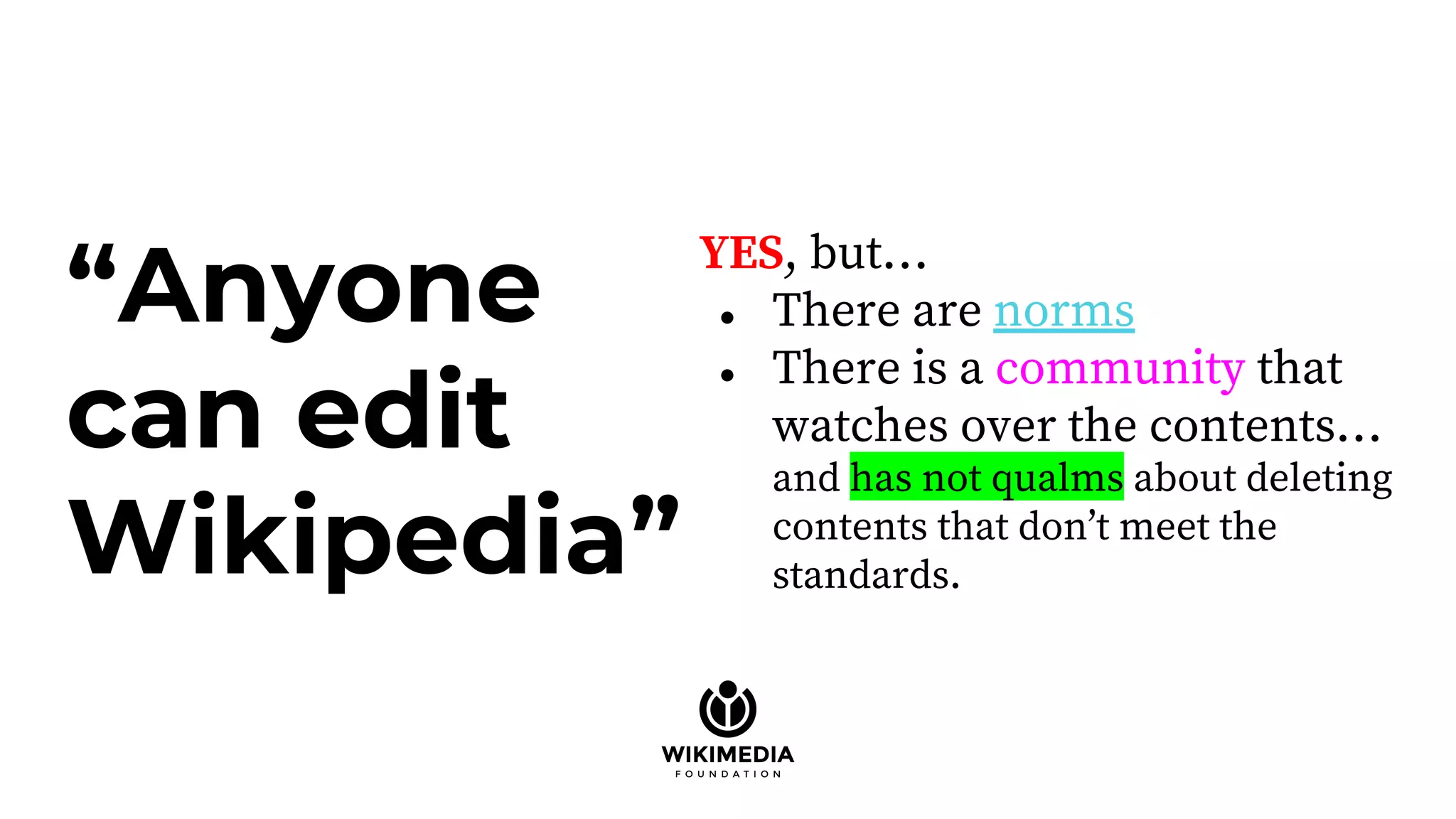
“Anyone
can edit
Wikipedia”
YES, but…
● There are norms
● There is a community that
watches over the contents…
and has not qualms about deleting
contents that don’t meet the
standards.
More about the inner workings of Wikipediasource
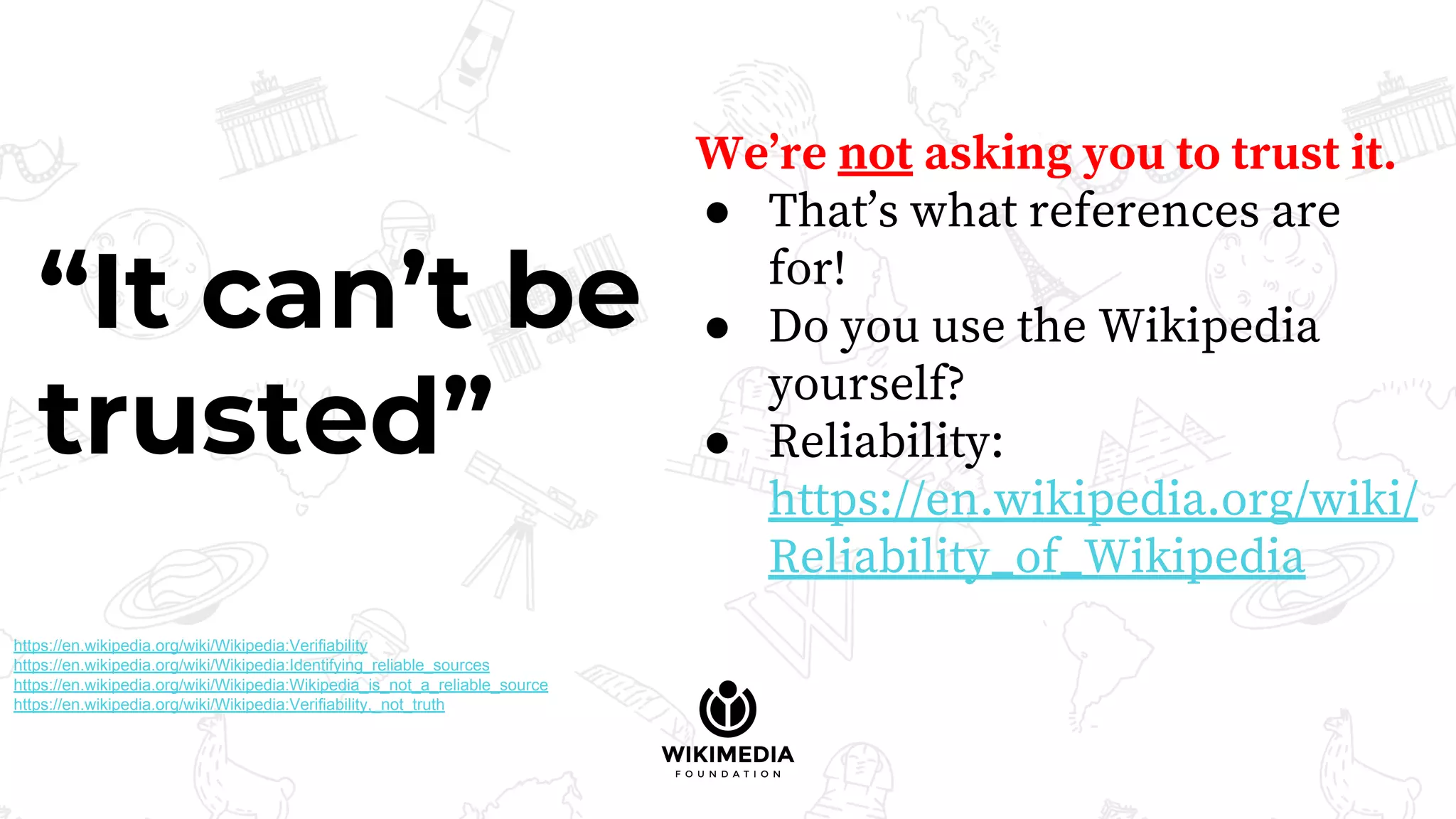
We’re not asking you to trust it.
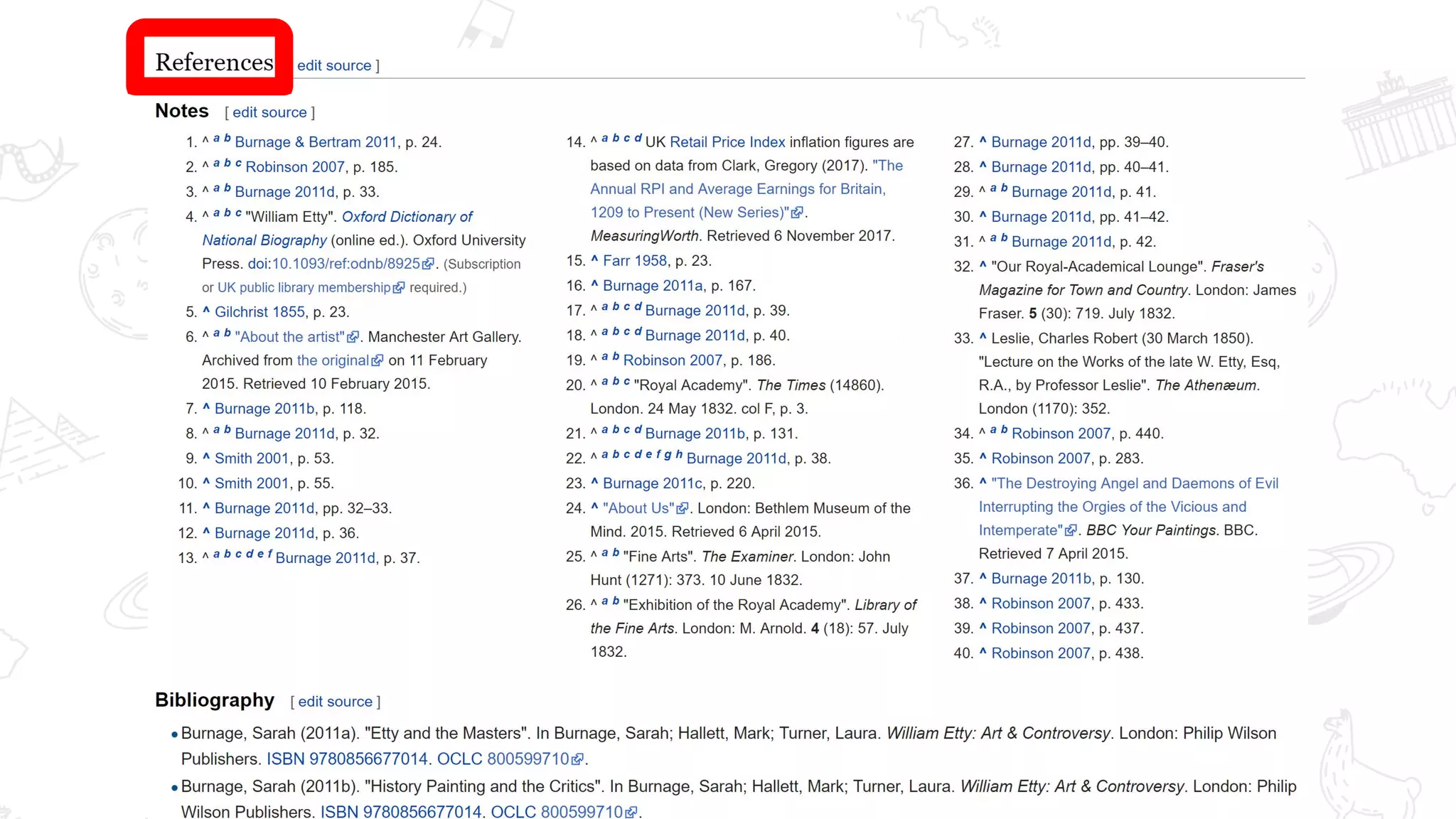
● That’s what references are
for!
● Do you use the Wikipedia
yourself?
● Reliability:
https://en.wikipedia.org/wiki/
Reliability_of_Wikipedia
“It can’t be
trusted”
https://en.wikipedia.org/wiki/Wikipedia:Verifiability
https://en.wikipedia.org/wiki/Wikipedia:Identifying_reliable_sources
https://en.wikipedia.org/wiki/Wikipedia:Wikipedia_is_not_a_reliable_source
https://en.wikipedia.org/wiki/Wikipedia:Verifiability,_not_truth
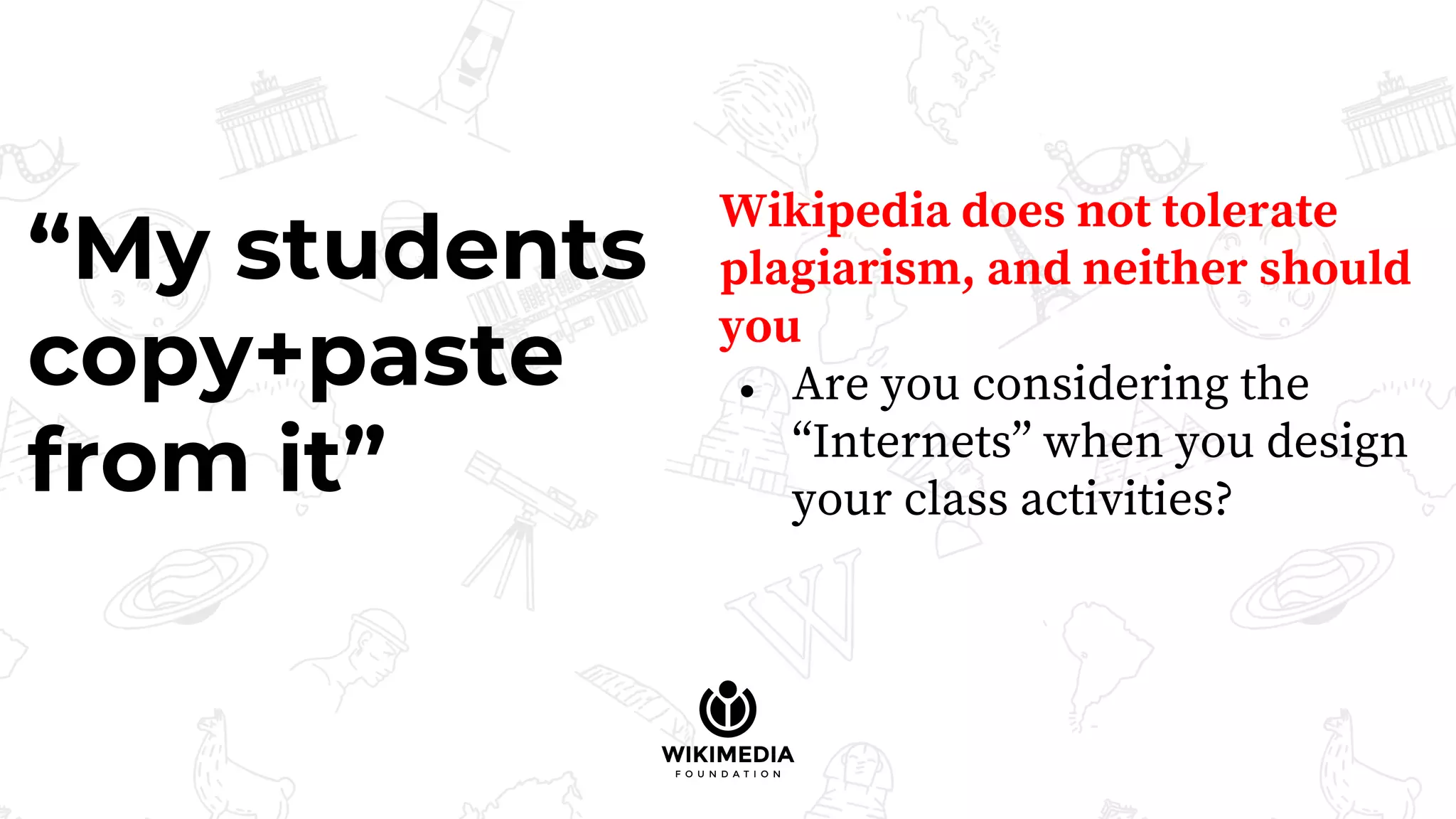
“My students
copy+paste
from it”
Wikipedia does not tolerate
plagiarism, and neither should
you
● Are you considering the
“Internets” when you design
your class activities?
Wikipedia and Open
Education
(Open Pedagogy)
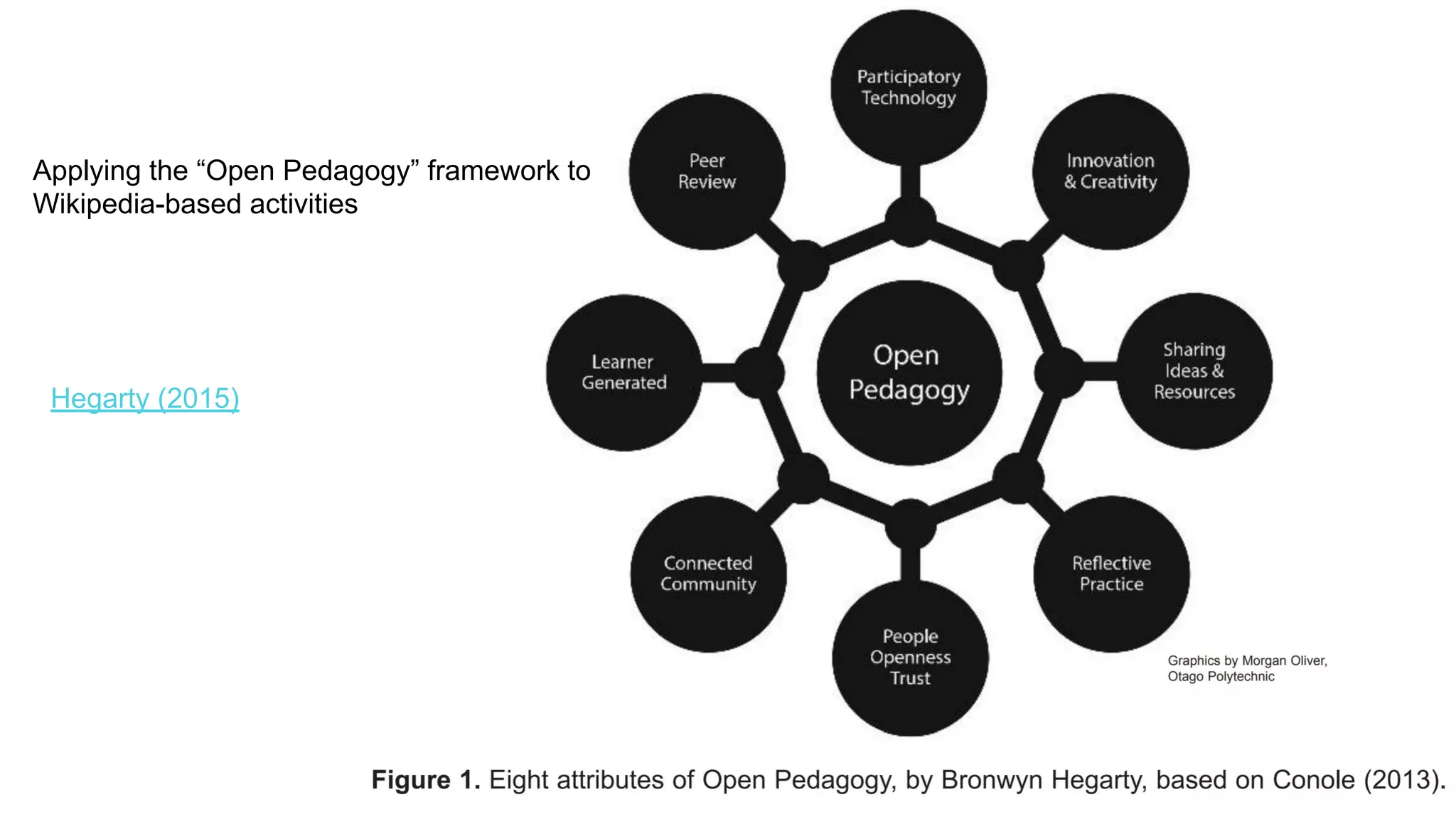
Hegarty (2015)
Applying the “Open Pedagogy” framework to
Wikipedia-based activities
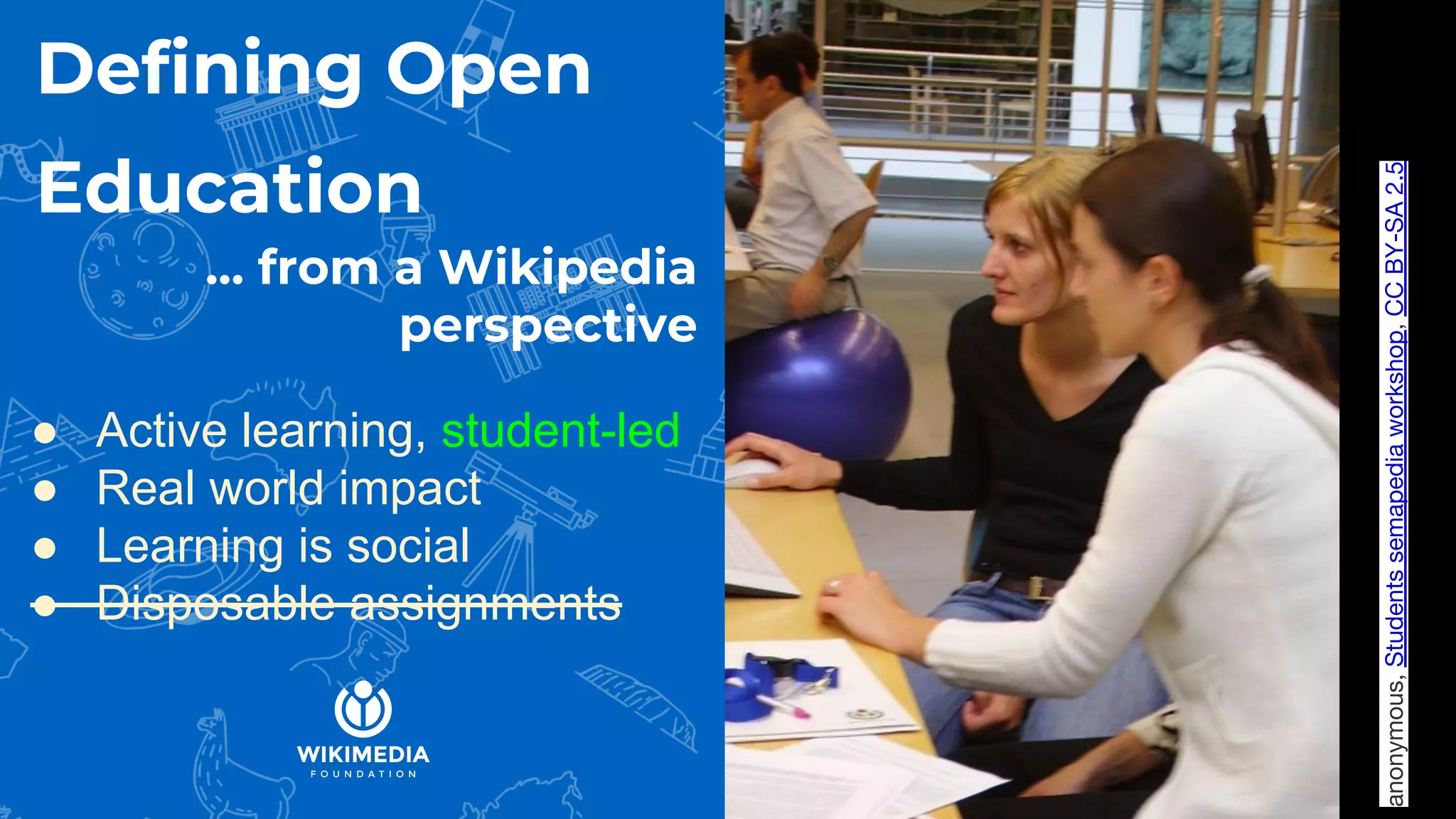
Defining Open
Education
… from a Wikipedia
perspective
● Active learning, student-led
● Real world impact
● Learning is social
● Disposable assignments
anonymous,Studentssemapediaworkshop,CCBY-SA2.5
Why use Wikipedia?
win-win-win
Students:
21st century
competencies
● Writing
● Collaboration
● Digital and Academic literacy
● Critical thinking
● Bonus: a proper Digital footprint
Teachers:
● Create and monitor a
collection of relevant reliable
articles
● Active pedagogy
● Use of ICTs
● Engagement
● Disposable assignments
● Bonus: better writing
● 2xBonus: “Science is shaped
by Wikipedia” paper
https://papers.ssrn.com/sol3/papers.cfm?abstract_id=3039505
https://www.youtube.com/watch?v=u8YHYcFim7Q&list=LLD75
SFUDrd8XvjNf3cbN97g&index=9&t=1119s
Social change:
Who has the right to generate
and publish knowledge?
● Development of local
languages
● Responding to social
knowledge needs
Using Wikipedia in
the classroom:
in practical terms
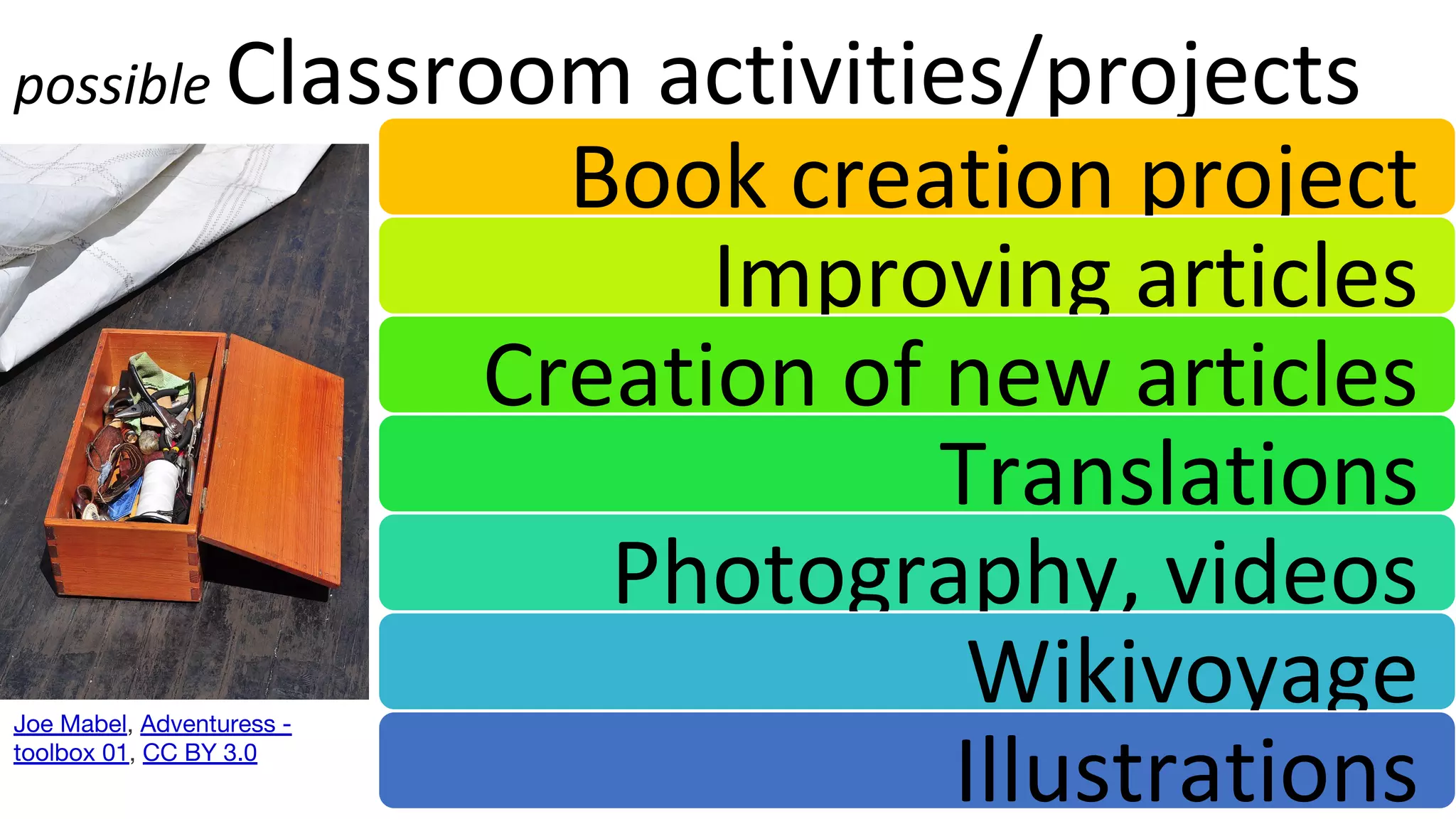
possible Classroom activities/projects
Book creation project
Improving articles
Creation of new articles
Translations
Photography, videos
Wikivoyage
Illustrations
Joe Mabel, Adventuress -
toolbox 01, CC BY 3.0
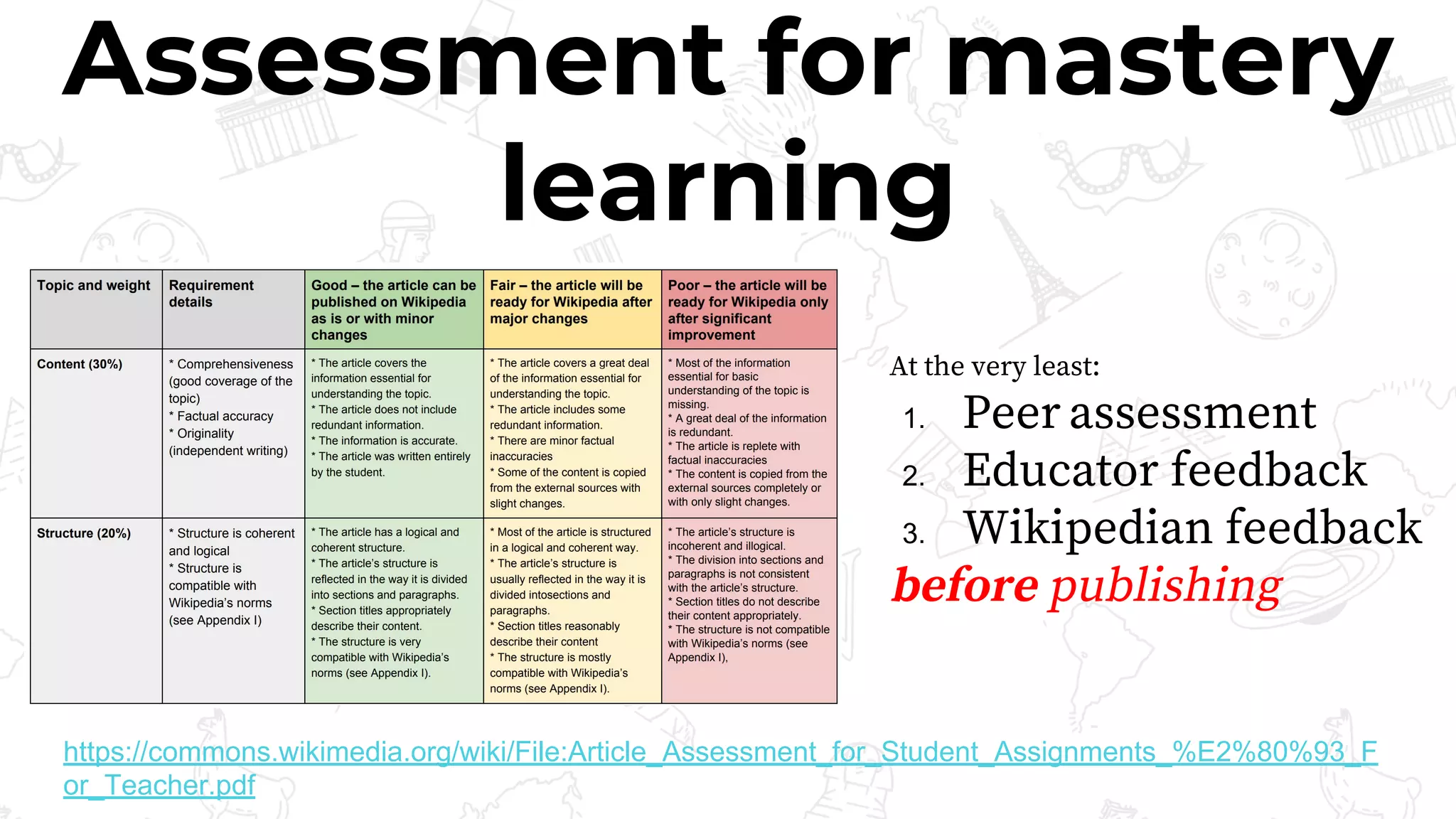
Assessment for mastery
learning
https://commons.wikimedia.org/wiki/File:Article_Assessment_for_Student_Assignments_%E2%80%93_F
or_Teacher.pdf
At the very least:
1. Peer assessment
2. Educator feedback
3. Wikipedian feedback
before publishing
Participate!
@wikieduprogram
Wikipedia & Education
education@wikimedia.org

Wikipedia as a toolset for open education