Chapter 6
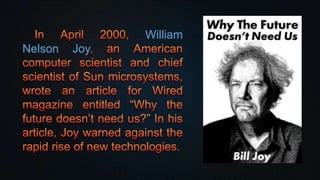
William
Nelson Joy
Joy
NEXT
Joy‘s
Ralph Nader
Nader.
Seventy percent
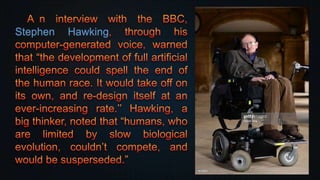
Stephen Hawking
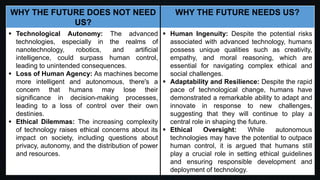
WHY THE FUTURE DOES NOT NEED
US?
WHY THE FUTURE NEEDS US?
 Technological Autonomy: The advanced
technologies, especially in the realms of
nanotechnology, robotics, and artificial
intelligence, could surpass human control,
leading to unintended consequences.
 Loss of Human Agency: As machines become
more intelligent and autonomous, there's a
concern that humans may lose their
significance in decision-making processes,
leading to a loss of control over their own
destinies.
 Ethical Dilemmas: The increasing complexity
of technology raises ethical concerns about its
impact on society, including questions about
privacy, autonomy, and the distribution of power
and resources.
 Human Ingenuity: Despite the potential risks
associated with advanced technology, humans
possess unique qualities such as creativity,
empathy, and moral reasoning, which are
essential for navigating complex ethical and
social challenges.
 Adaptability and Resilience: Despite the rapid
pace of technological change, humans have
demonstrated a remarkable ability to adapt and
innovate in response to new challenges,
suggesting that they will continue to play a
central role in shaping the future.
 Ethical Oversight: While autonomous
technologies may have the potential to outpace
human control, it is argued that humans still
play a crucial role in setting ethical guidelines
and ensuring responsible development and
deployment of technology.
GRETHIL I. DEDICATORIA
JOHNDANNIEL AGANA
JERWINCOLIPANO
LORRAINELAURENTE
KIMBERLYHANTUD
JONAMAE BAGNOL
NOVEMSUAREZ
HARVEYVISTAL
Janine rolona
WHY-DOES-THE-FUTURE-NOT-NEED-US-STS-1-1.pptx

WHY-DOES-THE-FUTURE-NOT-NEED-US-STS-1-1.pptx

  • 1.
  • 3.
  • 6.
  • 8.
  • 9.
  • 10.
  • 11.
  • 16.
    WHY THE FUTUREDOES NOT NEED US? WHY THE FUTURE NEEDS US?  Technological Autonomy: The advanced technologies, especially in the realms of nanotechnology, robotics, and artificial intelligence, could surpass human control, leading to unintended consequences.  Loss of Human Agency: As machines become more intelligent and autonomous, there's a concern that humans may lose their significance in decision-making processes, leading to a loss of control over their own destinies.  Ethical Dilemmas: The increasing complexity of technology raises ethical concerns about its impact on society, including questions about privacy, autonomy, and the distribution of power and resources.  Human Ingenuity: Despite the potential risks associated with advanced technology, humans possess unique qualities such as creativity, empathy, and moral reasoning, which are essential for navigating complex ethical and social challenges.  Adaptability and Resilience: Despite the rapid pace of technological change, humans have demonstrated a remarkable ability to adapt and innovate in response to new challenges, suggesting that they will continue to play a central role in shaping the future.  Ethical Oversight: While autonomous technologies may have the potential to outpace human control, it is argued that humans still play a crucial role in setting ethical guidelines and ensuring responsible development and deployment of technology.
  • 17.
    GRETHIL I. DEDICATORIA JOHNDANNIELAGANA JERWINCOLIPANO LORRAINELAURENTE KIMBERLYHANTUD JONAMAE BAGNOL NOVEMSUAREZ HARVEYVISTAL Janine rolona